
Quick Take
- Silkworms reach 10,000 times their initial hatching weight before they spin their cocoon to complete metamorphosis.
- Silkworms eat almost exclusively mulberry leaves, but they also eat silkworm chow derived from mulberry leaves.
- Mulberry leaves contain alkaloids that are lethal to many other insect species, but silkworms have special enzymes that allow them to eat mulberry leaves without coming to harm.
- Silkworms are fully domesticated and can only survive in captivity.
Silkworms are not actually worms but rather the caterpillar larvae of domesticated silk moths (Bombyx mori). These caterpillars are endemic to China and have been used in the silk industry, known as sericulture, for over 5,000 years. These caterpillars are also farmed for use as food for humans and reptiles in countries around the world. Since silk moths have become domesticated, B. mori is considered to be extinct in the wild. However, similar species still inhabit Asia.
A silkworm spins its cocoon from a spinneret in its mouth using just one strand of off-white or yellowish silk that can measure nearly a mile long. So, what do silkworms eat that allows them to spin such long strands of silk? Keep reading to find out.
Silkworm Growth
Female silk moths lay up to 500 eggs that are only about 0.039 inches long. In the silk industry, these eggs are often stored in the refrigerator to mimic winter conditions and keep the larvae dormant until needed. If the eggs are not refrigerated, they typically hatch within 7-14 days. Newly hatched silkworms are generally between 0.078 and 0.12 inches long.
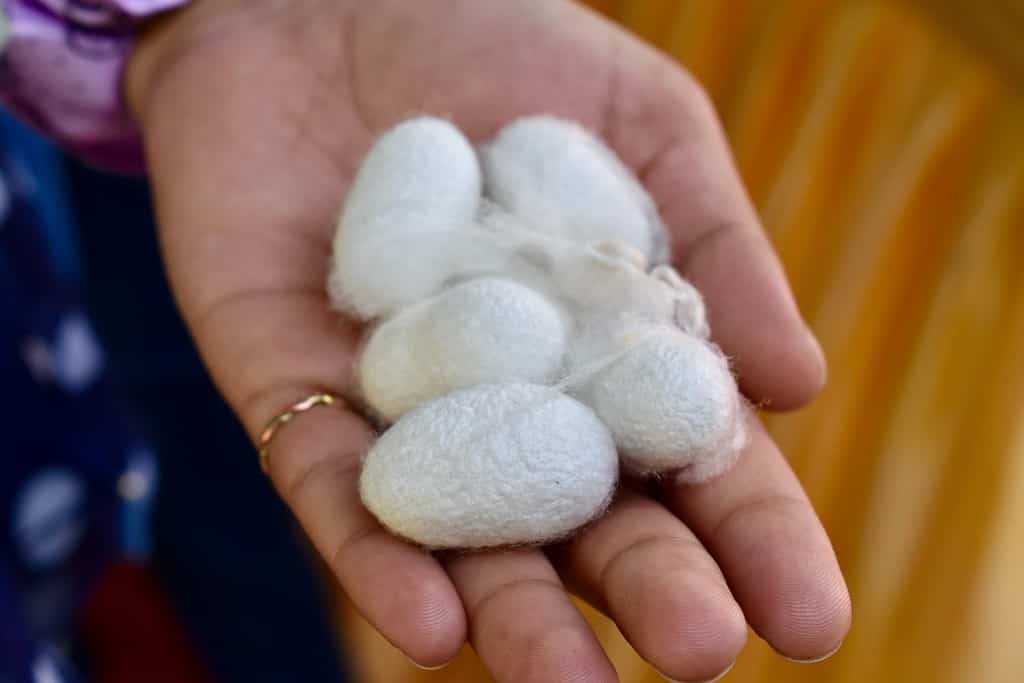
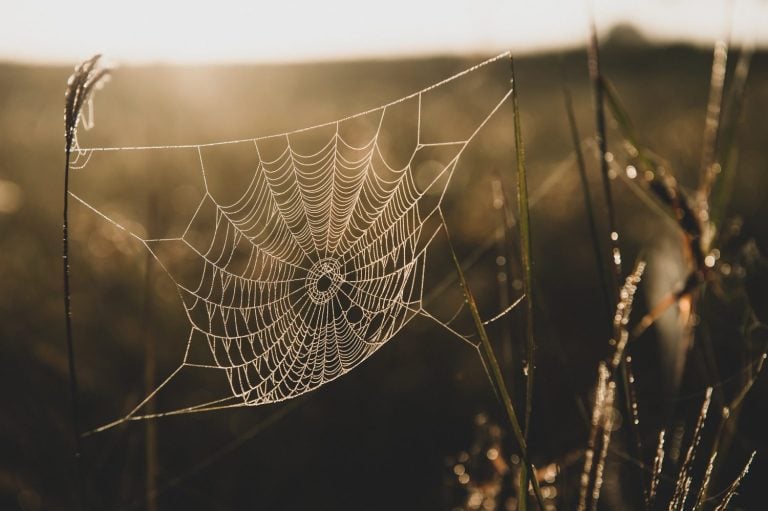
A silkworm cocoon is made of a single strand of silk that can measure almost a mile long.
©Alchemist from India/Shutterstock.com
The caterpillars go through five growth stages, or instars. They molt four times prior to entering their cocoons. During the fifth instar, they consume up to 80% of their lifetime food intake. During this stage, they also weigh 10,000 times their hatching weight and their bodies are 25 times larger. After about 30 days of munching on leaves, they stop eating completely and excrete all food and waste from their bodies. Then, they raise their heads up off the leaves and begin to sway from side to side. In the silk industry, the swaying caterpillars are placed into individual frames or boxes while they spin their cocoons.
Once the cocoons are completed, it takes about two weeks for the caterpillars to pupate. Unfortunately, many commercial silks require the death of the pupae via boiling or steaming so the silk cocoons remain intact. However, there are cruelty-free alternatives on the market, such as Ahimsa silk, that allow the pupae to complete metamorphosis and emerge from the cocoon unharmed. Silk moths do not have mouthparts, so they cannot eat, and they do not fly. They mate and lay the next generation of silkworms, dying shortly after.
The Silkworm Diet
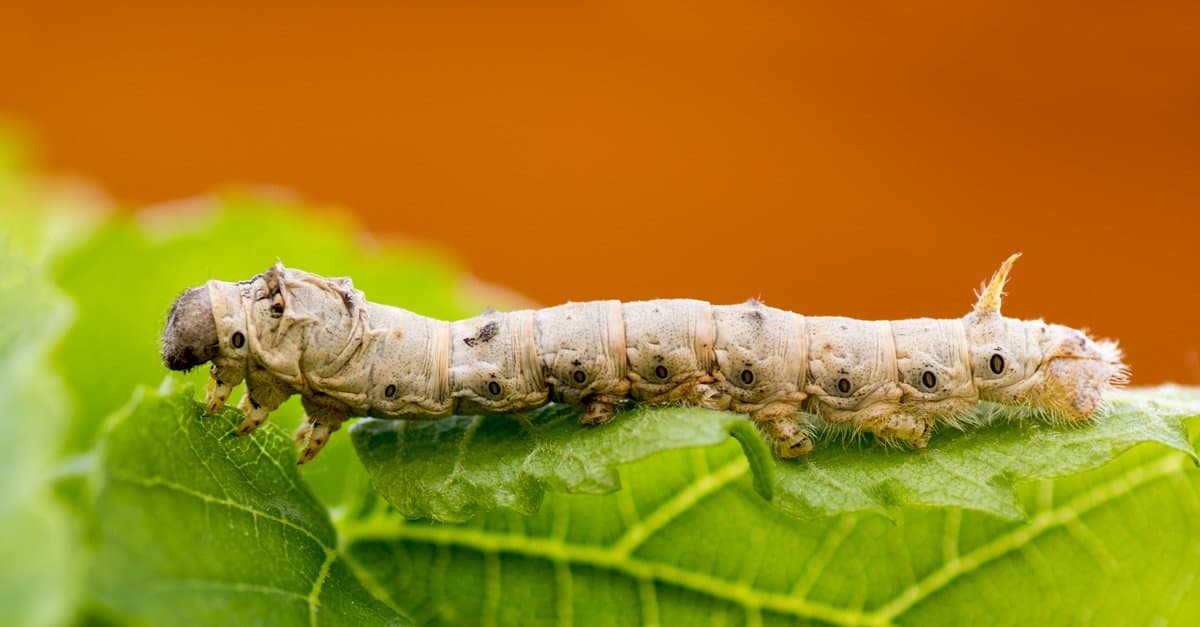
Silkworms almost exclusively eat mulberry leaves. Mulberry leaves are high in alkaloids that inhibit the breakdown of sugars, making the leaves extremely toxic to other insects. Researchers have discovered that silkworms have special digestive enzymes that may be the secret to digesting these toxic leaves.
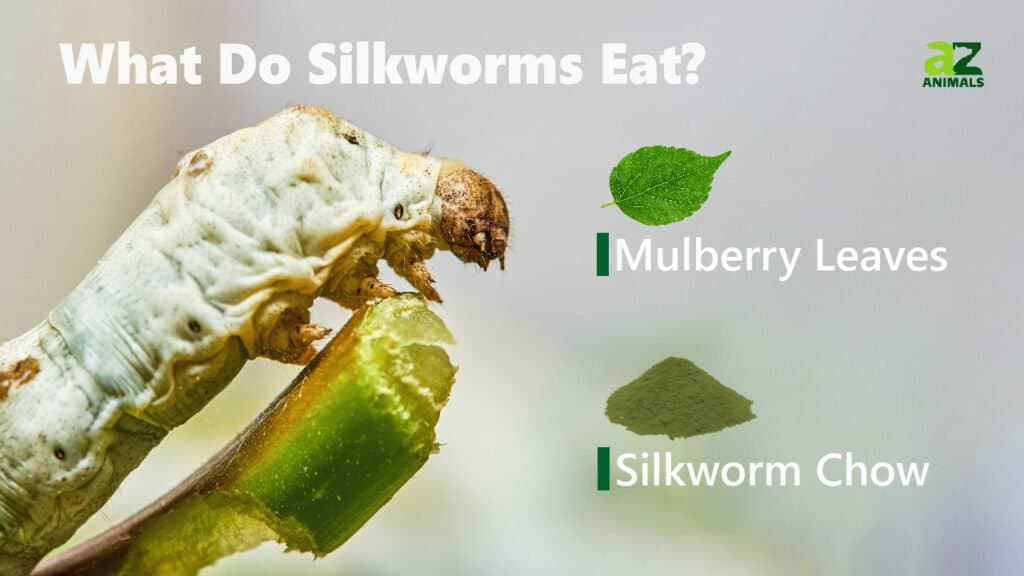
Silkworms primarily eat mulberry leaves or silkworm chow when fresh leaves are unavailable.
©/Shutterstock.com
However, silkworms are technically oligophagous rather than monophagous, meaning they eat a diet restricted to a few foods rather than just one. Silkworms may also feed on wild elm from the Ulmaceae family, as well as dandelion and lettuce, which belong to the Urticaceae and Compositae (Asteraceae) families, respectively. However, the leaves of these plants lack the nutritional value of mulberry leaves, which inhibits the silkworm’s ability to grow and develop to a healthy weight and size.
Fresh mulberry leaves are seasonal, with specific times to harvest them for optimal nutrition. Silkworm chow, however, is a readily available commercial powder or pre-cooked gel made from mulberry leaves with added vitamins and minerals. It eliminates the dependence on fresh mulberry leaves, allowing silk producers and reptile owners to breed silkworms throughout the year.