
Quick Take
- Their tiny silk homes aren't just shelters. Engineers have discovered they function as something far more sophisticated in fast-moving water. See how cases function →
- One artist handed caddisfly larvae gold and precious gems to see what they'd build, and the results were stranger than he expected. See Duprat's experiment →
- Not every caddisfly builds a home, and the alternatives reveal why carrying a portable case may be a bigger evolutionary gamble than it looks. Explore the alternatives →
- Caddisfly larvae will use almost any material they find, and that instinct is now accelerating a problem scientists didn't anticipate. See the microplastics problem →
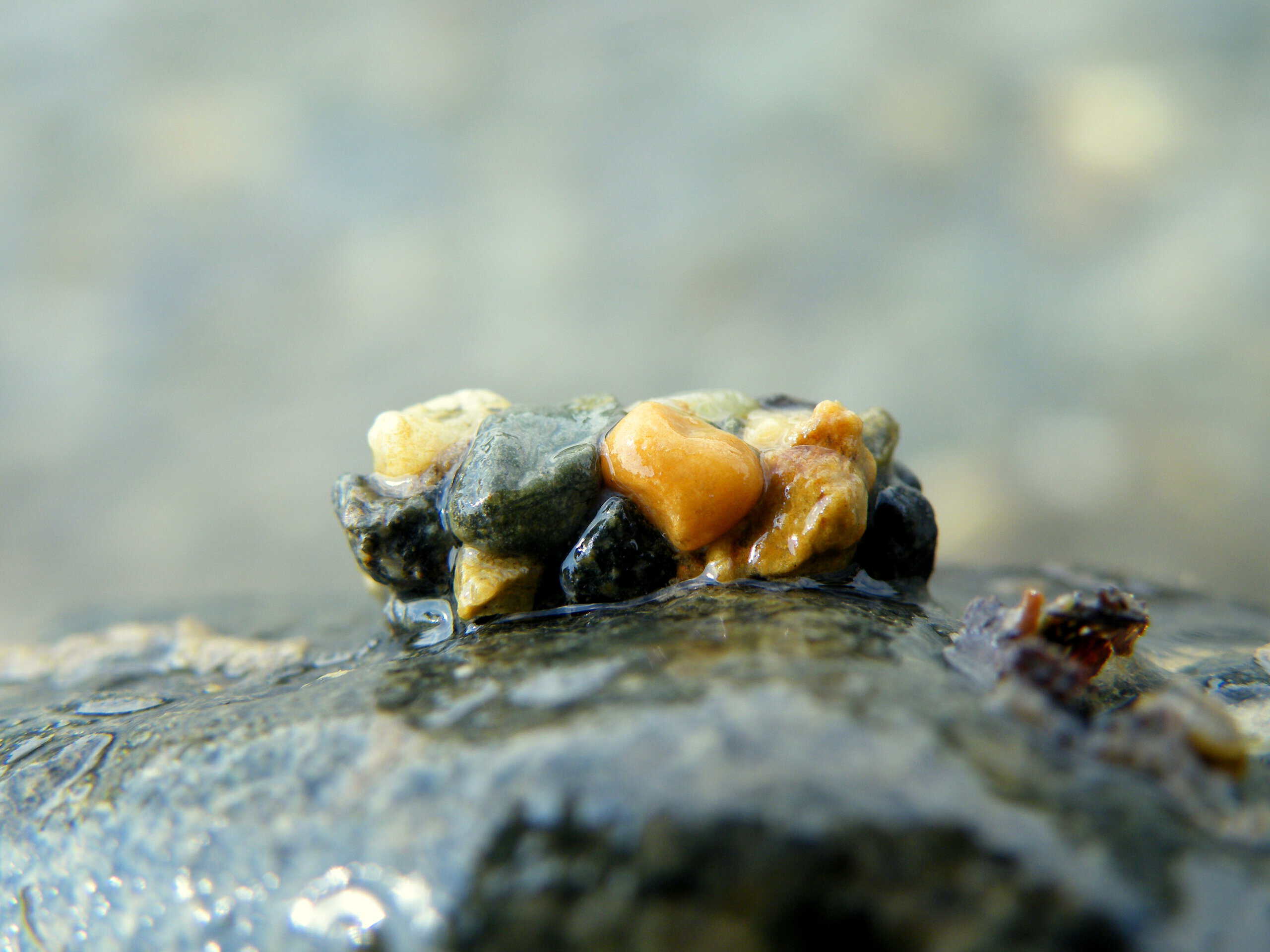
As an adult, the caddisfly looks like a nondescript, slender brown moth. But as larvae, these fascinating insects build inventive homes spun with waterproof silk. They intertwine their silk with materials such as sand grains, leaves, and twigs to create portable cases designed to protect their soft bodies. If you have ever spotted what appears to be pebbles or sticks crawling across a streambed, you’ve probably witnessed a caddisfly larva moving about in its home. How does this tiny insect perform such advanced engineering techniques? Let’s take a look.
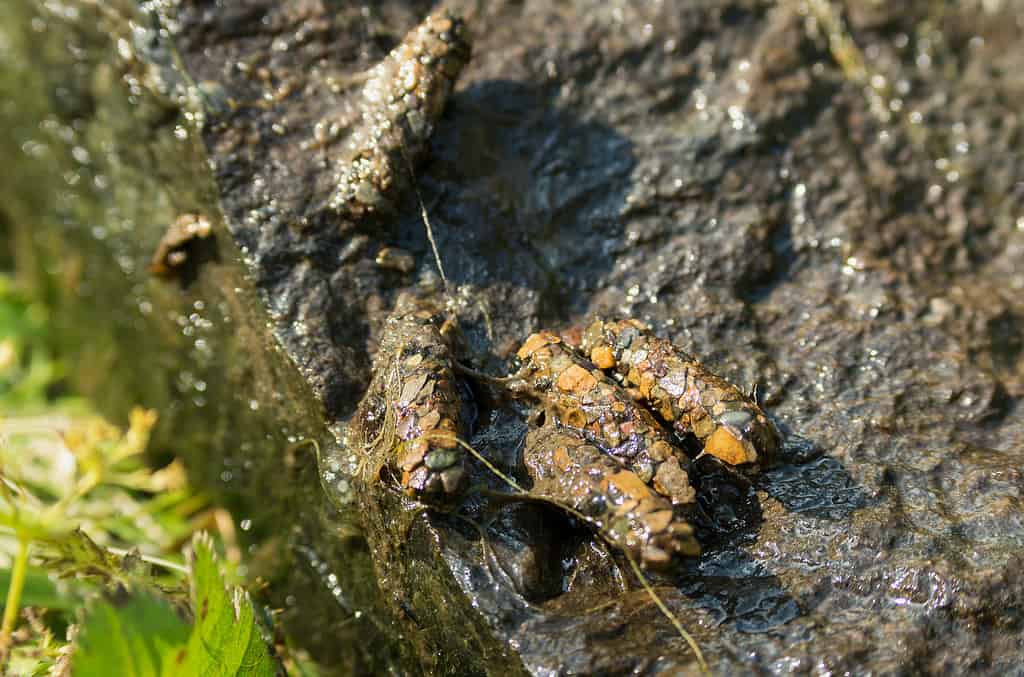
Caddisfly larvae spend their larval stage in protective cases that they build from materials found in the water.
©Evgeni Romanov/Shutterstock.com
Where the Builders Live and Their Habitats
Caddisflies are in the order Trichoptera. It’s the seventh-largest order of insects, comprising over 16,000 species worldwide, and nearly 2,000 species in North America. All caddisfly species undergo complete metamorphosis with larval, pupal, and adult stages. Although the various species are incredibly diverse, all caddisfly larvae are aquatic. Scientists use the presence of caddisfly larvae as an indicator of a healthy water ecosystem.
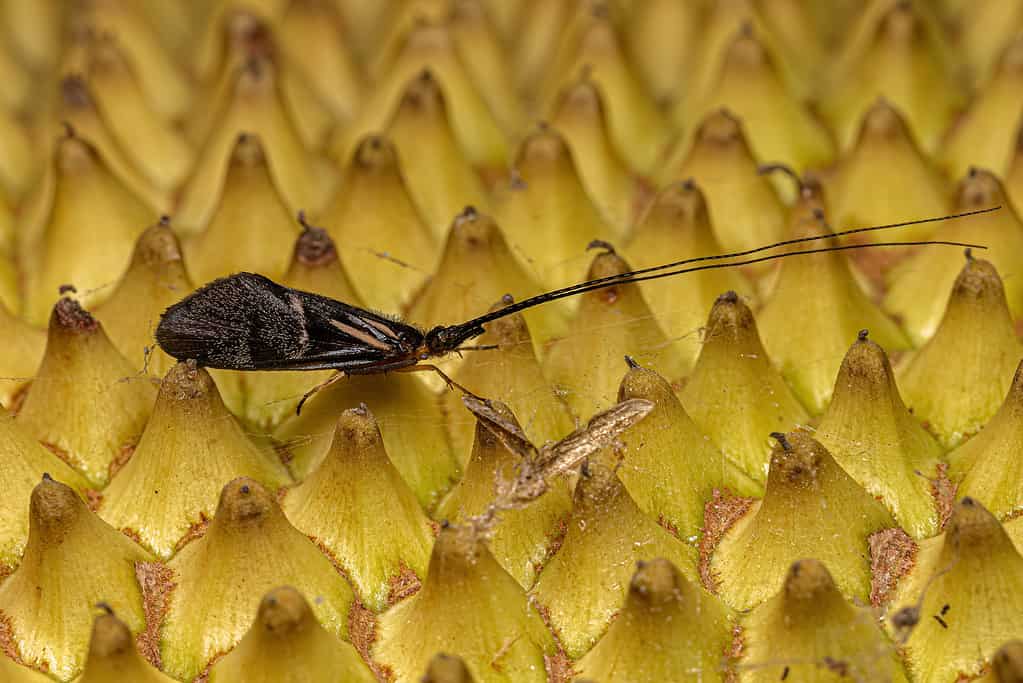
Adult caddisflies usually live just long enough to mate and lay eggs.
©ViniSouza128/iStock via Getty Images
Caddisfly adults lay their eggs in or around water. Depending on the species, caddisfly larvae can live in a wide variety of habitats, from fast-running rivers to stagnant ponds. The type of habitat determines what method and materials are used to make their protective case. Larvae in slow-moving water require different materials to survive inside their cases compared to those in strong currents.
Not All Caddisflies Build Cases—Some Hunt or Spin Nets
Not every caddisfly larva species builds cases. Net-spinning caddisfly larvae spin nets out of silk, which they use to catch detritus floating in the water. They eat their catch without the need to venture from their retreat. Free-living caddisfly larvae do not build protective retreats but instead crawl across river bottoms hunting their food.
Scientists believe that case-building caddisflies may gain several benefits from living in protective structures. Not only does it camouflage them from predators, but it may also help them get more oxygen by stirring up the water around the case. Other caddisflies may benefit from the weight of the structure, which allows them to walk across a river bottom to feed without floating away in the water.
The Anatomy of a Mobile Home
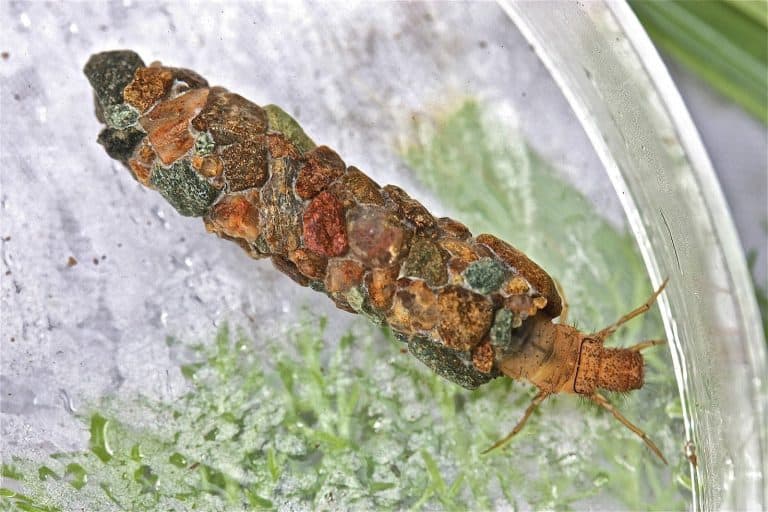
Scientists have found that case-building caddisfly larvae produce silk similar to that of spiders and other arthropods. The larvae secrete silk through glands near their mouth, which they use to glue together materials they have collected from the water. These may include grains of sand, small sticks, pebbles, shredded leaves, and even microplastics. Their final creation is a protective, camouflaged tube sturdy enough to protect the larva as it lives and grows.
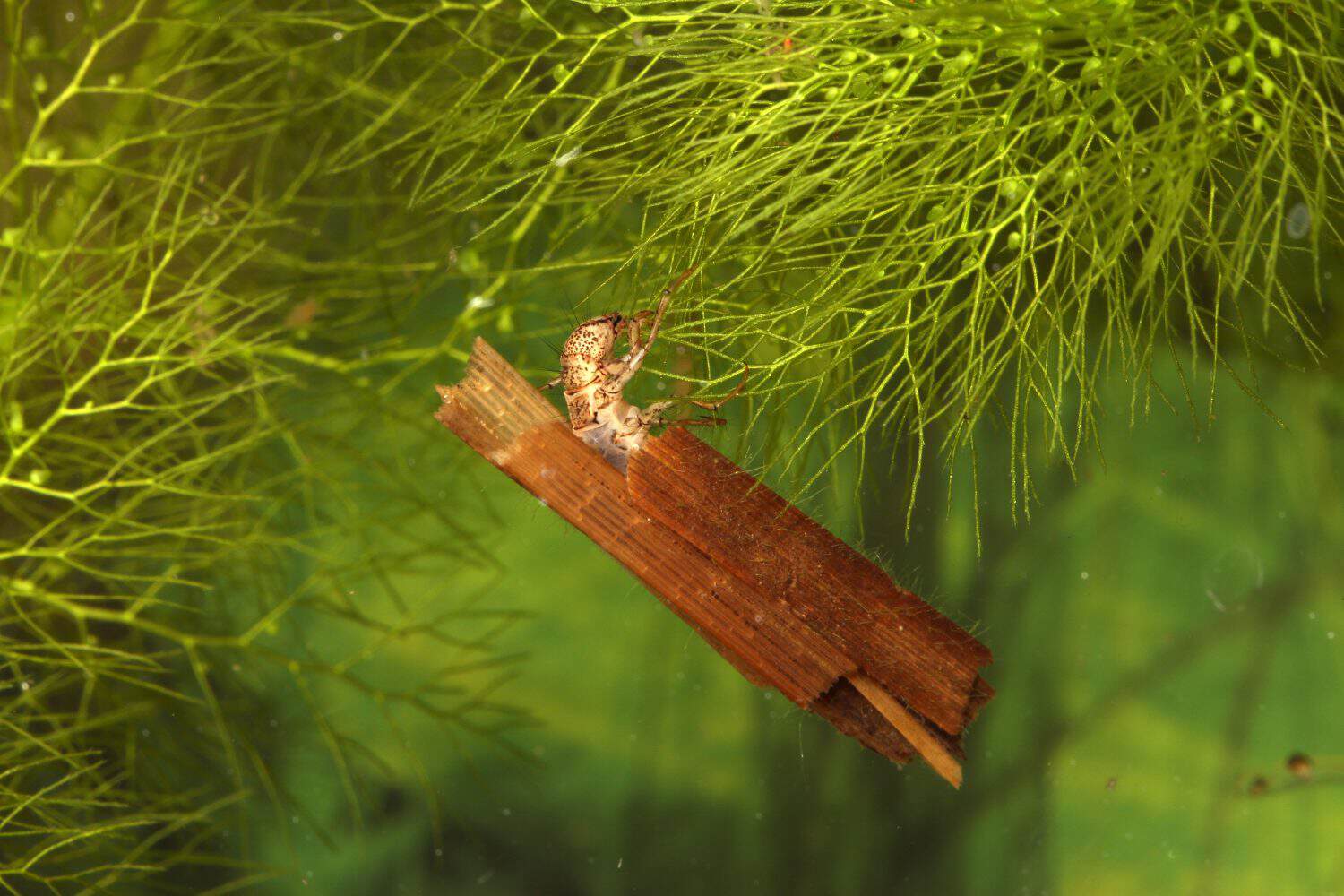
Caddisflies are found on every continent except Antarctica.
©TroutFodder/Shutterstock.com
The debris they use and the structures they build depend on the species and its habitat. Larvae in stagnant ponds or in slow-moving rivers use shredded leaves and twigs. Caddisflies that live in rivers or streams with soft sediment make their homes wider and flatter to help prevent sinking into the bottom.
Larvae found in strong currents build tubes using strong materials, such as pebbles and gravel. Researchers discovered that the cases built in fast-moving waters are not only protective but serve as hydraulic tools, offsetting water resistance. Scientists believe the ability to feed in strong currents gave these caddisfly larvae an evolutionary advantage over other species that can’t tolerate the conditions.
Caddisflies Continuously Grow and Repair Their Cases
Soon after hatching, a case-building larva will begin making its home. It’s not a one-time job, but one that the larva continuously works on. Caddisflies make repairs when their structure is damaged, and continue to add to it as they grow throughout their larval stage. Depending on the species, the larval stage may last a few months or several years.
Because caddisfly larvae will use any material they find in their environment, they are important decomposers. Known as shredder insects, caddisflies are crucial to the decomposition process in water bodies. Unfortunately, this is true of microplastics as well. Researchers found that caddisfly larvae using plastic pollution to construct their homes contributed to breaking down the macroplastics into microplastics, which caused the fragmented pieces to enter the food web faster than the usual process.
Ethereal Artists
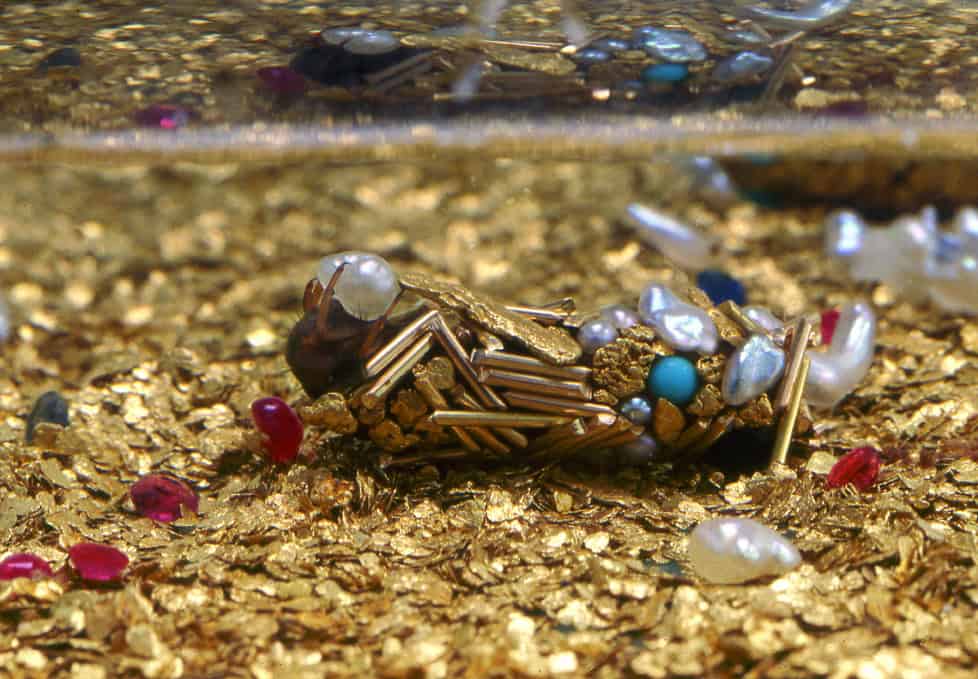
Artist Hubert Duprat collaborated with insects to create beautiful works of art.
©Hubert Duprat, CC BY-SA 3.0, via Wikimedia Commons – Original / License
Artist Hubert Duprat ran an experiment where he provided caddisfly larvae living in an aquarium with exquisite materials. Duprat added gold, pearls, and precious stones to the tank to see what the caddisflies would do. The tiny larvae obliged the artist, constructing their intricately tube-shaped homes using the precious materials. Duprat’s work highlights how each constructed case built by the caddisflies creates an original work of art, unlike any other in its environment.