
Quick Take
- Bagworm larvae construct a bag from silk and leaves, twigs, and other parts of plants.
- They stay inside this bag through all of their developmental instars.
- Adult males emerge to find a mate.
- Females remain in the bag where they will lay their eggs.
The caterpillar stage of the bagworm moth (Thyridopteryx ephemeraeformis) literally looks like a worm in a bag! Their multi-purpose mobile shelter provides a lifelong home for the females, and without this structure, they would not survive. This is how their remarkable, structure-based life cycle works.
Larvae Hatch and Spread Around
Bagworms are found in the eastern and central United States, from Massachusetts to Florida and west to Nebraska, Texas, Colorado, and New Mexico. They thrive in urban habitats.
Female bagworm moths lay between 500 and 1,000 eggs. From late April through early June, depending on the region, the larvae emerge from their smooth, cylindrical eggs. These tiny creatures are only 7/100ths of an inch long. To disperse from their hatching site, they spin a fine silk thread that catches the wind and carries them to nearby plants.
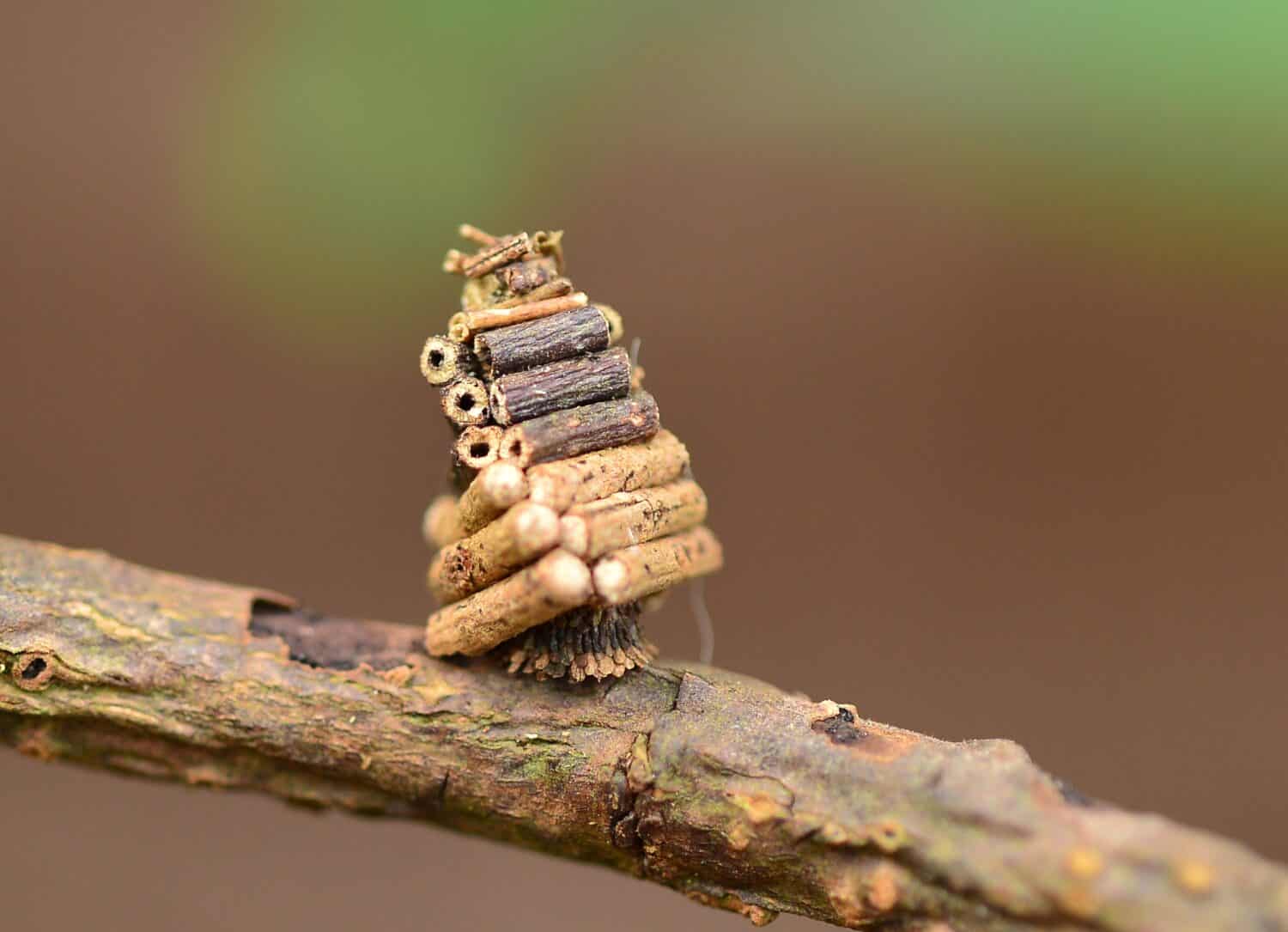
Here, they feed and begin constructing a ‘bag’ to live in. It is made of silk with bits of plants adhering to it, so it looks like a collection of twigs, leaves, or pieces of bark.
Do Bagworm Larvae Stay in Their Bag All the Time?
Yes, bagworm larvae stay inside the bag while feeding. Only their head and thorax protrude from the bag. They grow through their seven stages of development, called instars, inside the bag. As they grow (eventually reaching about 2 inches long), they must extend their bag.
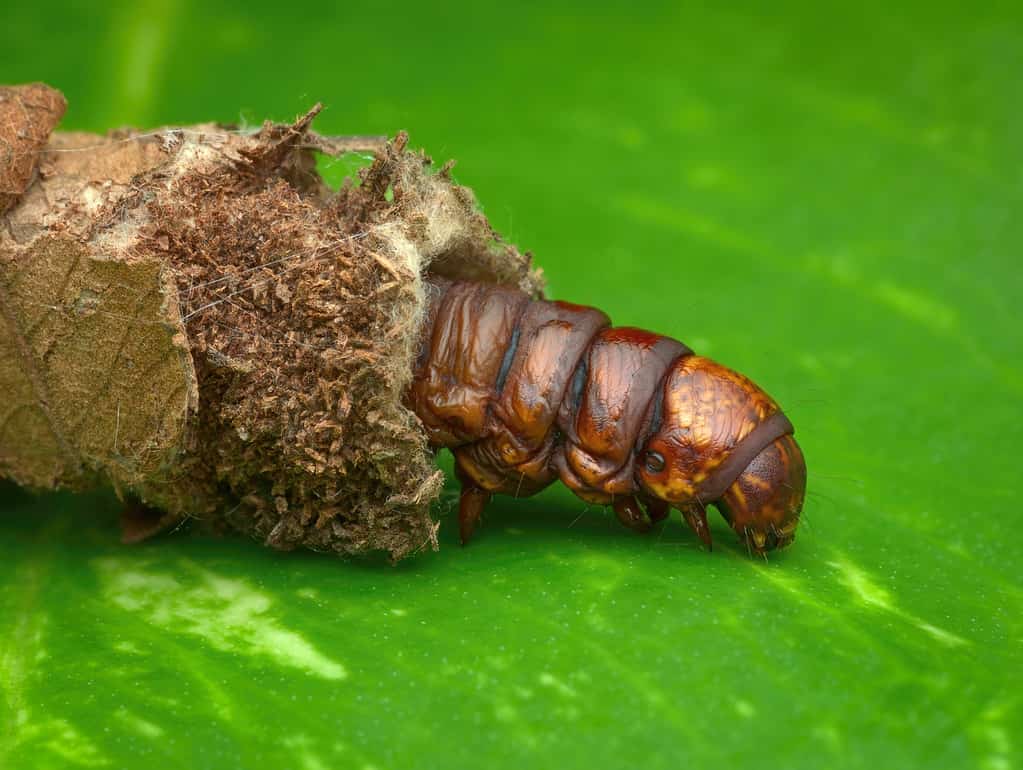
Bagworm caterpillars cover themselves with a protective case.
©iStock.com/Abdul Latif
At the end of summer, they stop feeding and no longer need to move around. They attach their bag to a stem or twig and seal it shut.
Pupal Stage Inside the Bag
It takes four weeks for them to complete their pupal stage, which also occurs inside the bag. In September or early October, the males abandon their bag and fly around looking for a female. The females, however, remain inside their bags and release a pheromone to attract males. During mating, the male inserts his abdomen into the bag. The female deposits her eggs into the bag, where they remain over winter and emerge the following year to begin the cycle again. Once this is complete, both males and females die.