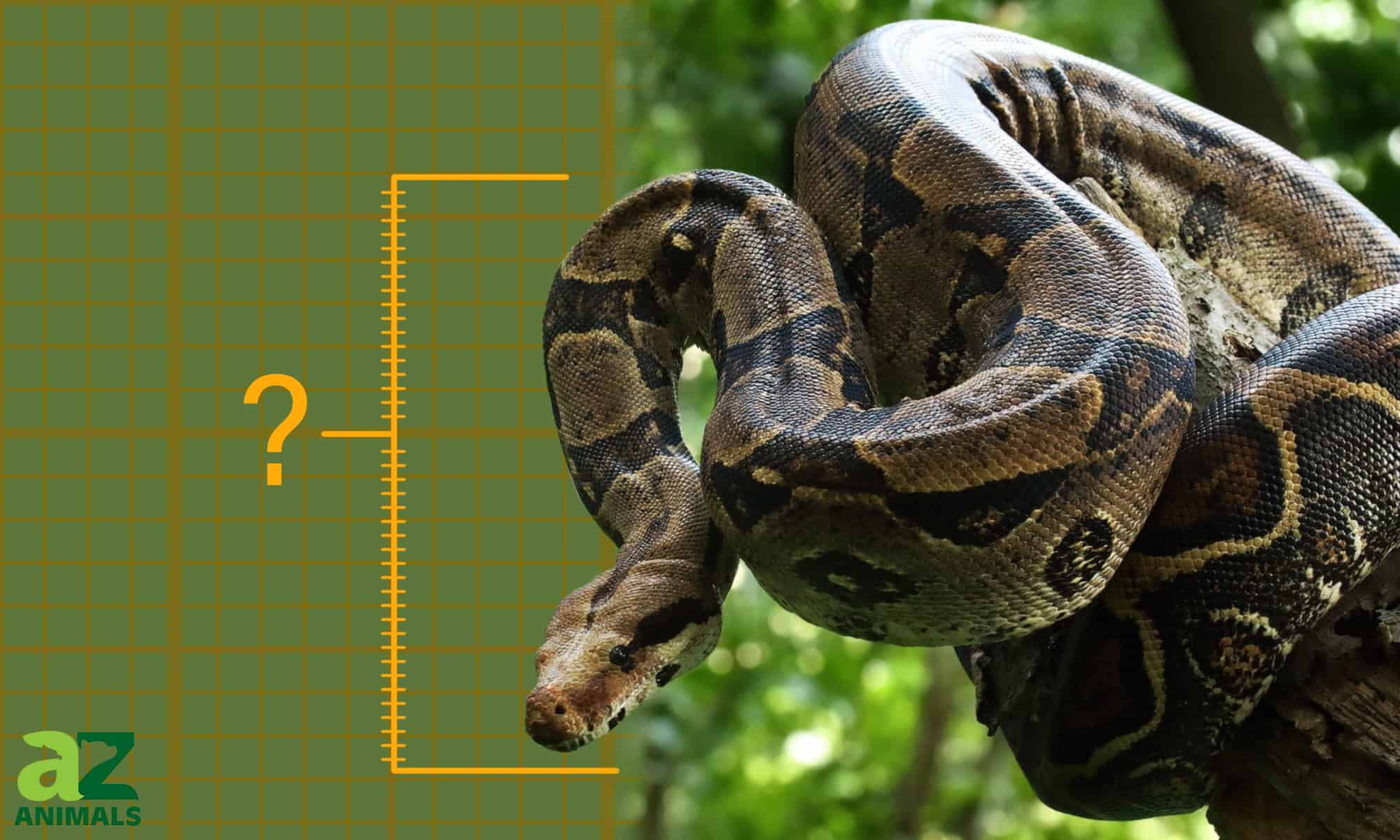

There are at least 10 different subspecies colloquially known as boa constrictors. Like ball pythons and corn snakes, the boa has not escaped the notice of snake enthusiasts looking for a pet. The most common species kept as pets are the common boa (Boa constrictor) and the Central American boa (Boa imperator). Continue reading to learn more about the boa constrictor and the size of the largest one ever caught.
Species Profile: Boa Constrictor
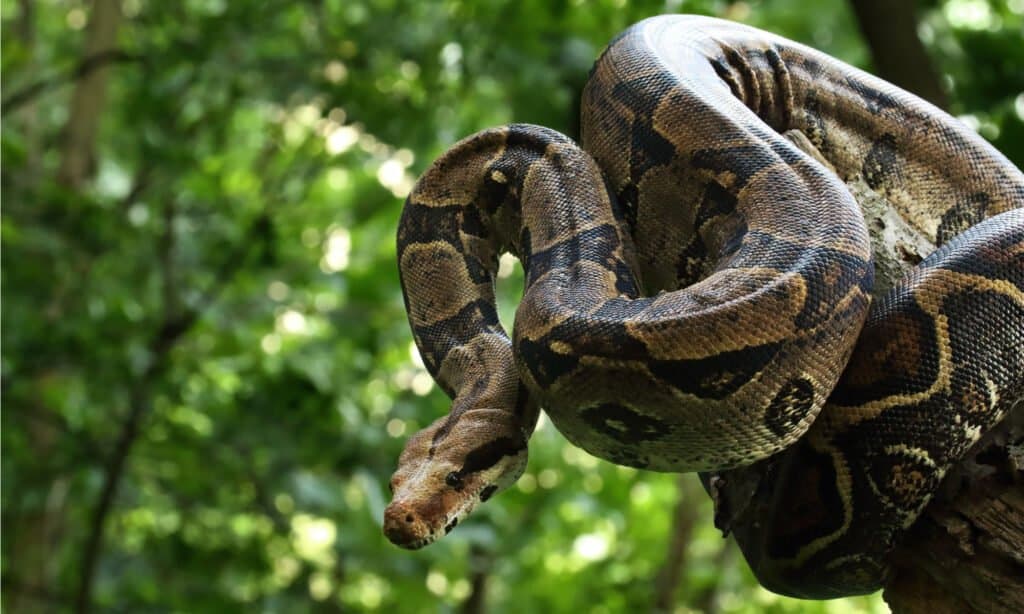
Boa constrictors are famous zoo animals; their large size and placid nature make them ideal for viewing.
©Jan Hejda/Shutterstock.com
Boa constrictors are native to Central and South America. They have large, long heads with distinct dark markings on the top of the head and around the eyes. Boas are light brown to tan, with darker brown or reddish hourglass markings along their back and sides. Many pet boas exhibit even more distinct coloring and patterning due to selective breeding.
Boas stay close to permanent water sources such as rivers, streams, and wetlands. They are strong swimmers and spend much of their lives in water. However, they can also climb and are sometimes found high in the trees.
Teeth
Boa constrictors have small, hooked teeth used to hold onto prey as they slowly constrict it to death. If their teeth fall out, they grow back. The jaws of boa constrictors are specialized to open astonishingly wide, allowing them to swallow large prey.
Diet
Boa constrictors kill their prey by constriction, resulting in a quick death. Afterward, the boa swallows the prey whole. They eat small- to medium-sized mammals, birds, and reptiles. The larger the boa, the larger the prey it can consume.
Boa Constrictor Size
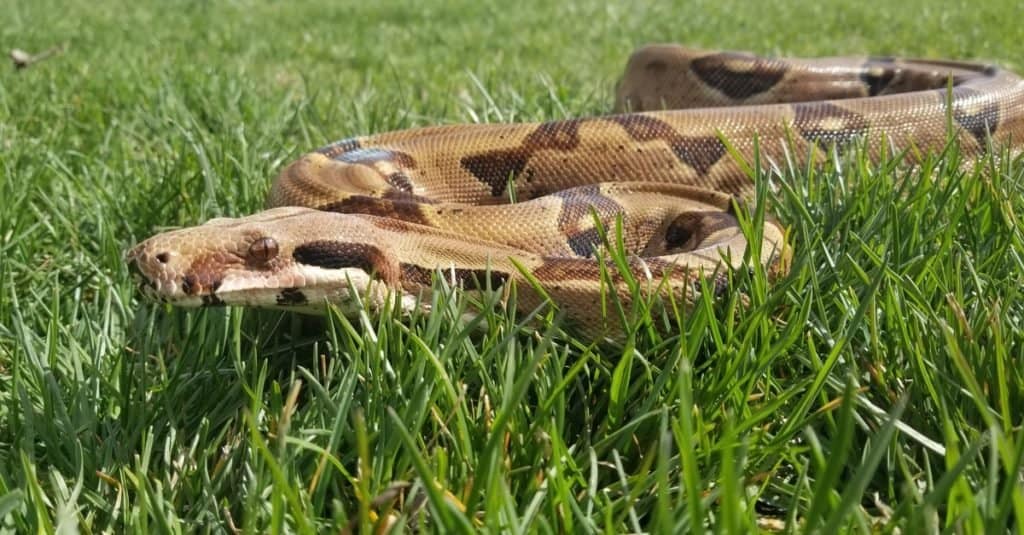
The boa constrictor is one of the largest snakes on Earth.
©KatKade/Shutterstock.com
Boa constrictors are 1 to 2 feet long as snakelets, but they grow rapidly during the first four years of life. By the time they are a year old, they measure 3 to 4 feet long. At 3 years old, they average 6 to 10 feet in length. After 5 years, their growth slows but never stops entirely.
The largest boas are up to 12 feet long, although there are reports of even larger boas. Their weight depends heavily on the subspecies, but ranges from 10 pounds to over 30 pounds. Female boas are longer and heavier than males.
The Largest Boa Constrictor Ever Caught
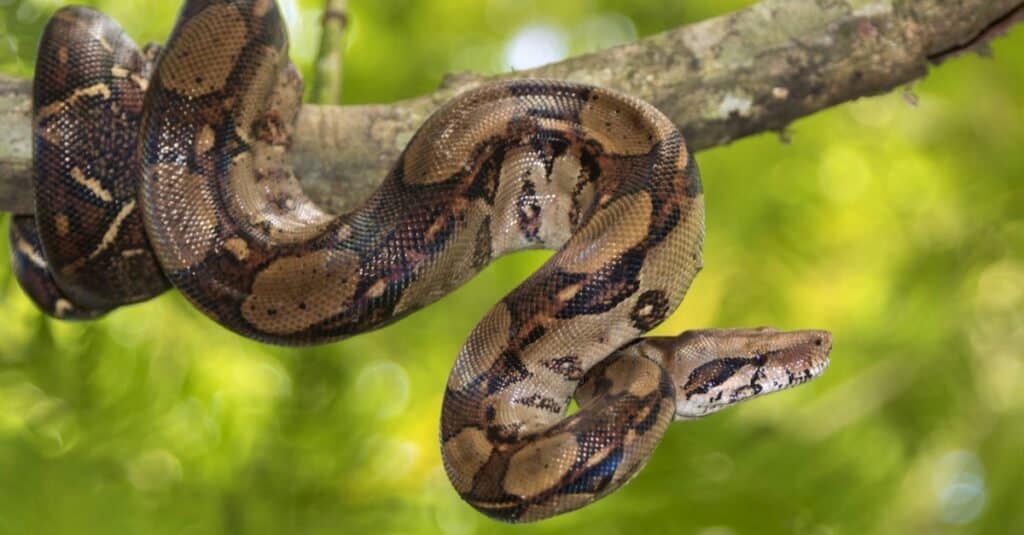
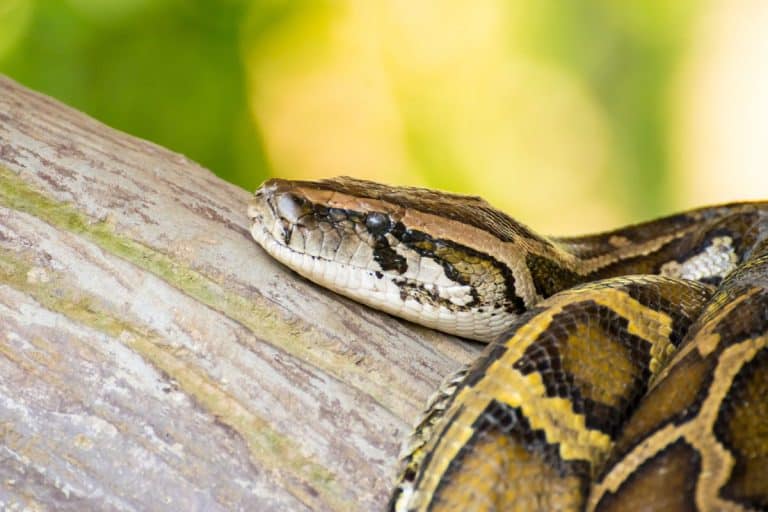
Boa constrictors may seem huge, but there are even longer snakes like the reticulated python.
©Natalia Kuzmina/Shutterstock.com
According to National Geographic, the largest boa constrictor ever caught measured 18 feet long, although no citation exists for this specimen. However, the largest reliably documented specimens are typically between 12 and 13 feet long.
Boa Constrictors as Pets

Boa constrictors may not be the right choice for beginner snake owners.
©New Africa/Shutterstock.com
Boas are largely regarded as low-maintenance, friendly, and safe to keep as pets. However, their tremendous size, up to seven feet for captive snakes, means that only those with adequate space should consider getting a pet boa. If one is considering adding a boa to their family, check state and federal regulations first. Boas and other snakes are not legal to keep in all states.
Life Cycle
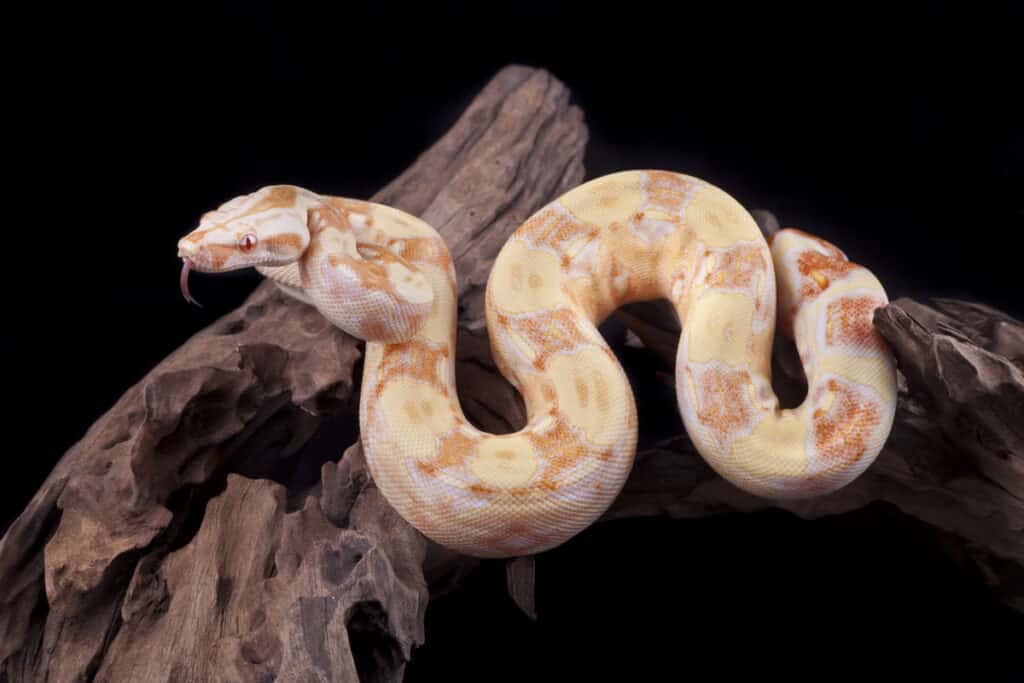
Boa constrictors can live for about 20 to 30 years.
©Sanne Romijn Fotografie/Shutterstock.com
Like many snakes, boa constrictors give birth to live young rather than lay eggs. Females gestate their young for 100 to 120 days before giving birth to an average of 25 snakelets, though some older females may have as many as 60. They are considered adults as early as 3 years old and no later than 5 years old. On average, they live longer than most other snakes. Boa constrictors live 20 to 30 years. There have even been reports of boa constrictors living as long as 40 years.