
Of the over 40 species of snakes in Oklahoma, seven are venomous, including the copperhead, the cottonmouth, and five species of venomous rattlesnakes: timber rattlesnake, Western diamondback rattlesnake, Western pygmy rattlesnake, Western massasauga rattlesnake, and prairie rattlesnake. All seven venomous snakes in Oklahoma are pit vipers, known for their distinctive triangular-shaped heads and pit sensory organs. They also have retractable fangs at the top of their mouths and elliptical pupils, resembling those of cats. Continue reading to discover Oklahoma’s six largest and most dangerous snakes and how to identify them.
Water Moccasin
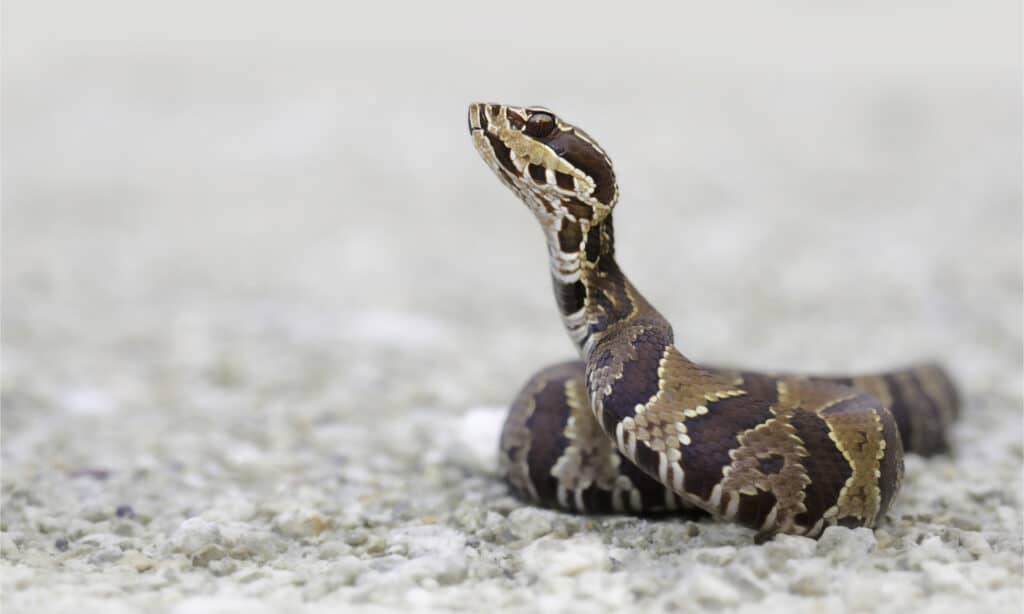
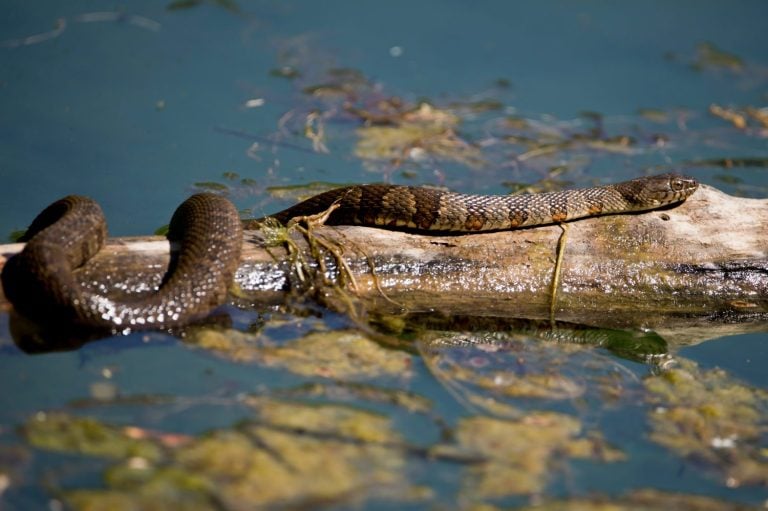
Water moccasins can reach lengths of up to six feet, though most adults are between 3 and 4 feet long.
©Kristian Bell/Shutterstock.com
The only venomous water snake in Oklahoma, the water moccasin, or cottonmouth (Agkistrodon piscivorus), is a thick-bodied snake that is 3 to 6 feet long and weighs up to 10 pounds. Common in the Eastern half of Oklahoma, cottonmouths usually inhabit riparian, marshy habitats, particularly in slow-moving, shallow lakes and streams.
Water moccasins are also known as cottonmouths due to the startlingly white interior of their mouths. An adult cottonmouth is large and capable of delivering a painful, potentially fatal bite. Its bite can cause necrosis, which can lead to severe scarring and, in extreme cases, amputation. When threatened, cottonmouths respond by coiling their body and displaying their fangs. Cottonmouths are not aggressive but may bite when they feel threatened.
Copperhead
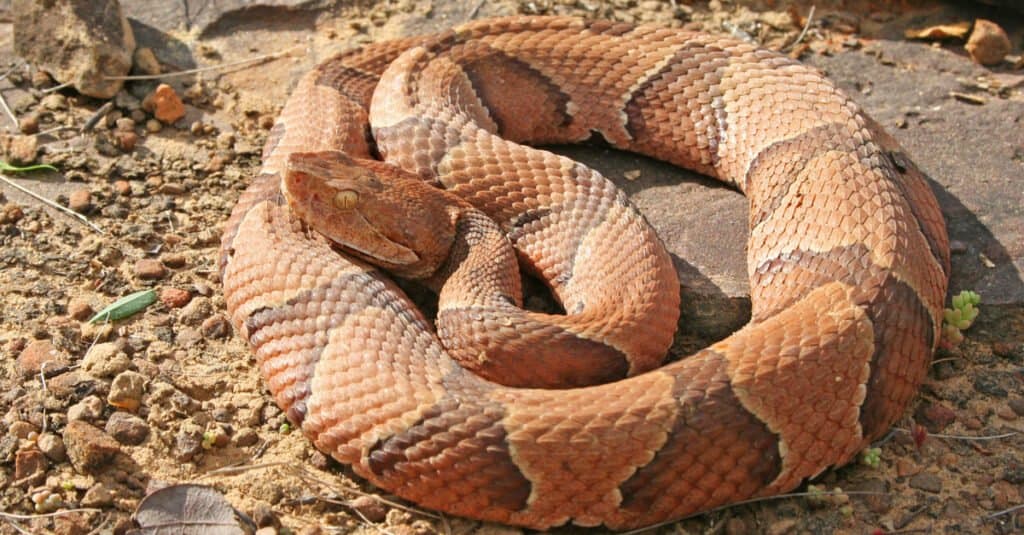
A bite from a copperhead can damage muscle and bone tissues.
©Creeping Things/Shutterstock.com
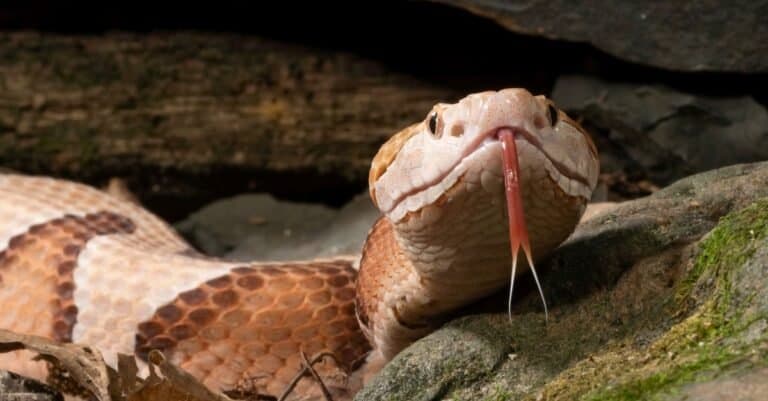
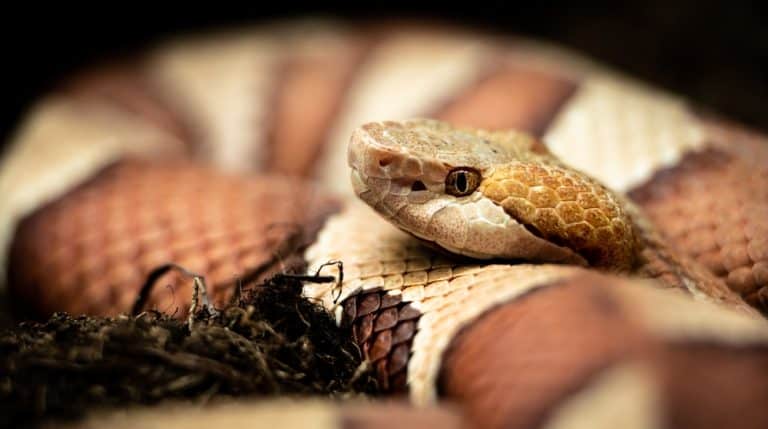
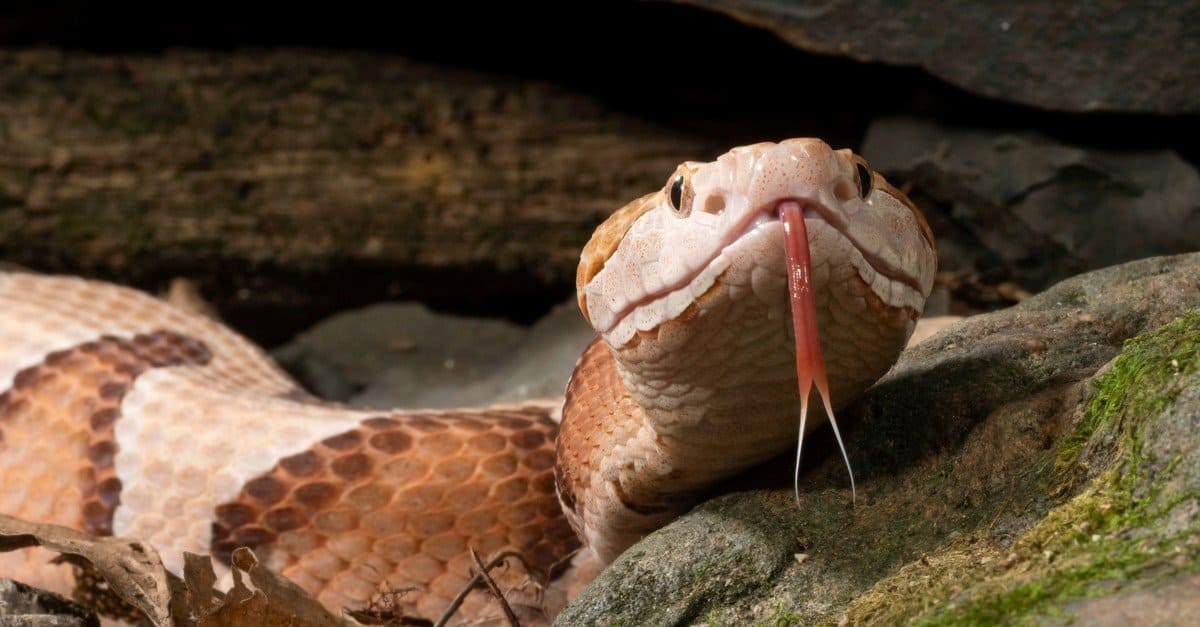
The Eastern copperhead (Agkistrodon contortrix) is recognized by its distinctive copper-colored head and hourglass-shaped markings. Copperheads are large, heavy snakes that can grow up to 3 feet long. They inhabit deciduous forests and mixed woodlands, where they feed on both vertebrates and invertebrates.
Though copperheads are generally not aggressive, they are venomous snakes whose bites can result in extreme pain, swelling, and severe nausea. A bite can also damage muscle and bone tissue, potentially leading to necrosis. Copperhead bites are considered a medical emergency. Immediate medical attention is key to a full recovery.
Timber Rattlesnake
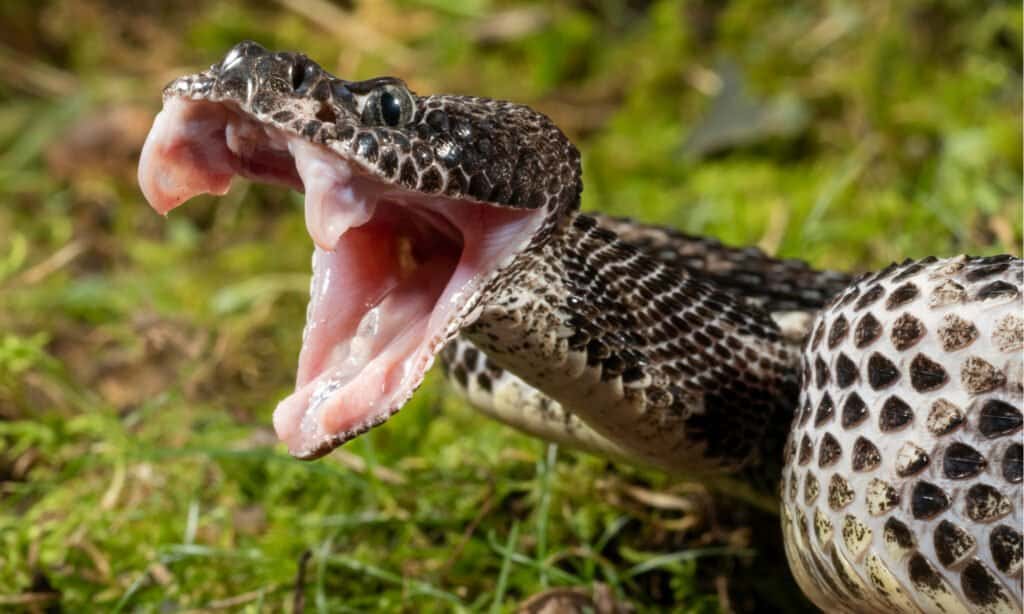
Timber rattlesnakes’ venom is one of the most potent of all venomous snakes in Oklahoma.
©Joe McDonald/Shutterstock.com
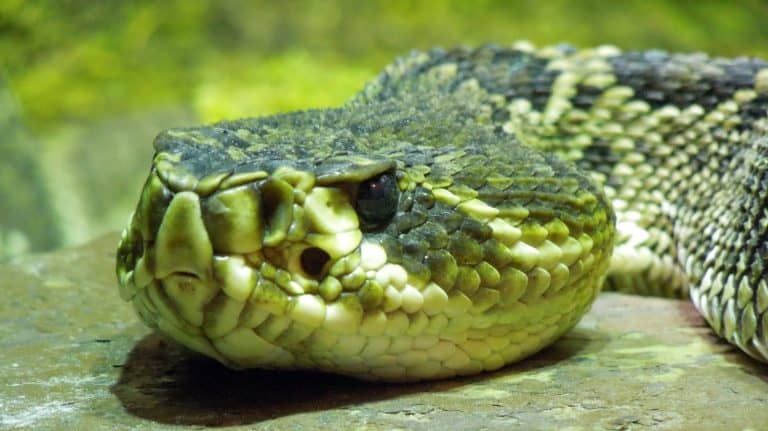
Rattlesnakes make up the largest population of venomous snakes in Oklahoma. Also called canebrake rattlesnakes, timber rattlesnakes (Crotalus horridus) are more common in Eastern Oklahoma. They are found in wooded areas and deciduous forests with rugged terrain. During the summer, timber rattlesnakes are active during the twilight hours. They brumate throughout the winter season.
Identified by a pattern of dark brown or black irregular crossbands on a yellowish-brown or grayish background. Adult timber rattlesnakes usually grow to a total length of 3 to 6 feet. They prey on small animals, including birds, frogs, and other snakes such as the garter snake. Timber rattlesnakes have a high venom yield and their venom is considered potent among Oklahoma’s snakes, but fatalities are rare with prompt medical treatment. Fortunately, they are not aggressive and usually give many warnings before biting.
Western Diamondback Rattlesnake
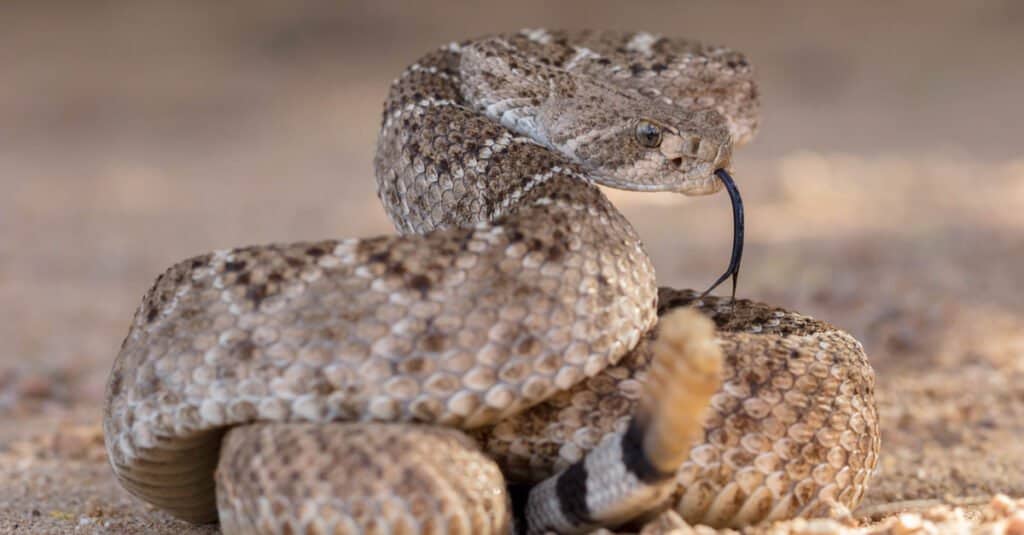
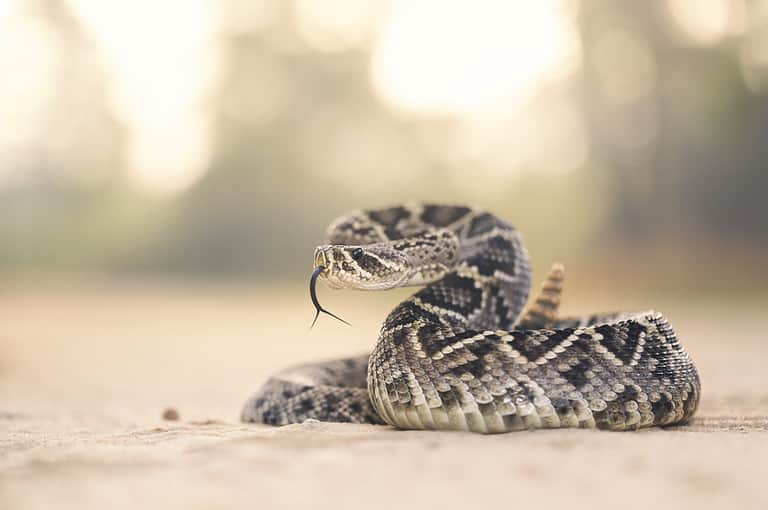
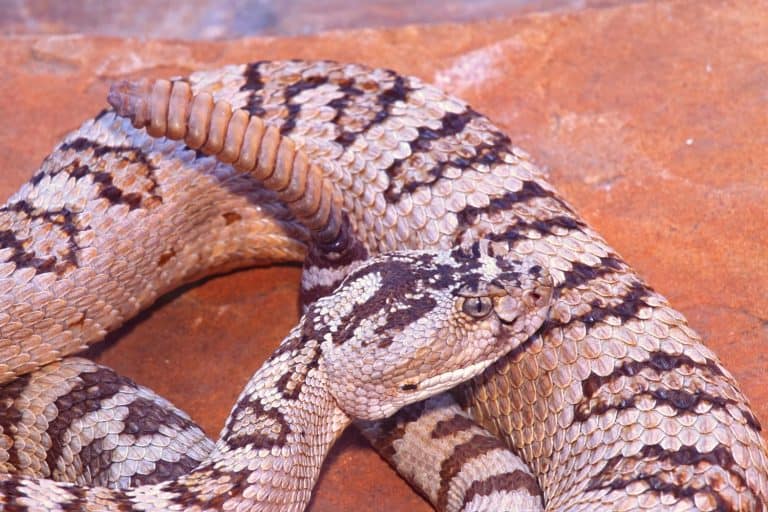
Weighing up to 15 pounds, Western diamondback rattlesnakes are among the largest rattlesnake species.
©Alexander Wong/Shutterstock.com
Western diamondback rattlesnakes (Crotalus atrox) occur in the piney woods region and the forested swathes of Southern Oklahoma, where their largest populations are found in the Choctaw Nation and the Chickasaw Nation. Their venom is primarily hemotoxic, causing severe bleeding and other life-threatening symptoms, which can be fatal.
The Western diamondback rattlesnake has large venom glands, allowing it to deliver a significant amount of venom in a single bite. These large-bodied rattlesnakes are dusty gray-brown with dark brown blotches along their backs.
Adults commonly grow to 4 feet in length, though longer specimens have been recorded. Although Western diamondback rattlesnakes typically weigh between 3 and 6 pounds, some individuals have been reported to weigh up to 15 pounds.
Prairie Rattlesnake
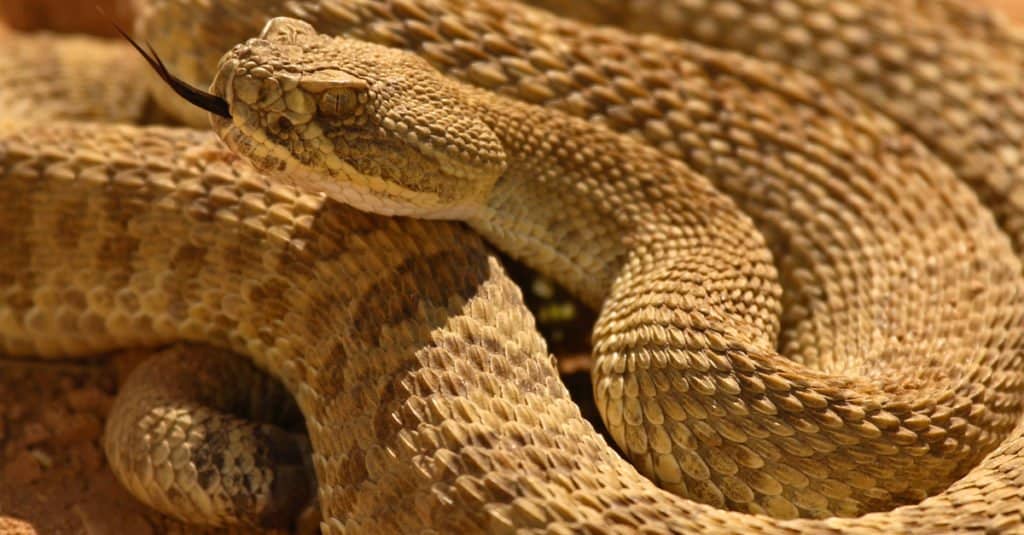
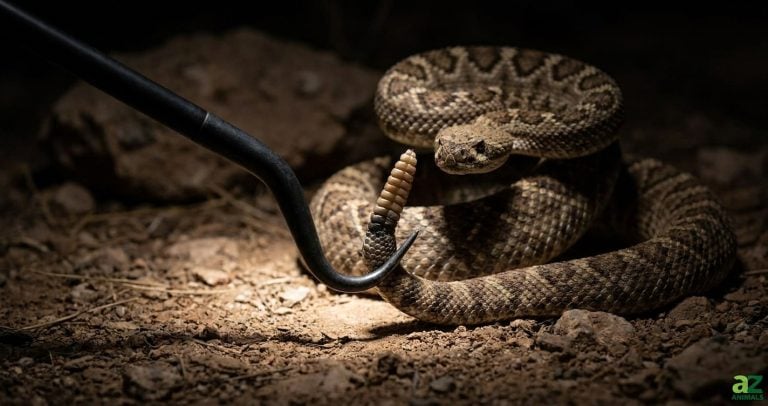
The prairie rattlesnake’s venom has hemotoxic, neurotoxic, and tissue destructive effects.
©Max Allen/Shutterstock.com
Generally, prairie rattlesnakes (Crotalus viridis) are colored in hues of light brown with patches of dark brown. A color band may be seen at the back of the eye. Distributed across the Western United States, Canada, and Mexico, prairie rattlesnakes are primarily terrestrial, but occasionally climb trees and rest in crevices or caves. Prairie rattlesnakes are active during the day in cooler weather and become nocturnal during hot weather. The venom of the prairie rattlesnake is very powerful. Its bite is hemotoxic and neurotoxic. Like other rattlesnake species, prairie rattlesnakes rapidly vibrate their tails, producing a unique rasping sound to warn intruders. Prairie rattlesnakes are generally not aggressive and will only defend themselves if threatened or provoked.
Western Massasauga Rattlesnake
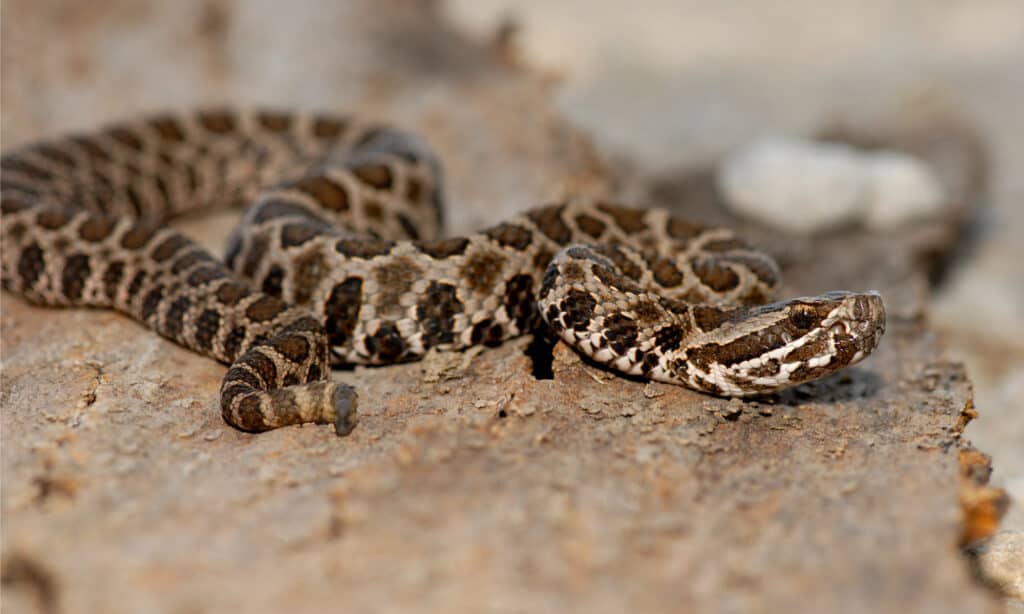
A juvenile Western massasauga rattlesnake sunning on a rock in Missouri.
©iStock.com/Shoemcfly
Massasauga is a native American word meaning great river-mouth. Western massasauga rattlesnakes (Sistrurus tergeminus tergeminus) measure approximately 21 to 30 inches in length. Their base color is gray or tan, with a row of rounded brown or black blotches down the center of the back and along the sides.
The venom of the Western massasauga rattlesnake contains specialized digestive enzymes that can cause severe internal bleeding. Bites from the Western massasauga rattlesnake require urgent medical attention. However, this species is rather timid and avoids humans when possible. Most snake bites occur when people deliberately handle or accidentally step on one of these animals. Mammals and reptiles make up the bulk of their diet, along with invertebrates such as centipedes.
Western massasauga rattlesnakes inhabit prairie wetlands, swamps, bogs, and meadows. They have a calm disposition compared to some other rattlers, even foregoing shaking their rattle unless seriously threatened. The sound of their rattle is high-pitched and does not sound quite like that of other rattlesnakes.