
Quick Take
- Both states share the exact same six venomous species, but the snake most likely to bite you depends entirely on which side of the state line you're standing on. See the shared species →
- Florida's deadliest-looking snakes aren't the ones sending people to the hospital. The culprit is the one most people would dismiss entirely. Meet Florida's top biter →
- One venomous snake in South Carolina has camouflage so effective that hikers routinely step on it without seeing it, and most people have no idea just how widespread it truly is. See the copperhead's camouflage →
- Most snakebite victims in Florida were not surprised by a snake. They made a deliberate choice that put them at risk, and it happens more often than you might expect. See who's really getting bitten →
Out of the 44 species of snake in Florida, only six are venomous. South Carolina also has six venomous snakes out of the 38 snake species in the state. The six venomous snakes are the same species in both states. There are no precise, scientifically verified population counts of all venomous snakes in either state. However, wildlife officials know which species are more abundant and where they can be found.
Venomous Snakes of Florida and South Carolina
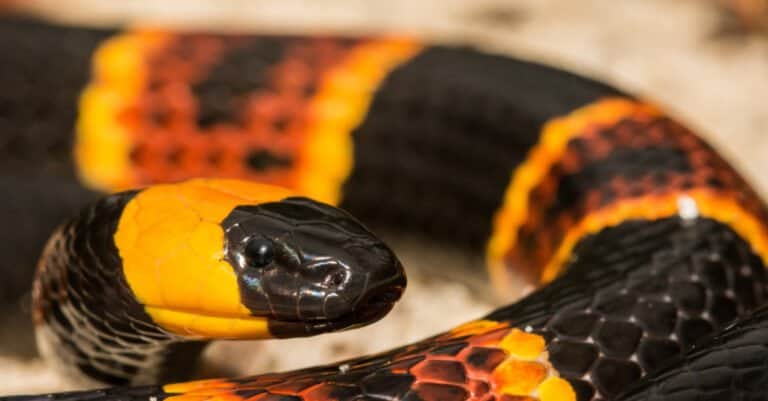
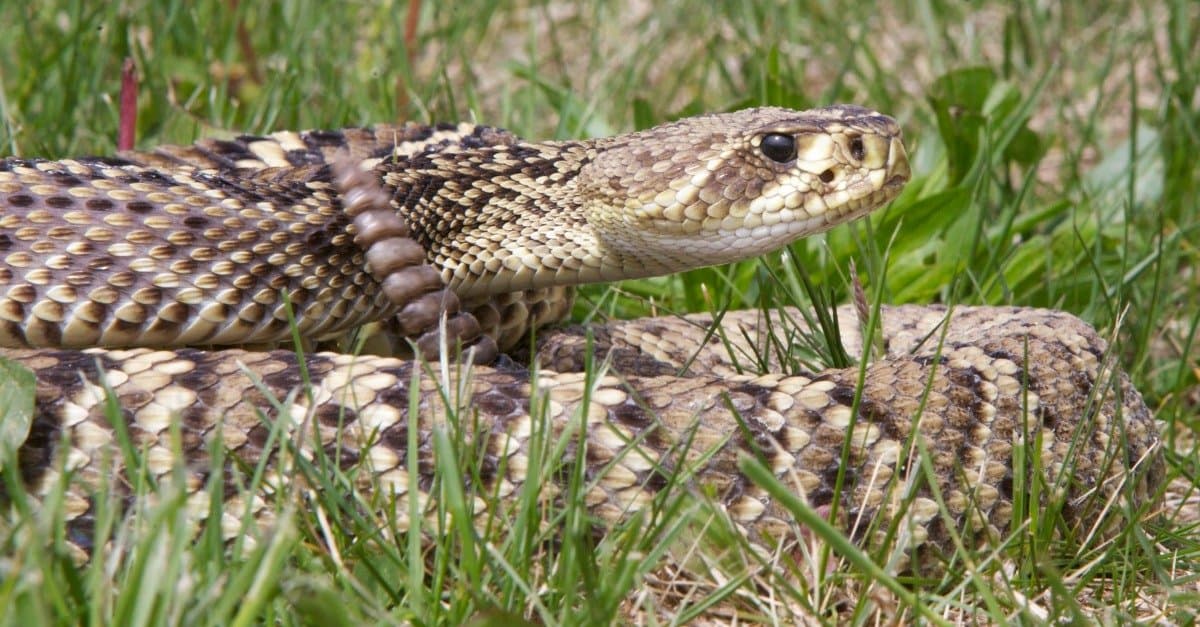
Both Florida and South Carolina have the same six venomous snake species: the eastern coral snake (Micrurus fulvius), the cottonmouth (Agkistrodon piscivorus), the southern copperhead (Agkistrodon contortrix), the eastern diamondback rattlesnake (Crotalus adamanteus), the timber rattlesnake (Crotalus horridus), and the dusky pygmy rattlesnake (Sistrurus miliarius). With the exception of the coral snake, these venomous snakes are pit vipers, which are the most common venomous snakes in the Southeast. Pit vipers get their name from the heat-detecting organs between their eyes and nostrils. These snakes cause an estimated 95%-99% of the annual snakebites in the U.S.
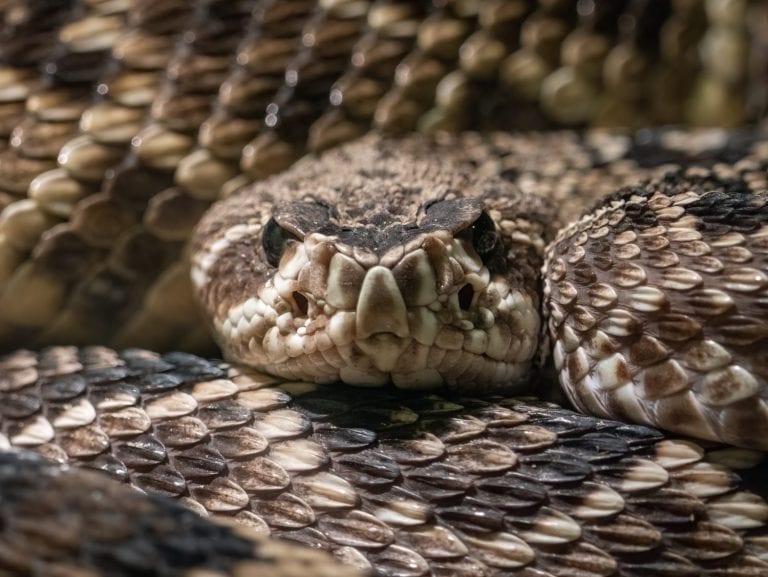
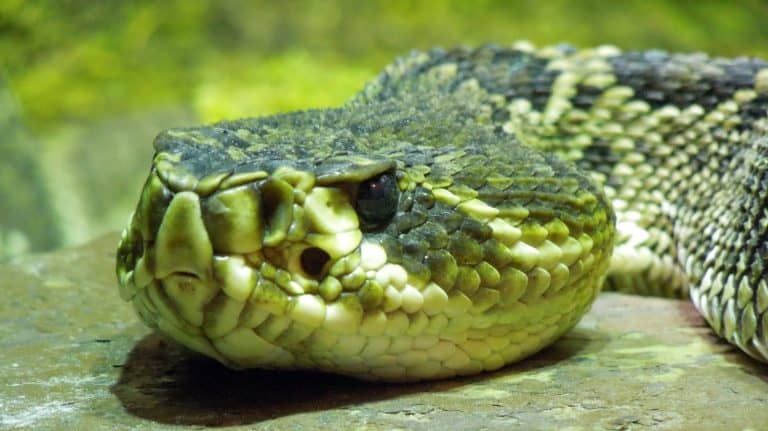
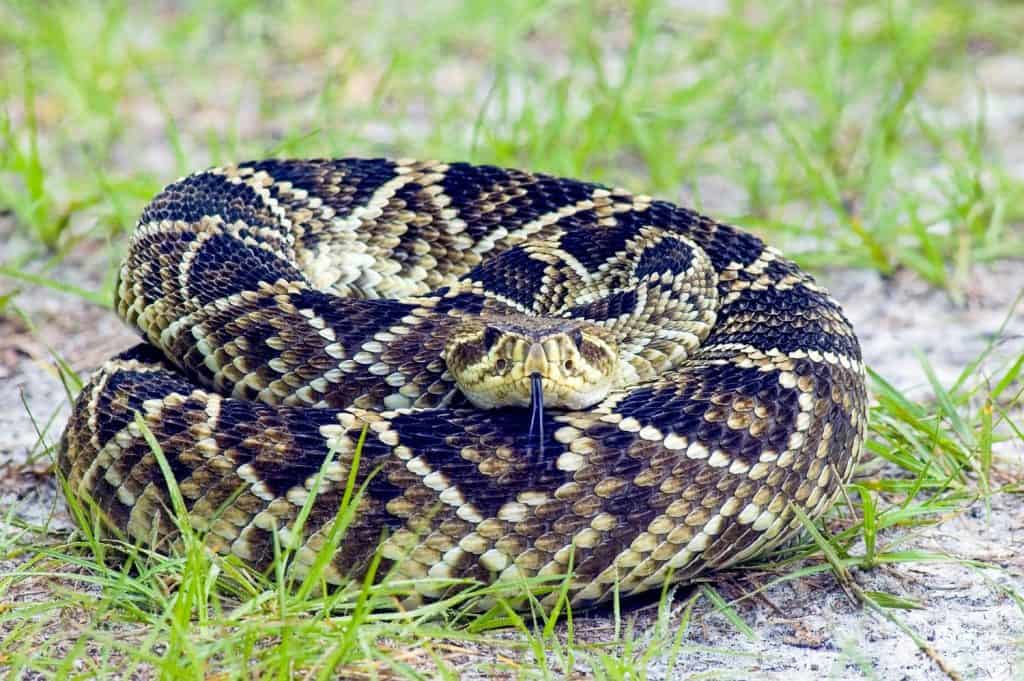
The most venomous snake on this list is the eastern diamondback rattlesnake. It is not only the most dangerous snake in both Florida and South Carolina, but in all of North America. It is responsible for the highest number of fatalities among all venomous snakes in the U.S. They are also the largest venomous snakes in North America by length and weight. These snakes average 3–6 feet in length, with some reaching up to 8 feet. They weigh an average of about 10 pounds. Untreated bites have a fatality rate of 10%-20%. The rarest venomous snake on our list is the eastern coral snake, as they are elusive and spend most of their time underground.
©Donna Bollenbach/Shutterstock.com
Venomous Snakes in Florida
| Species | Habitat | Distribution in Florida |
|---|---|---|
| Eastern coral snake | Inhabit a wide variety of habitats, but are usually hiding underground | The entire state except for the Keys |
| Cottonmouth | The margins of lakes, rivers, and wetlands | Throughout the entire state |
| Southern Copperhead | Near streams and wetlands but may be found other places | The Panhandle west of Tallahassee, primarily along the Apalachicola River and several of the westernmost counties |
| Eastern Diamondback | Prefers drier areas, such as scrub, pinelands, and even golf courses | Throughout Florida |
| Timber Rattlesnake | River bottomlands, damp pinelands, and hammocks | Northern Florida as far south as Gainesville and a small area in the western Panhandle |
| Dusky pygmy rattlesnake | Oak scrub, open pinelands, pine flatwoods, and palm hammocks | Throughout the state with the exception of the Keys |
The venomous snakes of Florida are most active during hot weather after recent rains because frequent, heavy rains force them out of their hiding places. This is when you need to be extra cautious while gardening or hiking. When out in the garden or nature, always wear closed-toed shoes and leather gloves while pruning or weeding. Unfortunately, the cause of most snake bites in Florida is intentionally handling or provoking wild snakes. The two snakes that cause the most envenomations in the state are the pygmy rattlesnake and the cottonmouth, discussed below.
The Most Common Venomous Snake in Florida
The dusky pygmy rattlesnake may be the smallest out of the six venomous snakes in Florida, but it is the most common venomous snake and causes the most snakebites in the state. Researchers found that 27.8% of documented envenomations were caused by the pygmy rattlesnake, but no deaths have been reported. These small, heavy-bodied snakes reach 12-24 inches in length. They range from light to dark grey with a row of black blotches over a reddish-brown stripe down the center of its back. It has a thin tail that ends in a small rattle.
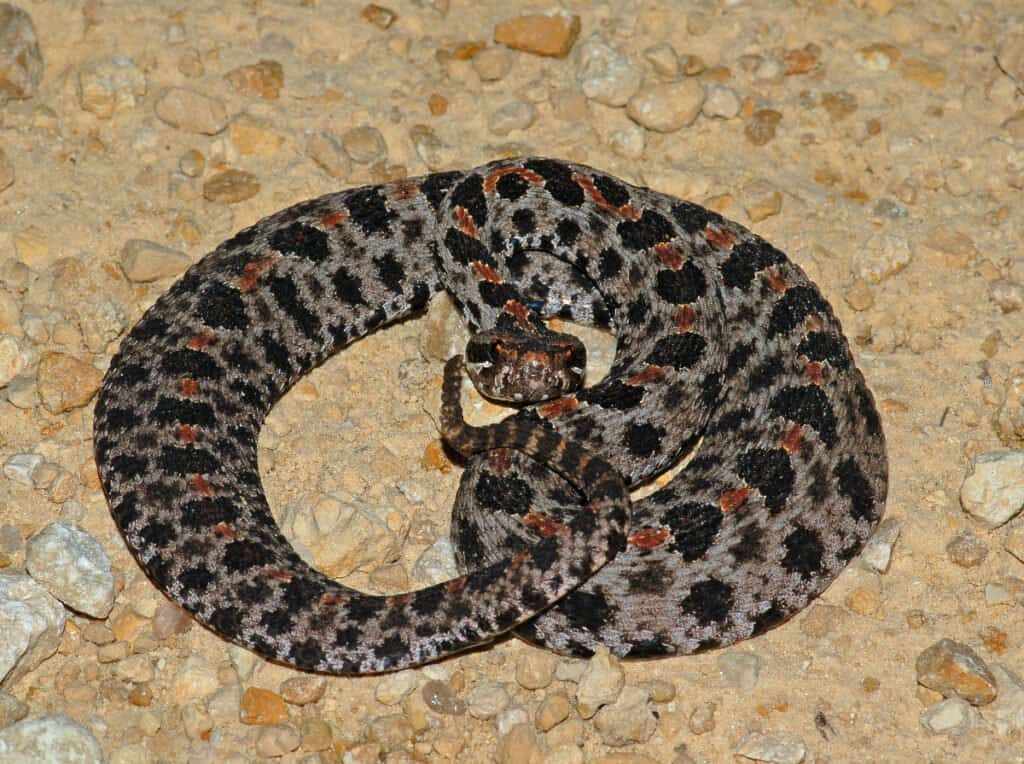
The pygmy rattlesnake is smallest venomous snakes in Florida, but it causes the most snakebites.
©Gerald A. DeBoer/Shutterstock.com
The Most Aquatic of Florida’s Venomous Snakes
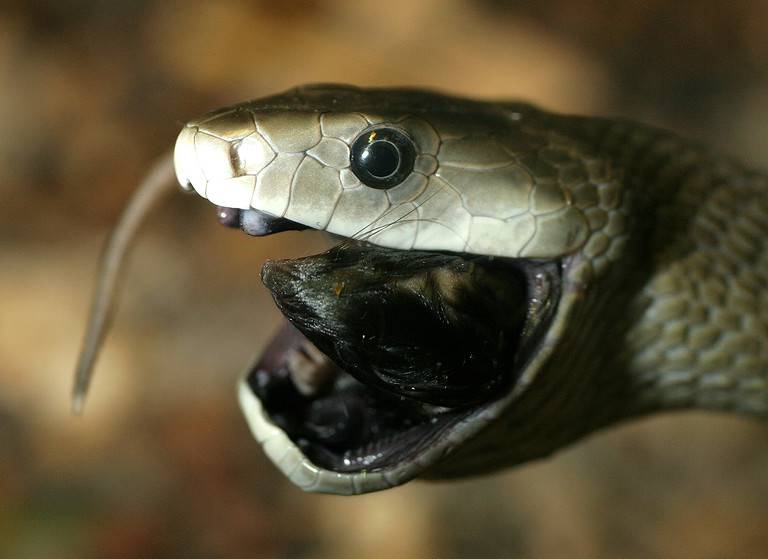
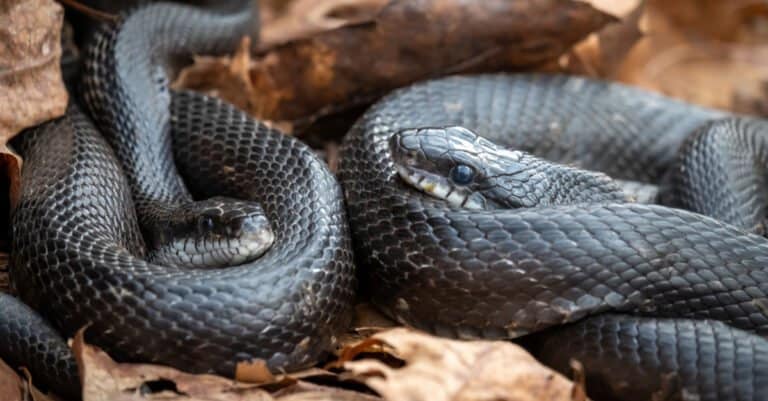
Cottonmouths cause 27.1% of envenomations in Florida. Their venom is primarily composed of hemotoxins, which attack blood cells and prevent blood coagulation or blood clotting. No fatalities were reported from 2002-2022, but some patients required surgical interventions. Cottonmouths range in color from dark brown to olive green with faint banding, or may appear jet black, which hides the banded pattern. Their heads are triangular-shaped and distinctly broader than their necks. Most adult cottonmouths in Florida reach an average of 3 feet, but they can measure over 5 feet in length. When threatened, these snakes open their mouths to flash the white interior, hence the name “cottonmouth.”
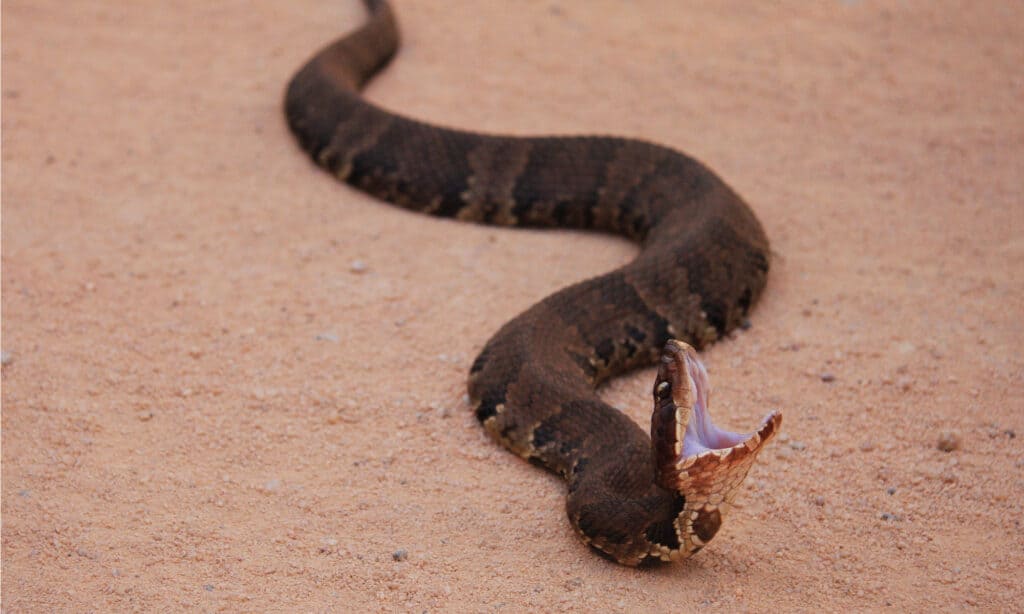
Cottonmouths can be dark brown to olive green with faint banding, or they can appear completely black.
©Nathan A Shepard/Shutterstock.com
How Common Are Snake Bites in Florida?
It is extremely rare to get killed, or even envenomated, by a snake in Florida. In fact, you are more likely to be struck by lightning than to be killed by a venomous snake in Florida. A 2025 study about snake envenomation in Florida found 546 patient encounters between the years 2002 and 2022 that could be positively confirmed for the presence of a venomous snakebite. The annual mortality rate from Florida snake bites is between zero and 0.01%.
Venomous Snakes in South Carolina
| Species | Habitat | Distribution in South Carolina |
|---|---|---|
| Eastern coral snake | Can occur in a wide range of habitats, but they spend much of their time underground | Primarily in the Coastal Plain |
| Cottonmouth | Wetlands including riverine swamps and floodplains, small stream forests, lake edges, Carolina bays | Sandhills and coastal plain regions but not the piedmont or mountain regions of the state |
| Southern Copperhead | Piedmont and coastal plain hardwood forests, longleaf pine and swamp forests, mountain coves | Throughout the state |
| Eastern Diamondback | Rolling pine-hills, longleaf pine flatwoods, and maritime grasslands | Middle and lower Coastal Plain, sometimes on barrier islands |
| Timber Rattlesnake | Rocky outcrops, river swamps, forested woodlands, wooded bluffs near rivers, and wet thickets | Found throughout South Carolina |
| Dusky pygmy rattlesnake | Typically near fresh water such as ponds, marshes, and swamps | Throughout South Carolina except of the mountains |
As the temperatures rise and the ground thaws in South Carolina, the snakes return. They are mainly active throughout the months of March to October. The most common venomous snake in South Carolina is the copperhead. This snake is also responsible for the highest number of venomous snakebites in the state, although fatalities are rare.
The Most Common Venomous Snake in South Carolina
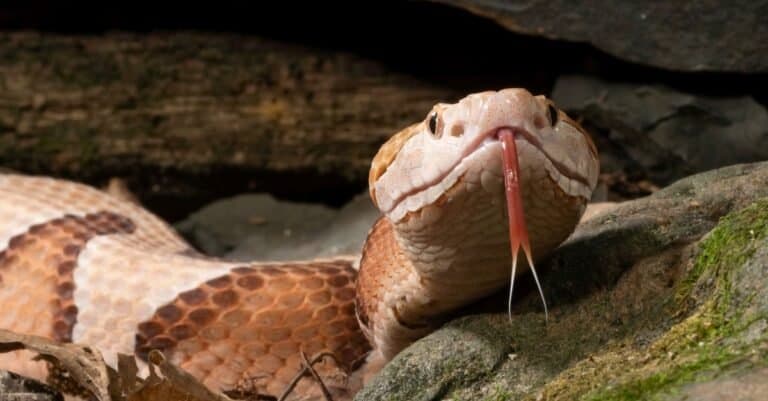
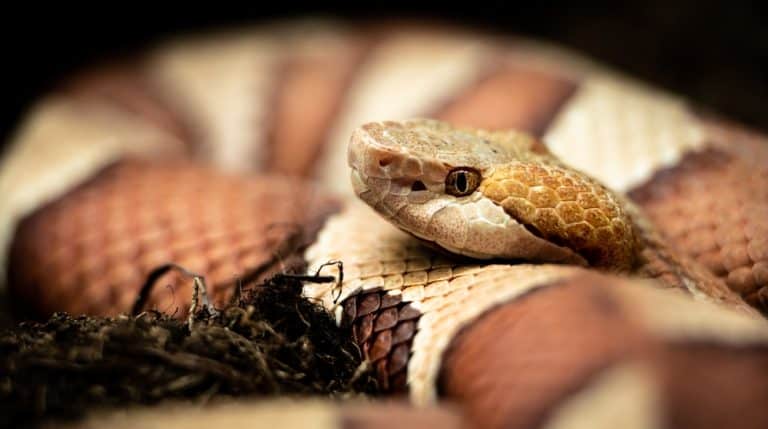
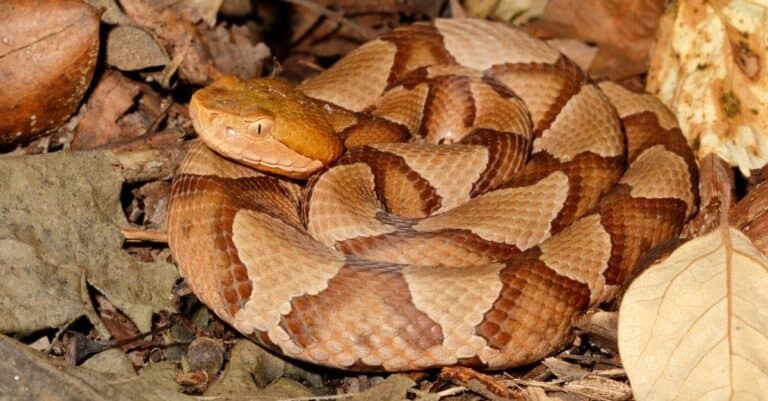
The copperhead is found throughout the state of South Carolina. They can reach up to 4 feet in length, but most adult snakes average between 2 and 3 feet. Their color varies from a pinkish to coppery tan with dark brown hourglass-shaped banding. As the name indicates, their heads are generally a uniform copper color. These snakes rely on camouflage to ambush prey. When they are curled up, they resemble a pile of leaves and can be easily stepped on. These snakes have hemotoxic venom, which causes the breakdown of red blood cells. Wildlife experts note that these snakes are the most active during August.
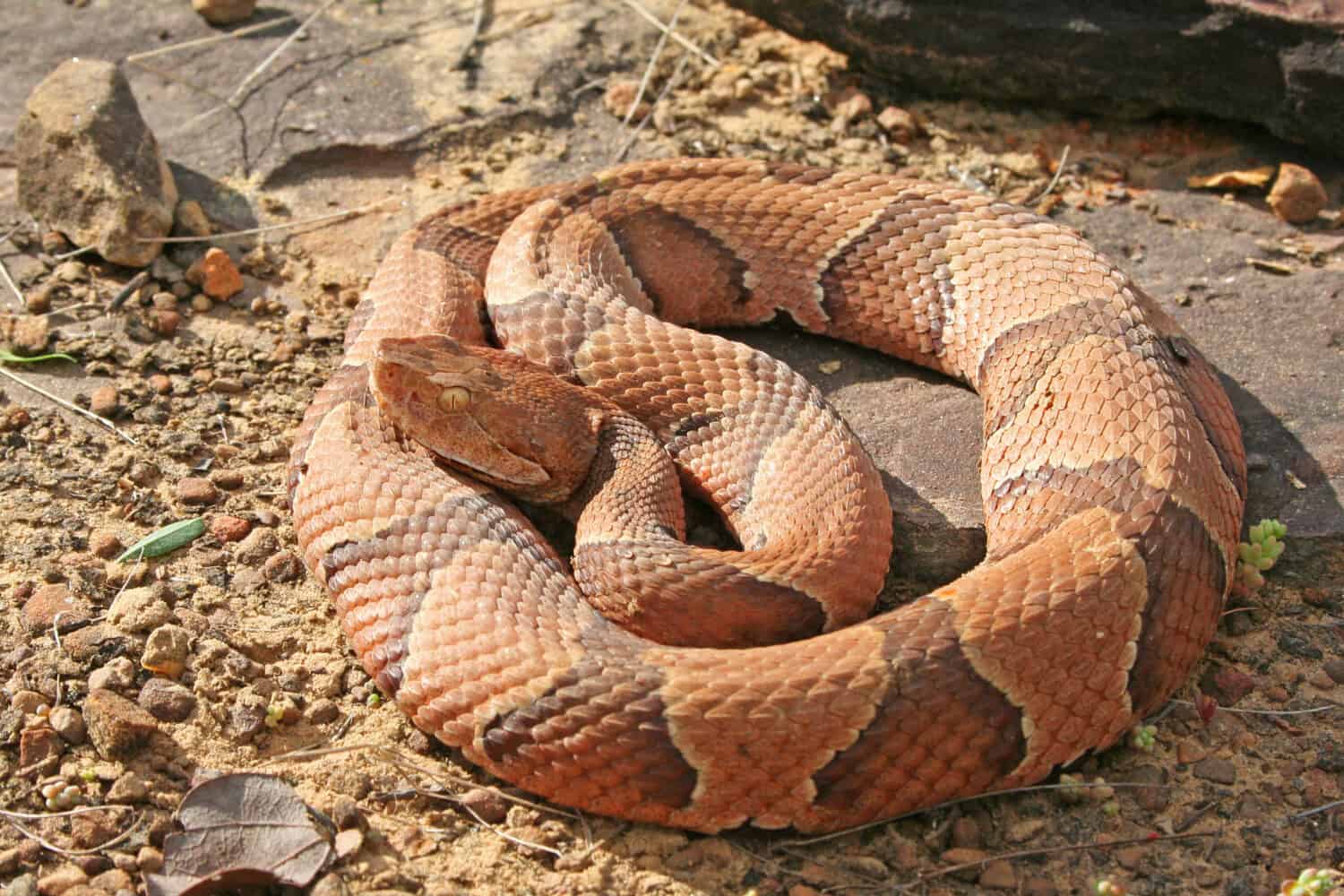
Copperheads bite more people than any other venomous snake species in South Carolina.
©Creeping Things/Shutterstock.com
How Common Are Snake Bites in South Carolina?
There are typically 240-270 snake bites recorded per year according to the Palmetto Poison Center. There were 244 recorded in 2020, 264 recorded in 2021, and 245 recorded in 2022. However, these cases include all snake bites, not necessarily bites identified as venomous snakebites.
What to Do If Bitten by a Venomous Snake
If you are bitten by a venomous snake in Florida or South Carolina, call 911 immediately, especially if the wound begins to swell, is painful, or changes color. Medical staff will be able to provide you with antivenom. However, if you find yourself waiting for the medical help to arrive, you can take the following steps:
- Get as far away from the snake as possible.
- Remaining calm and still can reduce the rate at which venom spreads.
- Before swelling occurs, remove any tight clothing or jewelry.
- Position yourself so the wound is below or at the level of your heart.
- Cover the bite site with a clean, dry dressing after cleaning it with soap and water.
Don’t try to catch the snake. However, try to get a good look at it and take down details like its shape and color. By doing this, you can describe the snake to the medical professional, which will speed up the treatment process. Taking a photo is even better. Don’t attempt to remove the venom, use a tourniquet, or apply ice. Stay away from alcohol or caffeine, which speeds up the absorption of venom. If you ever find yourself in Florida or South Carolina and feel like going on a hike, be sure to wear closed-toed boots and keep your eyes on the ground as much as possible.