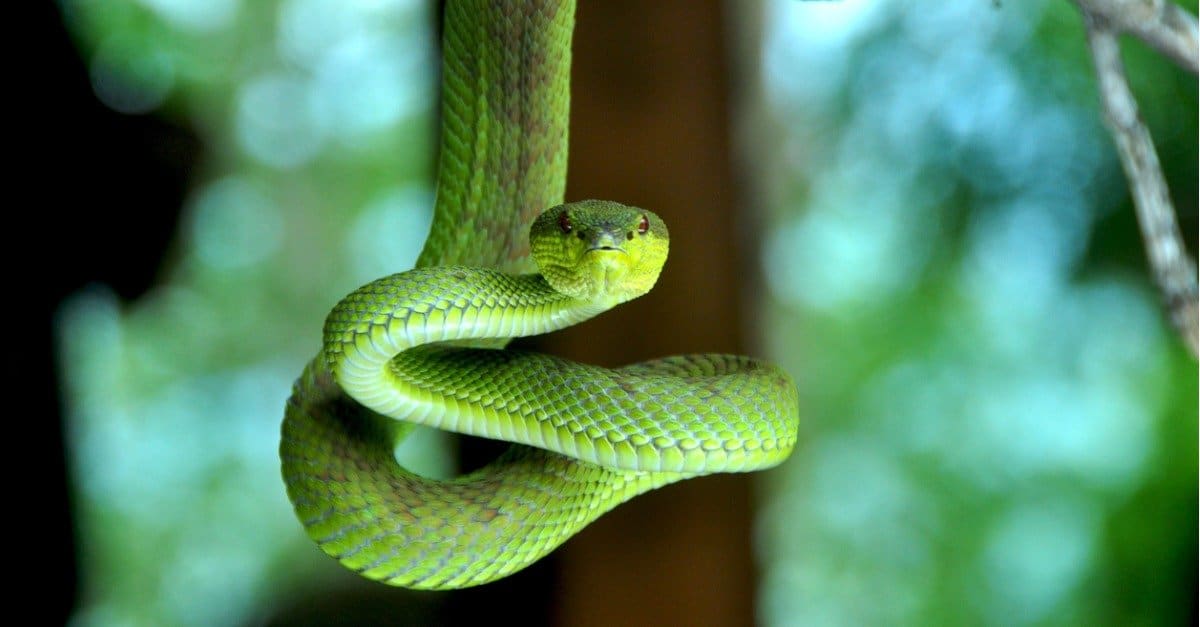

Unwanted snakes slithering into your home or yard can be an unsettling surprise. Whether they’re hiding in cool, dark corners or sunning themselves near your garden, their unexpected presence can cause fear and pose potential dangers. It’s important to act quickly and safely because while most snakes are harmless, some are venomous. Unless you are absolutely certain that the snake in question is harmless, it is best practice to consult with a professional. However, should you discover a harmless snake in your home, there are humane ways to capture and release it. Continue reading to discover humane methods of removing snakes safely.
What Attracts Snakes
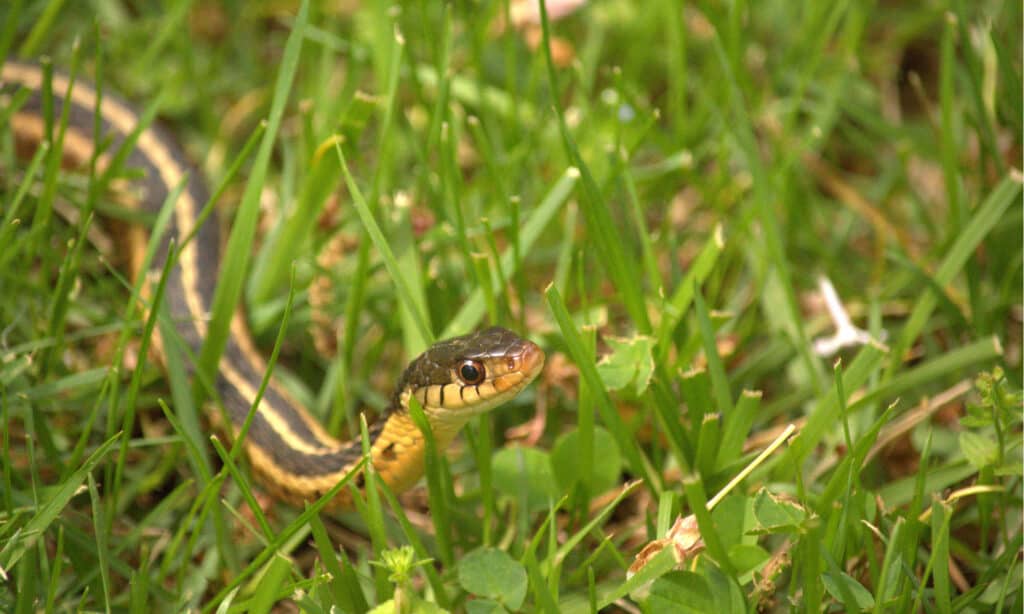
Garter snakes are considered beneficial to gardens as they consume a variety of garden pests, including slugs, snails, insects, and even small rodents.
©Charlotte Payne/Shutterstock.com
Snakes enter indoor and outdoor spaces seeking shelter, food, breeding grounds, and places to rest. They are primarily attracted to yards and homes by the availability of food, water, and shelter.. Snakes are attracted to yards and homes primarily due to the availability of food, water, and shelter. They seek out areas with abundant food sources like rodents and insects, hiding places such as tall grass or debris piles, and sources of moisture like ponds or damp areas, including basements and crawl spaces.
Getting Rid of Snakes Indoors
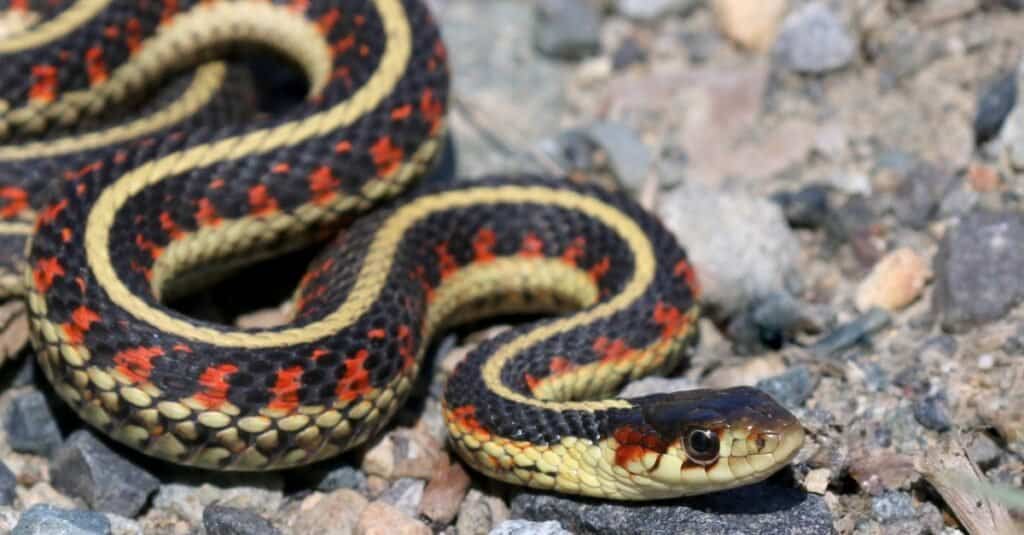
Garter snakes have three stripes that run the length of their body.
©iStock.com/randimal
If there are mice in your house, a snake may enter your home. Once inside, it’s likely the snake won’t know how to get out. No matter how distraught you are by the presence of a snake in your house, it’s important to understand that the snake is equally, if not more, stressed. Snakes instinctively seek out secure, single-entrance hiding spots to feel safe from predators. A house is unfamiliar territory to the snake. Even with furniture, it does not provide the same feeling of secure concealment as logs, rocks, and dense vegetation.
Once you have determined that the snake is non-venomous, begin by creating escape routes for the snake by opening doors and windows. Clear away any furniture, boxes, or clutter that might block the snake’s path. Encourage the snake to use the provided escape routes by making noise and energetically moving in areas away from the openings. In some cases, gently encouraging the snake with a broom is acceptable, but take care not to harm the snake in the process. If you can contain the scaly intruder to a specific area or room of your home, it simplifies the process of capturing it. This can be accomplished by simply closing a door, provided it has a good seal.
Get Rid of Snakes Outdoors
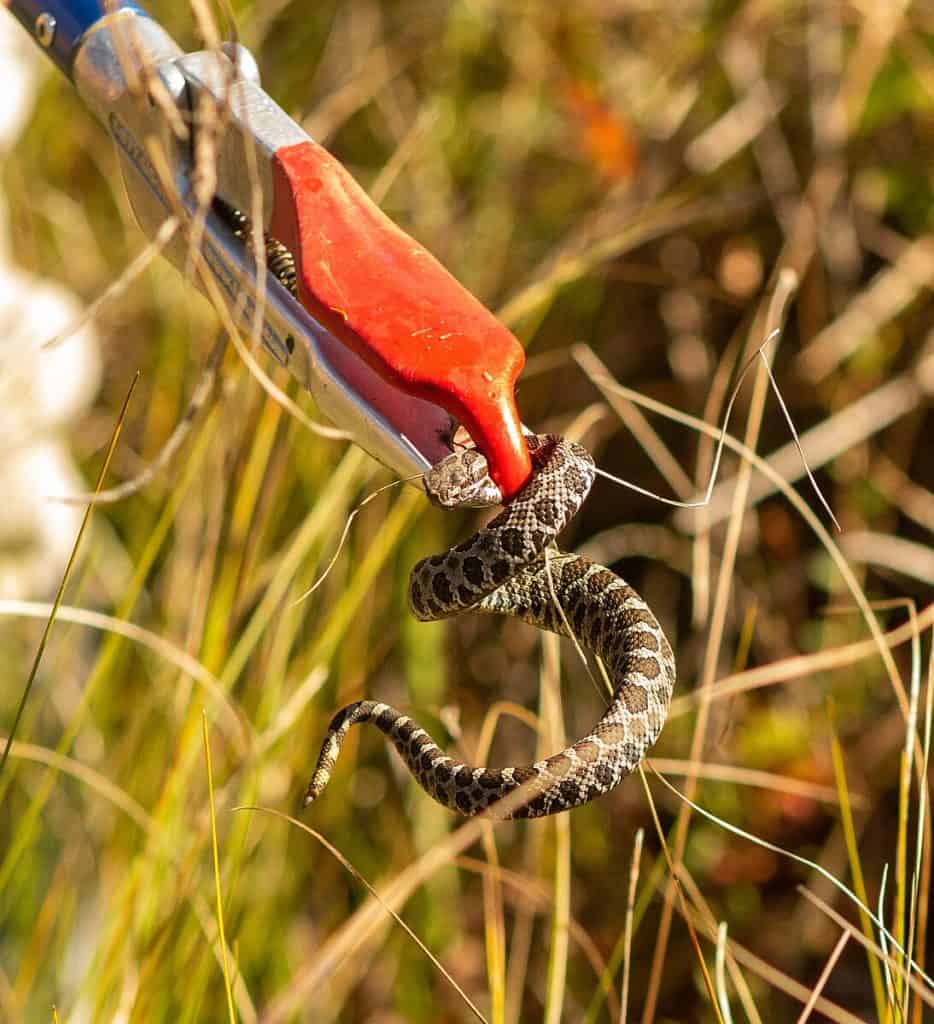
Snake tongs allow for safe snake removal.
©U.S. Fish and Wildlife Service – Midwest Region, Public domain, via Wikimedia Commons – Original / License
Both snake tongs and snake hooks are effective ways to safely remove an unwanted snake from your yard. Snake tongs allow you to securely grasp the snake from a safe distance, minimizing the risk of a bite, while a snake hook can be used to gently lift or guide the snake without causing harm.
If you are uncertain whether the snake is venomous, it’s crucial to contact a professional who has experience trapping and removing snakes. If you are completely certain the snake is non-venomous, consider adopting a live-and-let-live policy in your yard. The snake is most likely controlling other pests. However, if you simply can’t coexist, grab a garden hose and gently spray the snake. This is an immediate solution, not a permanent one. However, if the snake returns, continue to spray it. It will eventually look for a more hospitable home.
Minimize features that make your yard attractive to snakes, such as coiled hoses, tall grass, firewood, and dense brush. Grass should be kept trimmed short, ideally under 4-6 inches, to reduce hiding places for snakes, and areas with standing water should be addressed and rectified.