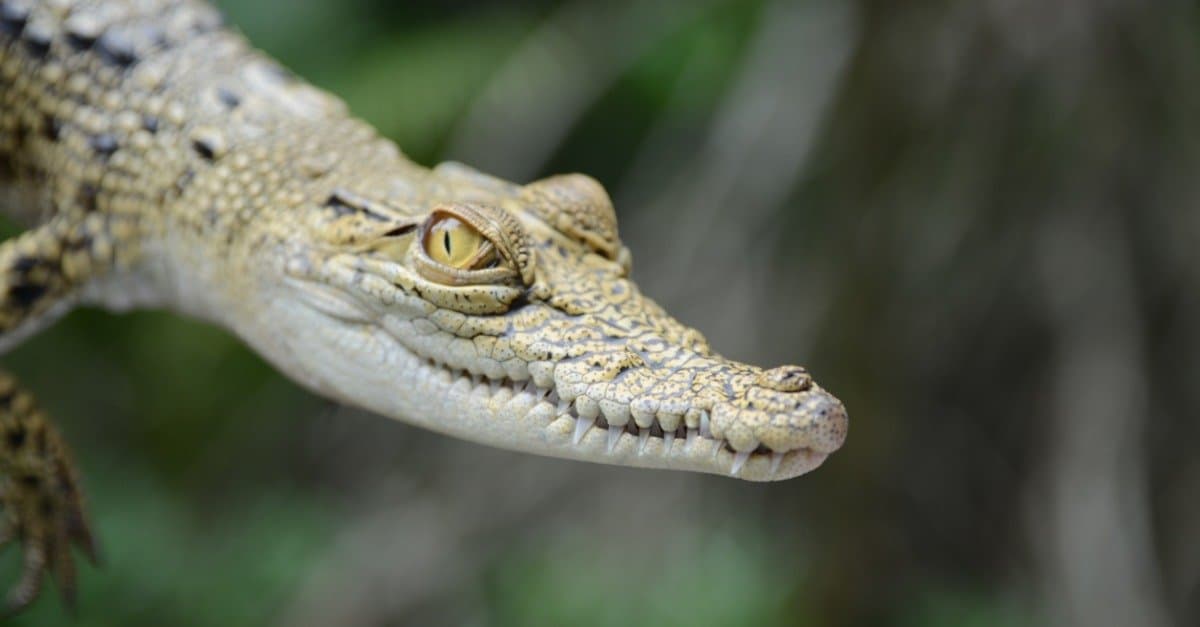

Crocodiles are probably not the first animals that come to mind when you think of the word “cute.” However, we think we can make an exception for baby crocodiles, also called hatchlings. Did you know that female crocodiles can lay up to 60 eggs, or that they carry their babies in their mouths? Keep reading to learn five fascinating facts and see some of the cutest pictures of baby crocodiles.
#1: Few Baby Crocodiles Make it to Adulthood
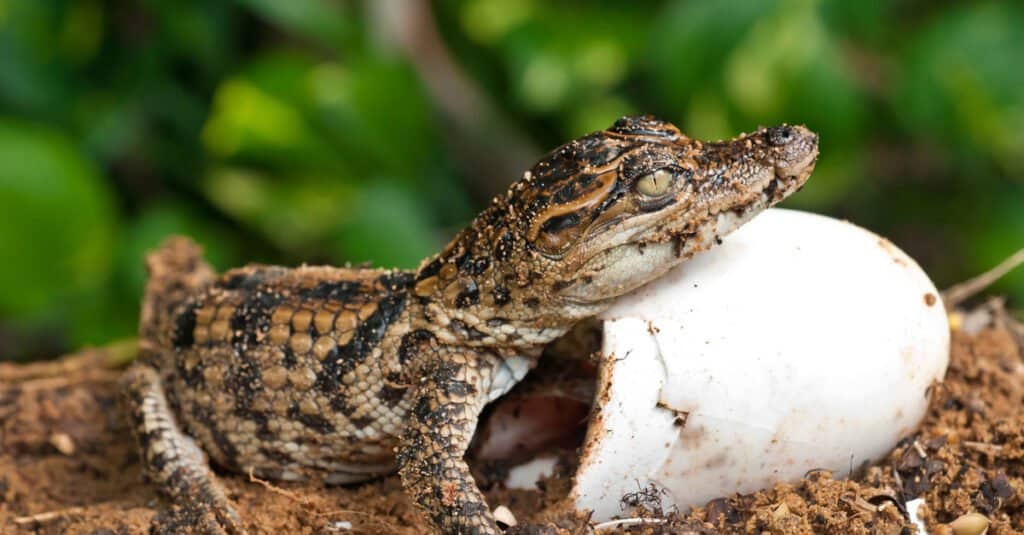
Crocodile hatchlings have many predators, including other crocodiles.
©dioch/Shutterstock.com
Even though crocodiles are well-known for their aggressive defense of their nests, most of their offspring don’t live past their first birthdays. Young crocodiles have a high mortality rate, primarily due to an abundance of predators, including monitor lizards, turtles, storks, herons, large fish, and even other crocodiles. Crocodile eggs also face threats from raccoons, monitor lizards, mongooses, and birds, among others.
One long-term study on American crocodiles found that hatchlings only had a 16% survival rate. Other crocodilians are even less fortunate. Researchers estimate that 99% of Cuban crocodile hatchlings do not survive. However, if they reach adulthood, most crocodiles have no natural predators — except humans.
#2: Female Crocodiles Lay Up to 60 Eggs
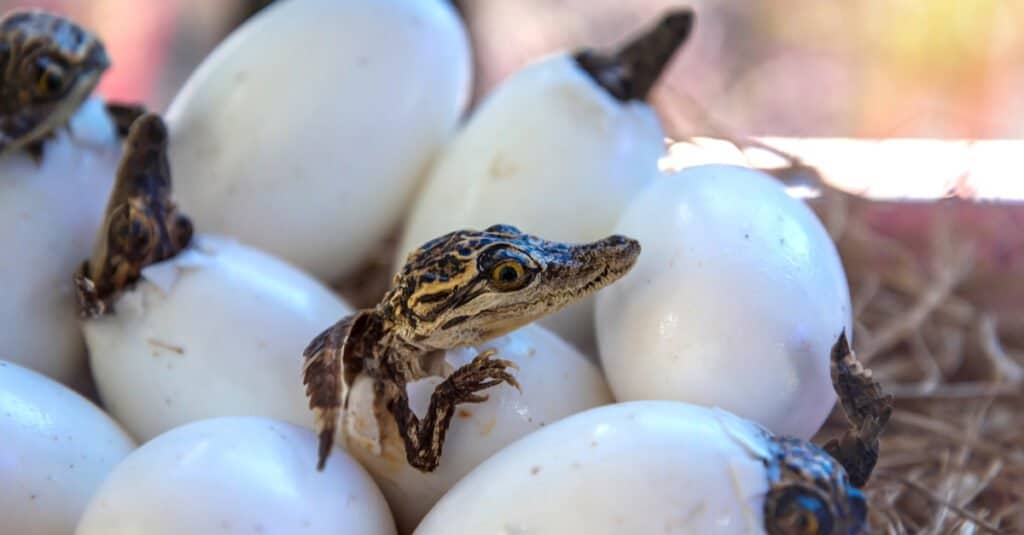
Mother crocodiles lay between 20-60 eggs in each clutch.
©WeStudio/Shutterstock.com
Female crocodiles typically build their nests near permanent water sources with sandy beaches. They either dig a hole in the beach or make a mound in the sand with their snouts and hind limbs. Then they lay a clutch of 20-60 eggs. After covering the nest, the mother may not return until the end of the incubation period, which typically lasts around 85 days.
When the baby crocodiles are ready to hatch, they break out of their shells using a special tooth called an egg tooth. They also make chirping sounds from the nest to alert their mother. The mother crocodile will then dig open the nest and help the babies get out of their shells. She gently picks up the egg and rolls it in her mouth until it cracks enough for the hatchling to make its way out.
#3: Baby Crocodile Hatchlings Can Replace Their Teeth
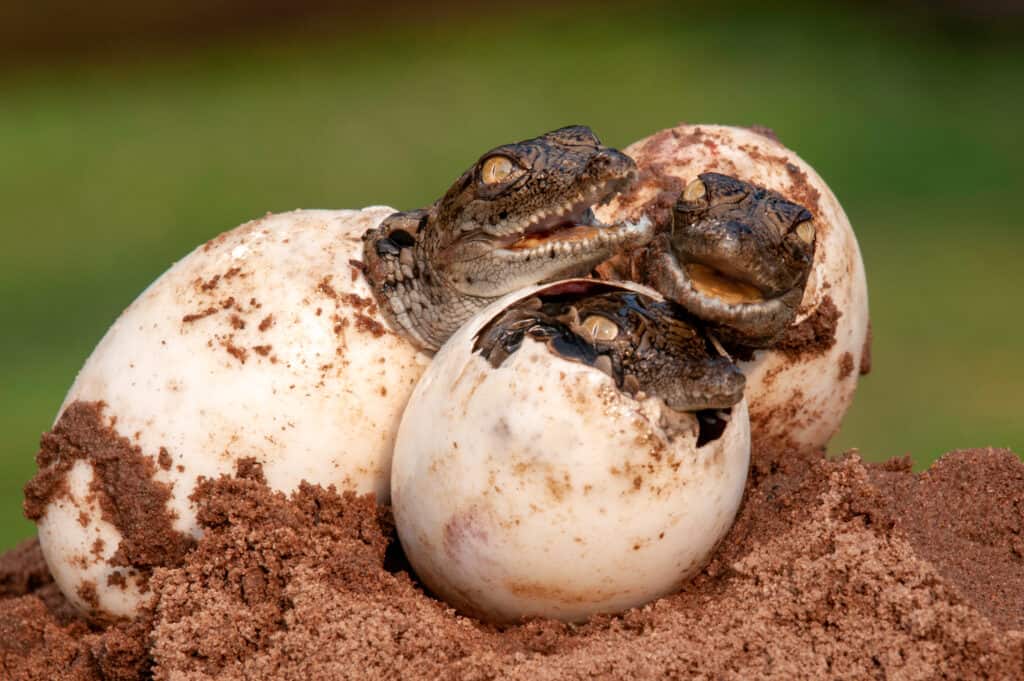
Young crocodiles replace their teeth at a faster rate than adults.
©Catchlight Lens/Shutterstock.com
As described earlier, when baby crocodiles hatch, they use their egg tooth to break out of their shell. As they mature, they will develop between 60-110 teeth, depending on the species. Crocodiles are believed to have the strongest bite force of any living animal. Although they have powerful jaws, researchers found they actually have thinner enamel than most mammals. Scientists believe this is because crocodiles don’t need strong teeth, as their teeth are continuously replaced. Animals that can replace their teeth are called polyphyodonts.
Researchers estimate that crocodiles replace each tooth an average of 50 times throughout their lives. Baby crocodiles lose and regrow their teeth at a faster growth rate during their first three months. As they mature, the replacement process slows and may even stop in the oldest individuals.
#4: Gender Is Determined by Temperature
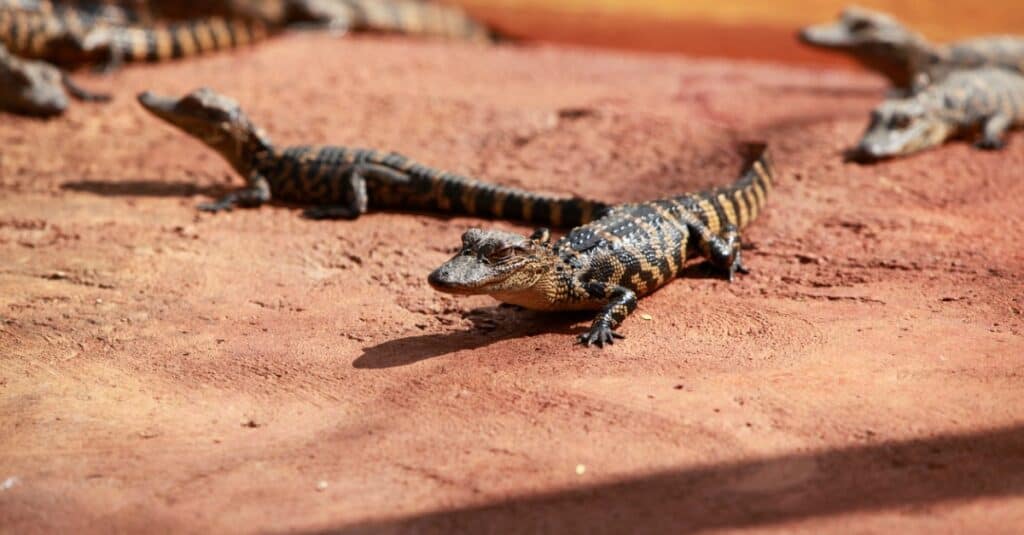
A crocodile’s sex is determined by environmental factors, not by chromosomes.
©iStock.com/Murmakova
Unlike humans, the sex of a crocodile embryo is not determined by chromosomes. A crocodile’s sex is determined by environmental factors, specifically the temperature of the eggs during incubation. This is called temperature-dependent sex determination (TSD).
For the eggs to survive and hatch, the temperature must remain above 82°F. Cooler temperatures of around 86°F will result in all female offspring. Warmer temperatures around 93°F will produce all male offspring. Researchers have found that the sex ratio of crocodilians is biased towards females. This ratio can sometimes be as high as 10 females for every one male.
#5: Mother Crocodiles Carry Their Babies in Their Mouths
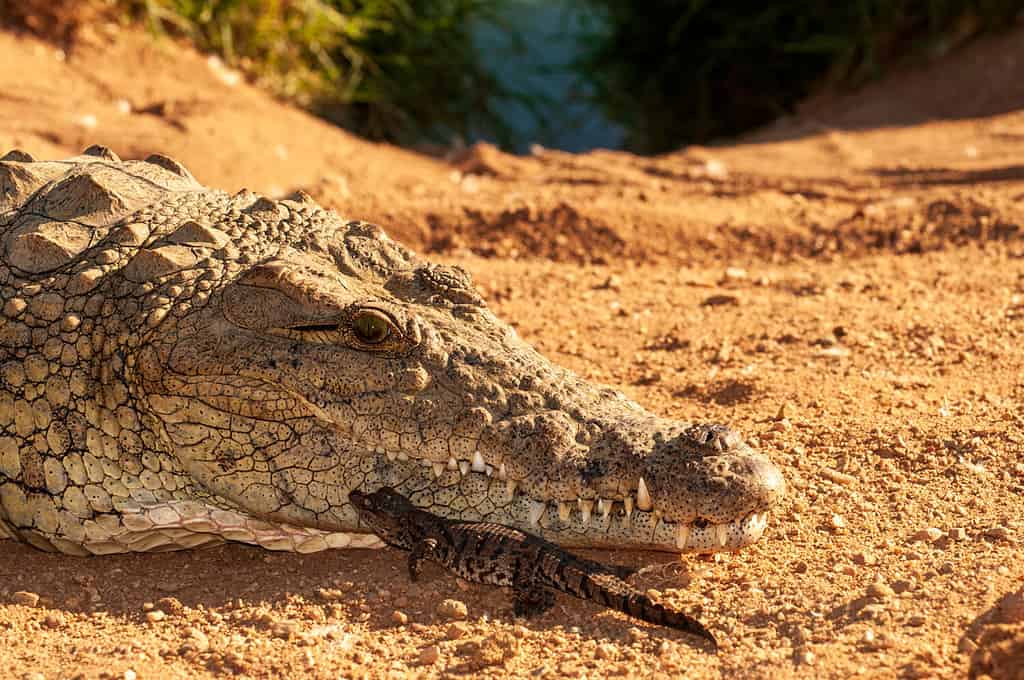
Crocodiles protect their babies by carrying them in their mouths or on their backs.
©Catchlight Lens/Shutterstock.com
Newborn crocodiles are precocial, which means they can fend for themselves almost immediately. However, the babies still need protection. Crocodile moms hold their babies in their mouths to carry them from the nest to the water. Despite having the most powerful bite in the animal kingdom, the mother gently scoops the babies up and holds them in a throat pouch beneath her teeth.
Gharials, freshwater crocodilians found in India and Nepal, have long, thin snouts, so their mouths cannot hold their babies. Instead, the hatchlings climb onto their necks and backs for safety. Both male and female gharials take an active role in caring for their offspring.