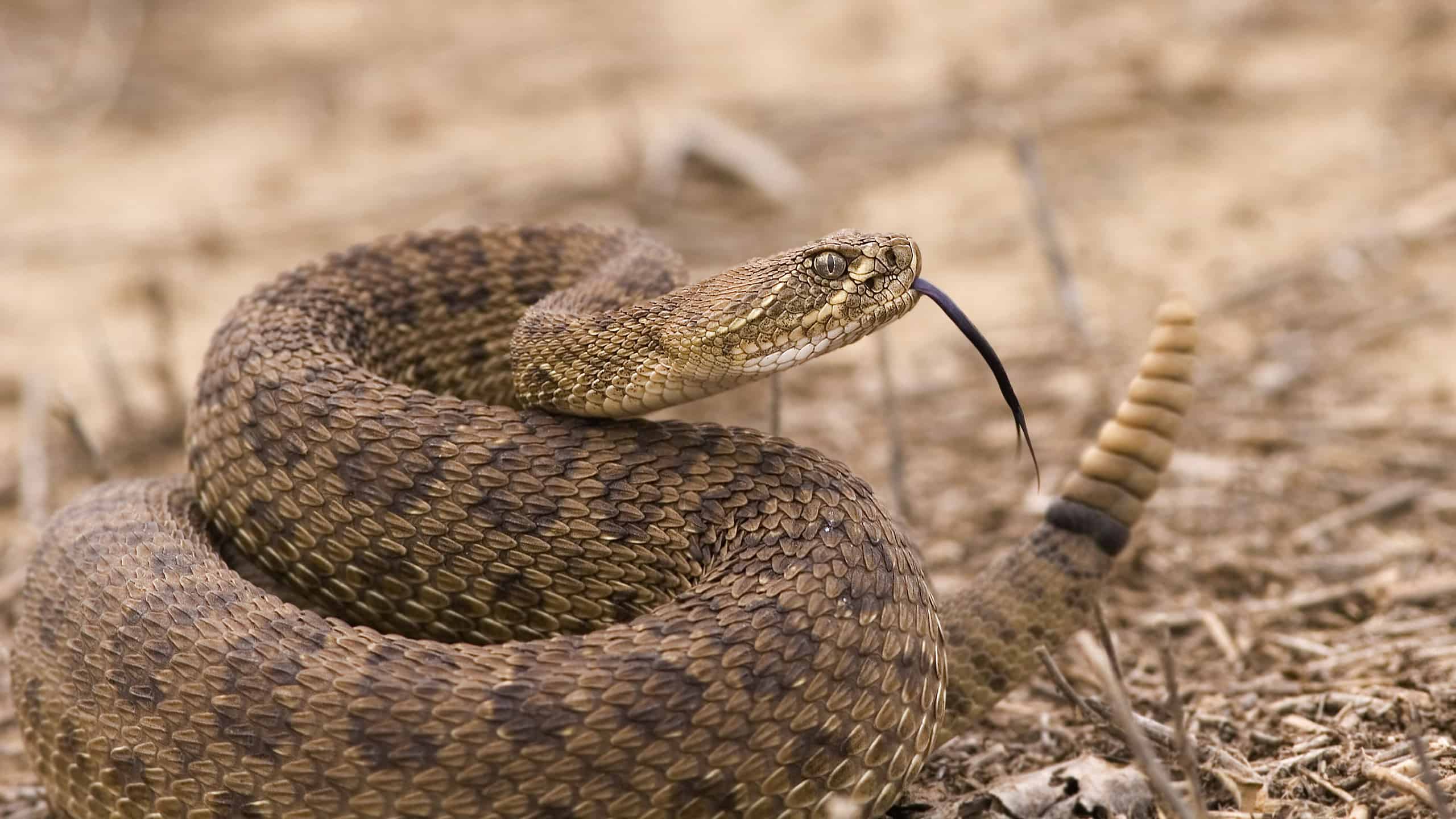

Quick Take
- One common Idaho snake mimics rattlesnakes so convincingly that even experienced hikers panic, yet it is completely harmless. Meet Idaho's rattlesnake mimic →
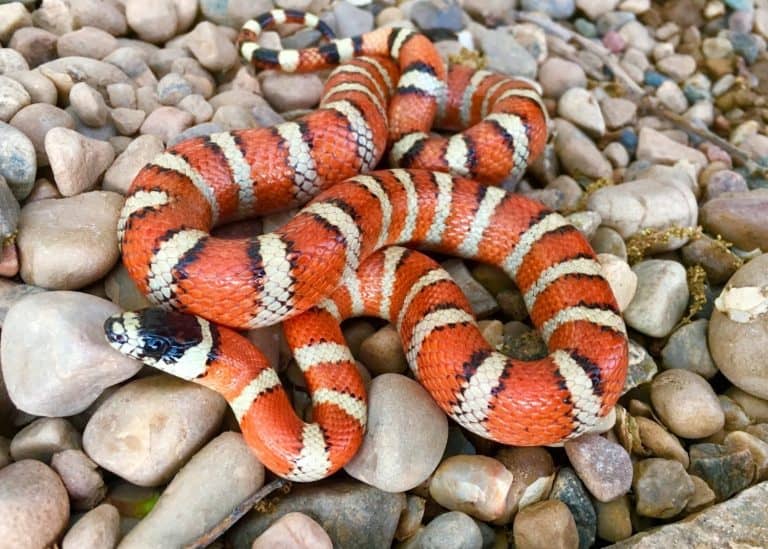
- A snake in Idaho looks nearly identical to one of North America's most venomous species, even though that deadly lookalike doesn't even live in the state. See the coral snake lookalike →
- Getting bitten by one of Idaho's two venomous snakes doesn't guarantee you've been envenomated, but you still can't afford to wait and see. Why dry bites still need care →
- Idaho has only 12 snake species, but knowing which 2 to avoid depends on details most people overlook in the moment. Idaho's two venomous species →
Situated in the northwestern United States, Idaho has many mountains and forests ideal for snakes, even around the Boise area. Despite the wide variety of habitats, there aren’t as many snake species in Idaho as there are in some eastern states. Of the 12 species of snake that call the Gem State home, only two are dangerous to humans. Fortunately, the chances of getting bitten by a snake are low, and even lower for those who know which snakes pose a threat. Learn which Idaho snakes to watch out for and how to recognize danger.
Nonvenomous Snakes in Idaho
The most common snakes in Idaho are non-venomous. These include garter snakes, gopher snakes, and whipsnakes, among others. These snakes pose little threat to humans.
Great Basin Gopher Snake (Pituophis catenifer)
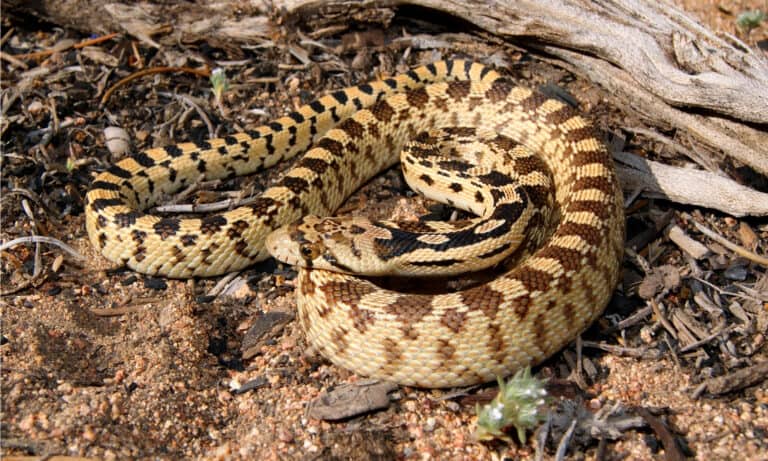
One of the most common snakes in Idaho is the Great Basin gopher snake. At 36-80 inches, they are the largest snakes in the state. They live across most of Idaho except in the northern panhandle region. They are found in habitats from deserts to forests but not generally at high elevations. These snakes are tan to light brown with rows of darker blotches on their backs and sides. They are often confused with rattlesnakes due to their coloring and their aggressive threat displays. Gopher snakes hiss, flatten their heads, puff up their bodies, and shake their tails in dry leaves to mimic a rattlesnake. They may even lunge and strike with their mouths closed. However, they are completely harmless to humans.
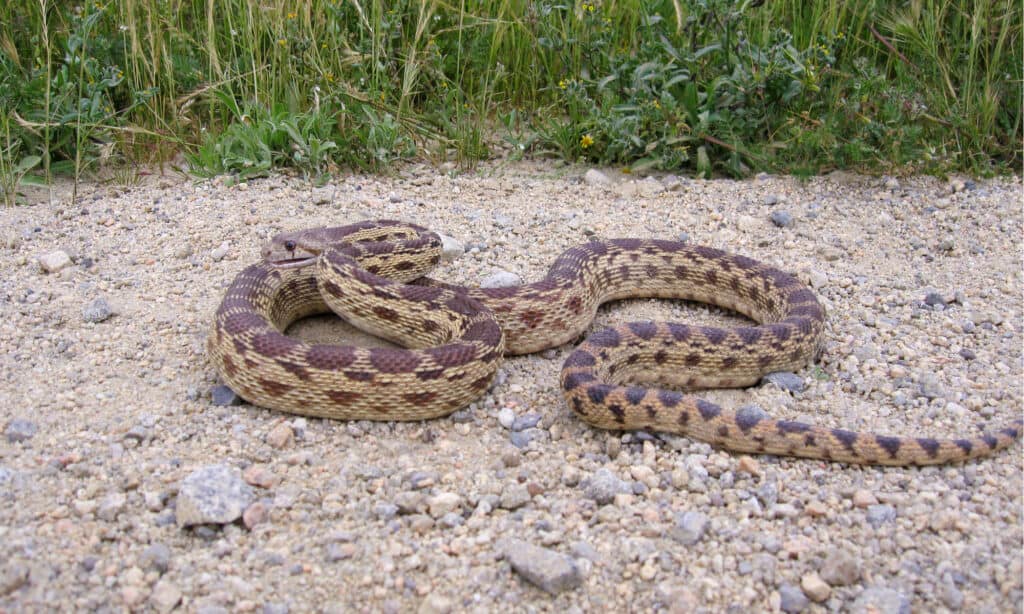
Gopher snakes engage in threatening displays to scare people away.
©rawaccess/Shutterstock.com
Western Terrestrial Garter Snake (Thamnophis elegans vagrans)
Western terrestrial garter snakes are the most common snakes found across Idaho. These snakes can be brown to greenish-grey or dark grey with three dull yellow or brown stripes, one down the back and two on the sides. Unlike the common garter snake, western terrestrial garter snakes lack red coloring on the sides. Their stripes may be uneven and broken up by black spots. These garter snakes generally range from 18-43 inches in length. They can be found in a wide variety of habitats, but they are most commonly found near water.
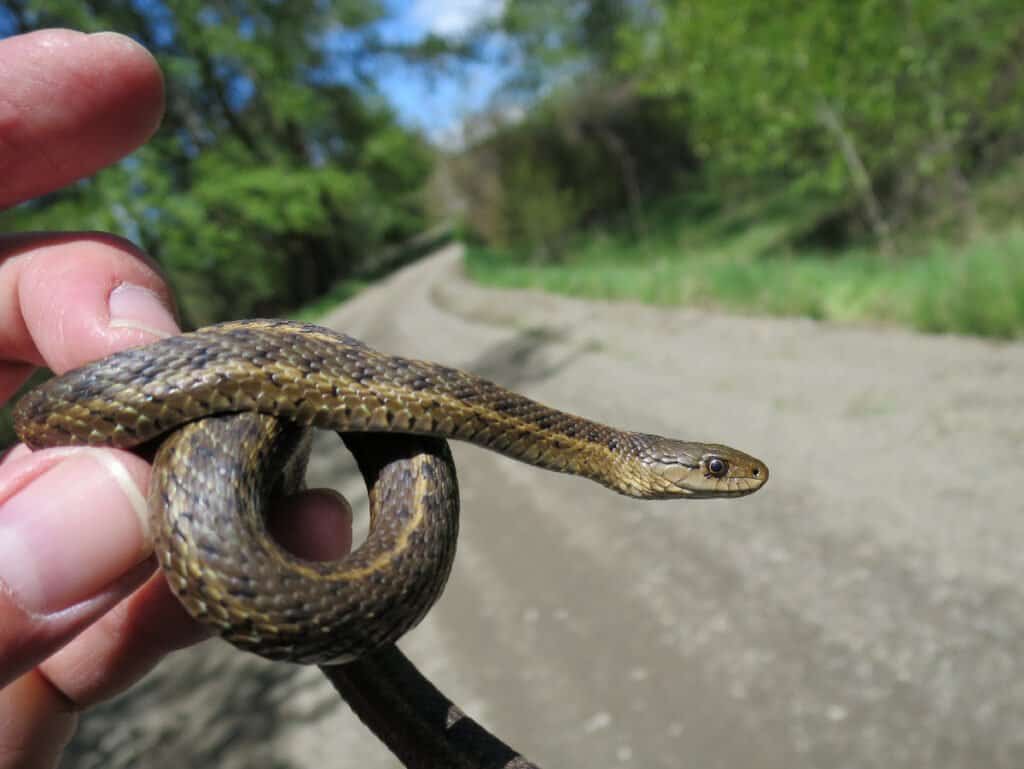
Terrestrial garter snakes are the most common snakes in Idaho.
©Randy Bjorklund/Shutterstock.com
Red Valley/Common Garter Snake (Thamnophis sirtalis fitchi)
A subspecies of the common garter snake, the red valley garter snake is found throughout the Pacific Northwest, including Idaho. These snakes generally measure 18-52 inches in length. In Idaho, these snakes are black with three yellow stripes running down their bodies. This particular garter snake stands out due to the red coloring on its head and red blotches above the stripes on its sides. Valley garters are extremely adaptable and can be found throughout many areas of Idaho, including forests, grasslands, wetlands, and water. Like terrestrial garters, they are skilled swimmers.
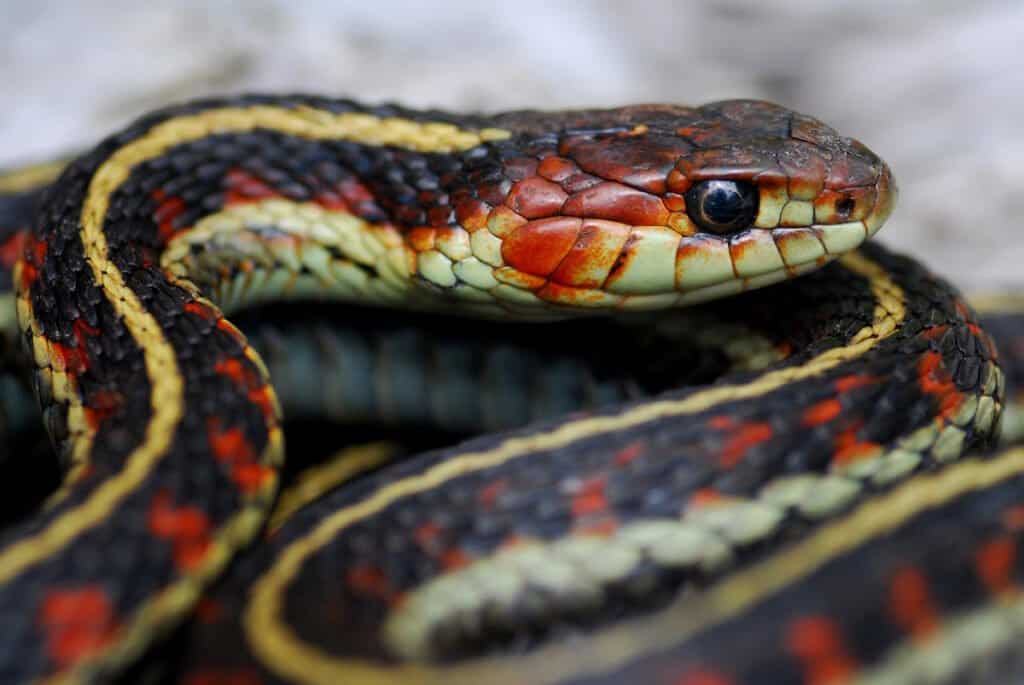
Red valley garter snakes can grow to reach 52 inches.
©Jason Mintzer/Shutterstock.com
Striped Whipsnake (Coluber taeniatus)
Striped whipsnakes can live in a variety of habitats, including sagebrush, rocky canyons, and grasslands, but in Idaho, they are only present in the southwestern part of the state. These nonvenomous snakes are 36-72 inches long. They are usually black, dark brown, or grey with light-colored stripes along their sides. Their undersides are white, transitioning to pink closer to the tail. If startled or threatened, they can become aggressive and bite.
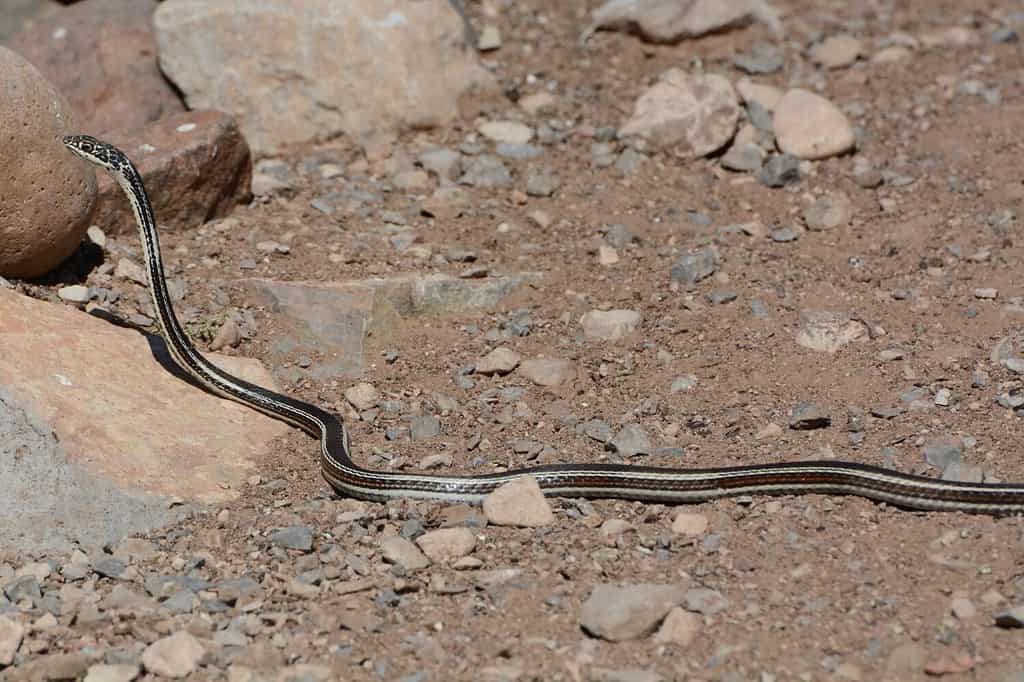
Striped whipsnakes are non-venomous but may bite in self-defense.
©David Jeffrey Ringer/Shutterstock.com
Longnose Snake (Rhinocheilus lecontei)
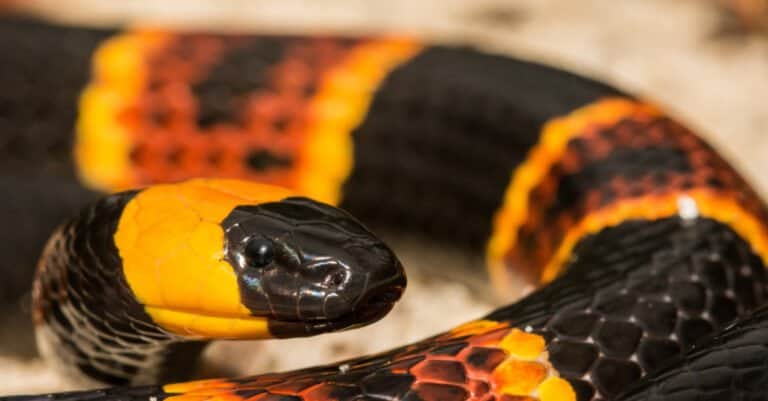
Due to their similar appearance, longnose snakes are sometimes confused with the venomous coral snake. However, coral snakes do not inhabit Idaho. This rare snake has black and red markings on a yellow base. It is generally 20-41 inches long and has a long, pointed snout for burrowing. Longnose snakes favor dry prairies, deserts, and rocky canyons in Southwest Idaho.

Longnose snakes are native to Idaho but they are rarely seen.
©Matt Jeppson/Shutterstock.com
Western Ground Snake (Sonora semiannulata)
Western ground snakes are small reptiles, typically only measuring 8-19 inches long. In Idaho, there are both banded and unbanded ground snakes. The banded ground snakes are black and orange with cream colored bellies, while unbanded ground snakes may be a uniform brown, grey, reddish, or tan color. These snakes are only present in desert regions in the southwestern part of the state, mostly along the Snake River.
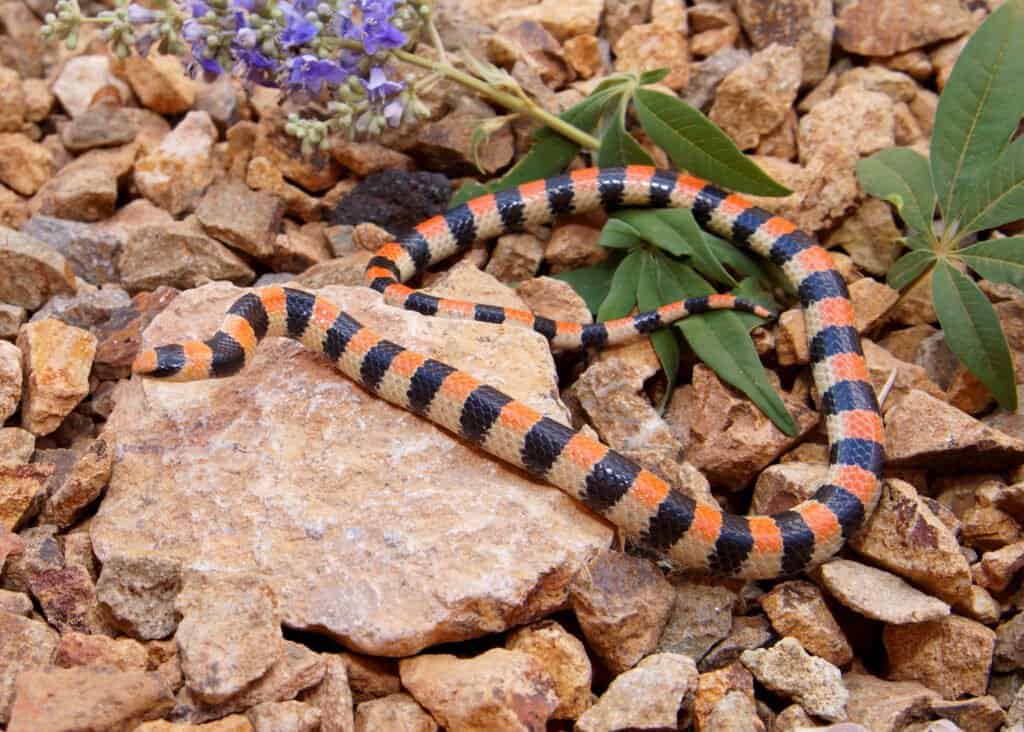
On average, western ground snakes are 8-19 inches long.
©Matt Jeppson/Shutterstock.com
Northern Rubber Boa (Charina bottae)
The northern rubber boa can be found throughout the state in a wide variety of habitats, ranging from montane forests to deserts. It has rubbery-looking skin of a uniform brownish color with yellow undersides. This stout-bodied snake typically measures 14-33 inches in length. It is sometimes referred to as “two-headed” because its head and tail appear similar. These constrictors are known to be docile and rarely bite.
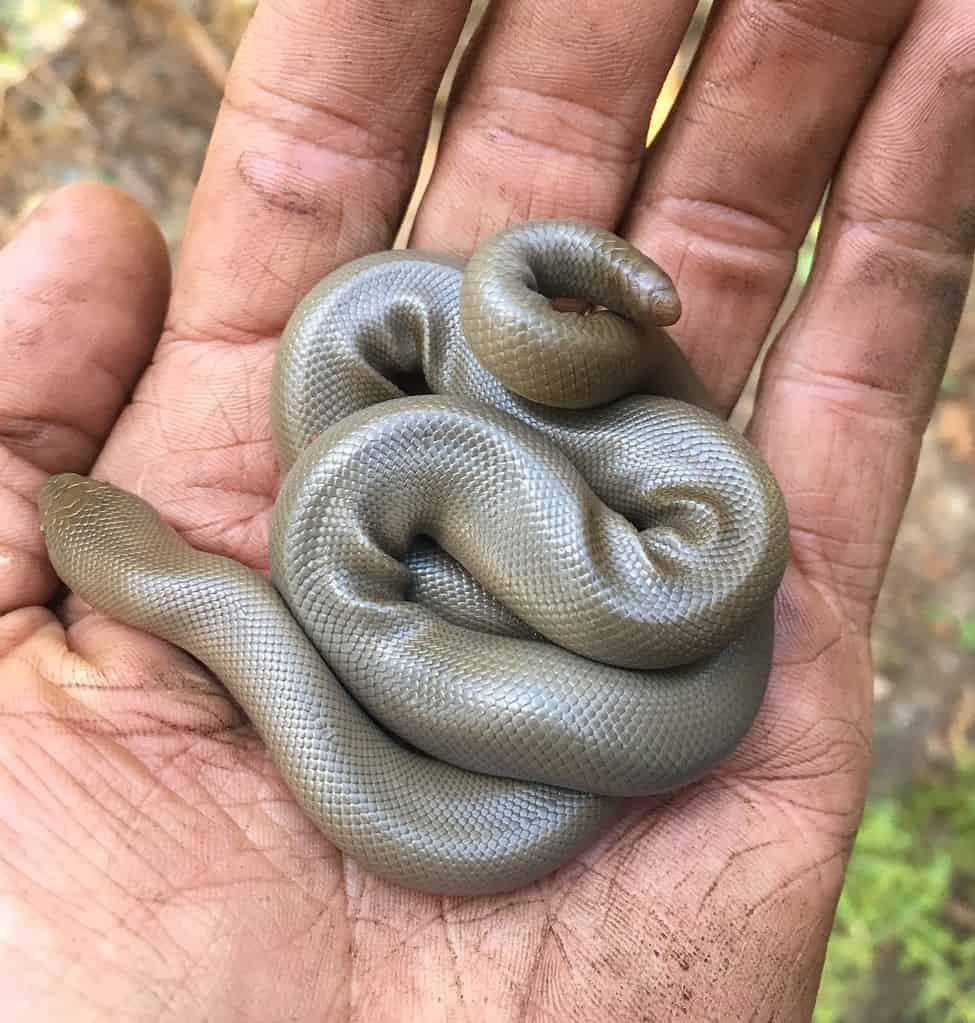
The northern rubber boa has rubbery looking skin in a uniform brownish color.
North American Racer (Coluber constrictor)
North American racers are long, slim, fast-moving snakes that measure 20-73 inches in length. These snakes are found in a variety of open habitats across the state, including grasslands, woodlands, meadows, shrub deserts, and forest edges. They are generally a uniform brown or olive color with yellow undersides.
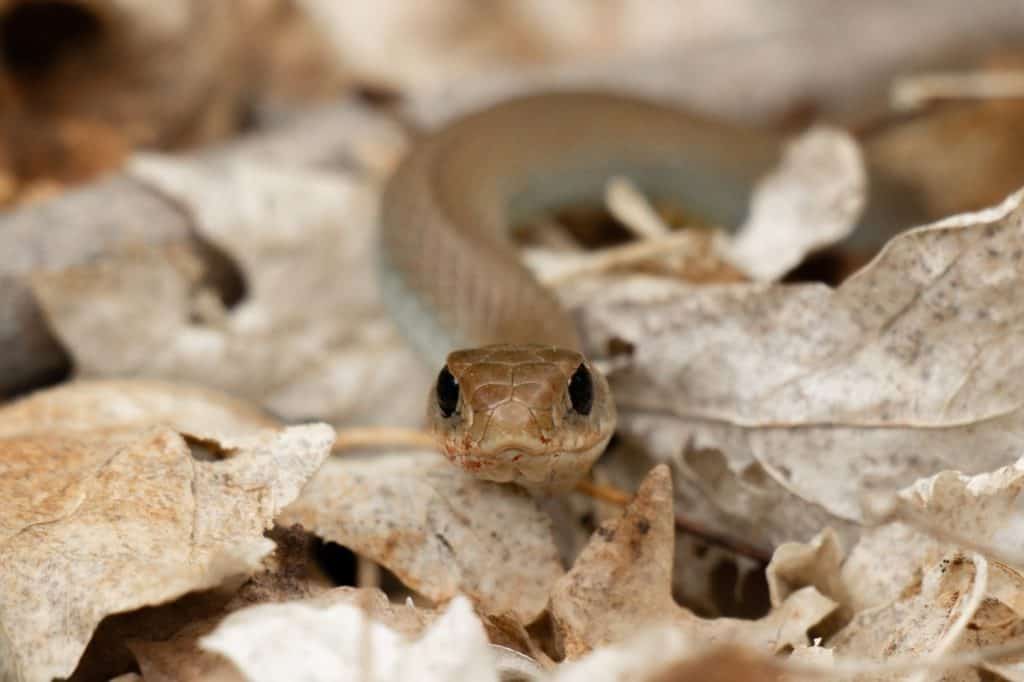
North American racers favor open habitats across Idaho.
©Pisaster/Shutterstock.com
Ring-Necked Snake (Diadophis punctatus)
Ring-necked snakes are relatively small reptiles, measuring 8-30 inches. They have greenish-grey backs with bright orange bellies and a bright orange neck band. These snakes are generally found in sparse populations in woodlands, shrublands, grasslands, and rocky canyons in the southern and western part of the state. These snakes are fossorial, so they are rarely seen, as they spend most of their time underground.
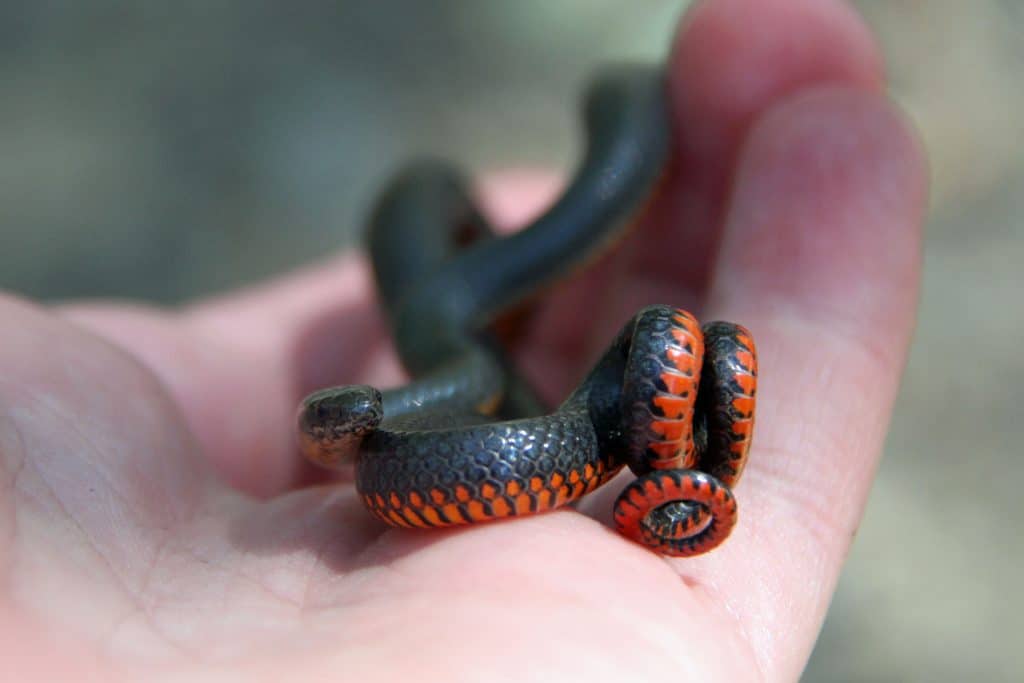
Ring necked snakes are known for the distinct rings around their necks and brightly-colored bellies.
Northern Desert Nightsnake (Hypsiglena chlorophaea deserticola)
Northern desert nightsnakes are also small, measuring just 12-26 inches in length. These snakes are light grey, beige, or light brown with darker blotches and pale undersides. They have two large, dark markings from the eye to the neck. These snakes are found in rocky outcroppings in southern Idaho, particularly in the drier, sagebrush habitats of the Snake River Plain.
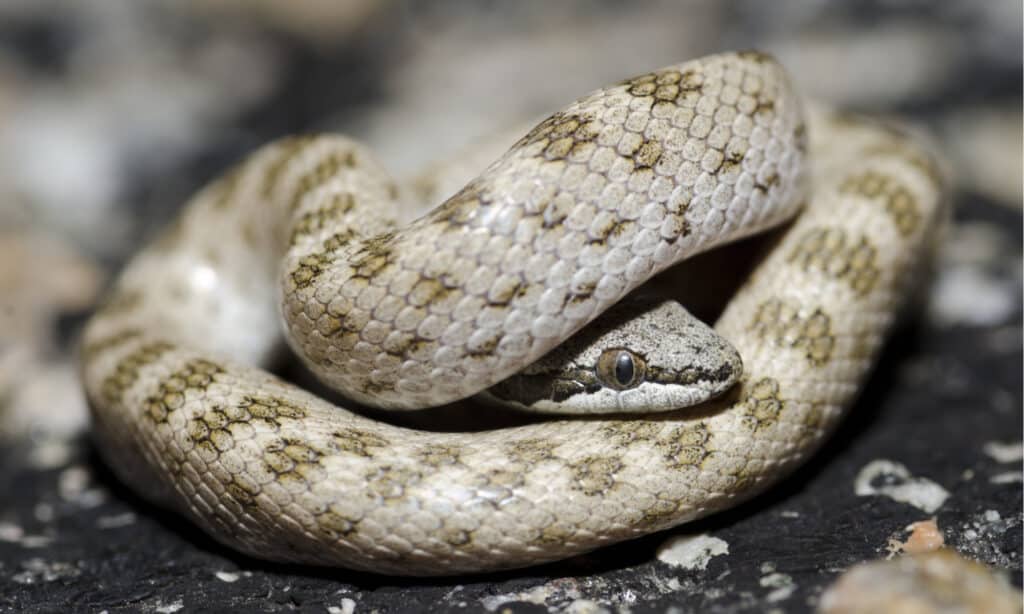
Northern desert nightsnakes are sometimes confused with gopher snakes, but they are much smaller.
©Jason Mintzer/Shutterstock.com
Smooth Greensnake (Opheodrys vernalis)
The smooth greensnake is a native species in Idaho, but little is known about its presence and regularity in the state. They are known to favor a wide variety of habitats, including old fields, farmland, low brush, boggy areas, and forest clearings. They are small, slim snakes with a tapered tail, typically growing up to 14 to 20 inches long. Their smooth scales are a bright, grass-green color, and they have white or yellowish undersides.
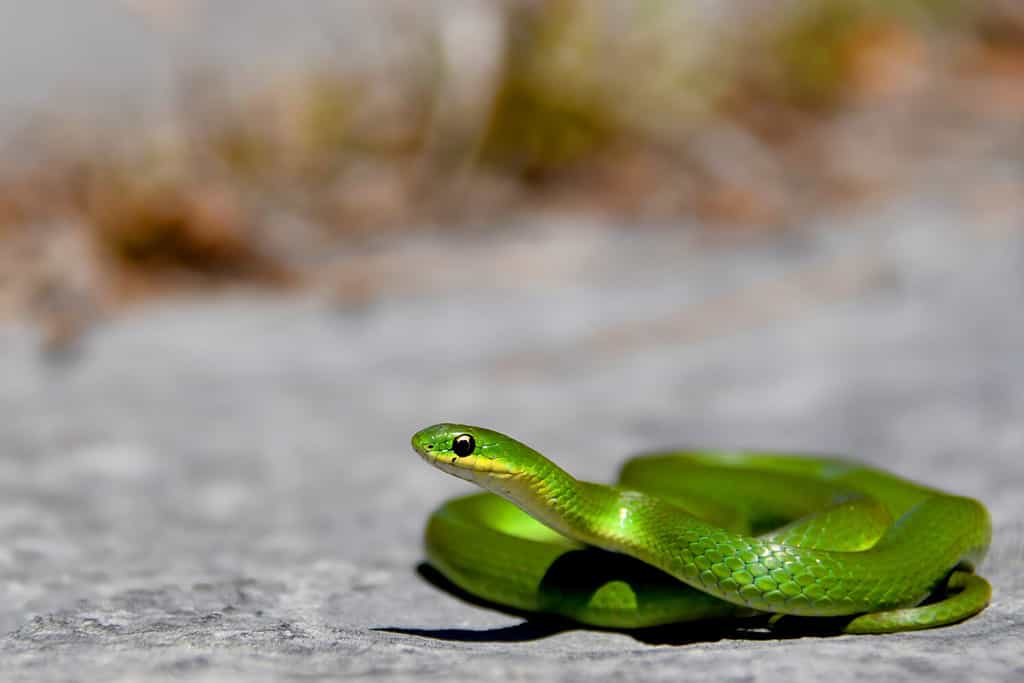
Smooth greensnakes have smooth, vivid grass-green colored scales.
©Lev Frid/Shutterstock.com
Venomous Snakes in Idaho
Idaho is also home to two types of venomous snakes. The prairie rattlesnake has a much more limited range, while western rattlesnakes are found across much of southern Idaho.
Prairie Rattlesnake
The prairie rattlesnake is common in dry grasslands, rocky areas, prairies, and sagebrush steppes. They are found in east-central Idaho and a small area near the northeastern border with Montana. These snakes typically reach 35-60 inches and come in several colors, including olive green, grey, brown, and occasionally yellowish. Along its body are dark, greenish-grey blotches that turn into rings closer to the tail. Their eyes are elliptical, similar to a cat’s eye. The prairie rattlesnake isn’t inherently aggressive, but it has potent venom and will defend itself.
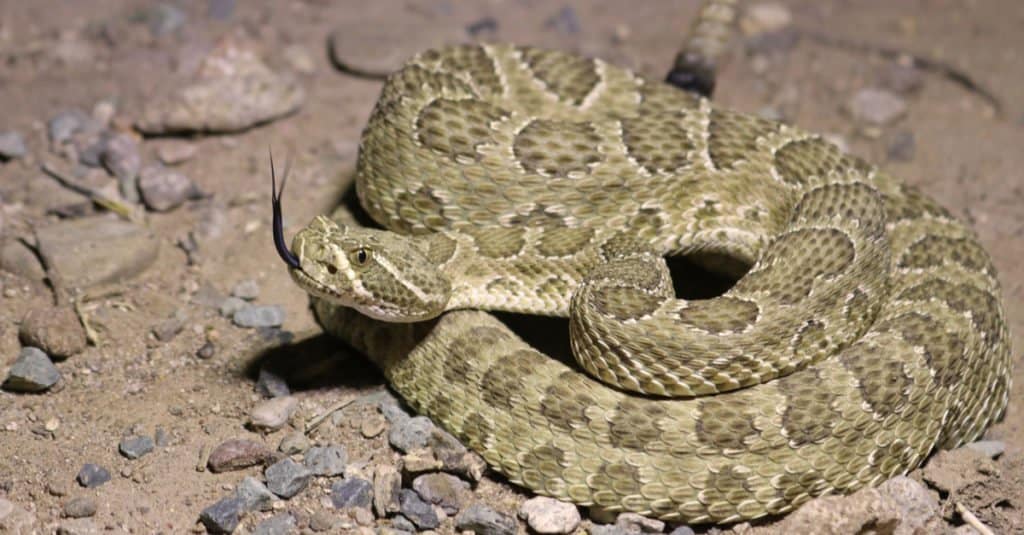
Prairie rattlesnakes are most often seen in east-central Idaho.
©Creeping Things/Shutterstock.com
Western Rattlesnake (Crotalus oreganus)
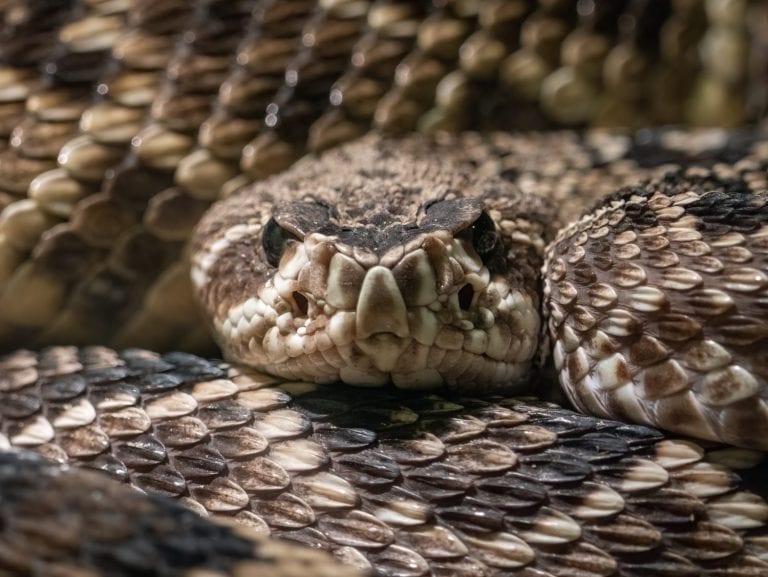
The other venomous snake in the state, the western rattlesnake, is also referred to as the northern Pacific rattlesnake or Great Basin rattlesnake. This snake is more common across Idaho, except at higher elevations and in the northern part of the state. These snakes primarily have dark brown to black blotches on lighter backgrounds. They have large, triangular heads, narrow necks and measure 15-65 inches in length. Western rattlesnakes prefer dry, rocky areas but may also be found in grasslands. Although an estimated 25 to 50 percent of western rattlesnake bites are “dry bites,” meaning they don’t inject any venom, it’s important to seek medical attention immediately if you have been bitten.
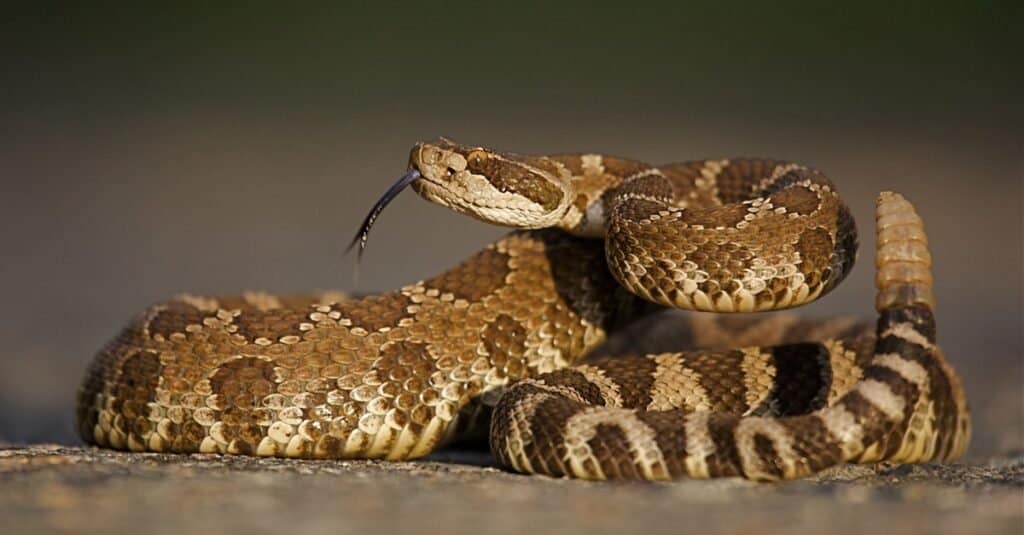
The western rattlesnake can be found in much of Idaho, except at high elevations and in the north.
©Tom Reichner/Shutterstock.com