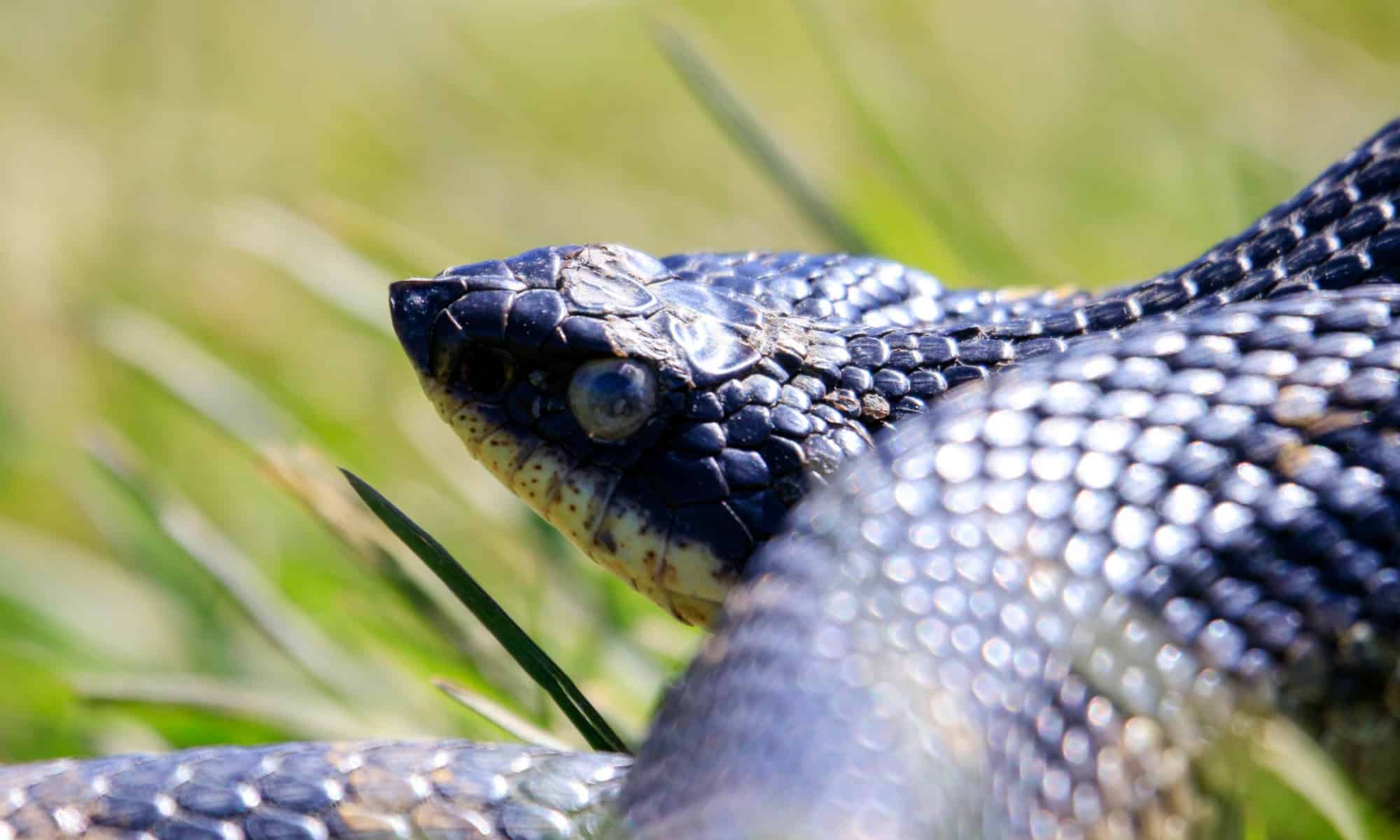

Quick Take
- North Carolina issued an official warning regarding the emergence of the Eastern hognose snake.
- The name Heterodon signifies a specific dental constraint during the snake’s encounter with its 95% diet.
- This species mimics the lethal Puff adder despite possessing no harmful neurotoxins for humans.
- The Eastern hognose must complete a specific 60-day incubation before entering the environment.
As we head into spring and snakes begin emerging from their winter sleep, be on the lookout for one snake in particular: the ‘zombie’ snake that’s emerging across the United States. Yes, you read that right: in the spring and throughout the summer, a real-life ‘zombie’ snake prowls the land. Okay, these zombie snakes don’t actually “rise from the dead,” but their incredible acting skills are pretty convincing.
In fact, these snakes are convincing enough that North Carolina had to issue a warning to its citizens about this species. The eastern hognose snake—this extraordinary zombie of the snake world—is one of the most uniquely adaptive snakes in the eastern United States. And it has a truly incredible defense strategy: when it feels threatened, this snake plays dead, only to suddenly ‘rise’ from the dead later and slither off as if nothing happened.

The Zombie-Like Eastern Hognose Snake
Eastern hognose snakes live in the eastern half of the United States and southern portions of Canada. These snakes prefer areas with sandy soil in which they can burrow. They live in woodlands, grasslands, fields, river valleys, prairies, and coastal areas.
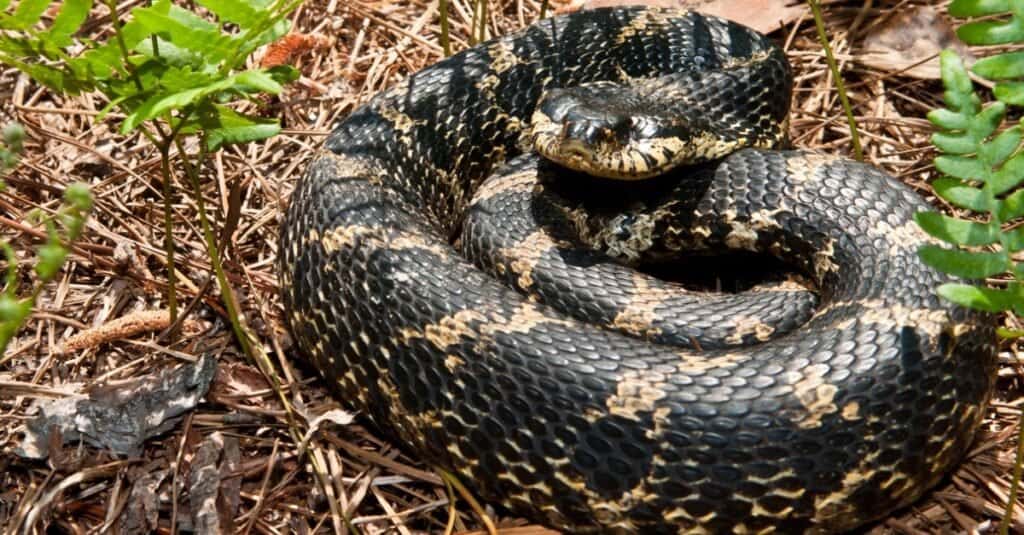
Eastern hognose snakes have several nicknames: the puff adder, hissing adder, and spreading adder.
©iStock.com/JasonOndreicka
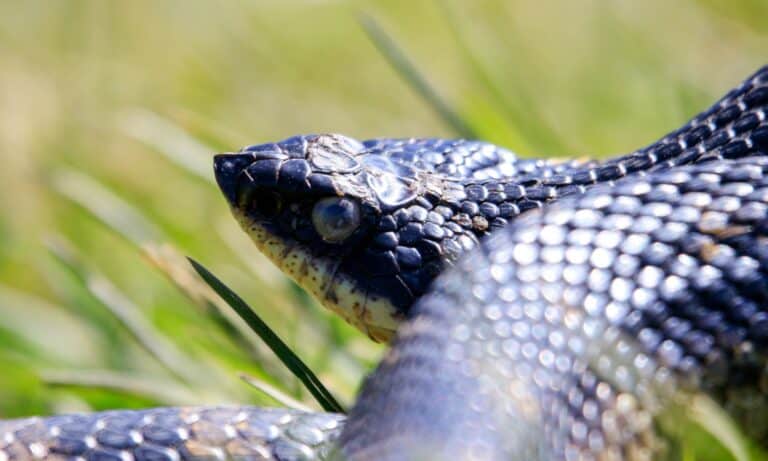
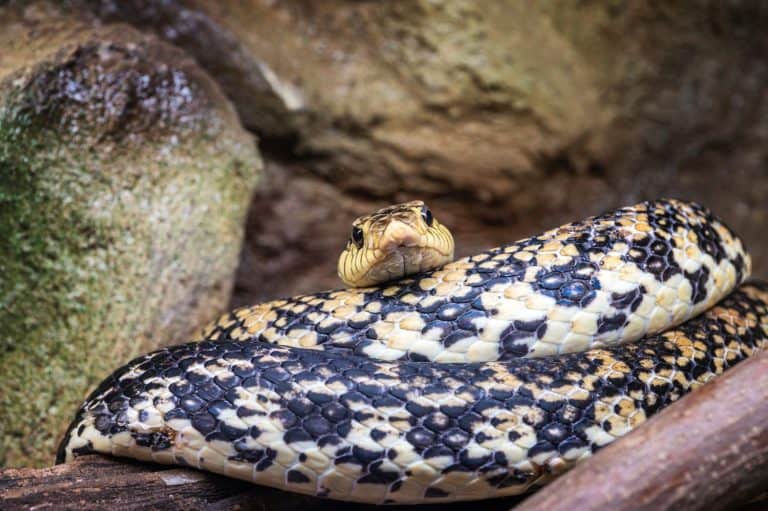
These snakes come in a wide variety of colors and patterns, depending on where they live. They are often brown, black, gray, green, red, yellow, orange, or even a combination of these colors. Some have one solid color, while others have dark spots or blotches along the length of their bodies to help them blend into their environment. These snakes are typically 20–33 inches long, though they can occasionally reach up to 46 inches, with thick, stocky bodies.
When the eastern hognose snake feels threatened, it has an arsenal of defenses to employ. First, it will spread out the skin around its head and neck and flatten its body. This helps the snake to puff up like a small cobra as it tries to look big and intimidating. This defense tactic is why the eastern hognose snake is sometimes called a puff adder.
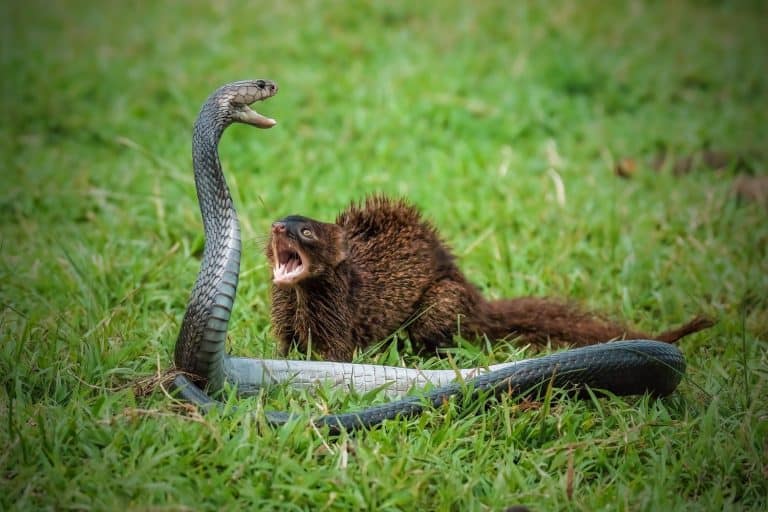
Puff adders are extremely dangerous to humans, injecting a large amount of potent venom with each strike. Mostly found in Africa in savannahs, grasslands, deserts, and rainforests across the continent, this snake is not native to North America.
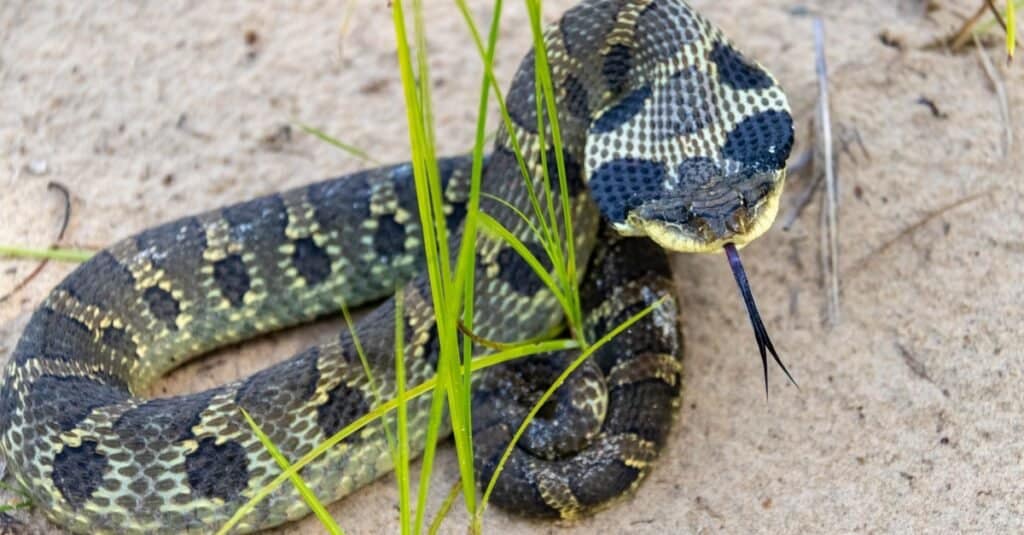
The eastern hognose snake flattens its head and neck and hisses loudly when it is threatened.
©IHX/Shutterstock.com
If the predator is not deterred by the puff adder approach, the eastern hognose snake will coil up and raise its head like a rattlesnake, hissing loudly while wiggling its tail. It will lunge, strike, and even pretend to bite (usually with its mouth closed). However, if the snake still fears for its safety, then it will turn to its dramatic last resort: dying.
Of course, the eastern hognose snake does not really die, but it does perform a very compelling fake death. The snake writhes about, contorting its body while excreting a foul-smelling musk. Finally, it will flip over onto its back, dramatically leaving its mouth wide open. In this position, the snake looks as if it has just experienced a very agonizing death. For good measure, the snake even throws its tongue out to dangle lifelessly from the side of its mouth.
Are All Snakes Such Drama Queens? Is This Normal?
A better name for these guys might be drama snakes, but that doesn’t have the same ring to it as zombie snake. When these snakes feel threatened, they play dead, complete with lolling tongue, exposed belly, and enough theatrics to convince the toughest critic of their acting ability. Given that they are harmless to all but frogs and don’t have other defenses, it is in their best interest to be good actors. While the hognose is the most famous for this behavior, it is not the only species to use it; other snakes, such as the European Grass Snake and the Dice Snake, are also known to feign death when threatened. Other non-venomous snakes generally rely on camouflage and hiding as their means of defense. Of course, venomous snakes also use these tactics, but have the option of striking to kill as well.
This incredible ‘dying’ spectacle works quite well, confusing the snake’s predators until they leave. The snake will continue to lie lifeless for quite some time until it feels safe again. Even if you were to try to turn it over onto its belly, the snake will immediately flip over on its back and continue to play dead.
When Do Eastern Hognose Snakes Come Out?
Eastern hognose snakes are diurnal, so they come out during the day and sleep at night. However, being cold-blooded reptiles, they are very sensitive to extreme temperatures. They are most active during the summer, usually from April until September. Mating season is in April and May, after which female snakes will lay anywhere from 8 to 40 eggs. They bury their eggs in sandy burrows or under leaves, rocks, and logs. After roughly 50 to 65 days, the baby eastern hognose snakes will hatch. Hatchlings are usually 5–10 inches long and are completely independent the moment they emerge from their eggs. When the weather turns cold in the fall, these snakes use their unique snouts to dig out burrows in the sandy soil. This is where they will brumate for the winter.
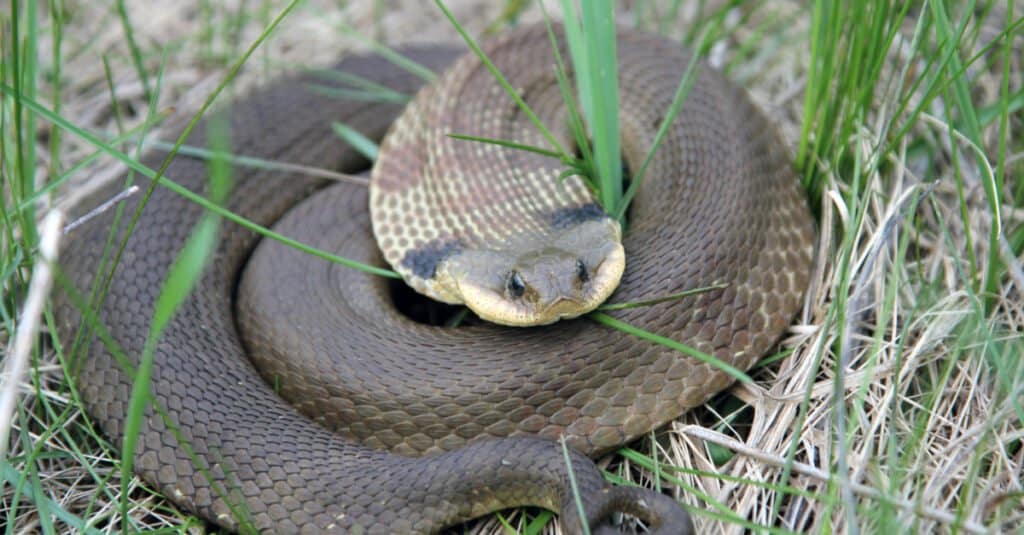
The eastern hognose snake is a toad specialist.
©iStock.com/deepspacedave
Are Eastern Hognose Snakes Dangerous to Humans?
The eastern hognose snake is not considered dangerous to humans. These snakes have specialized saliva (often referred to as mild venom) that helps to slow toads down (their favorite snack). While this mild toxin is delivered via rear fangs and is not life-threatening to humans, a bite can occasionally cause localized swelling, itching, or a mild allergic-like reaction in some individuals.
What Do Eastern Hognose Snakes Eat?
Eastern hognose snakes are uniquely adapted as toad specialists. In other words, they really like eating toads. They may also eat birds, small mammals, salamanders, frogs, and invertebrates. However, toads alone make up the vast majority of this snake’s diet.
As toad specialists, the eastern hognose snake has evolved to most efficiently hunt toads. For example, the snake’s head is really wide in the back and then narrows to a point on its nose. The unique shape of its head gives this snake its own built-in shovel, helping it to burrow underground and dig up toads. Additionally, the eastern hognose snake has an upturned nose that makes its snout resemble that of a pig or hog. This also aids in digging through sandy soil.
In addition to their head shape and nose, eastern hognose snakes have uniquely adapted teeth in the back of their throats. When toads get defensive, they inflate themselves and get really big like a balloon. The rear fangs of the eastern hognose snake allow the snake to pop these inflated toads and make them easier to swallow. In fact, this snake’s scientific name is Heterodon platirhinos, where “Heterodon” means “different tooth.” Moreover, eastern hognose snakes coevolved with toads, so they are immune to their toxins.
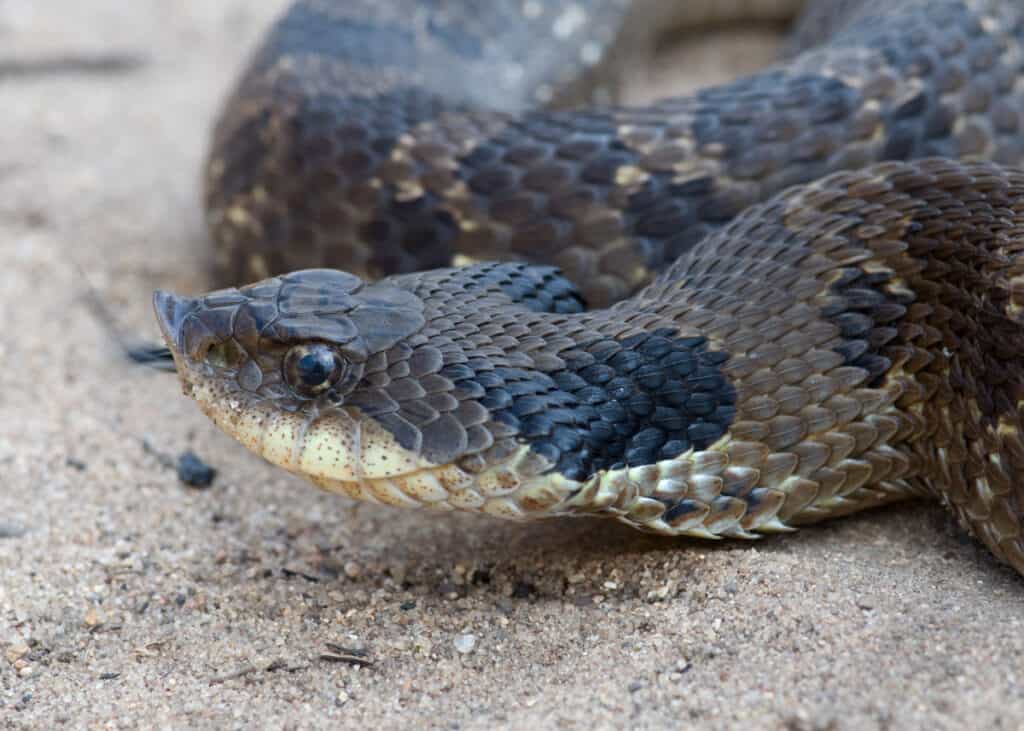
Eastern hognose snakes have keeled scales with a rough ridge in the middle of each scale.
©Gerald A. DeBoer/Shutterstock.com
Conservation Status of the Eastern Hognose Snake
The eastern hognose snake is a species of special concern in some areas like New York, New Hampshire, Connecticut, and Rhode Island. The biggest threats to these snakes are fragmentation and habitat loss, humans, and road mortality.
How Long Do Eastern Hognose Snakes Live?
In the wild, the lifespan of an Eastern hognose is difficult to track, but they are estimated to live around 8 to 10 years. In captivity, where they are protected from predators and have consistent food, they can live significantly longer, often reaching 15 to 20 years.
Other Animals That Play Possum Like the Eastern Hognose
Of course, the most well-known animal that “plays dead” is the opossum, though many other animals use this defense mechanism as well.