
Quick Take
- One animal on this list collapses after eating a venomous snake, then walks away two hours later like nothing happened. Honey badger's venom survival →
- A snake that eats other snakes has a scientific name that spells out its deadly habit, and it also happens to be one of the most recognizable reptiles on Earth. King cobra's snake-eating name →
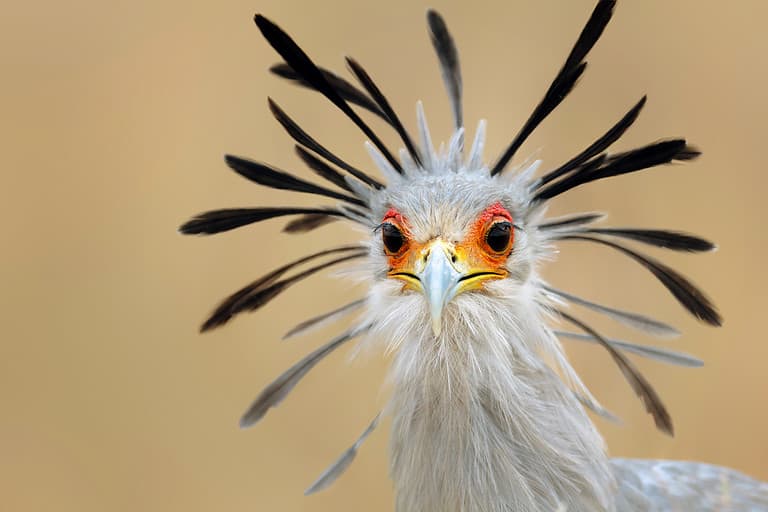
- One bird on this list doesn't use its beak or talons to kill snakes. Its weapon of choice will surprise you. Secretary bird's kicking weapon →
- The smallest predator on this list has a biological superpower that lets it safely eat animals that would kill most others. Hedgehog's toxin immunity →
Snakes are among the most dangerous groups of animals on the planet, ranking as a leading cause of animal-related human deaths globally. Out of the three thousand different recorded species, only around two hundred can harm humans. However, snakes also have a broad range of predators, including many birds that can drop down on the normally wary reptiles, catching them off guard. Continue reading to learn about the animals that prey on snakes.
Wolverine
Wolverines (Gulo gulo) are ruthless predators that will attack and eat anything they come across. Rodents, mice, worms, frogs, birds, and snakes are all fair game.
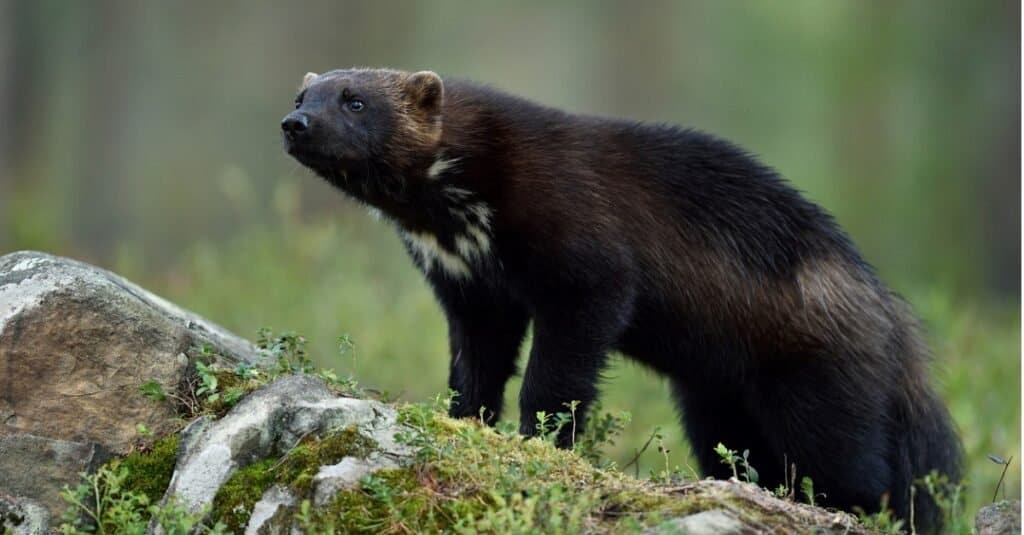
An average mature wolverine measures 26 to 44 inches in head-body length, has a 6 to 10-inch tail, stands 14 to 18 inches tall at the shoulder, and weighs between 18 and 55 pounds.
©iStock.com/ErikMandre
The wolverine is a member of the weasel family. They are powerful, versatile scavengers and predators. Solitary animals, wolverines spend considerable time in trees preying on birds. Wolverines traverse 15 miles a day looking for food and will dig burrows solely to capture hibernating animals.
Mongoose
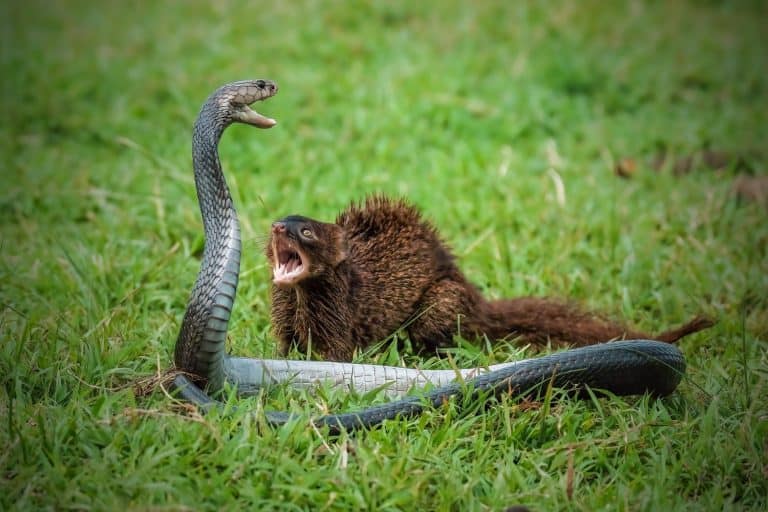
The Egyptian mongoose (Herpestes ichneumon), the slender mongoose (H. sanguineus), and the Indian grey mongoose (Urva edwardsii) are three species of mongooses that actively prey on venomous snakes, including cobras.
The mongoose has a unique defense against most venomous snakes: acetylcholine receptors that render mongooses immune to a variety of venoms.
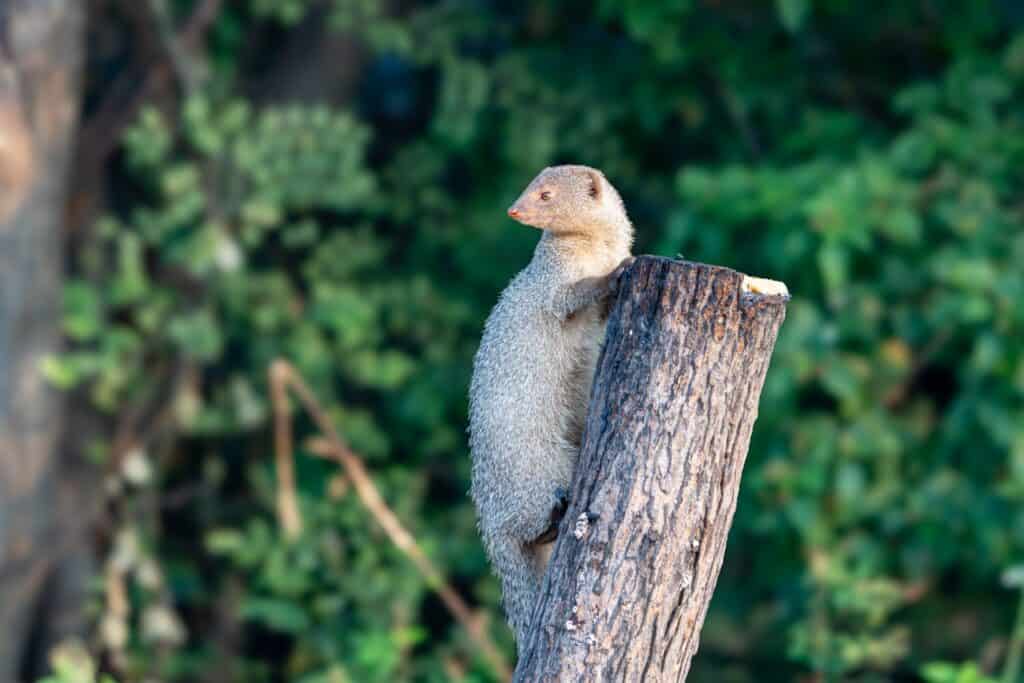
The Indian grey mongoose is noted for its audacious attacks on highly venomous snakes, such as king cobras.
©Banu R/Shutterstock.com
Mongooses rely on speed and agility to dart in with a lethal crunch of their jaws before settling down to eat.
Members of the genus Herpestes, which live in the warmer climes of Africa, Asia, and Southern Europe, are more likely to prey on snakes.
Kingsnake
Kingsnakes in the genus Lampropeltis, particularly the prairie kingsnake (Lampropeltis calligaster), speckled kingsnake (L. holbrooki), California kingsnake (L. californiae), the eastern kingsnake (L. getula), and the Florida kingsnake (L. g. floridana) are known to consume other snakes.
Kingsnakes kill by constriction and have some of the strongest constriction forces in the animal kingdom, exerting twice as much crushing force relative to their body size as larger constrictors such as pythons.

Prairie kingsnakes are known to prey on other snakes.
©Matt Jeppson/Shutterstock.com
Snake Eagle
The name snake eagle can refer to any number of birds in the Circaetus and Spilornis genera. Snake eagles are typically between two and three feet long, with wingspans approaching six feet.

A short-toed snake eagle (Circaetus gallicus) feeds her hatchling a snake.
©COULANGES/Shutterstock.com
Snake eagles are predatory birds that can decapitate and swallow an entire snake while in flight. They grasp the reptile from the ground or from a tree with their talons before returning to the air to dispatch their prey.
A layer of scales on the snake eagle’s legs offers protection from unwanted bites. That’s a great advantage for a bird that regularly preys on black mambas and cobras in the rainforest. The snake eagle also consumes rodents, lizards, fish, and bats when snakes are unavailable.
Bobcat
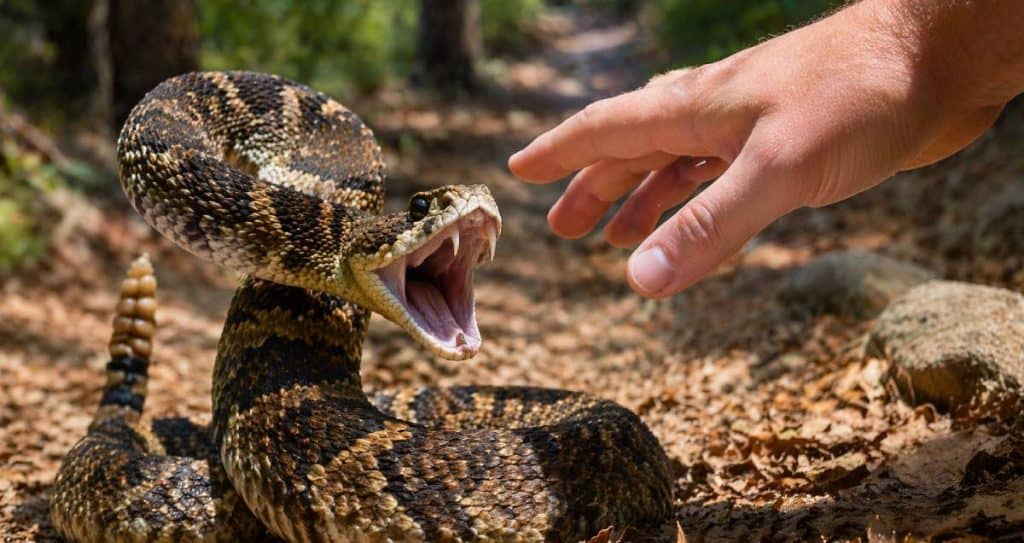
Bobcats (Lynx rufus) are strict obligate carnivores, meaning their bodies are biologically adapted to rely solely on animal flesh to survive. These predators feast on rabbits, snakes, rodents, eggs, and lizards. But the bobcat also likes a challenge, going after white-tailed deer and rattlesnakes in the desert. Bobcats are pure opportunists: if it moves and they can catch it, they will eat it.
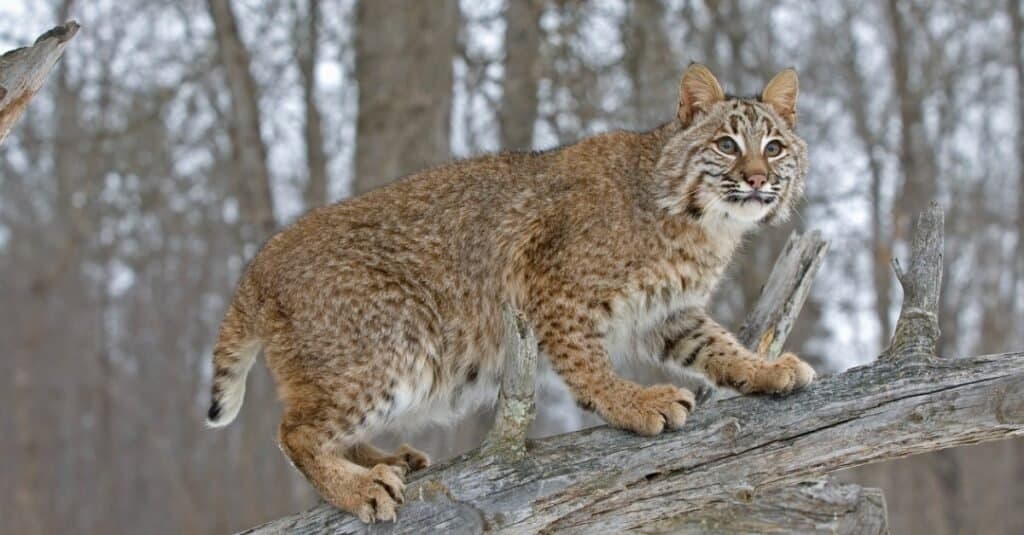
Bobcats are some of nature’s most fearless predators, making them one of the few native creatures bold enough to kill and eat venomous snakes.
©iStock.com/JohnPitcher
The bobcat is territorial and solitary, marking its boundaries with scent to keep out other cats. Males let their territories overlap with those of several females while ranging over 40 square miles of claimed land. Bobcats are shy and elusive.
Hedgehog
Both African hedgehogs and European hedgehogs, in the subfamily Erinaceinae, will readily attack, kill, and eat snakes.

Hedgehogs are immune to many toxins, which gives them the unique ability to consume some toxic animals. For example, they can eat small venomous snakes, scorpions, and frogs without any ill effects.
©DenisNata/Shutterstock.com
One of the most distinctive characteristics of the hedgehog is its immunity to a variety of toxins. This gives the hedgehog the ability to consume a variety of toxic animals — including scorpions, spiders, beetles, frogs, bees, and snakes — with no ill effects. During a nightly hunt, the hedgehog can consume up to a third of its body weight, feeding on plants, insects, small vertebrates, and other animals that would sicken or kill most other creatures.
Some species of hedgehogs sustain themselves mainly on small insects. Other hedgehogs are omnivores that consume a variety of animal and plant matter. And there are species that routinely consume snakes.
Honey Badger
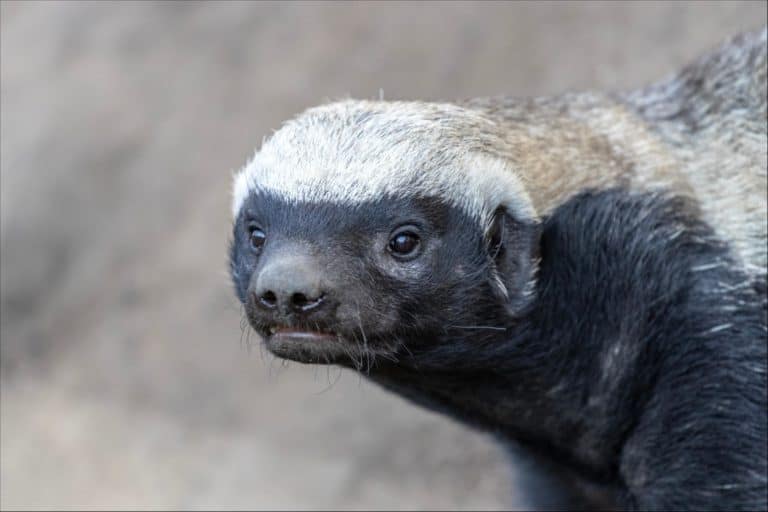
Thanks to their immunity to king cobra venom, honey badgers (Mellivora capensis) are always on the lookout for snakes. Viewing snakes as high-yield meals, the honey badger searches through dense brush, trees, and even burrows. During the warmer parts of the year, when snakes are active, the honey badger derives more than half its caloric intake from snakes.
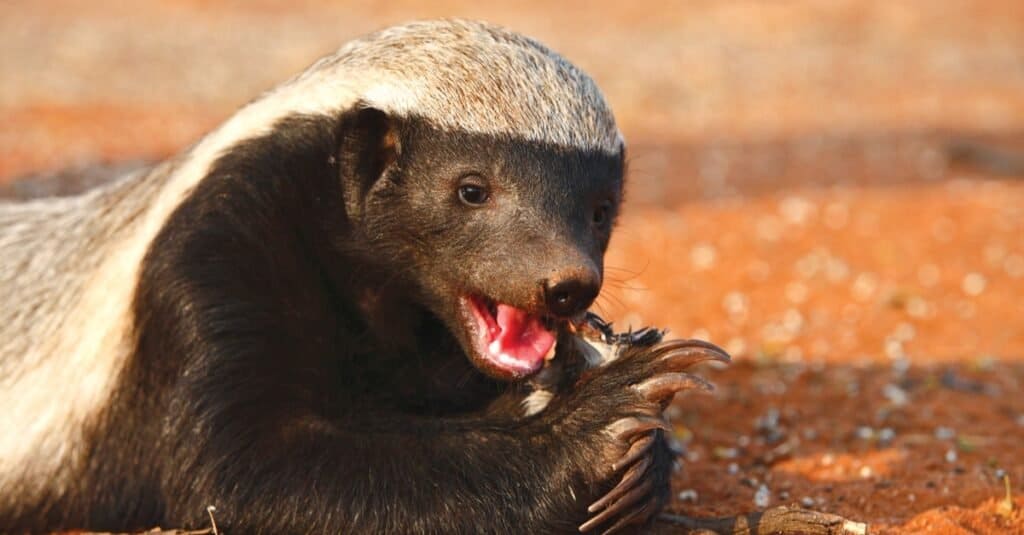
Up to 25 percent of the honey badger’s omnivorous diet consists of venomous snakes.
©Erwin Niemand/Shutterstock.com
Even the deadly puff adder is prey. Science has not been able to explain the honey badger’s immunity. A honey badger once collapsed after feeding on a puff adder’s head. The badger appeared to die, but it woke from a deep sleep two hours later and staggered off. There are accounts of other highly venomous animals whose venom also has no effect on the honey badger.
King Cobra
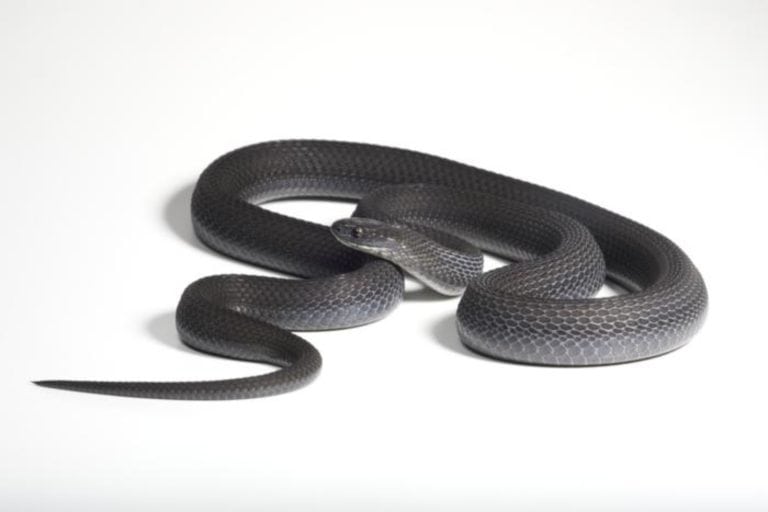
The king cobra (Ophiophagus hannah) is the longest venomous snake in the world, with some individuals reaching 18 feet. While these predators will eat large lizards and similar cold-blooded creatures, they typically consume other snakes.
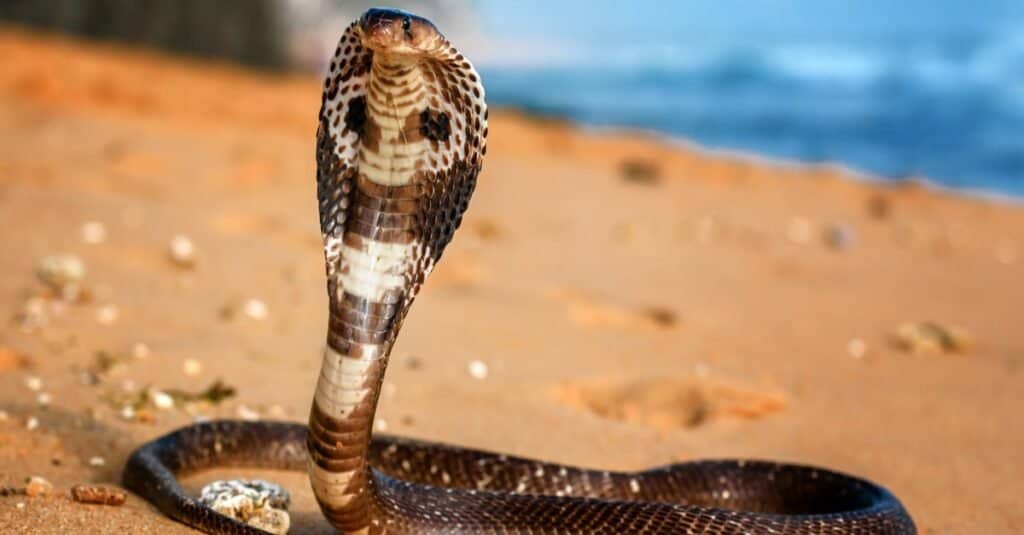
The king cobra’s scientific name is Latin for snake eater.
©Vova Shevchuk/Shutterstock.com
King cobras primarily hunt other snakes. Although deaf, the king cobra has an acute sense of smell. It stays on alert for prey and once scented, the cobra is on the prowl.
Secretary Bird
The secretary bird (Sagittarius serpentarius) has a kick with five times the force of its body weight. That’s more than enough to kill a large venomous snake in the blink of an eye. The secretary bird stands over four feet tall, on long, crane-like legs.
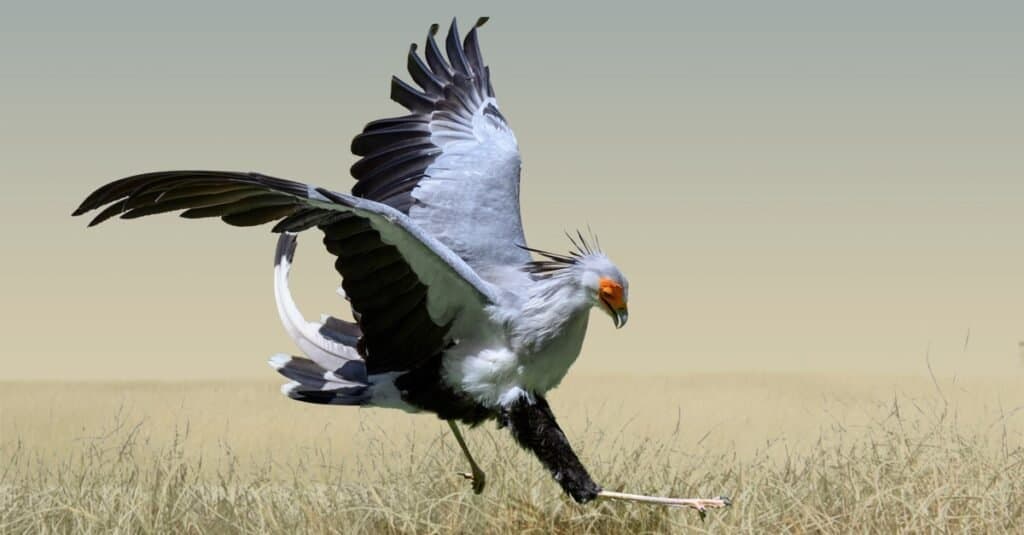
Scientists in the UK have found that the Secretary Bird, native to sub-Saharan Africa, can deliver precise and powerful kicks with a force five times its own body weight; enough to kill venomous snakes in less than the blink of an eye.
©Barbara Ash/Shutterstock.com
Unlike most birds that hunt from the air, secretary birds hunt on the ground. Instead of attacking with its beak or talons, the secretary bird stomps on its prey.
The secretary bird can land a fatal blow to its prey’s head with great accuracy; otherwise, the bird risks being bitten by the snake. But research shows the secretary bird moves fast enough that if the first strike goes awry, its motor control and visual targeting make a second strike a good bet.
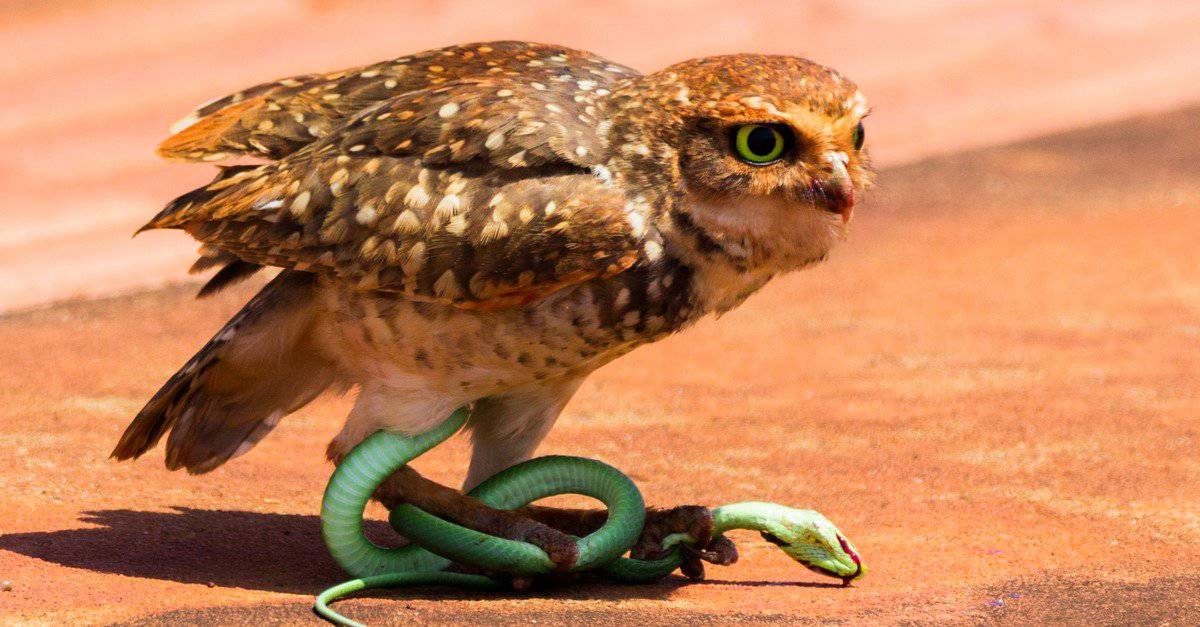
Burrowing Owl
Many owl species eat snakes, including the burrowing owl (Athene cunicularia).

A burrowing owl and her prey, the green snake.
©Rafael Goes/Shutterstock.com
Snakes are not routine prey for owls, but owls are opportunistic feeders that will eat a snake if one presents itself. Owls adapt to the food available in their environments, so the types of snakes they eat vary. The snakes, however, must be small enough for the owl to overpower them. Some common snakes eaten by owls include common garter snakes, rat snakes, ribbon snakes, eastern hognose snakes, and smooth green snakes.
Humans
Although not all cultures eat snakes, some humans (Homo sapiens) do consume snake meat.

Snake is considered a delicacy in some cultures.
©Yarlander/Shutterstock.com
Snake meat is eaten in China, Vietnam, and Indonesia, where it is regularly featured in dishes such as snake soup or served grilled on skewers. In the United States, snake consumption is largely localized to Texas, where fried rattlesnake is served as a novelty regional dish.