
Quick Take
- Only one of Georgia's seven venomous snakes made this list, and it's one most people misidentify as harmless. Meet the venomous exception →
- One black snake on this list isn't even native to North America, and it arrived in a way you'd never expect. See the invasive newcomer →
- One of these snakes is immune to venom and actively hunts other venomous snakes, yet it is still mistaken for a deadly species. Explore the venom-immune hunter →
- The longest native snake in the United States lives in Georgia, and most residents have no idea it exists. Discover America's longest native snake →
Georgia is a hotbed for snakes because of its warm and humid climate. There are approximately 47 species of snakes in Georgia, and 10 of them are black snakes that are sometimes mistaken for each other. Knowing some different behaviors and physical traits among these snakes can help you stay safe. There are seven venomous snakes in Georgia, but only one makes it onto our list of black snakes. What are 10 of the black snakes in Georgia? Continue reading to find out.

Snakes are attracted to Georgia’s warm and humid climate.
©Sue Smith/Shutterstock.com
Eastern Cottonmouth
Cottonmouths (Agkistrodon piscivorus) are absent from the northeastern part of Georgia, but are present throughout the rest of the state. These snakes are also known as water moccasins, and they’re highly venomous.
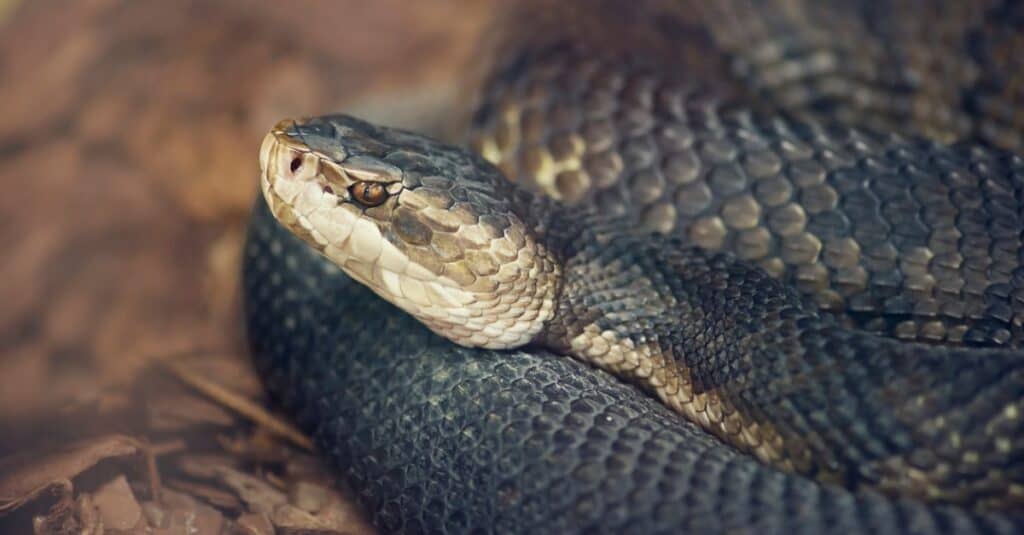
Cottonmouths are black venomous snakes in Georgia.
©iStock.com/Saddako
Their mouths are almost pure white, like cotton, which is how they earned their name. They battle birds of prey, and both can fatally wound each other.
Southern Black Racer
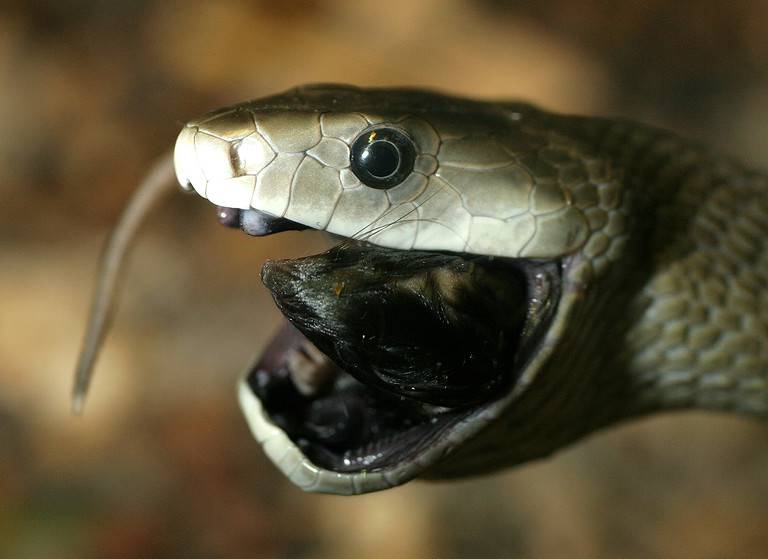
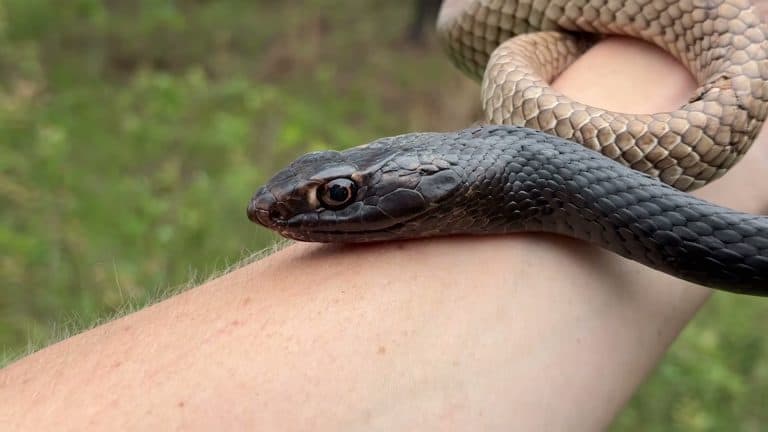
Southern black racers (Coluber constrictor priapus) are thin black snakes that can grow up to 5 feet long. Sometimes they have a white chin. If confronted, they’ll flee when possible, but they will also defend themselves by biting. They’re one of the most common snakes in Georgia.
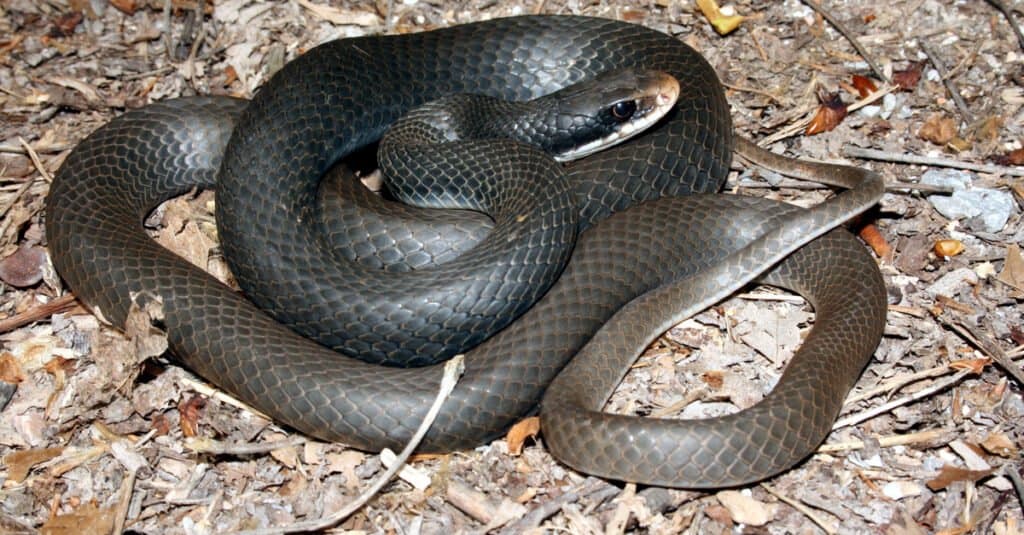
Black racers are one of the most common snakes in Georgia.
©Psychotic Nature/Shutterstock.com
These snakes have a uniformity to their coloring, which differentiates them from dark coachwhips, black kingsnakes, and hognose snakes. They are regularly mistaken for cottonmouths.
They thrive in almost any habitat, but they especially like the edges of forests and wetlands. They rely on their eyesight for hunting, and they look for their meals during daylight hours. Black racers are usually found on the ground, although they’re great climbers.
Glossy Crayfish Snake
Glossy crayfish snakes (Liodytes rigida, formerly Regina rigida) are smaller snakes that typically measure 14 to 24 inches long, though they can reach up to 32.7 inches. They’re found throughout the coastal plain in bodies of water as they are primarily aquatic. It is not fully understood how close to a water source they need to live.
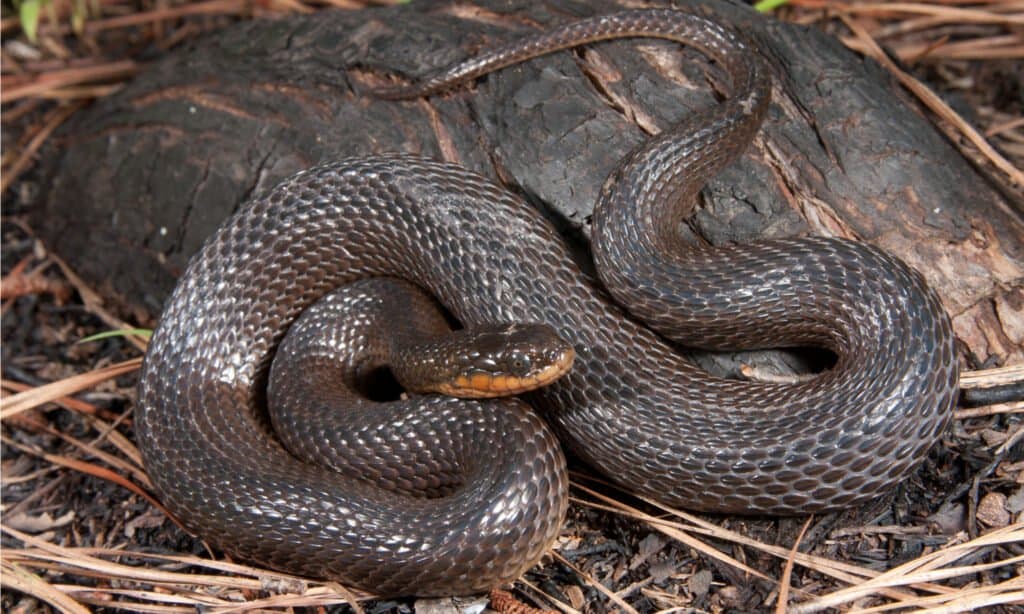
Glossy crayfish snakes feast primarily on crayfish that they swallow whole.
©Nathan A Shepard/Shutterstock.com
As their name implies, glossy crayfish snakes feed mostly on crayfish, and they’re able to do this because they have special pointy teeth that help them crunch through the crayfish’s exoskeleton.
They coil around their crayfish, but they aren’t constrictors; they swallow crayfish whole. They’re hard to spot in the wild, but sometimes, especially on rainy nights, they can be caught in shallow water.
Brahminy Blind Snake
Thought to be native to South Asia and parts of Africa and the Arabian Peninsula, the invasive species brahminy blind snake (Indotyphlops braminus) was brought to the United States in the soil of imported plants.
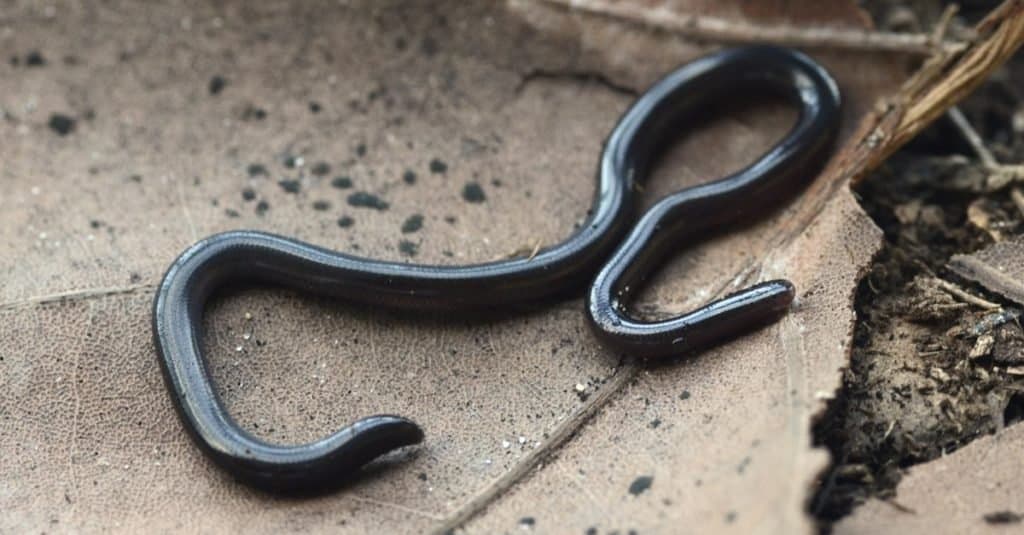
Brahminy blind snakes are tiny burrowers that are invasive.
©Patrick K. Campbell/Shutterstock.com
They’re tiny snakes that typically grow to about 4.4–6.5 inches in length, with a maximum of around 6.8 inches. Their favorite foods are termites and ant eggs. They like to burrow underground and are completely harmless.
Plain-Bellied Water Snake
The plain-bellied water snake (Nerodia erythrogaster) is found throughout the state of Georgia, except in extreme southeastern Georgia. These snakes grow to be approximately 3 feet long.
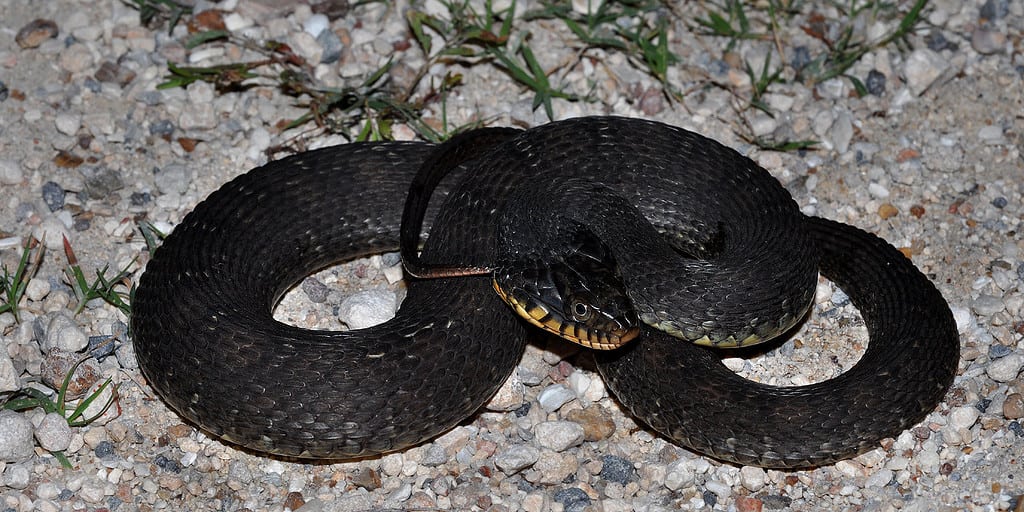
They’re usually near water of some kind, such as wetlands, lakes, or ponds. The loss of these habitats due to development threatens their presence in Georgia.
Eastern Rat Snake
The Eastern rat snake (Pantherophis alleghaniensis) is distributed across the state of Georgia. Rat snakes eat birds, including chickens, which is why they are sometimes referred to as chicken snakes. They also eat birds’ eggs and small rodents, including rats.
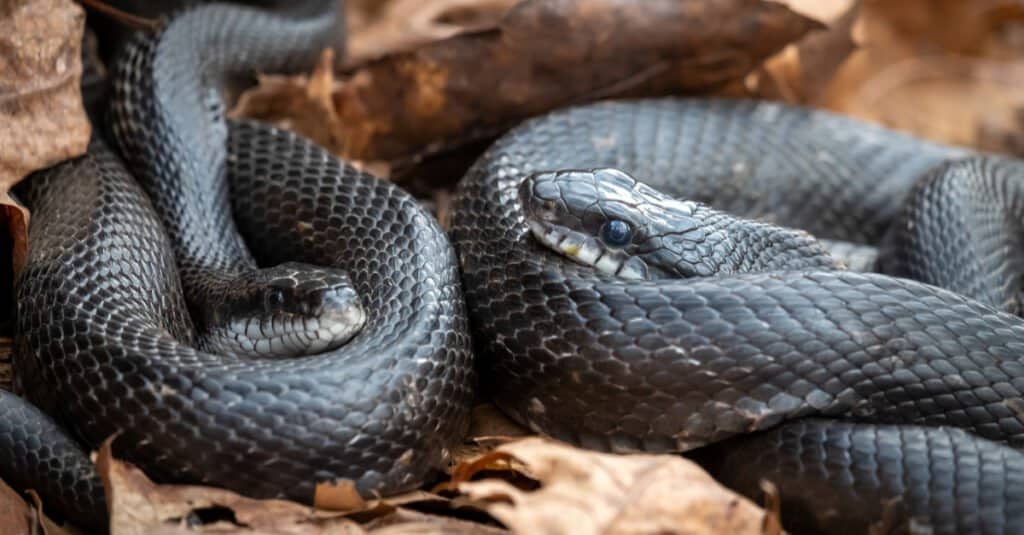
Eastern rat snakes can be as long as 8 feet.
©samray/Shutterstock.com
Eastern rat snakes are adaptable and can be found in various habitats, including wooded forests, rocky hillsides, and open edges like farmlands or fields, where they can hunt rodents.
Black Swamp Snake
Black swamp snakes (Liodytes pygaea, formerly Seminatrix pygaea) are found in Georgia’s southeastern coastal plain. They have a solid red underside and a black back. They seek wet habitats with more frogs than fish.
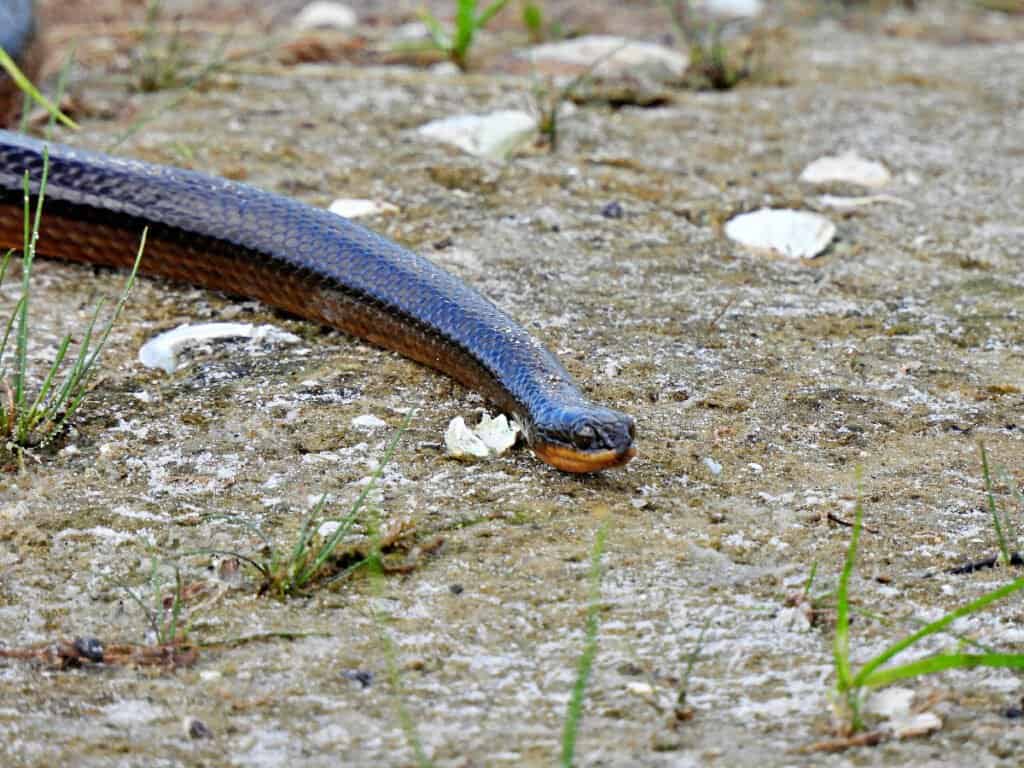
Black swamp snakes are about 14 to 15 inches long.
©iStock.com/passion4nature
They’re often confused with Eastern mudsnakes (Farancia abacura abacura); however, Eastern mudsnakes have checkered bellies while the swamp snake’s belly is solid.
Black Kingsnake
The black kingsnake (Lampropeltis nigra) is found in Northwest Georgia in a variety of habitats. These snakes are mostly black except for flecks of yellow that are distributed evenly across their bodies.
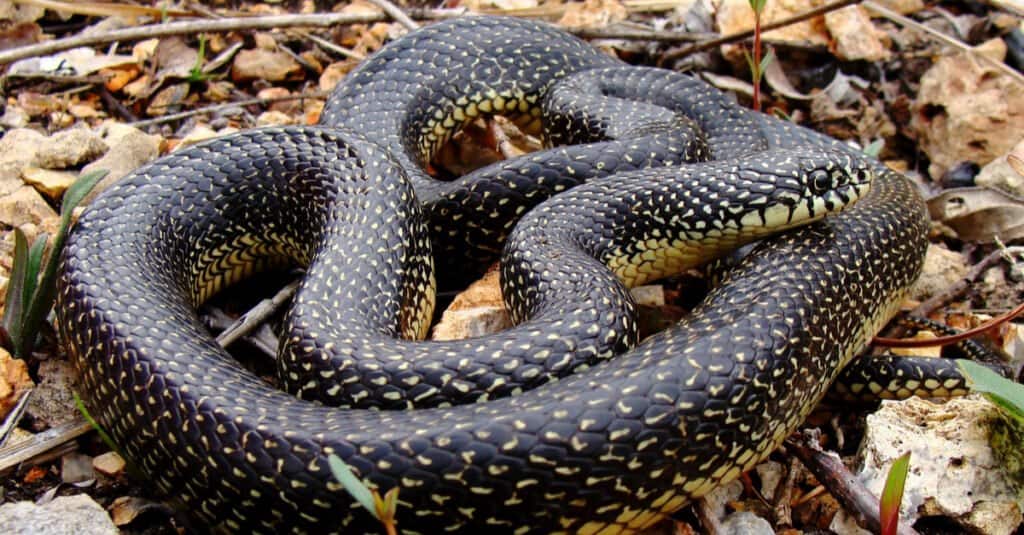
Black kingsnakes eat venomous snakes.
©Matt Jeppson/Shutterstock.com
Their bellies mirror their bodies: mostly yellow with blotches of black. They’re popular pets, but catching wild individuals is not recommended, as they’re more aggressive than those bred for captivity.
Kingsnakes are nonvenomous snakes that eat venomous snakes because they’re immune to most types of snake venom. They’re sometimes confused with cottonmouths, although cottonmouths have diamond patterning, while kingsnakes may have stripes.
Eastern Mud Snake
The Eastern mud snake (Farancia abacura) is an aquatic, nonvenomous species distributed throughout Georgia’s southern Coastal Plain. Eastern mud snakes have black backs and a red checkerboard pattern on their undersides. These nocturnal snakes live in muddy, slow-moving freshwater environments, including cypress swamps, marshes, and rivers. Adult Eastern mud snakes are between 3.5 and 4.5 feet long, with females growing larger than males.
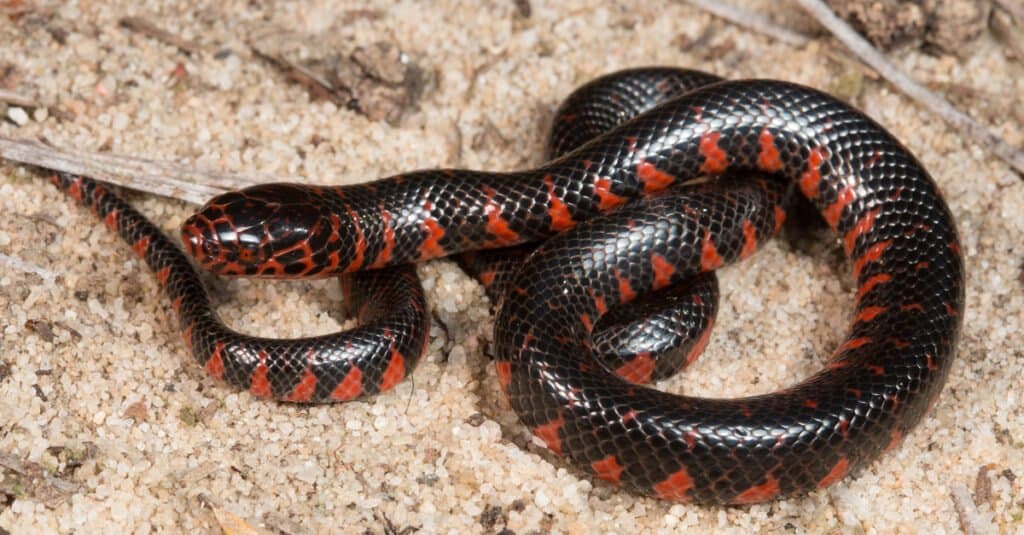
Eastern mud snakes prey on large aquatic salamanders.
©Nathan A Shepard/Shutterstock.com
Eastern Indigo Snake
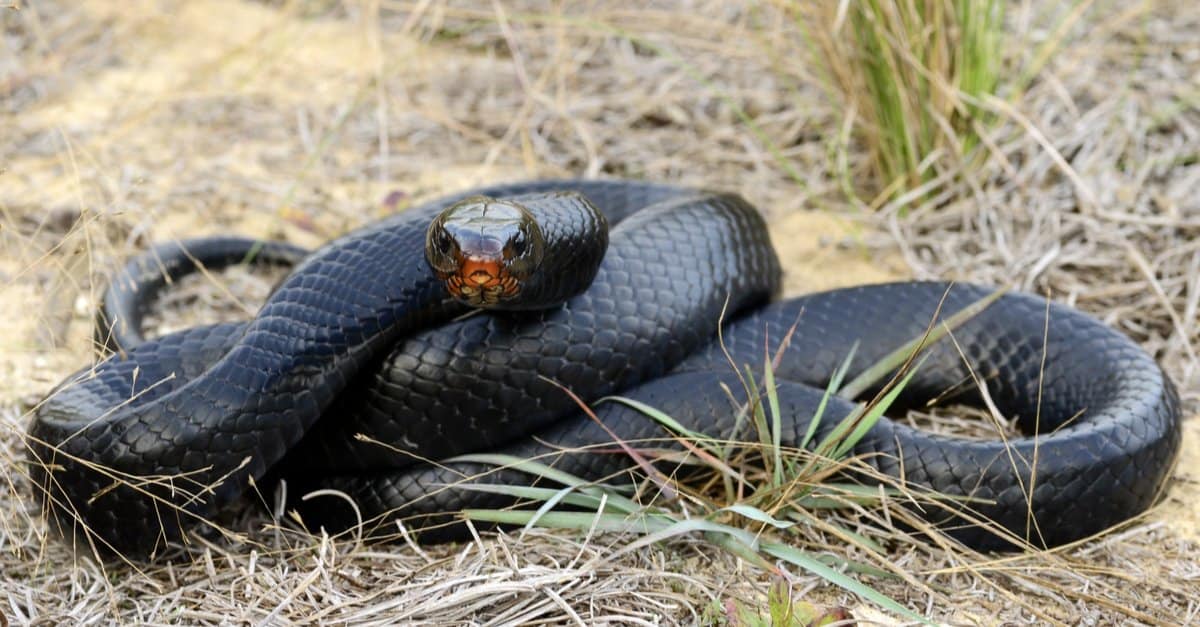
Though it was once widely distributed across Georgia’s coastal plain, the Eastern indigo snake (Drymarchon couperi) has vanished from much of its former territory due to habitat loss.
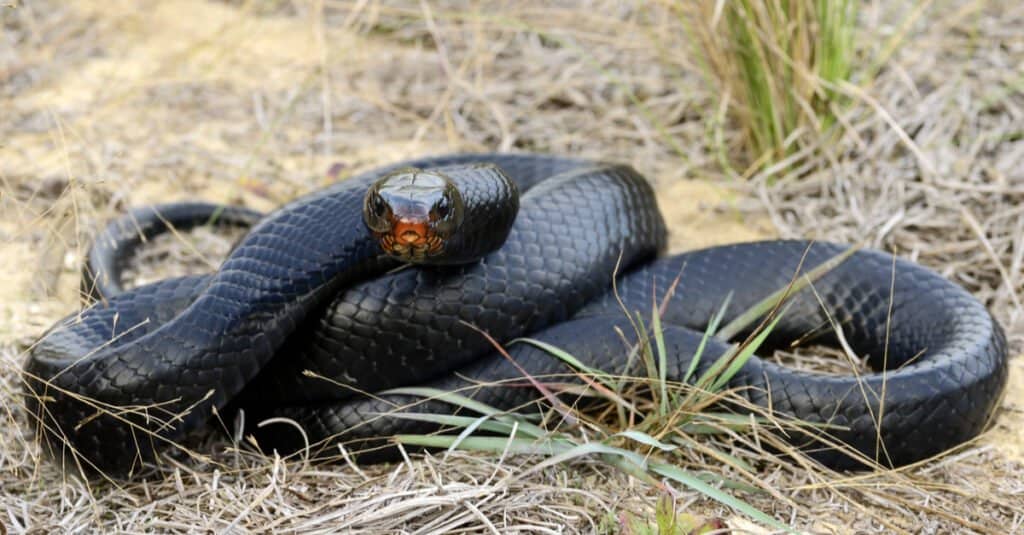
Eastern indigo snakes primarily eat gopher tortoises.
©Patrick K. Campbell/Shutterstock.com
The Eastern indigo snake is the longest native snake in the United States, typically reaching adult lengths between 5 and 7 feet. Its body is covered in smooth, highly polished scales, giving it a glossy, blue-black color that appears iridescent under direct sunlight.
Although the majority of its body is uniformly black, the Eastern indigo snake has a contrasting wash of reddish-brown, cream, or orange on its chin, throat, and cheeks. Its belly is a solid slate-gray or dark blue.
The Eastern indigo snake eats a variety of vertebrates, including juvenile gopher tortoises. They not only feast on gopher tortoises but also use their burrows.