
Quick Take
- One snake on this list looks completely black and harmless, yet it is actually venomous and potentially life-threatening. Meet the deceptive cottonmouth →
- A snake so rare in Virginia it's almost a myth hides in just three counties, and most residents have no idea it exists. Discover Virginia's rarest snake →
- One of these black snakes refuses to bite even when grabbed, while another will strike without hesitation despite being completely harmless. See which snake bites back →
- Some snakes on this list aren't actually born black, with something specific triggering the color change over time. Learn about the color change →
There are more than 4,000 species of snakes worldwide and 32 to 34 native snake species in Virginia. Only three snake species in Virginia are solid black, while a handful of others are primarily black. Although the solid black snakes found in Virginia are non-venomous and harmless to humans, venomous cottonmouths can darken significantly as they age and may appear to be solid black. Continue reading to learn about black snakes in Virginia.
Black Rat Snake
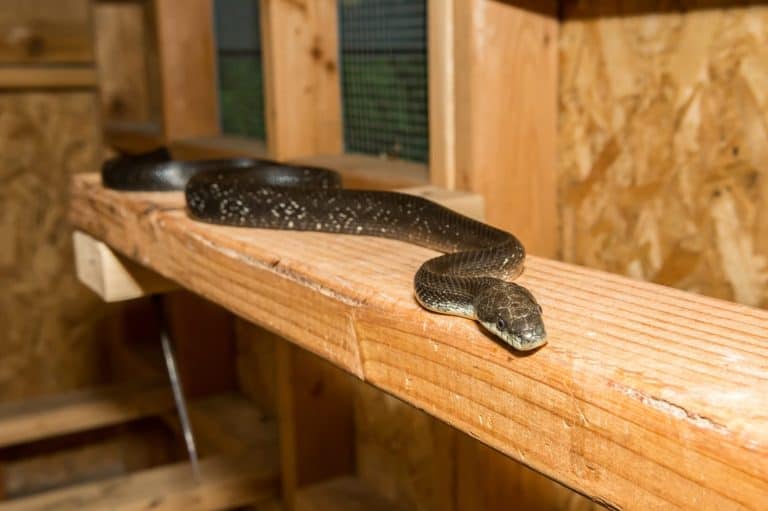
The black rat snake (Pantherophis alleghaniensis) is a large, nonvenomous constrictor with shiny solid black upper scales, a white chin, and a distinctive black-and-white checkerboard pattern on its belly. Juveniles feature dark blotches on a gray background. Black rat snakes average 3.5 to nearly 7 feet long.
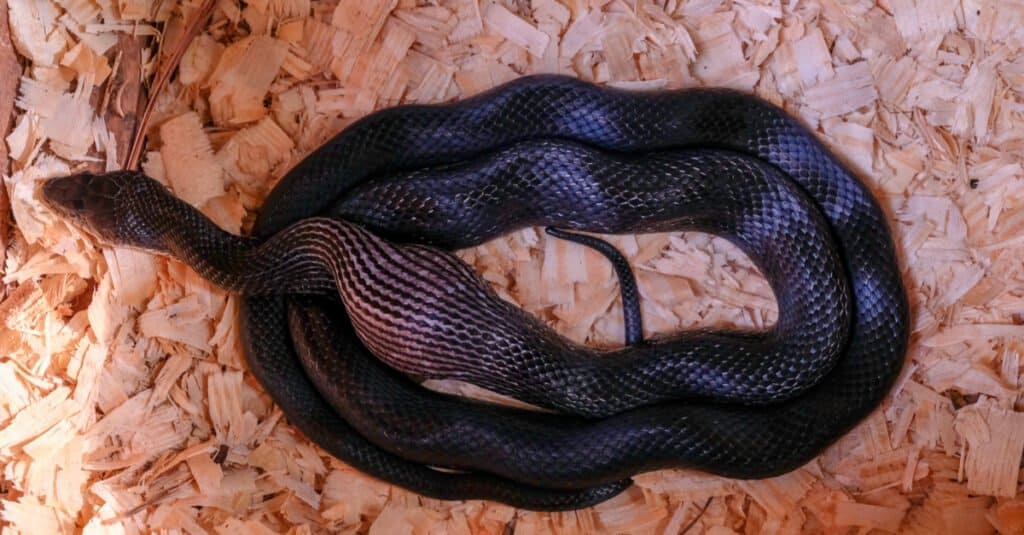
The black rat snake is the longest snake in Virginia.
©samray/Shutterstock.com
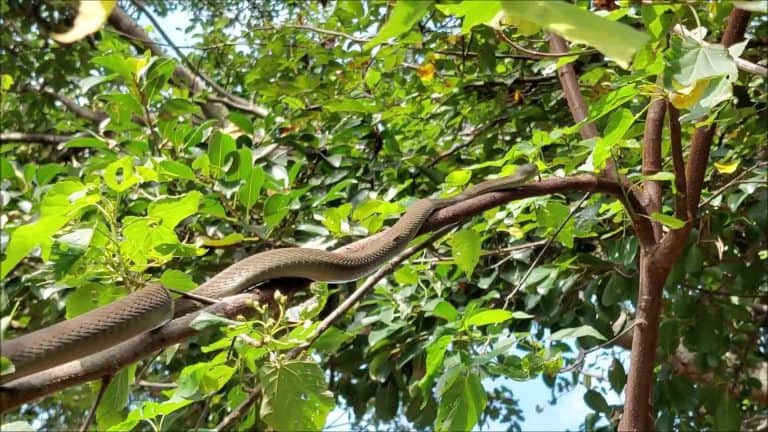
Rat snakes are exceptional climbers found across Virginia, living in diverse habitats ranging from hardwood forests and agricultural fields to suburban woodlots and old barns. Black rat snakes do not pose a threat to humans or pets. Instead of using venom, they are constrictors that squeeze the life out of their prey, including mice, rats, and birds.
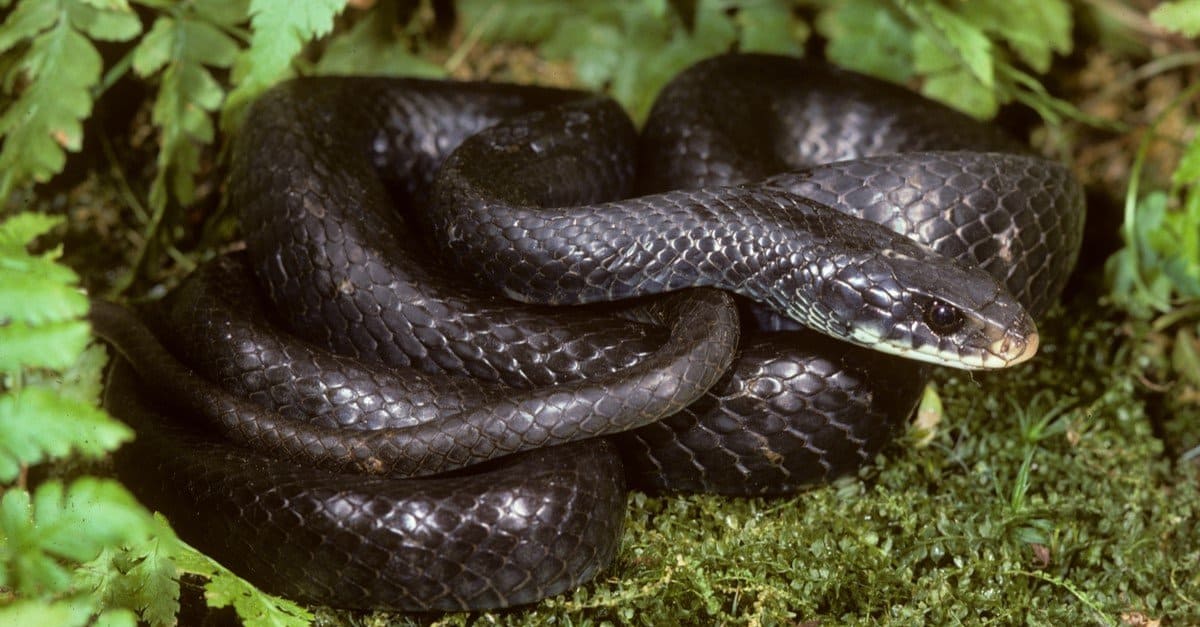
Northern Black Racer
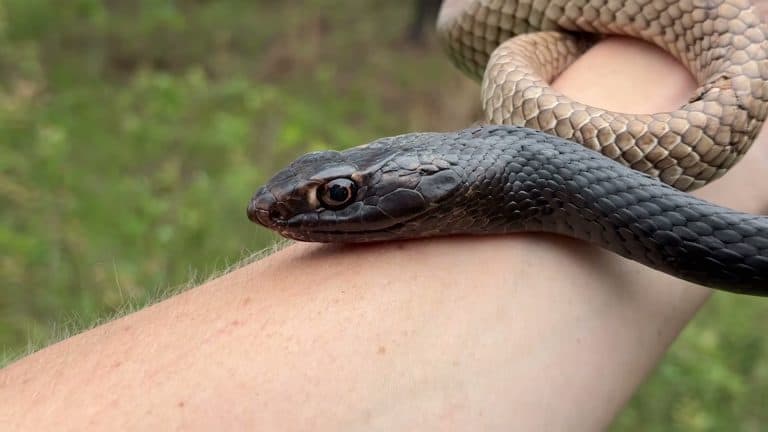
The Northern Black Racer (Coluber constrictor constrictor), is a slender, nonvenomous snake recognized by its uniform black back, dark gray belly, and distinctive white chin and throat. Mature specimens are typically between 33 and 65 inches long.
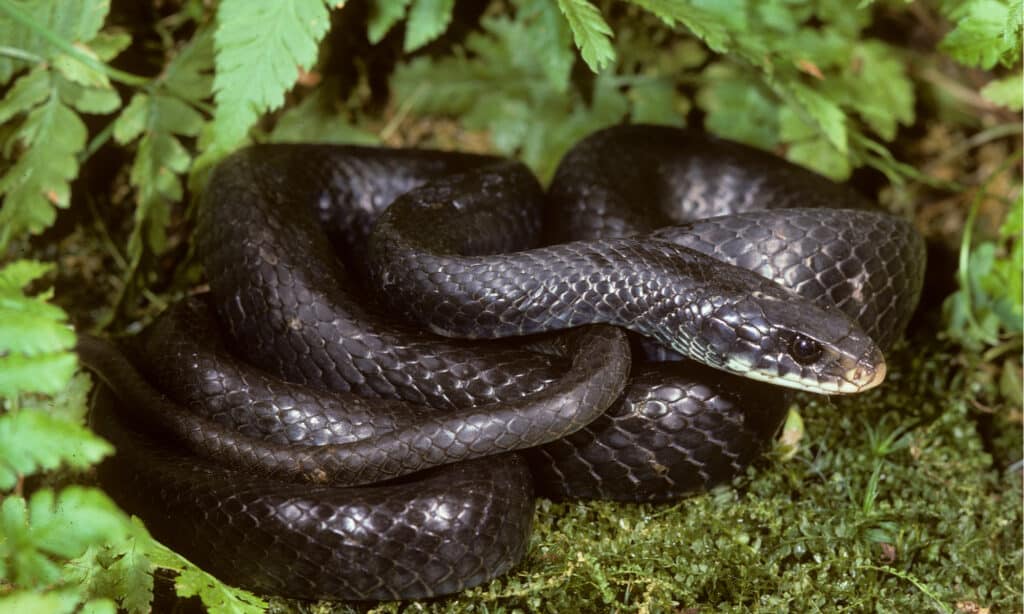
Northern Black Racers.
©Breck P. Kent/Shutterstock.com
Although Northern black racers are not venomous, they are wild animals. If they feel trapped, they will not hesitate to strike and deliver a quick, defensive bite. However, because their teeth are small, a bite typically results in minor, superficial scratches or pinprick punctures.
Eastern Black Kingsnake
The Eastern black kingsnake (Lampropeltis nigra) is a non-venomous constrictor with glossy black dorsal scales marked with white or pale yellow pigment dispersed uniformly across its body, which can fade with age. Its underside is characterized by a distinctive black-and-white checkered or irregularly patched belly. Eastern black kingsnakes are 36 to 45 inches long.
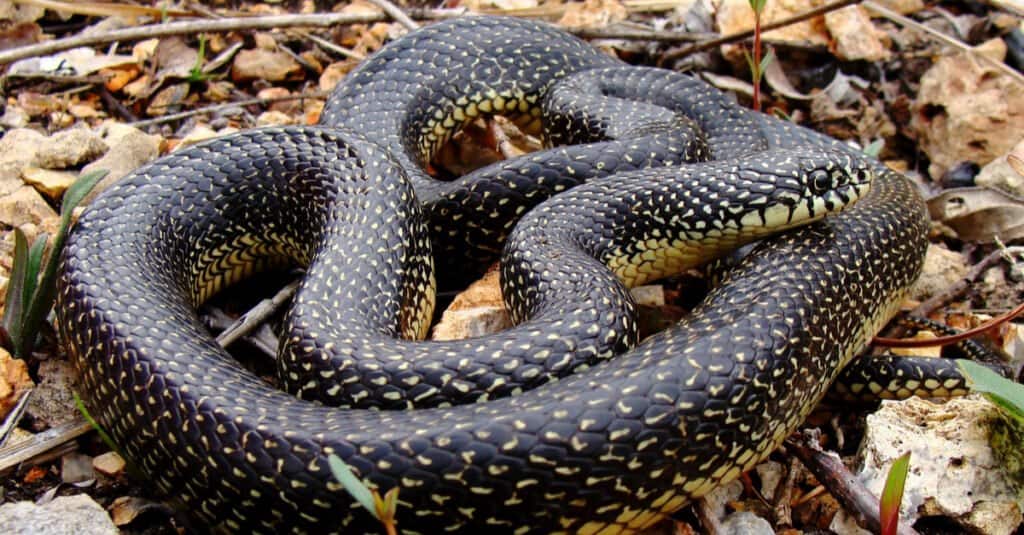
Eastern black kingsnakes can tolerate the venom of venomous snakes.
©Matt Jeppson/Shutterstock.com
Although common across parts of the broader Southeastern United States, the Eastern black kingsnake is considered a rare find in Virginia, where its distribution is strictly limited to the state’s far southwestern corner, primarily occurring in only three counties within the Ridge and Valley region.
Plain-Bellied Water Snake
The plain-bellied water snake (Nerodia erythrogaster) is a harmless, semi-aquatic snake with a uniform reddish-brown, gray, or greenish-brown back, though mature specimens may appear nearly black.
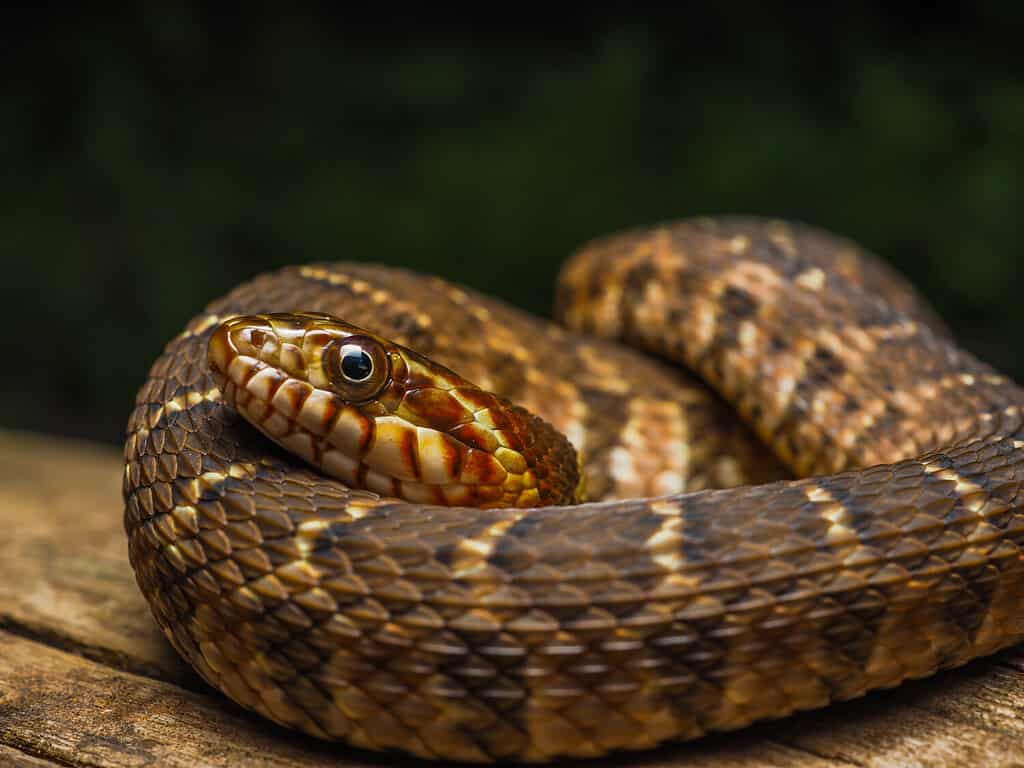
Plain-bellied water snakes are not always black.
©Tyler Albertson/Shutterstock.com
Plain-bellied water snakes are between 30 and 48 inches long, although females tend to be larger than males. These snakes are found in the Southeastern coastal plain and lower piedmont regions of Virginia, in freshwater habitats such as swamps, marshes, rivers, and flooded wetlands.
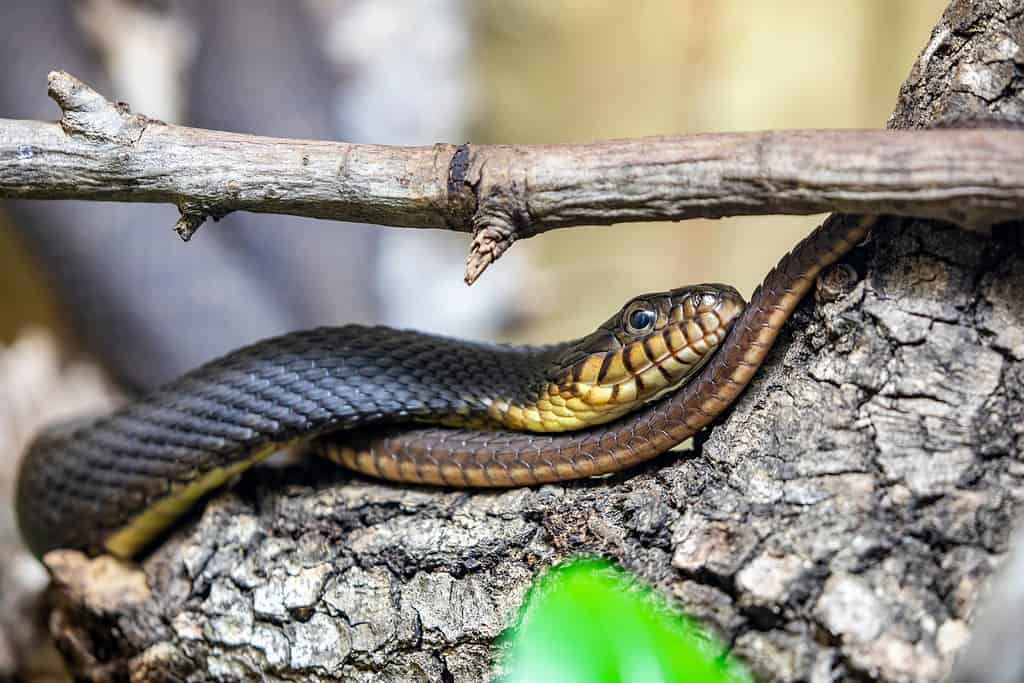
Plain-bellied water snakes tend to darken with age.
©Danny Ye/Shutterstock.com
Rainbow Snake
The common rainbow snake (Farancia erytrogramma erytrogramma) is aquatic. This large, non-venomous snake averages 27 to 48 inches in length. The rainbow snake is recognized by its glossy, iridescent bluish-black back adorned with three distinctive longitudinal red stripes.
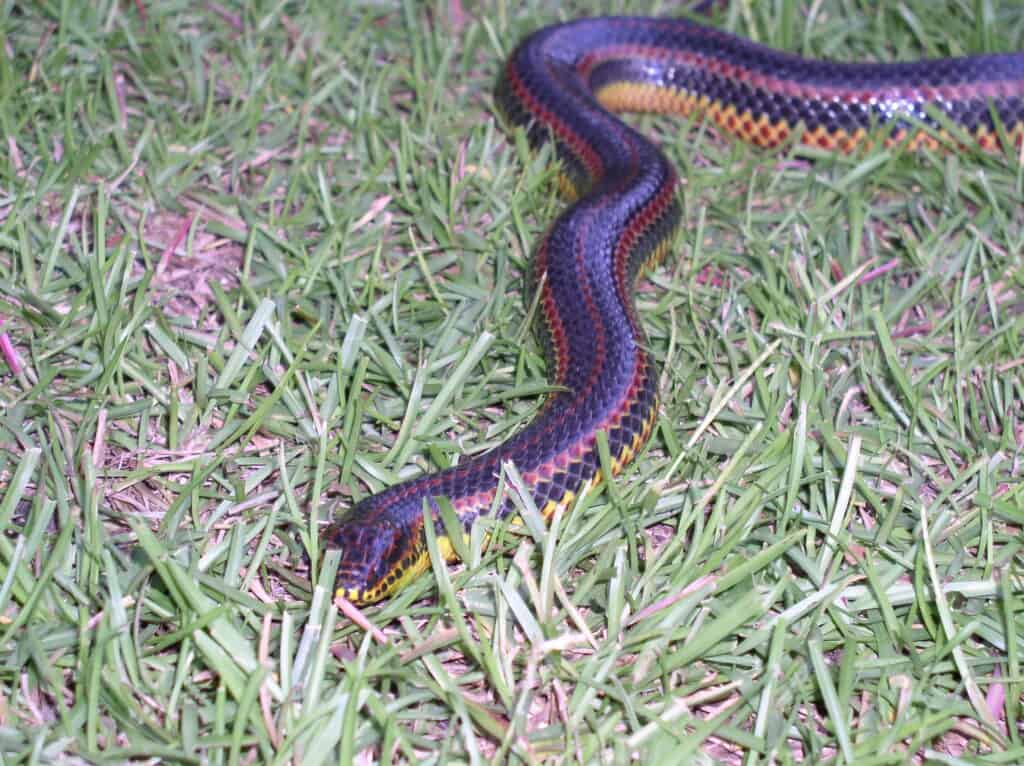
Black iridescent scales are a hallmark of rainbow snakes.
Rainbow snakes are distributed throughout Eastern Virginia, where they are found in aquatic environments, hiding under debris or within the mud of slow-moving freshwater rivers and swamps.
Rainbow snakes are harmless to humans. They are non-venomous and entirely docile, meaning they do not bite even when captured or handled.
Northern Cottonmouth
The cottonmouth (Agkistrodon piscivorus), also known as the water moccasin, is a semi-aquatic venomous pit viper. Cottonmouths have a triangular head and vertical pupils. Mature cottonmouths measure between 30 and 48 inches in length.
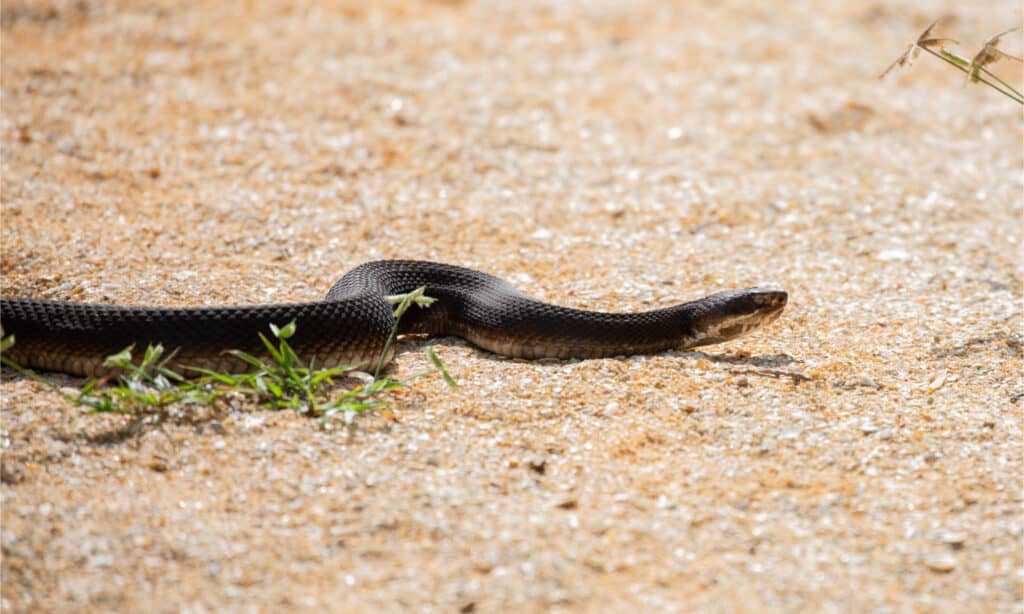
Cottonmouths are only found in Southeastern Virginia.
©Linda Burek/Shutterstock.com
Their dorsal scales are olive, brown, or nearly black, and often marked with dark cross bands that can darken into solid black with age. Cottonmouths are found exclusively in the Southeastern corner of Virginia in lowland freshwater habitats, swamps, and marshes. A cottonmouth bite can be life-threatening if left untreated, but fatalities are extremely rare.
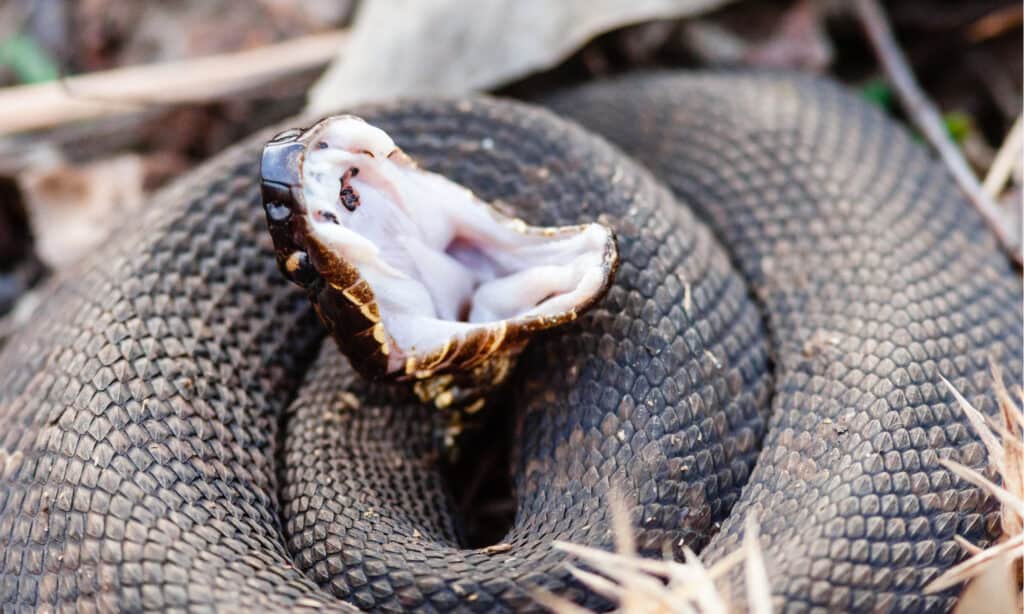
It’s illegal to kill a snake in Virginia unless it threatens livestock or people.
©Marcum Havens/Shutterstock.com