
Quick Take
- Copperheads bite more people than any other venomous snake in the U.S., but their fatality rate might shock you. Explore venom danger level →
- What you thought you knew about copperhead subspecies is now officially outdated, because DNA changed everything. See how DNA reclassified them →
- In three states, two distinct copperhead species overlap, and what happens when they meet is unexpected. See where they overlap →
- Copperheads live in far fewer states than most people assume. Is yours one of them? Check the 28 states →
Where do you find copperhead snakes (Agkistrodon contortrix) in the United States? Although they are common venomous snakes, they don’t live in every state. In fact, copperheads only live in 28 states. They can be found from Massachusetts south to Florida, and west from Nebraska down through Texas. According to the IUCN, copperheads are locally common and widespread throughout their range. Find out whether copperheads can be found in your state.
Get to Know Copperhead Snakes
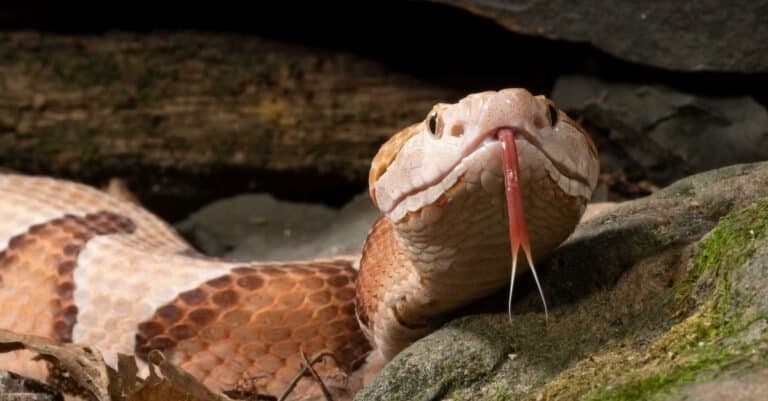
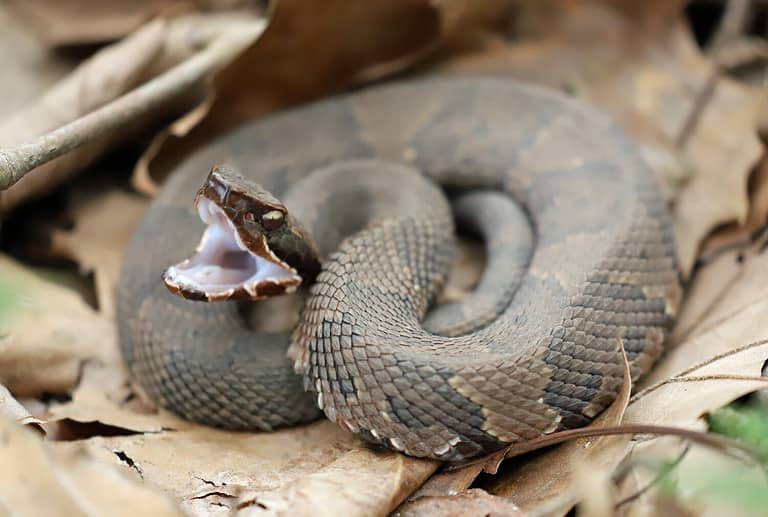
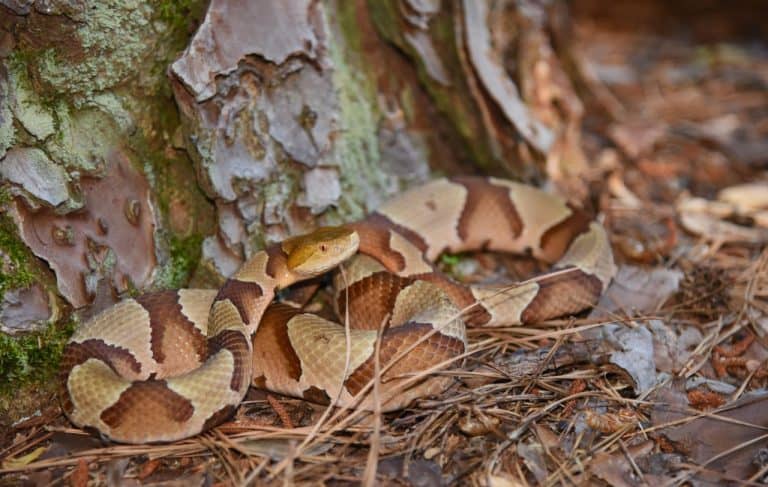
Copperhead snakes get their name from their copper-colored heads. Their heads are diamond-shaped and their bodies are thick, covered in ridged scales. They can have tan, light brown, grey, or pinkish-tan background colors with darker brown or reddish-brown hourglass-shaped crossbands across their backs. Copperheads typically reach 2 to 3 feet in length, although larger specimens can reach around 4 feet.
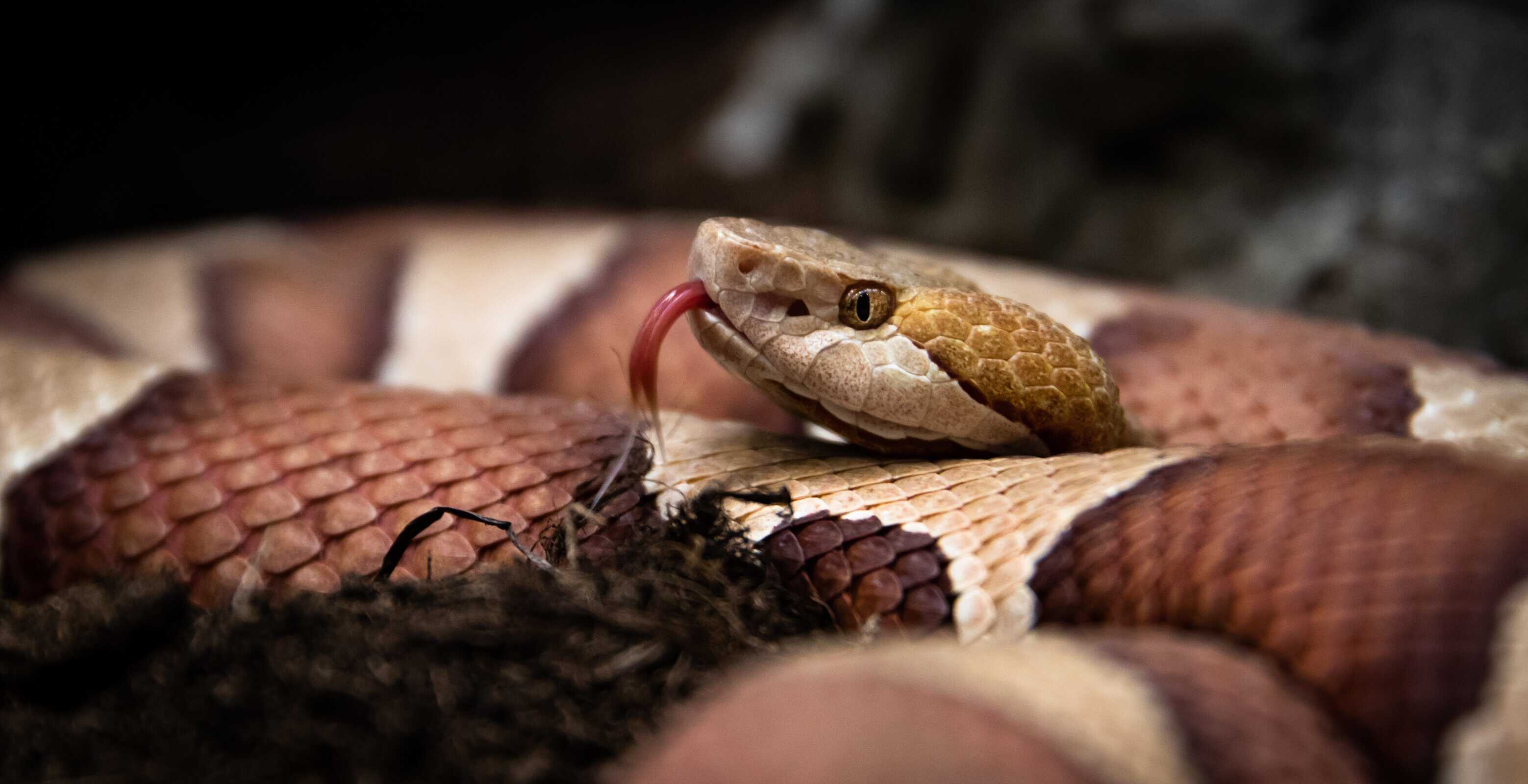
Belonging to the pit viper family, a copperhead snake has vertical, cat-like pupils and heat-sensing pit organs between its eyes and nostrils. These infrared heat sensors allow it to detect body heat in its prospective prey and strike with accuracy. These snakes are ambush predators, waiting motionless for prey. They generally feed on rodents, frogs, lizards, small birds, and large insects like cicadas. They are typically found in forests, rocky hillsides, old fields, and wetlands.
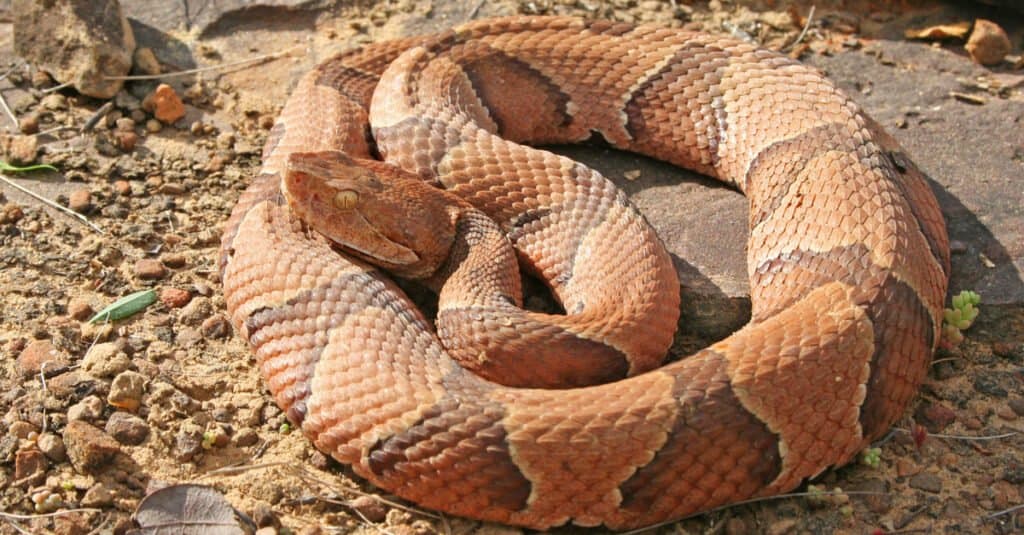
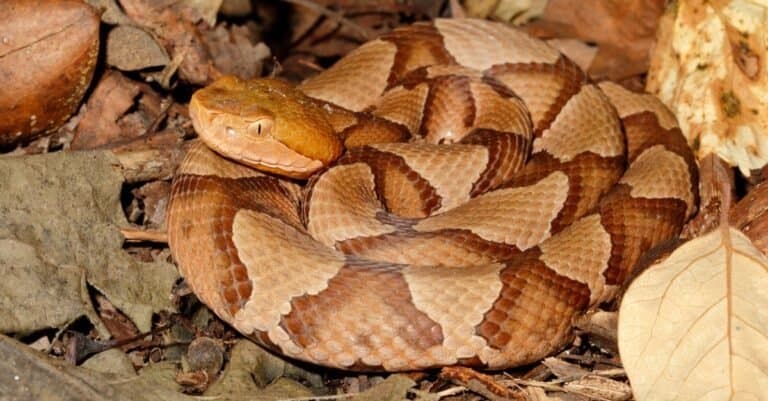
Copperheads have hourglass-shaped crossbands across their backs.
©Creeping Things/Shutterstock.com
Copperheads are some of the most common venomous snakes in the United States. Although they have bitten more people than any other venomous snake in the country, studies have shown that only 0.01% of copperhead bites have resulted in death. Experts note that this is due to their relatively mild venom and the small amount of venom they inject. Up to 25% of bites are dry bites, which means no venom is injected. Most bites occur when someone accidentally steps on or touches the snake. Copperheads are not naturally aggressive and would rather escape than confront a threat.
Copperhead Species vs. Subspecies in the United States
Historically, the North American copperhead had been divided into five subspecies. However, recent DNA analysis has recommended that only two species of copperhead be recognized: the eastern copperhead (A. contortrix) and the broad-banded copperhead (A. laticinctus).
Eastern Copperhead Former Subspecies
The southern, northern, and Osage copperhead subspecies are now all considered eastern copperheads. Eastern copperheads could have any of the following traits.
- Southern Copperhead (Agkistrodon contortrix contortrix): They are pale beige to almost pink, and the two halves of the hourglass do not always meet at the spine. The southern subspecies is generally larger than the northern. Found from Massachusetts west to Texas and southeastern Nebraska.
- Northern Copperhead (Agkistrodon contortrix mokasen): These snakes have a brown to tan background color that is darker than the southern subspecies. The two halves of the hourglass do typically meet along the spine. It is widely distributed from southern New England into Mexico.
- Osage Copperhead (Agkistrodon contortrix phaeogaster): Their colors are typically more sharply contrasted. They generally have a pinkish tan background with a light tan or white border around their dark brown markings. It is found in the central-western part of their range, including parts of Kansas, Nebraska, and Missouri.
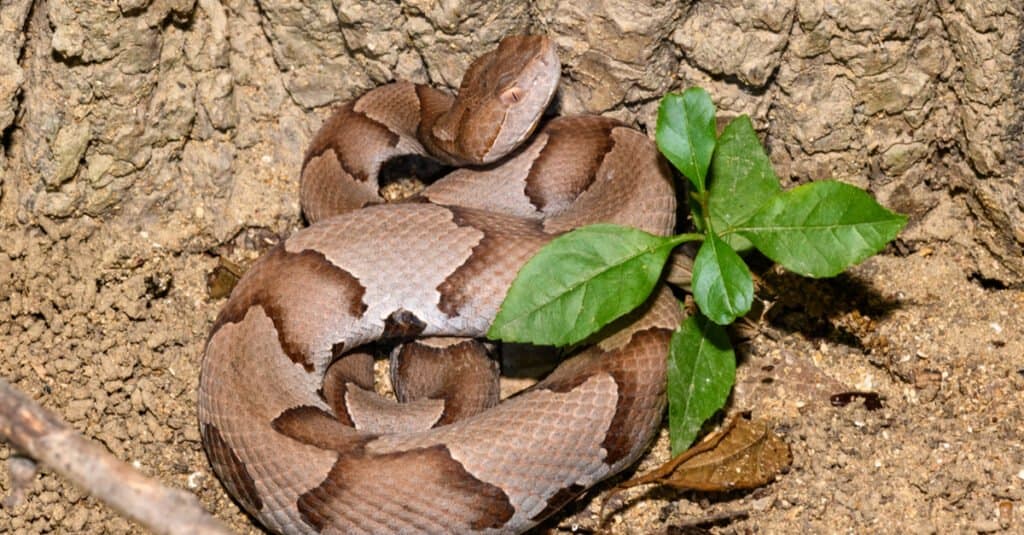
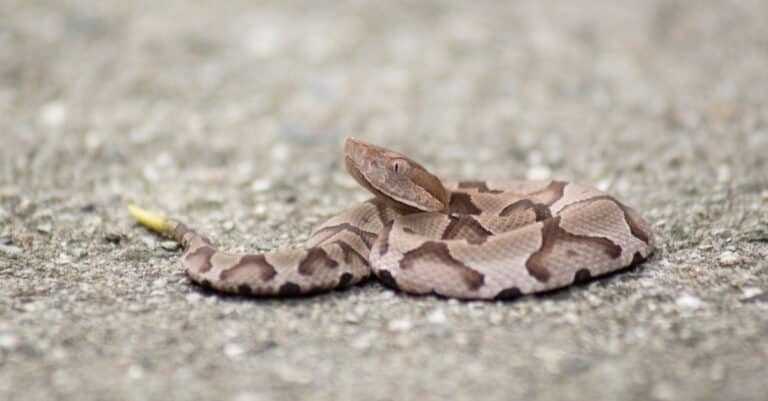
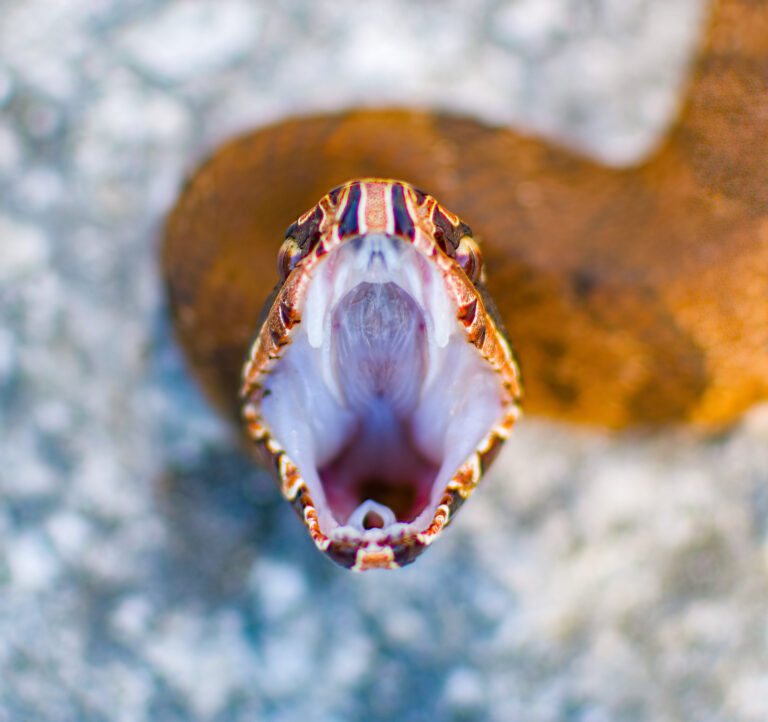
Eastern copperhead snakes include the former northern, southern, and Osage subspecies.
©Jeff W. Jarrett/Shutterstock.com
Broad-Banded Copperhead Former Subspecies
The broad-banded and Trans-Pecos copperhead are now both considered broad-banded copperheads. Broad-banded copperheads could have any of the following qualities.
- Broad-Banded Copperhead (Agkistrodon contortrix laticinctus): The snake may be referred to by either scientific name depending on taxonomic authority. It has dark, reddish-brown or copper bands that do not narrow at the spine but remain uniformly wide across the back. It is found in parts of Texas, Kansas, and Oklahoma.
- Trans-Pecos Copperhead (Agkistrodon contortrix pictigaster): Like the broad-banded copperhead, this snake also has bands that do not narrow significantly at the spine. However, it has a patterned belly with an elaborate black-and-white design, whereas the broad-banded copperhead has a plain white belly or minimal blotching. It is found primarily in the Trans-Pecos region of far-western Texas and parts of northeastern Mexico.
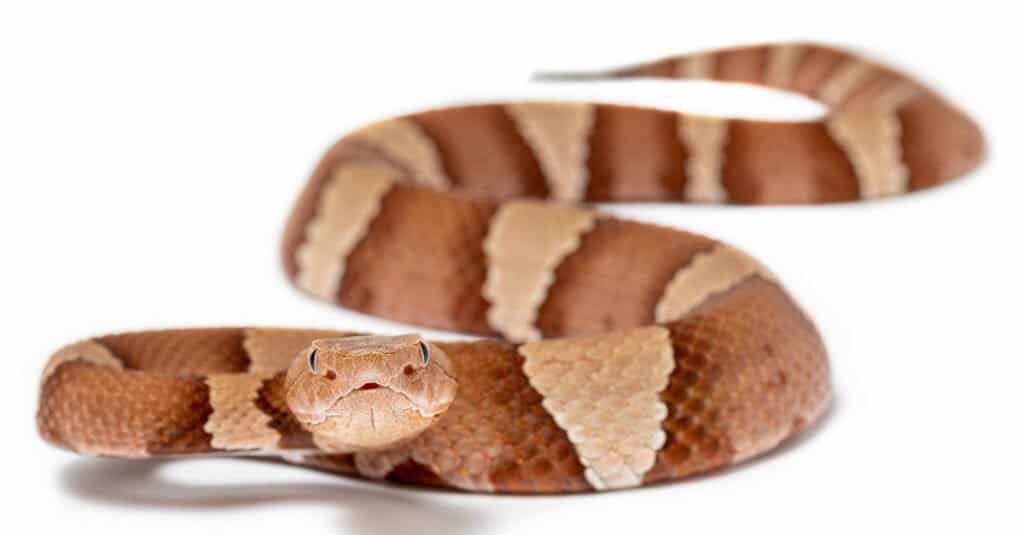
The broad-banded copperhead species also includes the former Trans-Pecos subspecies.
©Scott Delony/Shutterstock.com
In Which States Can Copperheads Be Found?
Copperhead snakes can be found in Alabama, Arkansas, Connecticut, Delaware, Florida, Georgia, Illinois, Indiana, Iowa, Kansas, Kentucky, Louisiana, Maryland, Massachusetts, Mississippi, Missouri, Nebraska, New Jersey, New York, North Carolina, Ohio, Oklahoma, Pennsylvania, South Carolina, Tennessee, Texas, Virginia, and West Virginia. Copperheads can also be found in the states of Chihuahua and Coahuila in Mexico.
The ranges of the eastern copperhead and broad-banded copperhead overlap in just three states in the central-southern U.S.: Texas, Oklahoma, and Kansas. In these areas, the two species can even hybridize (interbreed). In Texas, the eastern copperhead inhabits the east/coastal plains, while the broad-banded copperhead is found in central/western regions. East Oklahoma is home to the eastern copperhead, but central/southern regions are where broad-banded copperheads live. In Kansas, the eastern copperhead is typically found in eastern/central river drainages, while the broad-banded copperhead is more common in the south/Flint Hills border areas.