
Quick Take
- Reaching the 15 pound threshold is a primary biological achievement for the Eastern Diamondback species.
- The 6 ounce weight of the Pygmy Rattlesnake creates a specific technical problem during field identification.
- Counter-intuitively, Cottonmouths find nutritional value in carrion, defying the standard assumptions of predatory pit vipers.
- Initiating the mouth-gaping process is mandatory for Cottonmouths to establish a defensive perimeter without striking.
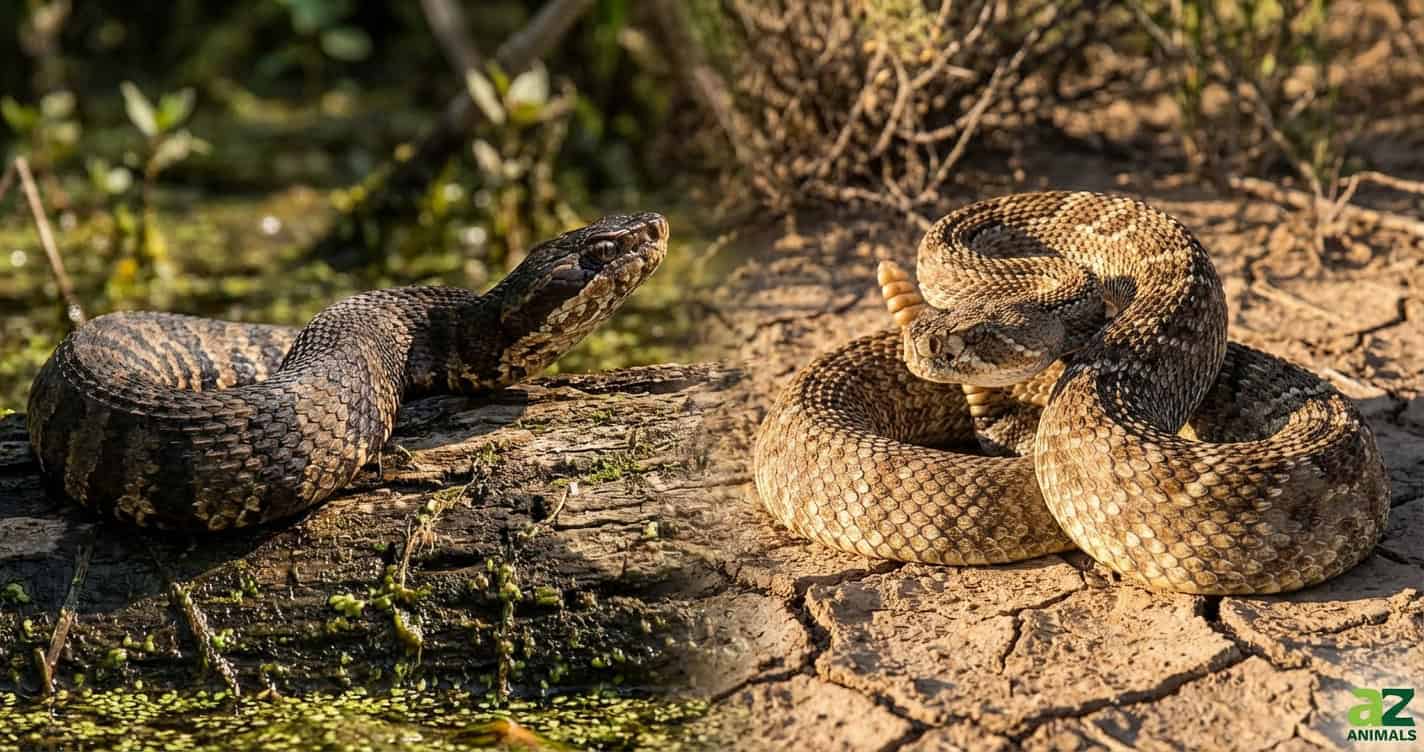
The cottonmouth (Agkistrodon piscivorus) and the rattlesnake (Crotalus and Sistrurus) are venomous snakes that are native to the Americas. They are both pit vipers that belong to the family Crotalinae, which also includes copperheads. There is one cottonmouth species and three subspecies, but there are over 30 rattlesnake species with around 70 subspecies. Some of their ranges overlap and there are a few similar physical characteristics. So, how can you learn to tell these snakes apart? Keep reading to learn the key differences between a cottonmouth and a rattlesnake.
Comparing Cottonmouths vs. Rattlesnakes

| Category | Cottonmouth | Rattlesnake |
|---|---|---|
| Size | 2.5-6 feet long; typically weigh 3-4 pounds but can weigh up to 10 pounds | Size varies by species; 1-8 feet long; typically weigh 3-6 pounds, with some reaching up to 15 pounds |
| Physical Characteristics | Black, brown, and olive coloring; thick body, large triangle head, and a crossband pattern; white inside mouth | Coloring varies by habitat; triangular head, raised scales, diamond patterned body; rattle on the end of the tail |
| Distribution and Habitat | North America only; wetlands, watery habitats, and marshes | North, Central, and South America; mountains, deserts, grassy areas |
| Behavior | Avoids people; less potent venom than rattlesnakes; shakes tail, emits musk, and opens mouth to ward off predators | Extremely potent bite; avoids confrontations; rattles tail, coils body, and shows fangs to warn intruders |
| Diet | More varied diet with more aquatic organisms; fish, amphibians, reptiles, rodents, birds, insects, eggs, and carrion | Rats, mice, rabbits, squirrels, lizards, and other small mammals |
Key Differences Between a Cottonmouth vs. a Rattlesnake
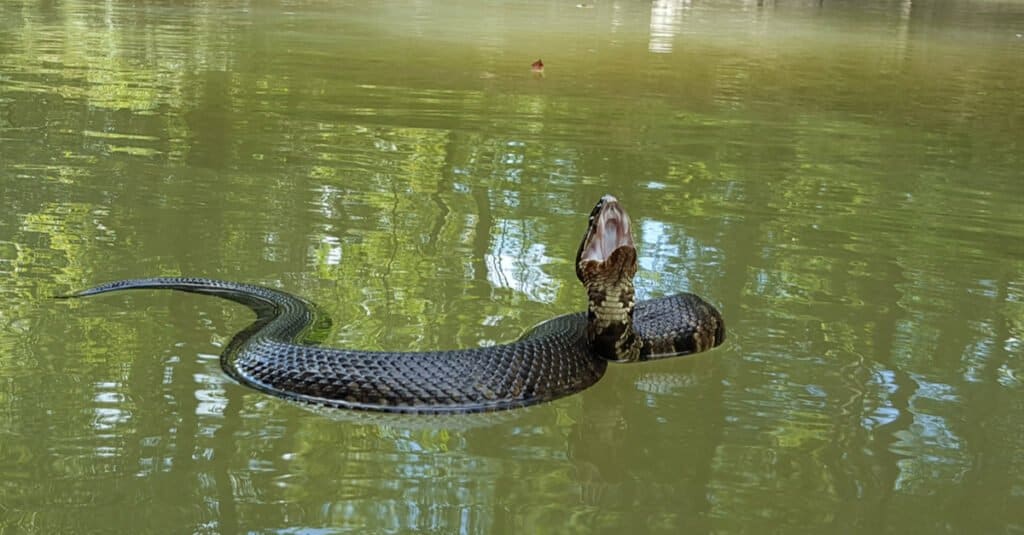
Rattlesnakes swim out of necessity and prefer to be on land, but cottonmouths are semi-aquatic.
©Seth LaGrange/Shutterstock.com
As shown in the table above, there are several key differences between a cottonmouth and a rattlesnake. These include size, other physical characteristics, distribution and habitat, behavior, and diet and hunting style. We will discuss these differences in more detail in the following sections.
Size
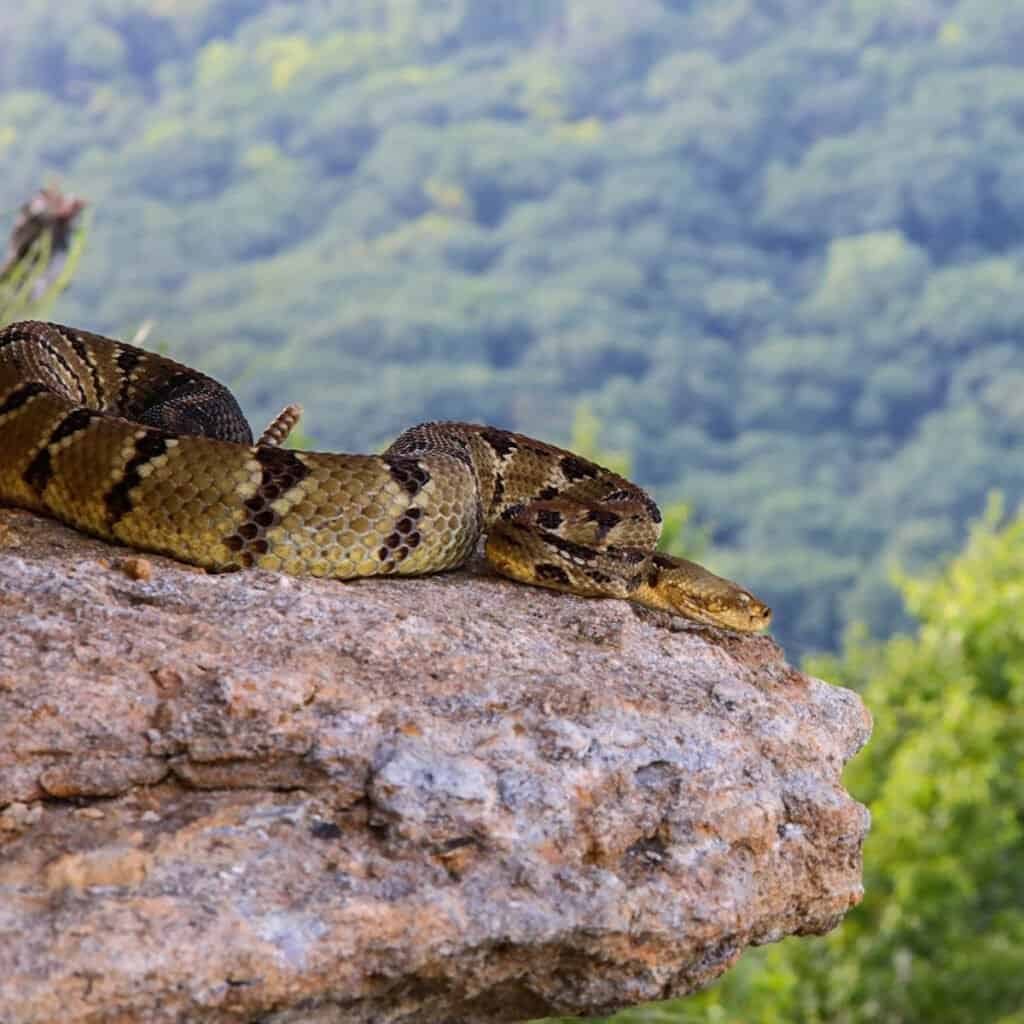
The various rattlesnake species can grow between 1 and 8 feet long, while cottonmouths grow 2.5-6 feet long on average.
©bradenjalexander/Shutterstock.com
Cottonmouths and rattlesnakes can differ significantly in size, but this depends entirely on the rattlesnake species. These are both relatively long, heavy-bodied snakes. The largest rattlesnakes are bigger than the largest cottonmouths, while the smallest cottonmouths are larger than the smallest rattlesnakes. Cottonmouths can grow from 2.5 to 6 feet long. They typically weigh 3-4 pounds, but some large individuals can weigh up to 10 pounds.
In contrast, rattlesnakes measure from 1 to 8 feet in length. They generally average 3 to 6 pounds. However, the largest rattlesnake species, the eastern diamondback (Crotalus adamanteus), averages 5 to 10 pounds, with the largest individuals weighing upwards of 15 pounds. The smallest species, the pygmy rattlesnake (Sistrurus miliarus), reaches between 15 and 24 inches long and generally weighs less than 6 ounces.
Distribution and Habitat
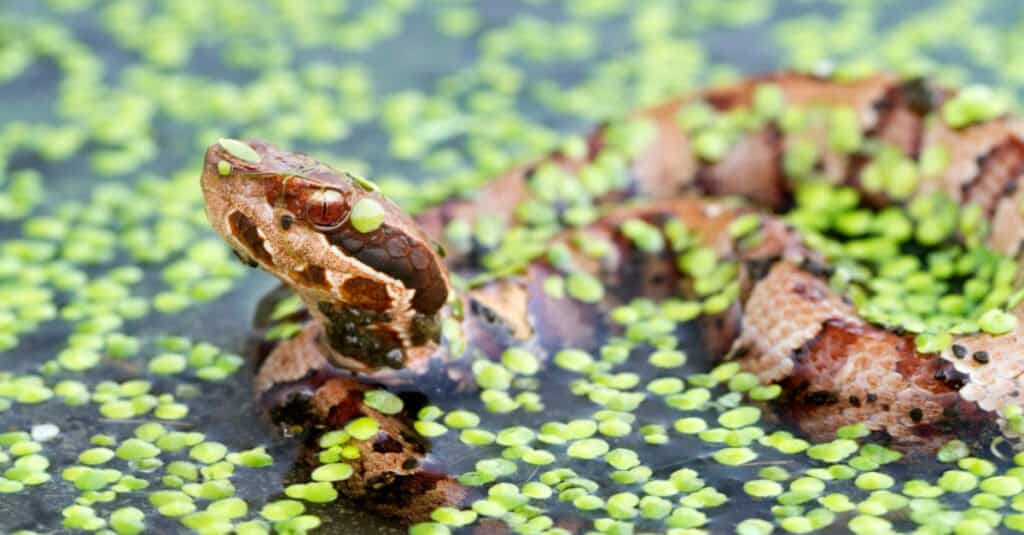
Cottonmouths can be found in many different aquatic settings.
©Mark_Kostich/Shutterstock.com
Both cottonmouths and rattlesnakes live in North America. The ranges of cottonmouths and some rattlesnake species overlap primarily in the southeastern and central United States. However, cottonmouths are only found in North America, while rattlesnakes are found in North, South, and Central America.
The preferred habitats of these two snakes also differ. Cottonmouths are semi-aquatic and can be found in many aquatic environments, such as marshes, wetlands, and alongside rivers and ponds. However, rattlesnakes only swim when necessary. While they may be found near water, they generally prefer to stay on land. Rattlesnakes live in arid deserts and warm mountain climates. Rattlesnakes can also be found in forested areas or grasslands, habitats they share with cottonmouths.
Physical Characteristics
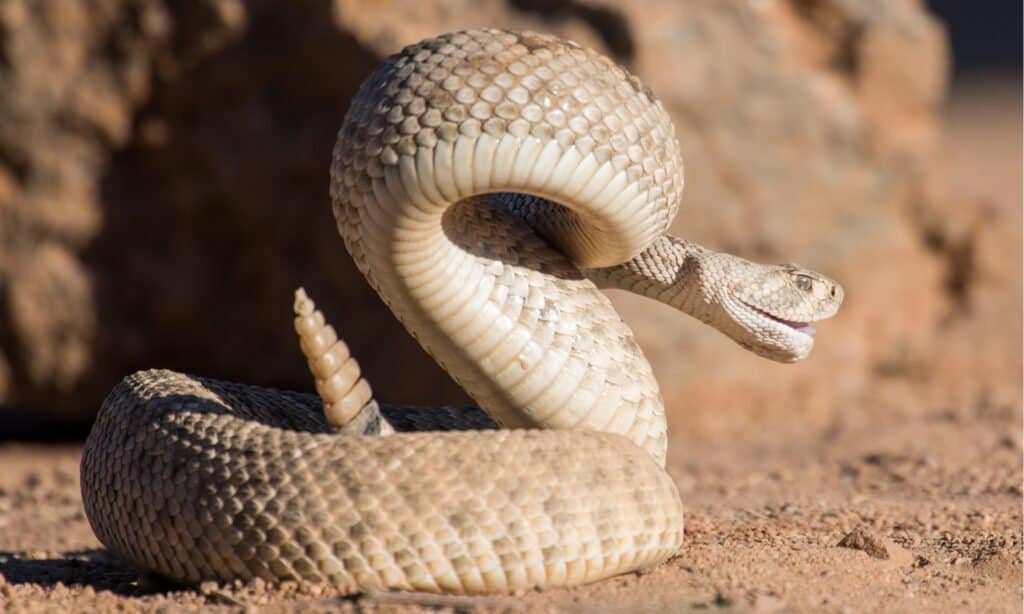
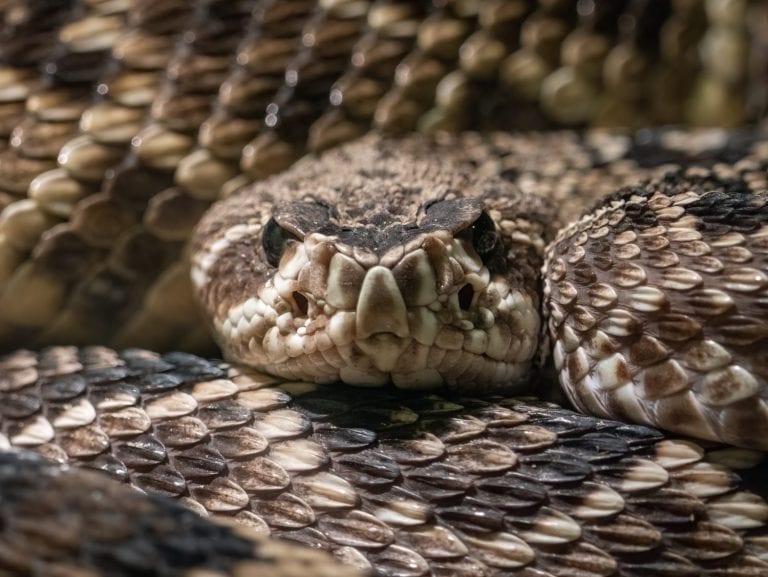
Rattlesnake scales have a distinct diamond pattern.
©Susan M Snyder/Shutterstock.com
It can be very difficult to tell a cottonmouth apart from some species of rattlesnakes. This is why the two snakes are often confused. As mentioned previously, they are both members of the pit viper family, but there are a few physical characteristics that set them apart. Both of these snakes have names based on how you can best identify them, so keep these names in mind should you come across a snake while hiking.
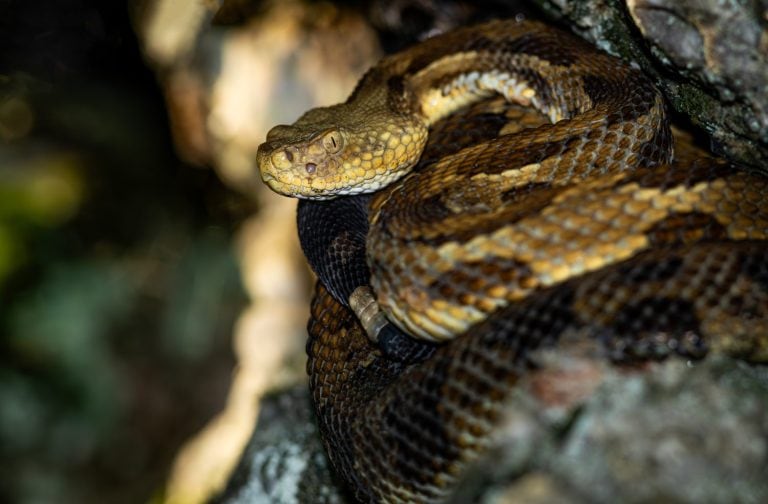
Cottonmouths are shades of brown, black, and olive with a crossband pattern. They may also have a wide, dark band running from the snout through the eye. They have broad, triangular heads and vertical pupils. Cottonmouths can also be identified by the interior of their mouths, which is a bright white.
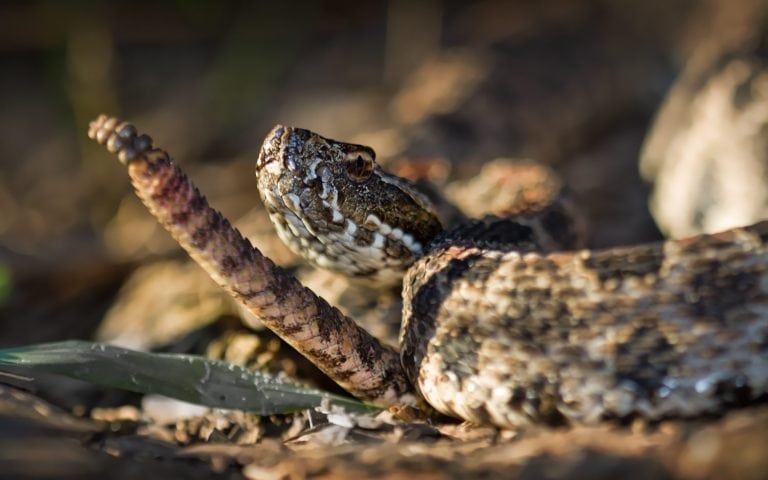
Rattlesnakes have a distinct diamond pattern on their bodies and are found in a wider range of colors than cottonmouths, depending on their habitat. For example, desert rattlesnakes have tan, yellow, and peach colored scales, but cottonmouths never have scales in these shades. Rattlesnakes have broad heads and vertical pupils. You can also identify a rattlesnake by its namesake rattle on the end of its tail.
Behavior
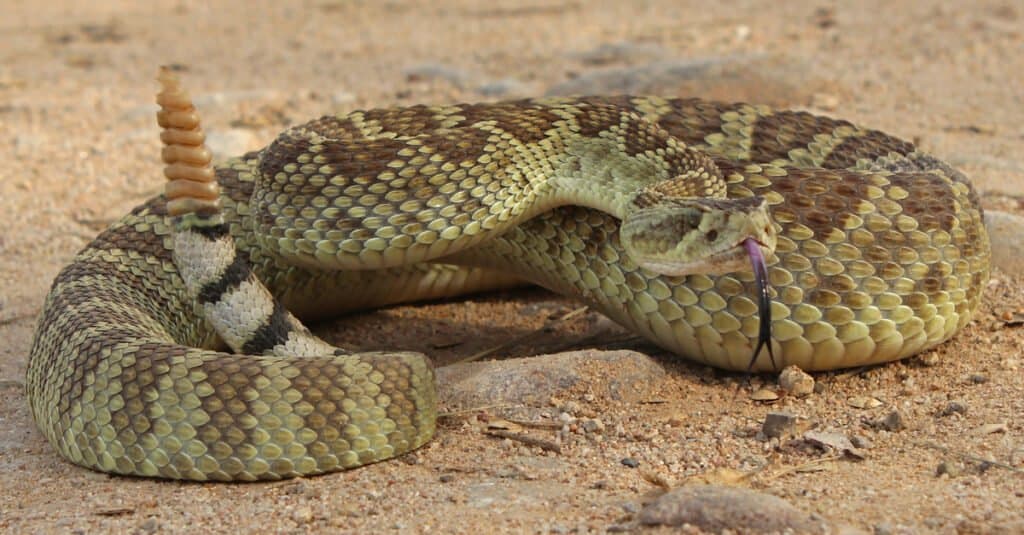
A rattlesnake’s threat display involves rattling its tail and coiling its body.
©Creeping Things/Shutterstock.com
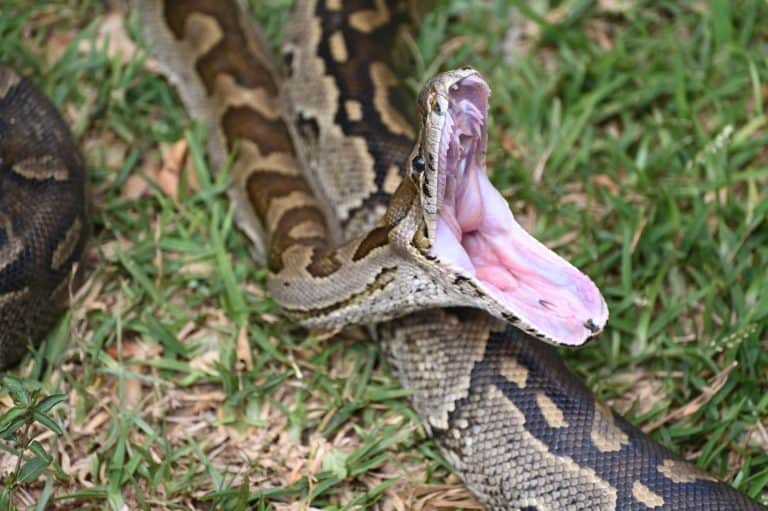
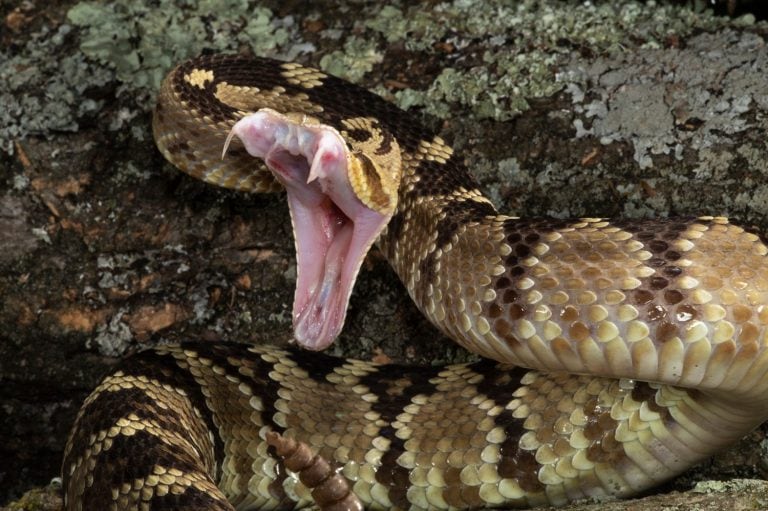
Another difference between cottonmouths vs. rattlesnakes is their behavior. While both of these snakes prefer to be left alone and only bite when threatened, they have different threat displays. Cottonmouths mimic a rattlesnake’s rattle and emit a musk that deters intruders. Besides shaking its tail, the cottonmouth will also gape its mouth to show the white lining, trying to scare away the predator.
Rattlesnake threat displays involve rattling their tails and coiling up their bodies. They may also flatten their heads or open their mouths to show their fangs. Rattlesnakes use these behaviors to avoid a confrontation, but will strike if they feel like they cannot escape. A rattlesnake’s venom is more potent than a cottonmouth’s, but bites from either snake are painful and can be life-threatening if left untreated.
Diet
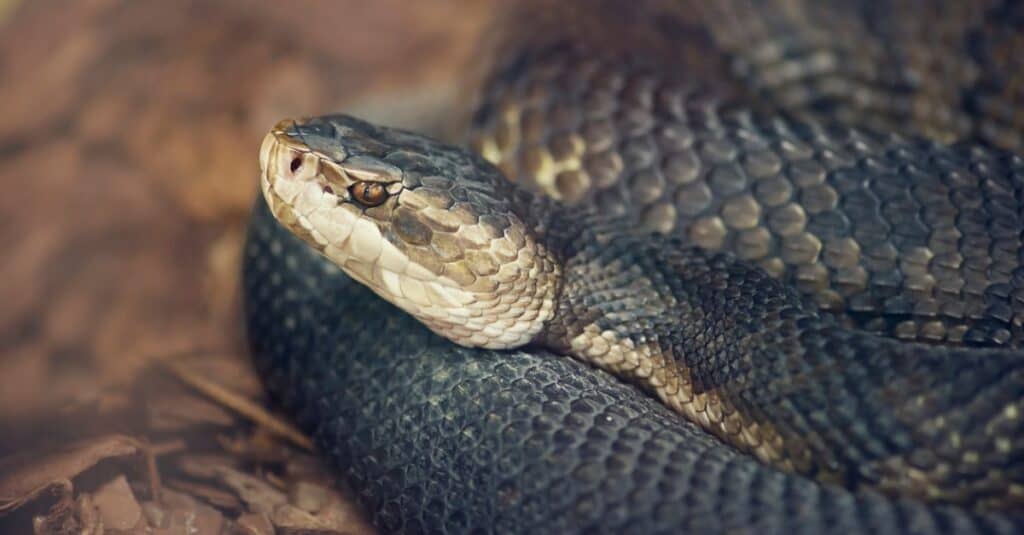
Cottonmouths eat fish, amphibians, reptiles, rodents, birds, insects, eggs, and even carrion.
©iStock.com/Saddako
A final difference between cottonmouths and rattlesnakes is their diet. While both of these snakes inject their prey with a powerful and immobilizing venom, cottonmouths eat a wider variety of foods compared to rattlesnakes. They also eat more aquatic organisms. Cottonmouths eat fish, amphibians like frogs and salamanders, reptiles, rodents, birds, insects, eggs, and even carrion.
A rattlesnake’s primary diet is small mammals. Their diet includes animals such as rats, mice, rabbits, squirrels, chipmunks, lizards, and voles. They may also eat birds. Young rattlesnakes may eat small reptiles, and some species of rattlesnake also prey on smaller snakes.