Quick Take
- The island's infamous reputation for housing hundreds of thousands of snakes turns out to be wildly off. The real number tells a very different story. See the real population →
- A banana plantation and a forest fire explain why this island became a death trap and why no human has lived there in over a century. Explore the island's history →
- The golden lancehead evolved one unique survival trick that no mainland snake needed, and that adaptation is the reason this species exists nowhere else on Earth. Discover the survival adaptation →
- Visiting Snake Island is technically possible, though the conditions required reveal just how seriously Brazil treats the threat lurking there. Check the access rules →
Ophidiophobia is the clinical term for snake phobia. Many people fear these slithering, reptilian, and sometimes venomous creatures that kill thousands of people around the world every year, even without a full-blown phobia. There is one small island that is so densely packed with snakes that it’s enough to inspire Ophidiophobia in practically anyone. Today, we’re exploring Ilha da Queimada Grande, also known as Snake Island in Brazil.
Snake Island is simply littered with snakes, and they’re not just small constrictors. This island is infested with a venomous cousin of the Fer-de-lance, the deadliest snake in the Americas. Learn the true story of the island as we explore its history and dispel the myths surrounding this harrowing place.
Where is Snake Island Located?
Ilha da Queimada Grande, also known as Snake Island, is a small island that lies off the coast of the southeastern portion of Brazil. The land is part of the State of Sao Paulo, and it’s noteworthy for having several different terrains, including a small portion of the rainforest.
Snake Island in Brazil is about 20 miles from the mainland, far enough away that the snakes can’t reach continental South America. Given the snake’s potent venom, this is a relief to many people.
The island’s name doesn’t translate to Snake Island. Instead, it translates to Big Burned Island, which refers to an attempt at deforestation in the early 20th century by burning the island’s vegetation, which resulted in a forest fire. The Island was being cleared to make way for a banana plantation, which was abandoned when it became evident how many deadly residents were already living on the island.
From 1909 through the mid-1920s, the island’s lighthouse had a resident lighthouse keeper. However, the light is now automated.

Meet the golden lancehead snake, a resident of Snake Island in Brazil.
What Snake Lives on Snake Island?
Ilha da Queimada Grande is home to the golden lancehead (Bothrops insularis). This snake is a relative of the mainland’s deadliest snake, the Fer-de-lance. The golden lancehead exists only on Snake Island, .
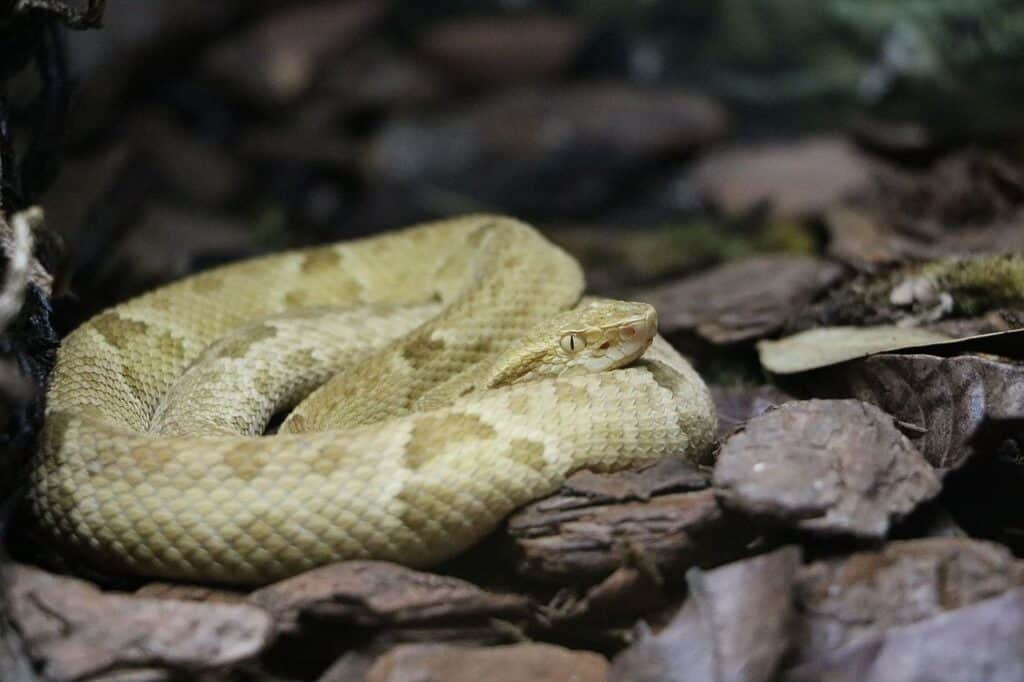
Snake Island is the only place in the world that is home to the golden lancehead
The prevailing theory is that this species became trapped on the island after the last ice age ended over 11,000 years ago. Rising seawater immersed the land connecting Snake Island to the mainland.
The golden lancehead is very distinct. The snake has a light yellow and light brown color, especially on its underside. Also, this snake shares the same unique head shape as the Fer-de-lance, a long head with a point at the nose that resembles a lance’s blade.
The snake is highly dangerous, but let’s parse the truth about this animal from the larger-than-life myth.
How Dangerous is the Golden Lancehead Snake?
The golden lancehead snake is one of the most venomous snakes in South America. The mortality rate for people that get antivenom is believed to be 3%. The mortality rate more than doubles to 7% for bite victims who do not receive treatment. Even when the individual does not die, they will suffer severe damage to their body.
The venom of a golden lancehead is hemotoxic. This means the golden lancehead’s venom attacks red blood cells and can cause a variety of physical issues, including intense pain, internal bleeding, necrosis of muscle tissue, and possible brain hemorrhages.
However, because the island is off-limits to civilians, no deaths from golden lancehead bites exist in modern records. This snake is not among the most venomous snakes in the world by any measure, but it’s deadly enough to kill humans.
How Many Golden Lanceheads Live on Snake Island?
With so few people setting foot on the island, and its reputation for being home to deadly snakes, you would think that golden lanceheads rule Snake Island like reptilian kings. But in fact, the future survival of this snake is very uncertain.

Roughly 3,000 snakes are believed to live on Snake Island in Brazil
©Prefeitura Municipal de Itanhaém / CC BY 2.5 / Wikimedia Commons – Original / License
The number of golden lanceheads on Snake Island is estimated to be between 2,000 and 4,000 snakes. Given that this is the only place on Earth where these snakes live, they are a critically endangered species of snake.
In the past, it was thought that as many as 400,000 snakes lived on the island. People thought that there was one snake for every square meter, but that isn’t the case. Simply put, there are not enough food resources on the island to sustain a population that large. In fact, there probably never was a food source that was capable of supporting that many snakes in such a small area.
To make matters worse, the deforestation efforts not only destroyed many snakes and their habitat but also resulted in fewer birds migrating to the island.
The reality is that there is probably one snake for every 140 square meters. When you consider the small amount of space on the island where the snakes thrive the most, away from the rocky outcroppings, there are still far too many snakes for a person to want to spend time on the island.
Another critical threat to the golden lancehead is poaching. Scientific research and the black market pet trade have made these snakes incredibly valuable. As a result, golden lanceheads sell for $10,000 to $30,000 apiece.
What Do Snakes Eat on Snake Island?
There are no other animals on Snake Island; they were no doubt wiped out by the snakes. The snakes prey on ill-fated migrating birds who stop on the island to rest. The snakes wait in trees for the birds to land and inject them with their paralyzing venom before they can fly away.

Unsuspecting birds are prey for the golden lancehead.
Can You Visit Snake Island?
The Brazilian government has closed off access to the island to protect humans and snakes. The Brazilian Navy restricts access to the island, but they go to the lighthouse to make repairs.
Very few researchers have permission to go to the island. When they do go, they must get specific approval, and then they must also have certified doctors supplied with antivenom accompany them.
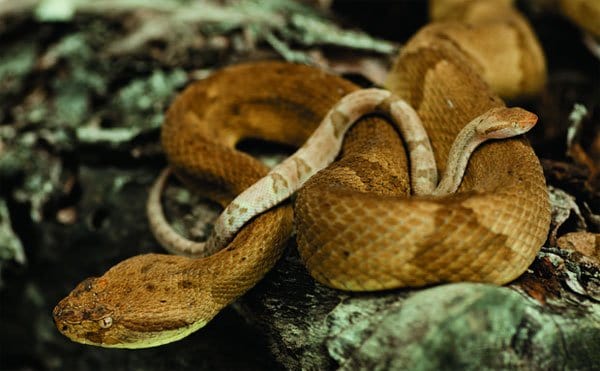
If you jump through hoops as a researcher, you can visit Snake Island, but why would you want to?
Since the snakes on the island are one-of-a-kind, government restrictions may not be enough to stop some enterprises from coming to the area. Reports of bio-pirates who visit the island and acquire snakes for researchers and collectors are well documented.
In short, Ilha da Queimada Grande is a place that does not quite live up to the legends. Nevertheless, it’s very dangerous and should not be a destination for anyone. Not only would someone face severe legal complications for going to the island without permission, but they could also die. It’s better to admire the golden lancehead from a very long distance.
Bonus: Is There Another Snake Island?
Off the coast of China’s Liaodong Peninsula in the Bohai Sea is a jungle paradise surrounded by turquoise waters. The beach could be home to a fabulous tropical resort if not for one problem: snakes — 20,000 venomous pit vipers! Shedao Island is the world’s other snake island, and the only place in the world where you can find the Shedao Island pit viper (Gloydius shedaoensis).
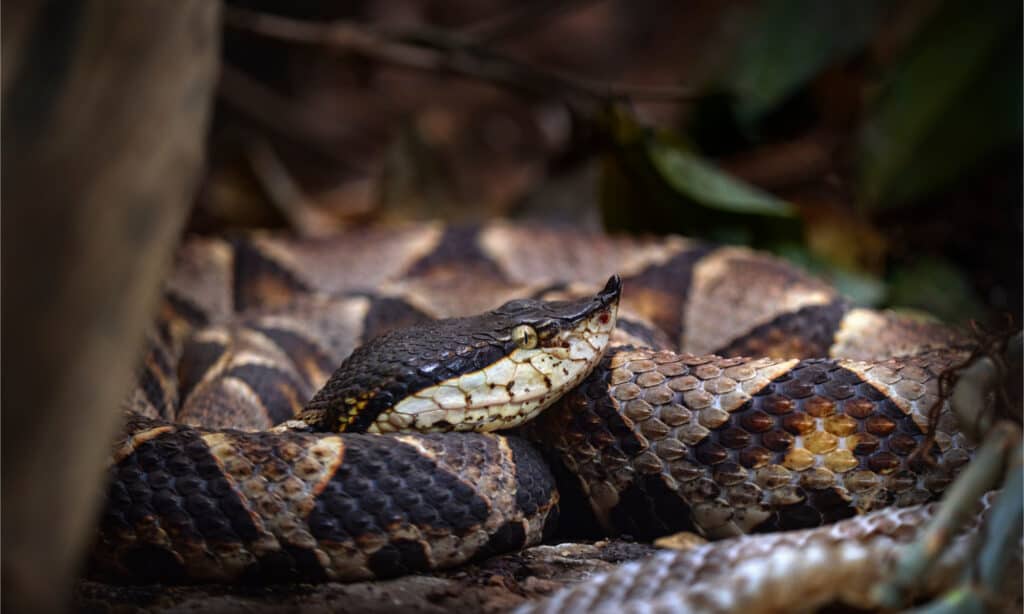
China’s Snake Island is home to 20,000 pit vipers.
©Ondrej Prosicky/Shutterstock.com
The Shedao Island pit viper has narrowly escaped extinction due to food scarcity and poaching. Like the golden lancehead on Brazil’s Snake Island, the Shedao Island pit viper has developed a more potent venom to catch its main food source, migratory birds. The island has a surface area of only 180 acres but it is estimated that there is one snake for every 10 square feet.