Quick Take
- One snake on this list has venom glands so large they extend a quarter of its body length, which it uses to freeze prey in spastic paralysis. See the venom glands →
- Some of these snakes aren't just immune to rattlesnake venom. They've evolved a hunting trick that shuts down a venomous snake's only defense before swallowing it alive. Explore the hunting trick →
- At least one snake on this list will eat members of its own species, and the culprit is probably not the one you would expect. Meet the cannibalistic species →
- The 'king' in kingsnake and king cobra both refer to the same thing, and the reason behind it reveals something surprising about how these snakes dominate their ecosystems. Discover the 'king' connection →
The ouroboros is an ancient symbol depicting a serpent eating its tail. It represents continual rebirth and the unity of all creation. Snakes that eat other snakes are called ophiophagous, a term that literally means snake-eating. The king cobra is known for its diet of other snakes, but are there other snakes that like to hunt their own kind? It turns out there are quite a few. Let’s take a look at nine snakes that eat other snakes, including venomous types like the rattlesnake.

Bas-relief of ouroboros, a snake biting its own tail
©Andrey Khusnutdinov/Shutterstock.com
King Cobra
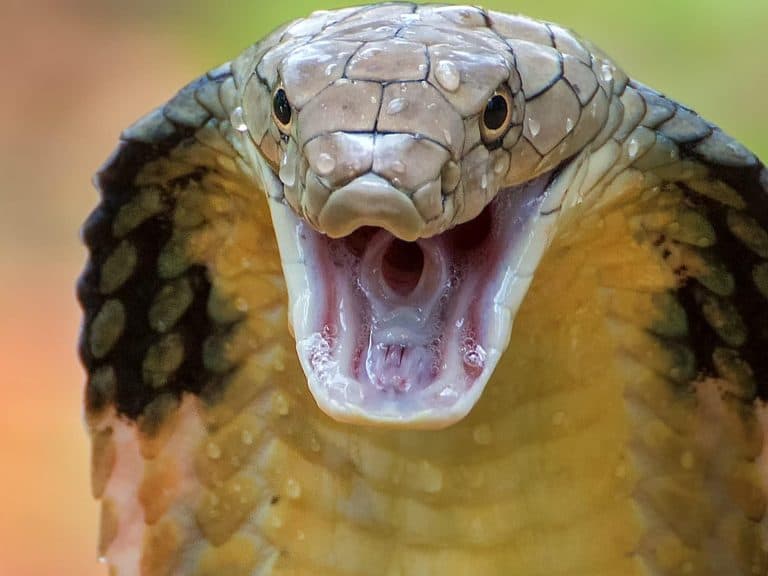
King cobras (Ophiophagus hannah) are considered among the most intelligent snakes in the world. They are calculated hunters that change their hunting strategy based on the specific prey and their circumstances. King cobras can adapt to repeated situations and recognize their handlers. They’re the longest venomous snake species at an average of 10 to 13 feet long.
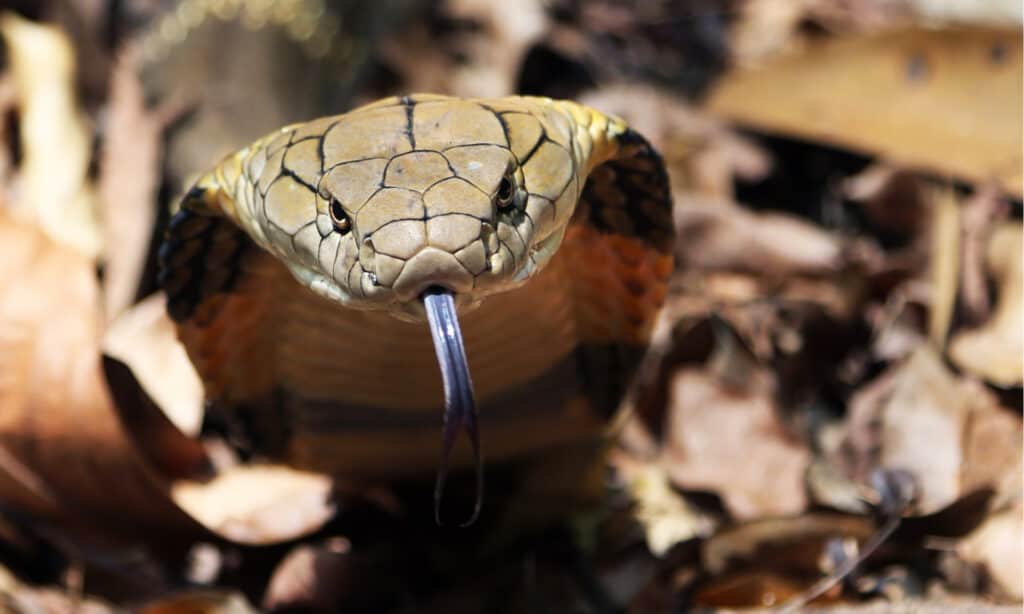
King cobras are named for their diets of other snakes.
©Suresh Suryasree/Shutterstock.com
The largest king cobra ever found was over 18 feet long! King cobras live in southern China, India, and Southeast Asia. They inhabit streams, forests, bamboo thickets, and swamps. While these carnivorous and capable hunters typically eat other snakes, birds, and lizards, they’ll also take advantage of other prey like rodents when options are limited. King cobras eat Asian rat snakes, dhamans, and pythons. They’ll also eat Indian cobras, kraits, vipers, and wolf snakes.
Mussurana Snake
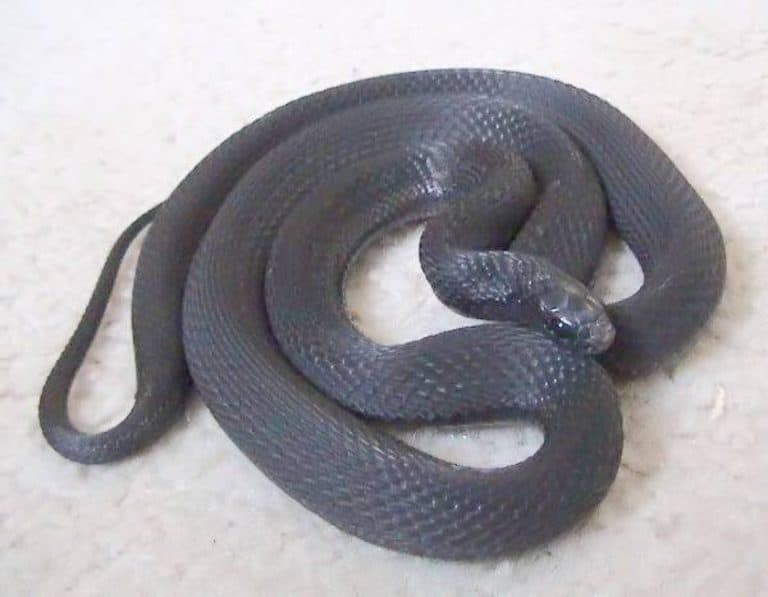
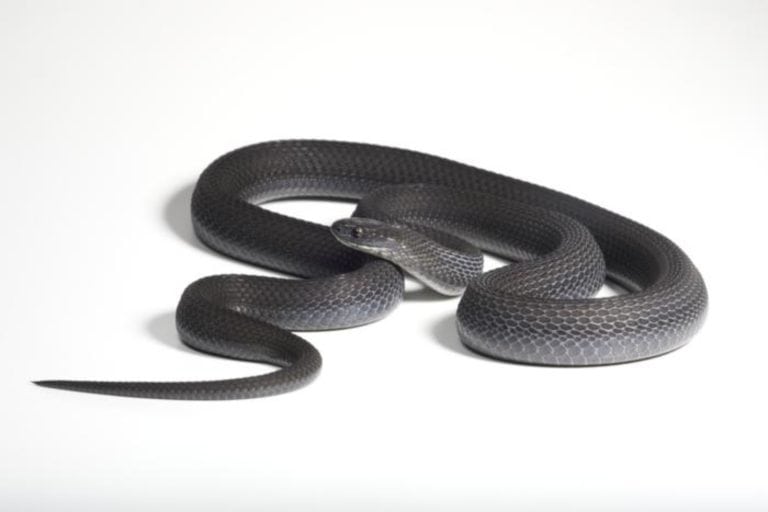
Mussurana (Clelia) is a colubrid snake genus of snake-eating snakes. They begin life as colorful juveniles and mature to be brown, gray, or black. The black mussurana (Clelia clelia) is found from Southern Mexico to Argentina and can grow to be nearly 7 feet long.
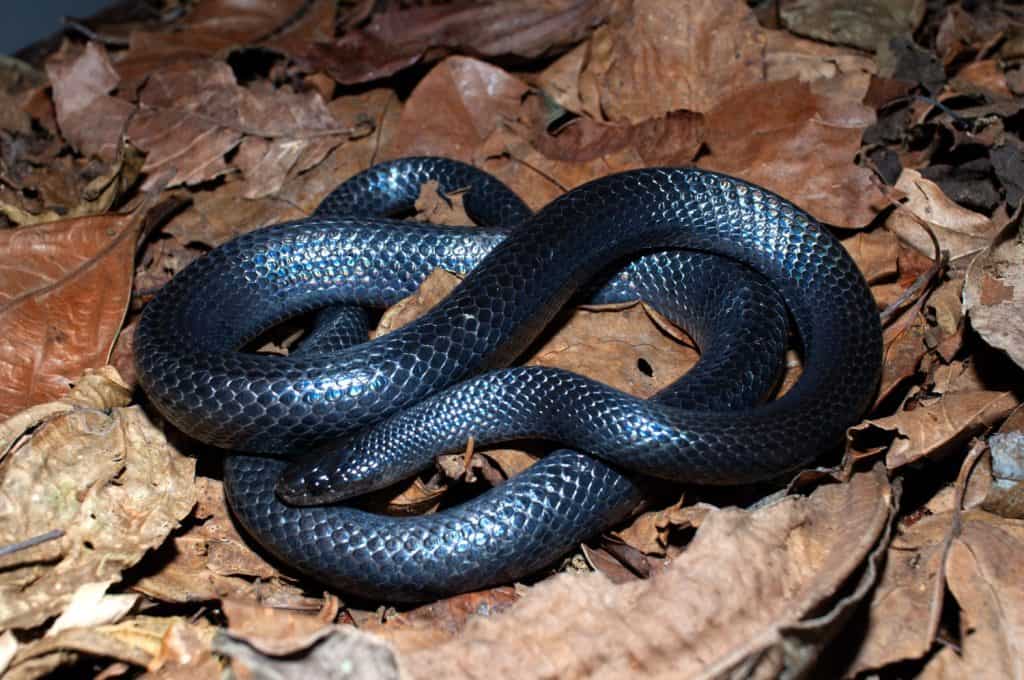
The black mussurana is immune to rattlesnake venom.
©Sapodorado26/Shutterstock.com
These snakes are unique in that they’re immune to the venom of vipers as fearsome as the fer-de-lance. They prey almost exclusively on snakes, including pit vipers such as rattlesnakes.

Juvenile mussurana snakes are typically brightly colored.
©Ryan M. Bolton/Shutterstock.com
Mussuranas have rear fangs that allow them to subdue their prey before eating it.
Common Kingsnake
The common kingsnake (Lampropeltis getula) is one of many kingsnake species that enjoy similar diets. The king portion of their name, like that of the king cobra, refers to their propensity to eat other snakes. These North American snakes are particularly fond of venomous species like rattlesnakes, cottonmouths, and copperheads. The venom of these snakes doesn’t affect kingsnakes, so they are able to devour them safely.

Kingsnakes eat venomous species like rattlesnakes, cottonmouths, and copperheads.
©Matt Jeppson/Shutterstock.com
Without venom, kingsnakes rely on constriction to subdue their prey. When hunting venomous snakes, kingsnakes use a special technique that allows them to bite the jaws of the other snake shut, preventing it from fighting back. The kingsnake then positions itself at the prey snake’s head and begins to devour it whole while it is still alive.
With its head trapped inside the kingsnake’s throat and unable to move, the other snake will die of suffocation. In addition to snakes, kingsnakes will eat frogs, turtles, birds, eggs, and rodents.
King Brown Snake
King brown snakes (Pseudechis australis), also known as the mulga snakes, are found throughout Australia. These long snakes typically reach around 5 to 6.5 feet in length, with exceptional individuals growing up to 11 feet. They are opportunistic hunters that catch a variety of prey with impressive speed.

King brown snakes are known to eat other members of their species.
©Ken Griffiths/Shutterstock.com
King brown snakes typically bite multiple times once they catch their prey, preventing it from fighting back. In addition to snakes, king brown snakes eat birds, amphibians, small mammals, and reptiles. They eat whip snakes, brown snakes, brown tree snakes, Southern shovel-nosed snakes, Gould’s hooded snakes, and crowned snakes. They’ll even eat other king brown snakes in the right circumstances.
Eastern Indigo Snake
The Eastern indigo snake (Drymarchon corais couperi) is a long black nonvenomous snake in the Southeastern United States. It’s the longest snake native to North America, and individuals can reach up to 8.6 feet in length, with females tending to be shorter than males.
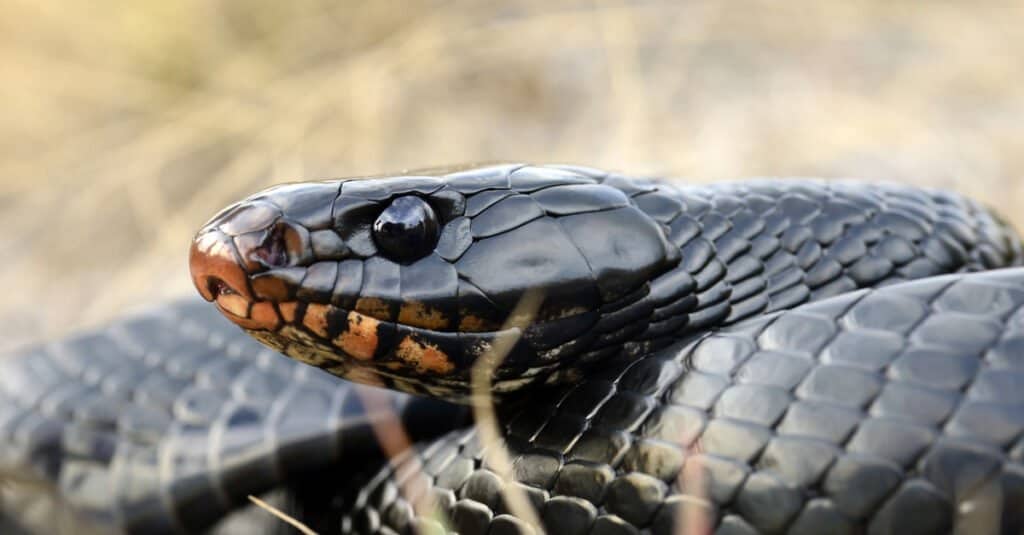
Resistant to other snakes’ venom, the Eastern indigo snake can eat copperheads, cottonmouths, and possibly rattlesnakes.
©Patrick K. Campbell/Shutterstock.com
Eastern indigo snakes rely on speed and brute force to take down prey. Once they catch prey, they pin prey against a hard surface and suffocate it with a strong bite. These snakes are skilled at catching venomous snakes and devouring them. They will eat copperheads and cottonmouths, and they may have a resistance to rattlesnake venom as well. In addition to snakes, Eastern indigo snakes eat turtles, mammals, frogs, birds, lizards, and rodents.
Blue Malaysian Coral Snake
There are over 80 species of coral snakes worldwide. Most of them eat a varied diet that includes snakes occasionally, but the blue Malaysian coral snake (Calliophis bivirgatus) feeds almost exclusively on other snakes. This species lives in Malaysia, Indonesia, Singapore, Thailand, Brunei, and Burma. Blue Malaysian coral snakes have a red head, tail, and belly, and a dark blue back with lighter stripes down the sides.

The blue Malaysian coral snake can take down stronger snakes with ease.
©reptiles4all/Shutterstock.com
Blue Malaysian coral snakes have a unique type of venom that is remarkable in its ability to subdue the most dangerous of snake prey. They have short fangs but long venom glands, the largest venom glands of any snake species, extending up to a quarter of their body length.
Blue Malaysian coral snakes have fast-acting venom that allows them to take down bigger and stronger venomous snakes quickly, while avoiding being bitten back. The venom doesn’t kill immediately but rather acts on all the nerves of their dangerous prey, freezing their bodies in spastic paralysis. They eat a variety of snake species and will even prey on young king cobras.
Banded Krait
Like many other kraits, the banded krait (Bungarus fasciatus) feeds mainly on other snakes. The banded krait is a highly venomous species found on the Indian subcontinent and in Southeast Asia. It is easily recognized by its alternate black and yellow crossbands, strong ridge, and triangular body cross-section.

The banded krait preys on sunbeam snakes, rainbow water snakes, and red-tailed pipe snakes.
©RealityImages/Shutterstock.com
Banded kraits are carnivores that will eat fish, frogs, skinks, and snake eggs, but their main prey is other snakes. They enjoy a wide range, including the sunbeam snake, rainbow water snake, red-tailed pipe snake, Indo-Chinese rat snake, Russell’s viper, cat snake, and more. These snakes bite their prey first to inject venom and then devour them headfirst.
Coachwhip
Coachwhips (Coluber flagellum) are long, slender, nonvenomous snakes native to North America and commonly found in the United States and Mexico. They have black or dark brown coloring that lightens as it reaches the tail and a distinctive patterning that resembles a braided whip.
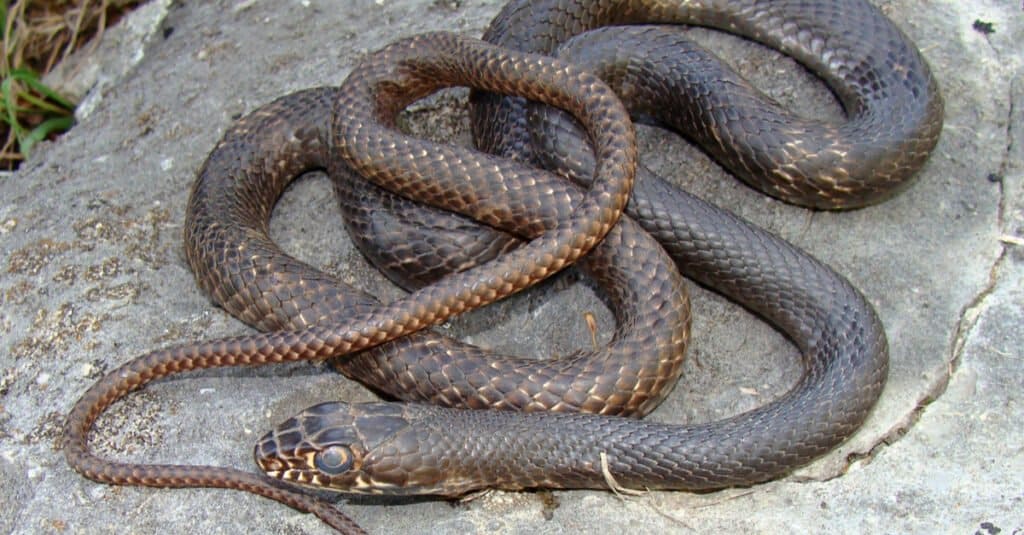
Coachwhips can move up to 4 miles per hour when chasing prey.
©Matt Jeppson/Shutterstock.com
Coachwhip snakes actively search for prey and can reach speeds of up to 4 miles per hour when pursuing prey. They use neither venom nor constriction to subdue prey; instead, they strike and grasp it in their jaws. They swallow their prey dead or alive. Other snakes and lizards are their most common prey, but they also eat insects, birds, eggs, and amphibians.
Cottonmouth
Also known as a water moccasin, the cottonmouth (Agkistrodon piscivorus) is a semi-aquatic venomous pit viper. Water moccasins are found throughout the Southeastern United States and spend most of their time in or around water.
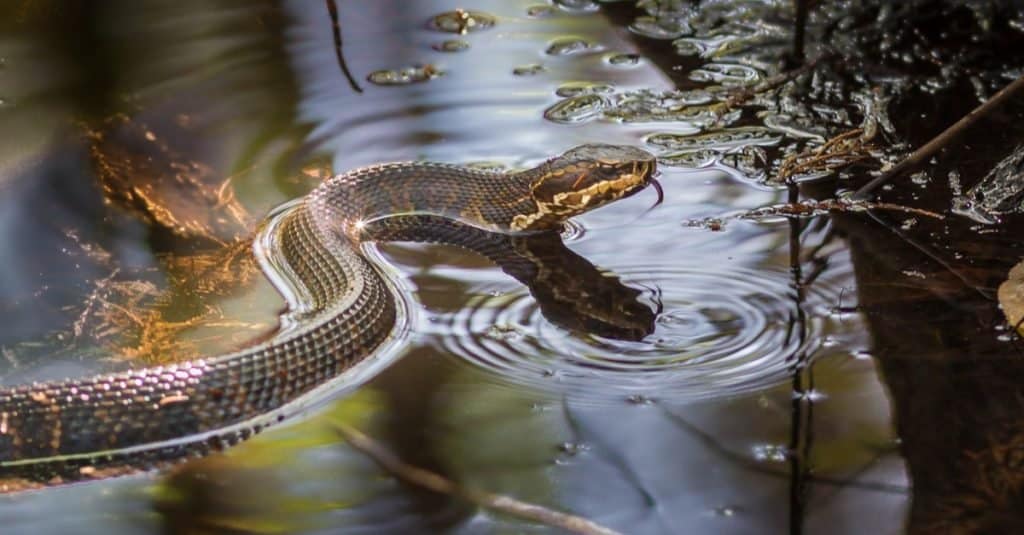
Cottonmouths are capable hunters on water or on land.
©jo Crebbin/Shutterstock.com
Cottonmouths have long, thick, muscular bodies that grow up to 6 feet long. These snakes have no trouble hunting on both land and water. They either actively chase prey or ambush it by waiting for it to pass.
Cottonmouths are carnivores that eat a varied diet of fish, rodents, small mammals, amphibians, insects, and other snakes. They have also been known to eat members of their own species.