
Quick Take
- 900 snakes didn't flee the floodwaters, and a specific chain of events explains why they all ended up in the same village at the same time. How the dam collapse caused it →
- A hospital had antivenom ready, yet one woman still didn't survive. Why one woman didn't survive →
- Cobras weren't the only predator swimming through flooded neighborhoods that day. See the other freed reptiles →
- Experts say most of the 900 escaped snakes posed far less long-term danger than residents feared, though the reason behind this is grimly counterintuitive. Why most snakes posed less risk →
In what could be described as a scene from a horror movie, a typhoon unleashed 900 snakes on villagers in southern China. The mix of venomous and nonvenomous snakes had villagers on edge, as the reptiles searched for dry land. While most snakes caused no harm, others did, adding to the loss of life caused by Typhoon Maysak.
Continue reading
Hundreds of Snakes Unleashed by Typhoon Maysak
Typhoon Maysak may be one of the most devastating typhoons to hit China in recent years. The storm, which made landfall on July 3, brought heavy rainfall. While most of the region reported between four and 16 inches of rain, the hard-hit Guangxi Zhuang Autonomous Region received up to 35 inches.
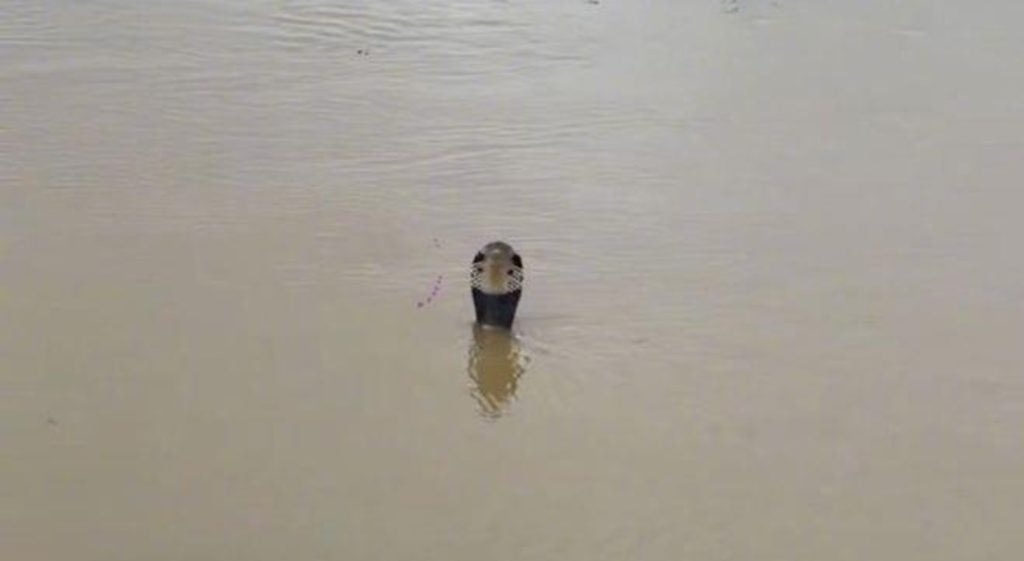
A cobra pokes its head above the floodwaters in southern China.
©chinaminutes / Instagram – Original
As if massive flooding was not enough of a worry for residents, snakes also became a concern after 900 were suddenly found in floodwaters on July 6. As seen in an Instagram reel from @chinafootage, snakes were both swimming through the water and bobbing with their heads above the water.
If all the snakes had been nonvenomous, seeing hundreds at once would have simply been a curiosity. However, the situation was much more dangerous because some of the snakes were venomous and potentially deadly.
What Led to So Many Snakes Swimming in Floodwaters?
Snakes are not uncommon in China. However, 900 snakes converging on villages at one time is unusual. The rain itself did not cause a mass movement of snakes seeking higher ground in southern China. Instead, floodwaters from dam breaches swept the snakes downstream, directly into the path of Dengwei Village residents.
As rain from Typhoon Maysak poured in, the Liulan Reservoir filled beyond capacity. Eventually, the water pressure caused two sections of the dam to collapse. When this happened, a snake farm in Dengwei Village was inundated. Nine hundred snakes were suddenly set free and washed downstream.
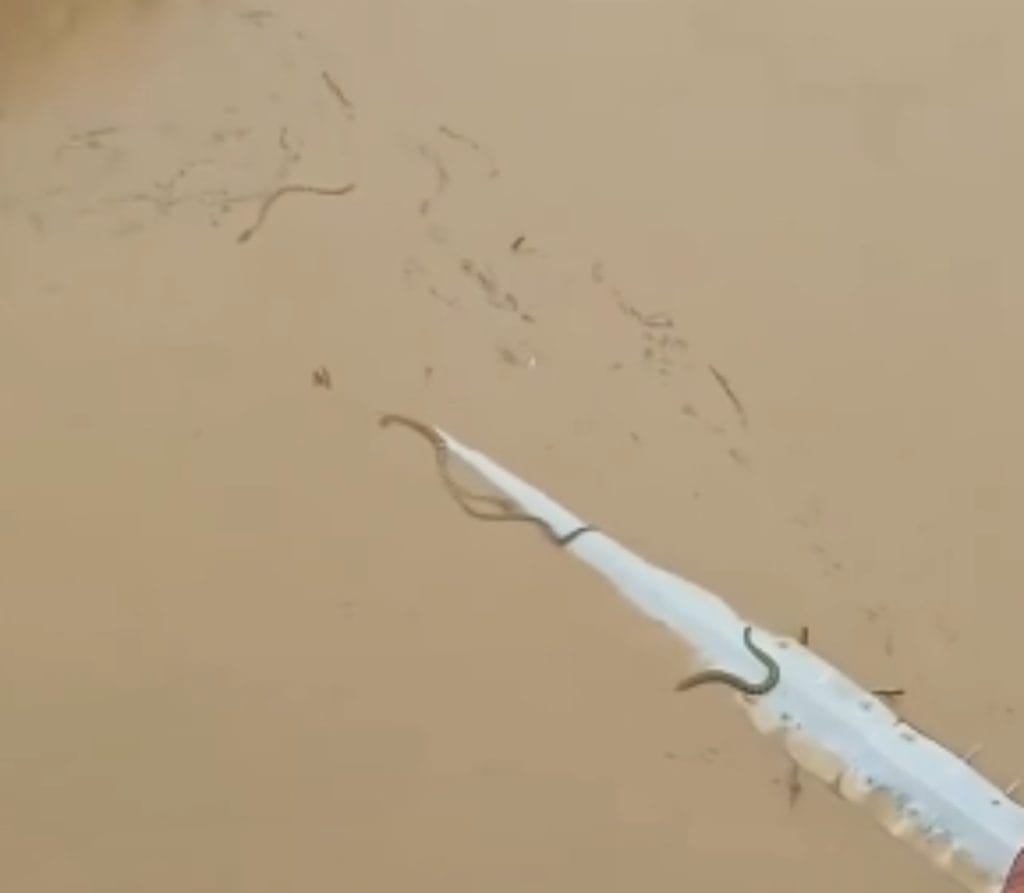
Hundreds of snakes were freed from a farm after a dam break in southern China.
©@hkeye_ / Instagram – Original
With authorities unable to reach the village due to flooded roads, many residents took matters into their own hands, using whatever tools they could find to scare the snakes away from their homes. While understandable, given that some of the snakes were venomous, authorities preferred that people not approach the snakes out of caution. Not everyone heeded that warning, as shown in social media videos of people chasing and capturing the snakes in floodwaters with their bare hands.
One Person Died, Another Received Antivenom After Being Bitten
Despite local hospitals having plenty of antivenom on hand, floodwaters made rescues difficult. Consequently, one woman died after being bitten by a venomous snake.
A woman, said to be between 40 and 50 years old, was bitten on July 6, 2026. Villagers found her in Yunbiao Township, Hengzhou City, unconscious. Because roads were blocked, multiple vehicles were used to transport the woman to a local hospital. By the time she reached the hospital, she had succumbed to the venom and was pronounced dead.
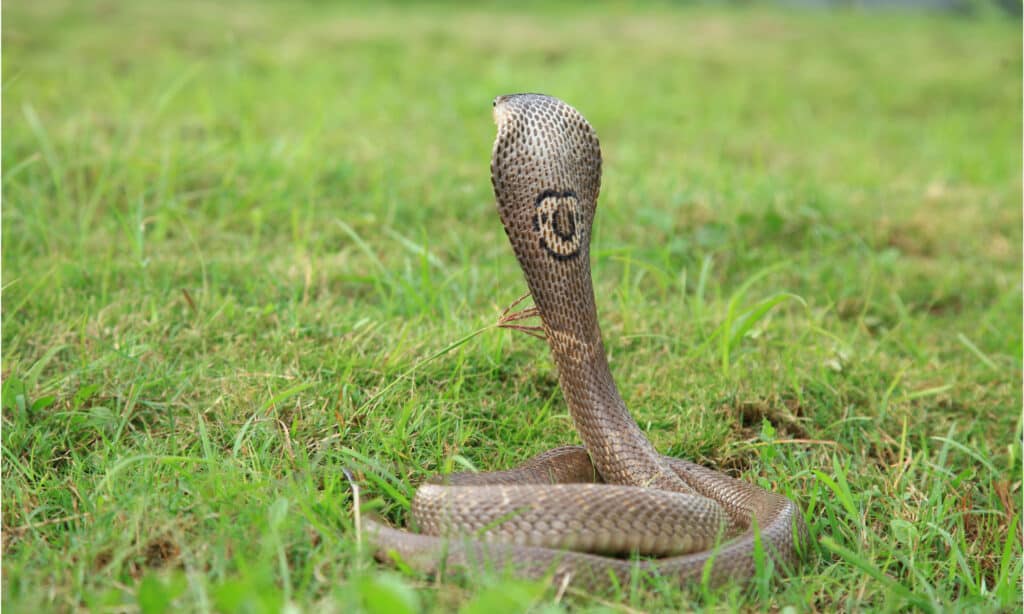
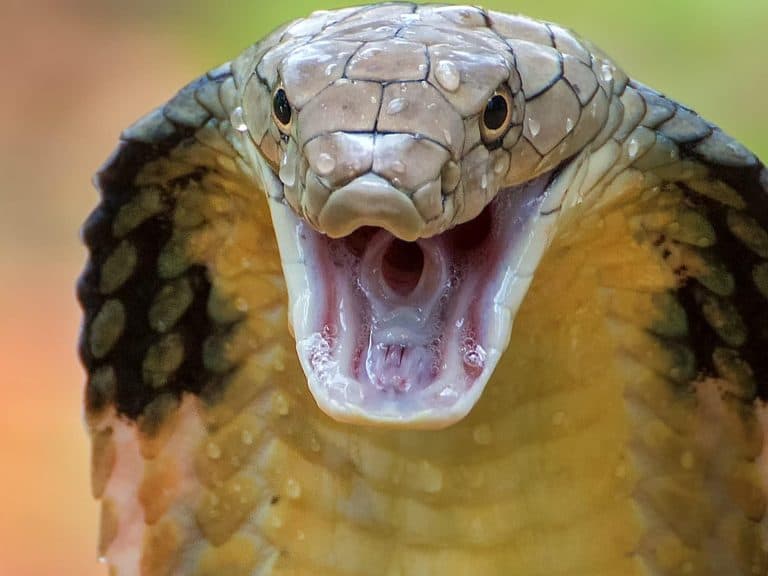
A monocled cobra, a venomous snake, was believed to have bitten villagers during the floods.
©iStock.com/ePhotocorp
Another villager was bitten after attempting to clear debris left by Typhoon Maysak. However, at the time of the bite, roadways were clearer. The man reached a hospital in time to receive antivenom. While hospitalized, he was expected to make a full recovery.
Majority of Snakes Were Nonvenomous
Thousands of people were left stranded after Typhoon Maysak’s flooding. There was nowhere for them to retreat. Consequently, those who lost their homes or were evacuated had to worry not only about finding shelter but also about coming into contact with the snakes on the loose.
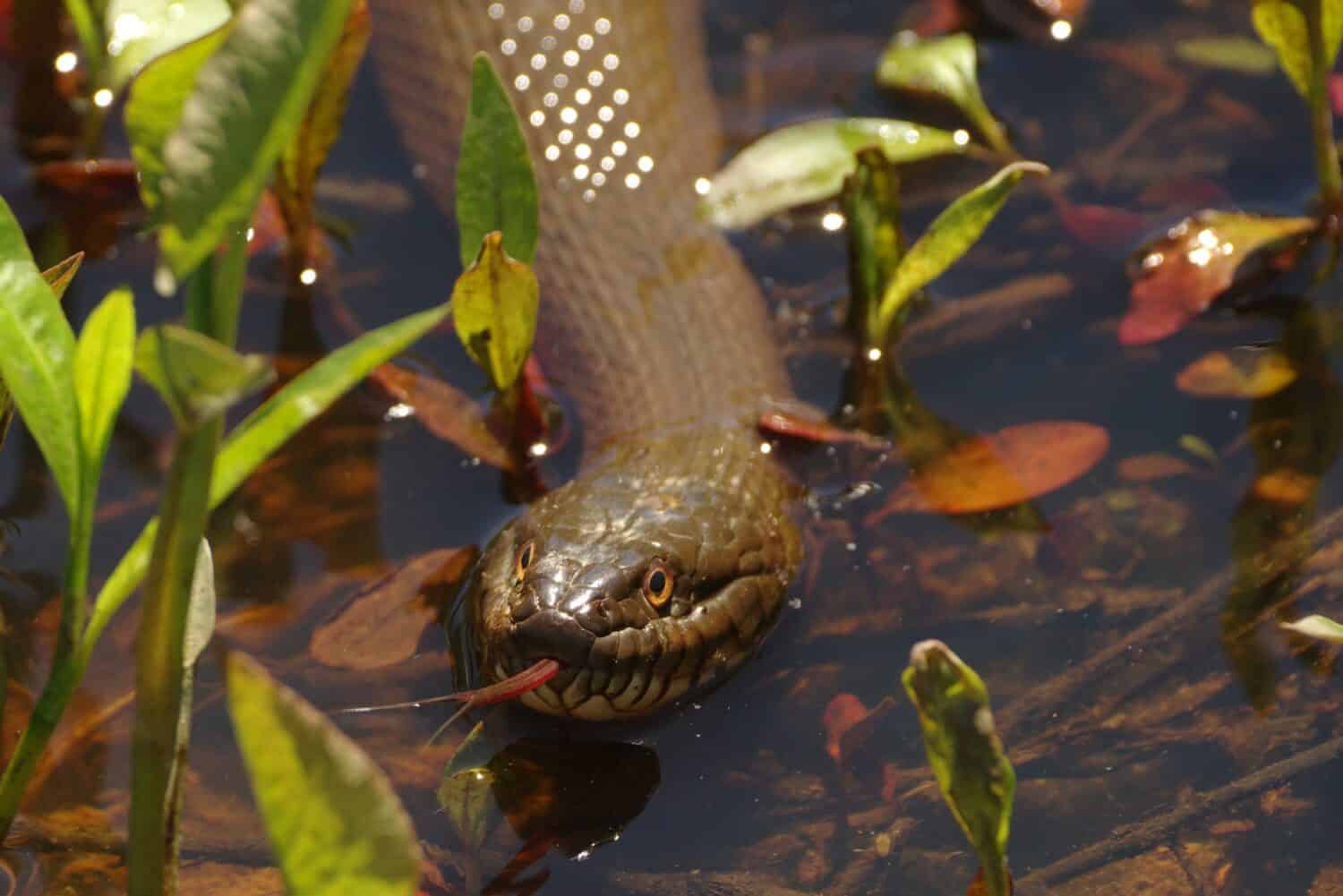
Fortunately, the majority of the snakes that were washed out of the snake farm were nonvenomous. The snake farm raised the following types of snakes:
- Oriental ratsnakes
- King ratsnakes
- Monocled cobras
- Nonvenomous watersnakes
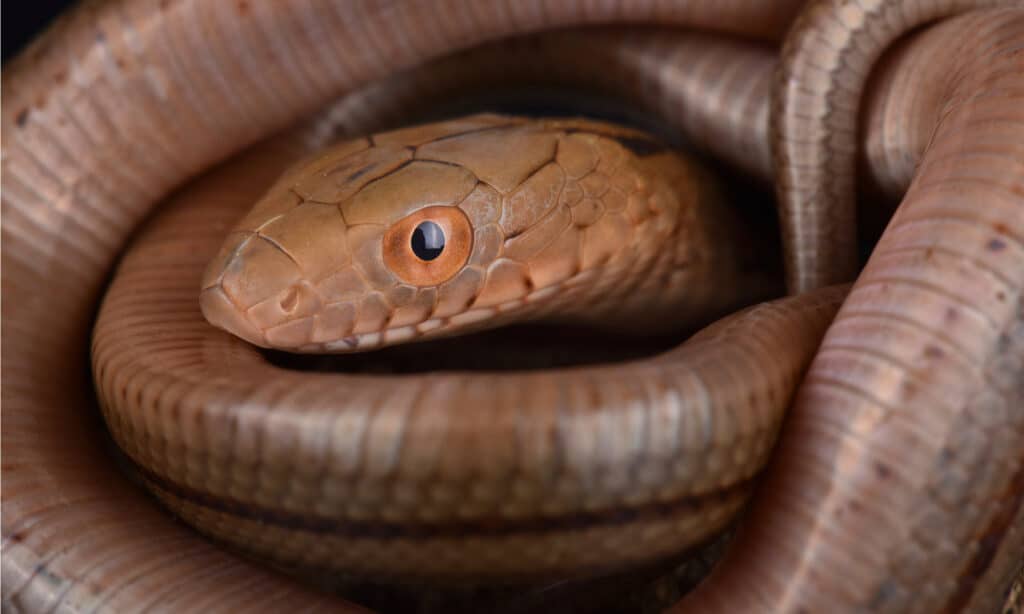
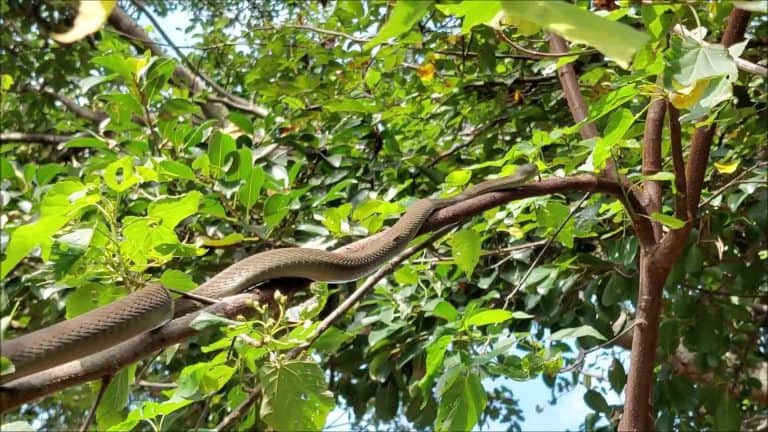
King ratsnakes were among the nonvenomous snakes unleashed in floodwaters in southern China.
©reptiles4all/Shutterstock.com
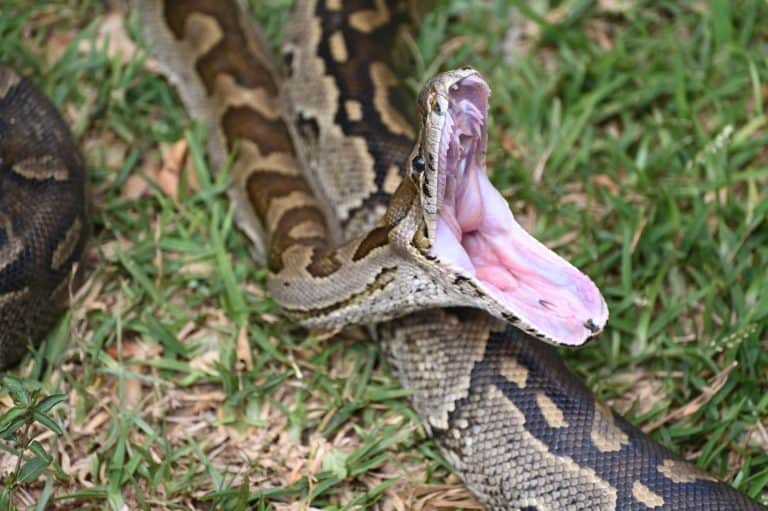
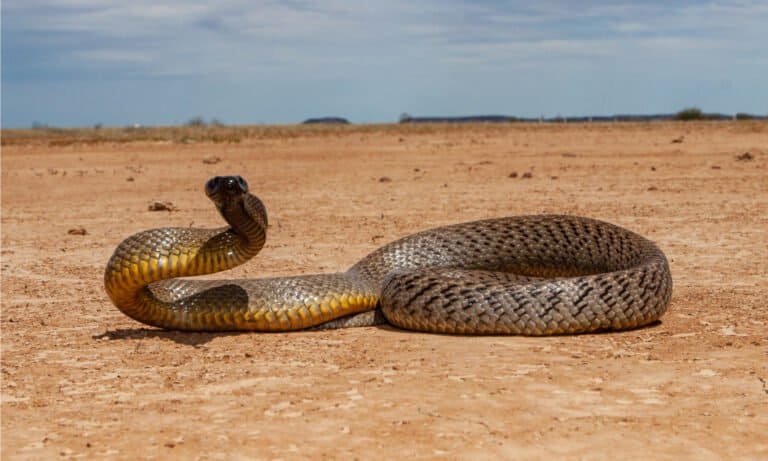
Of course, there was fear of being bitten by the cobras. This fear was warranted, given that monocled cobras have neurotoxic and cytotoxic venom. The combination can lead to both respiratory failure and necrotic tissue. This is why victims require antivenom nearly immediately.
The other snake species that escaped are capable of biting, but since they are nonvenomous, their bites are not dangerous to humans. However, to err on the side of caution, authorities warned people not to approach or handle snakes and asked them to leave removal to the experts.
Snakes Were Not the Only Reptiles Freed by Typhoon Maysak
In addition to the 900 snakes released into neighborhoods by floodwaters, another reptile was found lurking in the murky waters, raising concerns among those stranded.
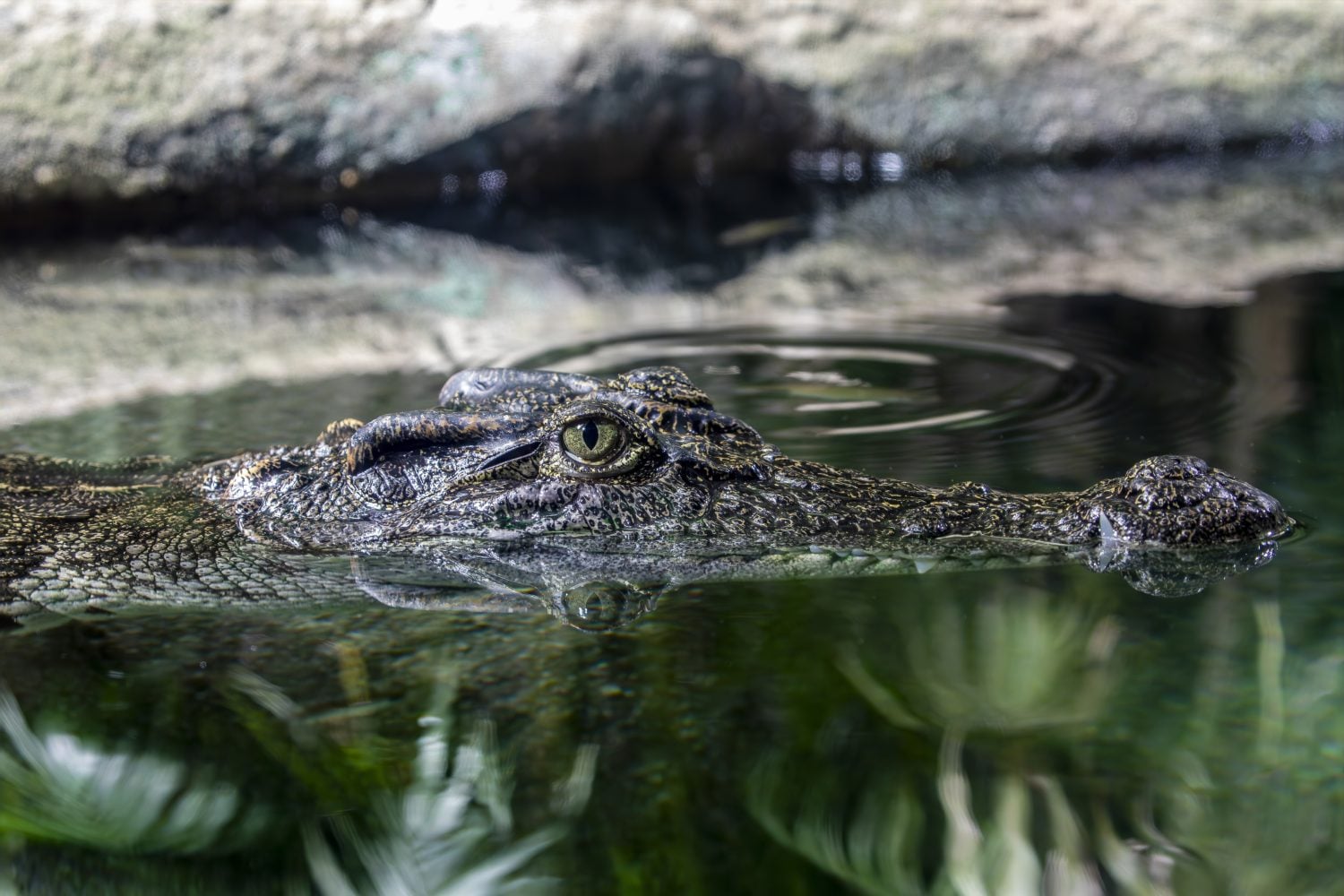
Crocodiles were seen swimming through flooded neighborhoods in China.
©Danny Ye/Shutterstock.com
Crocodiles were seen swimming through flooded neighborhoods as water swept through rain-soaked regions of China. The crocodiles, like the snakes, escaped from their captive enclosures as floodwaters damaged the facilities.
Fortunately, no injuries related to crocodiles were reported.
Majority of the Snakes Believed to Have Drowned
With up to 900 snakes invading the town after the flooding, there was a real fear that they could remain in the area after the waters receded. However, experts believe that post-flood snake attacks will be rare, both because most of the snakes were nonvenomous and because the majority likely drowned.
Nonvenomous watersnakes are quite well adjusted to spending long periods in the water. Even cobras and rat snakes can swim. However, the snakes that escaped from the farm did not enter the water gently. A strong current washed them away. The likelihood of all 900 freed snakes surviving the initial rush of water is slim.
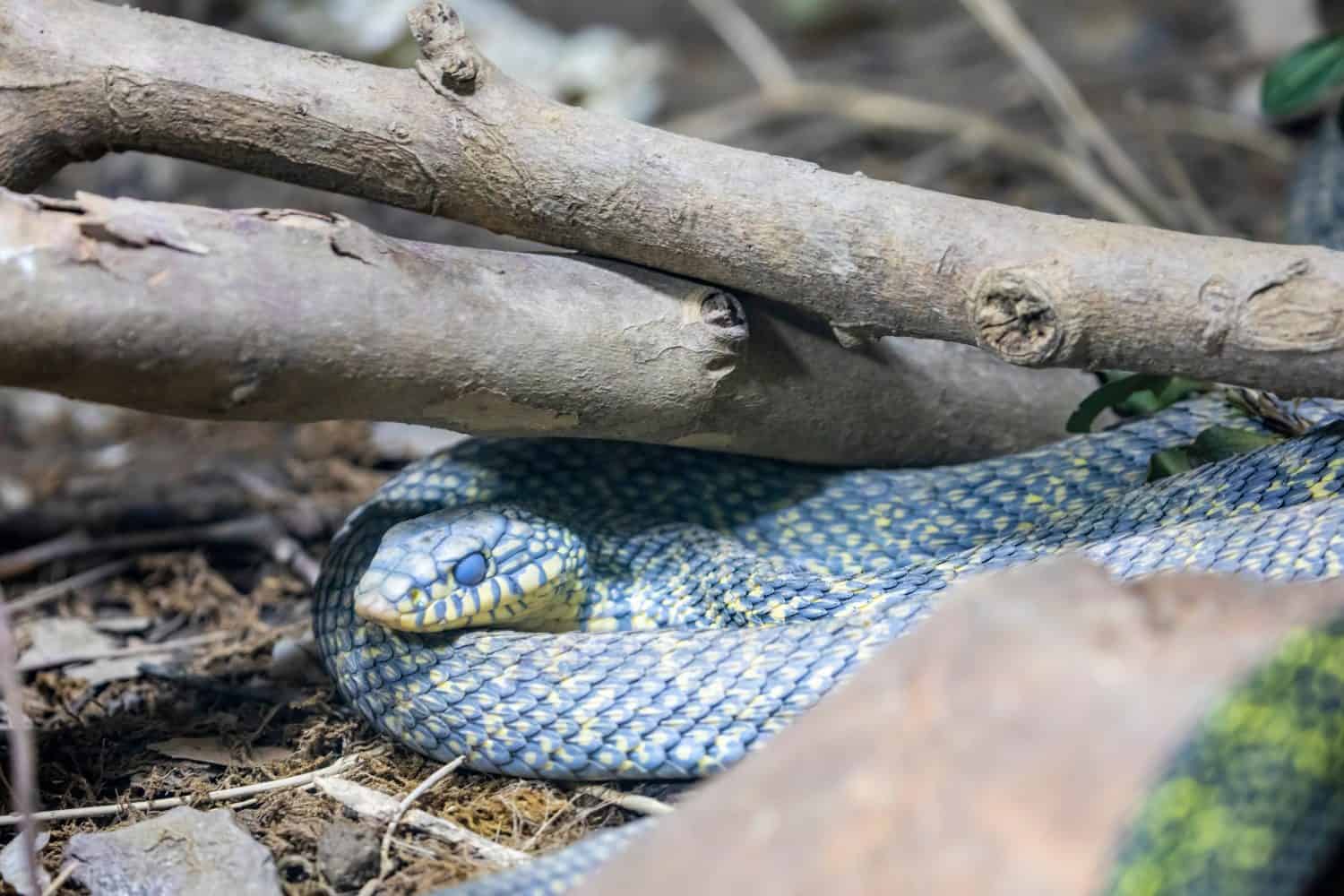
The majority of the escaped snakes are believed to have drowned in floodwaters.
©Danny Ye/Shutterstock.com
Experts claim that while the snakes can swim, not all are equipped to spend days in the water. They need time to rest away from the aquatic environment. This is why snakes captured by authorities were found on floating debris or other makeshift islands in and around floodwaters. The snakes were simply exhausted.
An updated death toll released at the end of August states Typhoon Maysak caused 159 people to lose their lives as a result of the consistent rain and the collapse of two dams. One of those deaths was attributed to a snakebite. The fallout from the typhoon is still being measured, as China’s National Meteorological Center warns that more storms of Typhoon Maysak’s magnitude are possible because of El Niño conditions. Through the summer of 2027, those living in China and nearby regions should be prepared for torrential rain—hopefully without any snakes in the floodwaters.