
Texas is home to over 105 snake species, which is thought to be the highest number of snake species of any state. However, one Texas snake species stands out from the rest due to its incredible size. So, just how big is the biggest snake ever found in Texas? Keep reading to find out.
What Is the Biggest Snake Ever Found in Texas?
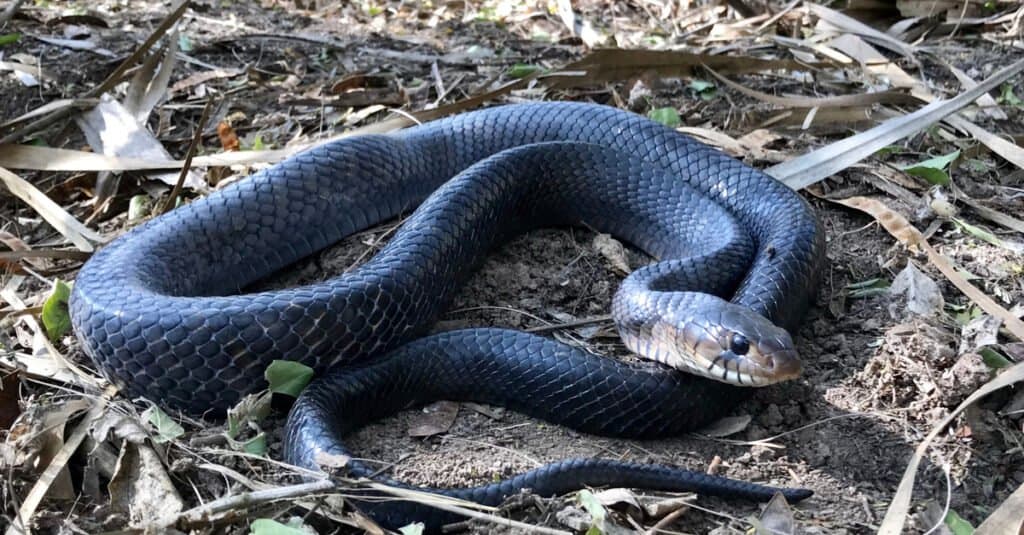
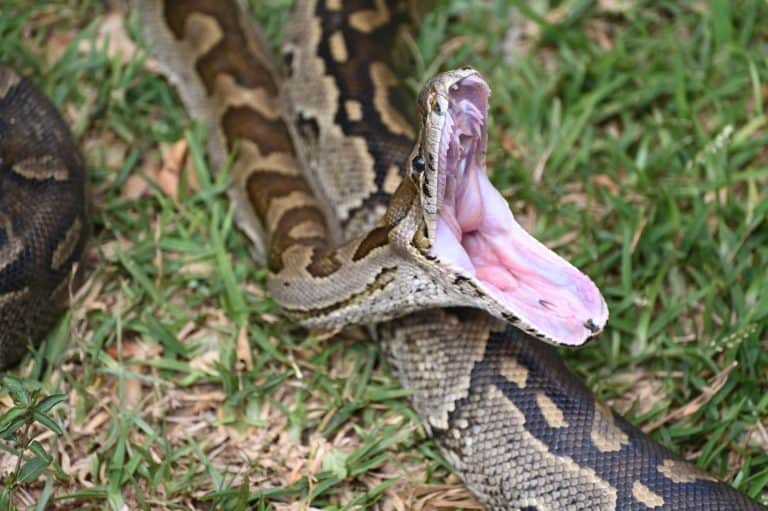
The biggest snake ever discovered in Texas was an 8.5 feet Texas indigo snake.
©Joe Farah/Shutterstock.com
The Texas indigo snake (Drymarchon melanurus erebennus) is the largest snake found in Texas, generally measuring between 5.5 to 6.5 feet long. This snake is a subspecies of the Eastern indigo snake (Drymarchon couperi), which holds the record for the largest snake in North America, with lengths reaching up to 9 feet. So, it is not surprising that the Texas indigo snake is the largest snake ever recorded in Texas. As reported by the Texas Parks and Wildlife Department Magazine, the longest Texas indigo snake documented in the state was 8.5 feet long. That is longer than a standard 96-inch sofa.
Texas indigo snakes are also heavier than other native snakes due to their length. These snakes generally weigh from 2 pounds to over 10 pounds. Large males typically weigh 7 pounds to over 10 pounds, while large females weigh 4 to 6 pounds.
Identifying a Texas Indigo Snake
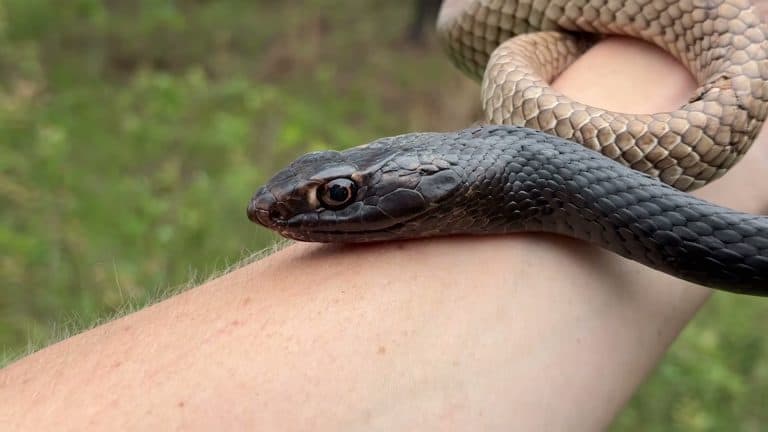
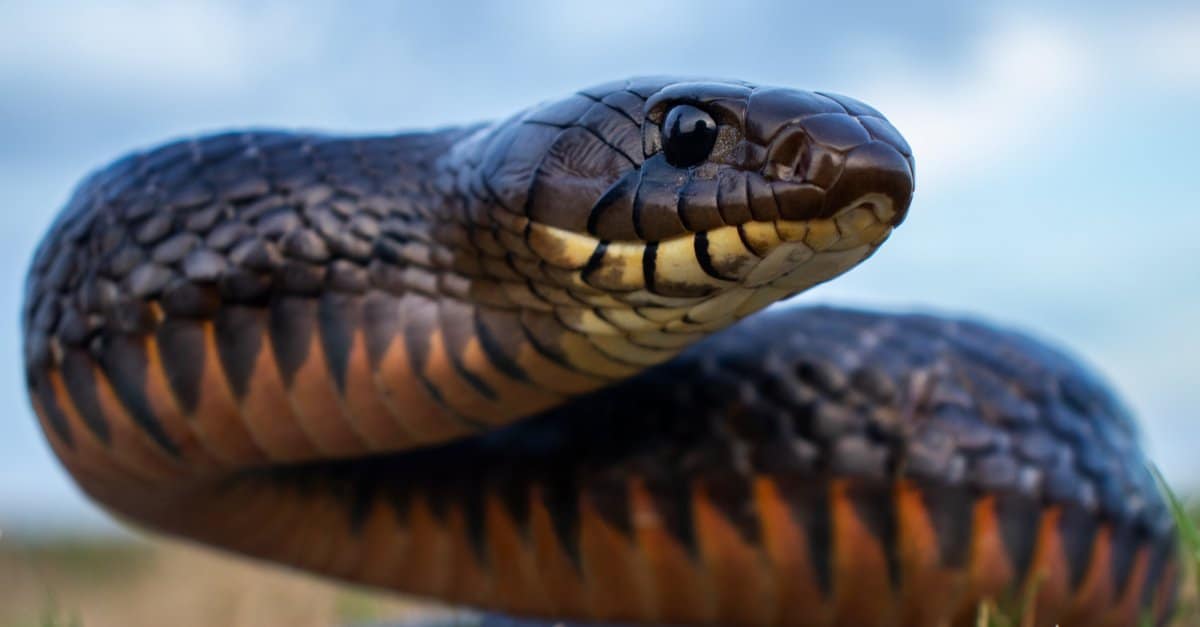
Of course, the first thing most people are likely to notice is their size. However, they are also striking-looking snakes. They have glossy, iridescent blue-black scales. Their bellies are typically a salmon-pink to cream color, darkening toward the tail.
Their snouts, chins, and throats are also usually salmon-pink, brownish-orange, or cream. They have vertical black lines running from under their eyes to their lips. Juvenile snakes may appear completely black before developing their adult coloration between two and three years of age.
Where to Find the Texas Indigo Snake
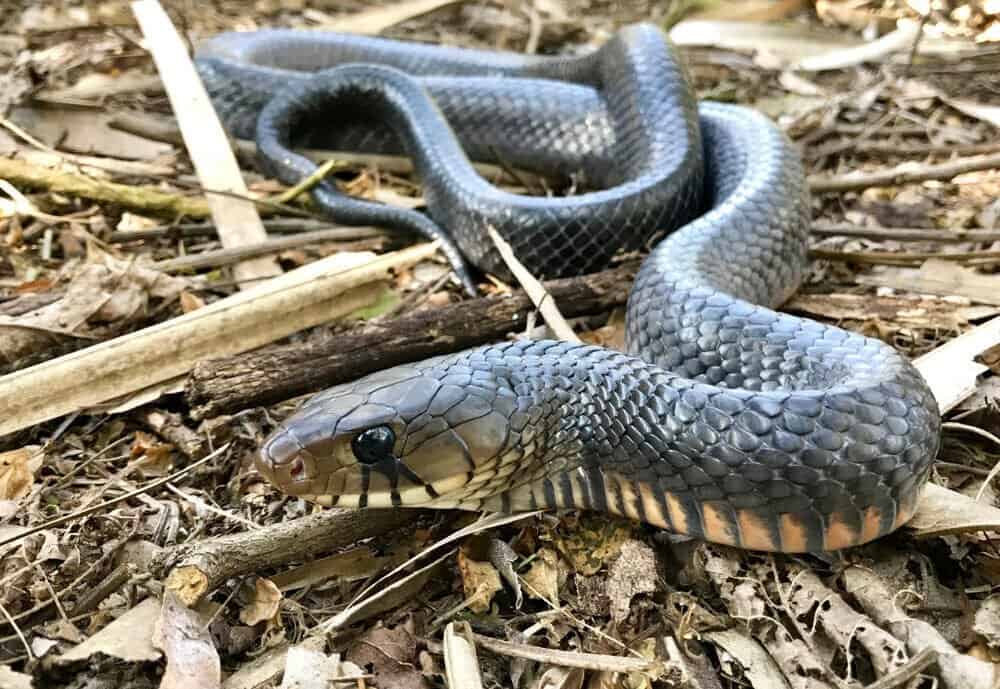
Texas indigo snakes are primarily found in Southern Texas.
©Joe Farah/Shutterstock.com
The native range of the Texas indigo snake spans from Southern Texas down to the state of Veracruz in Mexico. In Southern Texas, these snakes are primarily found in grassland areas near permanent water. However, they are adaptable and can also be found in brushlands and mesquite savannas, as long as water is close by.
They do not typically dig their own burrows, but they use the abandoned burrows of other animals for shelter and to lay their eggs. After mating between October and February, female Texas indigo snakes lay 3-12 eggs between April and June. The eggs typically hatch sometime in late summer or early fall. Newly hatched indigo snakes are usually between 14 and 18 inches in length, but may be longer, depending on the size of the parents.
Are Texas Indigo Snakes Venomous?
Texas indigo snakes are nonvenomous snakes that belong to the Colubridae family. However, despite their lack of venom, they kill and eat venomous pit vipers, specifically rattlesnakes. Indigo snakes have been found to exhibit a strong tolerance to North American pit viper venom.
Texas indigo snakes are diurnal, which means they hunt during the day. These snakes rely on their strength and size to overpower their prey. They clamp prey in their strong jaws and bite down until their prey is subdued, then they swallow it whole. In addition to other snakes, their prey also includes lizards, amphibians, and birds.
These snakes are relatively docile and are not naturally aggressive towards humans. However, they are not defenseless and have a painful bite when threatened. These snakes are a protected species in Texas, so it is illegal to hunt, kill, harm, collect, or possess them.