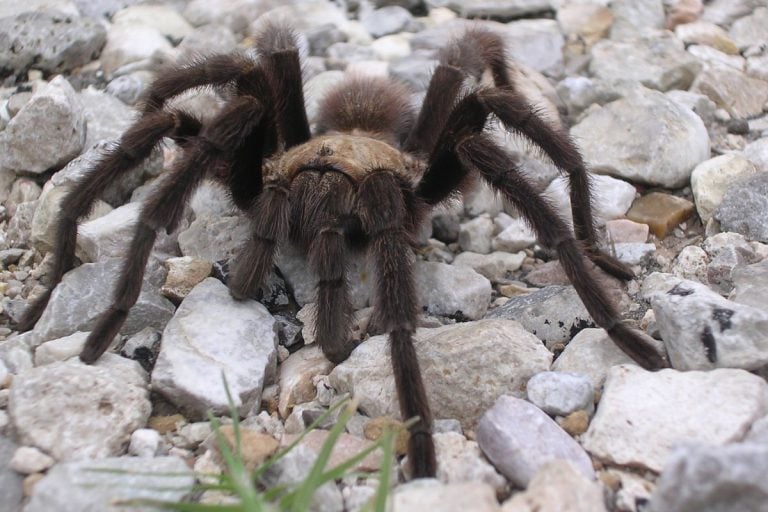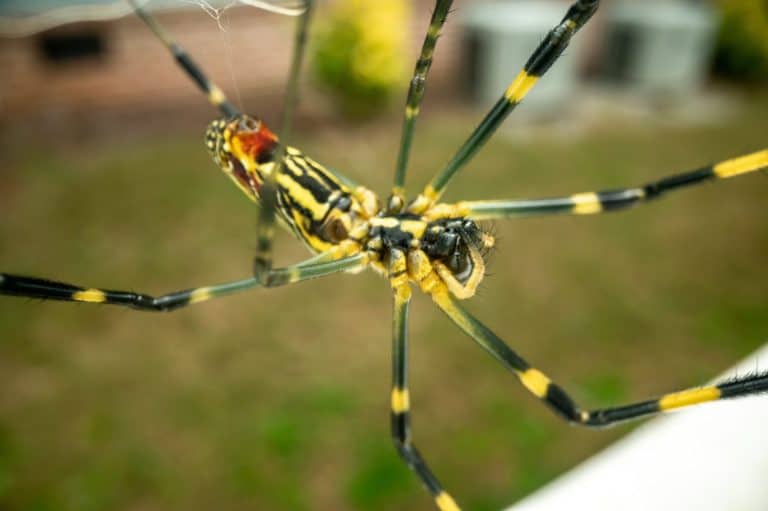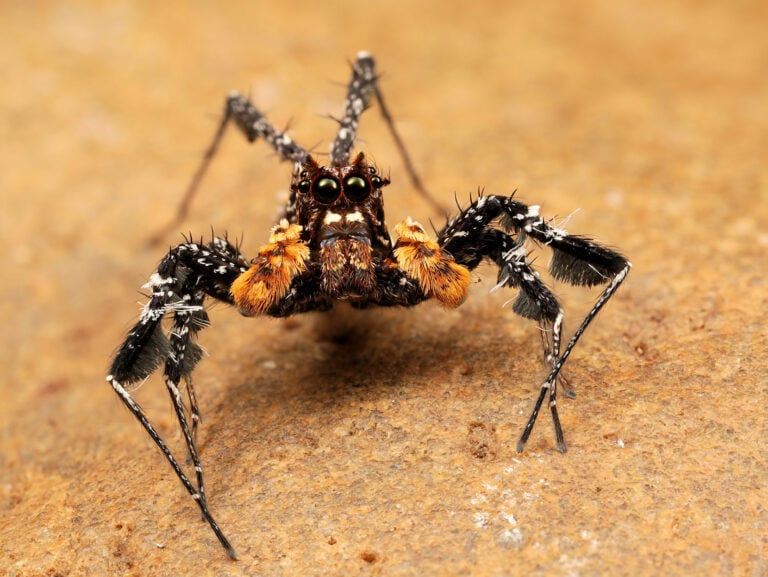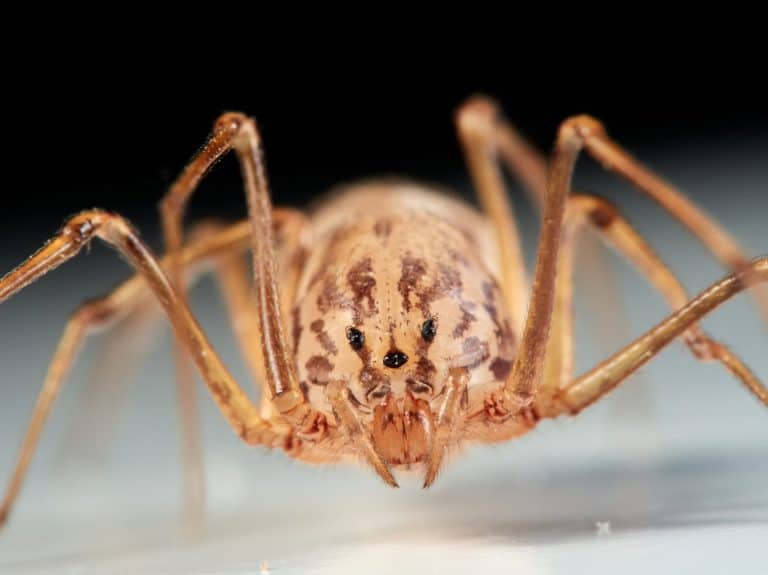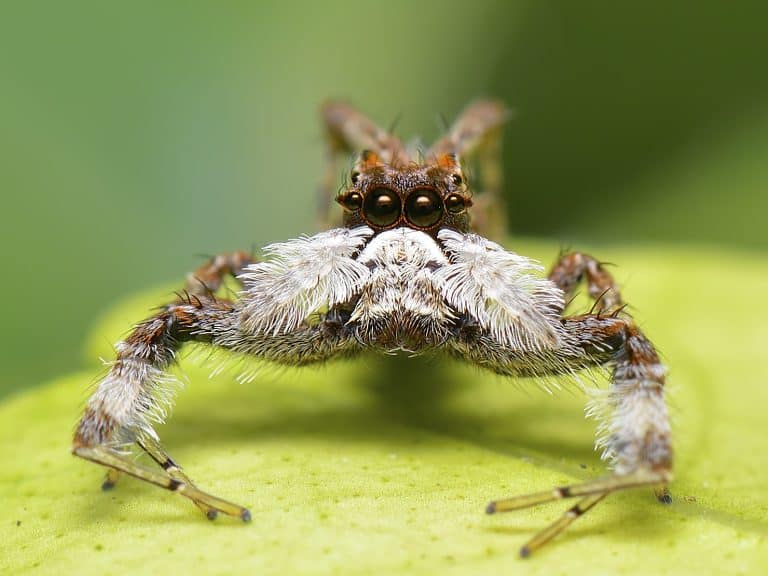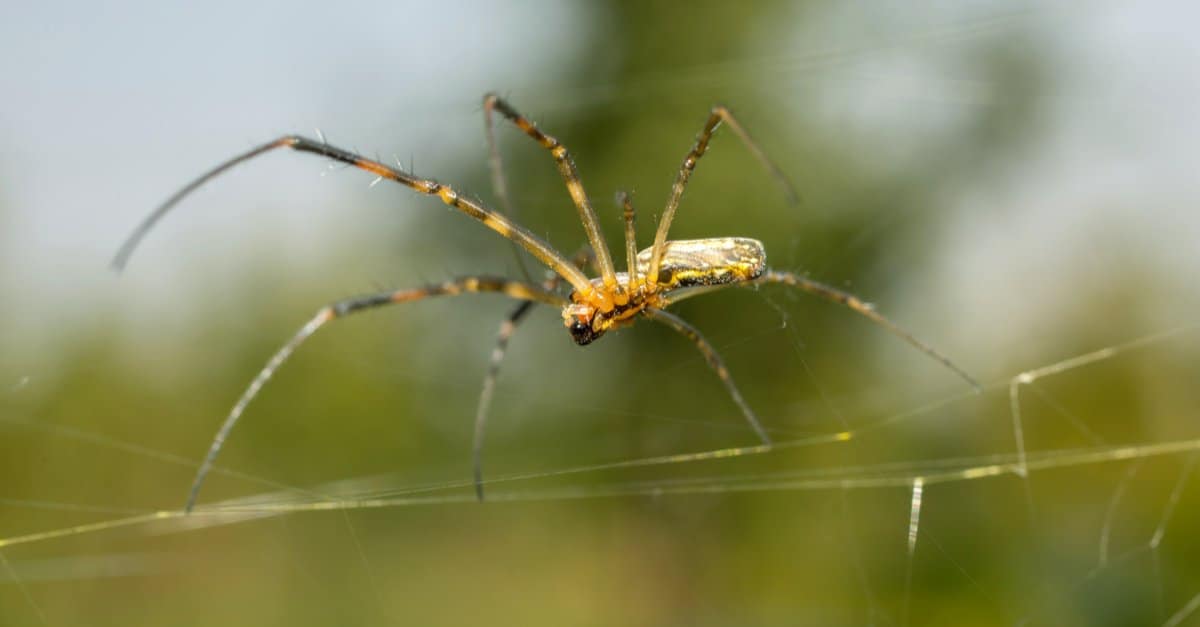

The common name banana spider refers to 11 distinct species in the genus Cupiennius. Native to the rainforests of Central and South America, banana spiders are large, wandering spiders that do not construct webs. Instead, they actively search for prey, which consists of insects. All spiders in the genus Cupiennius are venomous, though their venom is not considered medically significant to humans. However, banana spiders are often confused with spiders in the genus Phoneutria, whose venom is highly toxic to humans.
Banana Spiders Size
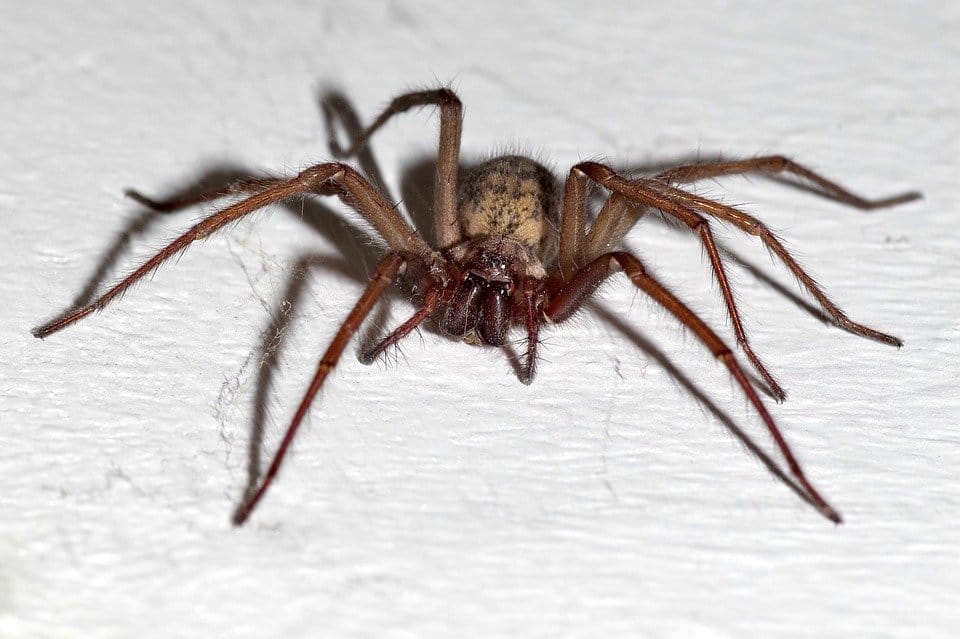
Called such because they are sometimes found in shipments of bananas, banana spiders look more intimidating than they are.
Banana spiders are medium-sized spiders whose bodies can range anywhere from 0.35 inches to 1.6 inches. However, their legs are much longer, reaching nearly four inches long. Banana spiders have fuzzy brown bodies, although some species have brightly colored areas, especially around their mouths.
Cupiennius getazi
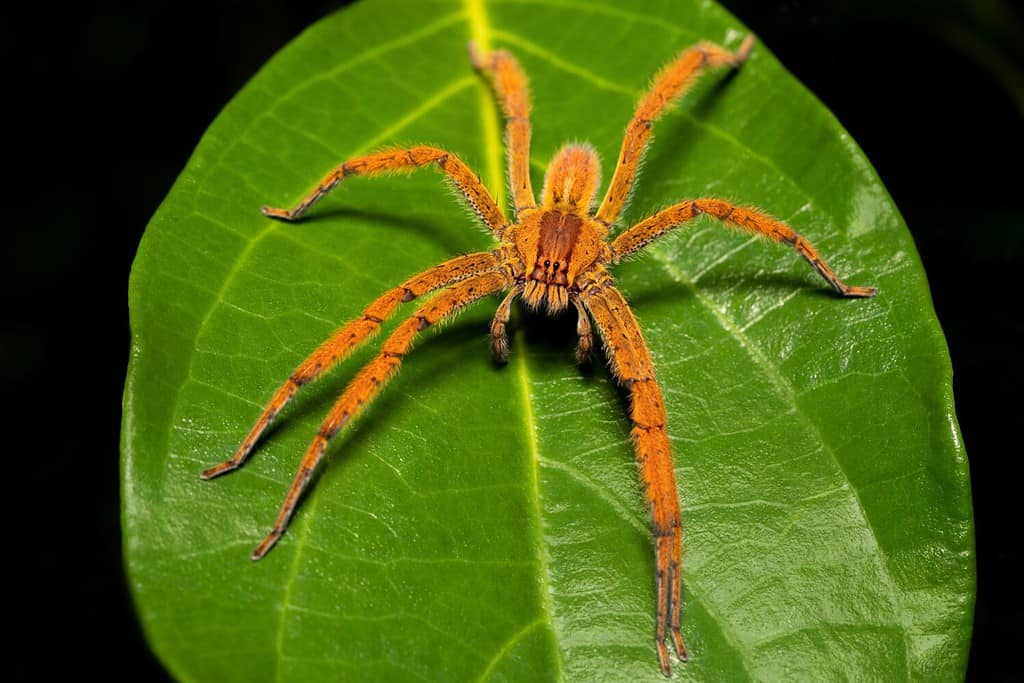
Its vibrant color and large size make the spot-legged bromeliad spider one of the most well-known species of the genus.
©Artush/Shutterstock.com
Due to its popularity as a specialty pet, Cupiennius getazi is one of the most well-known species of the genus. Commonly known as the spot-legged bromeliad spider, they are also prized for their vivid color. As one of the larger species, females can grow to 1.5 inches in body length, with a leg span of over five inches. This species is native to Costa Rica and Panama. They live among bromeliads, a diverse family of tropical plants recognized by rosette-shaped foliage with stunning, long-lasting blooms.
Cupiennius coccineus
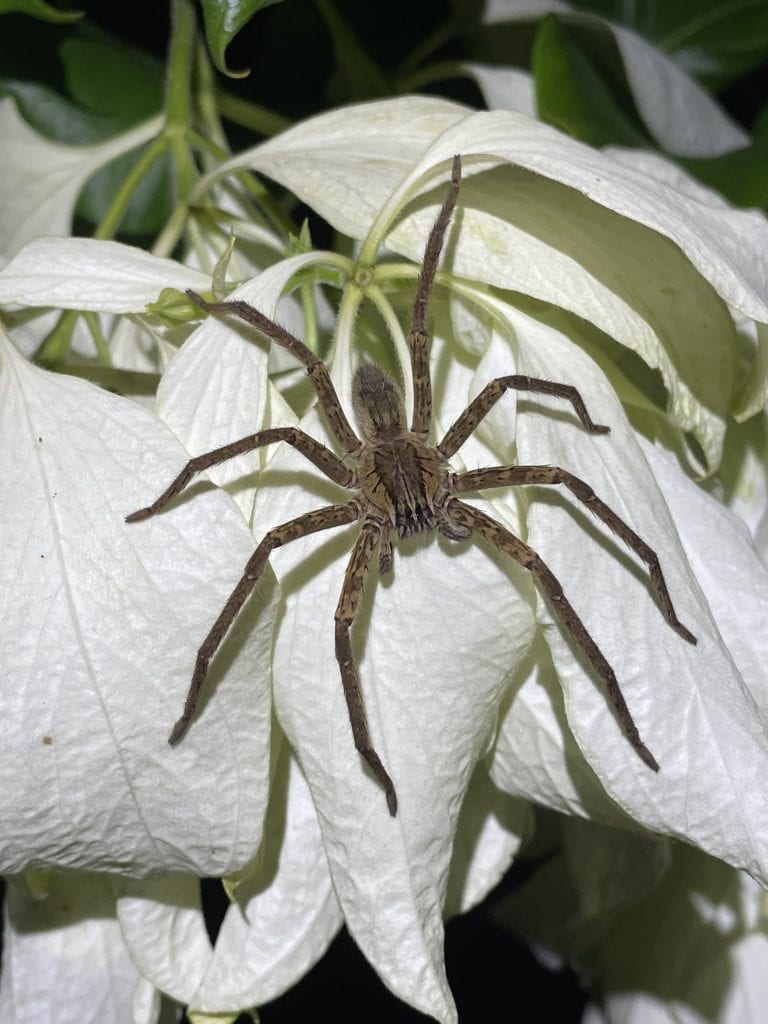
Red-thighed bromeliad spiders can have leg spans of three to five inches.
©Courtesy of Luke Padon, threeagoutdoors, CC BY 4.0 – Original / License
The red-thighed bromeliad spider (Cupiennius coccineus) is a wandering spider found from Mexico to Venezuela, as well as some Caribbean islands. It is known for resting in large plant leaves during the day, and venturing out after dark to hunt prey. These solitary creatures hunt using vibrations detected by metatarsal lyriform organs, specialized sensory structures that are highly sensitive to vibrations. This enables the red-thighed bromeliad spider to detect prey through substrate vibrations.
Cupiennius salei
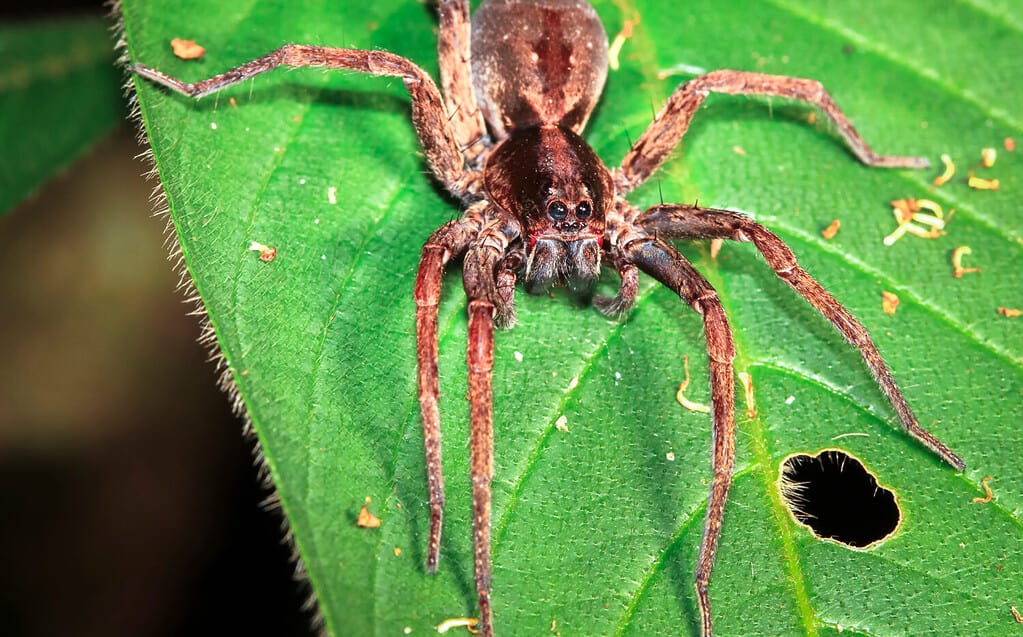
Native to Central America, this species shelters in banana plants and bromeliads.
©Kevin Wells Photography/Shutterstock.com
Cupiennius salei, also known as the tiger wandering spider or tiger bromeliad spider, is a large, actively hunting spider native to Central America. Like other spiders within the genus, Cupiennius salei is a nocturnal ambush predator that uses venom to subdue its prey. A relatively large spider, females can reach up to 1.4 inches in body length, with a leg span of up to 4 to 5 inches.
Cupiennius bimaculatus
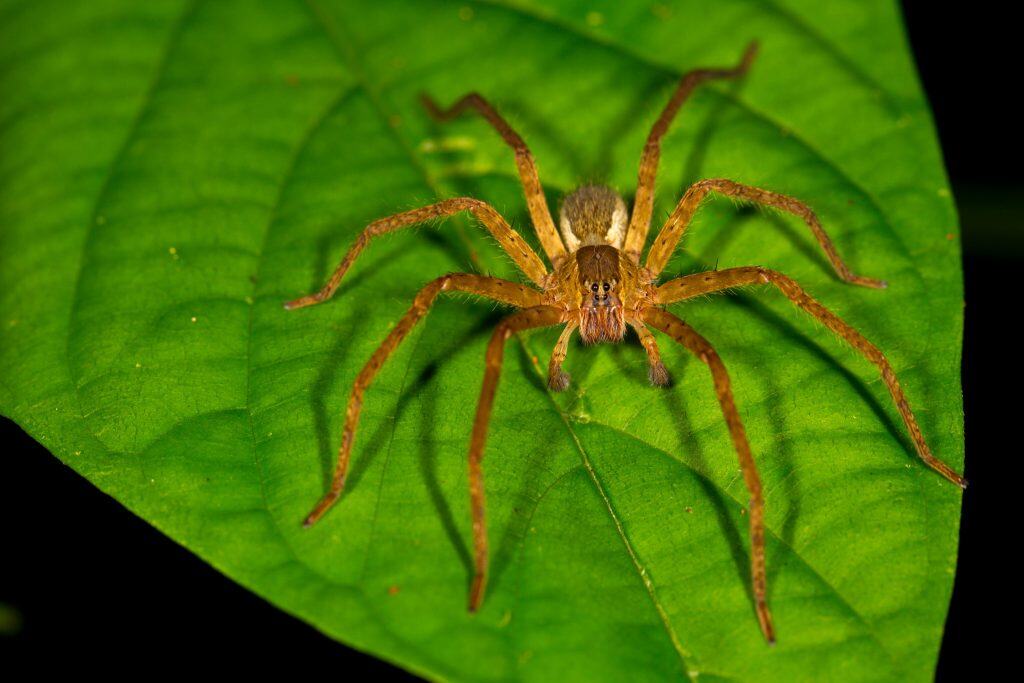
When wanting to mate, a male two-spotted bromeliad spider follows the silk dragline left by a female. He then uses vibrations to locate her.
Found from Mexico to northwestern South America, and on some Caribbean islands, Cupiennius bimaculatus, commonly known as the two-spotted bromeliad spider, is a medium to large spider with gray, brown, or orange coloration, sometimes exhibiting a striped pattern. They are nocturnal and are considered sit-and-wait predators.