
Quick Take
- Jaguar rosettes work like fingerprints, and the way scientists used them to unmask Cinco reveals a wider detective toolkit that is reshaping how researchers track wildlife without ever touching them. See how rosettes identify jaguars →
- A single botched capture in 2009 permanently changed how scientists study jaguars in the U.S. The method they switched to is far stranger than most people expect. Discover the shift to camera traps →
- No female jaguar has been recorded in the U.S. since 1963, yet males keep appearing, and the reason scientists think they're crossing north now points to something much bigger than the cats themselves. Explore why males cross north →
- The border infrastructure designed to stop illegal crossings may be quietly sealing jaguars out of their own historic range, and the wildlife openings built in as a fix are not solving the problem. See the border barrier threat →
Recently in southern Arizona, a jaguar broke the stillness of night as it drank from a remote desert watering hole. Captured on camera in March 2026, the male cat — known as “Cinco” — spent nearly five minutes at the water’s edge.
Jaguars once roamed much of the American Southwest, with records placing them as far north as the Grand Canyon. However, by the mid-1900s, hunting, habitat loss, and predator eradication campaigns had almost entirely wiped them out of the United States. For decades, jaguars were more legend than reality in Arizona. Cinco is only the fifth individual jaguar to be documented in the state since 2011. His presence marks a historic milestone for a species fighting to reclaim its rugged borderland home.
Cinco’s appearance highlights a hidden network of wildlife corridors stretching between Arizona and northern Mexico. It also underscores the growing role of remote camera traps, which reveal elusive animals rarely seen by humans.
Reading the Rosettes and Identifying Cinco
Cinco made his first appearance over Thanksgiving weekend in November 2025. A trail camera captured the large, spotted cat moving through the mountain ranges south of Tucson. Similar to human fingerprints, jaguar rosettes are unique to each individual cat. Researchers matched these rose-shaped spot patterns on his coat to previous records. Cinco’s unique patterns confirmed that he was a new arrival, distinct from the four other jaguars documented in Arizona since 2011. He was entirely new to the region, making him only the fifth jaguar spotted in recent decades. This earned him the nickname “Cinco.”
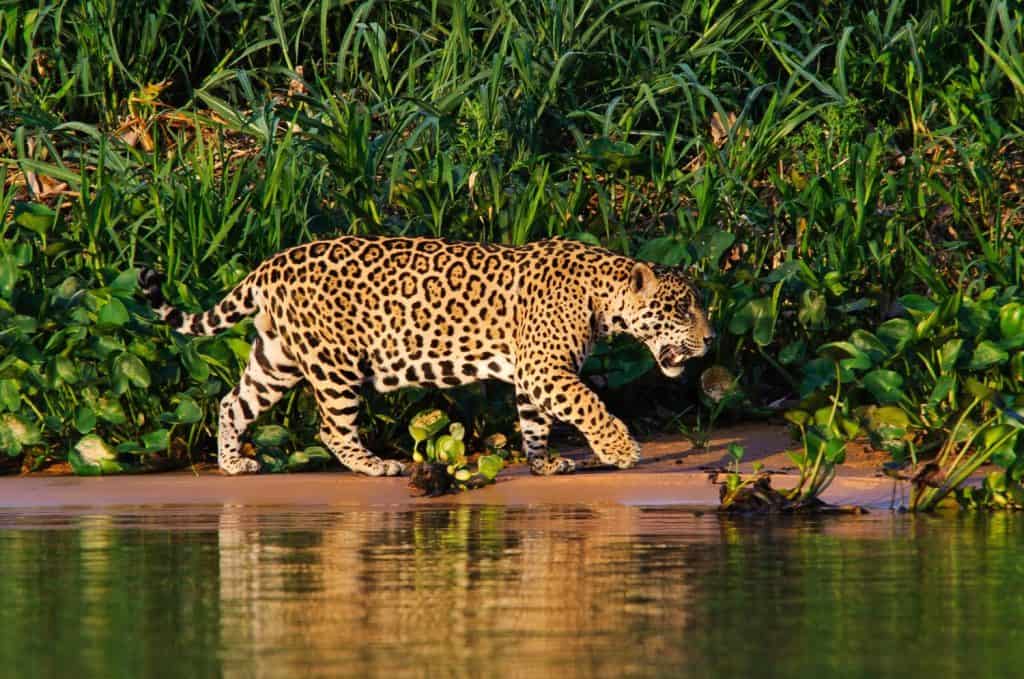
The frequency of these repeated sightings suggests that Cinco is more than just a transient visitor.
©Marcos Vergueiro/Shutterstock.com
Since his initial discovery, cameras have captured Cinco more than 17 times as of May 2026. He regularly revisits the same drainages, water sources, and mountain corridors. Footage of Cinco scent-marking trees and navigating the terrain suggests he is not merely passing through. He is actively using Arizona as part of his habitat.
This distinction is vital for conservation efforts. Each new sighting of Cinco strengthens scientific evidence that the Sky Islands remain a vital habitat for jaguars. These detections prove the mountains still bridge the gap between the United States and Mexico for these animals.
The Importance of Camera Traps in Conservation
Much of what scientists know about Cinco is thanks to a massive network of remote camera traps. Hidden throughout southern Arizona, these cameras provide a rare glimpse into the lives of the region’s most elusive wildlife. To keep the cameras running, researchers and volunteers hike off-trail through steep, thorny terrain. They brave these conditions to reach isolated canyons and watering holes scattered across the Coronado National Forest. As of May 2026, more than 40 volunteers help to monitor a large network of camera traps. Their work forms the foundation of research by providing the data needed to track jaguar movements and protect their habitat.
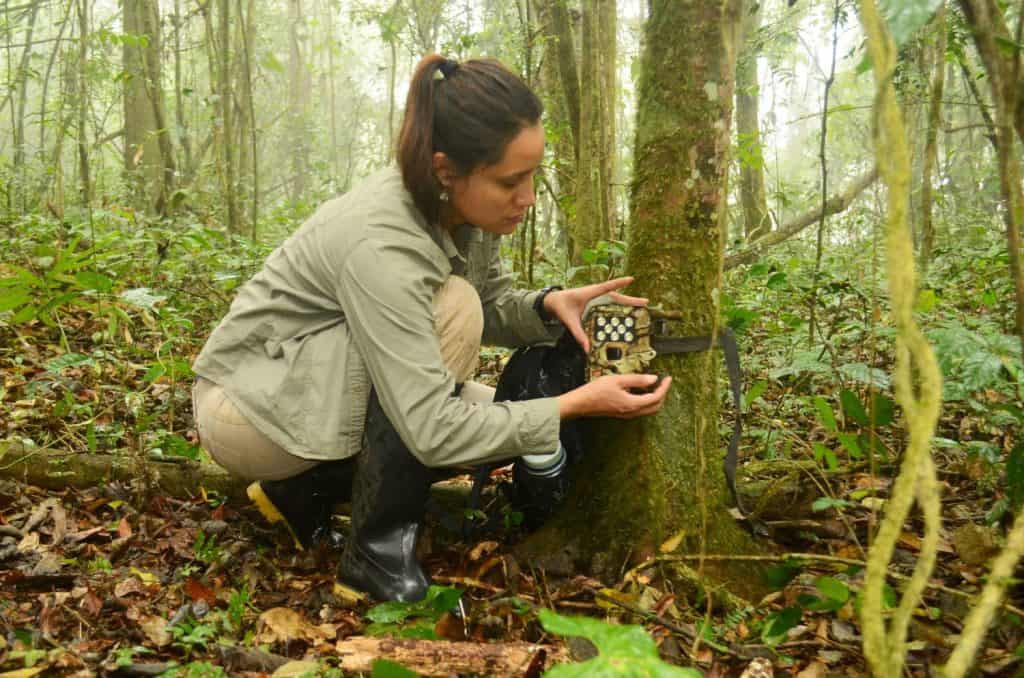
Camera traps are one of the most crucial methods for learning about the movements of jaguars in Arizona.
©AlvaroGO/Shutterstock.com
Older wildlife studies relied heavily on trapping and collaring animals. However, today the Wild Cat Research & Conservation Center follows a strictly non-invasive philosophy. This means they avoid capturing or handling the animals they study. Their monitoring equipment is also designed to be as unobtrusive as possible. Instead of using physical collars, traps, or bait stations, scientists use advanced technology and forensic methods. Remote cameras capture natural behavior in the wild without the need for lures or attractants that might disturb the animals.
Researchers can also study a jaguar’s health, diet, and movements by analyzing invisible traces left behind, such as samples from watering holes or tracks. They analyze waste to gather genetic and nutritional data. These hands-off techniques allow researchers to gather vital data while ensuring that jaguars like Cinco can live undisturbed in their natural habitat.
The Sky Islands as a Living Wildlife Corridor
Cinco’s survival depends on the Sky Islands, one of the most unique landscapes in North America. They act as biological stepping stones, connecting the Sierra Madre in Mexico to the American Southwest. For wide-ranging animals like jaguars, these mountains serve as critical wildlife corridors, allowing them to travel safely between different habitats.
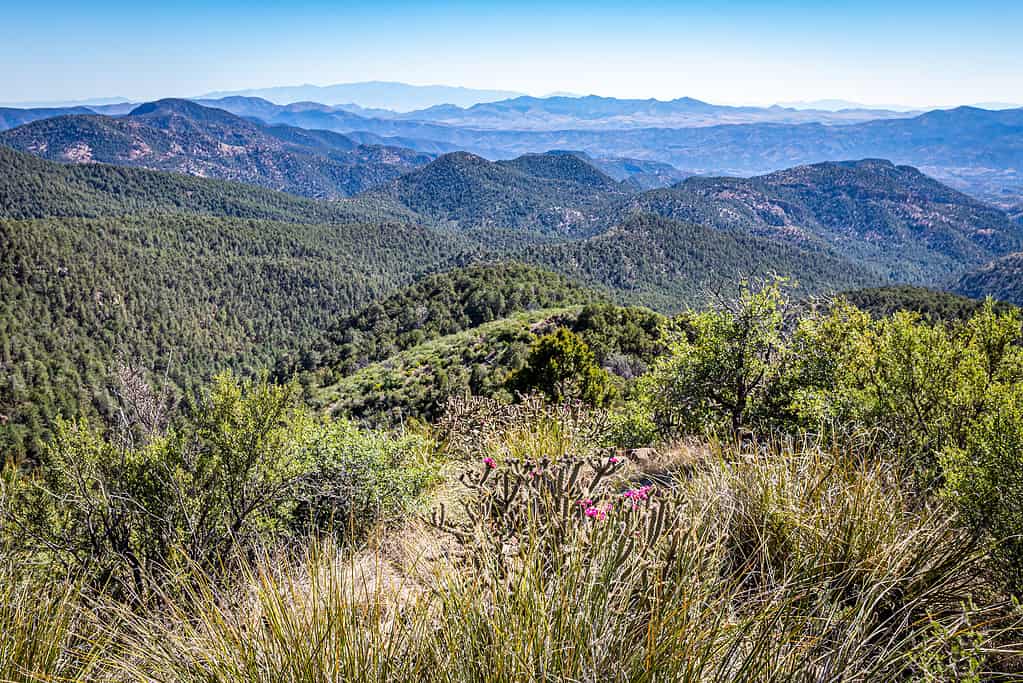
These isolated mountain ranges in Southern Arizona are separated by vast desert valleys.
©Different_Brian/iStock via Getty Images
In conservation science, researchers often describe the jaguar as an “umbrella species,” highlighting the health of the entire environment. If a large predator like a jaguar can survive in a landscape, it usually means the broader ecosystem is functioning correctly. A jaguar’s presence indicates there is enough water and prey (like deer and javelina) to go around. This means that protecting the region for jaguars also protects everything else that lives in the Sky Islands.
A Fragile Future
While Cinco’s presence proves that Arizona can still support jaguars, his situation also highlights the fragility of these animals in the United States. The population is not yet self-sustaining, and there have been no records of a female jaguar in the U.S. since 1963. Currently, the only jaguars in Arizona are a small group of males traveling north from Mexico in search of new territory.
Some scientists hypothesize that climate pressures could be contributing to these northern migrations. Rising temperatures, prolonged drought, and changing prey availability could be pushing some jaguars farther north into the cooler mountain corridors of the borderlands. They may be searching for more reliable water sources or following their prey as it shifts locations.
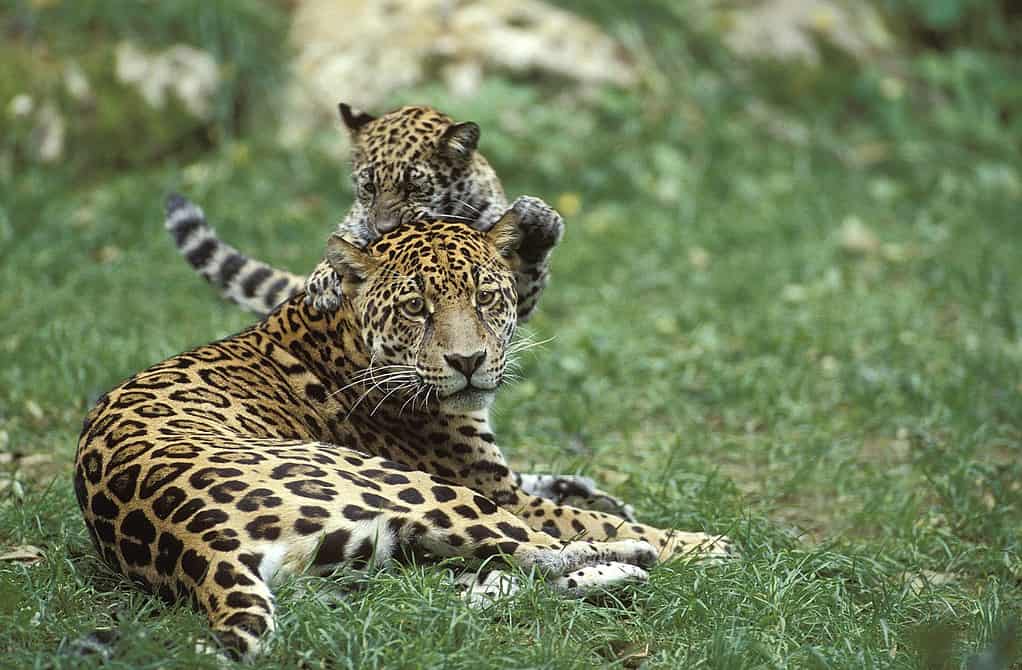
Currently, there are no female jaguars in Arizona.
©slowmotiongli/Shutterstock.com
For now, Cinco appears to be remarkably adaptable and has been documented crossing rugged lowlands, moving through dense brushy hillsides, and even surviving in cold, high-altitude conditions. Cinco’s ability to thrive in these diverse landscapes is a powerful reminder that jaguars are far more ecologically flexible than their tropical reputation suggests.
Barriers in the Borderlands
While Cinco’s story offers hope, it also reveals how vulnerable his habitat has become. To survive long-term, these wild cats don’t just need space; they also need connectivity through wildlife corridors. Conservationists warn that recent expansions of border infrastructure threaten to cut off these vital paths, essentially locking the cats out of their historic range. This prevents the natural migration they need to sustain a population.
Even more dangerous is habitat fragmentation. As wide-ranging predators, jaguars require enormous territories to hunt and thrive. When these areas are carved up, the land can no longer support them. These isolated wildlife populations often cannot find new mates, leading to inbreeding and reduced genetic diversity. Small, disconnected populations are also hit much harder by natural disasters like wildfires or the spread of disease.
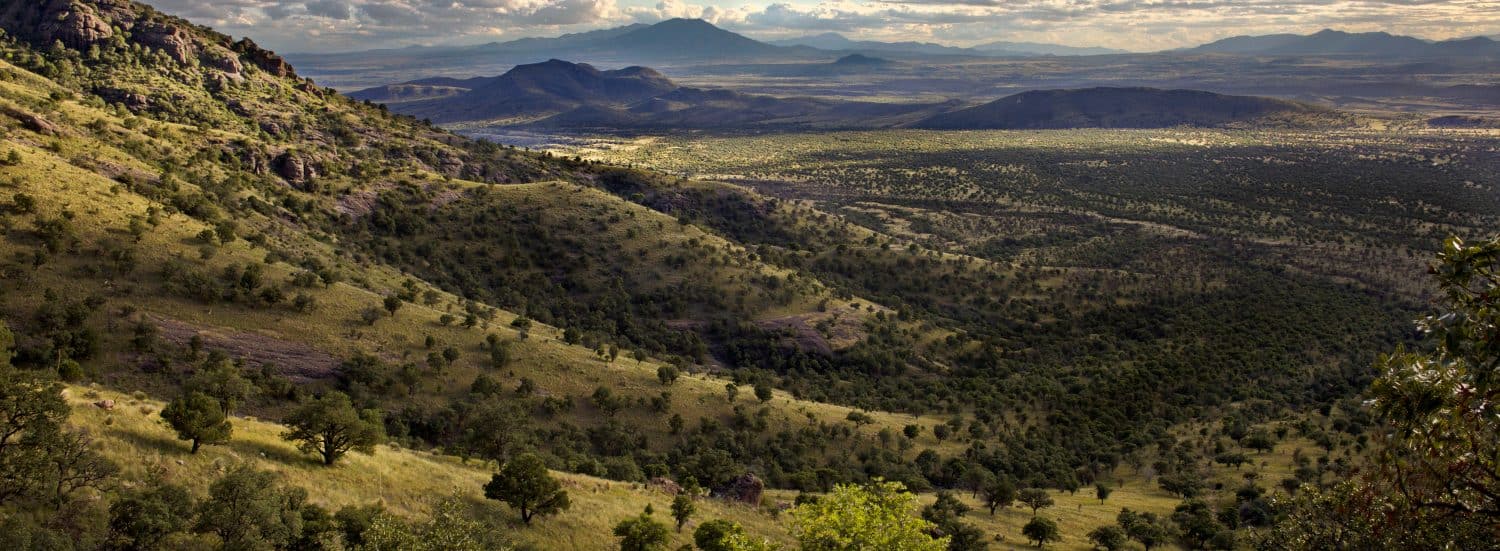
Even if laws protect the land on both sides, a barrier that stops these larger animals from crossing effectively cuts the ecosystem in half.
©Cassandra Tomei/Shutterstock.com
Small wildlife openings built into portions of the border infrastructure may help smaller species move through the landscape, but they are often too narrow for larger animals such as jaguars, black bears, or bighorn sheep. Researchers are particularly concerned about construction in areas like the San Rafael Valley, where new barriers are being constructed and could permanently disrupt historical migration routes between Mexico and the Arizona Sky Islands. If these routes are lost, it becomes much harder for species like the jaguar to reclaim their former ranges in the United States.
That is why every image of Cinco matters. His movements show which paths are still open and are successfully being used by wildlife today. By tracking where he goes, researchers can pinpoint exactly which areas are most critical to protect before they disappear entirely.
Proof That Jaguars Still Belong
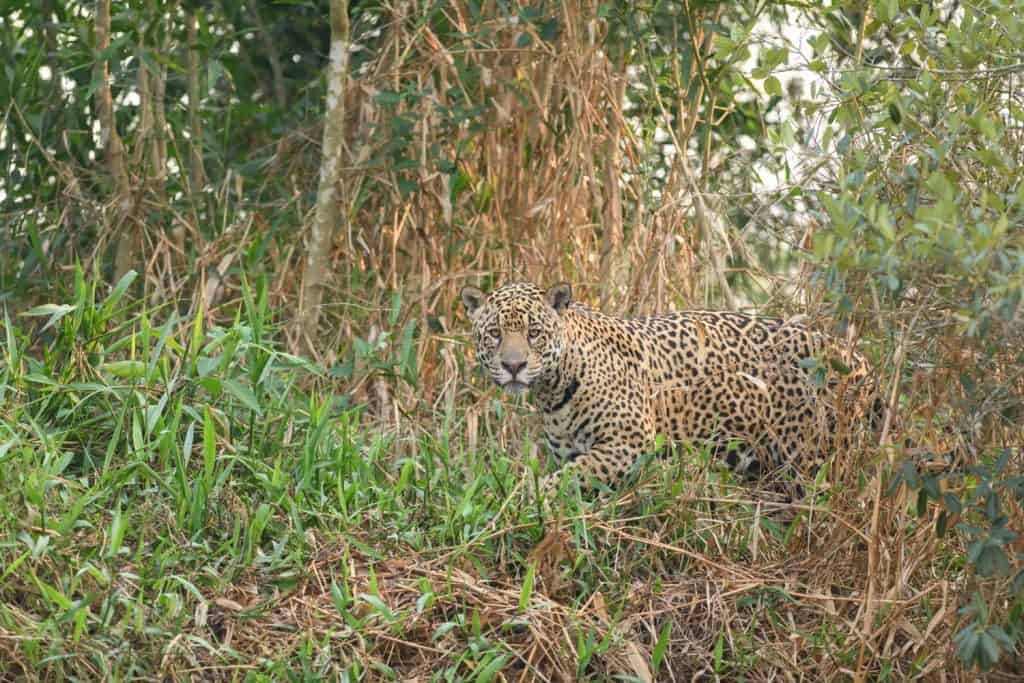
Against incredible odds, jaguars are still traveling across the border to Arizona.
©NaturesMomentsuk/Shutterstock.com
Cinco’s appearance is more than just a rare wildlife sighting; it is proof that jaguars still belong to the American Southwest. Every time he triggers a camera trap, Cinco provides the data needed to protect his future. His movements demonstrate that the Sky Islands still function as a bridge between the United States and Mexico. These images help researchers build a strong scientific argument for preserving the remaining wildlife corridors that large predators depend on.