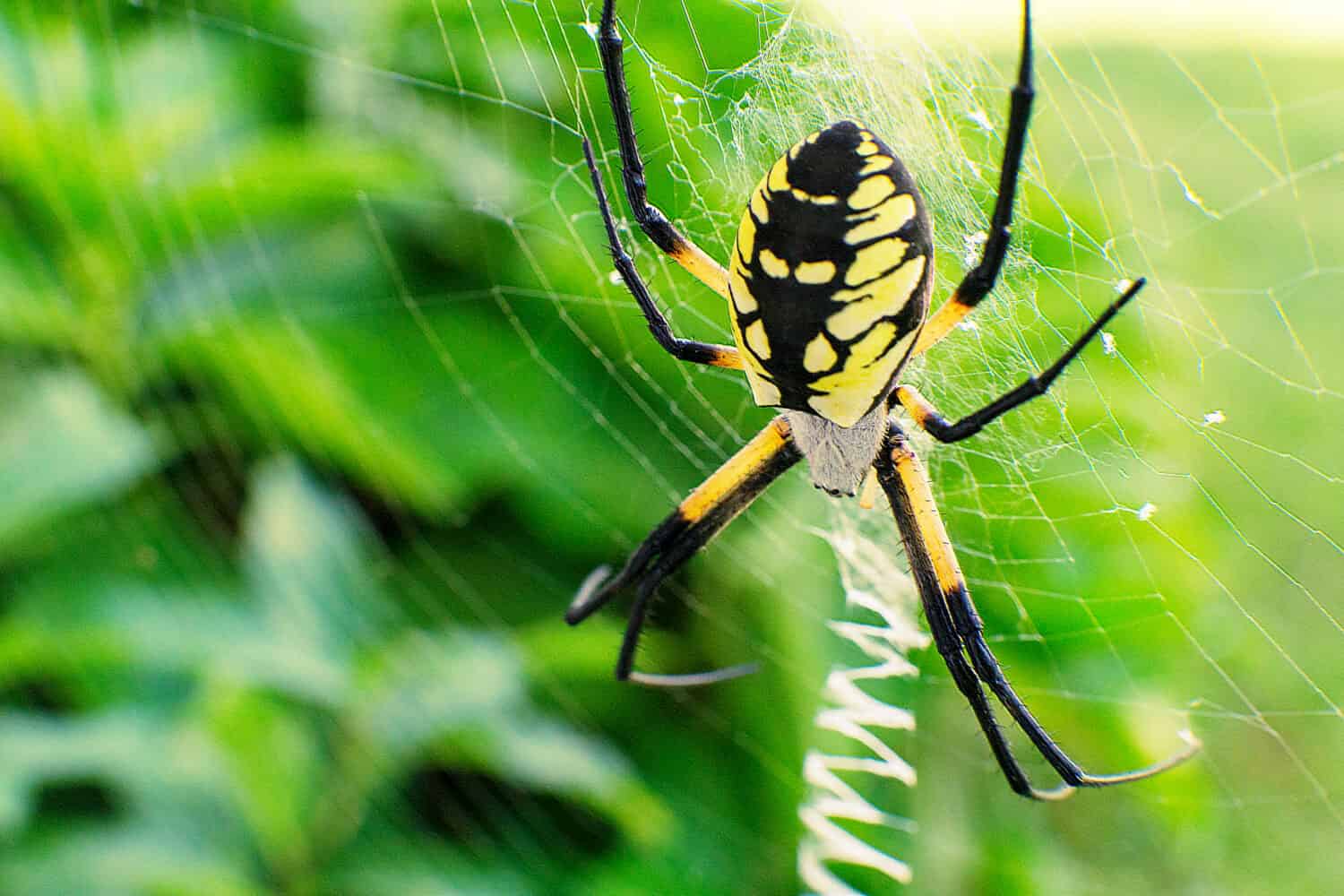

The state of Illinois borders Lake Michigan, has one of the largest cities in the U.S., Chicago, and has a surprising number of rural areas. Spiders can be found in and around all those places. While most of the spiders in this state are so small that they’re often overlooked, some of them are fairly large. Those are the ones that we’re going to focus on today. Let’s take a look at five of the biggest spiders in Illinois and where they are located.
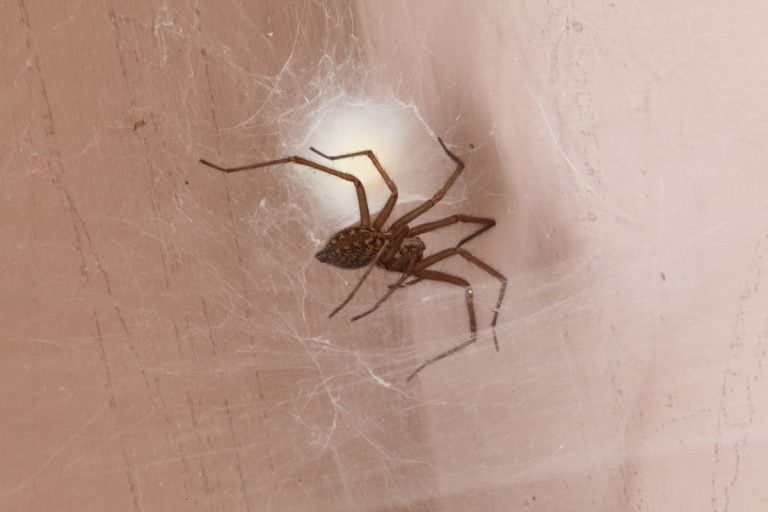
5. Long-Bodied Cellar Spider
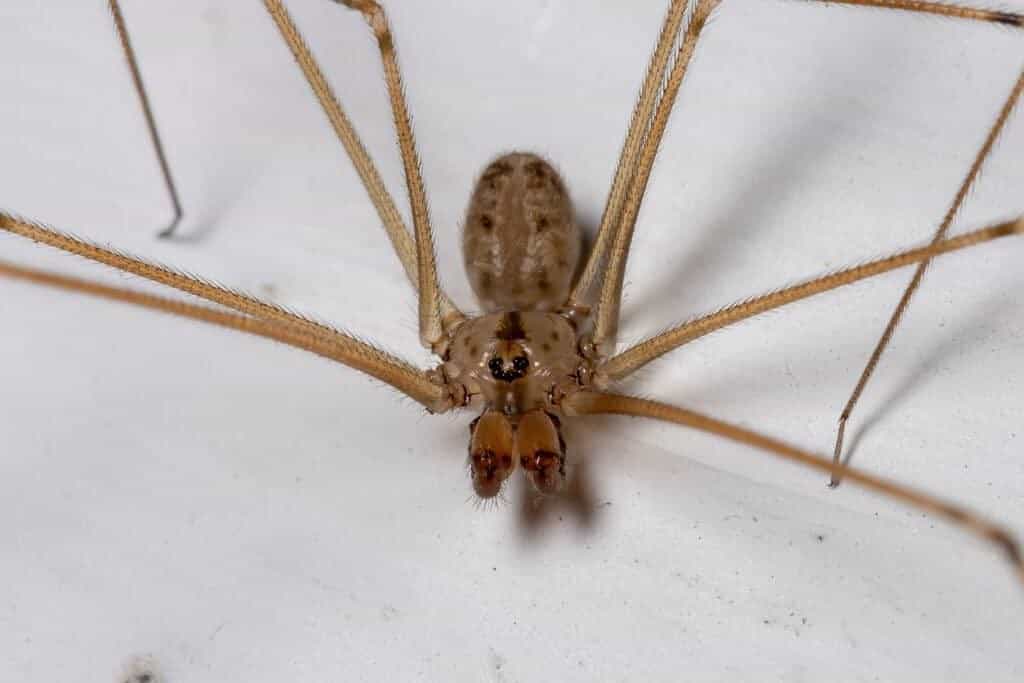
Cellar spiders have small, peanut-shaped bodies.
©Vinicius R. Souza/Shutterstock.com
| Scientific Name | Size | Danger to Humans |
|---|---|---|
| Pholcus phalangioides | 0.31 inches in body length and up to 3 inches in leg span. | A bite may cause a mild burning sensation. |
The long-bodied cellar spider is frequently confused with harvestmen because they both have the nickname Daddy Long Legs or Granddaddy Long Legs. This spider has a small, semi-translucent body that can reach up to 0.31 inches in length. It is brown or tan with a darker mark in the center of its carapace. Its long legs can be up to six times the length of its body.
Long-bodied cellar spiders are found in quiet, mostly undisturbed places like attics and basements. They build irregular webs to catch small insects. These spiders are harmless to humans. In the rare event of a bite, it would cause nothing more than a mild burning sensation.
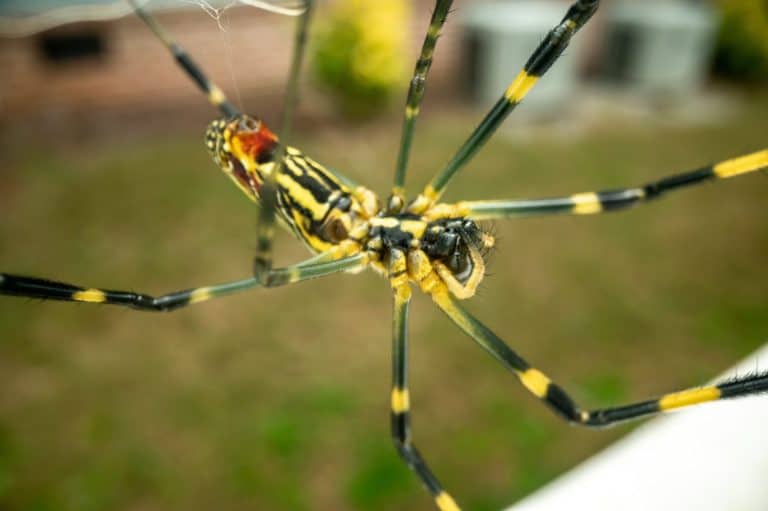
4. Black and Yellow Garden Spider
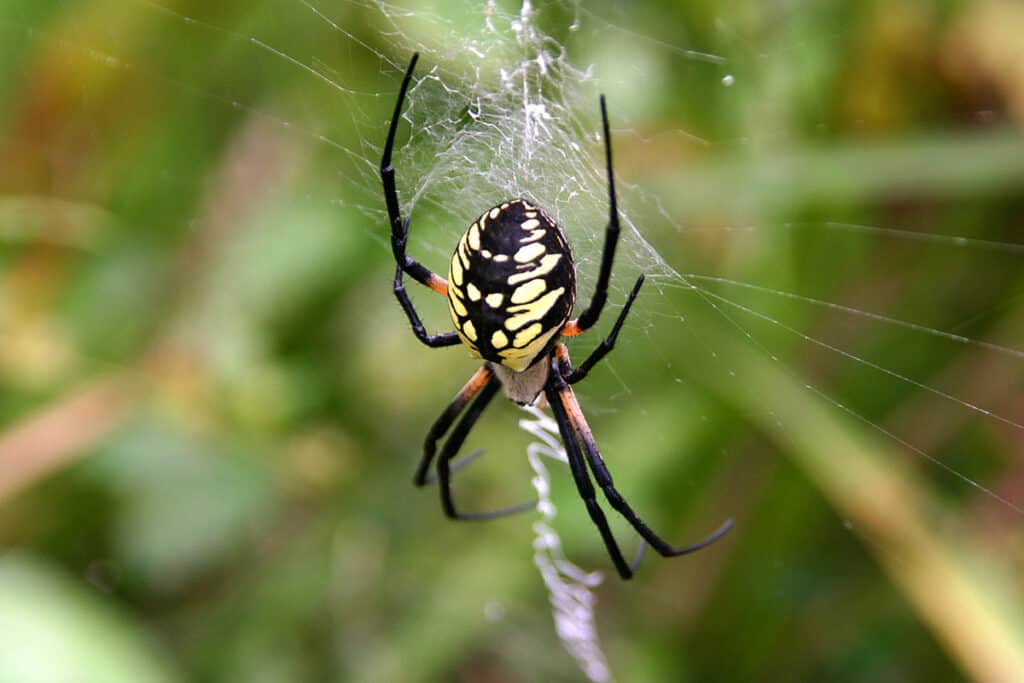
The black and yellow garden spider is a common sight throughout much of the United States.
©iStock.com/AwakenedEye
| Scientific Name | Size | Danger to Humans |
|---|---|---|
| Argiope aurantia | 1 inch in body length with a leg span of 2-3 inches. | Rarely bites humans, but it may cause pain and swelling. |
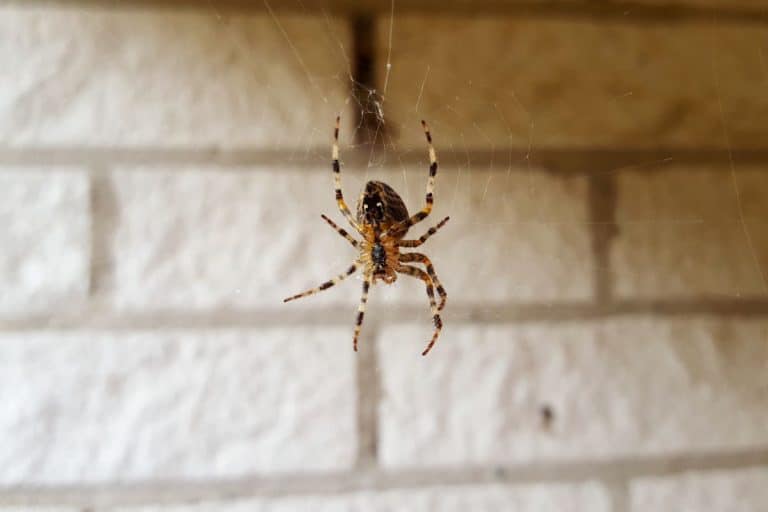
The black and yellow garden spider is also called the writing spider, orb weaver, and many other names. It is known for its silver cephalothorax and black and yellow markings on the abdomen that can sometimes include gray or silver. Its long legs are brownish-red close to its body and banded black and brown toward the ends. It can reach about 1 inch in body length with a leg span of 2-3 inches.
The spider is also identifiable by its large web. The web can measure up to 2 feet in diameter and features an extra-thick section called the stabilimentum, which resembles scribbled handwriting or a zig-zag pattern. This pattern has led to the species being called the writing spider. These spiders live outdoors in tall vegetation near fields and in sunny spots around human settlements. They may investigate disturbances to their webs, but they rarely bite. A bite from this spider is mildly painful and may cause some swelling in the area.
3. American Nursery Web Spider
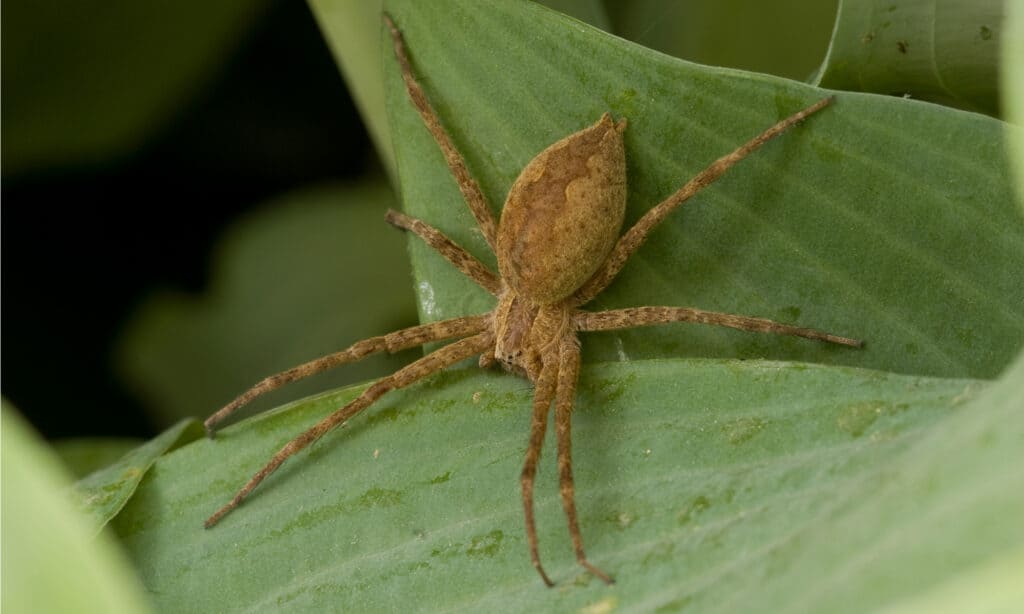
American nursery web spiders are primarily found in tall vegetation.
©SDeming/Shutterstock.com
| Scientific Name | Size | Danger to Humans |
|---|---|---|
| Pisaurina mira | 0.75 inches in body length and a leg span upwards of 3 inches | A bite is mostly harmless to humans, with localized pain and swelling |
The American nursery web spider is brown or brownish-red with a brown pattern bordered by a lighter color running down the length of its body. It has a dark brown pattern in the middle of its abdomen and its legs have bands of brown and light brown. Females can reach up to 0.75 inches in body length with a leg span upwards of 3 inches.
These spiders are known for their maternal instincts. They build a silken nest for their young and then watch over the hatchlings. They are primarily found in tall vegetation, but may also build their webs on bushes, trees, and shrubs near homes. A bite from these spiders is uncommon, but it can cause mild pain and swelling.
2. Rabid Wolf Spider
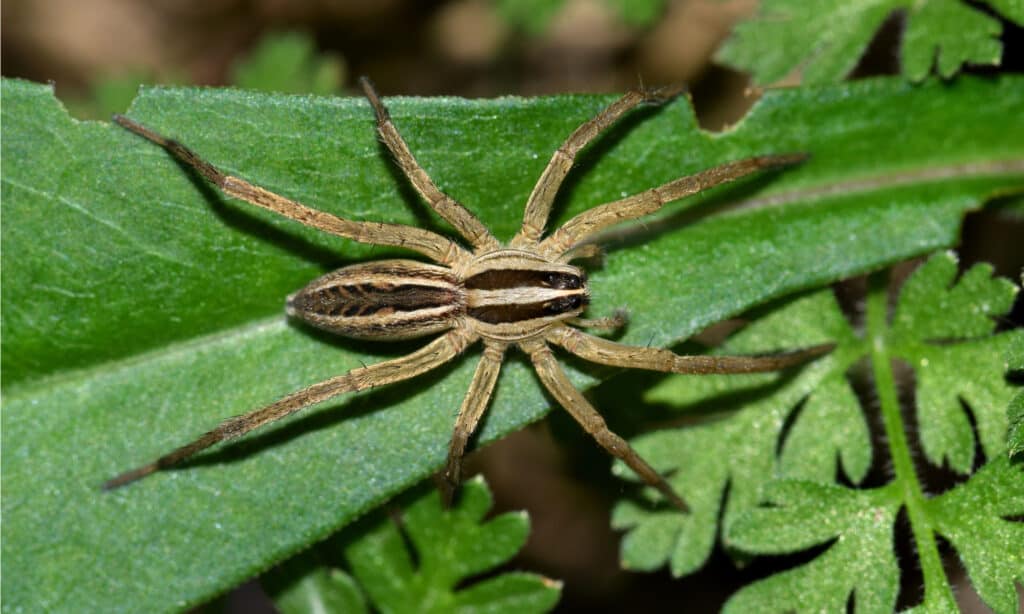
The rabid wolf spider is the largest wolf spider native to Illinois.
©Brett Hondow/Shutterstock.com
| Scientific Name | Size | Danger to Humans |
|---|---|---|
| Rabidosa rabida | 0.83 inches in body length with a leg span of 2.5-3 inches | A bite may cause pain, itchiness, and swelling |
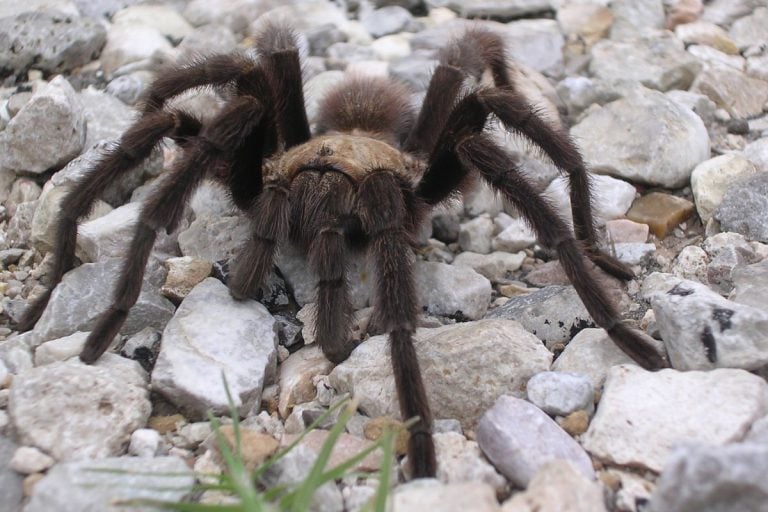
Rabid wolf spiders are the largest wolf spiders native to Illinois and are among the largest spiders in the state overall. It is easily identified by its light brown color with a dark line down its abdomen and light and dark stripes on its cephalothorax. The front legs of the males are generally dark brown to black. Females are larger than males, with a body that can reach up to 0.83 inches in length and a leg span of 2-3 inches.
This spider can be found in a variety of habitats across the state, including open fields, prairies, and woodlands. The rabid wolf spider does not spin webs. It hunts for prey at night. Although many people think they are very dangerous because of their name, size, and speed, the truth is that they are mostly harmless. A bite may cause localized pain, swelling, and itchiness.
1. Dark Fishing Spider
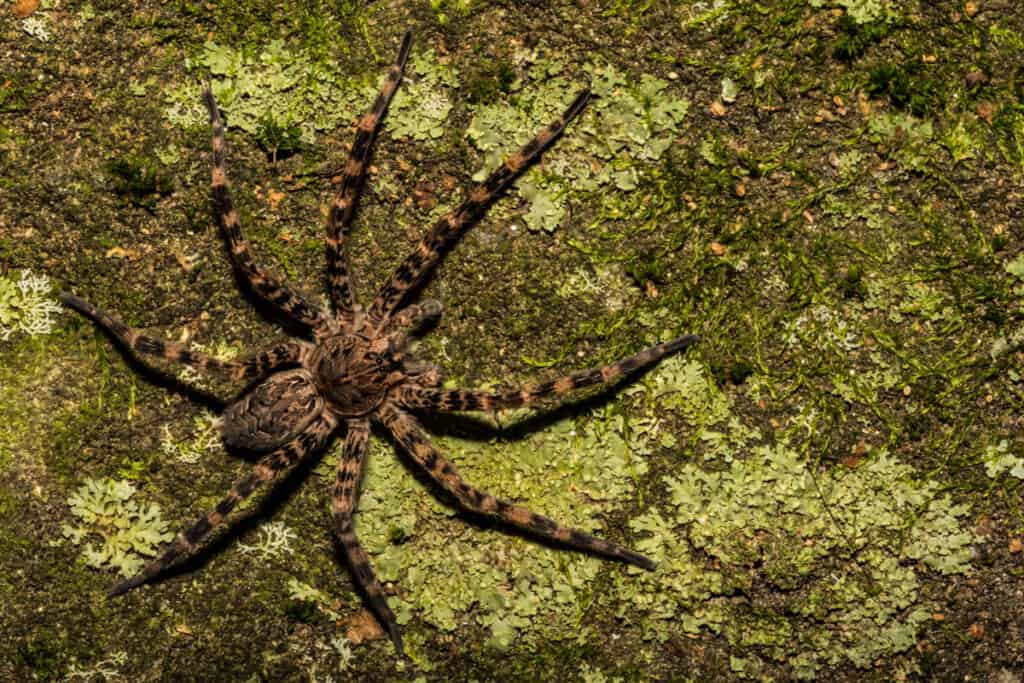
The dark fishing spider prefers vegetation near a permanent water source.
©iStock.com/JasonOndreicka
| Scientific Name | Size | Danger to Humans |
|---|---|---|
| Dolomedes tenebrosus | Up to 1 inch in body length with a leg span of 3-4 inches | A bite may cause a reaction similar to a bee sting |
Along with the rabid wolf spider, the dark fishing spider is cited as the biggest spider in Illinois. It has a mottled brown and black body, banded black and brown legs, and W-shaped markings on its abdomen. It can grow up to 1 inch in body length with a leg span of 3-4 inches.
These spiders prefer vegetation near a permanent water source, but they can also be found in wooded areas. They are not web-building spiders, but instead, they hunt for insects and other small invertebrates. Although the size of this spider can be scary, the good news is that it is relatively harmless to people. It will only bite if it feels threatened. If bitten, the sensation is said to be similar to a bee sting.