
Quick Take
- One common brown spider in Arizona is routinely mistaken for the deadly brown recluse, even though the two couldn't be more different in terms of danger. Meet the harmless lookalike →
- Not all recluse spiders lurk in your home. One Arizona species has a very different hiding strategy that makes encounters surprisingly rare. Discover its desert hiding spots →
- Arizona hosts a tarantula species that looks intimidating but earns a surprisingly gentle reputation even within its own dangerous family. See Arizona's gentle giant →
- One of Arizona's brown spiders hunts like a wolf, sees like few arachnids can, and still isn't the threat its size suggests. Find out which one. Explore the wolf spider's traits →
There are nearly 54,000 spider species documented worldwide, and Arizona is home to approximately 1,000 of them. The vast majority of spiders found in the state, including various jumping spiders, wolf spiders, and the western desert blonde tarantula, are entirely harmless to humans. However, Arizona is also home to venomous species such as the western black widow and the desert recluse. Continue reading to learn about seven brown spiders in Arizona.
Arizona Brown Spider
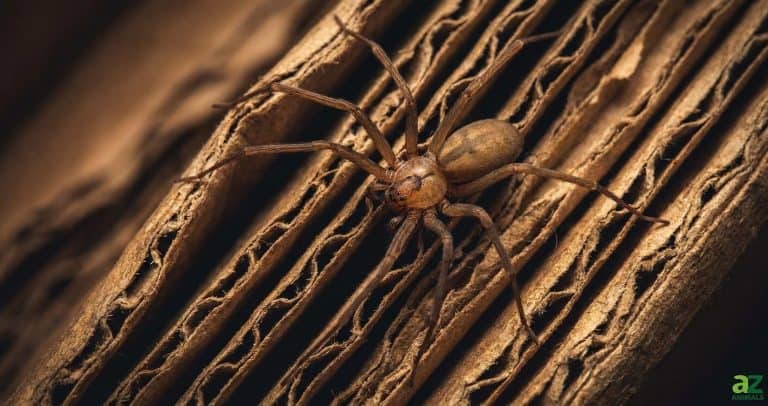
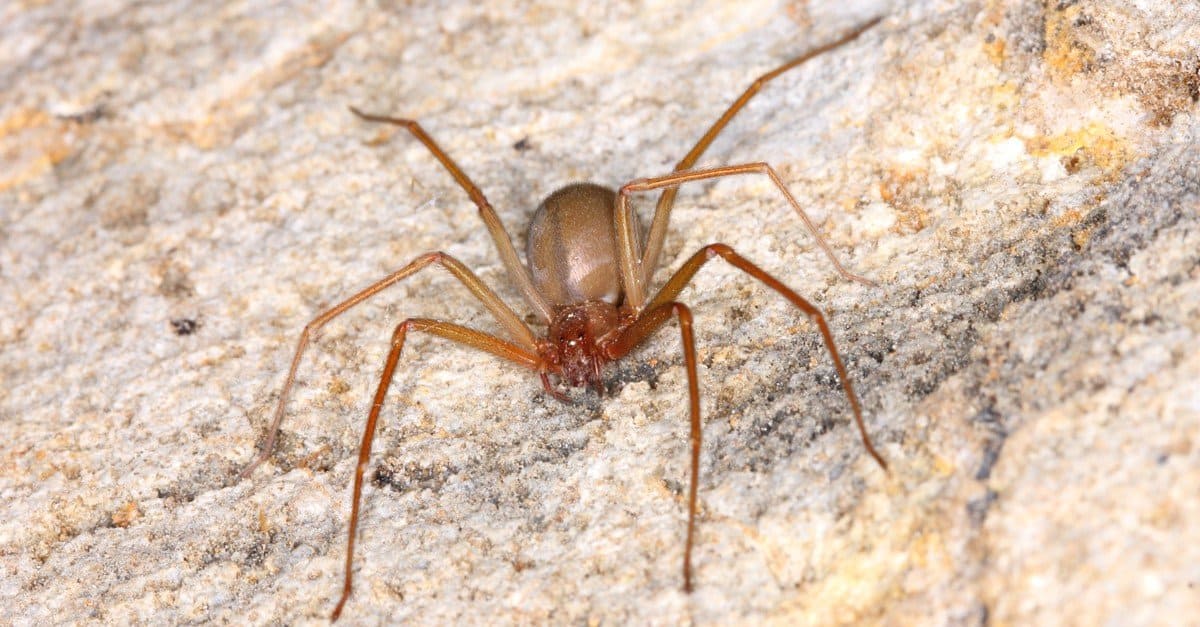
The Arizona brown spider (Loxosceles arizonica) is a small brown spider native to Arizona and is closely related to the infamous brown recluse spider.
Arizona brown spiders can be identified by dark brown markings on top of the head, which resemble the shape of a violin; hence they are commonly called fiddleback spiders. Arizona brown spiders are ⅓ to ⅔ inches long and have eight long slender legs.
The Arizona brown spider is related to the brown recluse spider.
©iStock.com/Ledzeppelinriff
Though primarily an outdoor species, the Arizona brown spider is reclusive by nature. This spider may sometimes be seen hiding in cracks or crevices and can be found nesting in basements, drop ceilings, attics, crawl spaces, closets, and behind baseboards.
The bite of an Arizona brown spider is potentially dangerous to humans, but symptoms are often not as severe as those of the brown recluse spider. The most common symptom of a bite is a spreading sore at the site of the bite that may result in necrosis (decaying of tissue due to cells dying) or permanent tissue damage if left untreated.
Western Desert Tarantula
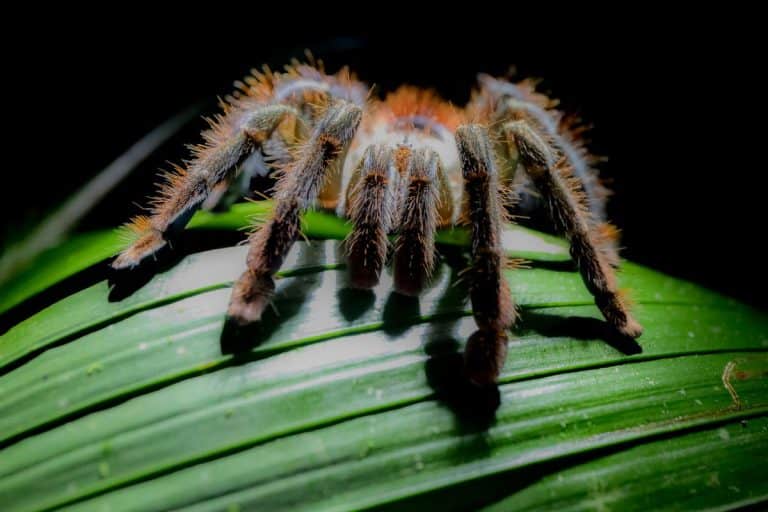
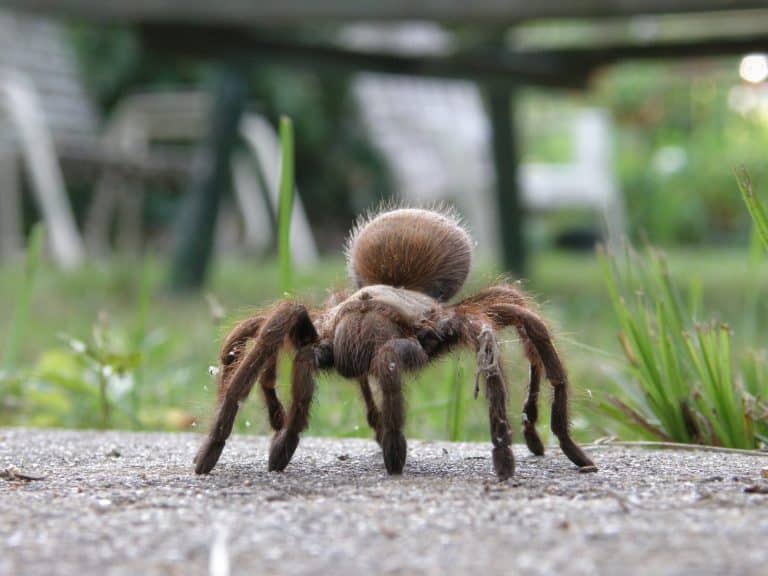
The Western desert tarantula (Aphonopelma chalcodes) is a brown, large-bodied, burrowing spider commonly seen in southwestern deserts during the summer or rainy season. A mature Western desert tarantula has a body length of up to about 2.2 inches, with females being larger than males. The female Western desert tarantula is usually a uniform tan or light brown color, while the male has a reddish-brown abdomen and black legs.
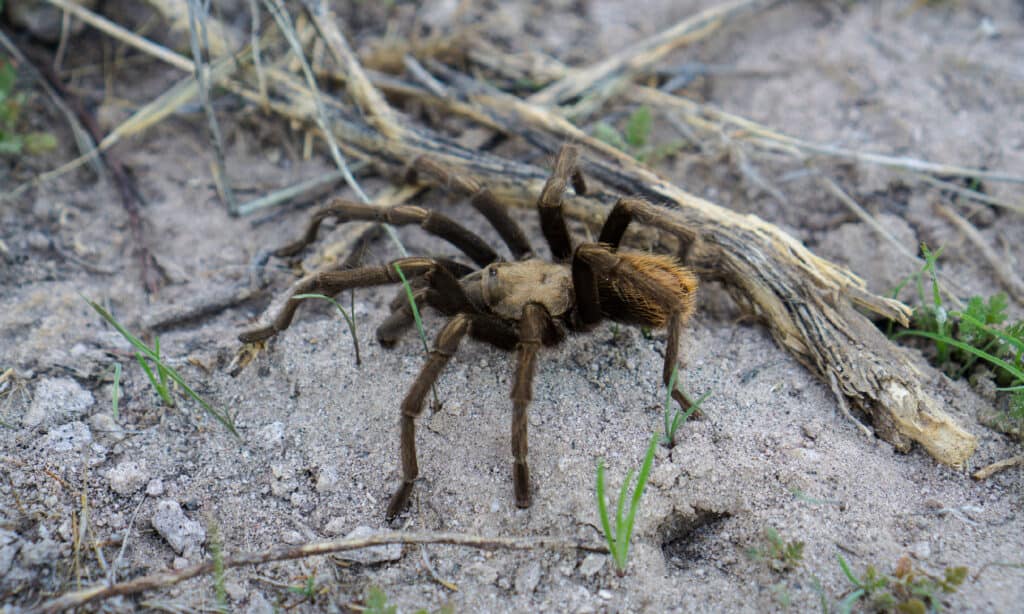
An adult western desert tarantula has a body length of 3 to 5 inches.
©iStock.com/Stephen Couch
The Western desert tarantula lives in desert soils and is resistant to harsh weather. It can also build burrows, surrounding the entrance with strands of silk, allowing this spider to detect prey while hiding in the burrow. The venom of the Western desert tarantula is not dangerous to humans, and it is one of the least dangerous tarantulas within the family Theraphosidae.
Common House Spider
The common house spider (Parasteatoda tepidariorum) is a small brown spider that lives in and near human dwellings. Common house spiders vary in color from tan to nearly black, often with patterns of varying shades on their body.
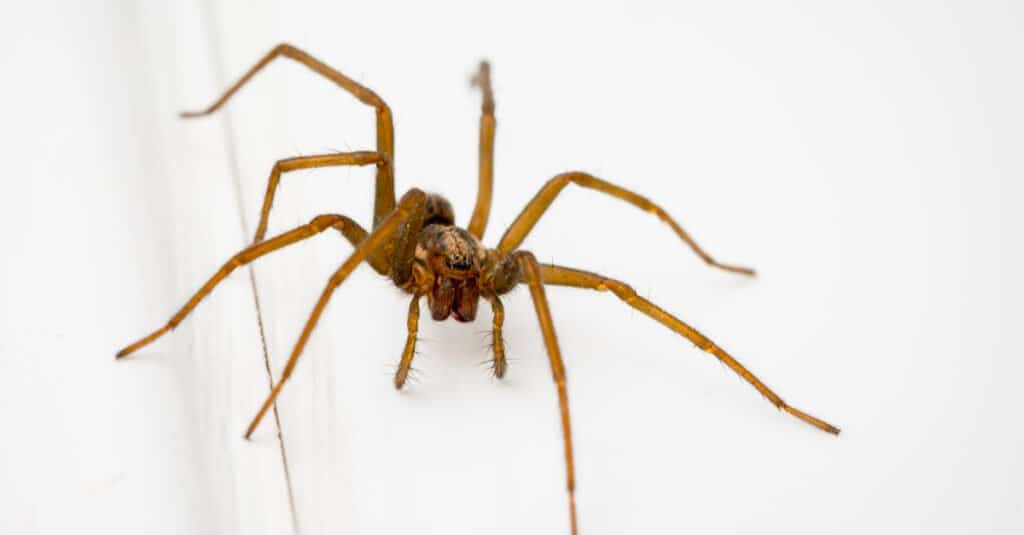
House spiders are easily identified by the papery brown egg sacs deposited in their webs.
©Sample Stars/Shutterstock.com
Female common house spiders reach 0.20 to 0.24 inches long, while males are generally smaller, averaging between 0.15 and 0.19 inches long. Females also have a more bulbous abdomen than males. Though these brown spiders live in proximity to humans, their size and color allow them to blend into the background and escape being seen.
House spiders, which are harmless to humans, are often mistaken for the much more dangerous brown recluse (Loxosceles reclusa), because of their similarity in appearance. However, brown recluse spiders do not have established populations in Arizona. The common house spider is rarely aggressive but will occasionally bite in self-defense when grabbed or squeezed. Their bites heal quickly, unlike brown recluse bites, which can persist for days to weeks.
Desert Recluse Spider
The desert recluse (Loxosceles deserta) is a native spider found primarily in the western desert regions of Arizona, including the Sonoran Desert. Unlike the brown recluse, the desert recluse is found in natural wild habitats rather than human homes. It has a light brown body, six eyes, and a faint violin-like mark on its back, which often leads to misidentification.
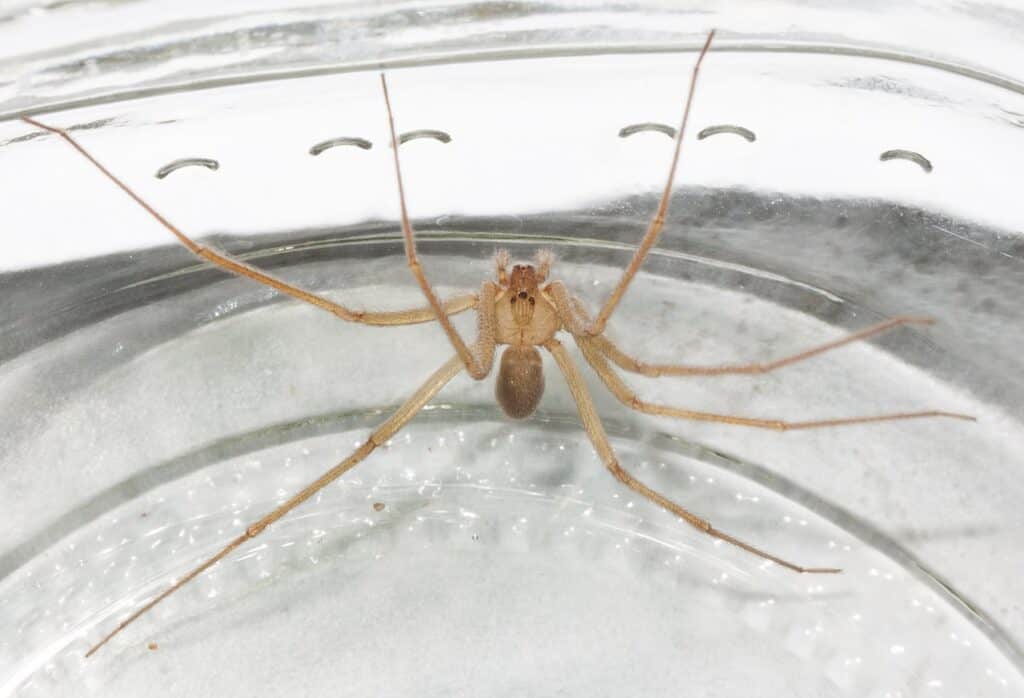
The desert recluse is a light brown spider that is found in Arizona.
©DesertTrip / CC BY-SA 4.0, via Wikimedia Commons – Original / License
Desert recluse spiders have potent necrotic venom that can cause tissue damage. Fortunately, bites are extremely rare because desert recluse spiders avoid people and only bite when trapped against the skin.
Desert recluse spiders are slightly smaller than the brown recluse. The body length of a desert recluse is approximately 1/3 inch, whereas a brown recluse has an average body length of between 1/4 and 3/4 inch.
Carolina Wolf Spider
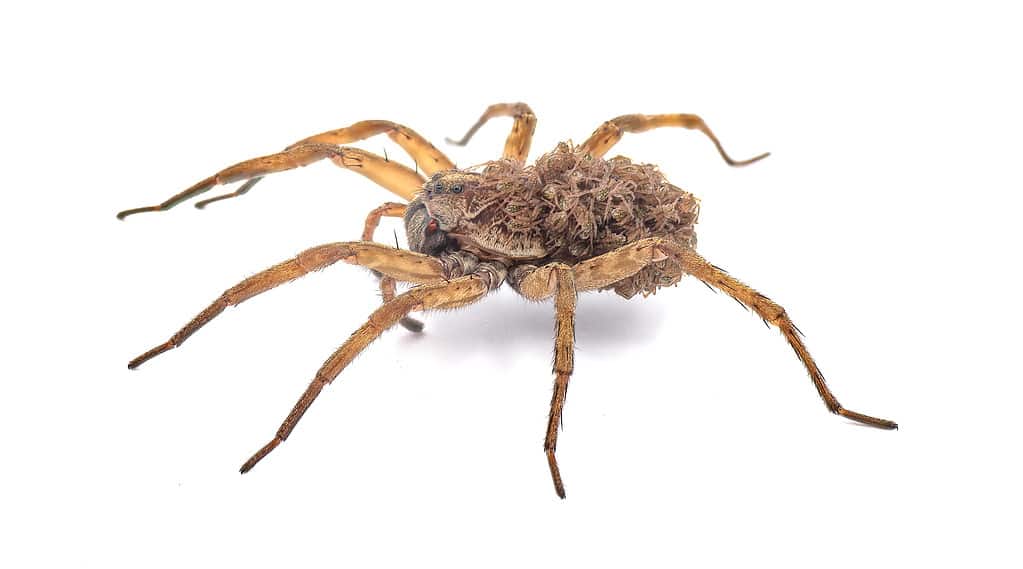
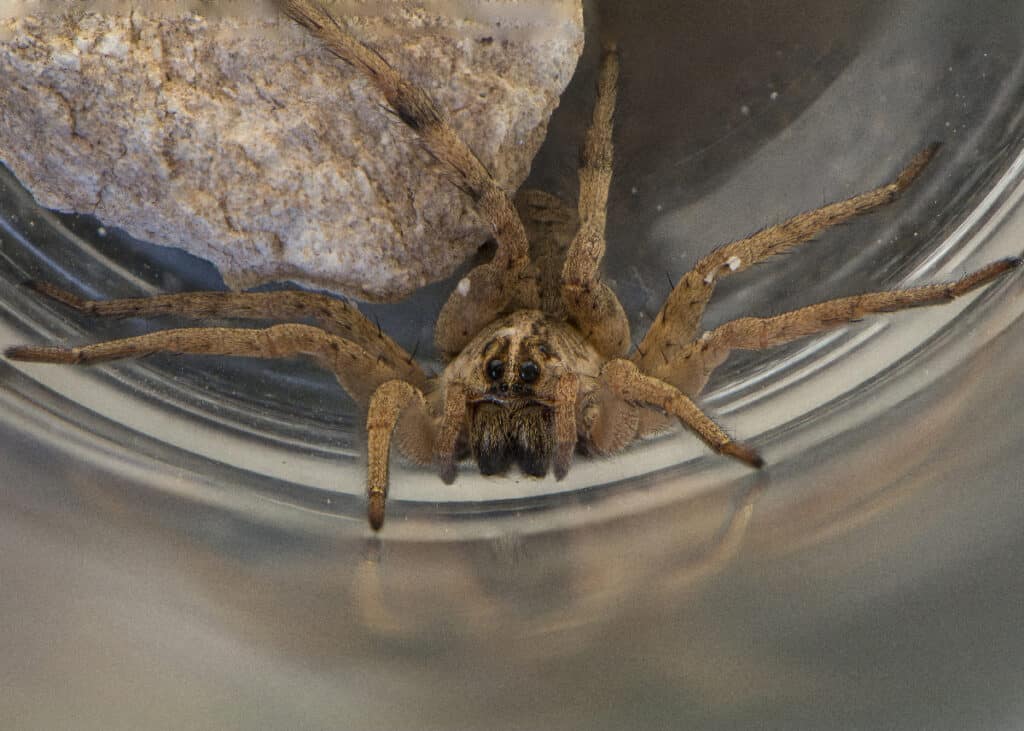
Carolina wolf spiders are found throughout Arizona in habitats ranging from low-elevation desert scrub to higher-elevation woodlands.
©Chase D'animulls/iStock via Getty Images
The solid brown Carolina wolf spider (Hogna carolinensis) is the largest wolf spider species found in North America, with a body length of up to 1 inch. Female wolf spiders are larger, with bodies as large as 1.38 inches long, while male Carolina wolf spiders have a body length of 0.25 to 0.75 inches. The Carolina wolf spider has a distinct solid black underside and eight eyes arranged in three rows. Unlike most arachnids, which have poor vision or are blind, wolf spiders have impressive visual capabilities. Carolina wolf spiders live in burrows rather than spinning suspended webs.
Though Carolina wolf spiders can be intimidating due to their large size, they are not a threat to humans, and they rarely bite people unless provoked.
Huntsman Spider
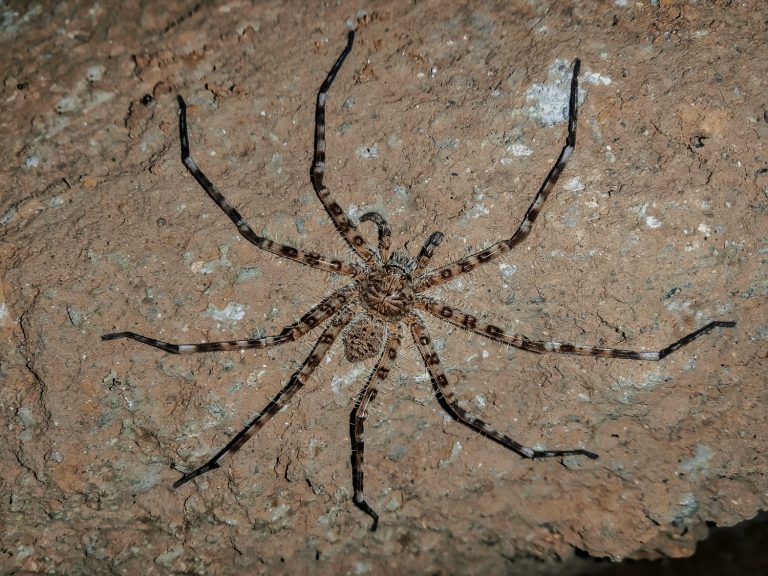
Huntsman spiders (family Sparassidae) are also called giant crab spiders because of their large size and unique crab-like appearance. Large species of huntsman spiders can often be confused with tarantulas. Still, they can mainly be identified by their legs, which, rather than being jointed vertically relative to the body, are twisted so that they extend forward in a crab-like fashion.
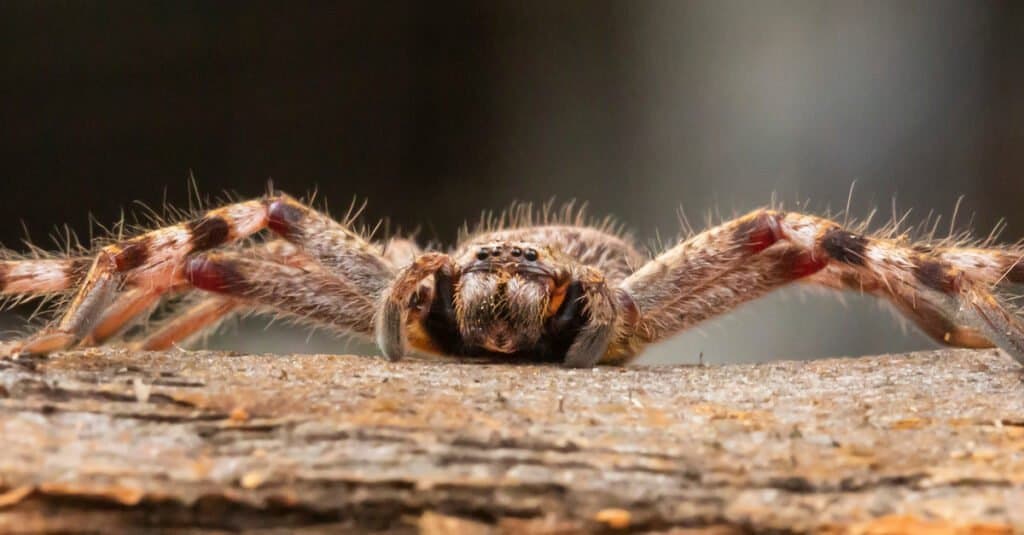
Large species of huntsman spiders can often be confused with tarantulas.
©Wright Out There/Shutterstock.com
Huntsman spiders are covered in fine, hair-like structures called setae. Different species of huntsman spiders appear in varying shades of brown. The body of an average huntsman spider measures approximately 0.7 inches long on average, with a leg span alone can approach 5 inches.
Huntsman spiders are native to tropical and warm temperate regions and tend to live under rocks and in the crevices of tree bark. However, they sometimes wander into people’s homes, sheds, garages, and other undisturbed areas. These brown spiders do not build webs but forage and hunt insects and other invertebrates. Huntsman spiders have been known to bite humans in defense, particularly when females aggressively defend their egg sacs and young against perceived threats. However, bites cause mild symptoms and usually do not require medical intervention.
Grass Spider
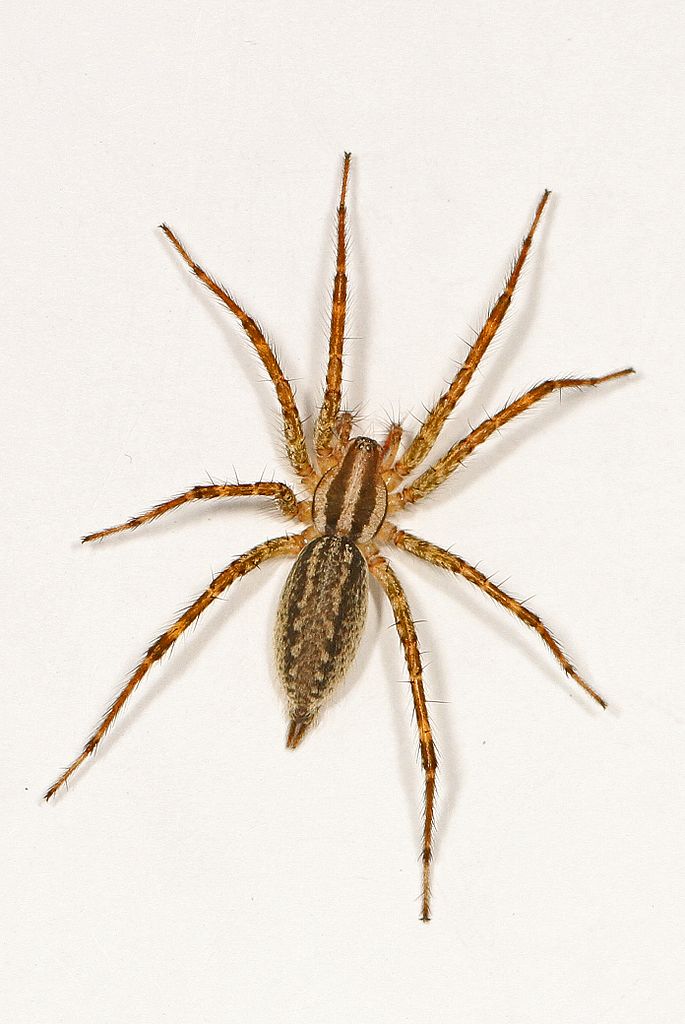
Larger individuals of grass spiders can grow to about 19 mm in body length.
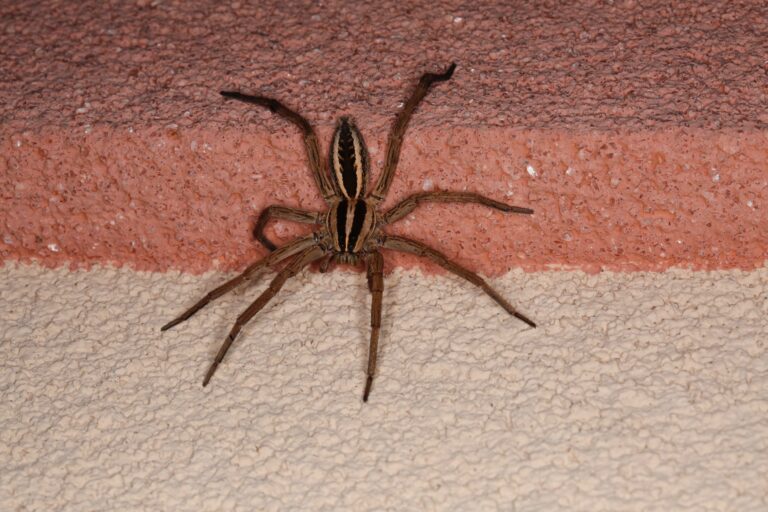
Grass spiders (Agelenopsis) are harmless brown spiders found in Arizona. They are easily identified by their two prominent hind spinnerets and the arrangement of their eight eyes into three rows. There are two eyes in the top row, four in the middle row, and two in the bottom row, spaced wider than the ones in the top row. Grass spiders have two dark brown bands running down both sides of their cephalothorax and lighter bands on their legs. The average body length of an adult grass spider ranges from 0.4 to 0.8 inches.
Grass spiders are not dangerous to humans.