
Quick Take
- Frog droppings can expose hidden pollution in an ecosystem, though not in the way you'd expect. See how feces reveals pollution →
- Constipation in a frog is not just uncomfortable. It can turn fatal surprisingly fast. Explore the constipation dangers →
- The color of frog poop can reveal a secret about its diet that most people would never guess. See what color reveals →
- Some frogs weaponize their own waste, and it actually works.
While it may not be the most exciting subject, frog poop can provide interesting information about these amphibians. Their feces can tell you about their diets, digestive systems, and overall health. It can even be an indicator of the condition of their local environment. In this article, discover what frog poop looks like, what it tells you about amphibian health, and how it can help scientists monitor environmental conditions.
What Does Frog Poop Look Like?
Frog feces vary in size and appearance depending on the size of the frog and its species. Experts note that it is typically shiny dark brown or black and cylindrical with slightly tapered ends. It generally ranges from 0.5 to 1.5 inches in length. Fresh droppings are damp, shiny, and gel-like, while dry droppings turn a lighter, duller black with a crumbly texture. It may also contain undigested plant or insect matter.
Dark brown to black droppings are consistent with a carnivorous diet, while greenish hues may indicate the presence of ingested plant matter. Changes in the color and consistency of the droppings can occur due to changes in diet and hydration. Runny, mucousy, or bloody stools can indicate infection, parasites, dietary imbalances, or blockages in the digestive system.
How Do Frogs Expel Waste?
Frogs do not have separate openings for the different types of waste. The reproductive system, urinary tract, and digestive tract are all connected, and solid waste from the digestive tract, urine from the kidneys and bladder, and eggs or sperm all empty into the cloaca and are then expelled from the body.
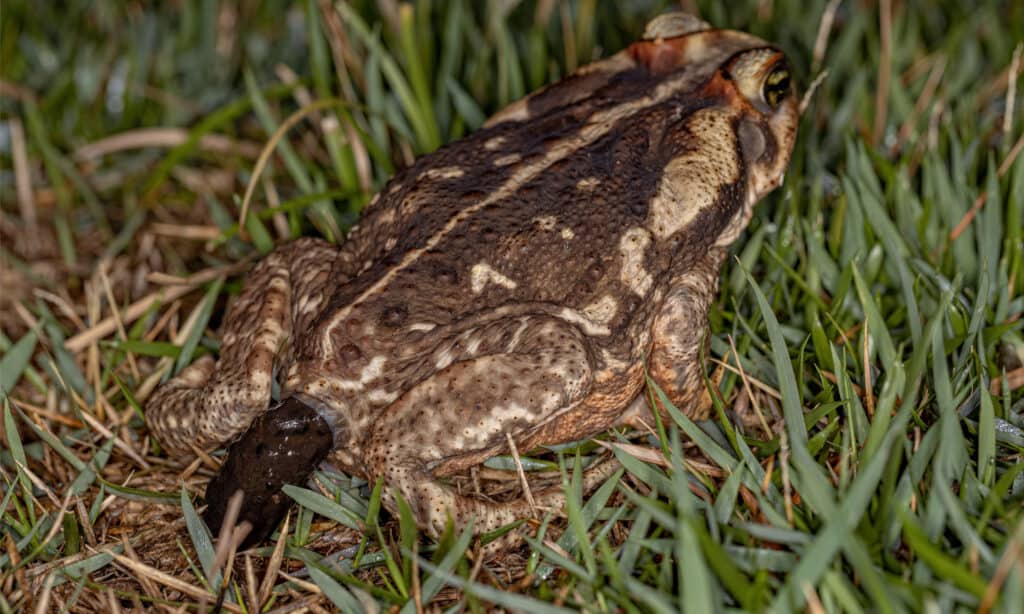
Frog poop is generally a cylindrical, brown to black substance that is often damp.
©iStock.com/ViniSouza128
Several frog adaptations allow the complex digestive process to proceed quickly and efficiently. The tongue, saliva, and stomach contribute to the process until the undigested parts of the meal are ejected as stool.
Constipation in frogs can be life-threatening, as an impaction can put pressure on nearby organs, including the lungs, causing respiratory problems. Blockages can cause pressure to build inside the intestines, leading to intestinal damage or rupture. A rupture can allow bacteria to enter the body, which can result in a serious infection.
How Often Do Frogs Poop?
Urinating and defecating can be a defense mechanism for frogs and toads to deter predators from eating them. Otherwise, frogs’ defecation schedules depend on their age, species, feeding habits, metabolism, and environmental conditions. For example, juvenile frogs poop more frequently, particularly during periods of rapid growth, as they require more nutrients.
The amount of food available in a frog’s environment also impacts how frequently it poops: frogs with more food available will defecate more often than those with fewer resources. Many adult frogs relieve themselves once or twice a week. For example, White’s tree frogs defecate once every 1-3 days. However, other adult frogs don’t need to poop that often; in fact, some care guides for larger frogs like Pac-Man frogs may go 7-14 days in between defecating, but individual frogs will vary.
During colder weather, some frogs also enter a dormant state called brumation. Their metabolism slows down significantly, and they may stop eating for extended periods. With little or no food entering their digestive systems, they defecate far less often than during warmer months when they are active and food is readily available.

Frog droppings can help scientists monitor the health of a their environment.
©Strawberry Pineapple Albino morph of the Pac Man Frog/Shutterstock.com
What Frog Poop Tells Us About the Environment
Frogs are sensitive to changes in their surroundings, so their feces can also provide indications of the health of their environments. Frogs generally feed on insects and other invertebrates. So frog droppings can give researchers clues about local food webs, insect diversity and health, and changes in prey populations in the frog’s habitat.
Frog feces can contain parasite eggs or other organisms. Researchers can use this information to monitor parasite infections and monitor the health of frog populations. The nutrients in frog waste also contribute to natural nutrient cycling.
Additionally, scientists can examine frog droppings for environmental contaminants, shedding light on the way chemicals, pesticides, heavy metals, or other pollutants move through the ecosystem. Frog poop provides valuable information about the relationships between amphibians and their environments.