
There are around 550 species of spiders that call Connecticut home. Spiders live in almost every habitat, and some commonly build their webs inside homes and other buildings. The months from spring to fall are when most spiders are active. During this period, you can find spiders of all sizes in Connecticut. Although tarantulas are not found in Connecticut, there are still several large spider species that live in the state. Keep reading to learn about three of the biggest spiders in Connecticut.
How Do You Measure A Spider?
Spiders are usually measured by their body size and leg span. The gender and species of a spider determine how large it can get. Females tend to grow larger than males and have more robust bodies to support reproduction. Males may have longer legs than females because they spend most of their time roaming in search of mates or food.
3. Wetland Giant Wolf Spider
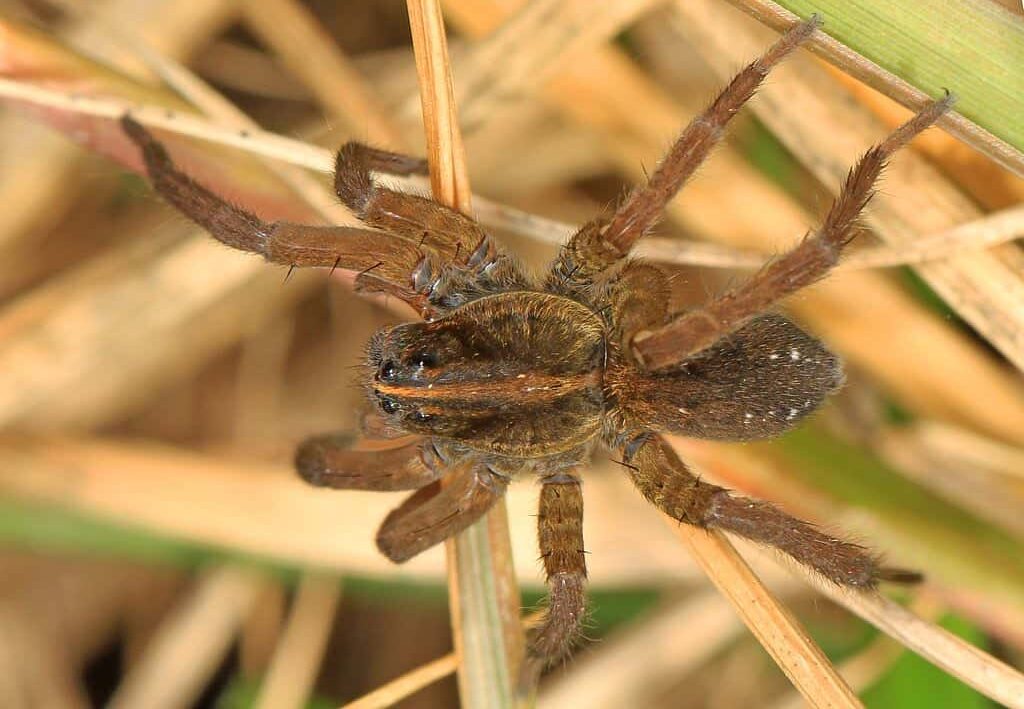
You can often find wetland giant wolf spiders in marshes or fields close to water.
Wolf spiders are among the largest spiders you may see in the U.S. The wetland giant wolf spider (Tigrosa helluo) is one of the biggest spiders in Connecticut. The body size of this species ranges from 0.39 to 1.2 inches in length. Its leg span is believed to reach up to 2 inches, with some large individuals possibly exceeding this size. This wolf spider species has tan to brown coloring, with a bold orange stripe running down its carapace.
These large spiders live in woodlands, marshes, and grasslands. This large spider can be found throughout the northeastern United States. Giant wetland wolf spiders feed on invertebrates and use their venom to subdue their prey. This species is active at night and hides in secluded areas such as burrows or under debris during the day.
2. Black and Yellow Garden Spiders
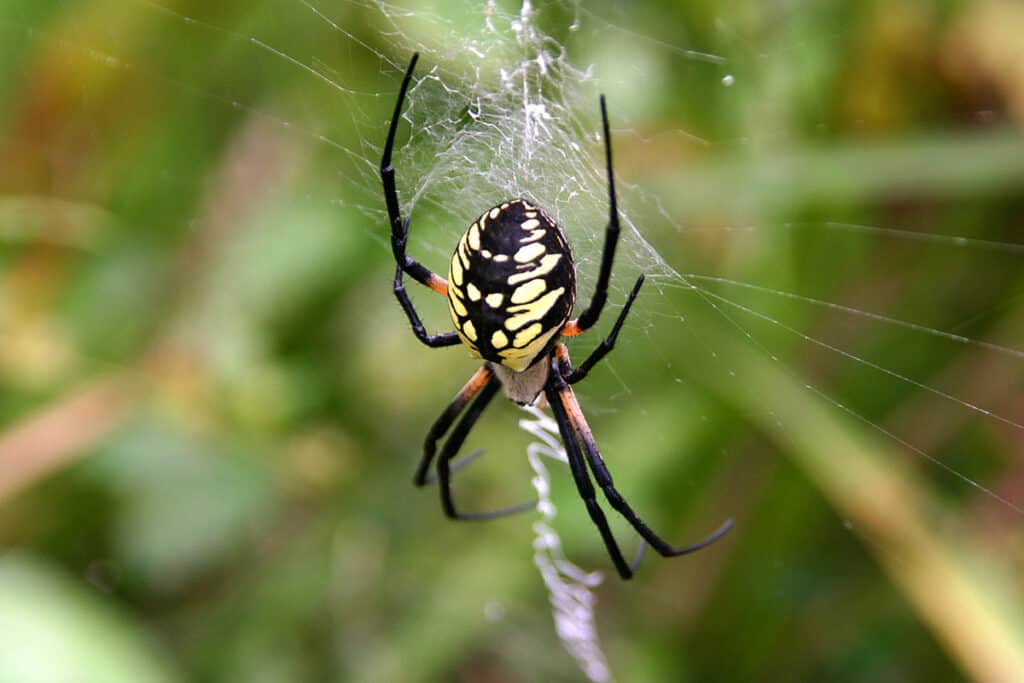
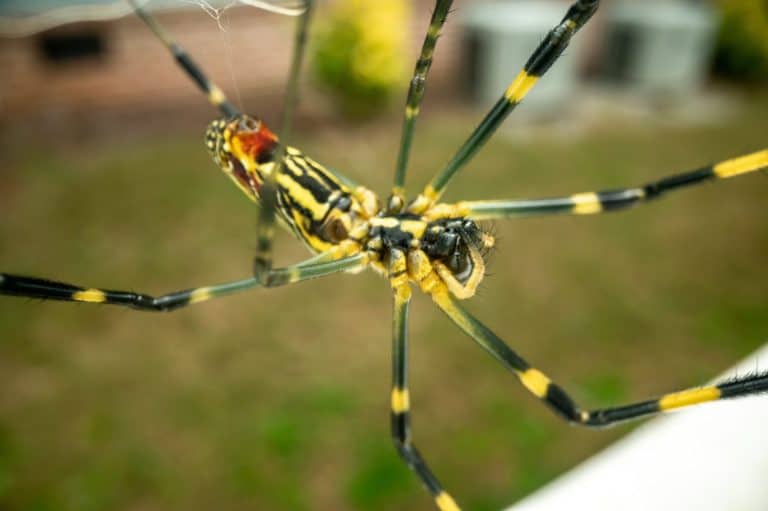
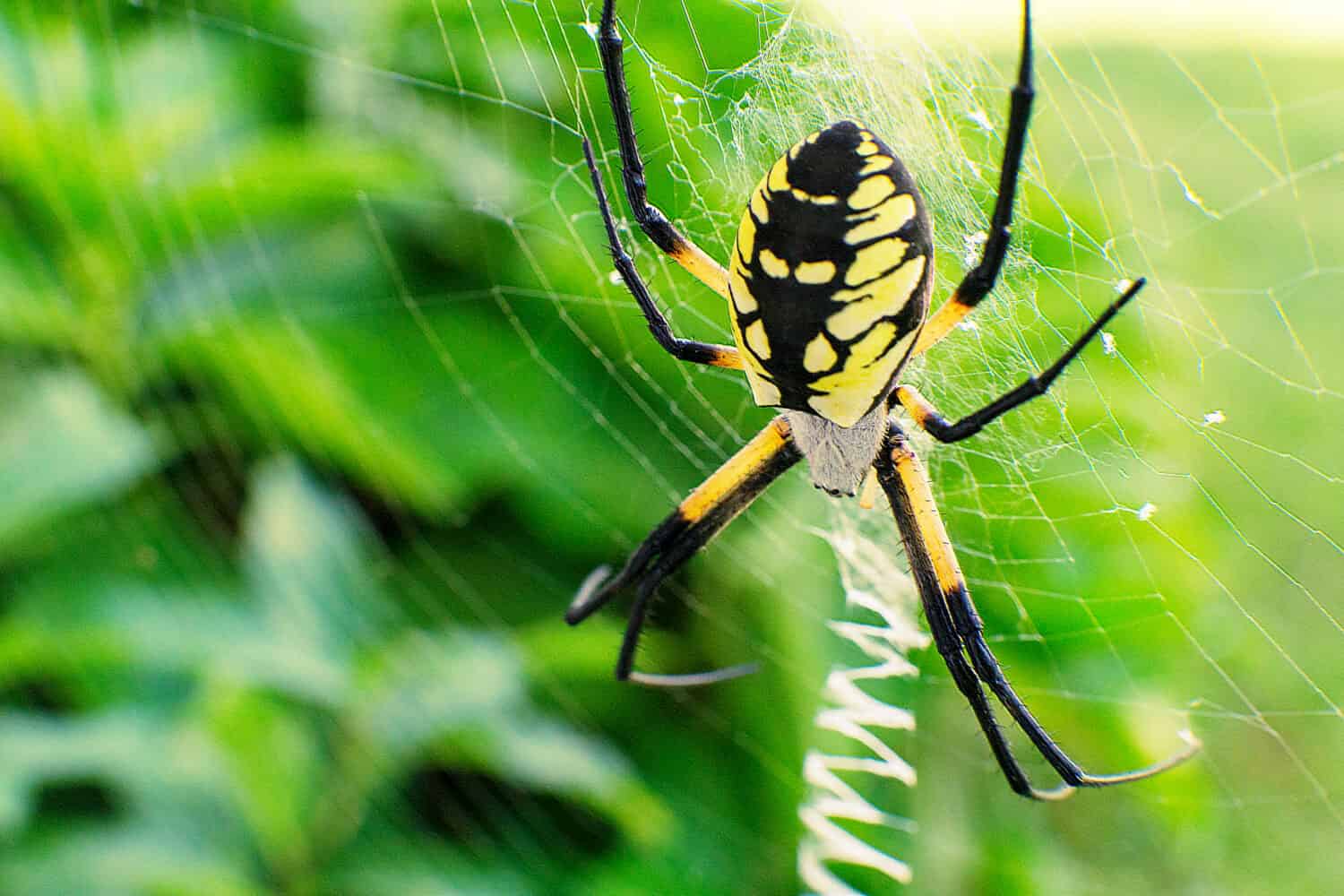
The black and yellow garden spider is a common sight throughout much of the United States, including Connecticut.
©iStock.com/AwakenedEye
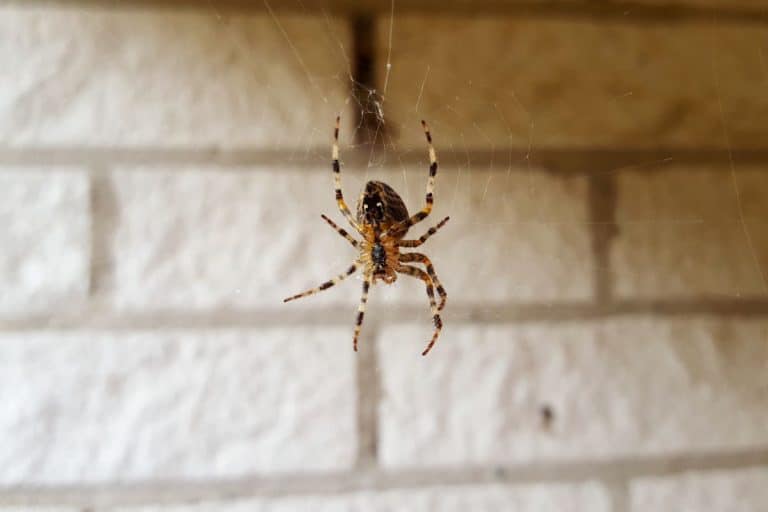
The black and yellow garden spider (Argiope aurantia) is a common member of the orb weaver family in North America. Females of this species are the largest orb weavers in Connecticut. They have a body size that ranges from 0.75 to 1.1 inches. Their long, spindly legs can span up to 3 inches. This spider has black and yellow coloring, with a silver cephalothorax. Males of this species are much smaller than females and have a body size of around 0.2 to 0.35 inches.
This spider prefers vegetated habitats such as gardens, meadows, and grasslands. Black and yellow garden spiders build large webs up to 2 feet in diameter, which they use to catch insects for food. A zig-zag pattern runs down the center of their web, which is believed to help prevent birds from crashing into it. Despite its vibrant coloring, this species is harmless to humans. This species also benefits gardens and agricultural fields by feeding on various flying insects that may damage crops.
1. Dark Fishing Spider
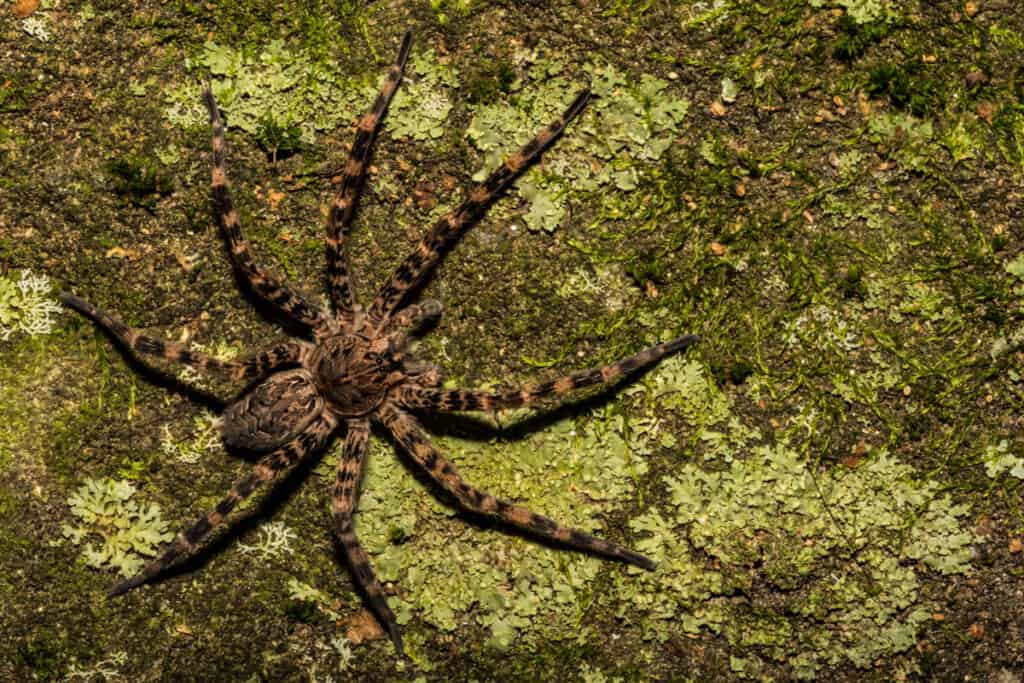
The dark fishing spider can run across the surface of water.
©iStock.com/JasonOndreicka
Dark fishing spiders (Dolomedes tenebrosus) are widespread in the United States and are among the largest spider species in Connecticut. Fishing spiders are known for their ability to walk on water and can quickly move across the surface. This spider may live near freshwater sources such as ponds and lakes, but it is also common in forested habitats.
Dark fishing spiders have a leg span that stretches over 3 inches and a large body size of around 1 inch. The dark fishing spider has tan coloring, with dark bands on its legs. Due to their size, they are often confused with wolf spiders. This species is active at night and spends its time searching for food. They feed on other spiders, small frogs, and insects.
Are Large Spiders Dangerous?
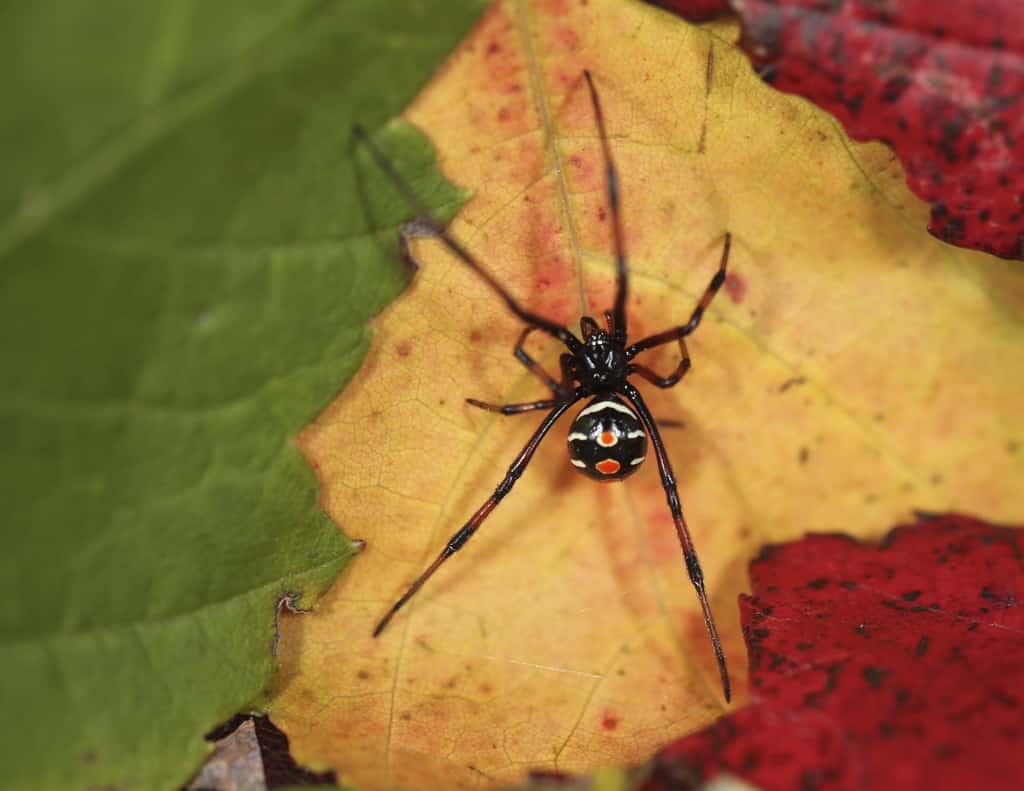
Northern black widows are the only spiders medically significant to humans found in Connecticut.
©iStock.com/NajaShots
Seeing a large spider can be frightening, but you should not be more afraid of them than of smaller spiders. Spiders are only dangerous if they have venom that is medically significant to humans, and even large species can be harmless if they do not have strong venom.
The Northern black widow (Latrodectus variolus) is the only venomous species native to Connecticut that is dangerous to humans. A spider bite can also be potentially dangerous if the person bitten is allergic to the venom. Most spiders you encounter are not dangerous, and their bites are similar to or less severe than a bee sting. Even the largest spiders in Connecticut are not dangerous and should not be feared.