
Maryland is packed with interesting places and animals. The state is home to the incomparable National Aquarium in Baltimore, and its crab fisheries are the stuff of legends. You’ll find many types of animals in Maryland, from aquatic creatures in the Chesapeake Bay to black bears in its western counties. Along the way, you’ll also find many different types of spiders. We’re going to look at five of the biggest spiders in Maryland. When we’re finished, you’ll know how big these spiders get, whether they are dangerous to humans, and what they look like.
What Are the Biggest Spiders in Maryland?
Spiders can vary a great deal in terms of their size, even in the same species. Males are frequently smaller than females, and they have different colorations. While we’re going to present information about the biggest spiders in Maryland, it’s important to remember that the one you encounter may not look exactly like what we describe. Also, you shouldn’t try to handle any wild animals you’re not completely familiar with.
With that in mind, let’s start counting down some of the largest spiders you’ll find in this state!
5. Long-Bodied Cellar Spider
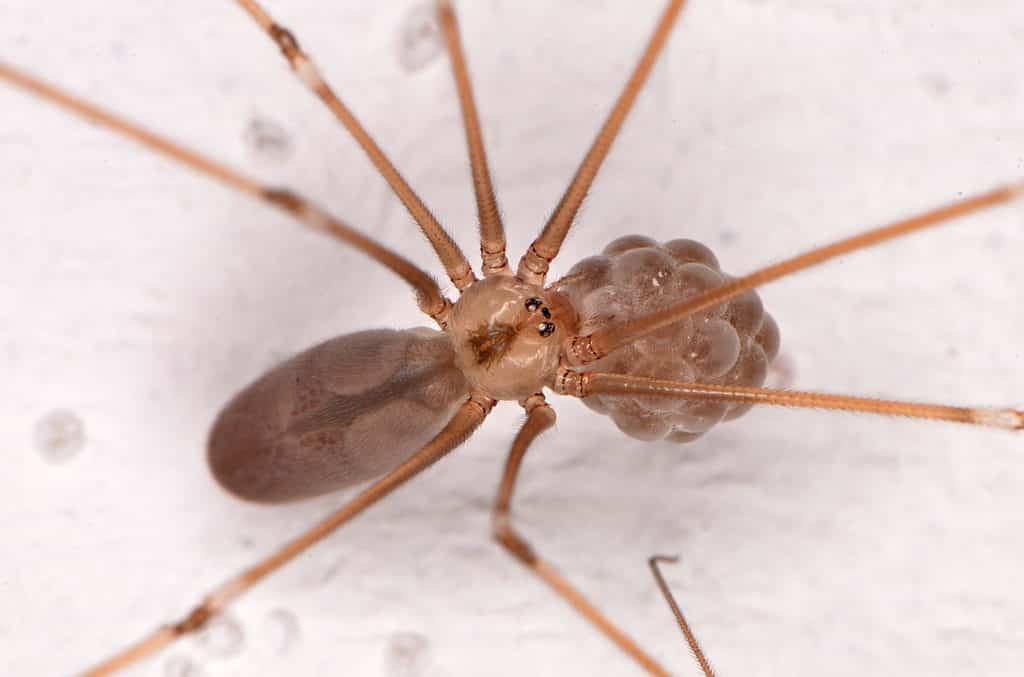
Long-bodied cellar spiders are common throughout the U.S.
©Marek Velechovsky/Shutterstock.com
| Scientific Name | Size | Danger to Humans |
|---|---|---|
| Pholcus phalangioides | Body length up to 0.31 inches with a leg span of 2 inches | A bite may cause a mild burning sensation. |
The long-bodied cellar spider is the most common Pholcidae species in the U.S. The cellar spider is often called a daddy longlegs in some regions, but that name also refers to the harvestman, which is a different arachnid species. These cellar spiders are easily identified by their body shape and long legs. They have a peanut-shaped body that is light tan or yellow, with gray markings in the center of the carapace.
They have a body length of up to 0.31 inches with a leg span of up to 2 inches. Males are only slightly shorter. This spider is typically found indoors and builds its irregularly shaped webs in garages, basements, barns, and other protected places that are generally undisturbed. Long-bodied cellar spiders are not known to bite humans. However, some sources suggest a bite could cause some pain and a burning sensation.
4. American Nursery Web Spider
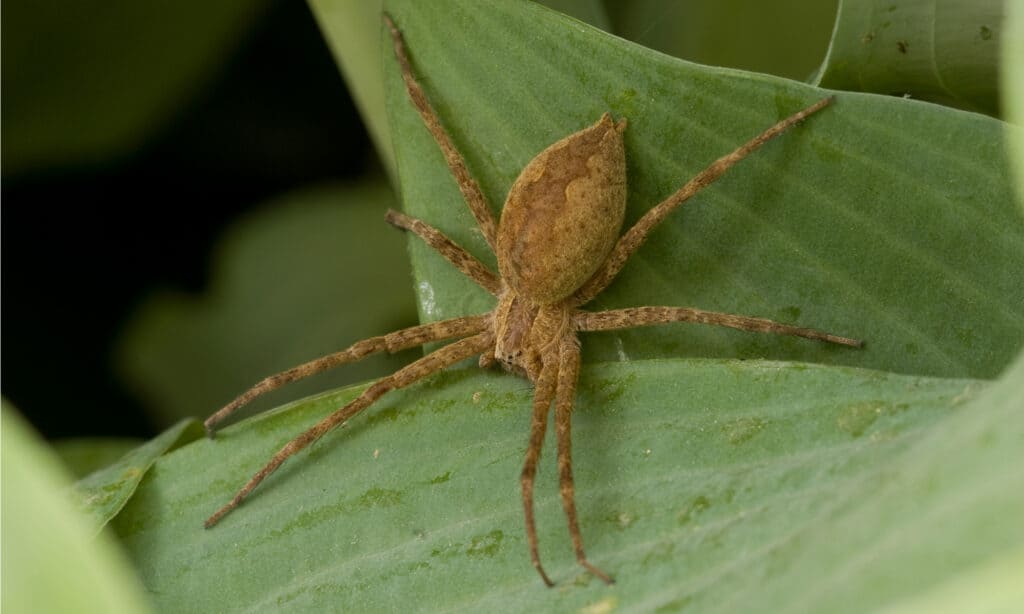
Nursery web spiders have long, slender legs and often hold the front two pairs together.
©SDeming/Shutterstock.com
| Scientific Name | Size | Danger to Humans |
|---|---|---|
| Pisaurina mira | 0.50-0.75 inches in body length with a leg span upwards of 2 inches | Bites may be painful but the venom is harmless to humans |
The American nursery web spider is another large spider than is commonly seen across Maryland. These spiders are yellowish-brown with a light to dark brown lengthwise marking down the middle of their carapace and abdomen. They have long, slender, banded legs and often hold the front two pairs of legs together. These spiders are 0.50-0.75 inches in body length with a leg span upwards of 2 inches. Males are slightly smaller on average but have longer legs.
Nursery web spiders can be found in woods, fields, and meadows. They do not build webs to catch insects. Nursery web spiders are active hunters that stalk prey in tall grass, bushes, and shrubs. They are called nursery web spiders because they tie leaves together to form a type of web to keep their newly hatched spiderlings safe. A bite may be slightly painful, but these spiders are not harmful to humans.
3. Black and Yellow Garden Spider
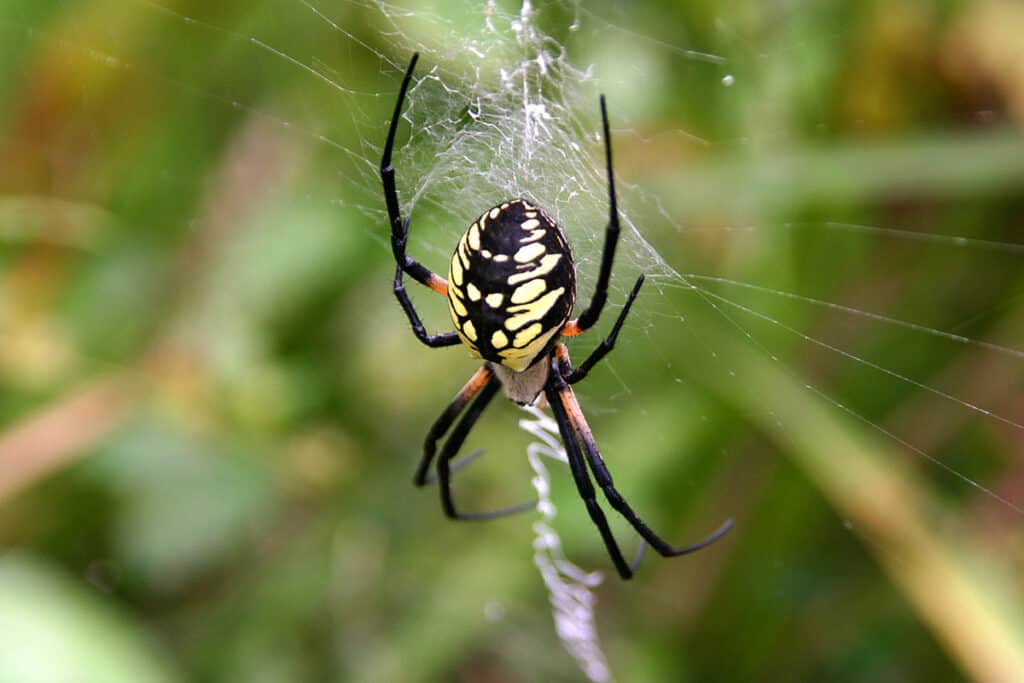
The black and yellow garden spider is a common sight throughout much of the United States.
©iStock.com/AwakenedEye
| Scientific Name | Size | Danger to Humans |
|---|---|---|
| Argiope aurantia | 0.75-1 inch in body length with a leg span of 3 inches | Rarely bites humans, but it may cause pain and swelling. |
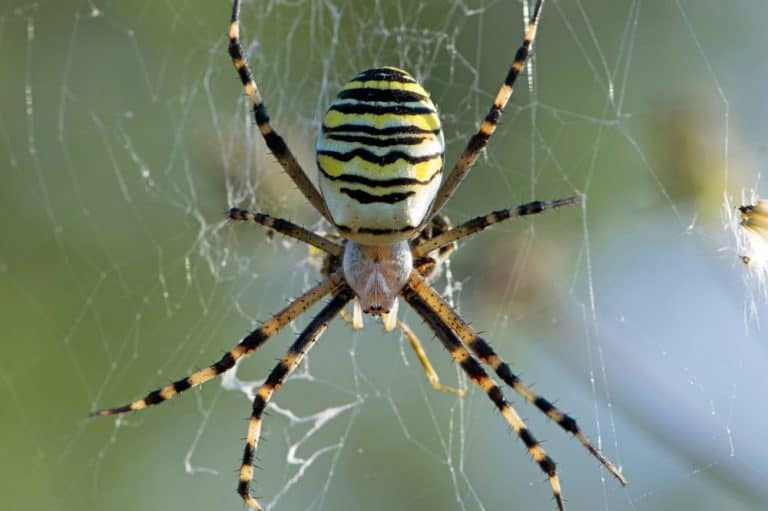
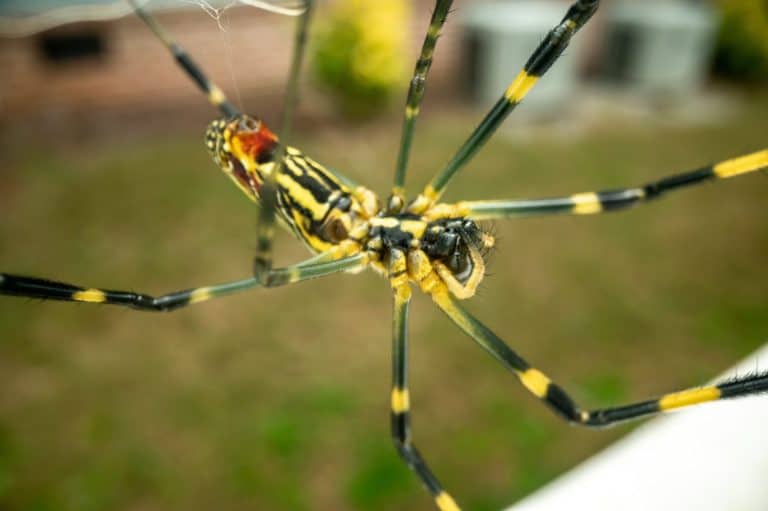
Black and yellow garden spiders are also among the largest spiders in Maryland. The female black and yellow garden spider can measure about 0.75 of an inch to just over 1 inch long in body length with a leg span of 3 inches. Males are much smaller, measuring only about 0.25 inches. They have a silvery cephalothorax and black abdomens with yellow markings. Their legs are primarily black with areas of red or yellow closer to the body.
These spiders make large webs that can be 2 feet in diameter. These webs feature an extra-thick, zigzag pattern in the center called a stabilimentum. Experts disagree as to its purpose, but it could be to aid in capturing prey or as a visual signal to prevent birds from flying into their webs. They generally build their webs in tall grass, weeds, and gardens. These spiders are not aggressive and rarely bite unless they feel threatened. Their bites are about as severe as a bee sting, unless the individual is allergic to the spider’s venom.
2. Dark Fishing Spider
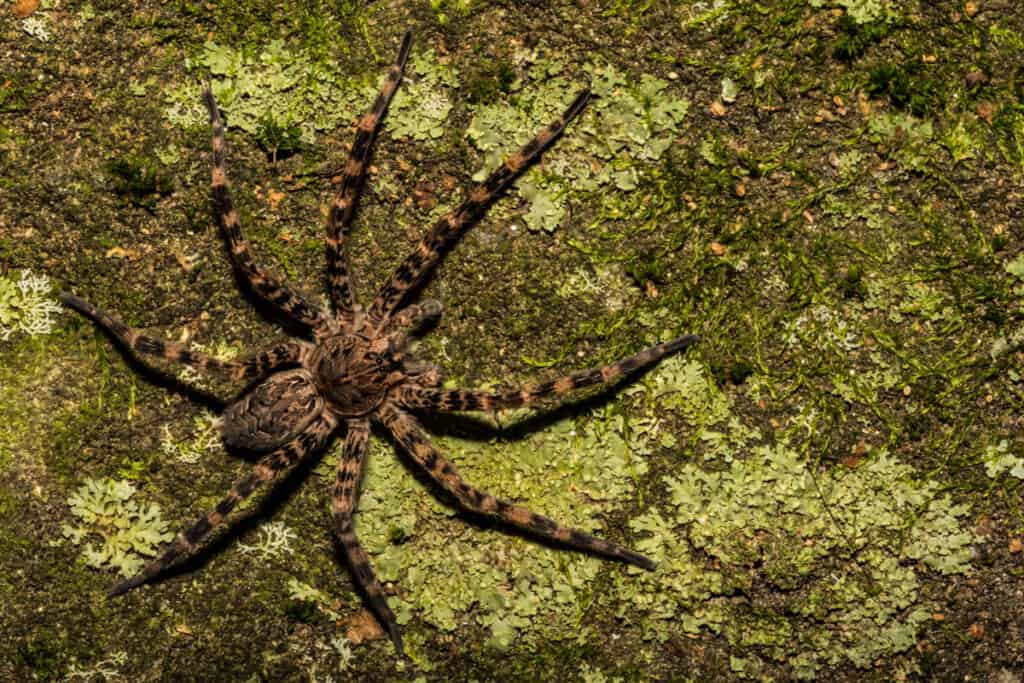
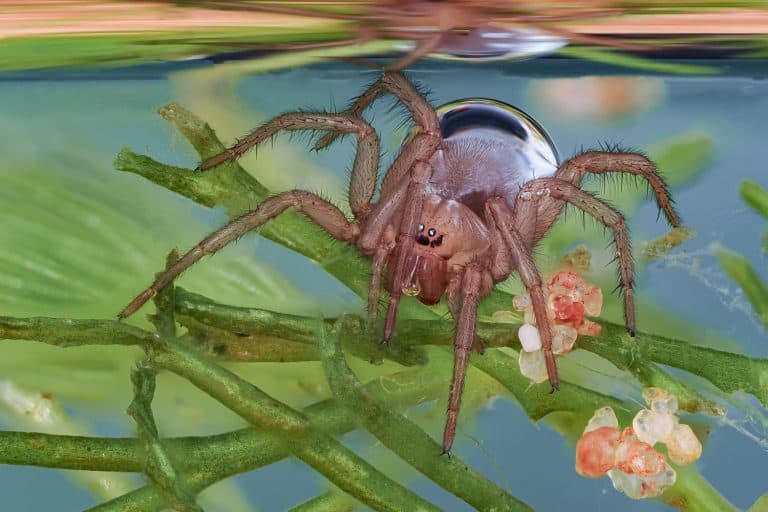
The dark fishing spider is often found in wooded areas near permanent water.
©iStock.com/JasonOndreicka
| Scientific Name | Size | Danger to Humans |
|---|---|---|
| Dolomedes tenebrosus | Body size up to 1 inch with a leg span of over 3 inches | Rarely bite humans but can cause a reaction similar to a bee sting |
With its large body and impressive leg span, the dark fishing spider rivals some wolf spiders in size. Female spiders have a body length of up to 1 inch with a leg span of over 3 inches, while the males are about half that size. Dark fishing spiders are brown to brownish-grey with lighter brown to black markings and legs banded with black and brown.
These spiders are usually found in wooded areas near water. They can run across the surface of the water to catch aquatic insects and even dive down far enough to catch small fish or tadpoles. While dark fishing spiders can appear intimidating due to their size, they are not very dangerous to humans. They are reluctant to bite people, preferring to flee instead. However, if they are threatened, their bites are said to be similar to a bee sting, causing localized swelling and pain.
1. Carolina Wolf Spider
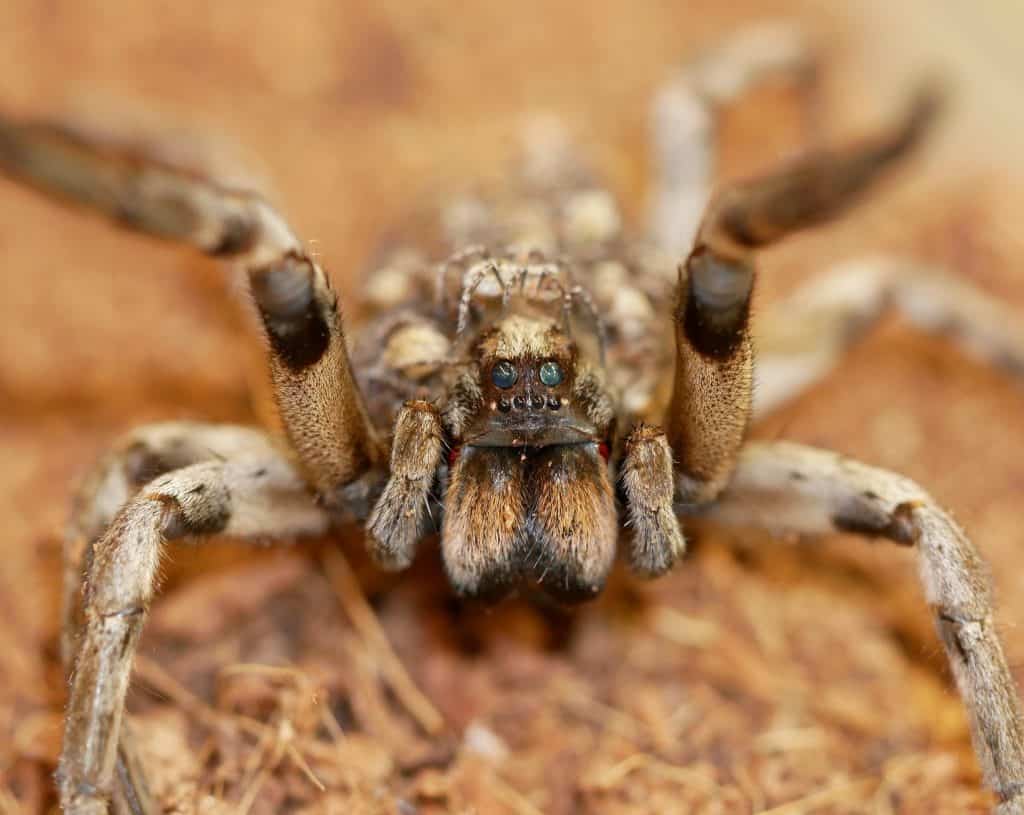
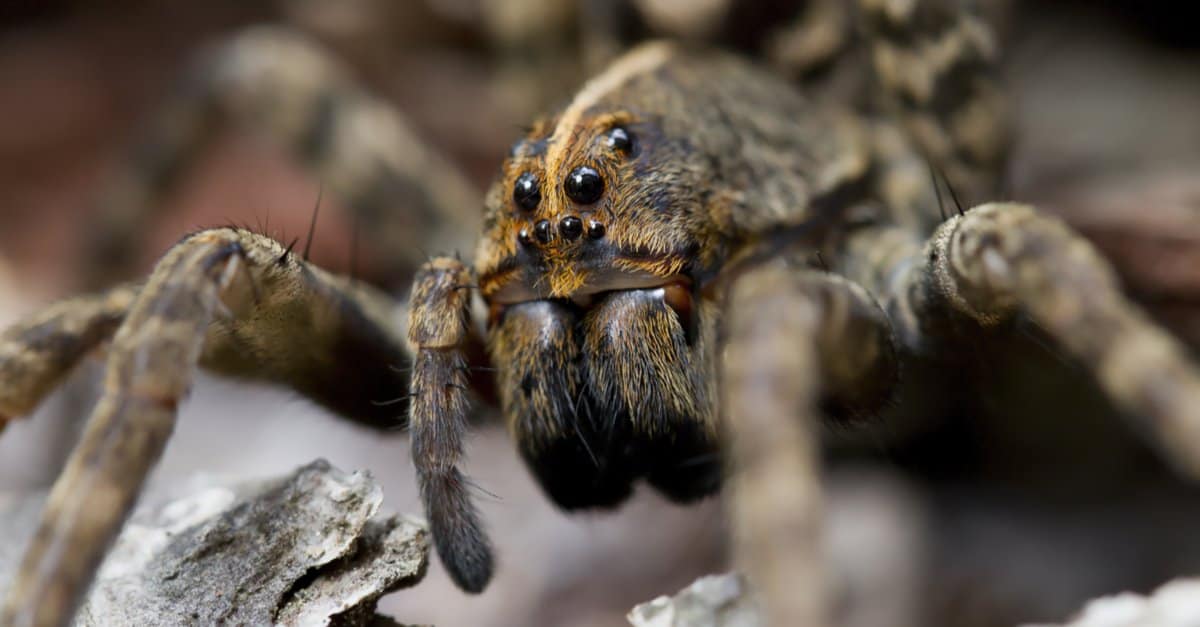
Carolina wolf spiders are the largest wolf spider species and arguably the largest spiders in Maryland.
| Scientific Name | Size | Danger to Humans |
|---|---|---|
| Hogna carolinensis | Body length up to 1.4 inches with a leg span of 3 to 4 inches | Bites can be painful but typically cause localized symptoms similar to bee or wasp stings |
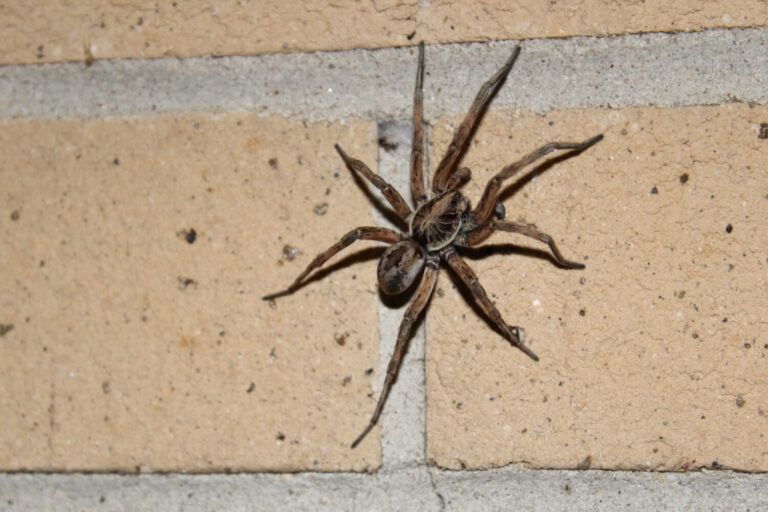
Many wolf spider species inhabit the state of Maryland, but the biggest is the Carolina wolf spider, which is the largest species among wolf spiders. These spiders can grow up to 1.4 inches in body length with a leg span that can measure from 3 to 4 inches. Female Carolina wolf spiders are typically larger than the males. Carolina wolf spiders have hairy, mottled grey to brown bodies with a darker colored stripe down their abdomens. The front of their mouthparts is a light orange, and males often have orange on the sides of their bodies. They have eight eyes in three rows, with two larger eyes in the front.
Carolina wolf spiders are found in many different types of open environments, including forests, grasslands, deserts, scrublands, and riparian habitats. Wolf spiders do not build webs; they dig underground burrows and actively hunt for their prey. A bite can be painful, but it typically causes only localized symptoms that are said to be similar to bee or wasp stings.