
Quick Take
- These spiders produce venom, yet there's a specific reason they're completely harmless to humans. That reason is not what most people assume. About their venom and humans →
- The real engine behind Korea's spider diversity explosion is one peculiar behavioral trait, not habitat or climate. What drives spider diversity →
- The four new species look nearly identical, with differences invisible to the naked eye, which raises an unsettling question about how many others are already hiding in plain sight. Meet the four new species →
Finding one new spider species is exciting, but scientists have recently discovered no fewer than four! They all belong to the Pholcus genus and like to live in dark and sheltered areas in Korean forests. Here’s the story of how they were discovered, with some theories about how they became isolated and evolved into so many new species.
All About Pholcidae Spiders
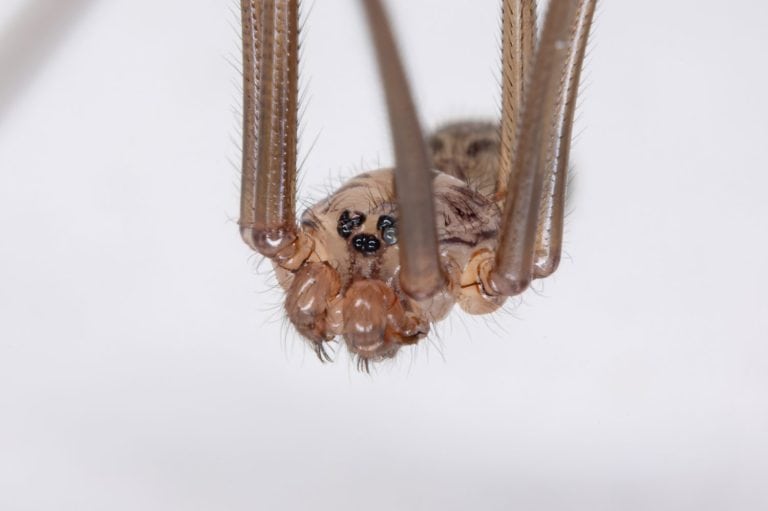
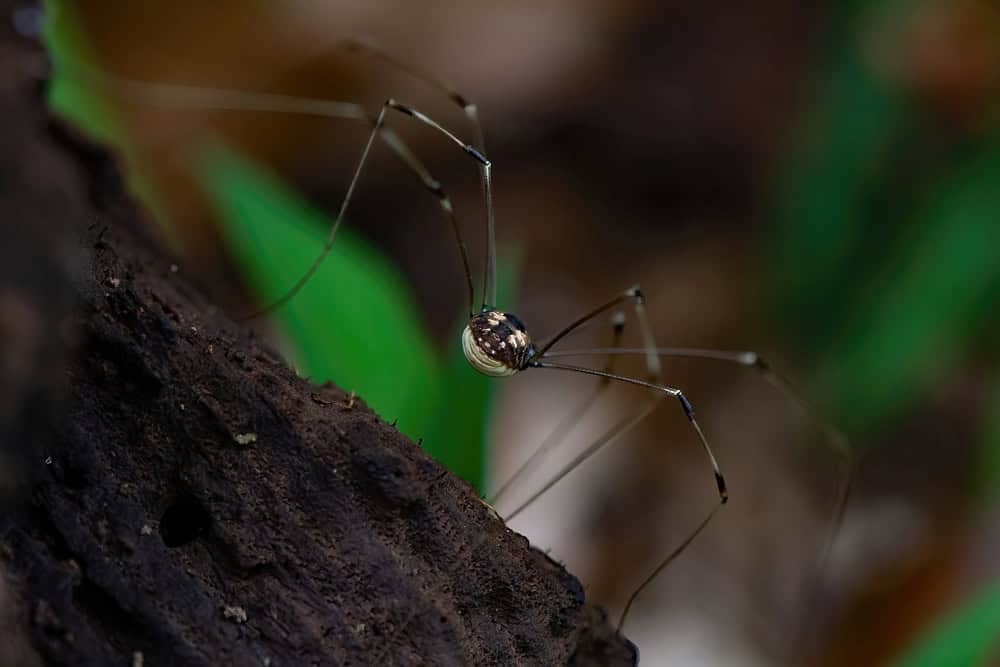
The Pholcidae spiders are one of the most diverse and species-rich families of spiders in the Araneae order. In all, there are 2,060 species over 97 genera. The family includes some well-known spiders such as the cellar spider, the daddy long-legs spider, and the carpenter spider. Their long, thin legs and comparatively small bodies characterize them. They typically have two groups of three eyes each, though some species possess an additional pair of small eyes.
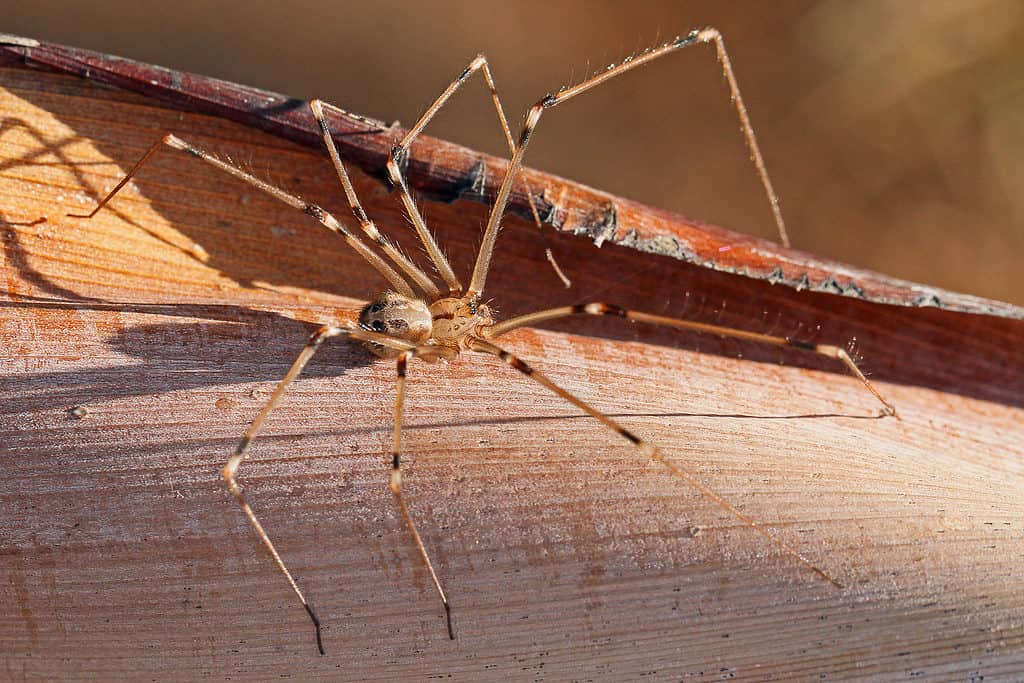
Daddy longlegs are Pholcidae spiders.
©Eugene Troskie/Shutterstock.com
This family of spiders is found on every continent in the world except Antarctica, where they create messy, irregularly shaped webs. They create their webs in dark and damp recesses, such as caves or under rocks, and then feed on the insects that they catch. Pholcidae spiders produce venom to subdue their prey. However, because their fangs are not strong enough to pierce human skin, they do not present a threat to us. They are happy to live around humans, and you may spot them in your attics and cellars, which explains the name ‘cellar spider’.
The Pholcus Group of Spiders
The most diverse group of the Pholcidae spiders is the Pholcus, which contains 434 species belonging to 21 species groups. The species group featured in this story is the Pholcus phungiformes species group. Most of these spiders are found in northern and northeastern China, the Korean Peninsula, and the Russian Far East. They like to live in dusky, humid spaces, so you will find them in rock walls, road drains, and cave entrances in mountainous and coastal mixed forests.
There are 61 species of the phungiformes group in Korea alone and 95 worldwide. Spiders in this group have a certain set of distinctive characteristics that can only be seen under magnification. These characteristics include the male chelicerae (mouth appendages) having frontal apophyses (outgrowths of the exoskeleton), as well as the procursus (a part of the genitalia) featuring dorsal spines.
The mountainous temperate mixed forests in South Korea are ideal habitats for them. There are both deciduous broadleaf and coniferous trees, along with numerous rocky areas where they can construct their webs.
Searching for Spiders in Korea
The study documenting the new spider discoveries was published in June 2026. All of the new spider species were collected by hand from mountainous mixed forests in South Korea during a survey of spider fauna. They were collected between 2022 and 2023, and the survey was led by scientists from the Diversity Conservation Research Department, Nakdonggang National Institute of Biological Resources, Ministry of Climate, Energy and Environment, Sangju, Republic of Korea.

South Korean forests have isolated micro-habitats.
©Stock for you/Shutterstock.com
The spider specimens were preserved in 98 percent ethyl alcohol so that their morphology could be examined in detail. This examination revealed that there were four new species among the specimens!
Which New Spider Species Were Discovered in South Korea?
The new spider species were named after the locations where they were found. The first, Pholcus baegamsan was found at Mt. Baegamsan (also known as the White Rock Mountains) in Sunchang-gun. The second, Pholcus hongcheon, was found at Mt. Garisan, Hongcheon-gun. The third, Pholcus namhae, was found at the Boriam Temple, Namhae-gun. Finally, Pholcus yeongcheon was found on Mt. Hwasan, Yeongcheon-si.
Rich Diversity in Korean Spiders
The Phungiformes group of spiders shows an exceptionally high degree of regional endemism in South Korea. This means that they are restricted to this specific geographical region. What’s more, studies of Korean spider habitats suggest that their diversification has been driven by geographic isolation. These spiders do not like to travel around much and show strong site fidelity. This means that they stay in specific locations and become isolated from other populations of their species. Eventually, they evolve into a new species. However, the main differences are restricted to the spider genitalia.
There are also physical barriers in this region that the spiders may find difficult to cross, contributing to their isolation. Many valleys separate adjacent mountain systems, limiting movement between spider populations.
The remarkable diversity of wildlife in this location, the abundant rocky microhabitats, and the barriers to spider movement mean that there are likely many locally isolated populations across mountainous regions. This, combined with the discovery of four new species from a single survey, suggests that many more undocumented spider species may still be awaiting discovery.