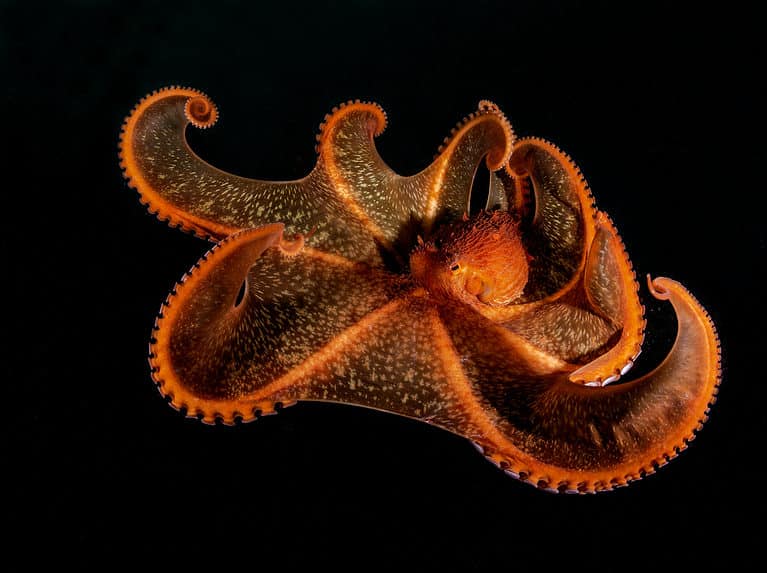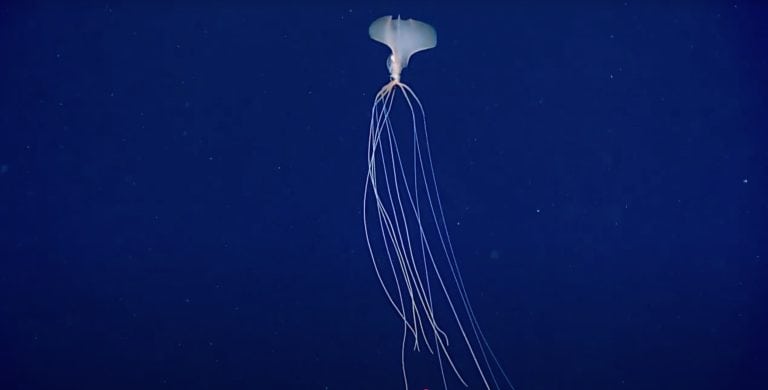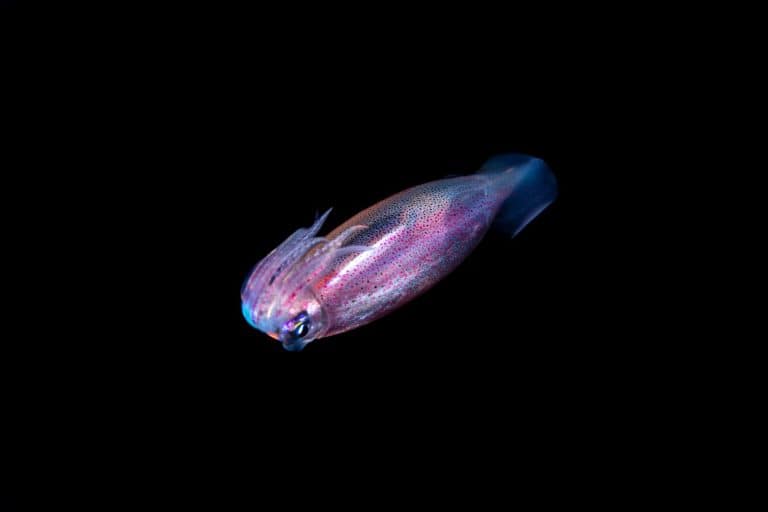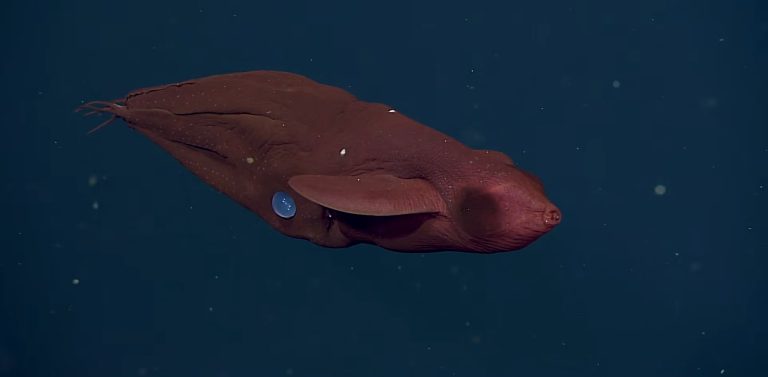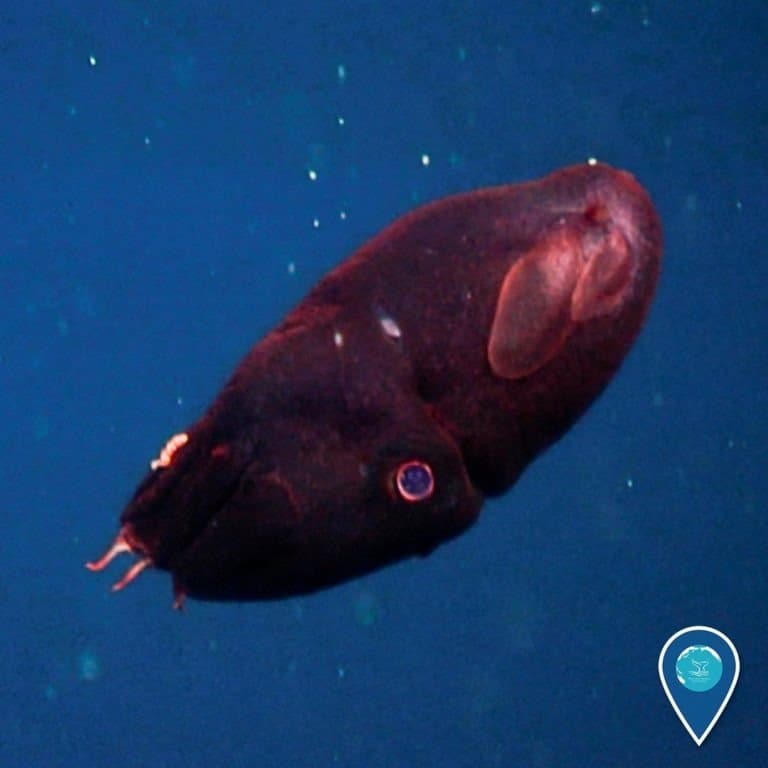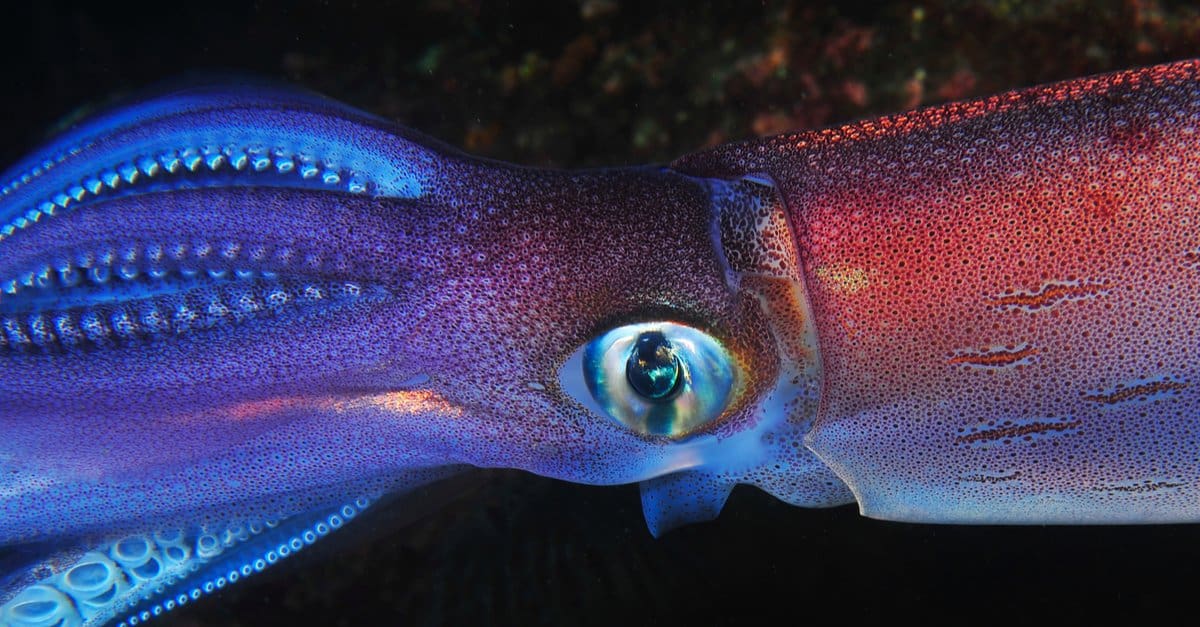

In Nordic folklore, seafaring pirates feared the unknown monsters of the ocean, especially the Kraken. This enormous squid-like creature was said to have engulfed entire ships in treacherous waters bringing the crews down with it. Although the infamous Kraken only exists in maritime storytelling, it is speculated that it was inspired by some very large, very real deep-sea squid.
There are around 500 recognized species of squid, although it is believed there are more yet to be discovered. These animals are incredibly diverse and unique in several ways. Squid come in a vast array of colors and some are capable of glowing in the dark. They also come in many different sizes, ranging from the tiny pygmy squid to the largest invertebrate on the planet. This article will dive deeper into what is known about these mysterious creatures. Here are the world’s largest squid based on maximum weight.
#5: Robust Clubhook Squid – 90lbs

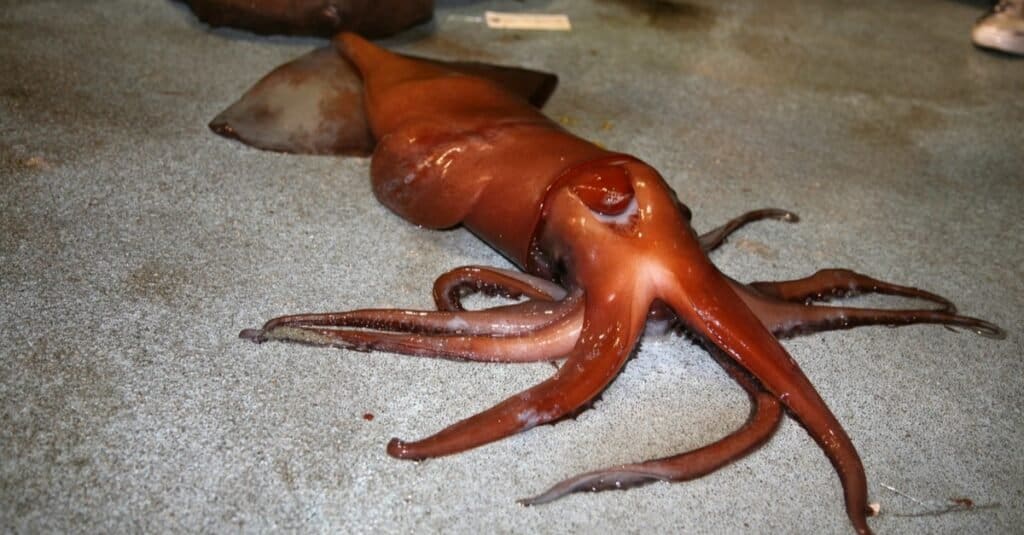
This NOAA worker is lying next to the robust clubhook squid to show its comparative size.
©U.S. National Oceanic and Atmospheric Administration/Public Domain – Original / License
The robust clubhook squid can grow to around 90 pounds with a length of up to 12 feet. It is the largest in its family of hooked squid. This rare squid lives in the northern Pacific Ocean from Japan to California. It is commonly found at depths of 100-1,700 feet. The robust clubhook squid reportedly feeds on small fish and jellyfish, such as the brown jellyfish that is native to the northern Pacific. This squid is prey to sperm whales, sharks, and fur seals.
It earns its name from the distinctive club hooks on its tentacles. This squid has ten arms that can grow to be as long as the mantle, or the body, of the squid. Each arm contains 15 to 18 club hooks that can latch onto prey. Each tentacle also has 50-60 suckers. Despite being a frequent catch of fishermen, little is known about the biology of this squid.
#4: Humboldt Squid – 110lbs
Humboldt squid are said to fly because they can launch themselves out of the water.
©mikeledray/Shutterstock.com
The Humboldt squid, often called the jumbo squid, is the largest of the flying squid. It can grow up to 110 pounds with a maximum length of up to five feet. They live in the eastern Pacific Ocean at depths between 660 and 1,230 feet. Humboldt squid has a short lifespan of only 1-2 years.
They are vicious predators and can swim up to 15mph in pursuit of prey. They primarily feed on other mollusks, small fish, and crustaceans, but are also frequent cannibals. Humboldt squid attack using their barbed tentacle suckers and pull their prey into their large, razor-like beaks. There have been verified reports of human attacks, primarily on deep-sea divers.
The Humboldt squid also has fascinating chromogenic behavior. This means they are able to change their body color. It is believed that they change the color of their skin from red to white to communicate with other squid.
#3: Dana Octopus Squid – 356lbs
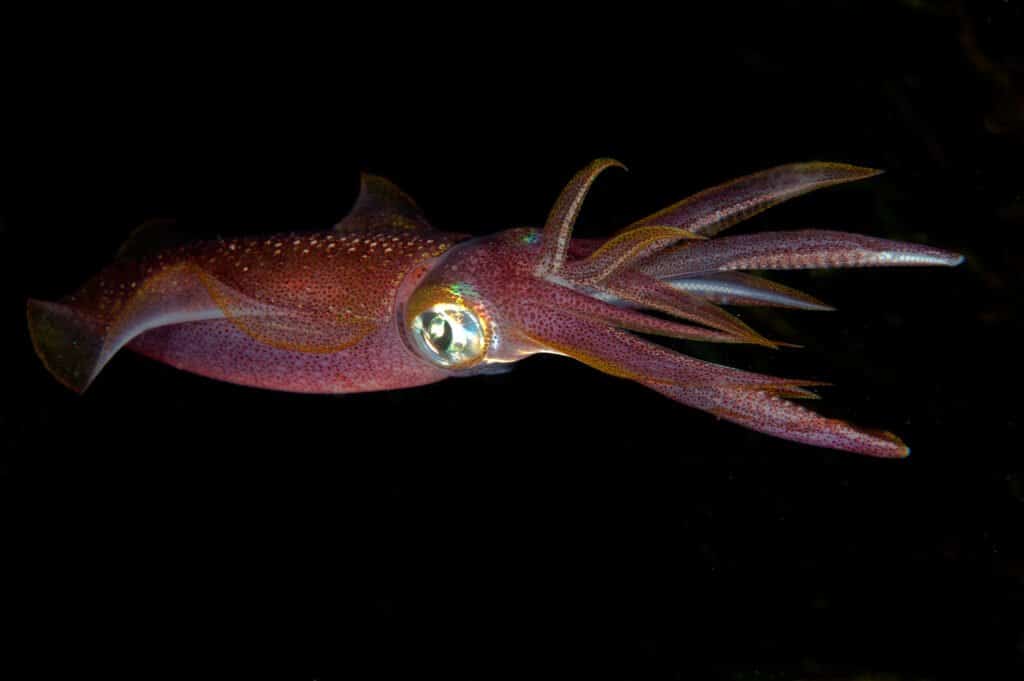
Dana octopus squid lives deep in the ocean at depths over 4,000 feet.
©Konstantin Novikov/Shutterstock.com
The largest recorded Dana octopus squid weighed a massive 356 pounds and was 7.5 feet long. They live in every ocean except the polar seas at depths of over 4,000 feet. The Dana octopus squid is prey to hammerhead, tiger, and blue sharks, as well as short-finned pilot whales and sperm whales.
Scientists believe these squid are skillful, highly maneuverable swimmers that can be quite evasive. There are few observations of this species in the wild and fewer specimens in collections. Nevertheless, some animals have been documented using evidence from the stomachs of sharks.
The Dana octopus squid is also bioluminescent. The squid has two large photophores on the end of two of its arms. These photophores emit blinding flashes of bioluminescent light to stun and disorient prey. It then uses its tentacles and sharp beak to trap and consume its prey. The light is also used as a tool for communication and mating. This squid is the largest known photophore in the world.
#2: Giant Squid – Up to 1,000lbs
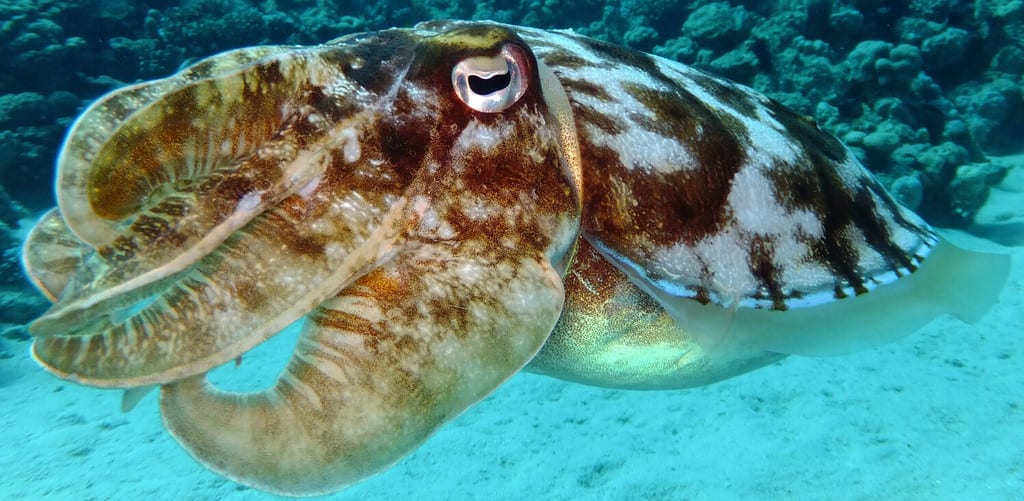
The giant squid was not filmed in its natural habitat until 2006.
©Shiva N hegde/Shutterstock.com
The largest giant squid ever recorded was around 43 feet. Some scientists estimate the specimen may have weighed nearly 2,000 pounds, but most giant squid are estimated to weigh less than 1,000 pounds. giant squid are found at depths up to 3,200 feet, making them hard to study. Most of what is known about them comes from studying carcasses that have washed up on beaches. They are believed to inhabit most of the world’s oceans, however, specimens are rarely found in tropical or polar latitudes. The first film of a live giant squid was not taken until 2006.
These creatures’ diets consist of deep-sea fish species, other smaller squid, and possibly some whales. The giant squid is a solitary hunter and catches its prey using two tentacles with barbed suckers. There is some evidence that they may be cannibalistic, as parts of a giant squid beak were found in the stomach contents of another giant squid in Tasmania. Sperm whales are the only predators of giant squid and scientists often try to track the whales in an attempt to locate giant squid.
Giant squid has one of the largest eyeballs on earth, measuring up to 10 inches in diameter. Having such large eyes allows them to detect light in the darkest parts of the deep sea. Scientists are also greatly interested in the giant squid’s complex brain and nervous system.
#1: Colossal Squid – 1,091lbs
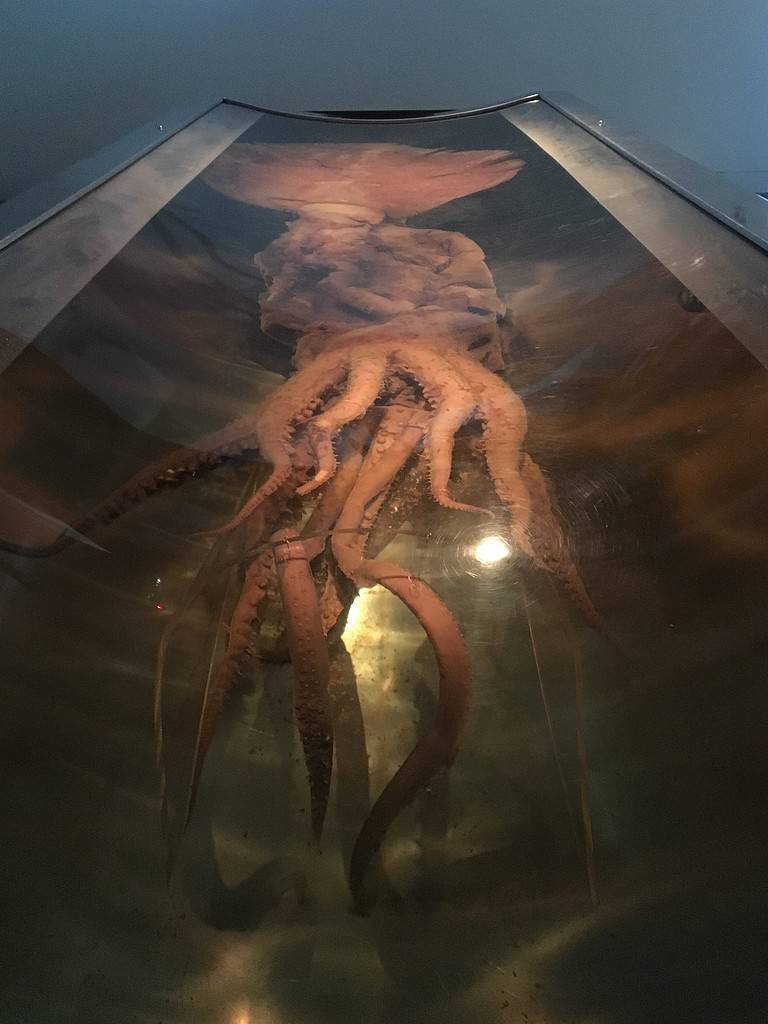
The largest colossal squid specimen is in the Museum of New Zealand Te Papa Tongarewa.
The colossal squid is the largest squid species and the largest mollusk. These squid primarily inhabit the the waters around Antarctica at depths of greater than 3,200 feet. Because they live in such deep, cold waters, there have been few opportunities to study the squid. No colossal squid has ever been spotted in its natural habitat.
The largest confirmed colossal squid weight is 1,091 pounds based on a specimen captured in 2007. However, based on beaks that have been recovered, scientists predict they can reach weights up to 1,300-1,500 pounds. Colossal squid are believed to reach up to 46 feet long. Their eyes measure 11 inches in diameter, making them the largest eyes of any creature on Earth.
Colossal squid are ambush predators and use bioluminescence to attract their prey. They are also a significant prey of sperm whales. Many sperm whales have been studied with scarring and injuries inflicted by colossal squid. Beaks have also been collected from sperm whale stomachs. The species is believed to be naturally rare, which is another reason why it is so difficult to study its biology.