


Quick Take
- This squid earned the nickname "red devil" for a reason that goes far beyond just looking scary. See the red devil traits →
- The most commercially caught squid in the world naturally tastes bitter, and there is a specific chemical reason why this is the case. Discover the bitter flesh →
- A female can produce millions of eggs, yet her lifespan ends almost immediately afterward. The timing is no coincidence. Explore egg production and death →
- It can exhaust entire fisheries near where it lives, yet scientists still can't fully classify its population status. Check the population status →
The Humboldt squid is named after the Humboldt Current, which flows north along the coast of South America. The current was likewise named after the German naturalist and explorer Alexander von Humboldt. This species is a particularly popular component of seafood dishes around the world.

3 Incredible Humboldt Squid Facts
- The Humboldt squid can change color from white to red and back again. This serves as both a means to communicate with each other and as a warning to potential predators. It might also serve as a form of camouflage. These adaptations have earned it the nickname of red devil, because it flashes bright red when caught.
- The family name of flying squid comes from the fact that it can launch itself out of the water to avoid predators.
- This species can propel itself very quickly through the water by shooting a jet in the opposite direction it wants to go. The undulating fins help them navigate through the environment.
Classification and Scientific Name
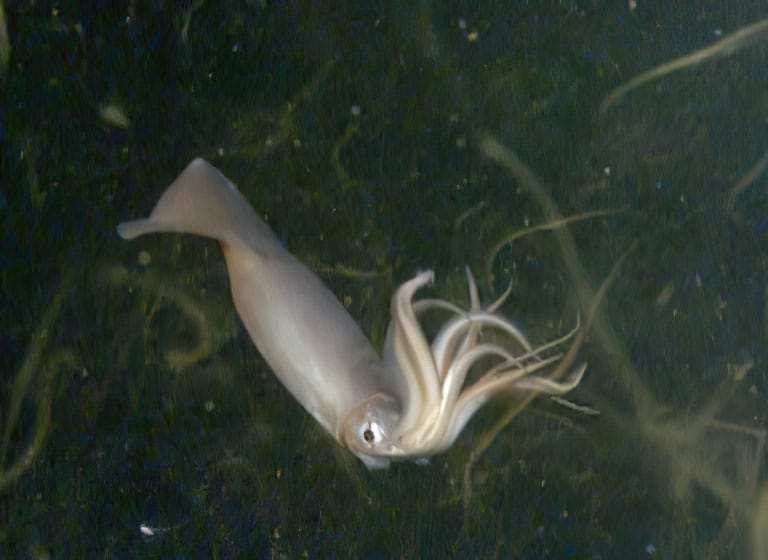
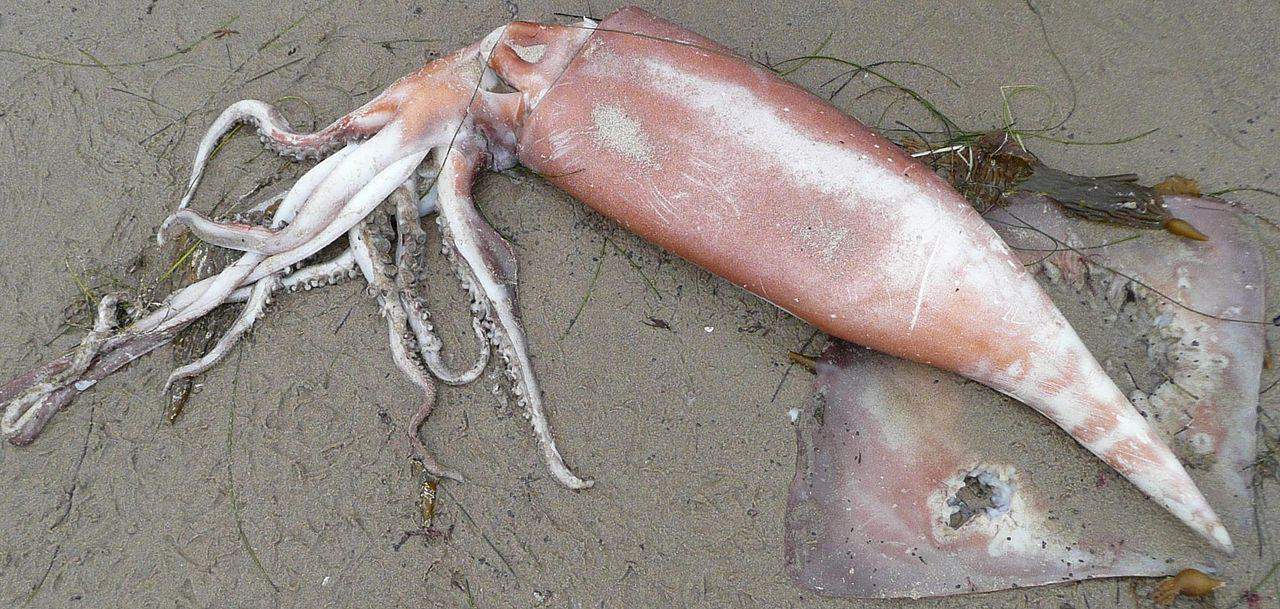
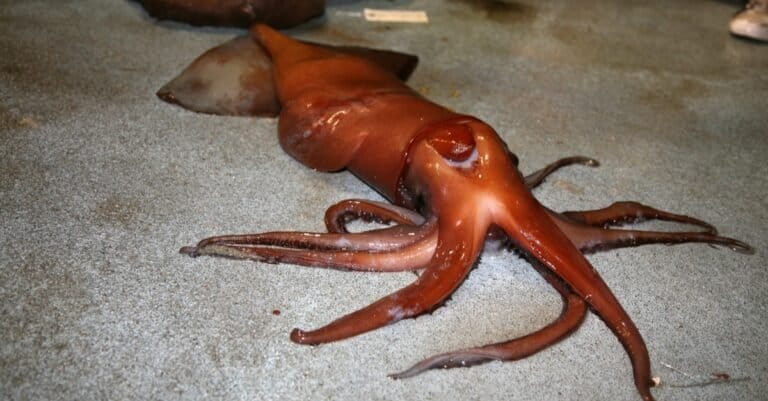
The Humboldt squid is one of the world’s larger cephalopods.
©Image courtesy of NOAA/MBARI 2006 / public domain / Wikimedia Commons – Original / License
The scientific name of the Humboldt squid is Dosidicus gigas. Gigas means giant in Greek because it’s the largest member of the flying squid family. It is also the only currently living member of its genus.
Appearance
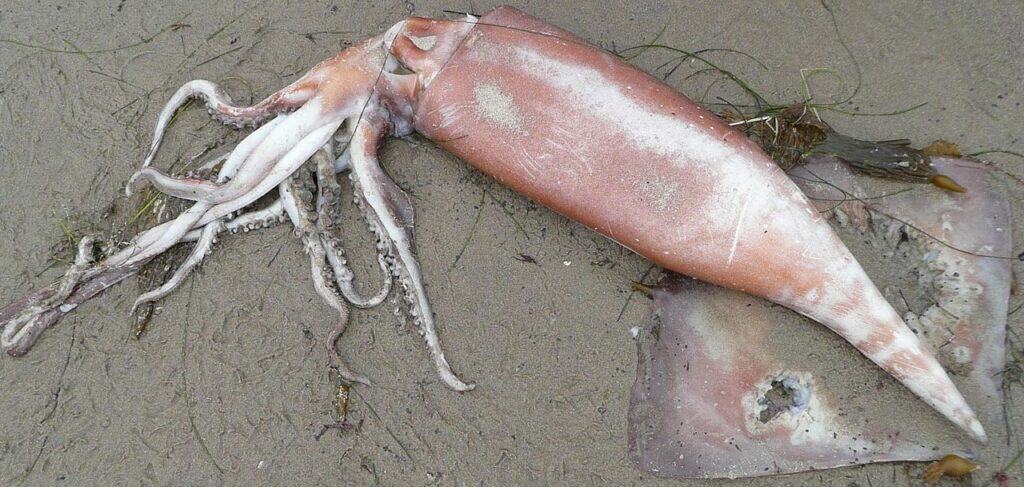
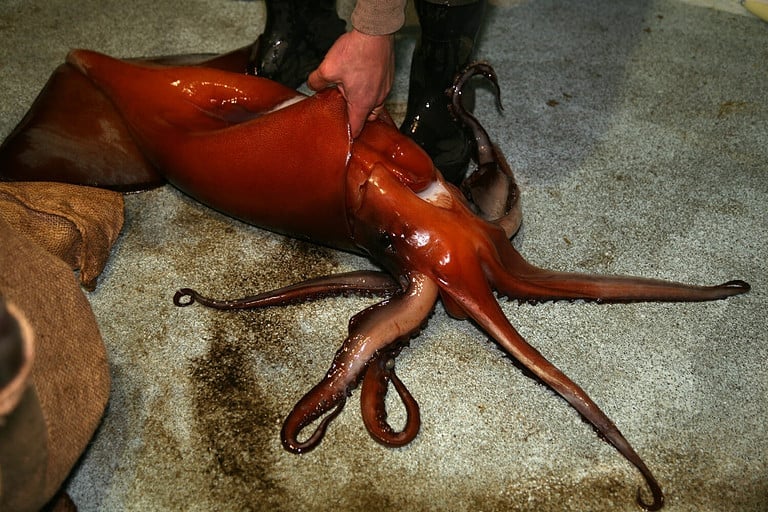
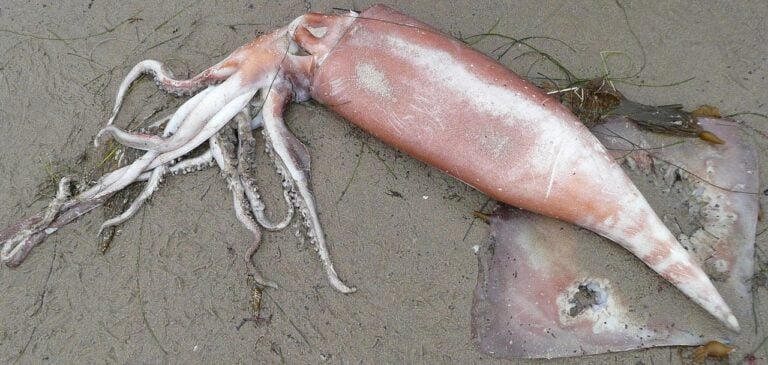
The Humboldt squid is one of the world’s larger cephalopods. The mantle alone (meaning the actual body) measures between 4 feet and 6.5 feet long, while the 10 barbed tentacles, each of which has 100 to 200 suckers, add another few feet to the length. Altogether, this species can reach a weight of approximately 110 pounds. The squid is characterized by a long, almost cone-shaped mantle with two wing-like fins emerging from the sides. The razor-sharp beak, which has an immense bite force, sits at the base of the mantle, where the 10 tentacles converge. As mentioned previously, the skin can transform colors depending on the mood.
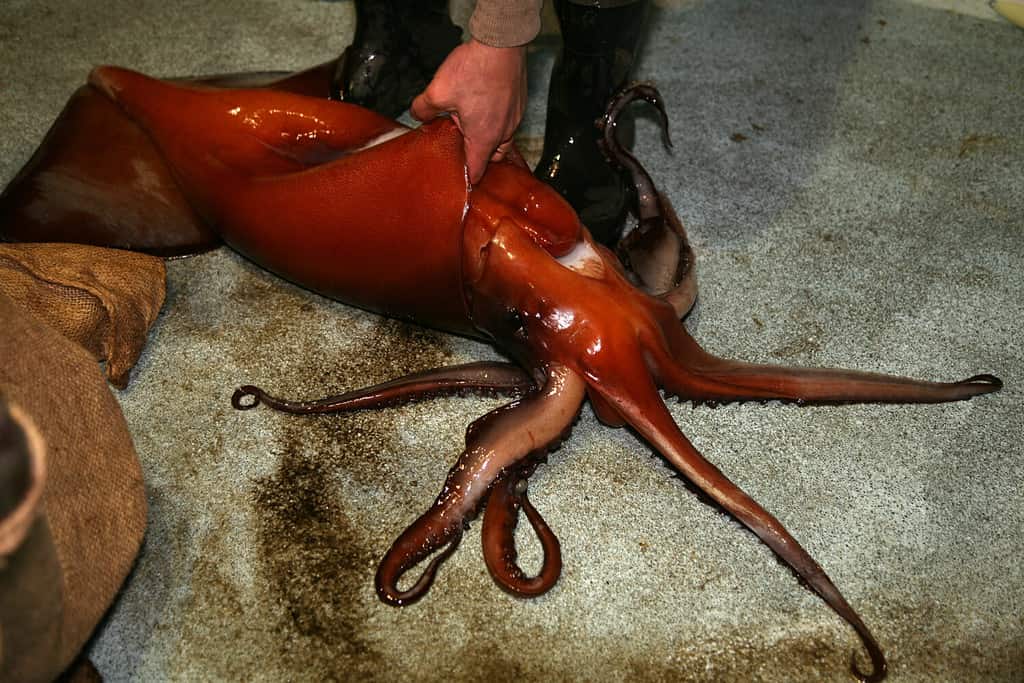
Humboldt squid on a fishing boat.
©mikeledray/Shutterstock.com
Distribution, Population, and Habitat
The Humboldt squid inhabits the deep open recesses of the eastern Pacific Ocean, reaching depths of more than 2,000 feet. This species appears to move from deeper to shallower waters about once a day to feed. It may also migrate around the oceans in ways that aren’t currently understood. This species was historically concentrated between Mexico and Peru, but it has also begun to expand to locations as far as Alaska and Chile. Despite being well-studied, it is currently classified by the IUCN Red List as data deficient.
Predators and Prey
The Humboldt squid is a mid-level predator. They eat so much that they can sometimes exhaust fisheries in locations where they live. However, they must always be on the lookout for predators farther up the food chain.
What eats the Humboldt squid?
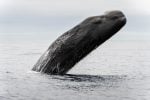
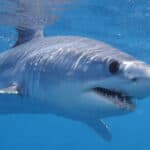
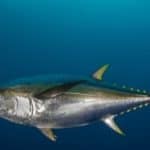
The Humboldt squid is a favorite food of large predators such as sperm whales, pilot whales, marlins, swordfish, seals, sharks, and sometimes even birds. If threatened, this squid can shoot ink at predators as one of its many defensive adaptations. It can also make a quick getaway at impressive speeds and even leap out of the water.
What does the Humboldt squid eat?
The squid has a very diverse diet of small fish, crustaceans, and other cephalopods (squids and octopuses). It grabs the prey quickly with its tentacles and then tears the flesh or shell apart with the incredible bite force of its sharp beak.
Reproduction and Lifespan
Very little is known about the actual reproductive habits of the Humboldt squid. They seem to mate at such immense depths that the courtship display is rarely observed. It’s assumed that changing coloration plays a role in courtship by signaling sexual availability. Once a pair has agreed to mate, the male will transfer his sperm into the female’s mantle via one of his specialized tentacles. After fertilization has taken place, the female squid will produce a gelatinous mass of around a million eggs. Females may have multiple mating partners every year and lay up to 20 million eggs in their short lifespan.
Once the eggs hatch about a week later, these creatures are incredibly small and vulnerable. With minimal parental protection, many of them are preyed upon in this early stage. The juveniles will form large schools for protection. Fortunately, they begin to grow rapidly, reaching their full length in just under a year. By the time they are adults, the squids congregate together in smaller groups. Their lifespan normally ends after completing the first reproductive period.
Fishing and Cooking

Sauteed Humboldt squid in chili oil with fresh green onion, sliced ginger, and sesame salt.
©Scottbbaird/Shutterstock.com
The Humboldt squid is the most popular commercially caught squid in the world. Many tons of squid are captured in Mexico every night by a technique called jigging, in which the line is jerked up and down to simulate prey. Both artisanal and industrial-scale fishing will catch immense numbers of squid and then sell them to markets all around the world.
Because of the ammonium chloride, which keeps the squid buoyant in the water, the flesh can naturally taste bitter or sour. That is why it is usually tenderized and washed to improve the taste first. Squid can be cooked and prepared in any number of different ways; frying and battering are particularly popular all over the world.
Humboldt Squid Pictures
View all of our Humboldt Squid pictures in the gallery.

mikeledray/Shutterstock.com
Sources
- Oceana / Accessed September 25, 2021
- Animal Diversity Web / Accessed September 25, 2021
- Scientific American / Accessed September 25, 2021