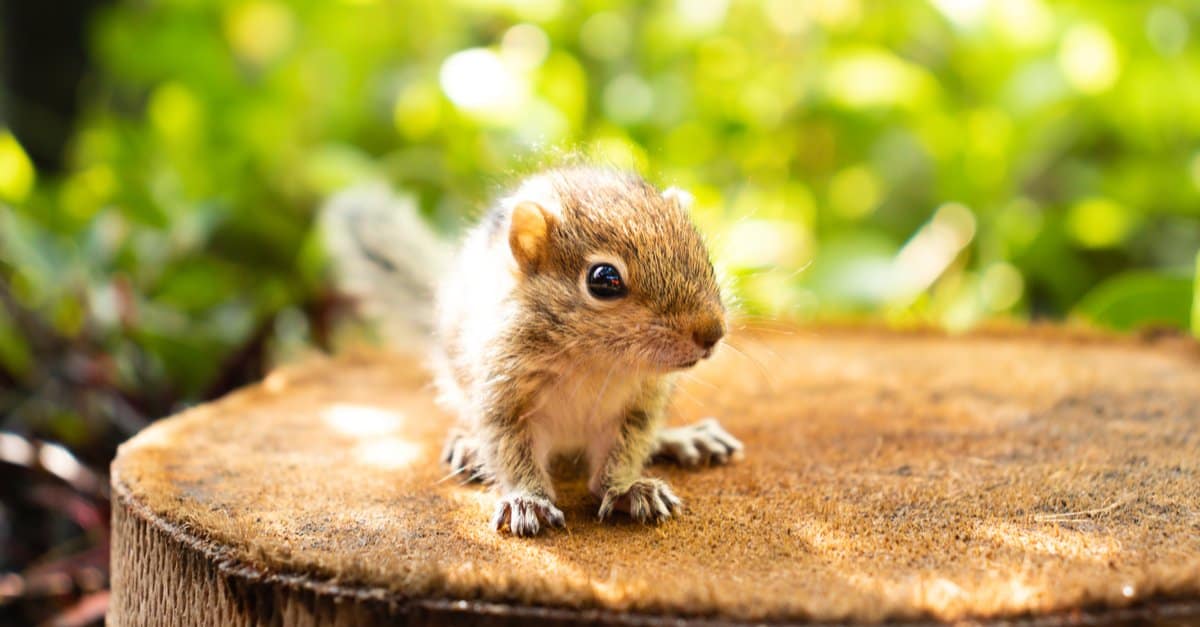

Baby squirrels are some of the smallest mammal babies in the animal kingdom, but they don’t remain helpless for long. These adorable, intelligent rodents can be found in a wide range of habitats all over the world, except in Antarctica and Australia. Keep reading to discover five incredible facts about baby squirrels and see 5 cute kit pictures.
#1: Squirrel Kits Are Born Naked, Blind, and Deaf
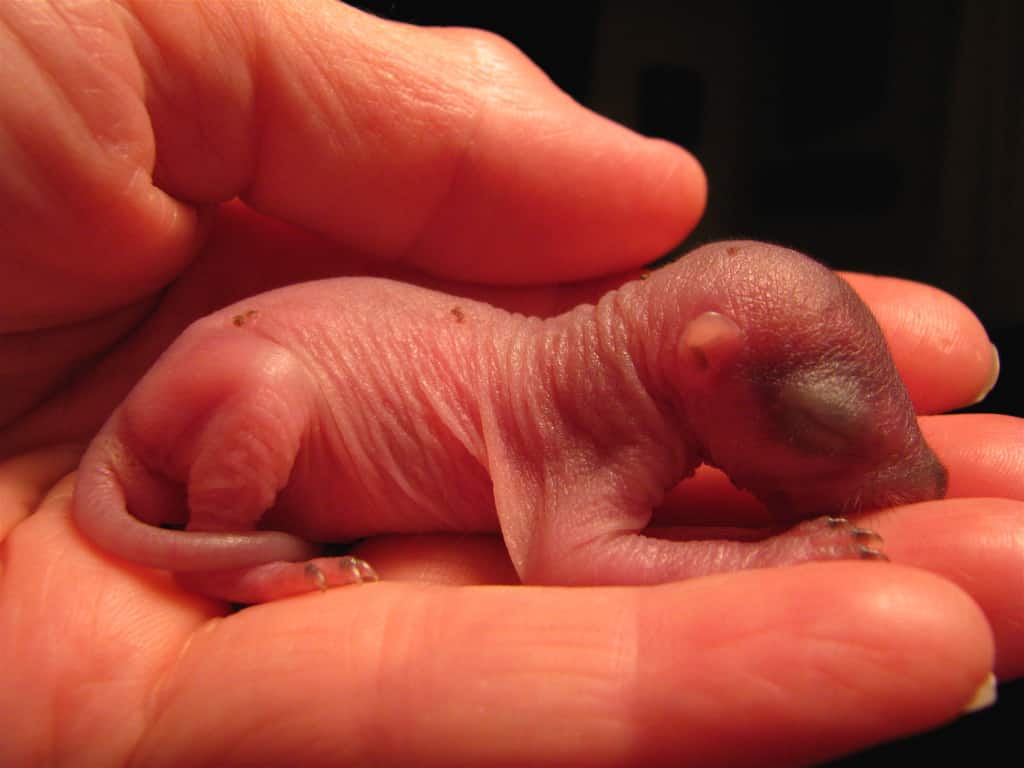
Baby squirrels do not have fur when they are born.
Like many mammals, squirrels are altricial. This means they are not fully developed at birth and are essentially helpless without a parent’s care. Baby squirrels are born pink and hairless, with both their eyes and ears closed. These tiny babies weigh only around 0.35 to 0.63 ounces.
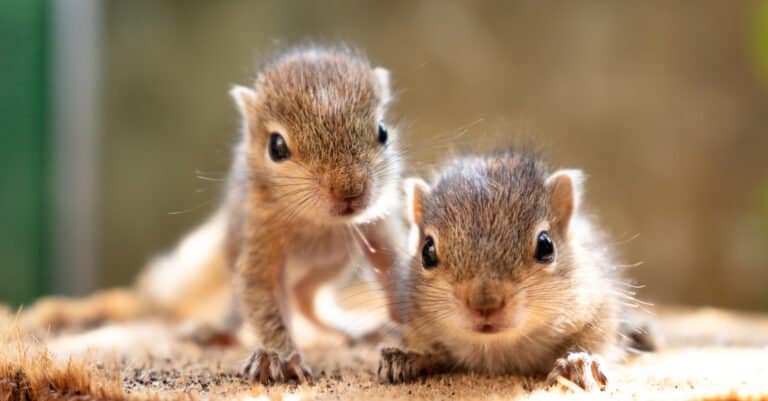
After about 14 days, they begin to develop skin pigment, and hair starts to grow on their backs. They have a full coat of hair by the time they are 3 to 4 weeks old. Their first teeth also erupt around 3 weeks of age. A squirrel kit’s eyes and ears typically open by around the fourth week.
#2: Squirrel Babies Are Independent Between 10 and 12 Weeks of Age
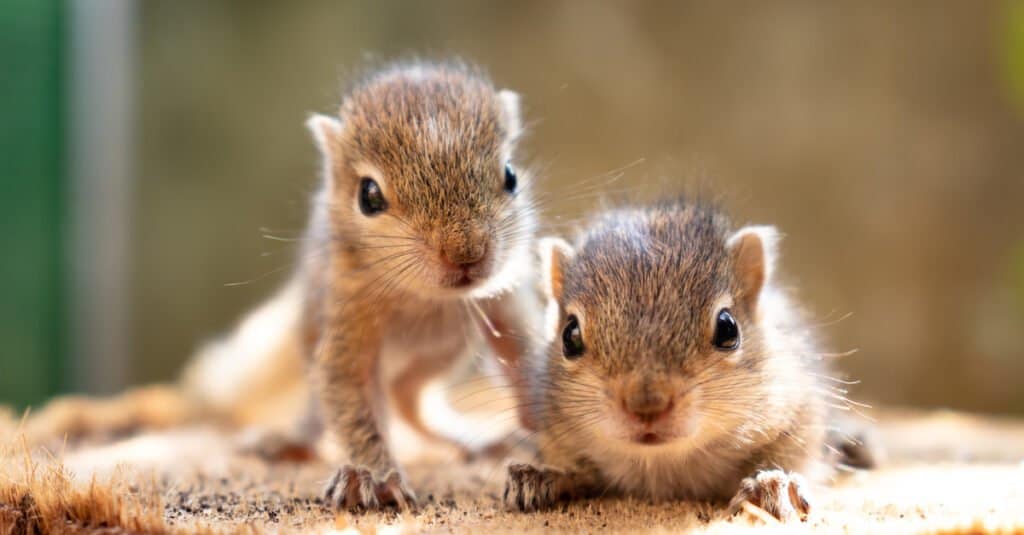
Squirrel kits grow quickly and become independent soon after they are weaned.
©Nilanka Sampath/Shutterstock.com
Unlike humans, squirrels mature relatively quickly. They are often seen venturing from the nest by 6 to 7 weeks of age. By this time, they are also able to consume solid foods such as seeds, nuts, and soft fruits. The kits are fully weaned by 10 to 12 weeks, when they have their full set of baby teeth, or milk teeth.
Once the babies are weaned, the mother leaves the kits in the breeding nest to fend for themselves. The babies grow their adult coats at around four months of age. They also lose their milk teeth and get their permanent teeth between 4 and 8 months old. Squirrels generally reach maturity at around 10 to 12 months old.
#3: Baby Squirrels’ Teeth Never Stop Growing
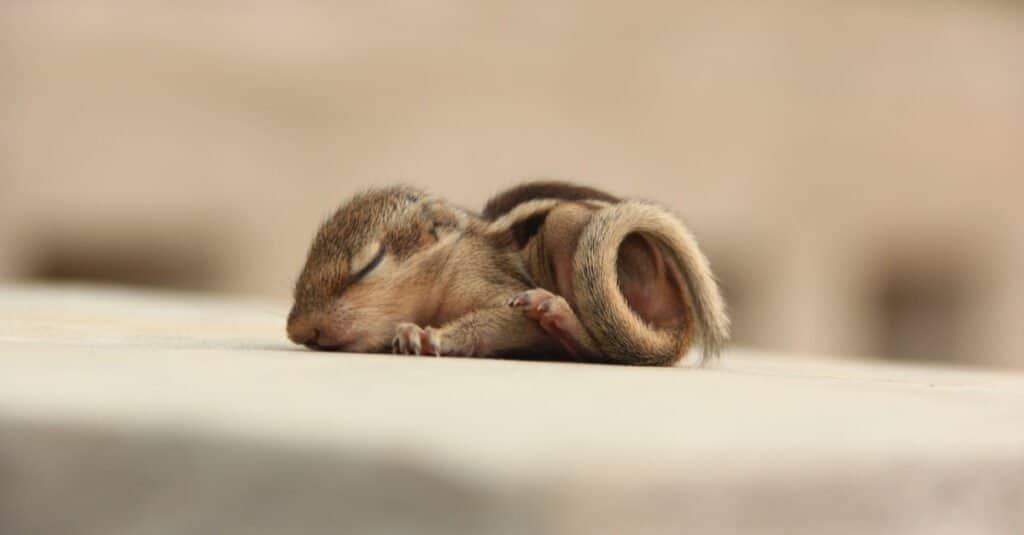
Baby squirrels get their milk teeth by 10 to 12 weeks, which are replaced by permanent teeth beginning around 4 months.
©Saptarshi Bhattacharyya/Shutterstock.com
As we mentioned above, baby squirrels get their permanent teeth between 4 and 8 months old. However, did you know that their teeth never stop growing? Squirrels are rodents, and like most rodents, their upper and lower incisors do not have roots like our teeth do. These teeth grow continually throughout their lives — as much as 6 inches per year.
This is why squirrels frequently grind their teeth. They also gnaw on the bark and the cambium layer of trees to help keep their teeth short and sharp. Their teeth are also very hard, allowing them to chew on hard foods like pinecones and acorn hulls.
#4: Baby Squirrels Cry for Their Mothers
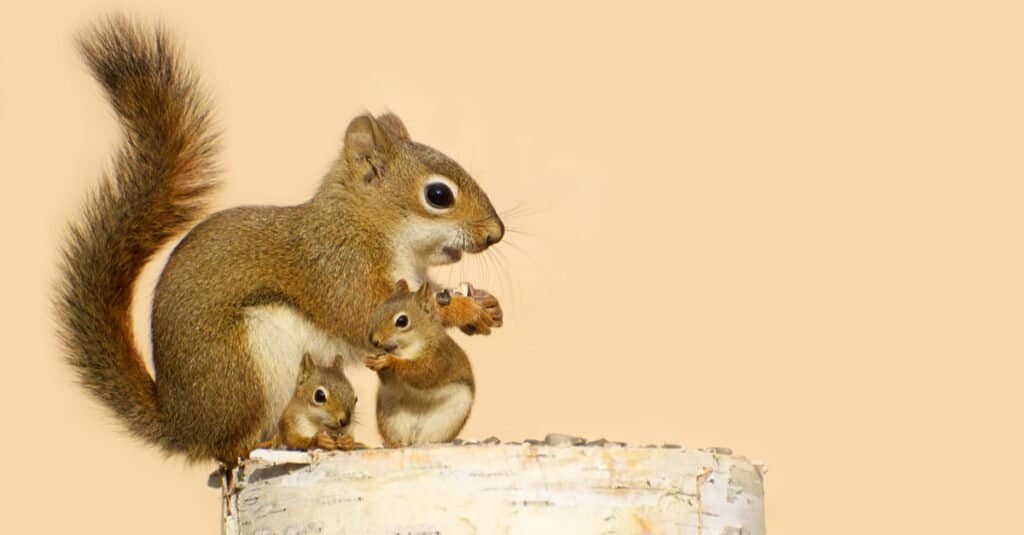
Young squirrels cry for their mothers just like human infants.
©KellyNelson/Shutterstock.com
Just like human babies, baby squirrels will cry for their mothers. These cries are typically soft and low to avoid attracting the attention of predators. Baby squirrels may chirp, squeak, or squeal when they are hungry or in distress.
Fortunately, female squirrels are attentive mothers. They usually respond quickly to their babies’ cries. They are also very protective and will fiercely defend their nest from intruders.
#5: Some Squirrel Babies Can Practically Fly

Baby flying squirrels begin leaping and gliding when they are around 8 weeks old.
©Tony Campbell/Shutterstock.com
There are over 280 species of squirrels, of which around 50 are flying squirrels. Flying squirrel babies don’t really fly, of course, but they can certainly glide. From the wrists of their front legs to the ankles of their hind legs, flying squirrels have a wing-like membrane covered in fur, called the patagium.
The patagium works similarly to a parachute. When they leap from the trees, they spread their arms and legs wide. The patagium slows their descent by creating more air resistance. They also use their tails to help them steer. Baby flying squirrels begin leaping and gliding short distances around the time they are weaned, which is about 8 weeks old.