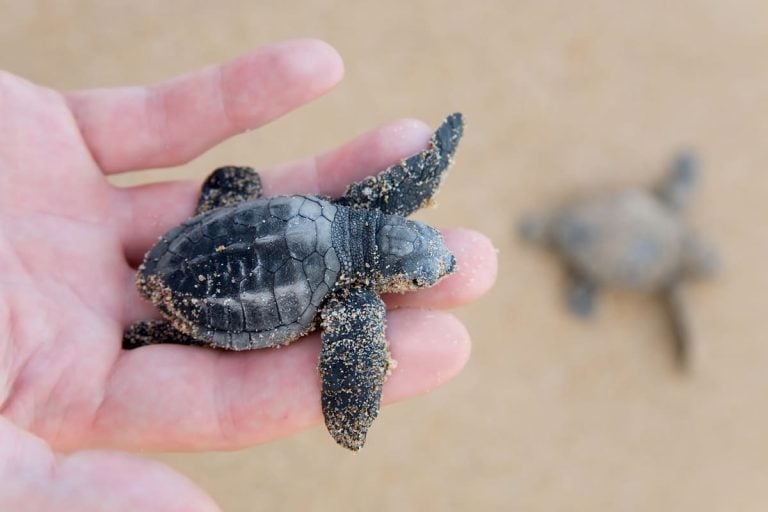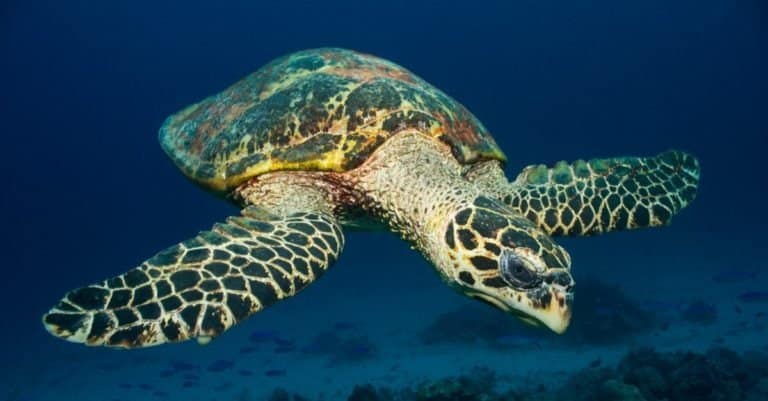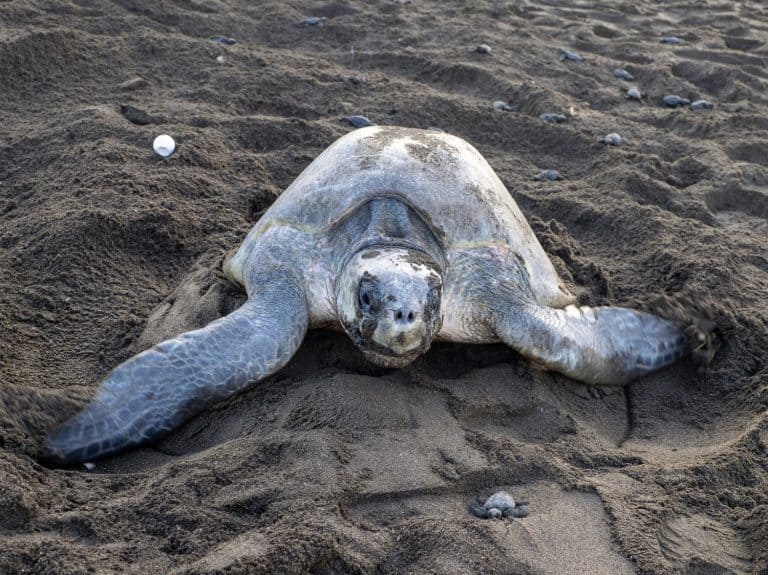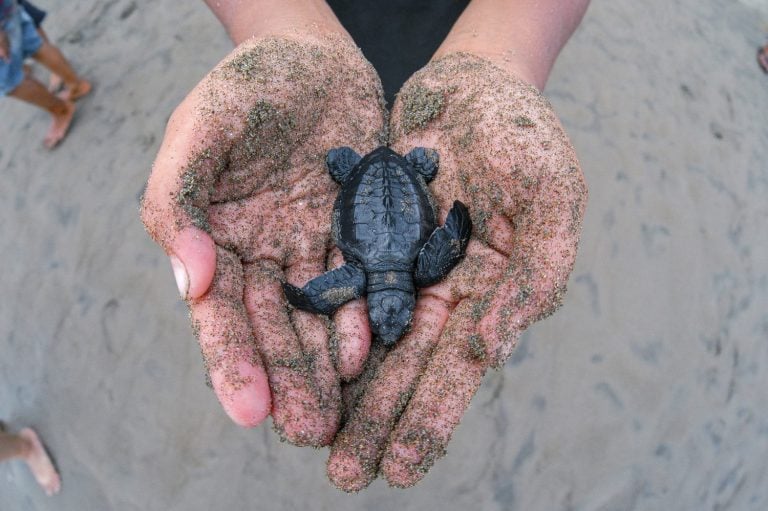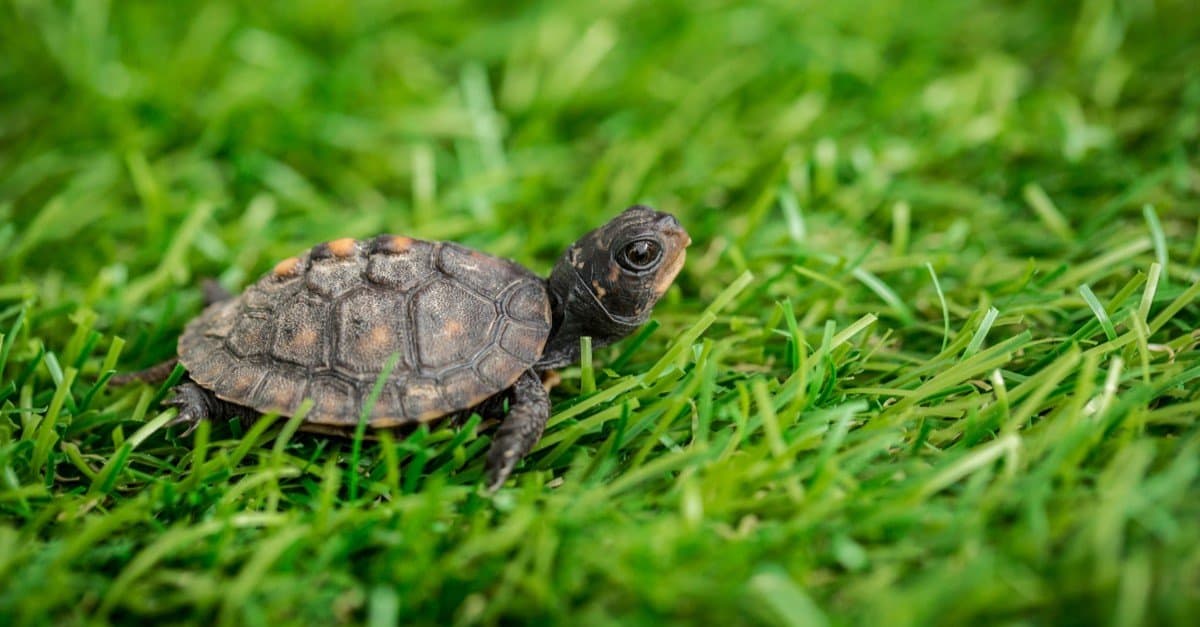

Baby turtles are some of the cutest shelled animals on Earth. However, did you know that sea turtles usually hatch at night? Or that they imprint on the magnetic field of the beach where they were born? We’ve uncovered many interesting facts about baby turtles, but here are five of our favorites, accompanied by five precious pictures.
#1: Baby Turtles Talk to Each Other Before They Hatch
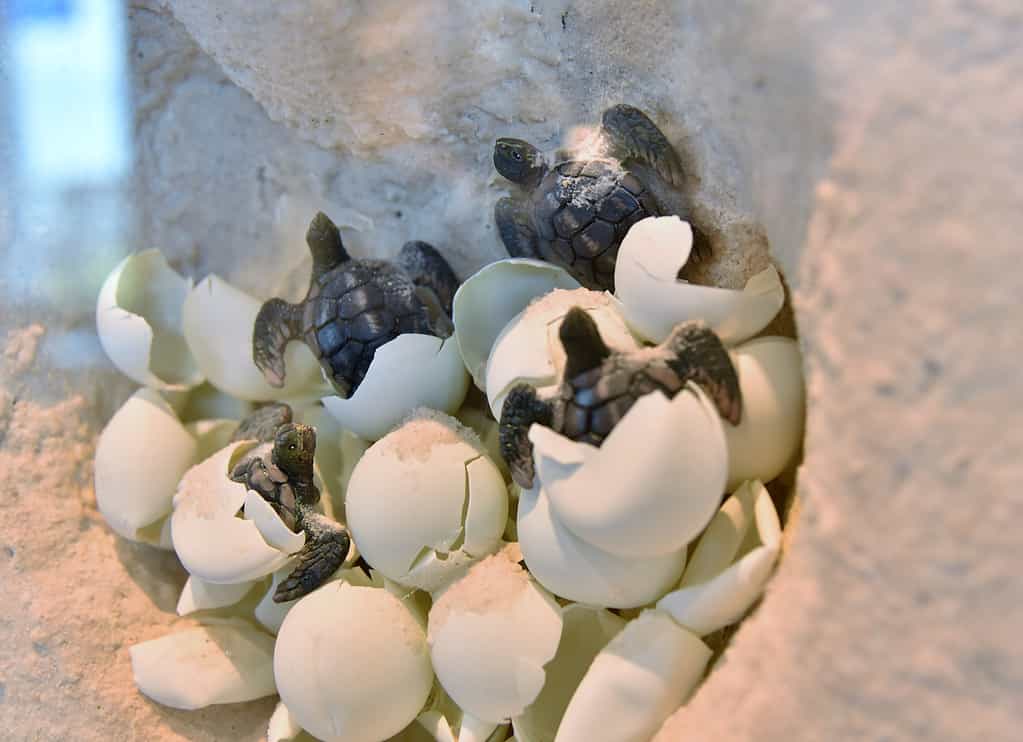
Baby turtles communicate with one another in their shells to coordinate synchronized hatching.
©Florida Chuck/iStock via Getty Images
The first characteristic that comes to mind when we think of baby turtle hatchlings is not how noisy they are. Turtles, in general, are not known to be very vocal. However, researchers have found that at least 47 species make some type of sound. Scientists studying leatherback sea turtles recorded over 300 unique sounds from turtles of all ages, even baby turtles that are still in their eggs.
Some turtles, such as the giant South American river turtle, talk to their babies before they hatch. Baby turtles also communicate with each other. Researchers believe they use sound to coordinate their hatching process. By hatching at the same time, they can work together to dig out of the nest, which decreases their energy expenditure and reduces the risk of predation.
#2: Hatchlings Have Baby “Teeth”
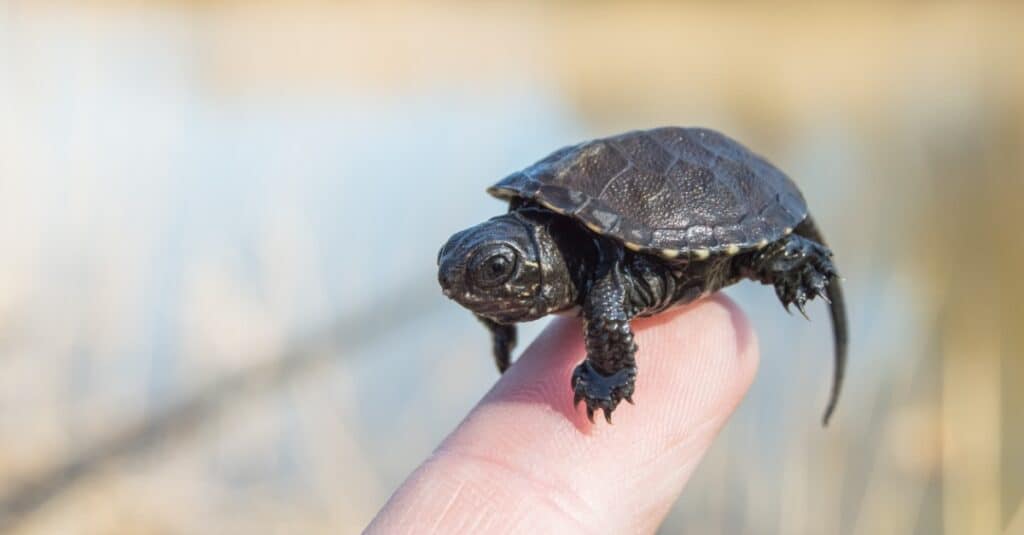
Turtle babies chip open their eggshells with a tooth-like extension on their beaks called an egg tooth.
©iStock.com/Shidlovski
Modern turtles don’t actually have teeth. However, fossils indicate that extinct turtles did have teeth as recently as 160 million years ago. Today, carnivorous turtles have strong, shark-like beaks to kill prey. Herbivorous turtles have flat beaks with serrated ridges that they use like teeth to tear and crush vegetation.
The only turtles with “teeth” are turtle hatchlings. Baby turtles have an egg tooth, called a caruncle, that they use to slice the egg membrane and chip open their eggshells. Many birds and reptiles have this sharp, tooth-like extension on their beaks or at the front of their upper jaws. In baby turtles, the egg tooth is made of tough, thick skin that protrudes from the tip of the beak. Turtles lose their egg tooth within a few weeks after hatching.
#3: Turtle Hatchlings Are Born Orphans
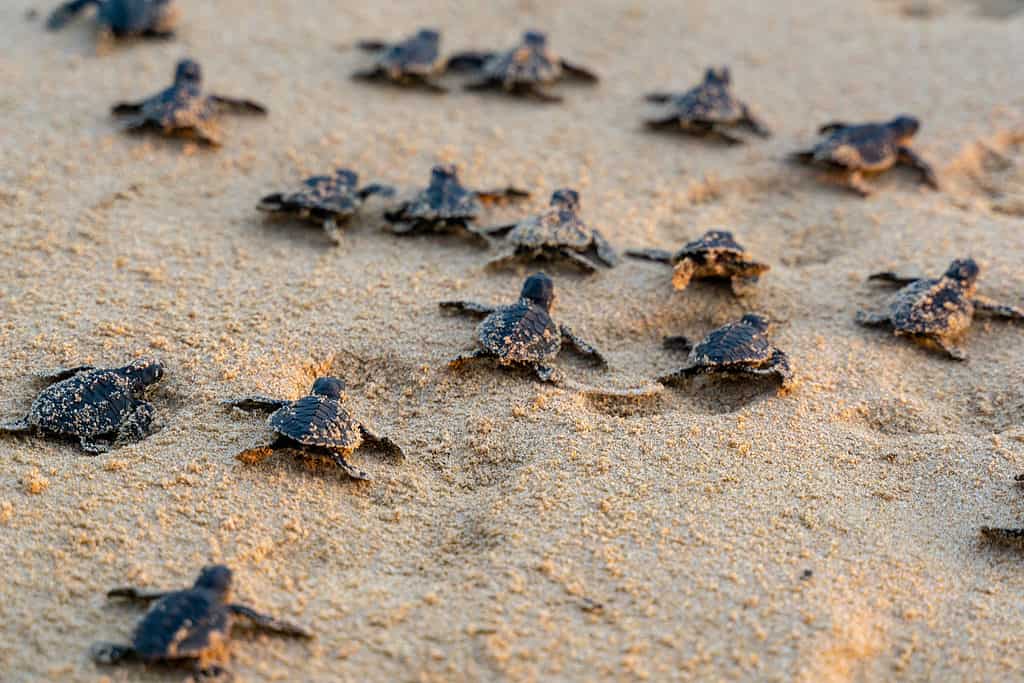
After hatching, sea turtles instinctively move toward the ocean.
©Julian Wiskemann/Shutterstock.com
All turtle species lay their eggs on land. When they are ready to lay their eggs, female sea turtles navigate using magnetic fields to return to the same beach or coastline where they were hatched. The female turtle digs her nest in the dirt or sand with her hind feet or flippers. Then she lays her eggs, covers the nest, and returns to her preferred habitat. Most turtle species do not provide parental care, so the hatchlings must fend for themselves.
However, turtle hatchlings are precocial, meaning they are relatively developed and independent as soon as they hatch. After breaking out of their eggs, the turtles dig their way up to the surface. Then, most hatchlings instinctively make their way to the water to search for food and shelter.
#4: The Sex of a Baby Turtle Is Determined by Temperature
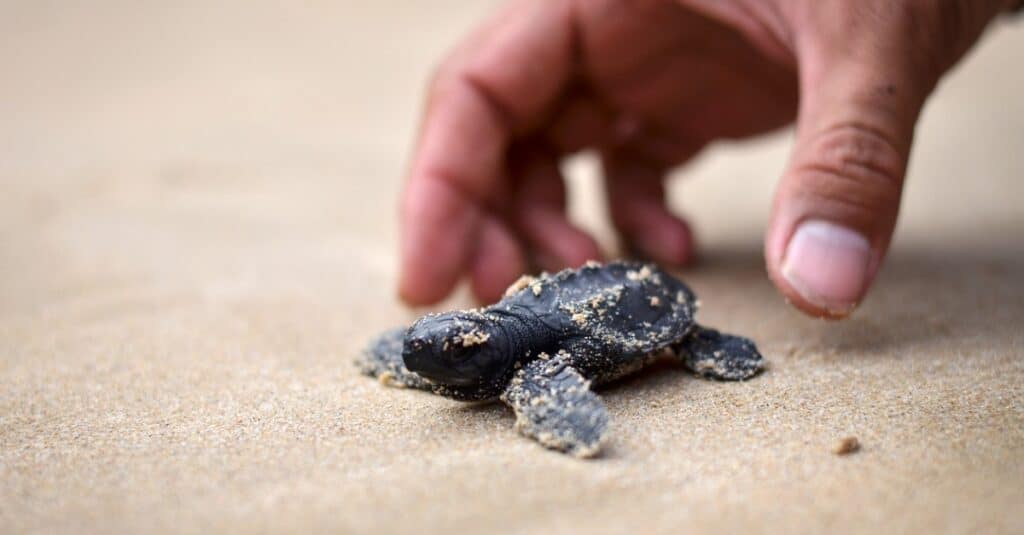
The incubation temperature determines the sex of turtle hatchlings.
©iStock.com/Riza Azhari
Most turtles lack sex chromosomes. This means their sex is determined after fertilization during the incubation period. The process is known as temperature-dependent sex determination (TSD).
For example, in sea turtles, eggs that are incubated below around 82°F will be male, while eggs incubated above approximately 89°F will be female. If the temperature varies, the clutch will contain a mix of males and females. Scientists have also found that the warmer the temperature of the sand or dirt, the more likely the hatchlings are to be female.
#5: Turtle Hatchlings Belong to One of the Oldest Animal Groups in the World
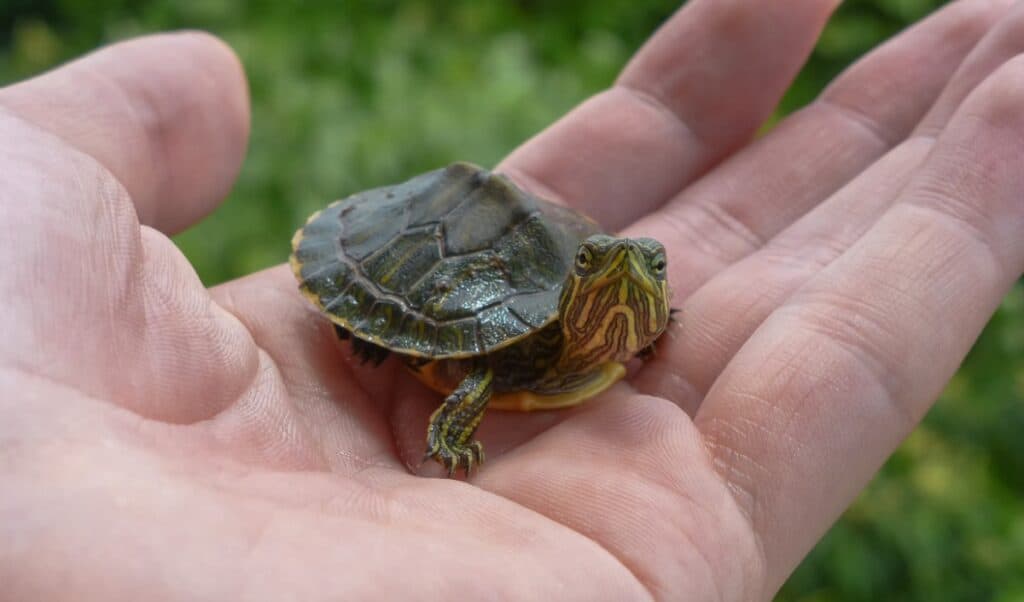
Turtles have existed on Earth for at least 260 million years.
©iStock.com/Pablo Solís Fernández
All species of the order Testudines, which includes terrapins and tortoises, are considered “turtles.” Turtles have existed on Earth for hundreds of millions of years, making them one of the oldest groups of reptiles. Researchers believe the earliest turtles emerged during the Permian Period around 260 million years ago. The first dinosaurs appeared during the Triassic period around 245 million years ago, which means turtles preceded dinosaurs by about 15 million years.
Researchers believe that turtles were able to survive two mass extinction events because their slow metabolisms allowed them to live on fewer resources. They also believe that living in aquatic habitats helped protect ancient turtles from the catastrophic events occurring on Earth’s surface.