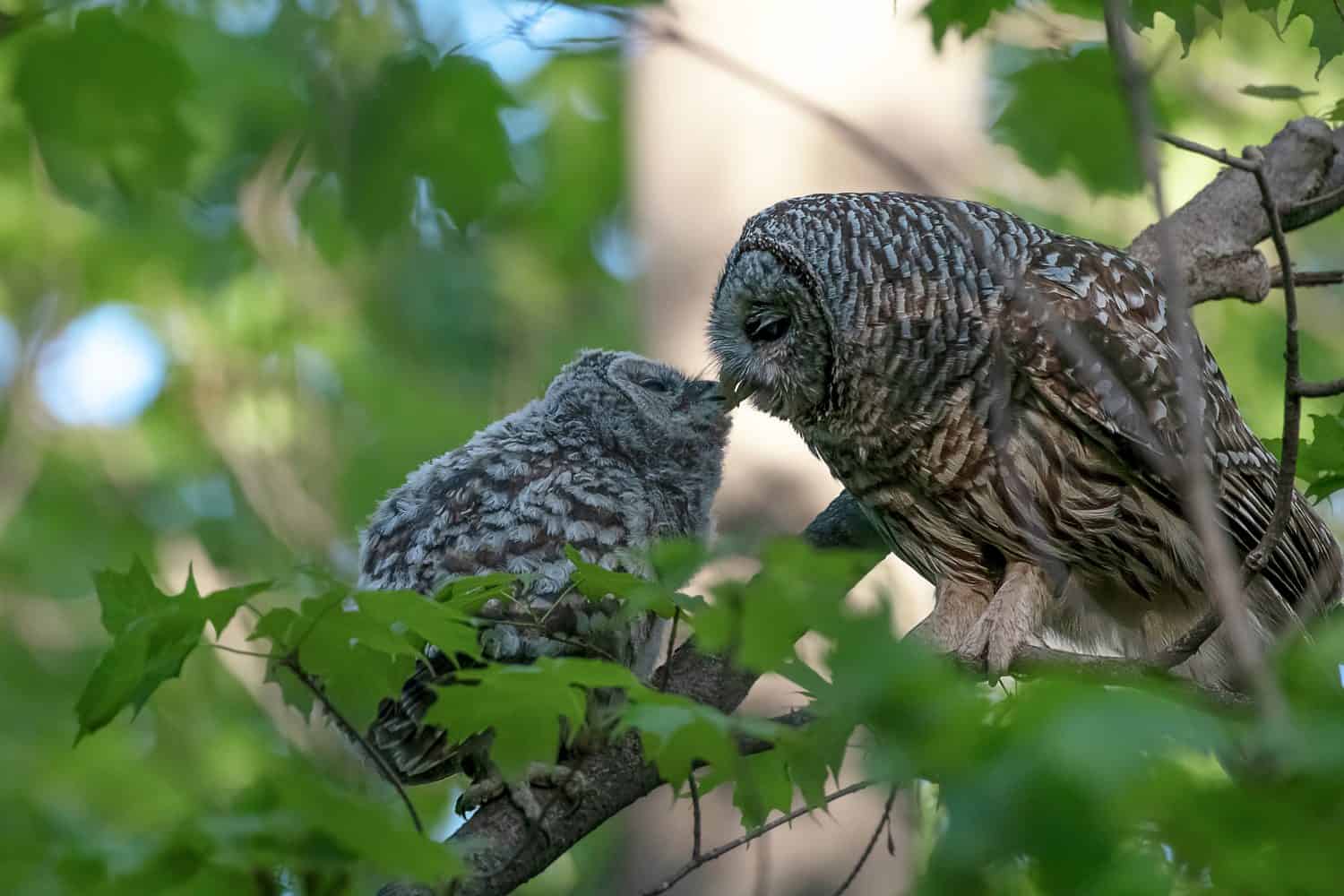

Quick Take
- Barred owl chicks have a specific behavior that keeps their parents in a near-constant state of panic, and this behavior goes on all night long. Hear the nonstop noise →
- The father barred owl's role in this family is not what you'd expect from a bird of prey. See the father's role →
- Long after the chicks learn to fly, the mother's work is far from over. Discover the full timeline →
It doesn’t matter the species; parenting is tough work for anyone. It will push you to your limit, make you question your life choices, and may even make your hair fall out from the pure, never-ending stress. In this Instagram video, a mama barred owl sits in a nest surrounded by chicks. While her young stay close to her feet, the mother looks up at the camera with an unmistakable look.
Perhaps it’s the group of chicks clustered at her feet. Or maybe it’s the feathers stuck haphazardly around her face. Whatever it is, the bird gives the camera a look like, “What have I gotten myself into?” It’s the type of expression that any mother can instantly recognize. However, being a mother is no easy feat, especially if you are a barred owl. Let’s learn why.
Preparing the Nest
Owls may seem like pretty solitary creatures, but barred owls often mate for life. Usually, mating pairs mate in late winter, well into March. Once everything is a go, the female barred owl enters a sort of drowsy pre-breeding stage where she is personally fed by her male partner.
When female barred owls lay eggs, they usually lay between two and three eggs, though up to five are possible. Then, she sits on her pure white, slightly rough-textured eggs for about 28 days. During that entire period, the male partner acquires food for her. Often, mothers lay eggs at intervals so chicks hatch at different times.
Early Motherhood
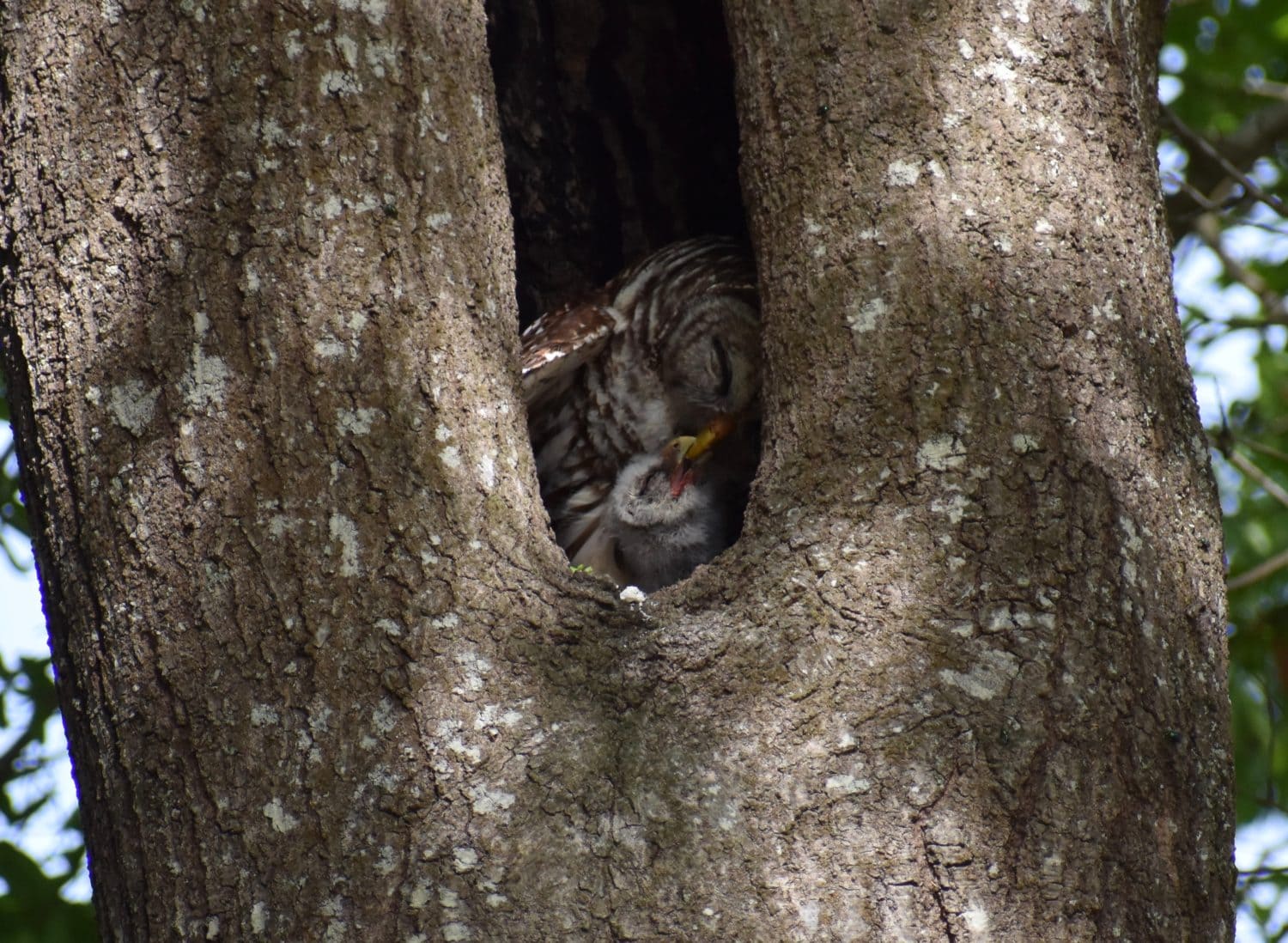
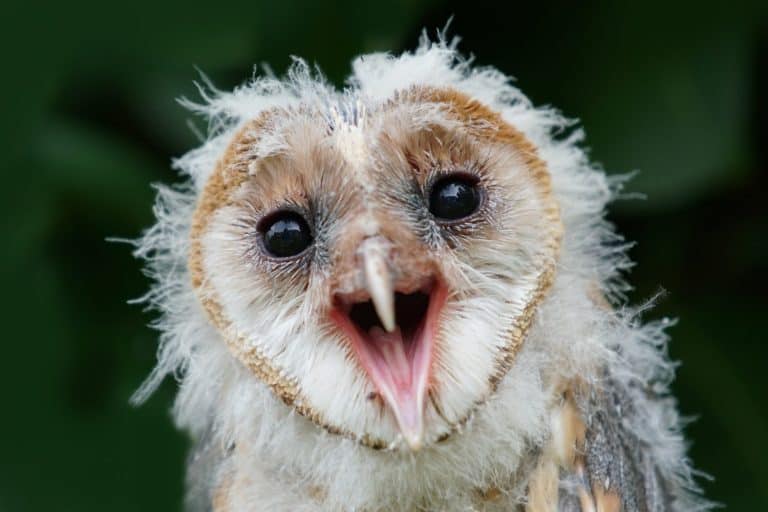
While all babies are needy, barred owl chicks scream constantly for food.
©Alexis Sheffield/Shutterstock.com
In this Instagram video, a barred owl gives an exhausted look at a nest camera while she broods her chicks, complete with feathers stuck to her face. While all babies can be demanding, barred owl chicks are especially vocal when expressing their needs. Additionally, barred owls often experience asynchronous hatching, which means older, larger chicks can be more demanding and aggressive than their younger siblings during feeding times.
In general, barred owl chicks are quite loud and persistent. They engage in calls throughout the night as a form of food begging, the likes of which tend to keep their parents in a state of constant, low-level panic. Mother barred owls rarely leave the nest during the first two weeks, as they need to use their body heat to regulate their chicks’ temperature. During this time, the father hunts for prey and delivers meals to the family, which the mother then tears into tiny, bite-sized pieces for the chicks.
Is It Really That Exhausting?
In short, yes. This Instagram video provides a glimpse into a situation that all mothers have experienced: being absolutely exhausted while taking care of babies. Barred owl chicks are especially exhausting, as they constantly screech for food. Once the chicks can regulate their own temperature, they move away from their mother’s body but remain in the nest for about four to five weeks.
Even after they have learned to fly, the chicks will stick pretty close to home. In fact, mother barred owls will continue to feed and protect their young for up to four months after hatching. While the feathers on her face in the video are probably from a prey animal, the look in the barred owl mother’s eyes is unmistakable. By the time her chicks are old enough to care for themselves, the mother will have spent over six months in a state of near starvation and constant vigilance.