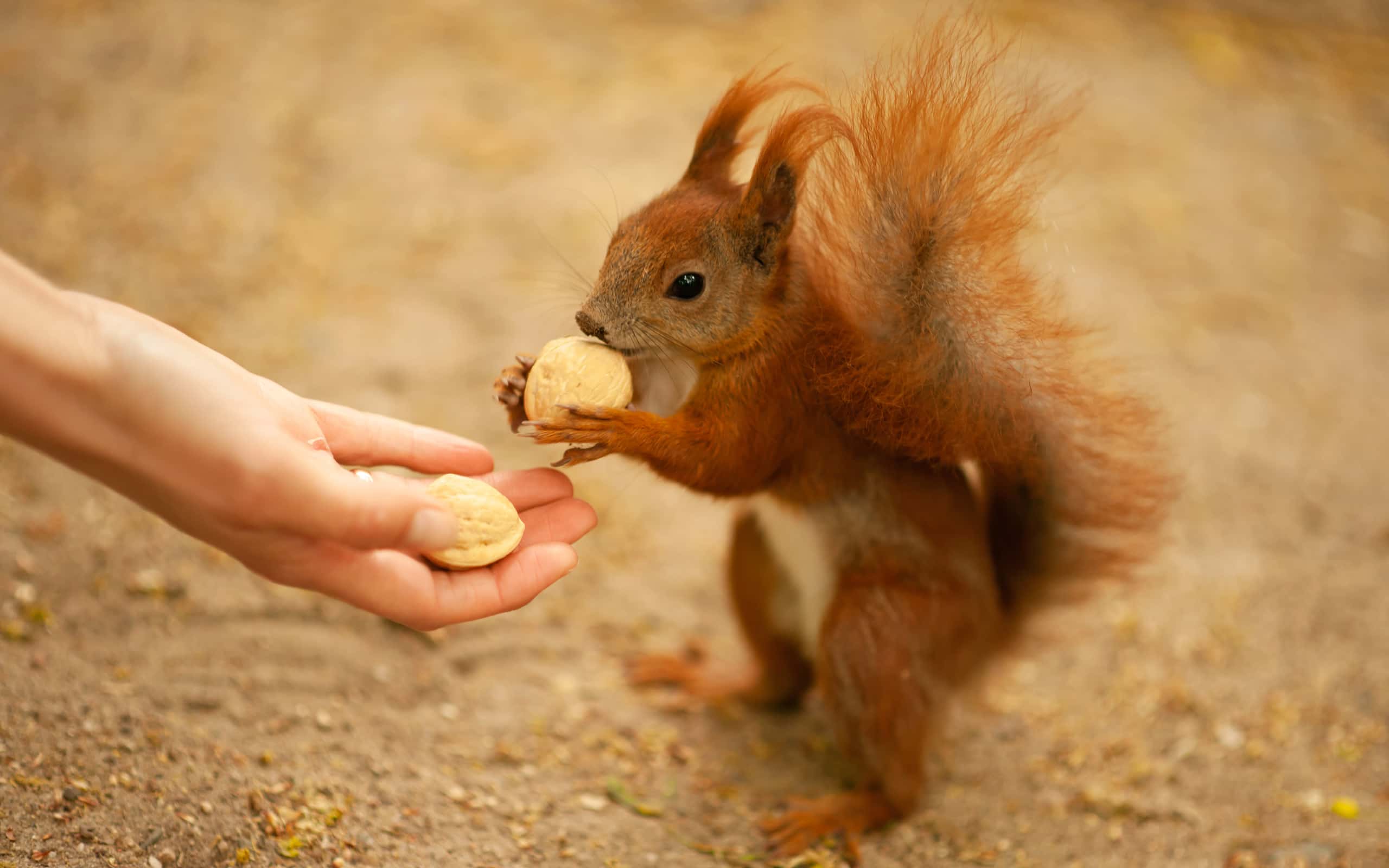

Is there any rodent species more ever-present and loved by humans than the adorable squirrel? Squirrels belong to the Sciuridae family, which is made up of small rodents like chipmunks, prairie dogs, groundhogs, and, of course, both tree- and ground-dwelling squirrels. There are over 200 species of squirrels around the world, ranging in size from the tiny pygmy squirrel, weighing less than two ounces, to the black giant squirrel, weighing nearly 3 pounds. These delightfully curious animals love to hang out in our backyards and gardens, and over time, they’ve adapted to eat a wide variety of foods to survive and thrive. So what do these adorable rodents eat?
What Squirrels Eat
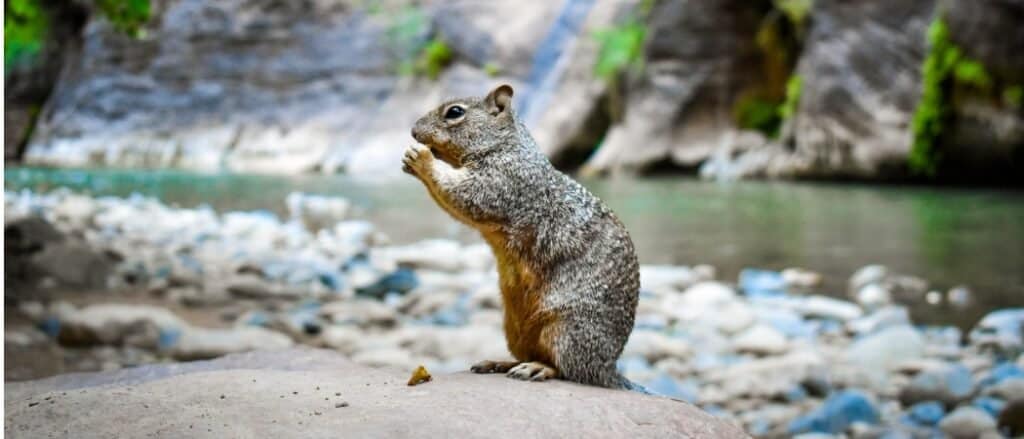
Squirrel eating by the water.
©iStock.com/Gabriel Mash
Squirrels are technically omnivores, which means they eat both plant and animal matter. However, they tend to have a preference for plant-based foods that are rich in carbs, fats, and protein, such as nuts, fruits, and grains. Squirrels only eat other animals like mice and lizards when they are desperate and can’t find anything else.
Still, though, they’re highly opportunistic and surprisingly skilled problem solvers, so they’ll happily chow down on any of the following foods they manage to find in their many varied habitats:
- Nuts of any kind, including peanuts, walnuts, almonds, cashews, hazelnuts, etc.
- Fungi like truffles and oyster mushrooms
- Seeds
- Roots
- Grains
- Grasses and leaves
- Small fruits, primarily wild berries
- Insects like caterpillars and crickets
- Bird eggs
- Mice
- Vegetables like corn and squash
- Leafy greens, such as kale, spinach, and lettuce
- Flowers
- Small lizards and snakes (rarely)
Although squirrels are unable to properly digest cellulose (an organic compound found in most green plants), they will still often eat them. This is especially true during early spring, when most of the nuts they stocked up on have started sprouting or rotting away, and a lot of the other foods they eat, like fruits and vegetables, aren’t yet readily available.
Additionally, urban squirrels will frequently eat food scraps found in dumpsters and around areas where humans congregate, though this isn’t beneficial to their health and is more of a survival tactic.
Squirrel Foraging
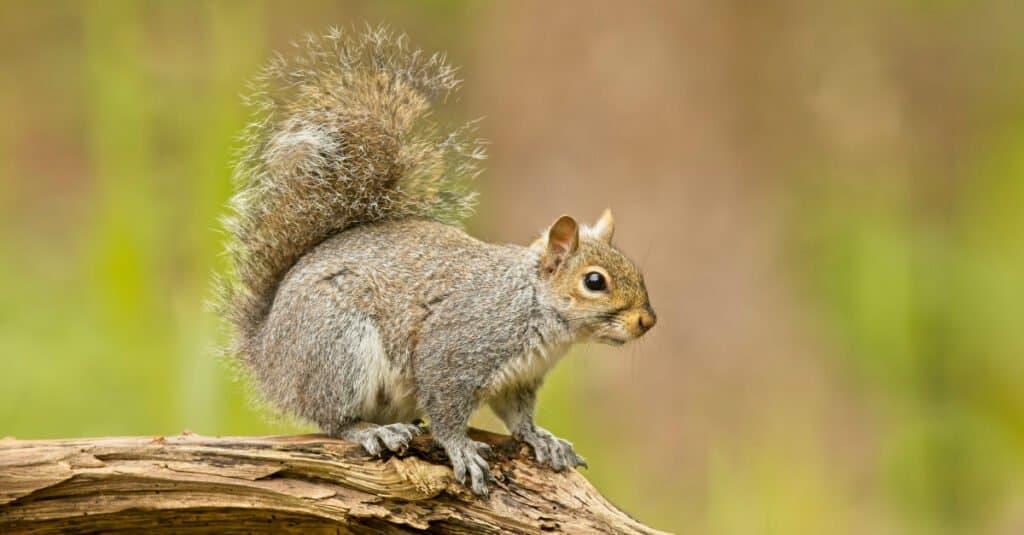
Squirrels rely on their sense of smell to find the caches in which they hoard their food.
©iStock.com/birdsonline
Squirrels have an excellent sense of smell and very good vision, both of which they rely on to scout out their favorite foods. To survive the harsh winter months, many squirrels will bury food in various locations during warmer weather to come back to later. This ensures a steady supply of food, even when things start to get tough and most of the things they eat become exceedingly scarce.
Their keen sense of smell is also how squirrels can find what they’ve hoarded and buried. Scent isn’t the only way they track down the nuts and other goodies they’ve buried, though; studies have shown that many species of squirrels can remember distinct food cache locations for weeks or even months.