
Quick Take
- Tarantulas are only found in Southern Europe because they need warmer temperatures to survive.
- Monocentropus balfouri can only be found on the remote island of Socotra off the coast of Yemen.
- Satyrex males have the longest palps (leg-like appendages near the mouth) of all known tarantula species.
- Chaetopelma olivaceum, also known as the black furry tarantula, is the most widely distributed Chaetopelma species across the Middle East.
Tarantulas are ectothermic, which means they cannot regulate their own body temperatures. They require warmer temperatures for a stable metabolism. Therefore, in Europe, tarantulas are found only in southern regions, such as Spain and Italy. Despite the warmer climate, habitat limitations such as extreme heat and geological barriers mean that comparatively fewer tarantula species are supported in the Middle East.
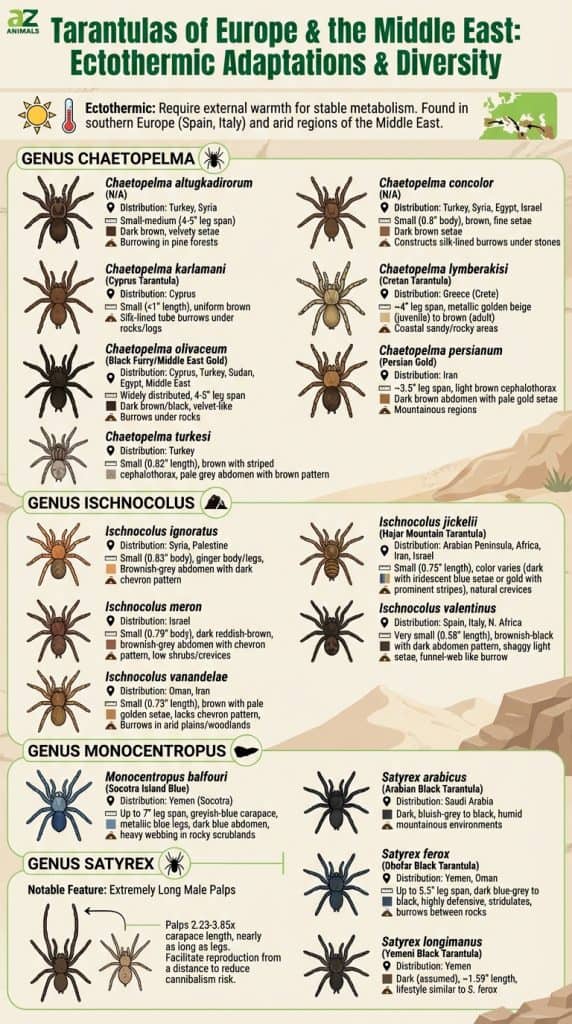
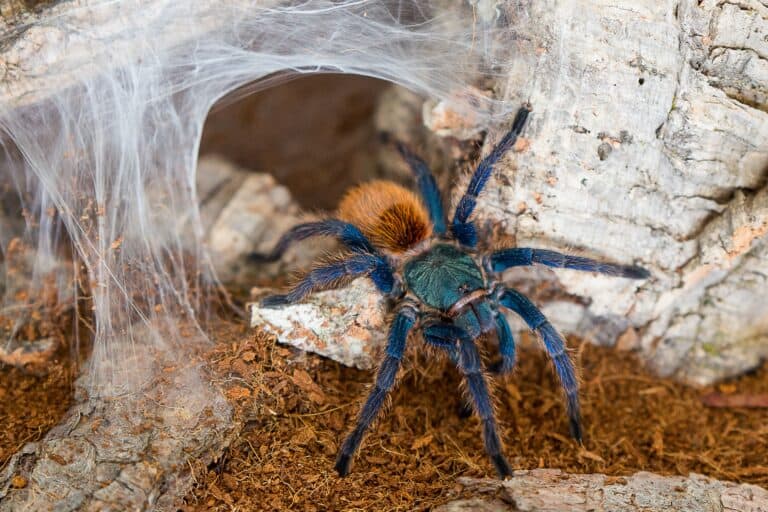
From metallic blue legs to specialized palps that prevent cannibalism, these desert survivors evolved the ultimate toolkit for a high-stakes life.
©A-Z Animals
However, species like Chaetopelma have adaptations that allow them to thrive in arid regions. The following list includes all currently recognized tarantula species in Europe and the Middle East according to the World Spider Catalog as of December 2025. For a comprehensive reference, see our complete list of tarantula species.
Chaetopelma Ausserer, 1871
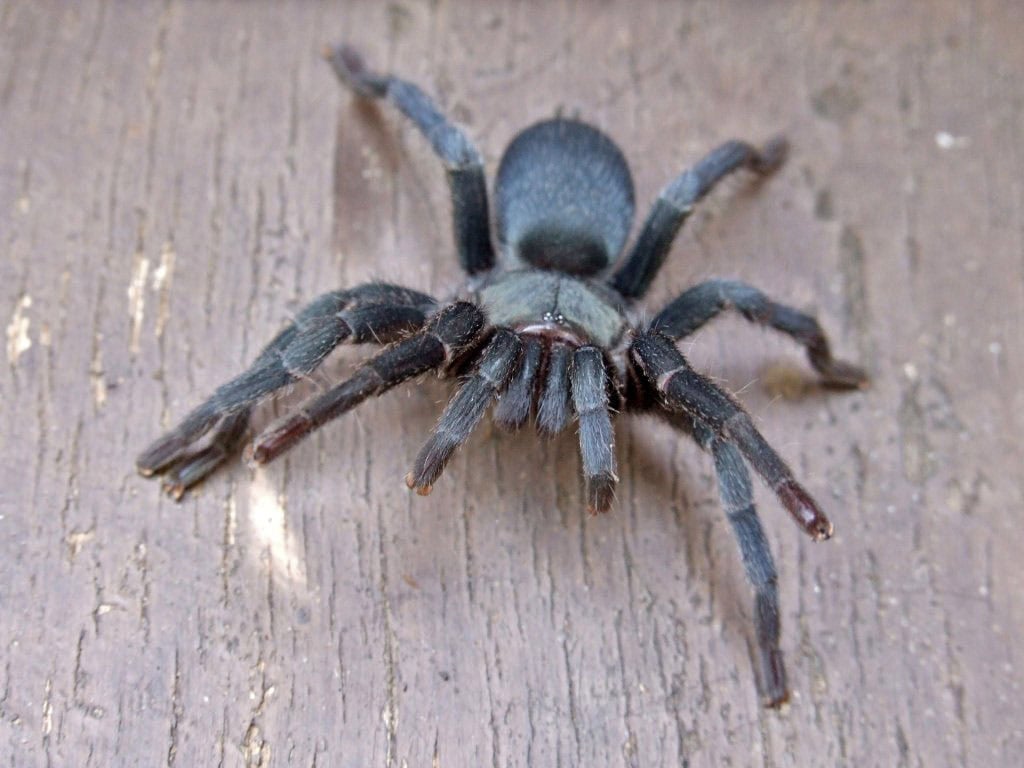
The black furry, or Middle East gold tarantula, is primarily found around the Eastern Mediterranean and Middle East.
Chaetopelma altugkadirorum Gallon, Gabriel & Tansley, 2012
- Common name: N/A
- Distribution: Turkey, Syria
Chaetopelma altugkadirorum is a small to medium-sized burrowing spider that inhabits the border region between Turkey and Syria. These spiders are often found in pine forests under decaying tree stumps. They are dark brown and covered in short, velvety-looking hairs (setae). Their abdomen and legs have long, pale guard setae. Ch. altugkadirorum adults typically reach around 4-5 inches in leg span.
Chaetopelma concolor (Simon, 1873)
- Common name: N/A
- Distribution: Turkey, Syria, Egypt, Israel
Chaetopelma concolor is a relatively small tarantula species that only reaches about 0.8 inches in total body length. It is brown overall and covered in fine setae. This spider constructs silk-lined burrows under stones and rocks, often in pine forests.
Chaetopelma karlamani Vollmer, 1997
- Common name: The Cyprus tarantula
- Distribution: Cyprus
Chaetopelma karlamani is also a smaller Chaetopelma species, reaching just under 1 inch in total length. These tarantulas inhabit silk-lined tube burrows under rocks, leaf litter, and logs. They are only known from the island of Cyprus, located south of Turkey in the Eastern Mediterranean Sea. They are a uniform brown and covered in short setae.
Chaetopelma lymberakisi Chatzaki & Komnenov, 2019
- Common name: Cretan tarantula
- Distribution: Greece (Crete)
Chaetopelma lymberakisi is a burrowing spider found in rocky, sandy areas along the coast. However, it has also been observed in rocky crevices and sparse pine forests in the Lefka Ori mountains of Western Crete. This tarantula is a metallic, golden beige as a juvenile before darkening to brown as an adult. They have a leg span of around 4 inches.
Chaetopelma olivaceum (C. L. Koch, 1841)
- Common name: Black furry, black tarantula, Middle East gold, and Cyprus giant
- Distribution: Cyprus, Turkey, Sudan, Egypt, Middle East
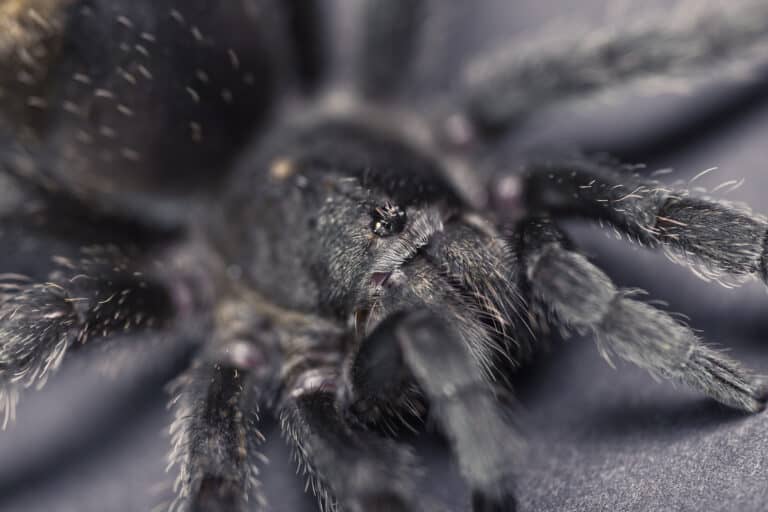
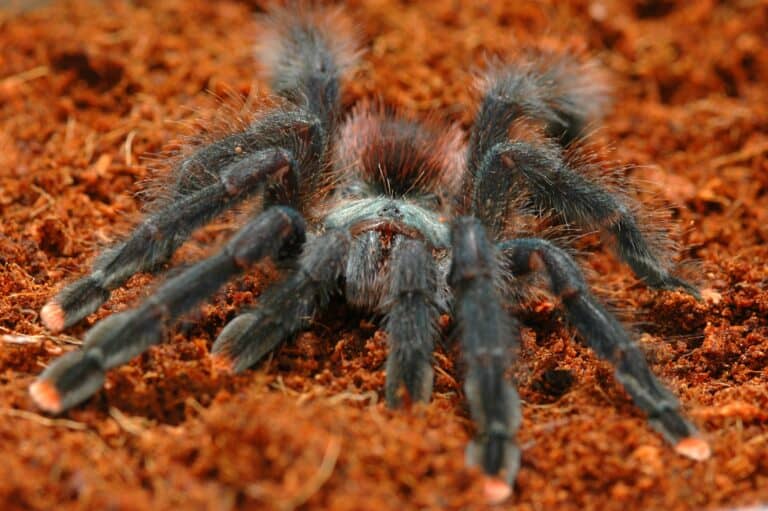
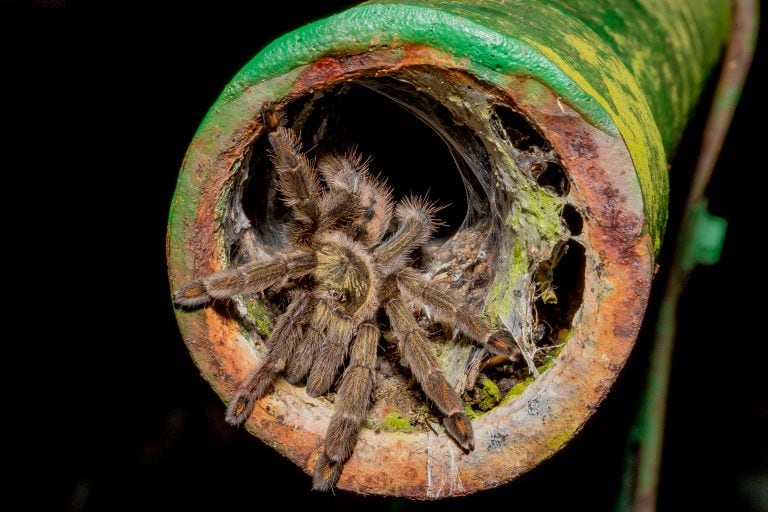
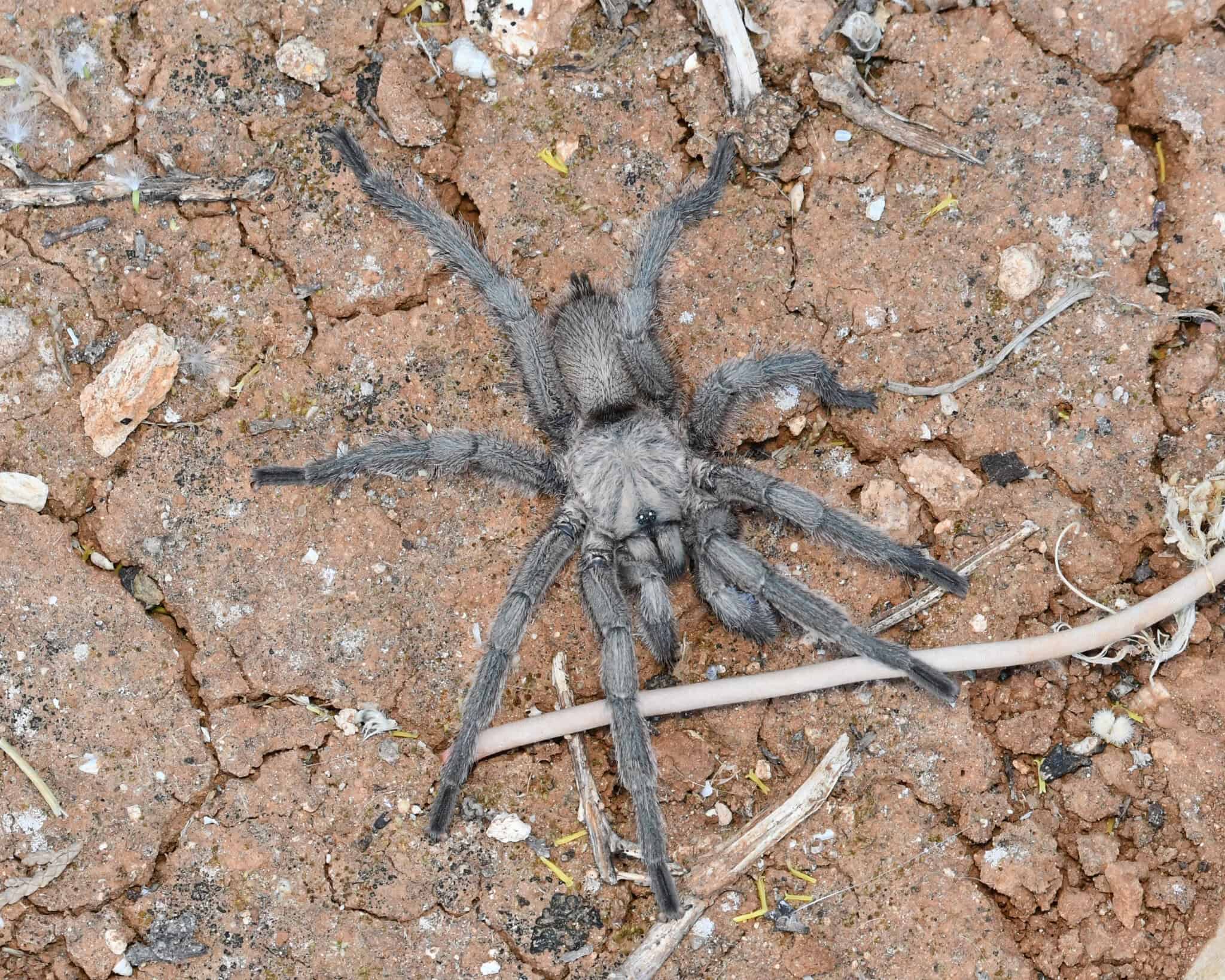
Chaetopelma olivaceum is the most widely distributed Chaetopelma species. It has a total body length of about 2 inches and a leg span of 4-5 inches. They are typically dark brown, grey, or black in color and are covered in tiny setae, giving them a velvet-like appearance. Observers note that they may vary in size and color throughout their range. Ch. olivaceum constructs silk-lined burrows under rocks and stones
Chaetopelma persianum Zamani & West, 2023
- Common name: Persian gold
- Distribution: Iran
Chaetopelma persianum is a recently described species known from the Zagros Mountains in northwestern Iran. It measures around 1.4 inches in total body length with a leg span of around 3.5 inches. This burrowing species inhabits densely vegetated mountainous regions. It has a light brown cephalothorax and a dark brown abdomen with long, pale gold setae on its legs and abdomen.
Chaetopelma turkesi Topçu & Demircan, 2014
- Common name: N/A
- Distribution: Turkey
Chaetopelma turkesi is a smaller Chaetopelma species, reaching just 0.82 inches in total length. It is brown with a striped pattern on its cephalothorax, and its abdomen is pale grey with a brown pattern. It is covered in fine, velvety setae. Like other Chaetopelma species, it is typically found in burrows under stones. Ch. turkesi is known from Hatay province, Turkey.
Ischnocolus Ausserer, 1871
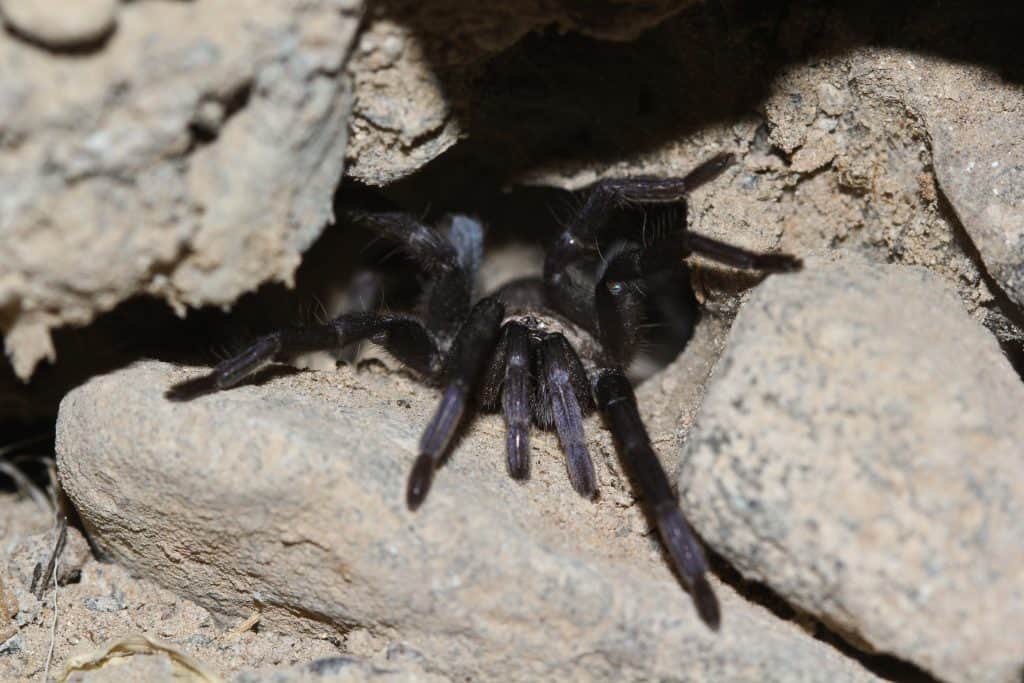
The Hajar Mountain tarantula, Ischnocolus jickelii, is a small tarantula native to the Arabian Peninsula and Africa.
Ischnocolus ignoratus Guadanucci & Wendt, 2014
- Common name: N/A
- Distribution: Syria, Palestine
Ischnocolus ignoratus is a small spider with a total body length of around 0.83 inches. It has a ginger colored body and legs and a brownish-grey abdomen with a dark brown chevron pattern. It is also covered in fine, ginger-colored setae. This burrowing tarantula inhabits low foothills with tall, dense shrubland or open pine woodlands.
Ischnocolus jickelii L. Koch, 1875
- Common name: The Hajar Mountain tarantula or Dhofar blue dwarf
- Distribution: Ethiopia, Eritrea, Djibouti, Somalia, Yemen, Saudi Arabia, Oman, United Arab Emirates, with additional records reported from Iran and Israel
Ischnocolus jickelii is a small tarantula, reaching only about 0.75 inches in total length. Some specimens from the UAE and Oman have dark carapaces, faded stripe marks on the abdomen, and iridescent blue setae on their palps and legs. Spiders from other localities have gold carapaces, prominent stripes on their abdomens, and clear setae on their palps and legs. These tarantulas make their burrows in natural crevices or under large rocks, low shrubs, or inside the stumps of dead trees.
Ischnocolus meron Zonstein, 2023
- Common name: N/A
- Distribution: Israel
Ischnocolus meron has a total body length of 0.79 inches. This tarantula has a dark, reddish-brown body and legs and a brownish-grey abdomen with a dark brown chevron pattern. It is also covered in brown setae. It inhabits low shrubs near wadis and in the natural crevices or burrows under large rocks.
Ischnocolus valentinus (Dufour, 1820) Type Species
- Common name: N/A
- Distribution: Spain, Italy (Sicily), Morocco, Algeria, Tunisia, Libya
Ischnocolus valentinus is a very small species, reaching only 0.58 inches in total length. It is a uniform brownish-black tarantula with a dark pattern on its abdomen and long, shaggy, light-colored setae. These spiders make their burrows in natural cavities under and among rocks and tree roots. I. Valentinus typically covers the entrance with a thick sheet of webbing similar to that of a funnelweb spider.
Ischnocolus vanandelae Montemor, West & Zamani, 2020
- Common name: N/A
- Distribution: Oman, Iran
Ischnocolus vanandelae measures around 0.73 inches in total length. This spider is brown with short, pale golden setae on the body, with legs being slightly darker. However, it lacks the chevron pattern on the abdomen seen in many other Ischnocolus species. These spiders have been found to excavate burrows under large rocks in rocky, arid plains with sparse, low shrubs. They have also been observed in grasslands and evergreen woodlands at the base of large trees.
Monocentropus Pocock, 1897
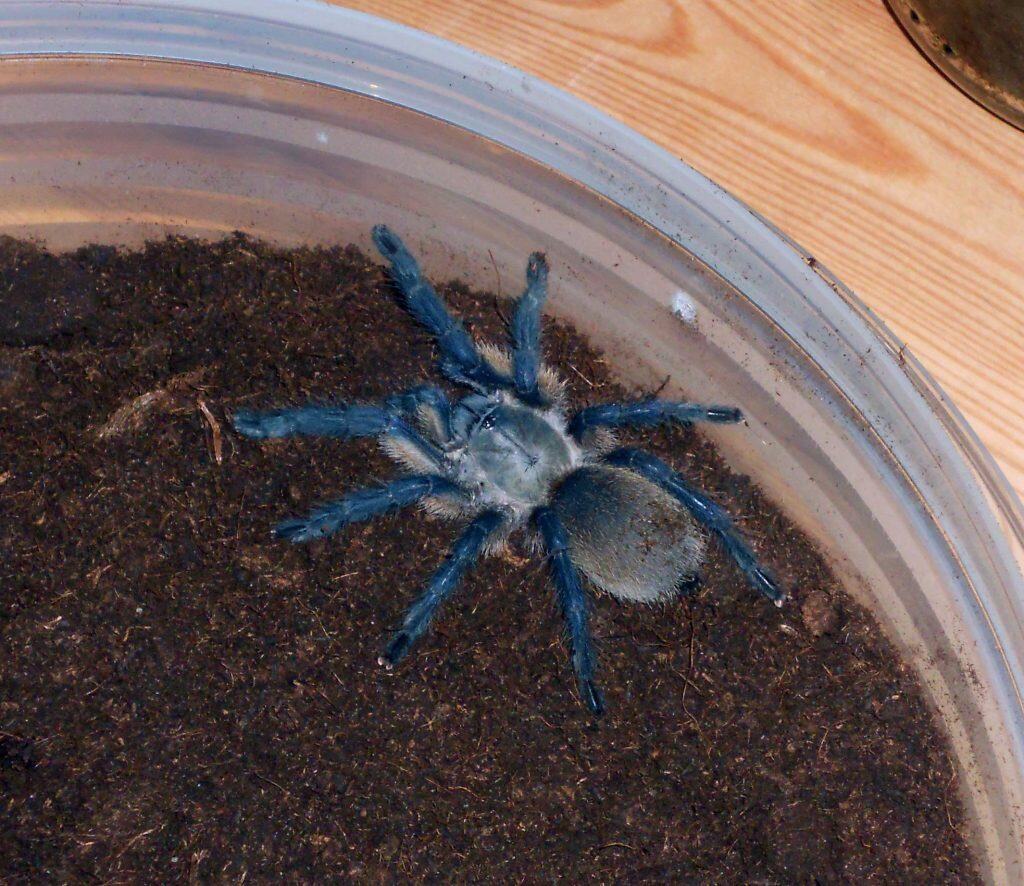
The Socotra Island blue tarantula, Monocentropus balfouri, inhabits the scrublands of Socotra Island, off the coast of Yemen.
Monocentropus balfouri Pocock, 1897 Type Species
- Common name: Socotra Island blue
- Distribution: Yemen (Socotra)
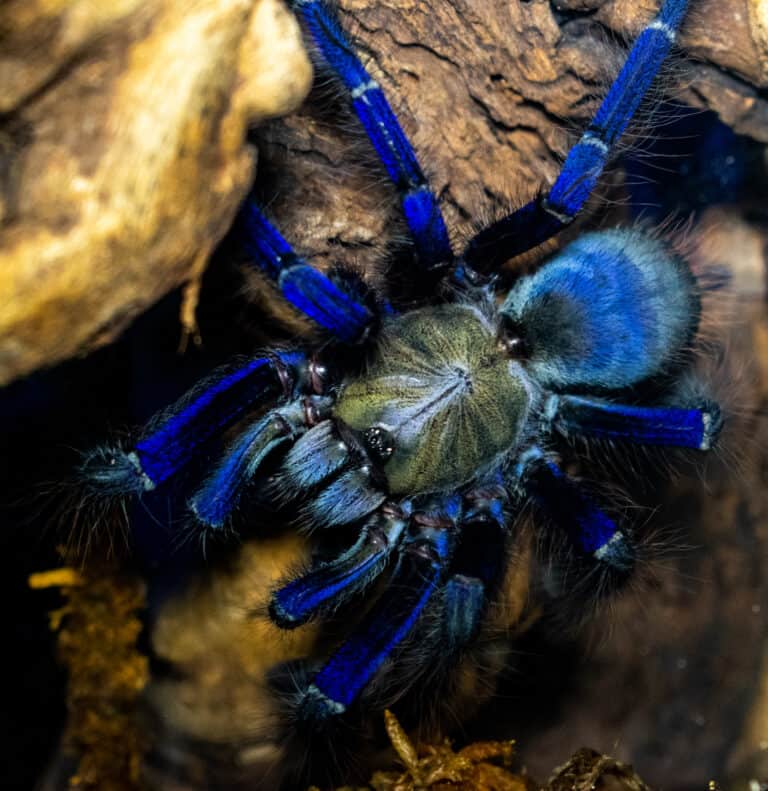
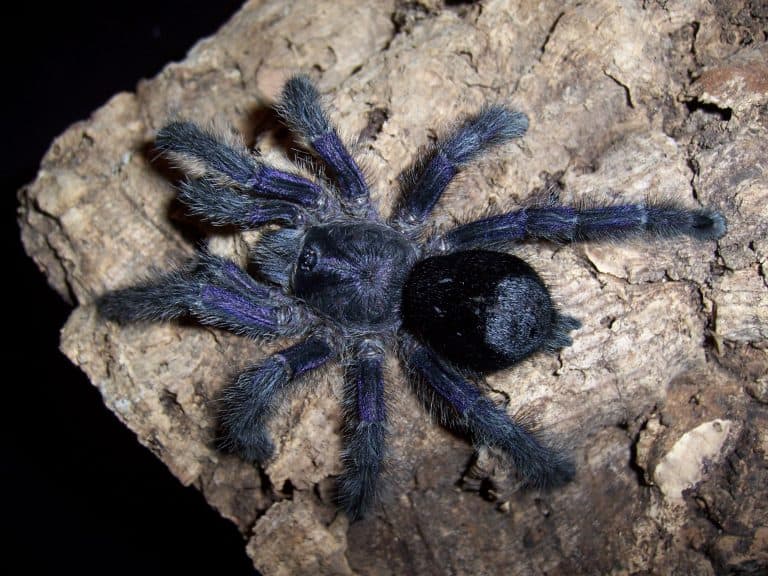
Monocentropus balfouri is a burrowing species that heavily webs both the inside and outside of its burrow. It is generally found in rocky, mountainous scrublands. M. balfouri can only be found on the remote island of Socotra off the coast of Yemen. They measure about 1.85 inches in total length and have a leg span of up to 6 and 7 inches. These spiders have modified setae used as stridulatory organs to communicate and for defense. They have a greyish-blue carapace, metallic blue legs, and a dark blue abdomen. Their legs and abdomen are covered in beige setae.
Satyrex Zamani & von Wirth, 2025
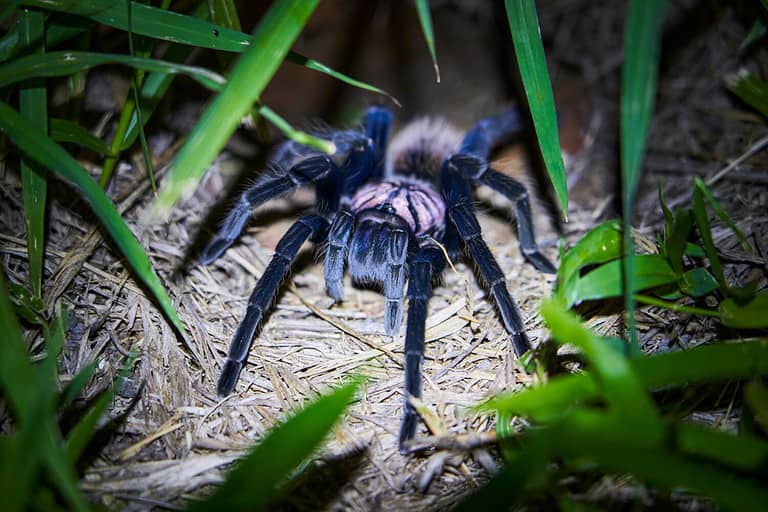
The tarantulas in genus Satyrex are found in Somalia and the Arabian Peninsula, including Yemen, Saudi Arabia, and Oman. These spiders are notable for males having the longest known palps (leg-like appendages near the mouth) of all tarantula species. The palps of Satyrex spiders are between 2.23 and 3.85 times longer than the carapace. At around 2 inches, their palps are nearly as long as their legs.
These elongated appendages are hypothesized to facilitate reproduction while decreasing the risk of death by cannibalism. The male is able to position himself further away from the female instead of directly beneath her. Considering the aggressive behavior recorded in the females of this species, researchers believe this is plausible. The fierce Satyrex ferox, described below, is shown in this Instagram post from one of the study’s authors, Dr. Alireza Zamani.
Satyrex arabicus Zamani & von Wirth, 2025
- Common name: Arabian black tarantula
- Distribution: Saudi Arabia
Satyrex arabicus is a burrowing spider that inhabits humid, mountainous environments with rocky outcroppings and dense vegetation. They are only known from Jazan Province in southern Saudi Arabia. Male specimens measure a total length of 1 inch, while the male palps are 3.18 times the length of the carapace. Researchers note there is no female specimen to examine, but live females are similar in color to the male. These spiders are dark colored overall, with bluish-grey to almost black legs and bodies.
Satyrex ferox Zamani, von Wirth & Stockmann, 2025 Type Species
- Common name: Dhofar black tarantula
- Distribution: Yemen, Oman
Satyrex ferox has been observed to be highly defensive, assuming a threat posture and emitting loud, frequent stridulation with little provocation. These fossorial spiders dig their burrows between rocks or at the base of shrubs. Both their legs and body are a dark blue-grey to nearly black. Males measure 1.06 inches in length, while females have a total length of 1.95 inches and a leg span of about 5.5 inches. The male palps measure 3.85 times the length of the carapace. S. ferox is the largest and most behaviorally aggressive of the newly described species. It is known from the Al Mahrah Governorate in southeastern Yemen and the Dhofar Governorate in southwestern Oman.
Satyrex longimanus (Pocock, 1903)
- Common name: Yemeni black tarantula
- Distribution: Yemen
Monocentropus longimanus was transferred to the Satyrex genus due to the morphology of its genitalia. Like other Satyrex tarantulas, the male palp is significantly longer than its carapace. Not much is known about Satyrex longimanus, but its lifestyle and behavior are believed to be similar to those of S. ferox. The male specimen measures 0.94 inches in total length, while the female measures 1.59 inches. The male palp is 2.7 times the length of the carapace. Its color in life is unknown, but scientists believe it to be as dark as other tarantulas in the genus. S. longimanus is only known from the type locality in the Dhale Governorate in southwestern Yemen.