
Quick Take
- Arthritis, or osteoarthritis, is a degenerative joint disease where cartilage thins and bone changes occur, often affecting older dogs and cats.
- Signs in dogs include subtle pain with slower movement, reduced interaction, and reluctance to handling.
- Management relies on weight control, controlled activity with physical therapy, supplements, and pain relief; surgery, stem cell therapy, and laser treatment are also options.
Many of our cats and dogs are living long and happy lives thanks to the improved care and nutrition they now receive from their owners. However, there is one condition that many of our four-legged companions will have to face in their senior years, if not before. Arthritis is a progressive and degenerative condition affecting the joints. Here we will explain the physiological mechanism behind arthritis, how it differs from other joint disorders, the subtle signs that your pet may have it, and the latest treatment options.
Understanding Joint Structure
Arthritis is the common name for the medical condition of osteoarthritis, also called degenerative bone disease. It typically affects the joints of older animals, but younger dogs and cats can get it too.
Before you can understand arthritis, you need to appreciate the structure of a joint. Let’s start with bones. They are the rigid structures at the centre of the limbs, and they form a protective casing for the delicate organs in the chest and abdomen. Bones are made up of living tissue that manufactures blood cells, maintains calcium and phosphorus reservoirs, and houses bone marrow. Old bone tissue is constantly replaced with new bone marrow, and this is termed remodeling.
How Joints Work
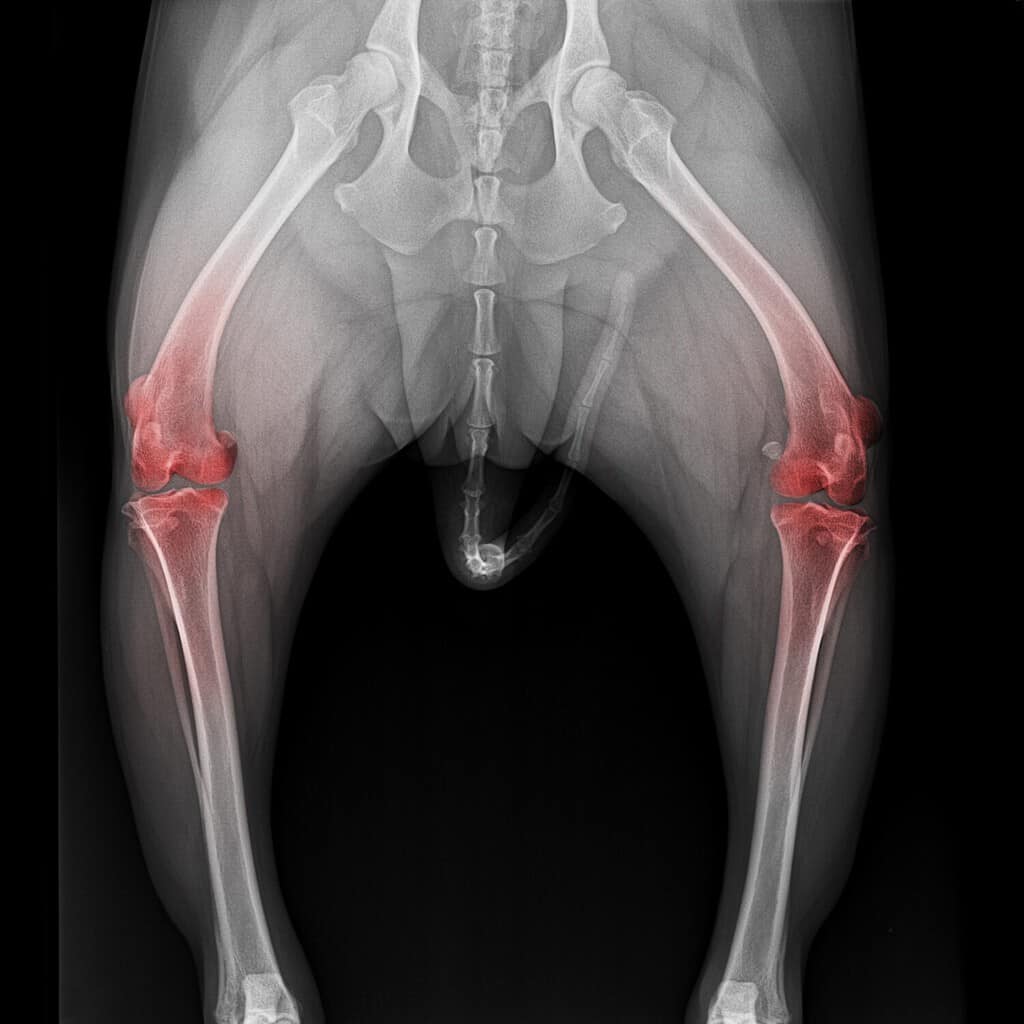
Joints rely on cartilage to work properly.
©Intarapong/Shutterstock.com
The point at which two bones join is called a joint. Ball and socket joints, such as the hip joint, allow rotation. Hinge joints, such as the knee joint, move in just one plane. At a joint, the ends of the bones are covered in a substance called cartilage. It is firm but smooth connective tissue, and it stops the surfaces of the bones from scraping across each other as the joint moves.
Tendons are another structure associated with joints. These are collagen-rich bands of connective tissue that do not stretch and connect muscle to bone. Then there are ligaments, which are tough cords of connective tissue that connect one bone to another within the joint. Finally, there are skeletal muscles that maintain posture and allow movement. A joint problem can arise from any of these structures, which makes them tricky to diagnose.
What Is Arthritis?
Osteoarthritis is a specific condition that affects joint cartilage. The cartilage degenerates and gets thinner over time. Fluid builds up, and bony outgrowths may form around the joint.
Arthritis can be caused by trauma, infection, malformation of the joint, the body’s own immune system, and infection as well as wear and tear.
Signs of Arthritis in Dogs
The onset of arthritis in dogs can be very subtle and difficult to spot, especially in working breeds that are bred to work through the pain. There may be intermittent flare-ups where your dog is clearly in discomfort, but chronic low-level pain is much harder to detect. Many dogs learn coping mechanisms, so you may notice them interacting less with you, being adverse to handling, or moving more slowly and carefully. Here are just a few of the signs to look out for:
- Walking slowly or not wanting to go on a walk
- Hesitation when jumping on the sofa or going upstairs
- Stiffness
- Changes in posture and body shape
- Sleeping more
- Panting
- Loss of appetite
Which Dogs Are Most Likely to Get Arthritis?
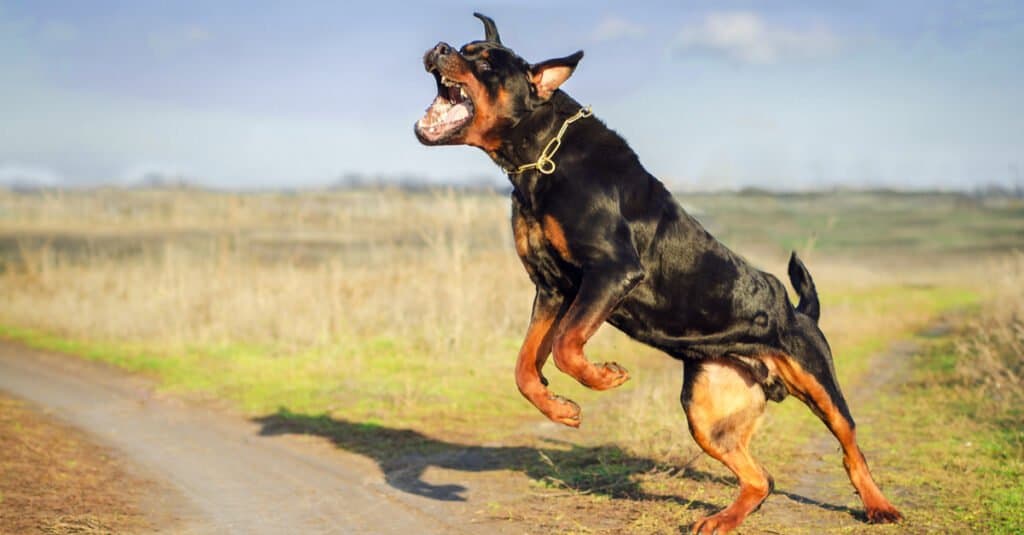
Rottweilers are more likely to get arthritis.
©Olexandr Andreiko/Shutterstock.com
Any dog can get arthritis, but it is most common in:
- Medium to large breeds such as rottweilers and labradors
- Dogs with underlying joint problems, such as hip dysplasia and elbow dysplasia
- Overweight dogs
- Dogs that have had previous surgery or joint trauma
Other Joint Problems in Dogs
The problem with the above signs is that they may also be present in other joint disorders. The challenge your vet will have is to determine whether your dog’s symptoms are caused by arthritis or another condition.
They will do this by using some diagnostic techniques, which may include a physical examination and an orthopedic examination, looking at posture, muscle mass, and mobility. Your vet will also likely manipulate your pet’s joints to test for abnormal or restricted movement, sensations such as crunching (crepitus), and signs of discomfort. If necessary, they may also carry out radiography, CT scans, or joint taps.
Essentially, your vet is trying to rule out other joint disorders such as hip dysplasia. This is where the femur does not fit properly into the hip socket. It eventually leads to arthritis and is more common in large-breed dogs. Osteochondrosis is an example of a metabolic disorder that affects the joints of large-breed dogs that are fed excess calcium. Some hormonal disorders, such as hypoparathyroidism, can affect the joints. Other structural joint problems that can cause symptoms similar to arthritis are kneecap displacement, osteochondrosis (disturbance of cartilage and bone formation in medium and large dogs), and joint trauma such as cranial cruciate ligament tear. Muscle tears and trauma are another possibility.
Arthritis in Cats
Arthritis usually takes years to develop in cats. However, once cats reach over 12 years of age, up to 90 percent of them will have the condition. The mechanism through which it develops is exactly the same as it is for dogs, and in some cases, genetics may play a role. Also, arthritis can develop in cats after an injury, such as a ligament injury. It can also develop after a tick-borne disease, an immune-mediated disease, or some other infection. Congenital defects (defects that the cat is born with) can also play a role. The most common joints to be affected by arthritis in cats are the elbows and hips, although shoulders, hocks (ankles), and knees can also develop the condition.
How to Tell if Your Cat Has Arthritis
Cats tend to tolerate joint issues better than dogs, and many have been in discomfort for ages before their owners are aware of it. Often, arthritis in cats is diagnosed incidentally when the vet is investigating something else. One very subtle sign is overgrown claws because the cat is avoiding using their scratching post! Here are a few of the more common signs of arthritis in cats:
- Limping and/or stiffness
- Lethargy
- Sleeping more
- Reluctance to jump up onto things
- Reluctance to go outside
- Overgrooming around joints, causing stained fur
Even though lameness is a potential sign of arthritis, many cats with arthritis are not lame at all!
Which Cats Are Most Likely to Get Arthritis?
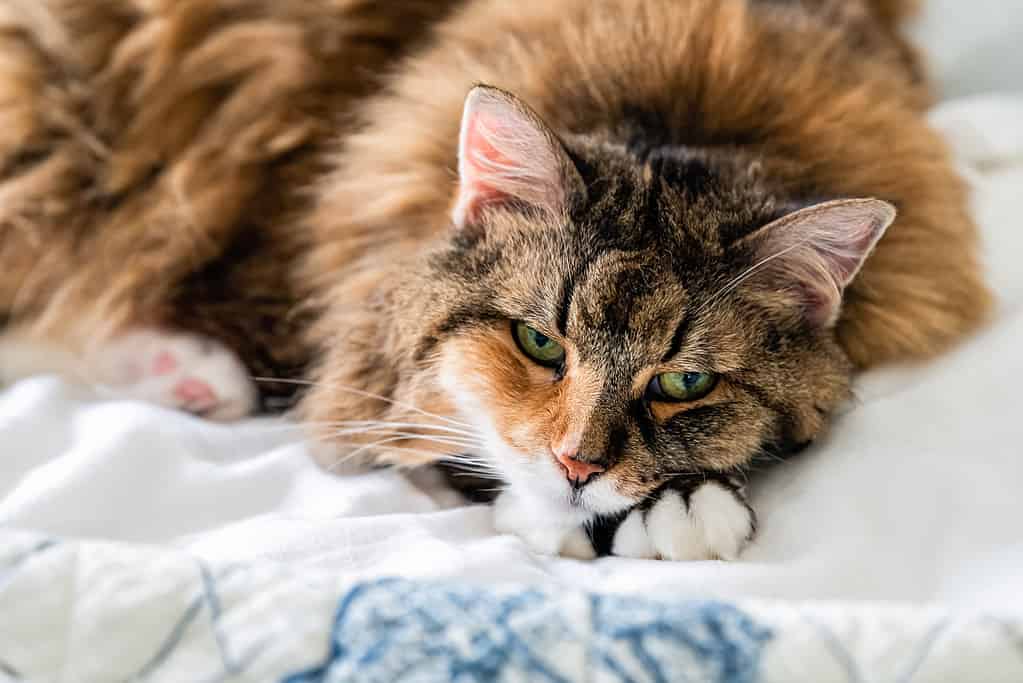
Maine coons are more susceptible to arthritis.
©krblokhin/iStock via Getty Images
Obesity is linked to arthritis in cats, so maintaining a cat’s healthy weight is very important. Age is the most significant risk factor, with older cats being most likely to develop the disease. Some breeds are predisposed to joint abnormalities, and this makes them more likely to develop arthritis. For example, Maine Coons and Scottish Folds are more likely to have hip dysplasia and cartilage abnormalities. Cats that have suffered joint injuries in the past are also more at risk.
Other Joint Problems in Cats
It is harder to diagnose arthritis in cats than it is in dogs. X-ray changes in cats are less severe than in dogs with osteoarthritis. In some cases, they show fluid within the joint and cartilage destruction. However, some cats with arthritis do not have any changes on X-rays at all! Also, many cats do not take kindly to having their limbs moved around and prodded by a vet.
Several other joint disorders in cats will need to be ruled out. For example, septic arthritis is typically caused by bacteria spreading via the bloodstream and causes lameness. Cancerous arthritis is commonly caused by a synovial cell sarcoma. Cats can also suffer from joint trauma, such as cranial cruciate ligament tears and palmar carpal ligament breakdown. There are disorders associated with vitamin and mineral deficiency that can also cause joint problems
Latest Arthritis Treatment Methods for Dogs and Cats
The accepted cornerstones of osteoarthritis management in dogs and cats are weight management, controlled physical activity with physical therapy and conditioning (which may include hydrotherapy for dogs), supplements, and pain medications.
However, owners may now also have the option of surgery. This could involve joint stabilization, removal of cartilage or bony chips, or even joint replacement with a prosthetic joint.
Stem cell therapy is also offered by some vets and is most suitable for dogs with moderate to severe osteoarthritis who are not having surgery. It can also be used as part of surgery, especially in younger dogs, where it can slow down the progression of the disease. Laser therapy (also called photobiomodulation) can be used alongside the traditional treatments. Some owners have also used alternative therapies such as acupuncture, homeopathy, and magnetic field therapy.