
Quick Take
- The Guiana Shield, a 1.7-billion-year-old geologic formation dominates the region and is known for its iconic tepuis.
- There are over 20 tarantula species native to the Guianas, including the Goliath birdeater (Theraphosa blondi).
- The Goliath birdeater reaches 4.75 inches in body length, up to 12 inches in leg span, and weighs up to 6 oz.
- Keep reading to see which genera lack urticating setae, which is uncommon in New World tarantulas.
The Guianas are a region on the northeastern coast of South America that includes three main territories: the countries of Guyana (formerly British Guiana) and Suriname (formerly Dutch Guiana), as well as French Guiana, which is a territory of France. The climate is humid with distinct wet and dry seasons. The area is dominated by the Guiana Shield, a 1.7-billion-year-old geological formation renowned for its tropical rainforests and unique flat-topped mountains known as tepuis.
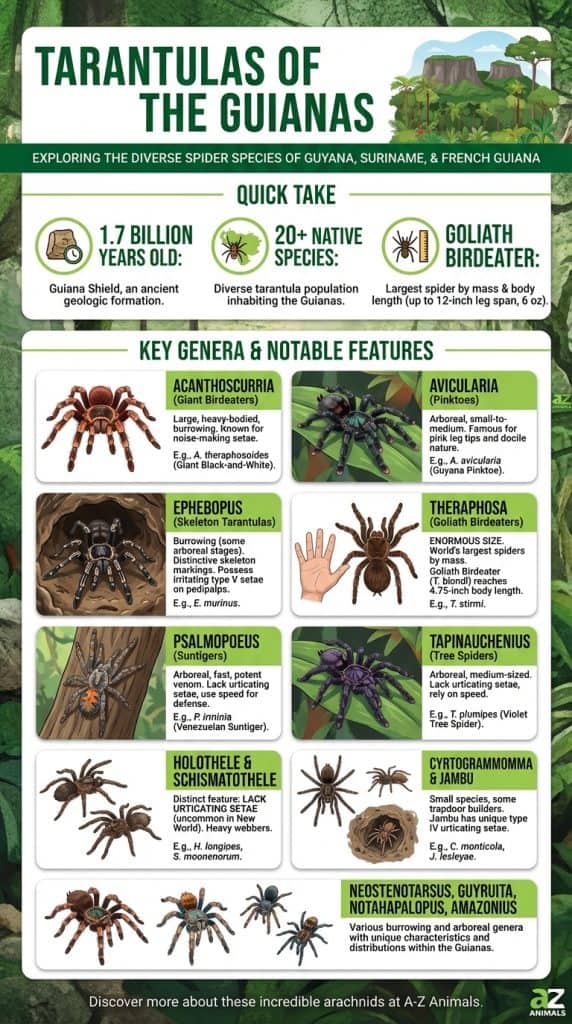
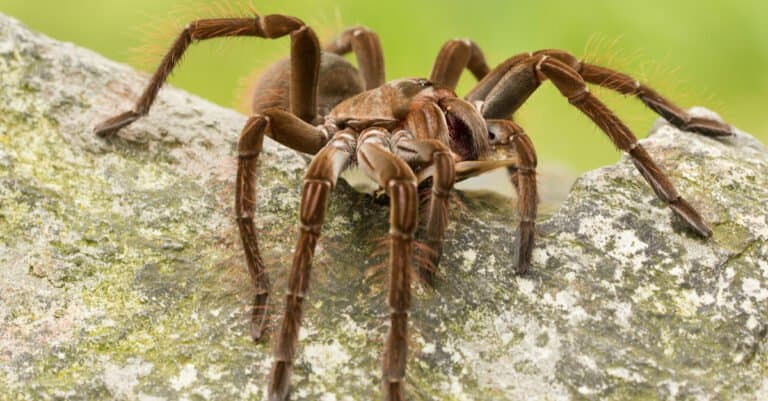
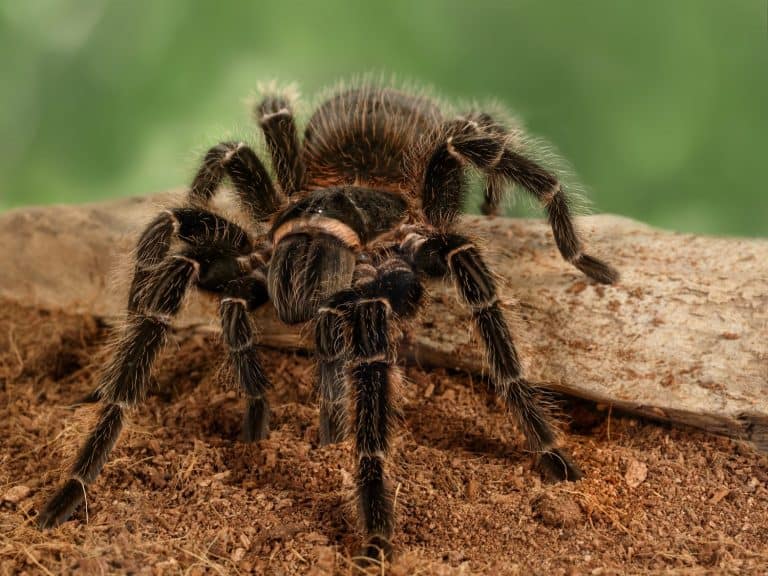
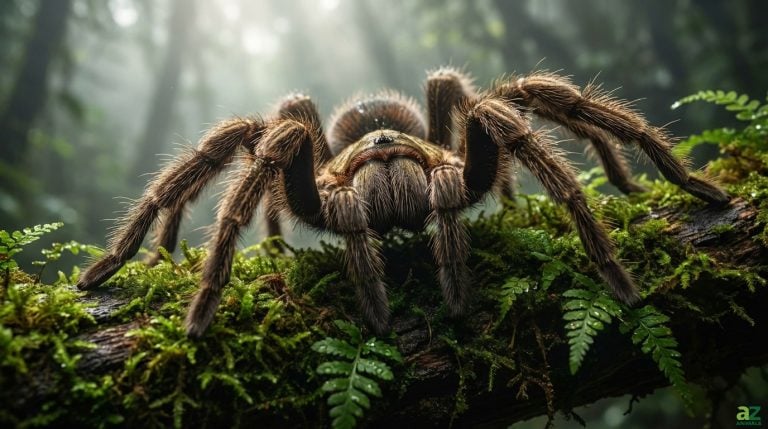
The Goliath Birdeater weighs as much as a hockey puck, but it’s just one of 20+ giants hiding in this 1.7-billion-year-old jungle fortress.
©A-Z Animals
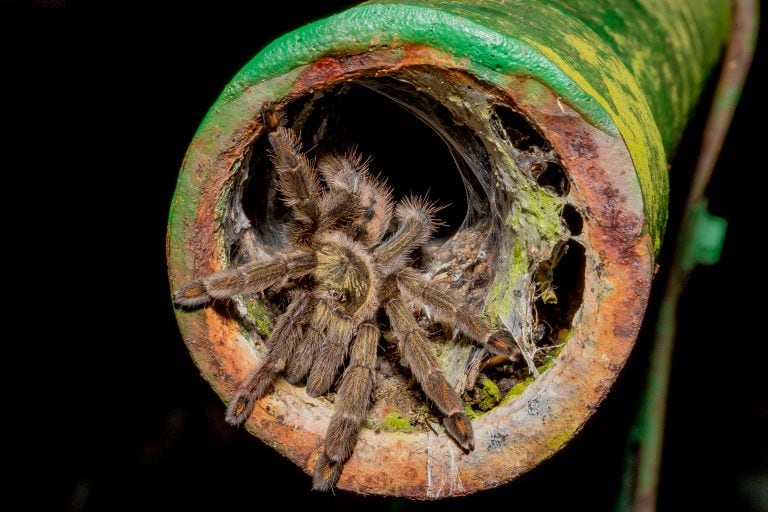
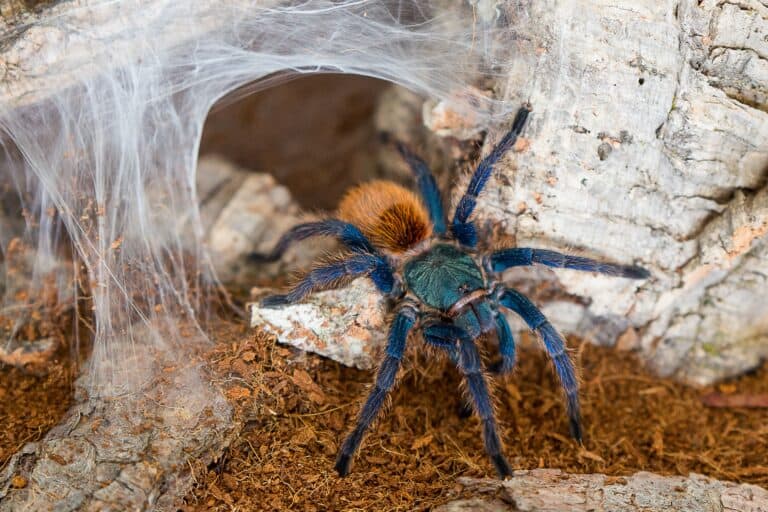
There are over 20 tarantula species native to this region, including the famous Goliath birdeater, Theraphosa blondi, the largest spider on Earth by body length and mass. The following list includes all currently recognized tarantula species inhabiting the Guianas according to the World Spider Catalog as of December 2025. For a comprehensive reference, see our complete list of tarantula species.
Acanthopelma F. O. Pickard-Cambridge, 1897
The genus Acanthopelma includes just two species: A. rufescens, which is native to Central America, and A. beccarii from Guyana. These burrowing spiders are generally small, with leg spans of 2-3 inches. A. beccarii is reddish-brown to brown overall with a slighter darker carapace and a dark pattern on its abdomen. It has lighter-colored setae on its legs and abdomen. Little is known about this species, but it is believed to favor tropical forest habitats like the other member of its genus.
- Acanthopelma beccarii Caporiacco, 1947
- Common name: N/A
- Distribution: Guyana
Acanthoscurria Ausserer, 1871
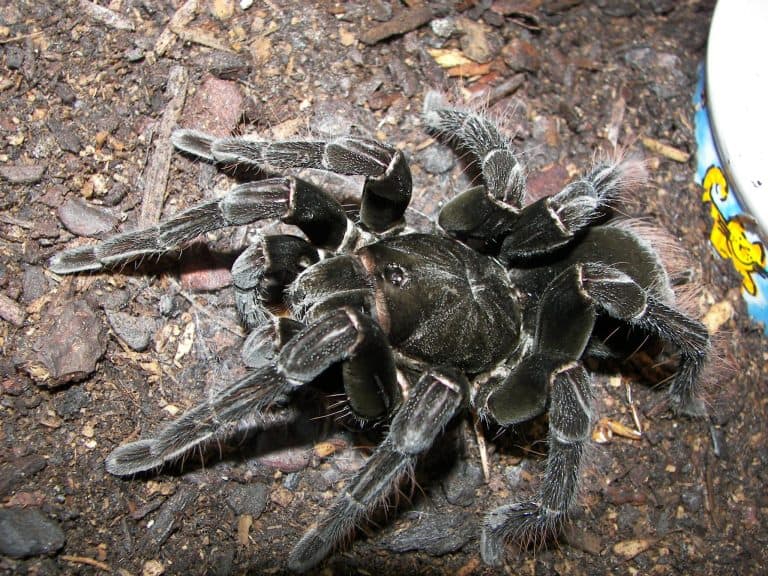
Acanthoscurria tarantulas are large, heavy-bodied spiders that reach leg spans of 7-8 inches. In the Guianas, these terrestrial spiders often burrow or shelter under logs and rocks in the rainforests and wet lowland areas. Acanthoscurria tarantulas are distinguished by stridulating, or noise-making, hairs (setae) on the back side of the second segment of the pedipalps. These tarantulas often have reddish-colored setae on their legs and abdomen and pale bands at the leg joints.
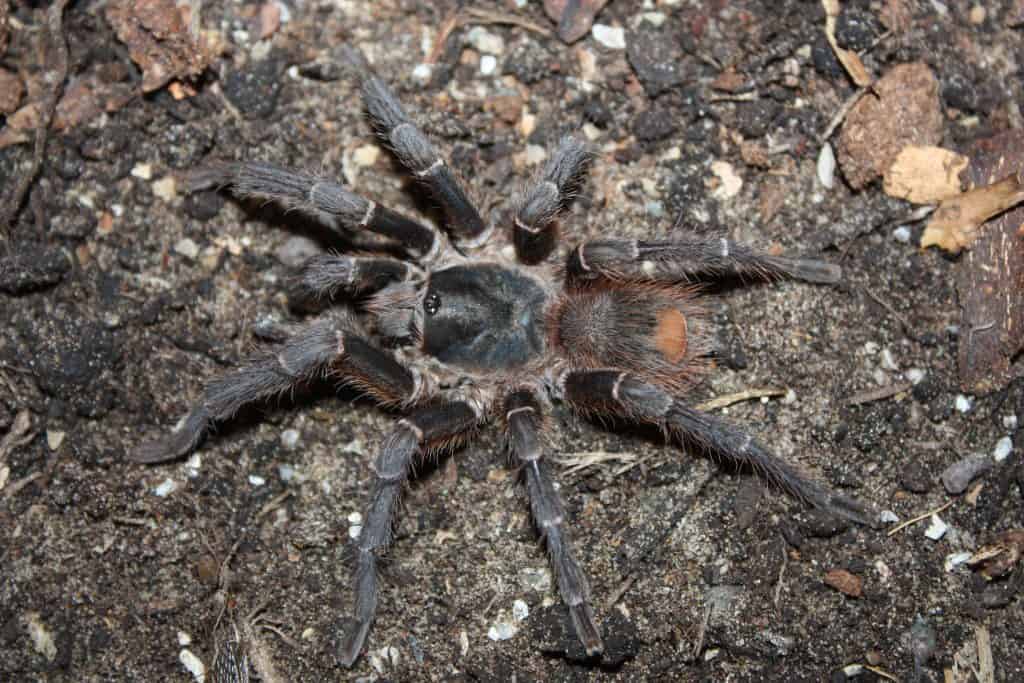
The tarantula Acanthoscurria theraphosoides is also known as the giant black-and-white tarantula.
- Acanthoscurria cordubensis
- Common name: Rusty brown birdeater
- Distribution: South America, except Colombia, Suriname, Ecuador, and Chile
- Acanthoscurria simoensi Vol, 2000
- Common name: Manaus black and gold
- Distribution: Guyana, French Guiana, Brazil
- Acanthoscurria theraphosoides (Doleschall, 1871)
- Common name: Giant black-and-white tarantula
- Distribution: Peru, Bolivia, Brazil, French Guiana
Amazonius Cifuentes & Bertani, 2022
Amazonius is a relatively new genus of arboreal tarantulas. A. germani was originally identified as Tapinauchenius gigas; however, this was later determined to be a misidentification. In 2022, it was described as A. germani. This tarantula reaches a leg span of about 5 to 6 inches. It is peachy-orange in color with long, similarly colored setae on its legs and abdomen. It also has a greenish-grey carapace. A. germani inhabits the rainforests and other lowland forested areas.
- Amazonius germani Cifuentes & Bertani, 2022
- Common name: Sometimes called the orange tree spider due to its misidentification as Tapinauchenius gigas
- Distribution: French Guiana, Brazil
Avicularia Lamarck, 1818
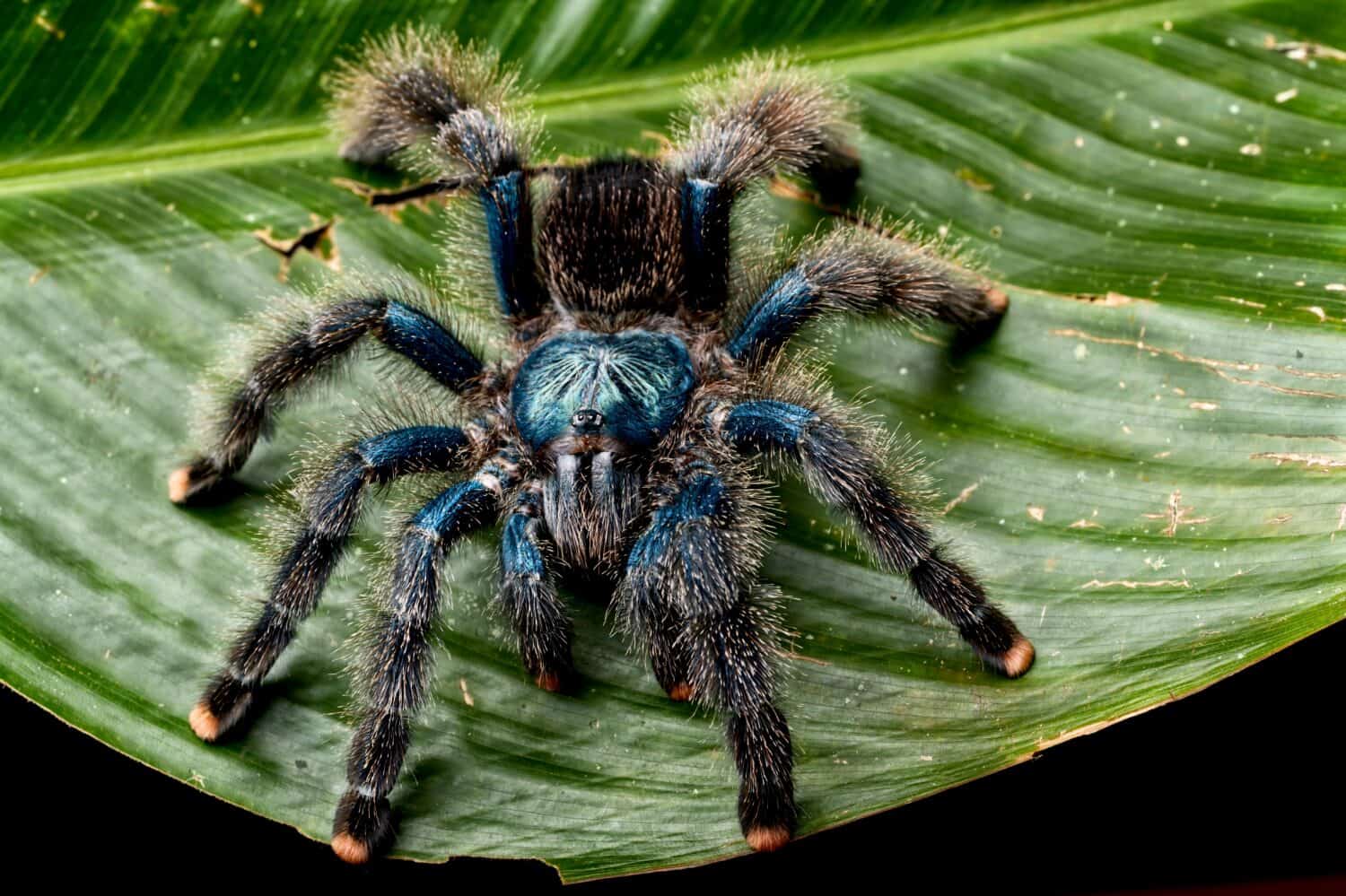
Tarantulas in the genus Avicularia primarily have arboreal habits, making silk tunnels and retreats on vegetation in rainforest habitats. These are generally small to medium-sized tarantulas, with leg spans of 4-6 inches, although some species may grow larger. A. avicularia typically has a leg span of up to 4.75 inches. It is mostly black with a blue-green metallic sheen on the carapace and femora. It has long, pinkish-orange setae, and the end of each leg is pink, giving it the common name, Guyana pinktoe or pink-toed tarantula. Spiders in this genus have historically been among the most popular in the pet trade.
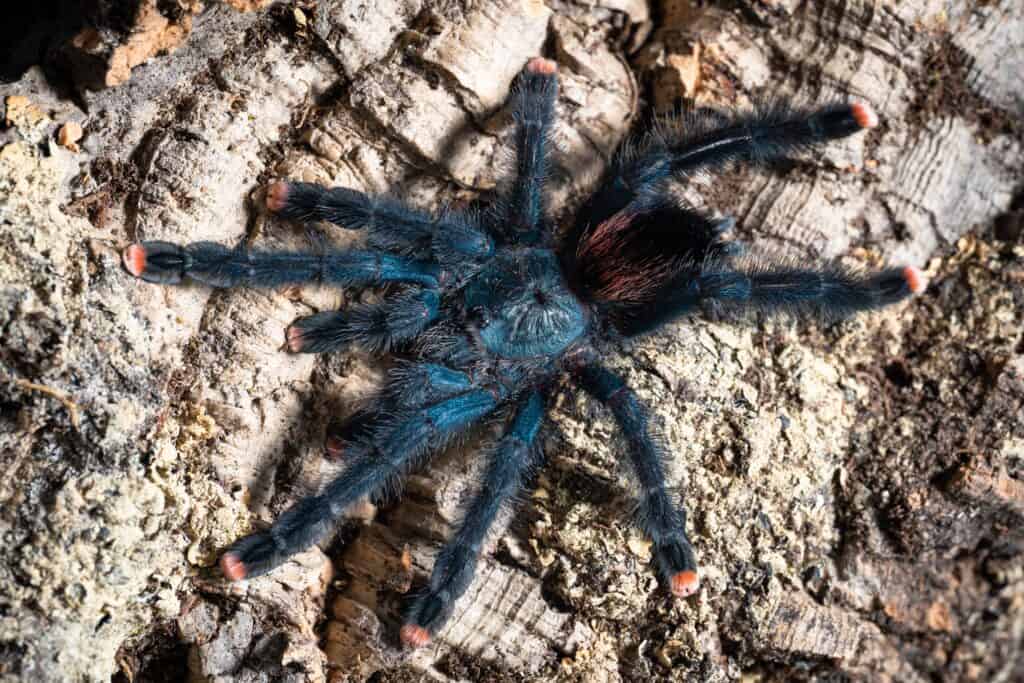
The Guyana pinktoe, Avicularia avicularia, is popular in the pet trade for its striking looks and calm temperament.
©tempisch/Shutterstock.com
- Avicularia avicularia* (Linnaeus, 1758)
- Common name: Guyana pinktoe or pink-toed tarantula
- Distribution: Venezuela, Guyana, Suriname, French Guiana, Trinidad and Tobago, Brazil, Peru, Bolivia
Cyrtogrammomma Pocock, 1895
The genus Cyrtogrammomma consists of three species of small tarantulas, with the largest having a maximum total body length of approximately 0.55 inches. Spiders in this genus are typically light to dark brown with pale setae. They excavate silk-lined burrows in the soil, closed with a type of camouflaged lid used as a trapdoor. C. monticola was first described from Monte Roraima, a flat-topped mountain that is located at the borders of Guyana, Brazil, and Venezuela. It has also been recorded in caves. C. raveni is known from the Kamakusa Mountain region.
- Cyrtogrammomma monticola* Pocock, 1895
- Common name: N/A
- Distribution: Guyana, Brazil
- Cyrtogrammomma raveni Mori & Bertani, 2020
- Common name: N/A
- Distribution: Guyana
Ephebopus Simon, 1892
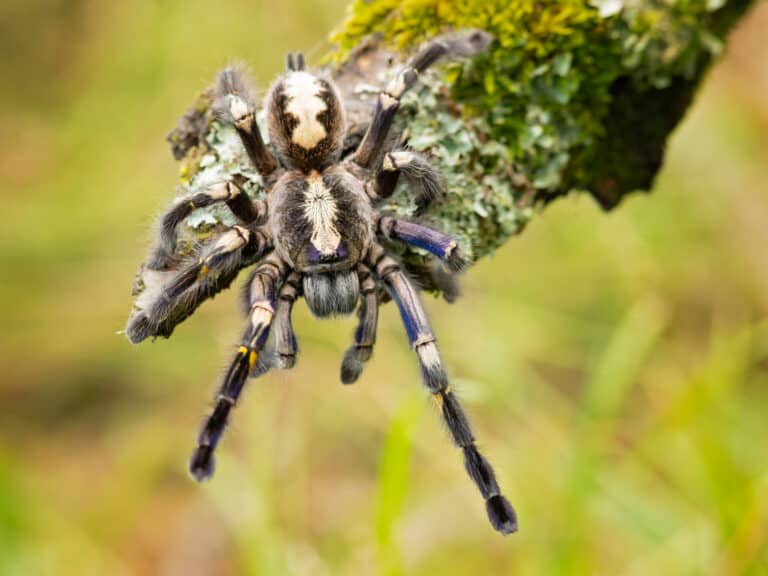
Tarantulas in the genus Ephebopus are primarily burrowing spiders, except for E. murinus, which has an arboreal stage during development. They typically inhabit burrows under roots, logs, or rocks in lowland forests. Often referred to as “skeleton tarantulas,” these spiders are known for their distinctive light-colored markings on dark legs, said to resemble bones. These medium-sized tarantulas generally reach 4.5 to 6 inches in leg span. Ephebopus tarantulas are also distinguished by type V setae, which are very short, barbed hairs located on the pedipalps, rather than on the abdomen like other tarantulas. Type V setae are light and easily detachable, and can become embedded in the skin, causing significant irritation.
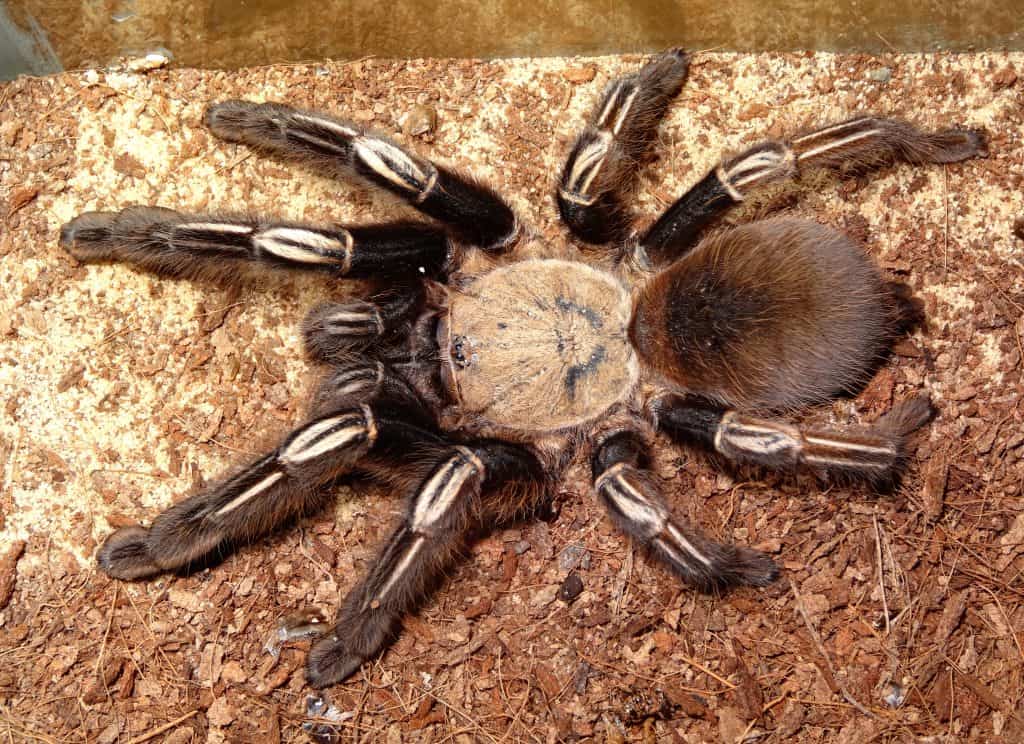
The skeleton tarantula, Ephebopus murinus, is known for its distinctive bone-like markings.
- Ephebopus cyanognathus West & Marshall, 2000
- Common name: Blue fang, blue fang skeleton
- Distribution: French Guiana
- Ephebopus foliatus West, Marshall, Fukushima & Bertani, 2008
- Common name: N/A
- Distribution: Guyana
- Ephebopus murinus* (Walckenaer, 1837)
- Common name: Yellow-kneed tarantula, skeleton tarantula, skeleton leg tarantula
- Distribution: French Guiana, Suriname, Brazil
- Ephebopus rufescens West & Marshall, 2000
- Common name: Red skeleton, burgundy skeleton
- Distribution: French Guiana, Brazil
Guyruita Guadanucci, Lucas, Indicatti & Yamamoto, 2007
Guyruita tarantulas are typically small, with leg spans of 4 inches or less. These burrowing spiders are often found living under rocks in forested areas. G. guadanuccii is only known from the rainforest south of Maripasoula, French Guiana. The holotype specimen of G. guadanucci has a total length of 1.02 inches. It is primarily brown and is distinguished by a unique pattern five black bands on its abdomen.
- Guyruita guadanuccii Sherwood & Gabriel, 2021
- Common name: N/A
- Distribution: French Guiana
Holothele Karsch, 1879
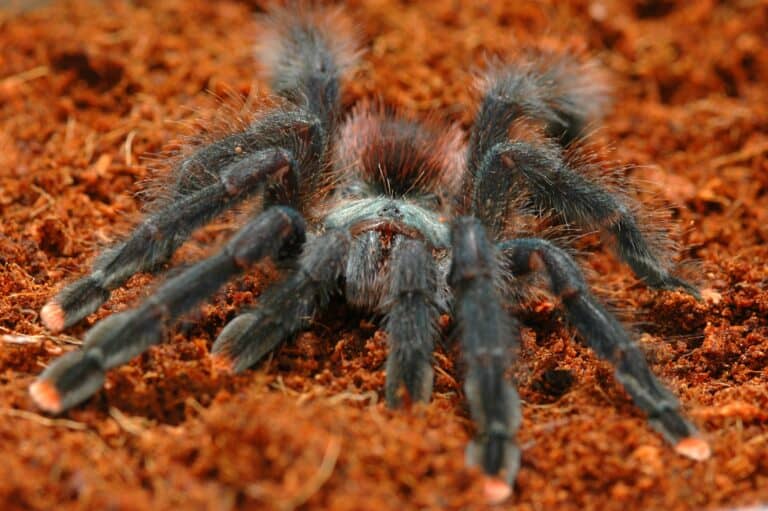
One distinguishing feature of Holothele tarantulas is the lack of urticating setae, which is uncommon in New World tarantulas. These are burrowing tarantulas and heavy webbers. H. longipes has a wide distribution, including both the West Indies and South America. It can reach leg spans between 3 and 4 inches. These tarantulas generally have pink or rose-colored carapaces and abdomens, with contrasting black or dark metallic blue legs. However, coloration may vary depending on geographical location.
- Holothele longipes* (L. Koch, 1875)
- Common name: Trinidad pink
- Distribution: Venezuela, Bolivia, Trinidad and Tobago, French Guiana, Suriname, Brazil
Jambu Miglio, Perafán & Pérez-Miles, 2024
Jambu tarantulas are terrestrial spiders. They are distinguished by type IV urticating setae, which are short, fine hairs with pointed, barbed tips. While this type of setae is less irritating to humans than type III hairs, which are longer and more potent, it can cause problems for small animals. J. lesleyae was originally found in the Kanaima Mountain region of Guyana. It is a small tarantula, typically reaching less than 4 inches in leg span. It has a brown body with a black and orange-patterned abdomen, but lacks carapace markings found in some other Jambu species.
- Jambu lesleyae (Gabriel, 2011)
- Common name: N/A
- Distribution: Guyana
Neostenotarsus Pribik & Weinmann, 2004
Neostenotarsus guianensis was originally found in the Oyapock Valley, French Guiana in the 1950s. These are small tarantulas said to dig extensive burrows. A formal redescription in 2024 indicates it can be distinguished from most genera by a protrusion on metatarsus I in the male. The preserved specimen is brown with brown urticating setae and has a black abdomen with patterned sides. N. scissistylus, formerly a synonym of N. guianensis, has been re-established as a separate species until the type or topotypic material can be examined by future researchers.
- Neostenotarsus guianensis (Caporiacco, 1954)
- Common name: N/A
- Distribution: Guyana, French Guiana
- Neostenotarsus scissistylus* (Tesmoingt & Schmidt, 2002)
- Common name: N/A
- Distribution: French Guiana
Notahapalopus Sherwood, Gabriel, Peñaherrera-R., Osorio, Benavides, Hörweg, Brescovit & Lucas, 2024
The genus Notahapalopus includes three species that were transferred from Hapalopus and one newly described species. Notahapalopus gasci was originally found at Saut Pararé on the Arataye River and inhabits the Atlantic-lowland area of the Guiana Shield. This small, burrowing tarantula was moved from Hapalopus due to differences from other Hapalopus species, including the absence of a striped or spotted abdominal pattern. It is described as having a light brown carapace and legs and a darker brown abdomen.
- Notahapalopus gasci (Maréchal, 1996)
- Common name: N/A
- Distribution: French Guiana
Psalmopoeus Pocock, 1895
Tarantulas in the genus Psalmopoeus are arboreal. They are distinguished by a single row of stiff, rough stridulatory setae on their mouthparts and the absence of urticating setae. Psalmopoeus tarantulas rely on their speed and their potent venom for defense. These are medium to large spiders with a leg span of 5-7 inches, although some species may grow larger. P. irminia has been documented in tree cavities and under bark in forests near the Venezuelan border, often associated with the Gran Sabana region. This striking tarantula is grey to black with bright orange markings on its legs and abdomen.
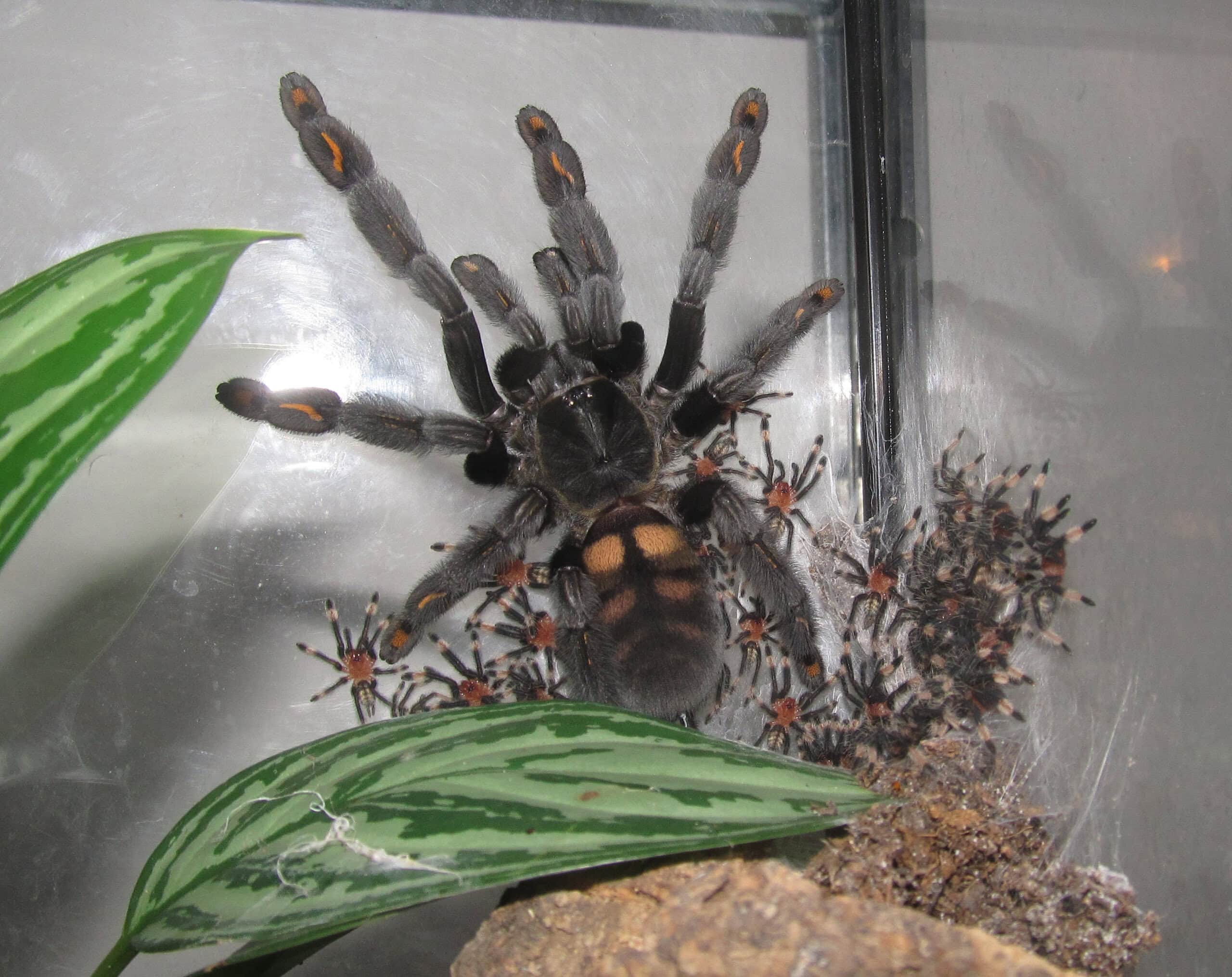
- Psalmopoeus irminia Saager, 1994
- Common name: Venezuelan suntiger
- Distribution: Venezuela, Guyana, Brazil
Schismatothele Karsch, 1879
Spiders in the genus Schismatothele are burrowing tarantulas that lack urticating setae. Schismatothele moonenorum was originally found in Emerald Jungle Village, a botanical garden and eco-tourist complex in the commune of Montsinéry-Tonnegrande. S. moonenorum has a dark brown carapace and legs with a light brown abdomen. The holotype specimen indicates it is a relatively small spider, with a total length of approximately 0.80 inches. The total length of its longest legs (pair IV) is 1.23 inches.
- Schismatothele moonenorum Moeller, Weinmann & Guadanucci, 2023
- Common name: N/A
- Distribution: French Guiana
Tapinauchenius Ausserer, 1871
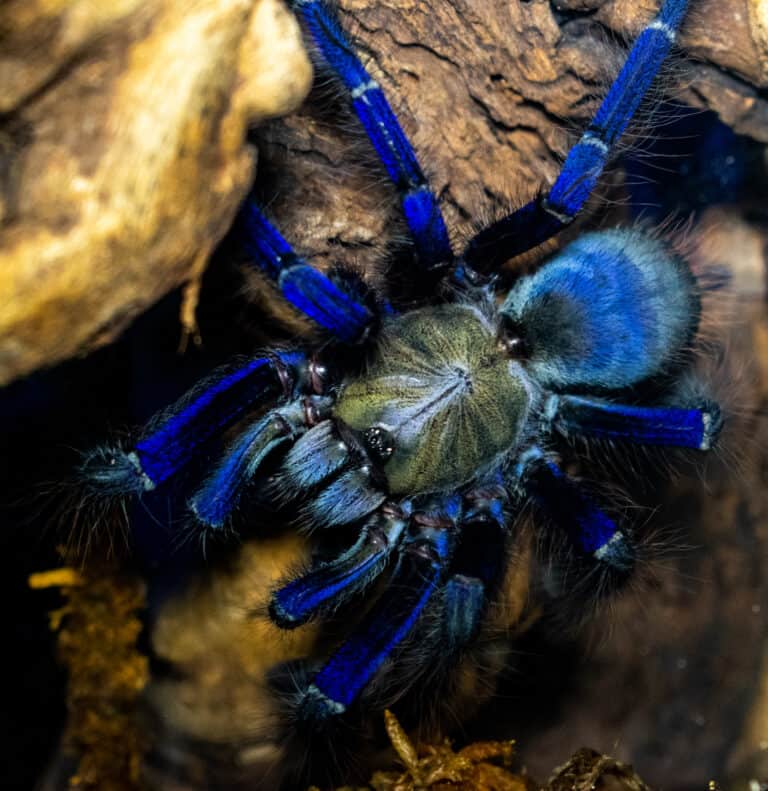
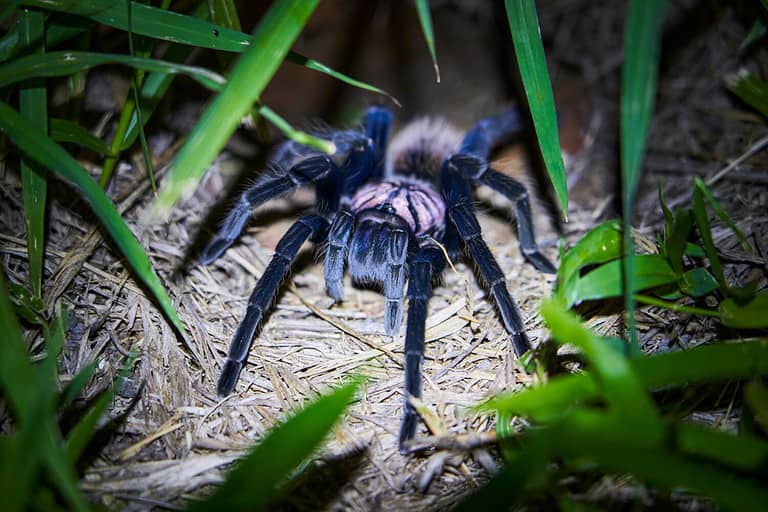
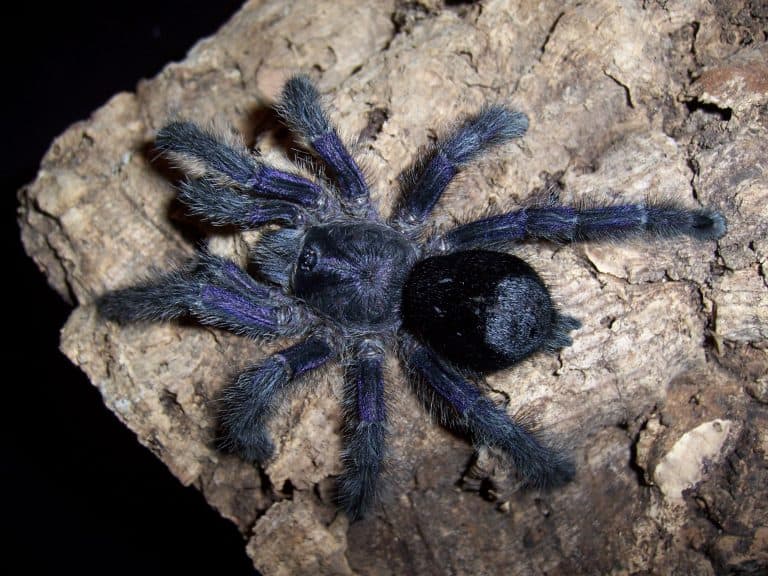
Tapinauchenius tarantulas are arboreal, making their homes in the vegetation of the rainforests. They are medium-sized spiders, typically reaching a leg span of 4-5 inches. T. plumipes was originally recorded from Paramaribo, Suriname. It is primarily dark brown with shades of blue-violet. Males have a purple abdomen with a T-shaped marking, while females have a brown abdomen with violet shades and a central longitudinal line. T. latipes has a bronze carapace with a brown abdomen and legs. Its hairy legs are banded and covered in pale setae. Tapinauchenius spiders lack urticating setae, so they rely on their speed to evade threats.
- Tapinauchenius latipes L. Koch, 1875
- Common name: Ghost tree spider
- Distribution: Venezuela, Trinidad and Tobago, Guyana
- Tapinauchenius plumipes* (C. L. Koch, 1842)
- Common name: Violet or purple tree spider
- Distribution: Guyana, Suriname, French Guiana, Brazil
Theraphosa Walckenaer, 1805
Tarantulas in the genus Theraphosa are known for their enormous size. The Goliath birdeater, Theraphosa blondi, is widely recognized as the largest spider on Earth by body length and mass. These spiders have a total body length of 4.75 inches, leg spans of up to 12 inches, and weigh up to 6 ounces. They can be found in silk-lined burrows in the rainforest, sometimes beneath roots or rocks. Theraphosa spiders are generally light to dark brown in color. T. blondi has long, dense setae on the patella, while T. stirmi has very little setae on the patella.
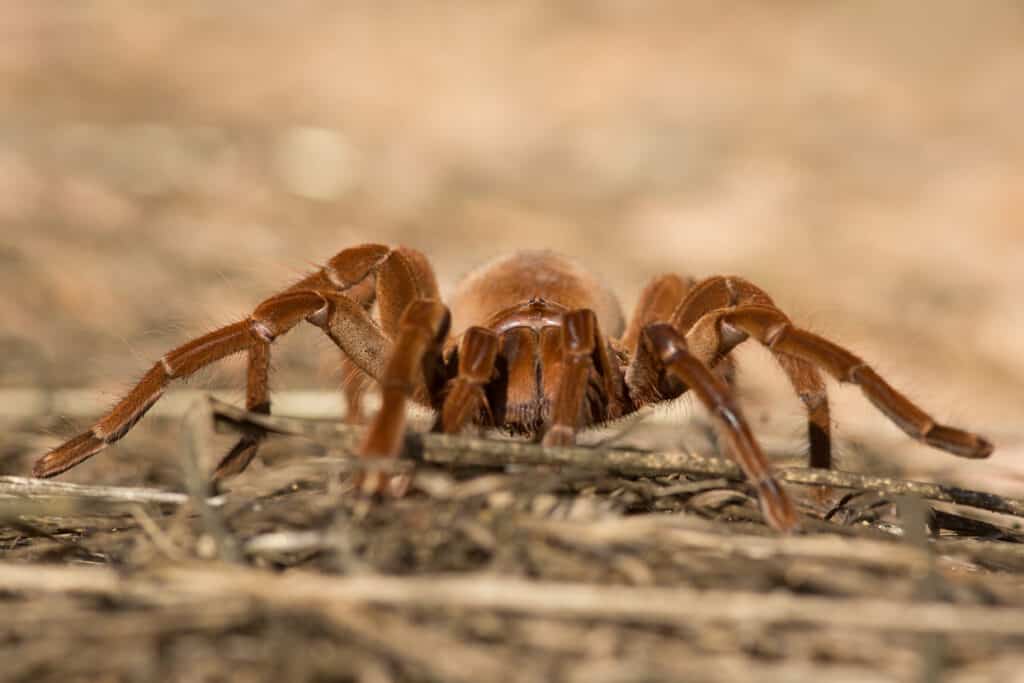
The Goliath birdeater, Theraphosa blondi, is the largest spider in the world by body length and mass.
©Milan Zygmunt/Shutterstock.com
- Theraphosa blondi* (Latreille, 1804)
- Common name: Goliath birdeater
- Distribution: Venezuela, Brazil, Guyana
- Theraphosa stirmi Rudloff & Weinmann, 2010
- Common name: Burgundy Goliath birdeater
- Distribution: Guyana, Brazil