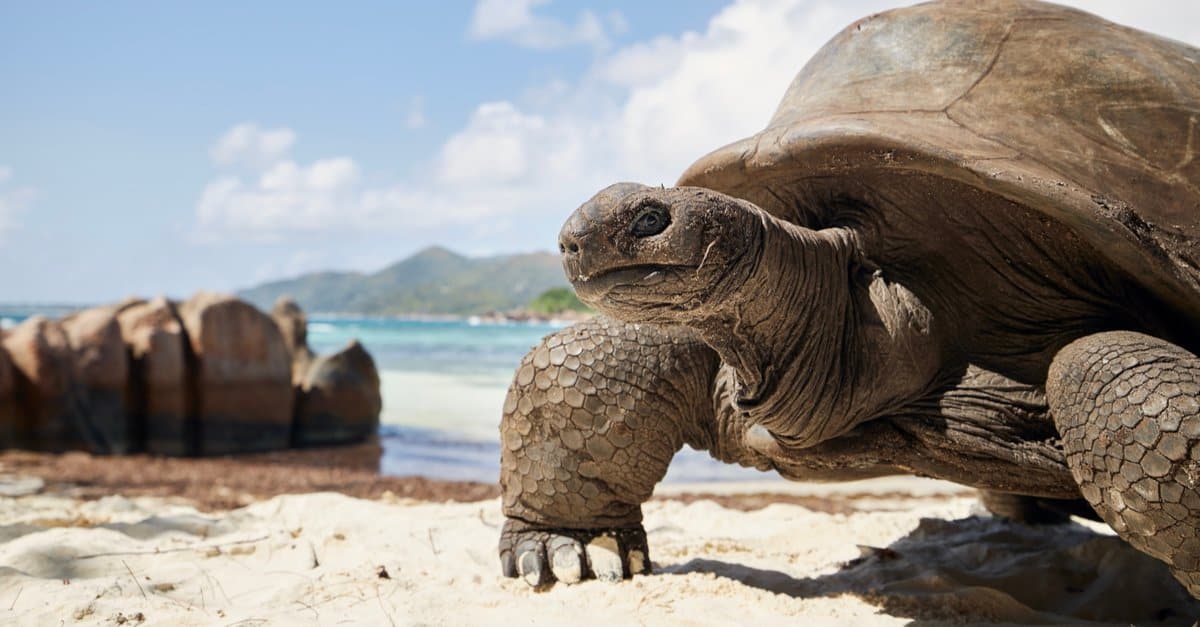

Tortoises are land-dwelling reptiles that eat low-growing shrubs, grass, and even cacti. Unlike sea turtles, they have round and stumpy feet designed for walking. It is common for tortoises to reside in hot and arid habitats. They can dig burrows with their powerful front limbs when the weather is too hot, allowing them to hide underground. Tortoises are also known to be long-lived animals, but how old is the world’s oldest living tortoise?
Is a Tortoise a Turtle?
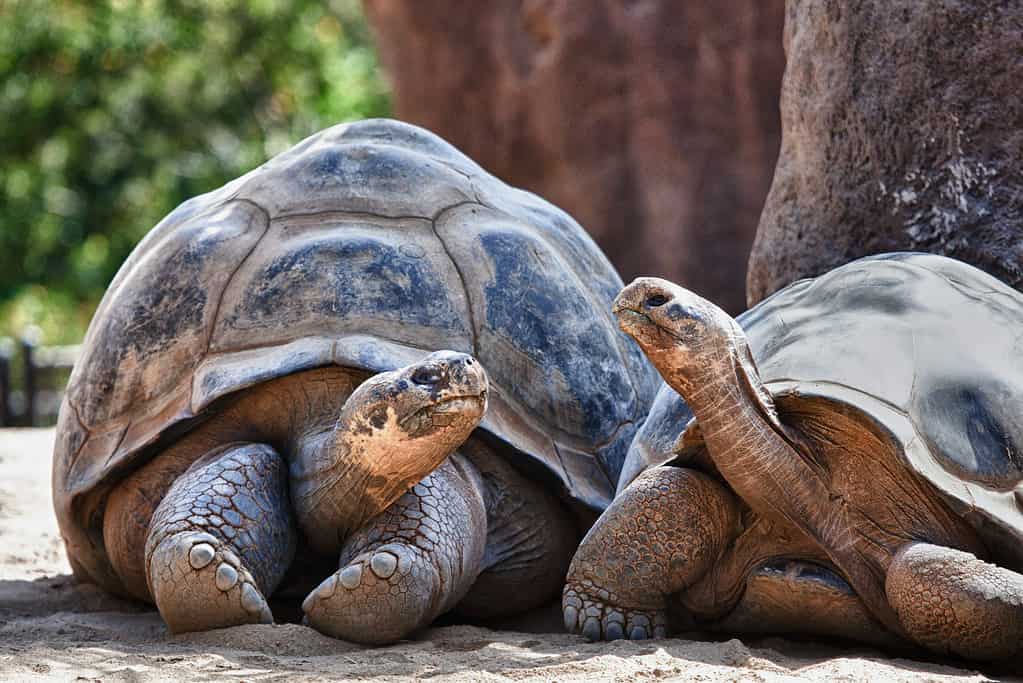
Tortoises are a type of turtle that live on land.
©paulacobleigh/ via Getty Images
Turtles, tortoises, and terrapins are all members of the Testudines family, a group of shelled reptiles. All members of this order are collectively referred to as turtles. So tortoises are a distinct type of turtle that inhabit the land in warm areas worldwide. They are unable to swim, which is what distinguishes them from turtles. Tortoise species inhabit a wide range of environments, from humid rainforests to hot deserts. There are about 360 species of turtles, some of which live on land, in water, or both.
All About Tortoises
Tortoises belong to a 220-million-year-old reptile family. The size of tortoises varies from small padlopers in southern Africa to huge tortoises on the Aldabra and Galapagos islands.
Turtles are the only reptiles with a shell, made up of 59-61 bones covered by plates primarily made of keratin. The shell is permanently connected to the spine and rib cage, so the turtle cannot crawl out. The carapace is the shell’s top, and the plastron is the bottom. Turtles can feel through their shells. Tortoise shells aren’t as heavy as they might appear because the shell is hollow, making it lighter.
Unlike humans, tortoises do not have teeth. Their beak-like mouths allow them to eat by biting with a rough, jagged edge. Although tortoises do not have ears like we do, their sense of vibration is all they need to know where a predator is hiding. They also have a keen sense of smell to help them locate food.
How Long Can Tortoises Live?
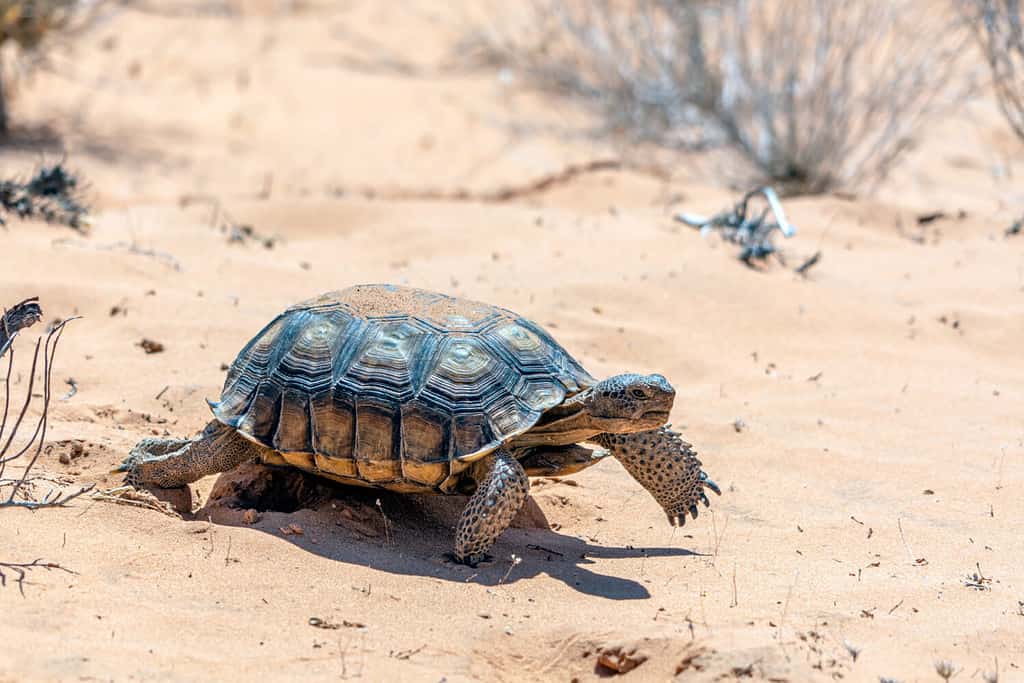
Tortoises have slow metabolisms, which are thought to contribute to their longevity.
©Gchapel/Shutterstock.com
The lifespan of tortoises is commonly cited as being between 50 and 100 years. However, scientists believe that much older tortoises may be roaming the land. The Galapagos tortoise, for example, has been living in solitude for so long that their lifetimes are measured in centuries. So it is extremely difficult to determine their age.
No one knows exactly why tortoises live so long, but a slow metabolism and fewer threats have been suggested as possible explanations. Because of a slower metabolism, tortoises burn energy at a slower rate, which may slow down the aging process. Studies have also found that tortoises have gene variants that are linked to DNA repair, cancer suppression, and immune response. Giant tortoises also live in regions where there are fewer predators. Additionally, predators may have a tough time getting a taste of turtle meat since it is covered in a hard shell.
The World’s Oldest Living Tortoise
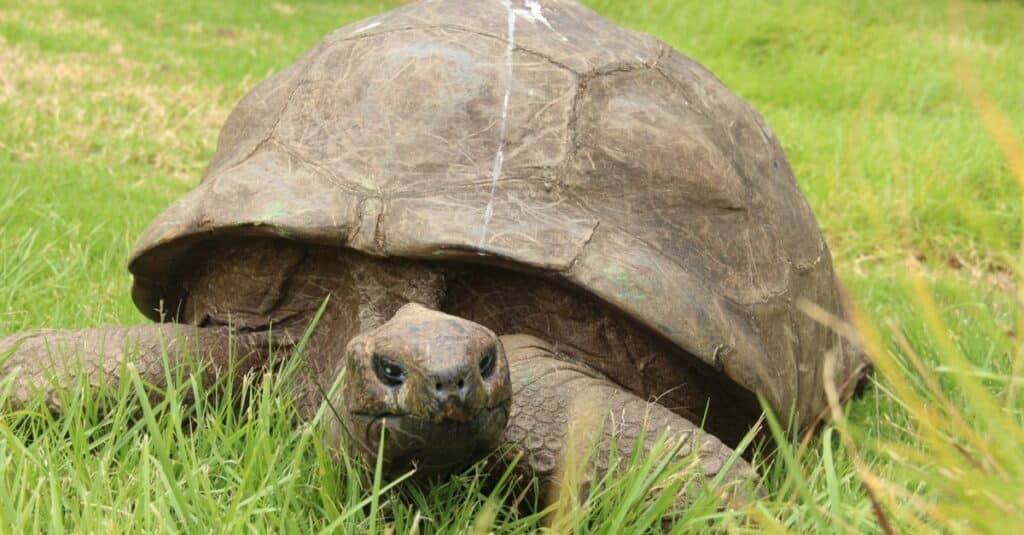
Jonathan, a Seychelles giant tortoise, is the oldest land animal alive.
©Snapper Nick/Shutterstock.com
Say hello to Jonathan, a giant tortoise believed to have hatched in 1832. Jonathan will celebrate his 193rd birthday in 2025. He is not only the oldest known tortoise, but also the oldest known land animal.
Another well-known giant tortoise, Adwaitya, died in 2006 at the age of 250. He was believed to be an Aldabra tortoise from the Aldabra Atoll in the Seychelles islands. Jonathan was also long thought to be an Aldabra tortoise. However, the Seychelles Nature Trust (and other zoologists) believe he may be a rare sub-species, the Seychelles giant tortoise. It is estimated that there are now fewer than 100 individuals of this rare subspecies left in the world.
Jonathan lives on the British overseas territory of St. Helena at a place called “Plantation House,” a Georgian estate built by the East India Company in 1791. There are three other gigantic tortoises living on the grounds to keep him company: David, Emma, and Fredrik. Although he is now blind, Jonathan has a good sense of smell. For most of the day, Jonathan lounges on the grass and socializes with the other tortoises. His image can be found on the back of the island’s five-penny coin, a testament to his fame.