
Quick Take
- Jonathan spent decades as a notorious troublemaker before becoming a scientific celebrity, and his early behavior may say more about his species than you'd expect. Read about Jonathan's early mischief →
- Scientists couldn't draw his blood, so the question remains: how did they sequence the genome of the world's oldest land animal? Discover how they sampled Jonathan →
- Jonathan's genome holds a feature that makes part of his DNA look younger than a juvenile tortoise's, and this feature may be the key to why he's still alive at 194. See the youthful DNA findings →
- The same longevity mechanisms found in Jonathan's DNA have also turned up in humans who live well past 100, and researchers think they know the reason why. Explore the longevity pathways →
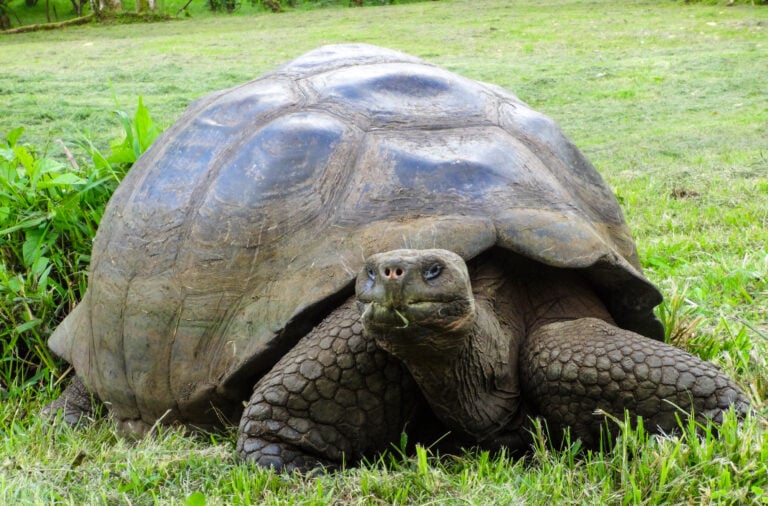
There are old creatures, and then there is Jonathan. This approximately 192- to 194-year-old Aldabra giant tortoise is the oldest living land animal. He has lived through the rise and fall of empires and survived to tell the tale, seemingly healthier than ever. Members of his species routinely live past 100 years, but there is something special about Jonathan, and scientists are keen to figure out what it is. The latest research in this department provides further clues to his longevity, and it seems to be related to his epigenome.
The recently published paper concerning Jonathan’s remarkable longevity involved a team of researchers meticulously measuring and piecing together the tortoise’s genome. They discovered that Jonathan’s genes, particularly ones that govern mitochondrial energy production, remained fresh and blocked entropy. Let’s learn more about the oldest living land animal, how scientists uncovered his secret to longevity, and what it teaches us about epigenetics’ role in staving off aging.
The Story of Jonathan

The oldest living land animal spends his days greeting tourists, eating fruit, and cavorting around the governor’s plantation on St. Helena with his tortoise companion Frederik.
©iStock.com/StHelena
The story of Jonathan begins in 1832 when he hatched in the Seychelles, an archipelago of over 100 islands in the Indian Ocean off the coast of East Africa. Fifty years later, he and three other tortoises were brought to the volcanic island of St. Helena in the South Atlantic as a gift for Sir William Grey-Wilson, who later became governor of the island. The tortoise was more or less anonymous until the 1930s, when Governor Sir Spencer Davis named him Jonathan.
Various accounts describe Jonathan’s youth as rebellious. He had a penchant for mischief, which manifested in his seemingly deliberate habit of overturning benches near the tennis court at the governor’s residence. Sometimes he would interrupt games of croquet by sitting on top of the balls during active play. Jonathan mellowed out as he grew older but retained a youthful vigor.
Since his time on the island of St. Helena, Jonathan has grown accustomed to human beings. In fact, he is drawn to the voices of people and will even belch loudly for crowds during public mealtimes. His longevity means he has lived through 31 different governors’ terms. In his advanced age, Jonathan is blind from cataracts. No longer able to forage for his own food, his personal veterinarian feeds him a specialized diet of fruits and vegetables once a week. Jonathan spends his days in the company of his mate Frederica, a tortoise introduced to the governor’s mansion in 1991 and originally assumed to be female before later discovered to be male.
Fighting Entropy
While it’s hard to say exactly how old Jonathan is, he has enough documented evidence to confirm his status as the oldest living land animal. This feat interests scientists. Recently, a team of scientists associated with Vanderbilt University and other organizations set out to understand exactly why Jonathan has survived so long.
Previously, researchers attempted to draw blood from Jonathan but concerns for his health prevented such measures. Instead, they collected saliva and cheek swabs. This proved to be something of an obstacle, as such samples don’t provide long, intact DNA strands. To supplement, they used a standard short-read DNA sequencing machine, which produced over a billion reads. Data requires context, however, so researchers took a blood sample from four other tortoises including a younger Aldabra tortoise named Tank. They sequenced Tank’s DNA and compared it with Jonathan’s. Roughly 93% of the samples lined up, including protein-coding genes and mitochondrial DNA.
The results were exceptional. Most of Jonathan’s DNA was very old, but certain segments that turn genes on or off were surprisingly young. For example, his methylation entropy, which controls genes that influence longevity, was lower than every studied tortoise except a 5-year-old juvenile. Furthermore, researchers found 287 genes with unique variants. Some link to tumor suppression and DNA repair, while others encode proteins that target and eliminate aging cells.
Magic Markers
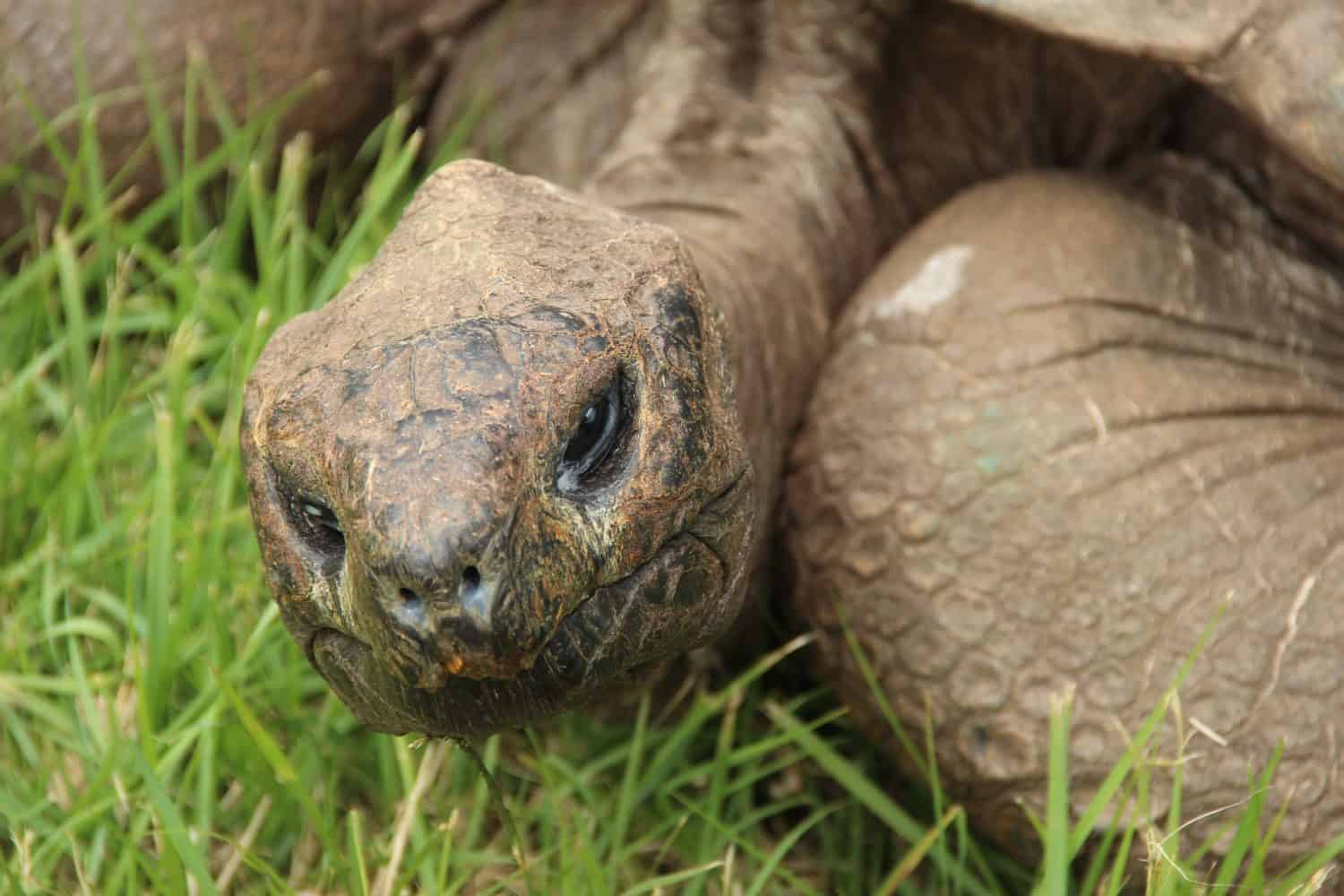
Aspects of Jonathan’s mitochondrial function mirror those of people that live well past 100 years old.
©Nix images/Shutterstock.com
As co-lead author of the study, Benjamin Vaisvil explained to Reuters, “We found changes in Jonathan’s genome in pathways associated with longevity, like DNA repair, mitochondrial function, insulin regulation and telomere function.”
While these findings are significant, the researchers are quick to point out that determining whether or not these traits are unique to Jonathan is difficult. It’s just as likely that an optimal diet and life on a tropical island has contributed to his long life. Vaisvil added, “We cannot say for certain that what we found is the reason for his longevity.”
That being said, the traits provide a valuable clue to aging. The researchers pointed out that the same mechanisms that may contribute to Jonathan’s longevity are found in long-lived people. A recent study of a 117-year-old woman found that her mitochondrial function mirrors the research team’s findings.
Regardless of the exact reasons for Jonathan’s remarkably long life, he remains healthy, content, and a testament to a life well-lived. Time will tell just how long that life proves to be.