
Quick Take
- Cold-stunning can leave sea turtles dangerously weak and unable to survive without treatment. See the cold-stunning danger →
- Vets had a specific checklist Pancake had to pass before it could ever touch the ocean again, and the requirements are more surprising than you'd think. See the release criteria →
- Releasing Pancake wasn't the end of the story. The team had one more move that changes everything about how they know it's okay. See the satellite tracking →
- Kemp's ridley sea turtles have survived for 110 million years, yet today a single rescued juvenile can matter more than you'd guess. See why each turtle counts →
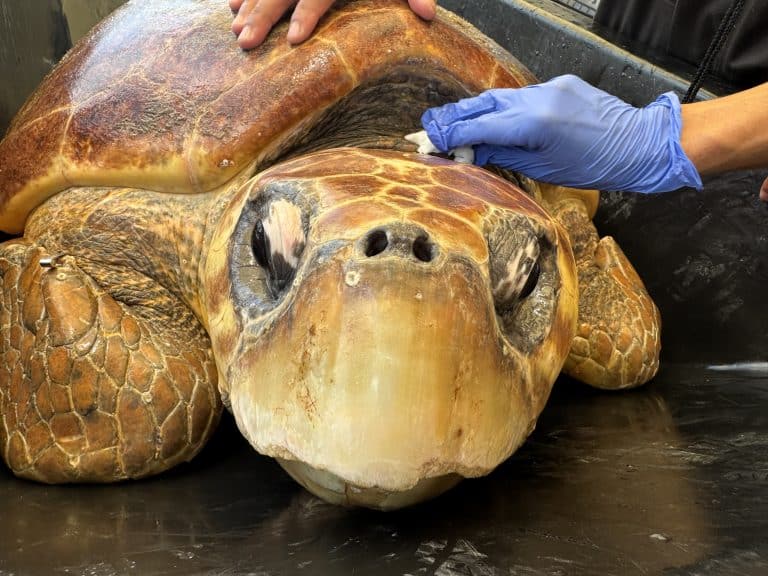
A crowd gathered at Coney Island in New York on July 23, 2026, for an unusual reason: to say goodbye to a turtle. Not just any turtle, however. It was a special turtle named Pancake, an endangered Kemp’s ridley sea turtle who had been in rehabilitation for 8 months before finally returning to its Atlantic Ocean home.
Pancake marked one more success story for the Atlantic Marine Conservation Society (AMSEAS) and its efforts in marine conservation.
What Happened to Pancake?
Pancake was found at Duck Harbor Beach in Wellfleet, Massachusetts, on November 22, 2025, after experiencing cold stunning, according to a press release by the Wildlife Conservation Society (WCS).
The juvenile sea turtle, estimated to be between two and five years old, was weak and inactive due to cold-stunning when it was found. According to the NOAA Fisheries, cold-stunning occurs when sea turtles are exposed to water temperatures below 50 degrees Fahrenheit. In such cold water, sea turtles become lethargic and may appear lifeless as they float at the surface, as if they have been stunned.
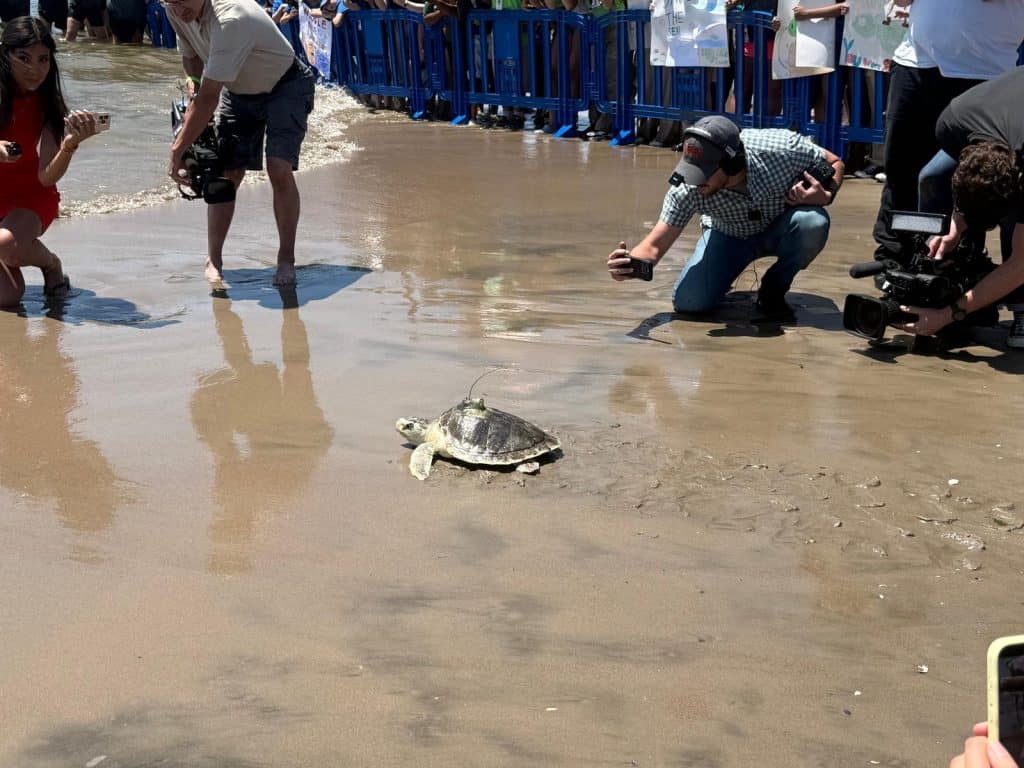
People cheered for Pancake as the sea turtle was released back into its home in the Atlantic Ocean.
©Wildlife Conservation Society/Drone Shots Credit NYS DEC
If sea turtles remain in cold water for too long, they can become seriously ill and may even die. This is because sea turtles can’t regulate their internal body temperature like mammals and birds do, so they are greatly affected by the environment around them.
Sea turtles that have been cold-stunned generally require assistance and veterinary care to recover before they can be safely returned to the wild. Fortunately, Pancake received the necessary care and made a full recovery, allowing it to return to its home environment and, hopefully, thrive for years to come.
How Was Pancake Treated?
Pancake was first rescued by the Massachusetts Audubon Society before being transported to the New England Aquarium for emergency treatment and then to the AMSEAS Sea Turtle Care Facility. The sea turtle underwent months of specialized rehabilitation by trained veterinarians, which included close monitoring, medication and treatment, nutritious food, and ample time to heal and recover.
The veterinarians who treated Pancake knew it was strong enough to return to the ocean after it demonstrated strong swimming ability, actively pursued its own food, ate shrimp and clams, and reached 11 pounds. They brought Pancake to the Atlantic Ocean outside the WCS’s New York Aquarium, where many people cheered for the turtle’s safe release.
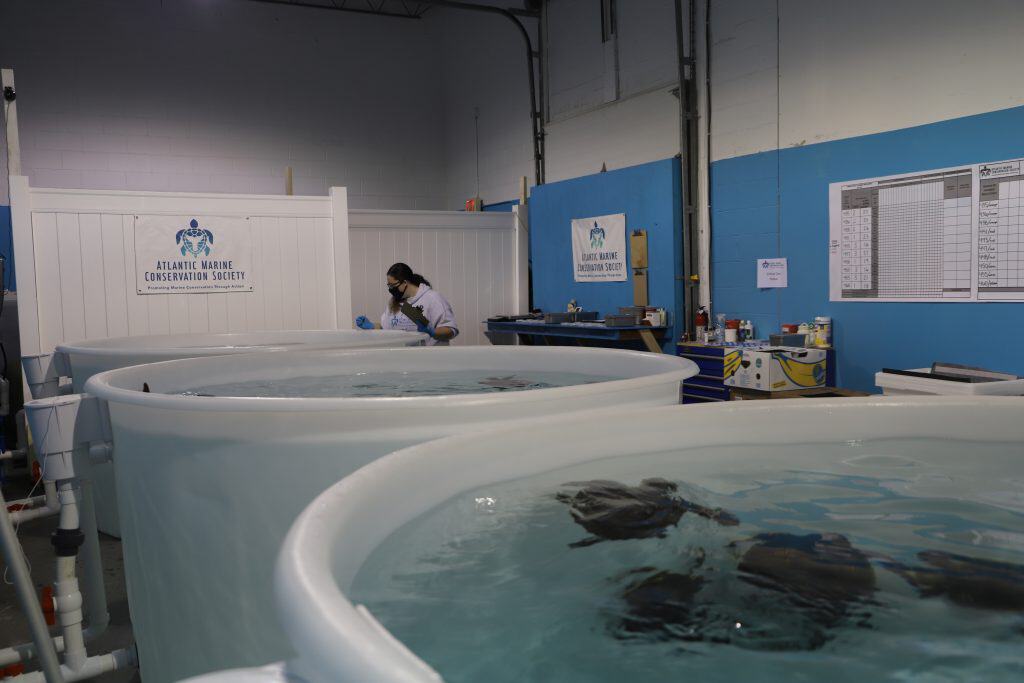
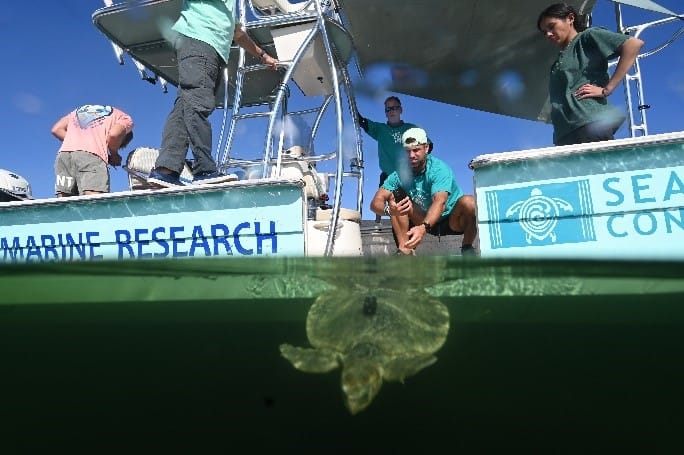
Sea turtles swimming at the Atlantic Marine Conservation Society’s Sea Turtle Care Facility, where they are closely monitored by trained veterinarians.
©Atlantic Marine Conservation Society
Pancake (whose sex is unknown) is one of 25 sea turtles transferred to AMSEAS for cold-stunning treatment during the 2025-2026 season, and one of 125 sea turtles treated at the facility since 2020.
“The care and release of Pancake is an inspiration to all of us who work so hard to preserve and restore our endangered ocean species and habitats,” New York Secretary of State Walter T. Mosley said in the press release, crediting the New York State Environmental Protection Fund for helping with the marine conservation.
What Happens to Pancake Now?
Pancake wasn’t simply released back into the ocean with hopes for the best. Instead, the team at AMSEAS attached a satellite tag to Pancake’s shell to track its location and surrounding water temperature and ensure its continued healthy behavior. The organization shared an update about the sea turtle’s whereabouts in an August 4 Instagram post, revealing that Pancake has been happily swimming and enjoying a second chance at life.
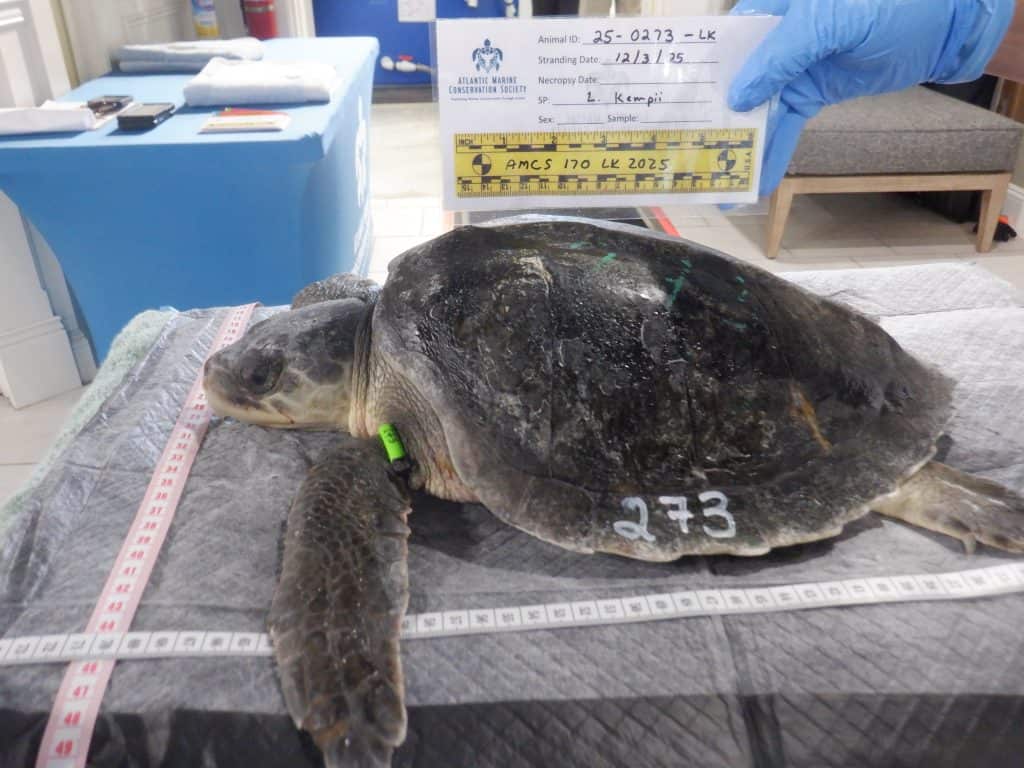
Pancake was measured and monitored at the Atlantic Marine Conservation Society’s Sea Turtle Care Facility.
©Atlantic Marine Conservation Society
“After spending some time offshore following the release, Pancake has recently been spotted in the South Shore Estuary Reserve bays, an important habitat for juvenile Kemp’s ridley sea turtles,” the organization wrote in the caption. “These protected bays provide abundant food sources and shelter, making them an ideal place for young turtles to forage and grow.”
They added, “Seeing Pancake thriving in the wild is exactly what we hope for with every patient we rehabilitate.” How amazing is that?
Kemp’s Ridley Sea Turtles Are Endangered
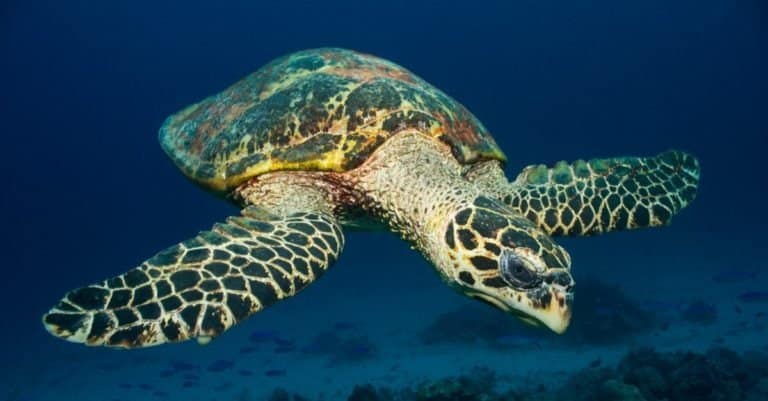
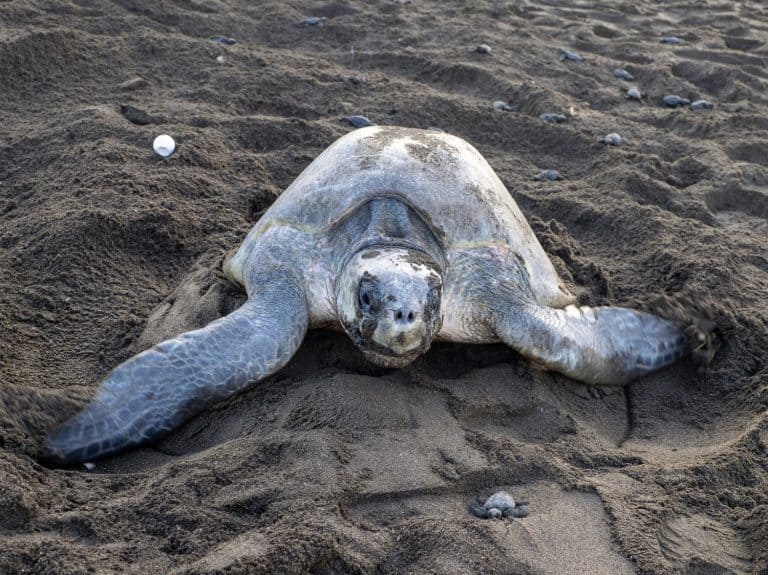
Kemp’s ridley sea turtles are among the oldest living animals, having existed for 110 million years. They have flippers for limbs and a tapered shell that doesn’t allow them to retract their heads inside like many other turtles. They spend almost all of their time at sea, although female sea turtles will come to land to lay eggs.
Kemp’s ridley sea turtles are the smallest of all sea turtles, with an estimated lifespan of around 30 years, and are considered critically endangered. Because of this, it’s more important than ever to ensure that each surviving individual is cared for and protected.
“Every Kemp’s ridley returned to the ocean is a victory for one of the world’s most endangered sea turtle species,” John F. Calvelli, Executive Vice President of Public Affairs for the Wildlife Conservation Society, said in the press release. “Pancake’s release reminds us that New Yorkers share our ocean with sea turtles, whales, dolphins, sharks, and countless other remarkable marine species.”