
Quick Take
- Mourning doves are granivores, preferring grain and seeds to any other foods.
- They prefer to forage for food that is readily available on the surface of the ground.
- These birds intentionally consume sand and small rocks to to help them grind down the seeds they eat.
- Hatchlings require a 100% crop milk diet for their first 7 days of life.
Many people have heard the sorrowful cooing calls and hoots of the mourning dove. After all, they have a wide range that includes most of North America and parts of Central America. Although their hoot is often confused with an owl’s, mourning doves are easily recognized by their distinct silhouettes and the fact that they often appear in pairs. The foods that mourning doves eat also distinguish them from owls. Unlike owls, you will not see a mourning dove swoop down to catch a field mouse. So, what do mourning doves eat? Read on to discover what foods you can provide in your yard to attract mourning doves and fill your terrace with their song.
The Mourning Dove Diet
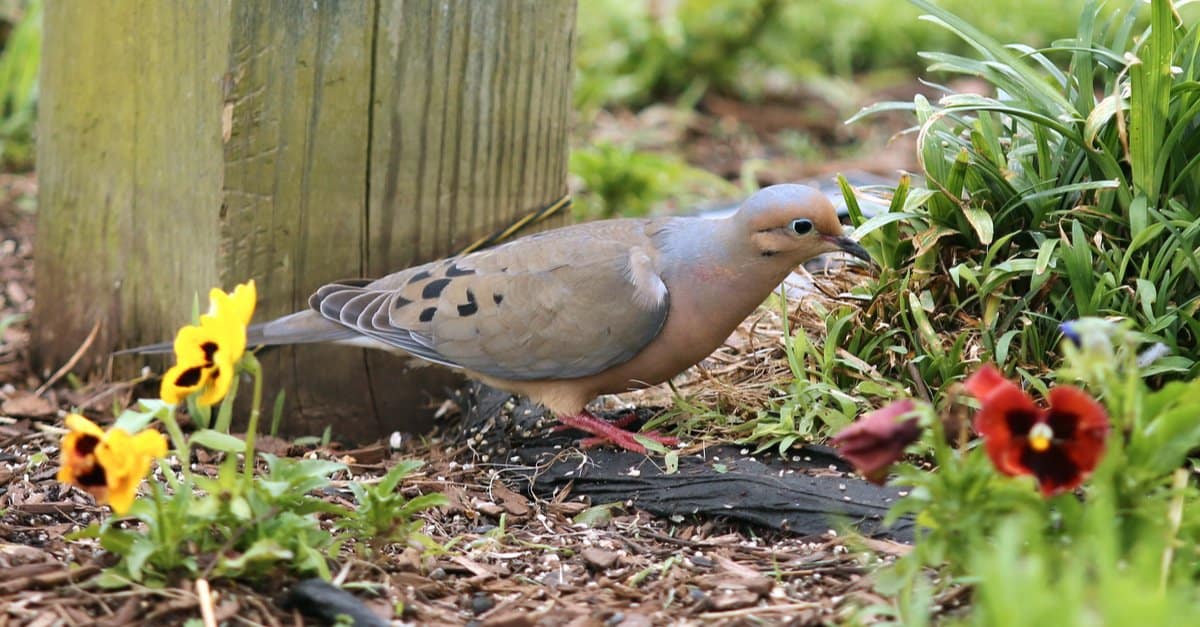
Mourning doves are granivores, preferring grain and seeds to any other foods. They also consume some fruits, herbs, and wild grasses. They prefer foods found on the ground because these are easy to obtain. They’re also opportunistic eaters, consuming foods that are available only seasonally. Mourning doves prefer to linger in areas with greater food diversity, where food can be found throughout the year.
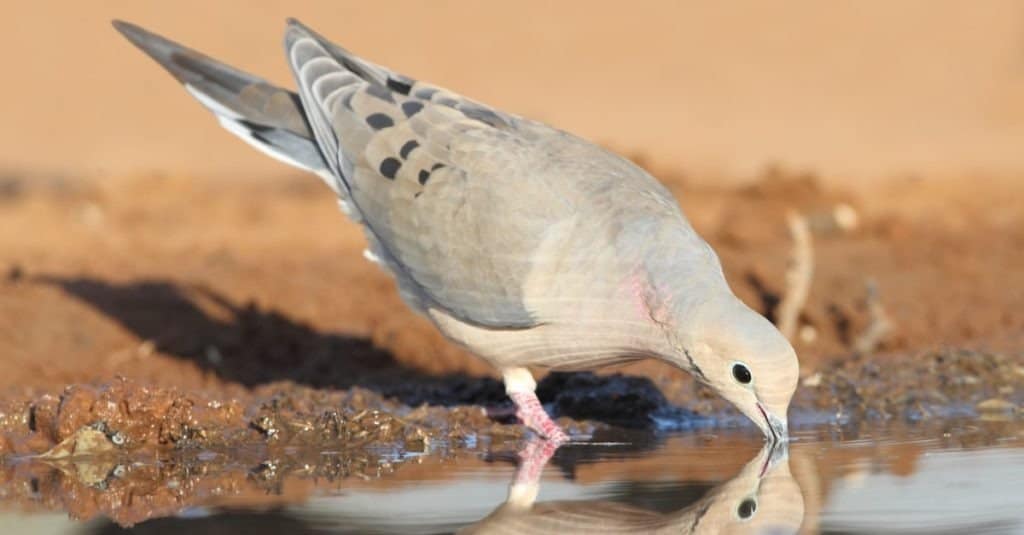
Mourning doves also require plenty of water to help soften their food for digestion.
©iStock.com/BrianLasenby
Although grains and seeds make up almost all of their diet, they eat many different foods. Here are some of the specific foods that mourning doves regularly consume:
- Corn
- Millet
- Buckwheat
- Rye
- Pine nuts
- Foxtail
- Sunflower seeds
- Canary grass
- Wheat
- Safflower
- Rapeseed
- Witchgrass
- Sorghum
Although it is rare, mourning doves have been observed eating other foods when their favored foods are not plentiful. These birds occasionally eat insects and other small invertebrates to supplement their diet, but they almost always prefer to eat grains and seeds. Mourning doves also consume sand or small rocks, which are stored in their gizzards to help them grind down the seeds they eat. Additionally, they require plenty of fresh water to help soften their food for digestion.
How Do Mourning Doves Forage for Food?
Mourning doves tend to favor sunflower seeds and other foods that they can see without having to scratch the ground for them. These birds also choose foods based on size. For example, studies have shown that mourning doves prefer shorter and narrower corn seeds.
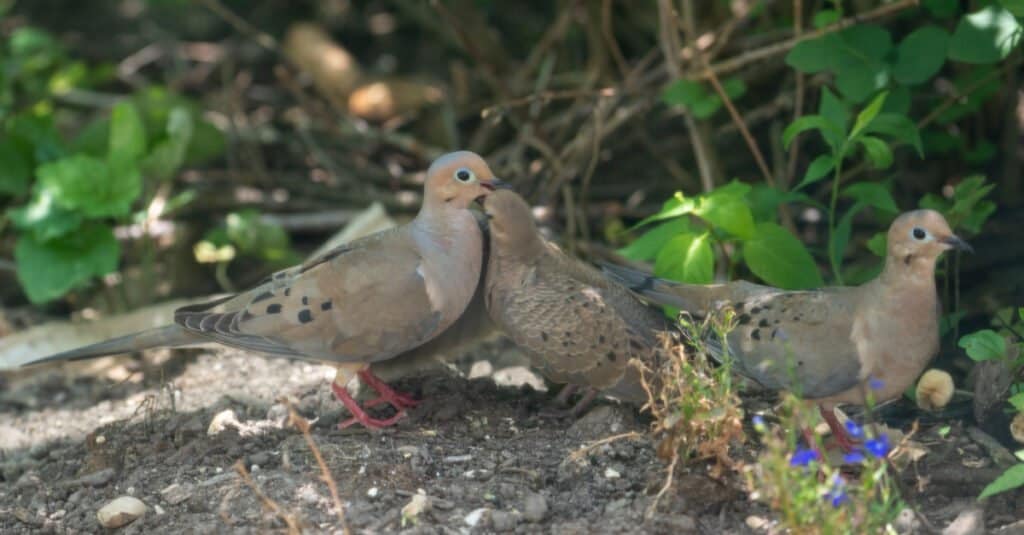
Mourning doves also choose foods based on size.
©Brooke Bowdren/Shutterstock.com
Mourning doves spend a lot of time on the ground searching for food. Their foot structure is not well-adapted for scratching the earth to find food covered by leaves and other vegetation. These birds prefer to look for food that is readily available on the surface.
Mourning doves feed while on the ground, filling their crops. This pouch at the front of their necks can store food and begin the process of digestion. Frequently, mourning doves will fill their crops and then retreat to a safer location to digest their food. The crop is also where adult birds produce crop milk, a nutrient-rich secretion they feed to their hatchlings.
The Mourning Dove Winter Diet
Mourning doves, like many other birds, begin to migrate south in the autumn months. Some birds leave for warmer states in the U.S., while others go farther south to Mexico and Central America. During the fall, these birds have been observed eating wheat until the field stubble has been consumed. They also forage around recently harvested foxtail and corn fields.
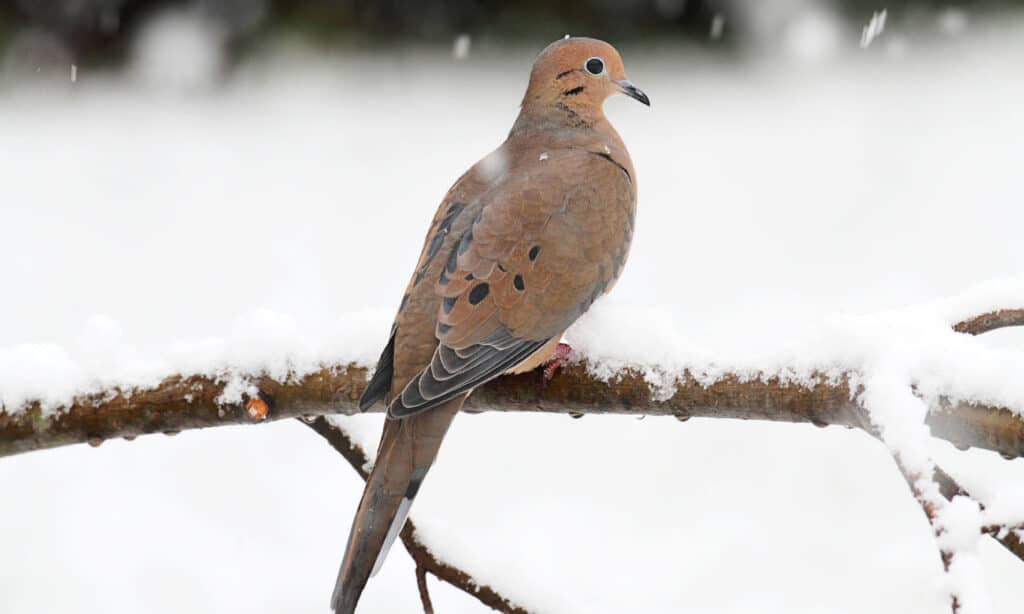
Mourning doves are less selective in the winter because fewer surface foods are available.
©iStock.com/SteveByland
In the winter months, mourning doves continue to forage for their normally desired foods. The migration to warmer climates supplies them with plentiful foraging opportunities. However, not all of these birds migrate. Some birds remain relatively close to their breeding grounds throughout the winter, continuing to forage on field stubble until new weeds and other crops begin to grow.
What Do Baby Mourning Doves Eat?
Baby mourning doves consume only crop milk for the first week of their lives. Both male and female adult birds produce this substance in their crops, the esophageal pouch where they store food and begin digestion.
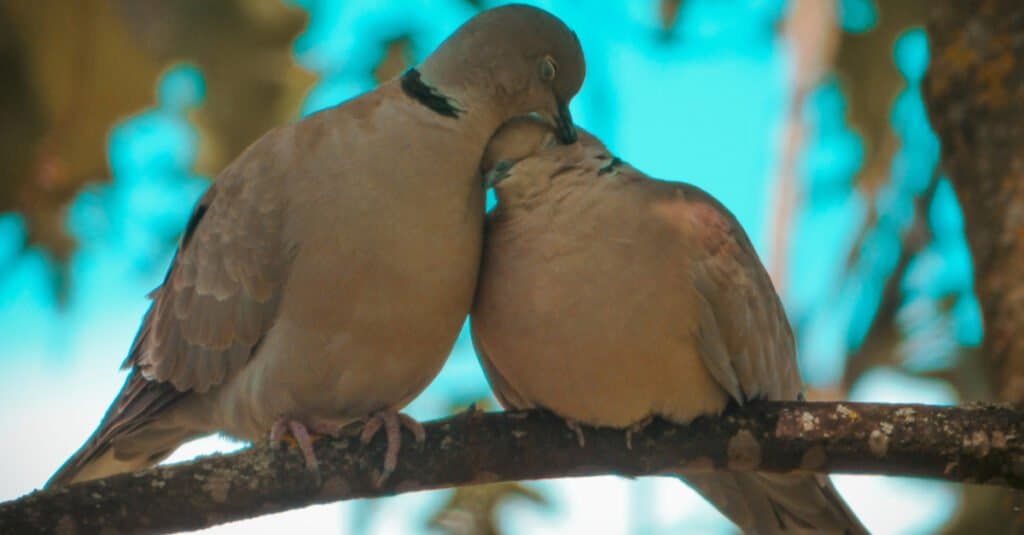
Mourning dove parents produce crop milk for the first weeks of their babies’ lives.
©petritzaa/Shutterstock.com
Crop milk is made from cells of the crop lining and provides essential proteins and fats for the baby birds. The parents regurgitate the crop milk directly into their babies’ mouths. In the second and third weeks of life, the baby birds eat partially digested seeds from their parents. After that, they are ready to forage for seeds on their own.