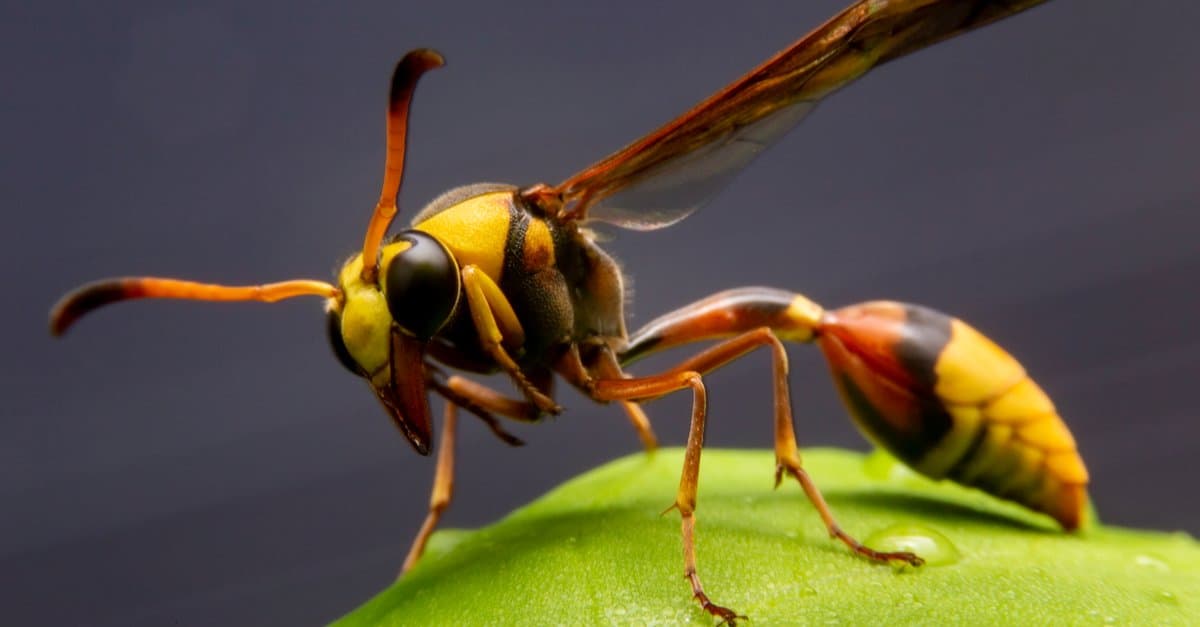

Identifying certain insects around your home can be an important step when considering pest control. Today, we are going to take a look at the difference between dirt daubers vs. wasps in order to understand what makes them unique. Learning to correctly identify different insects is important for anyone interested in ecology or those who just want to know what kind of nest they found in their backyard. Additionally, proper identification can actually aid in allowing natural pest control to occur, as we will find out later. Let’s get started!
Comparing Mud/Dirt Daubers and Wasps
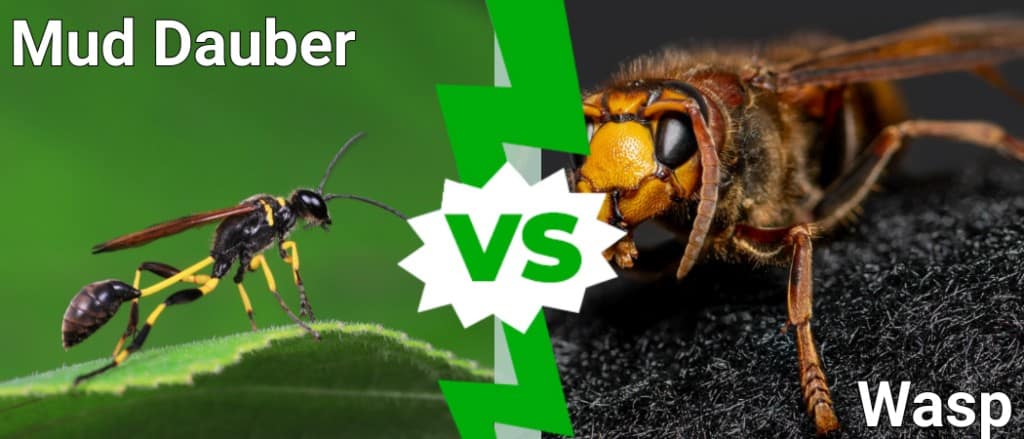
| Mud Dauber | Paper wasp | |
|---|---|---|
| Nests | Constructed with mud and dirt; tubular shape | Constructed from chewed wood fibers and saliva; umbrella shape with hexagonal structure |
| Colony Size | Solitary wasps | 20-40 wasps per nest |
| Prey | Almost exclusively spiders, occasionally pollen and nectar | Mostly nectar and pollen |
| Sting | Not aggressive; painful sting that can cause significant local reactions | Territorial and can be aggressive; painful sting can cause significant local reactions |
Key Differences Between Dirt Daubers vs. Wasps
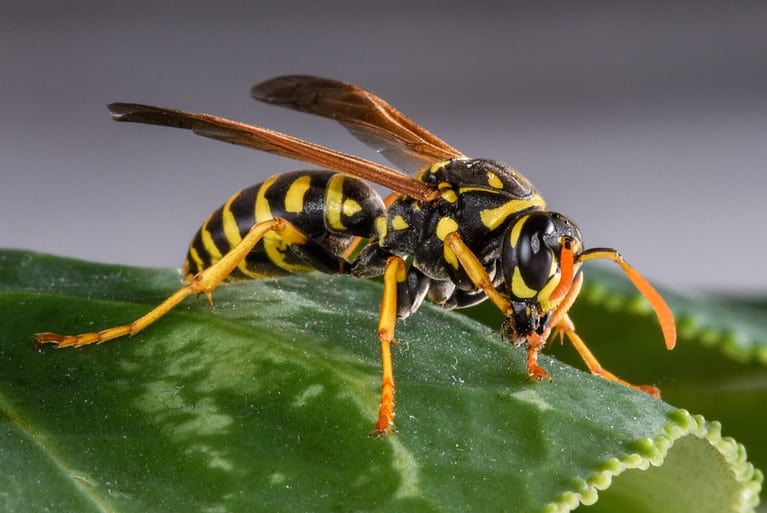
Understanding the differences between dirt daubers and wasps begins with the correct names. Technically, dirt daubers are wasps. “Wasp” is a broad category of insects that include over 100,000 species. Paper wasps, yellowjackets, tarantula hawks, and even mud daubers are all wasp species. However, in the U.S., when most people refer to a “wasp,” they are mostly likely referring to the common paper wasp. As such, we are going to be comparing the two today. The biggest differences between dirt daubers, also referred to as mud daubers or mud wasps, and paper wasps are their nests, colony size, prey, and sting. Let’s take an in-depth look at each of these differences.
Nests
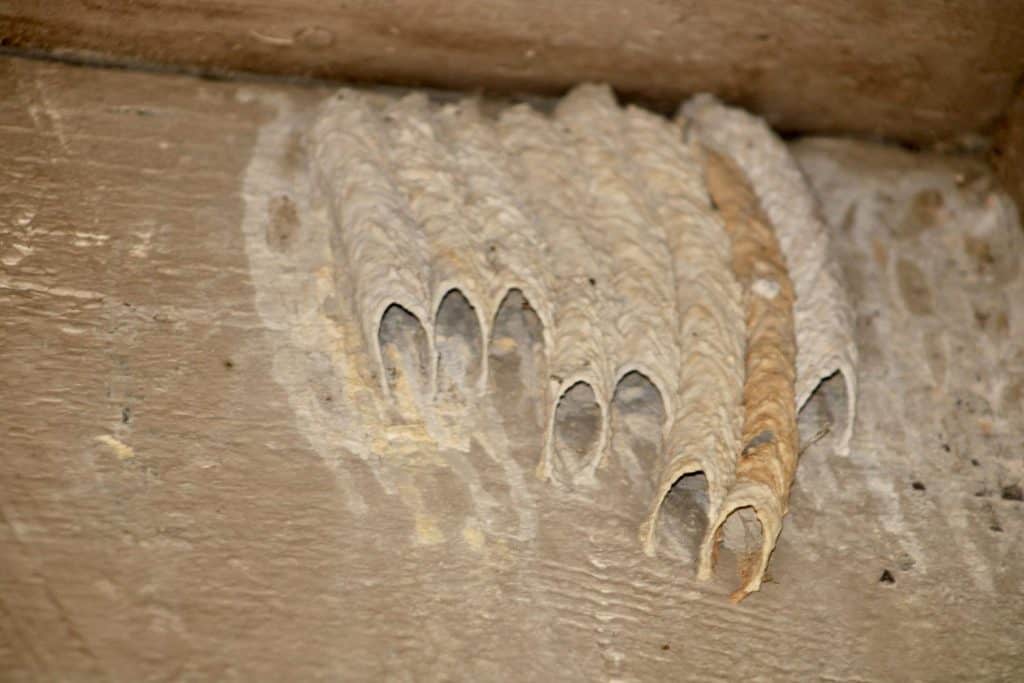
Mud daubers use mud to build their nests while paper wasps use chewed wood fibers.
©Jaclyn Vernace/Shutterstock.com
The nests of dirt daubers and paper wasps are closely related to their names. Mud daubers get their names from the females of the species. When they go to construct their nests, they gather mud from the surrounding area and form it with their strong mandibles. The resulting structures are tube-like, generally 0.5 inches wide and 2-4 inches long. Within the tubes are small chambers in which the females lay eggs. Mud daubers’ nests are common sights in almost every covered outdoor building, especially in gazebos and covered picnic areas.
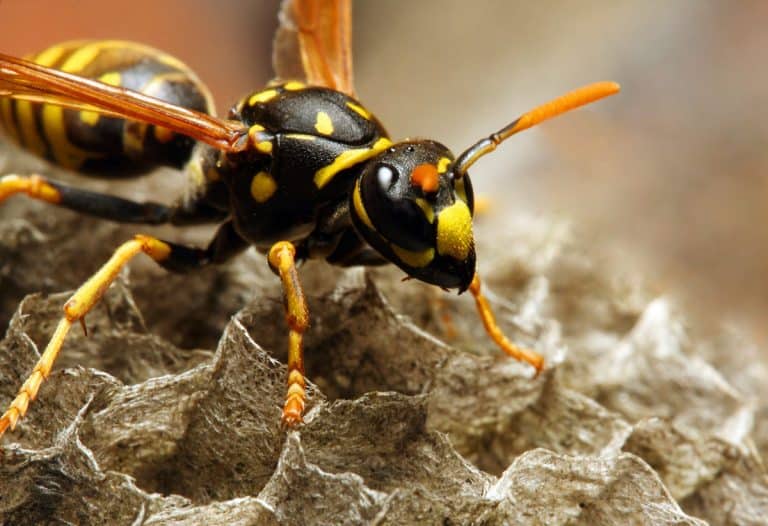
Paper wasps also get their name from the way they build their nests. Where mud daubers use mud and dirt to build their nests, paper wasps chew wood fibers into a pulp that they mix with their saliva. The resulting paste is then spread as a construction material and, when dried, closely resembles a natural paper. Their nests resemble handle-less umbrellas, with a small connection point holding it to an overhang and hexagonal entrance on the bottom. On average, they can be 4-5 inches in diameter, although some species of wasp create much larger structures.
Colony Size
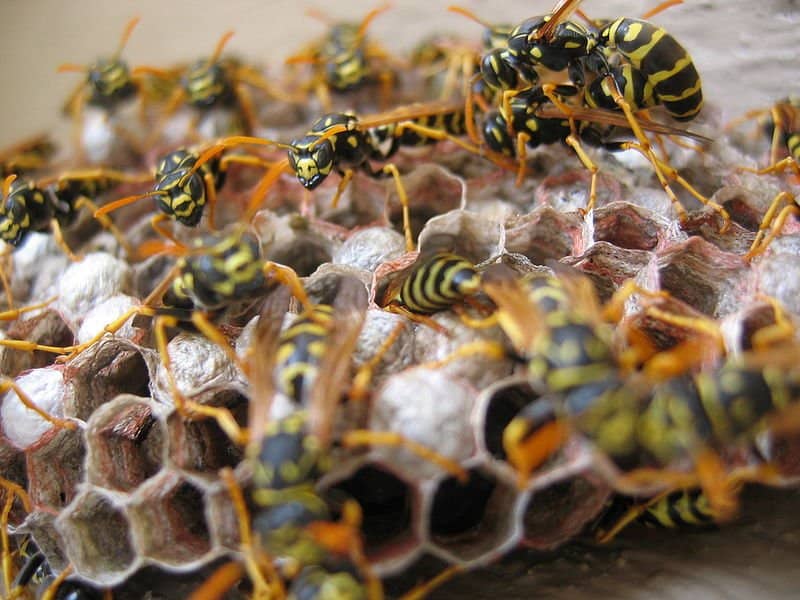
Mud daubers are solitary wasps while paper wasps live in colonies.
©Brian Fish – Public Domain
Mud daubers and paper wasps lead very different social lives. Daubers are part of a group of wasps known as “solitary wasps.” Solitary wasps are sometimes known as hunting wasps, and they are relatively common among the wasp family. They live alone and spend their day hunting, with most of them reproducing by laying their eggs in a paralyzed prey victim, usually a spider. Mud daubers belong to this group of wasps, and each female will usually carry a paralyzed spider into her nest, lay an egg in it, and seal it away in a chamber.
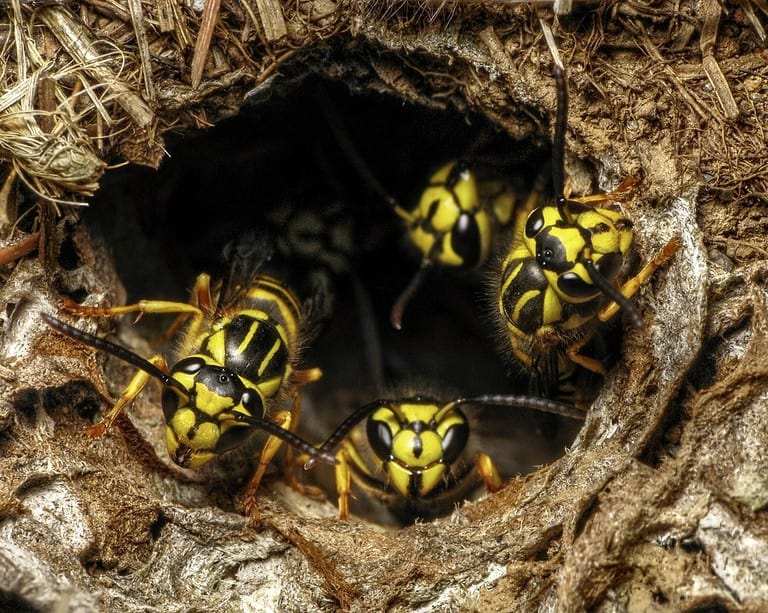
Unlike the dauber, paper wasps are colony insects. In most colony-based wasp species, there is a queen that overwinters in a hidden location, emerging in the warm months to begin building a nest. Once construction has begun, a paper wasp colony can house as many as 20-40 individuals, mostly determined by the amount of time the colony has had to work on the nest. The hexagonal structures under the “umbrella” are actually larval chambers where eggs are laid, sealed in, and develop into adult wasps.
Prey
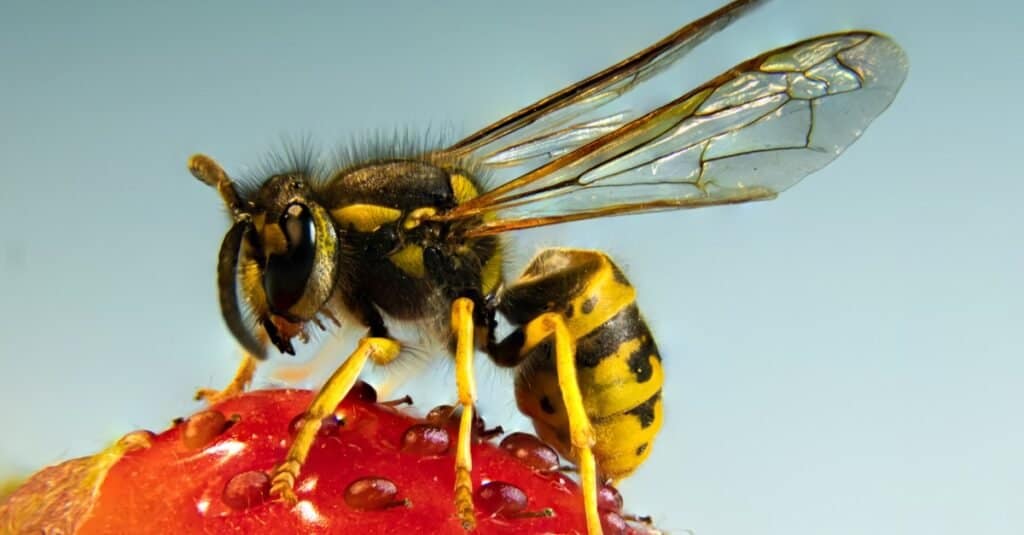
Mud daubers eat spiders while most colony-based wasps eat nectar and pollen.
©Thomas Hochreutener/Shutterstock.com
Most solitary wasps, daubers included, specialize in a particular type of prey. Most species of dauber are expert spider hunters and can kill as many as 25-30 spiders per tube of their nest. With the number of spiders that daubers kill, they act as a natural form of pest control. They generally target crab spiders, orb weavers, jumping spiders, and brown or black widows. Since they are so good at killing spiders, killing or removing daubers is generally a bad idea. They help keep spider populations in check, especially dangerous ones.
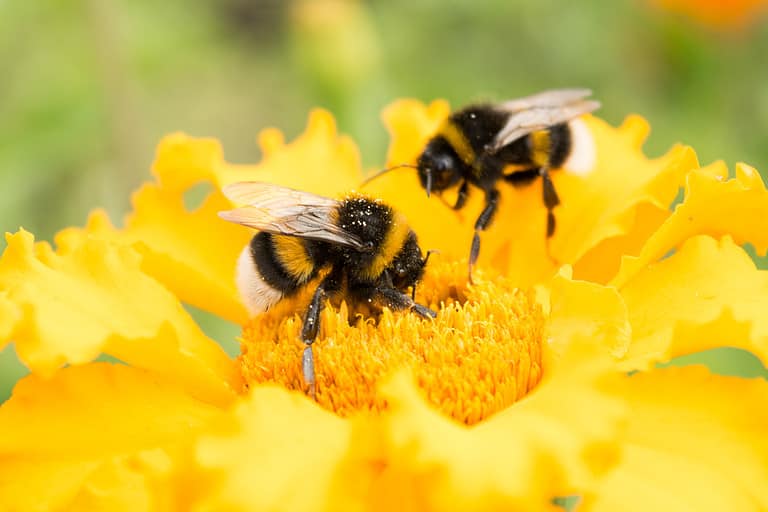
Paper wasps are somewhat less predatory than their solitary cousins. Colony wasps get most of their nutrients from nectar and pollen, much as a bee would. Additionally, they are known to feed on other sweet liquids like those from fruits and human gardens. They act as important pollinators in the wild. Although they mostly drink nectar and eat pollen, they also hunt caterpillars and other insects to feed their larvae.
Sting

Both wasps sting, but paper wasps are typically more aggressive and territorial.
©WIRACHAIPHOTO/Shutterstock.com
Mud daubers, like all wasps, have the ability to sting when threatened. All wasps have their own chemical concoction that determines how their venom works and how it feels, but the dauber and the paper wasp are similar. Daubers, however, are known to be much less territorial when it comes to their nests and personal space. Like all wasps, only the females can sting — and their stings hurt — but they rarely sting humans. A dauber would prefer to avoid confrontation and would rather reserve their sting for prey.
Paper wasps have a similar sting to a dauber, only they are known to be more aggressive and territorial. Wasps will defend their nests with their life and are known to attack humans who get too close. So, stings involving humans usually come from paper wasps, especially since the places they build nests are locations that humans are more likely to frequent.
How to Treat a Dauber or Wasp Sting at Home
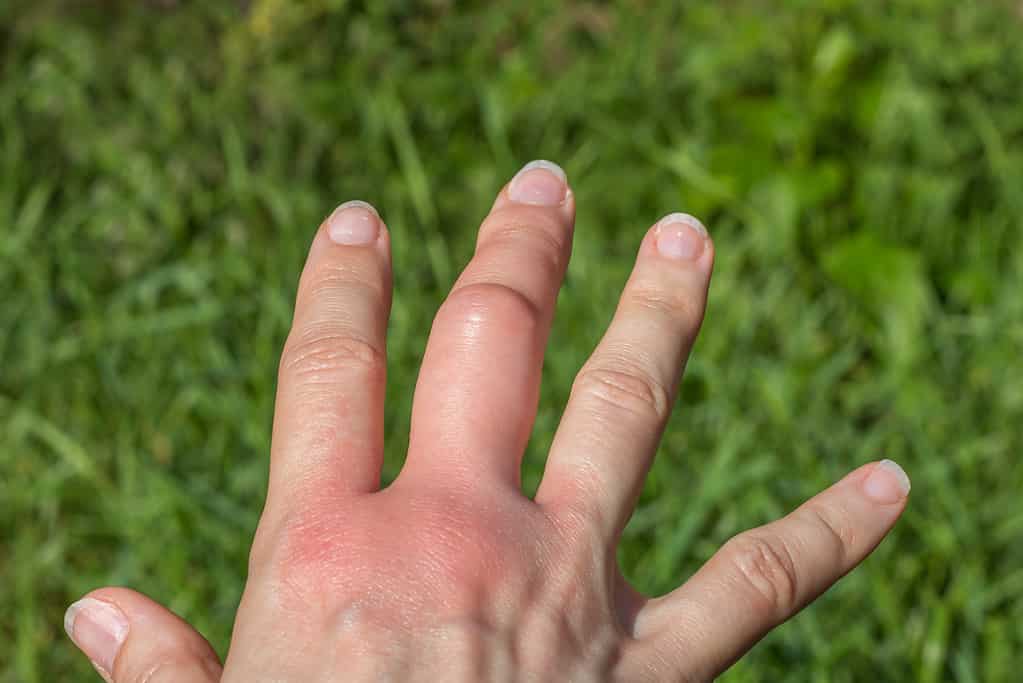
Wasp stings can cause swelling and redness.
©iStock.com/Inna Kozhina
While most stings from mud daubers and paper wasps are not life-threatening, they can be quite painful and may cause significant local reactions. Individuals with allergies or who experience severe symptoms should seek medical attention without delay, especially if stung in the mouth, nose, or throat.
For stings in other areas:
- Wash the affected area with warm soap and water. This can help wash out venom and bacteria left behind by the wasp.
- Apply ice or a cold pack. This will help reduce swelling and alleviate the pain of the sting. This should be done for about an hour after the sting in intervals of ten minutes on and ten minutes off.
- Take anti-inflammatory medicine. Take an over-the-counter anti-inflammatory medication for pain and swelling.
- Treat itchiness with an antihistamine. Not only will this help with itchiness, but it will also diminish pain and swelling. The sooner it is applied, the better.