
Quick Take
- Not every yellowjacket nest needs to be removed, but the ones that put people or animals in a dangerous situation do. See when to leave it →
- The DIY removal methods most people reach for first don't just fail. They can turn a manageable problem into something far more dangerous. See the DIY dangers →
- There's one location where a nest can make no room in your house feel safe, and that spot is easier to miss than you'd think. Find the risky location →
- You don't have to be allergic to wasp stings for a yellowjacket encounter to turn fatal. The math is more unsettling than most people realize. Understand the sting math →
One warm August afternoon, I opened my office window and sat down to work. I heard a strange humming noise outside that didn’t stop. Eventually, I popped my head outside to see what was causing the commotion.
Imagine my shock when I came almost face-to-face with a very large Yellowjacket nest. I saw them before they noticed me and quickly retreated inside, slamming the window shut behind me. Then I sat down to figure out what to do about the nest that was just a few yards from our front porch.
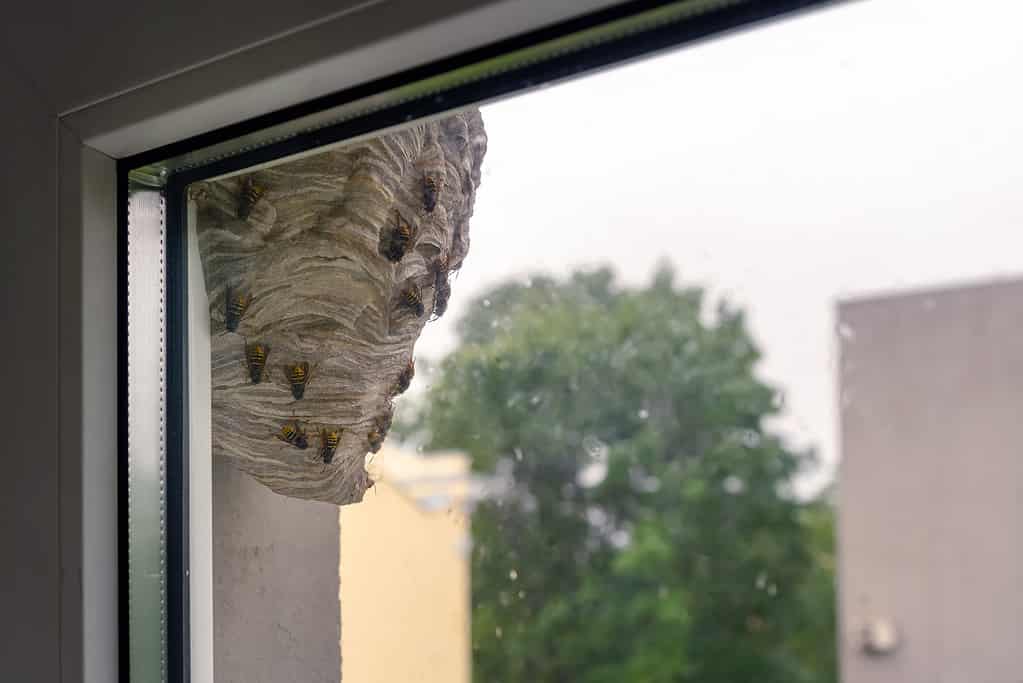
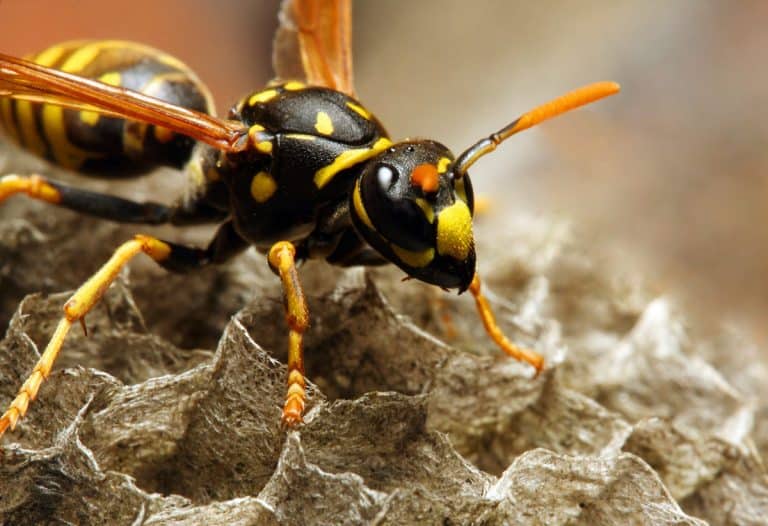
Yellowjackets like to build nests in protected nooks, especially high on buildings.
©Ja'Crispy/iStock / Getty Images Plus via Getty Images
Whether you have uninvited Yellowjackets making their home along your roofline, in your walls, or underground in your lawn or garden, cohabiting with them can be a challenge. Here’s everything you need to know about identifying a Yellowjacket nest, when to leave it alone, and when to call in the professionals to remove it.
Continue reading
How to Spot a Nest Before You Step On It
The nest next to my office window was easy to spot. It was attached to the peak in our second-story roofline. But not all Yellowjacket nests are so obvious. Wasps can – and often do – build nests wherever it is most convenient. Sometimes that’s in the walls of your house, or in your grass or landscaping.
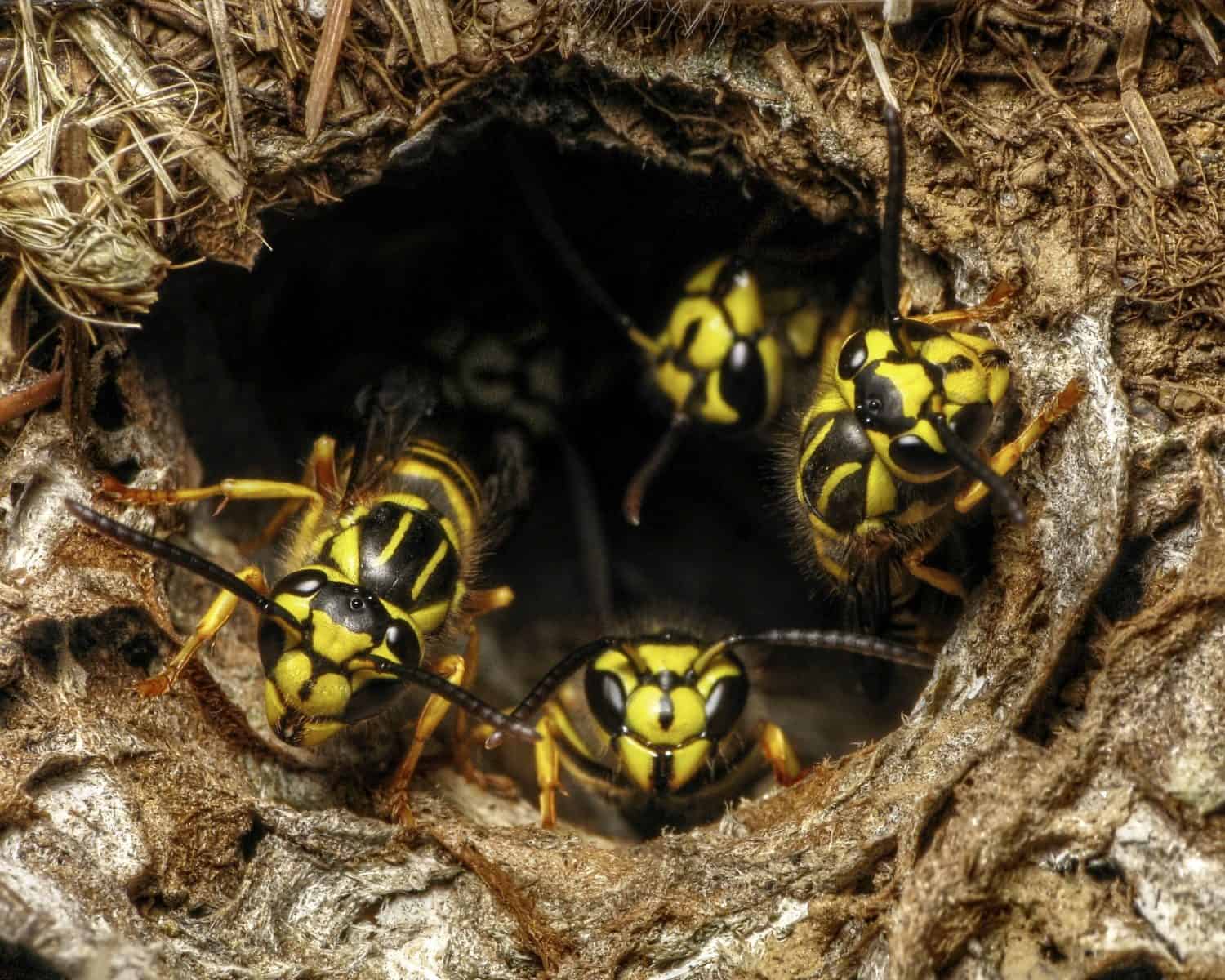
For the nests you can’t easily spot, there are a few signs to look out for that indicate Yellowjackets have made a home nearby. The most obvious is when you consistently observe a steady line of wasps flying in and out of a single small opening. If you see that behavior consistently, it’s a very good indication there’s a nest at the end of that route.
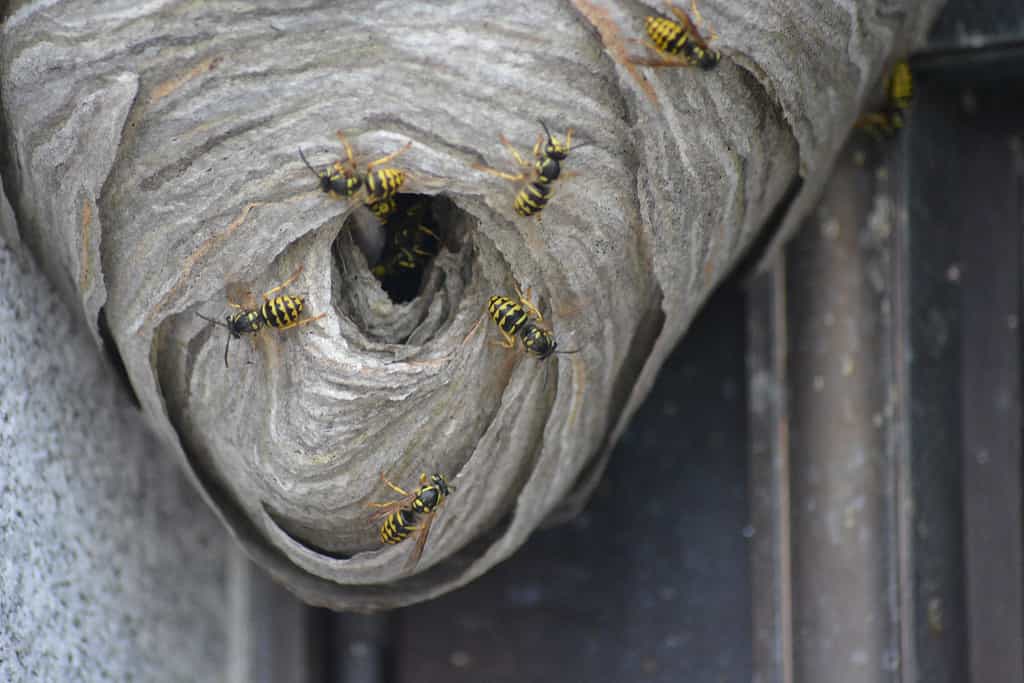
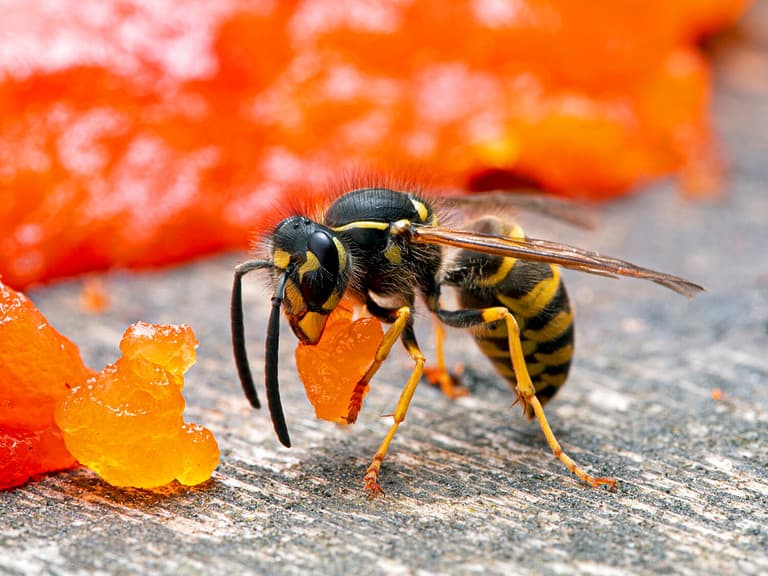
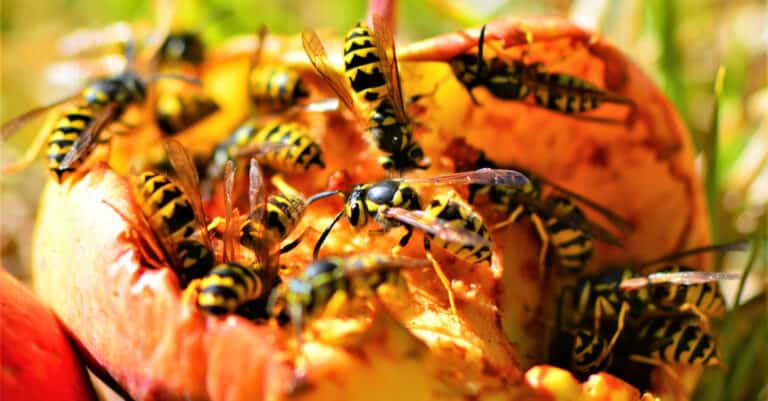
Yellowjackets will aggressively defend their nest.
©Daniel Loya/Shutterstock.com
Sometimes you won’t see the nest, like when it is underground or inside a structure. For visible nests, the entrance is usually the lowest and most obvious opening. In the case of the nest outside my office, the entrance was a very obvious hole, about the size of a quarter, at the bottom front of the nest.
By late summer, a Yellowjacket nest can hold thousands of worker wasps along with a queen. That makes it even more important not to accidentally disturb the nest.
When to Just Leave It Alone
Not all nests need to be eradicated. For example, if the nest is somewhere people and pets don’t usually go, like in the far corner of your yard or deep in a hedge, wasp experts say to simply leave it alone and avoid the area – at least in areas that get colder winter temperatures.
Yellowjacket colonies die off naturally after the first hard frost, and wasps don’t re-use old nests. However, if you live in a milder climate or the nest is located near areas with frequent human or animal activity, removing the nest may be the best option.
When a Nest Has to Go
There are some scenarios that demand a nest be removed. If it is located near a doorway, walkway, patio, or in your home’s walls, this is a time to act. Nests in walls are particularly problematic because no part of your house will be safe from incoming wasps.
In my situation, the nest was directly above our front porch and door area. Anyone going in or out was at risk of being stung by wasps from the huge nest.
It isn’t just the pain of a wasp sting that makes removal important. Yes, stings hurt—a lot, as I eventually found out. But for some people, severe allergic reactions can occur. According to the American College of Allergy, Asthma & Immunology, 1.6 to 5.1 percent of Americans experience a life-threatening reaction to an insect sting at some point, and around 72 deaths occur in the U.S. each year as a result.
The Risks of DIY Removal
Experts warn against trying to remove wasp nests yourself. Some methods, like using gasoline or fire to burn the nest, can quickly spiral out of control, causing a much larger and more dangerous fire.
Likewise, using insecticides may be ineffective, especially for underground nests. Those types of nests can extend several feet deep and may be many feet away from the observable entrance. In those cases, you’ll end up only killing a few wasps just inside the immediate entrance, leaving the nest untouched. The same is true for nests high out of reach, like on your home’s roofline (like mine).
Most importantly, the greatest risk is triggering a mass attack by the yellowjackets. If you disturb a nest, they may become highly defensive. If you’re not wearing full wasp protection, you could be stung repeatedly. In addition to being extremely painful, mass yellowjacket stings can be fatal. The venom in 300 Yellowjacket stings is enough to kill a child, even if they aren’t allergic to the stings.
When to Call In the Professionals
Based on my personal experience with the yellowjacket nest high on the roofline of my house, I recommend calling in experts for nest removal. These professionals have the protective gear and equipment that keep them safely distanced from the nest while still effectively eradicating it. Wasp experts agree.
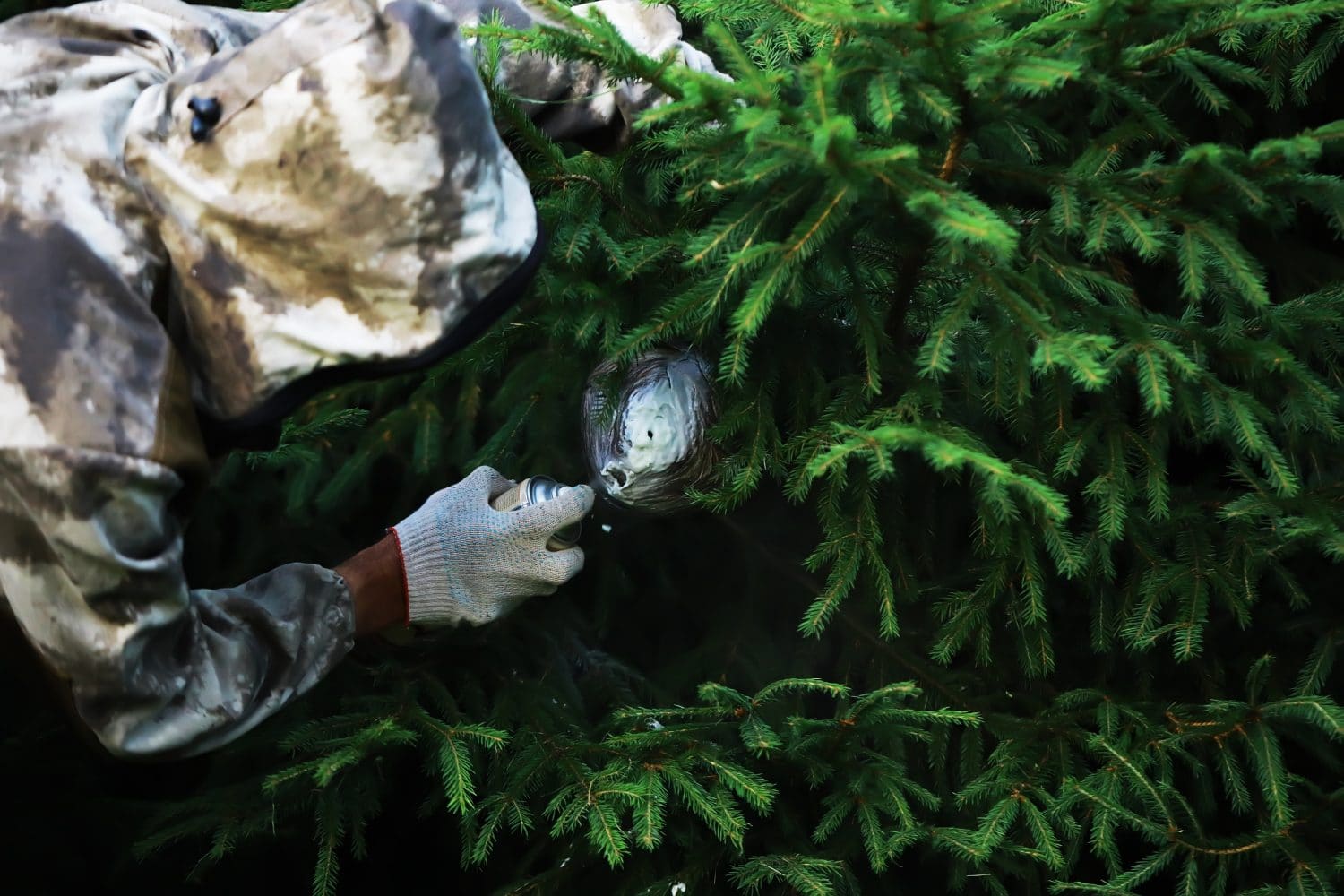
Professional wasp removal experts have the protective gear and tools to safely remove a nest.
©alexkich/Shutterstock.com
If the nest you need removed is inside the walls of your house or another hard-to-reach spot, hiring a pest control expert is likely the only way to rid yourself of the wasp problem. Leaving it to the professionals is also the safest way to avoid stings to yourself, your friends, or family members who might think they can remove the nest themselves.
Hiring a professional also reduces the risk associated with DIY removal. This helps you avoid potentially life-threatening situations, such as anaphylactic shock in someone who is unaware of their allergy to wasp stings until after being stung.