
Quick Take
- Red wasps look terrifying, but their actual threat level compared to other Texas wasps might surprise you. See their threat level →
- Removing a wasp stinger the wrong way can make things significantly worse, and most people's instinct leads them to do exactly that. Get the correct treatment →
- That red wasp nest near your door might be doing your garden a favor, and that possibility complicates the decision to remove it. Explore the garden benefits →
- Timing is everything when dealing with red wasps, and most homeowners pick the worst possible moment. Find the safest timing →
Texas is among the hottest states in America, and where there’s heat, there are insects. Wasps are no exception. Texas is home to 130–150 wasp species. If you’ve ever been stung by a wasp, the first whir of a buzz may send you running inside, especially if that wasp is a glaring bright red. The predatory red wasp is considered a nuisance to Texas residents, and there is no denying that these insects conjure panic. However, are these rusty red arthropods actually dangerous or just slightly bothersome? Learn how to identify red wasps in Texas, including where you might find them and whether they pose a threat to humans.
How to Identify Red Wasps in Texas
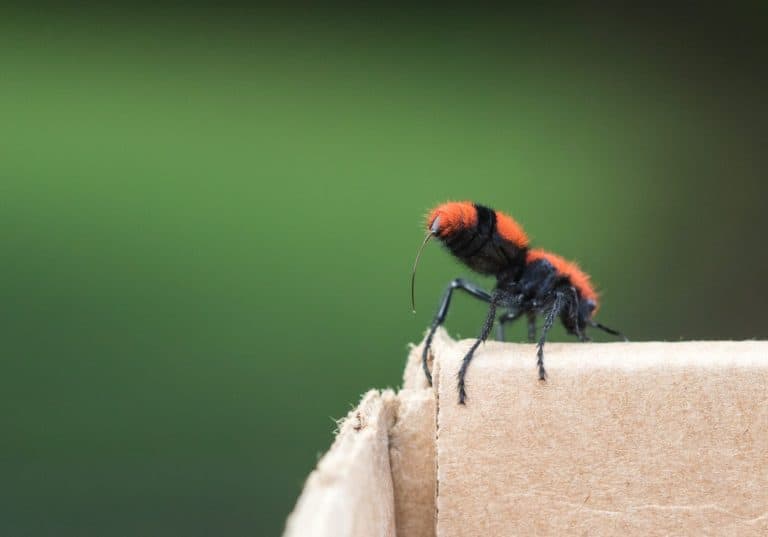
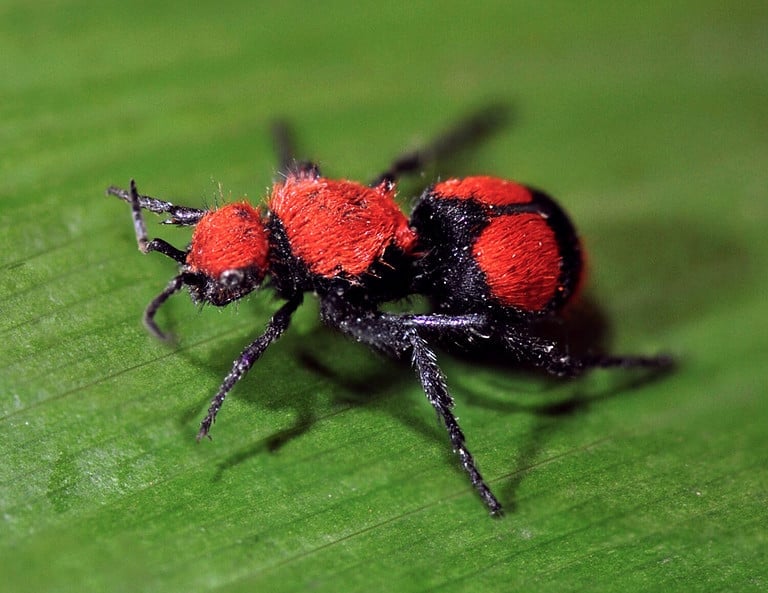
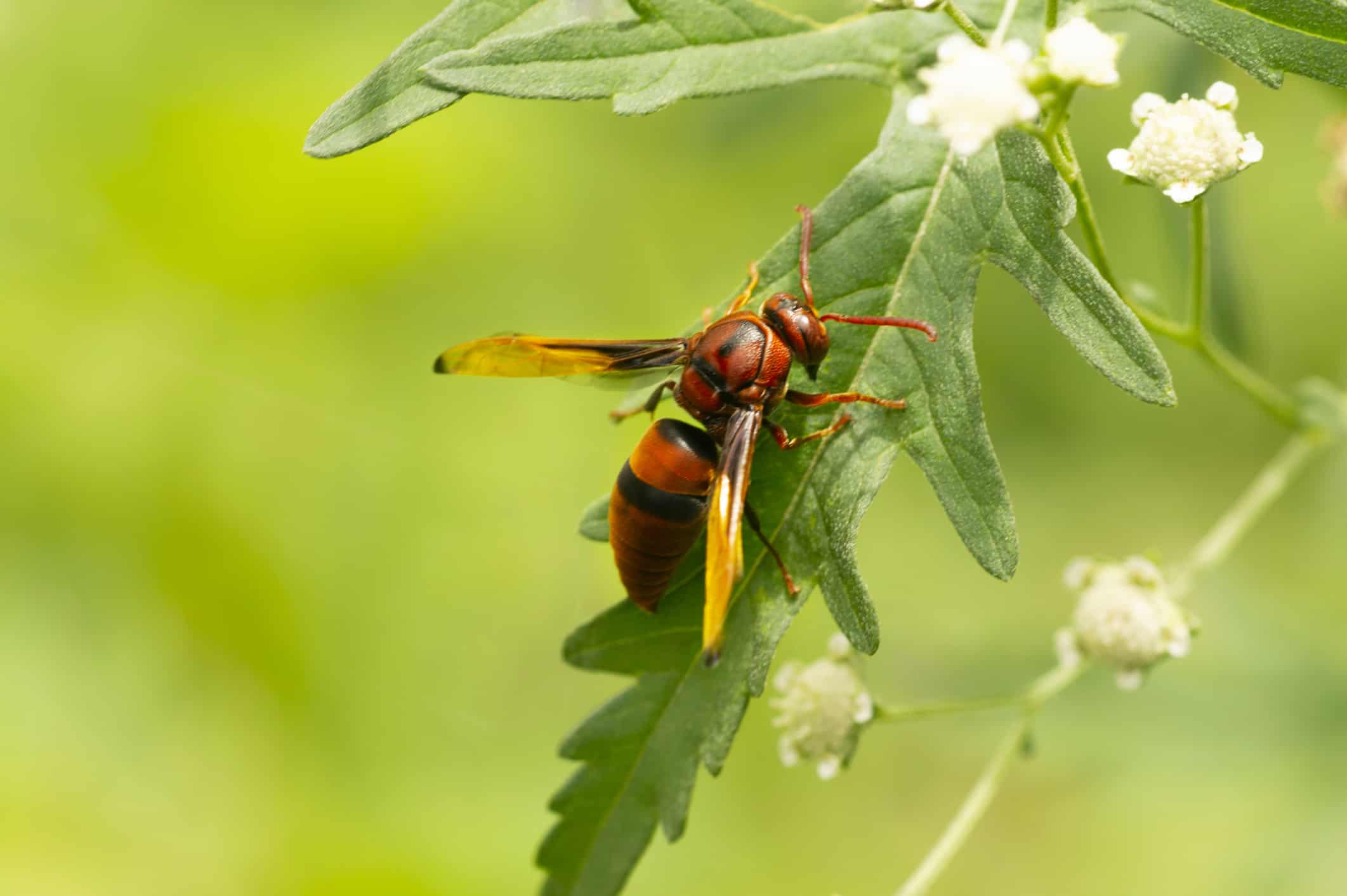
The red wasps in Texas as primarily red paper wasps. These wasps inhabit the eastern, southern, and south-central U.S. They are around 0.75 to 1-inch long with slender, narrow waists. Their bodies are a rusty red color all over, except for their wings, which are a smoky black.
The most common red wasps in Texas are Polistes rubiginosus and Polistes carolina. P. rubiginosus has coarse ridges on the thorax, which is the middle body section, while P. carolina has finer ridges or none at all, giving its thorax a smoother appearance. This is why P. rubiginosus is called the “coarse-backed red paper wasp” and P. carolina is referred to as the “fine-backed red paper wasp.”
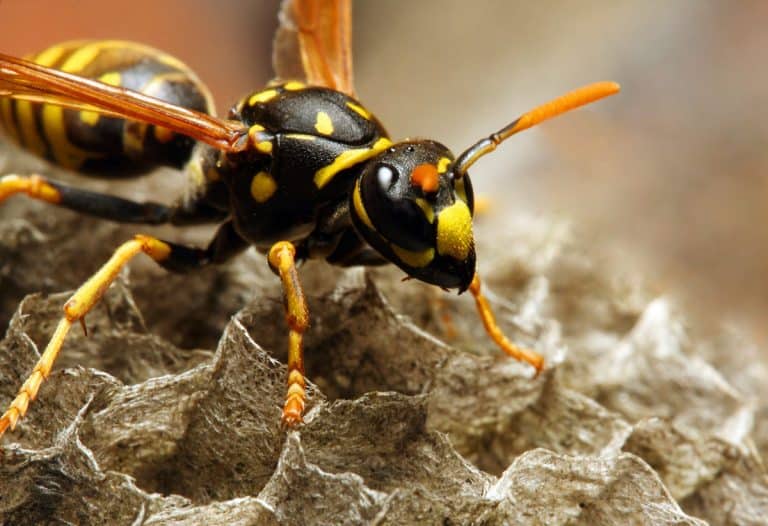
Both are social wasps in the Vespidae family and prefer to build their upside-down umbrella-shaped nests in protected areas. Paper wasps differ from yellowjackets and hornets by building their nests with open cells, not covered with a cap.
Red wasps build their nests from wood fiber that they collect from plant stems and posts. They chew the fiber and then shape the paper-like material into hexagonal cells; nests typically have between 20 and 200 cells, sometimes more.
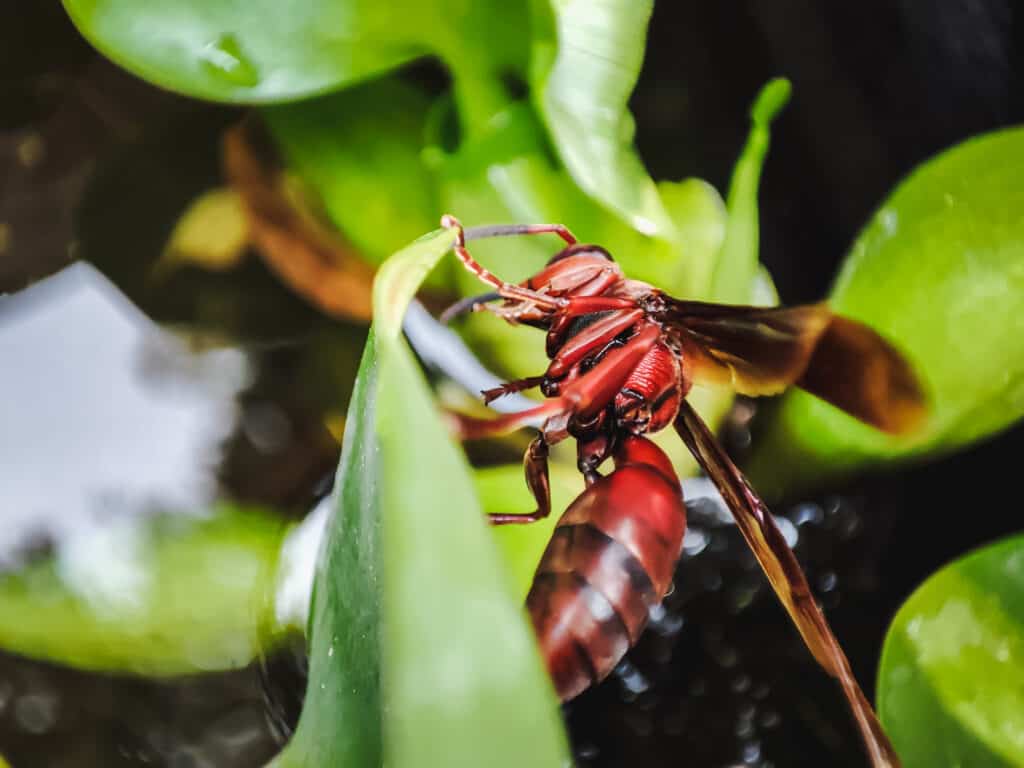
Red wasps have slender waists and rusty-red coloring with black wings.
©iStock.com/Riki I Gunawan
Where Can You Find Them?
P. rubiginosus is common throughout the state, while P. carolina occurs in the eastern half of Texas. These wasps prefer to hang their nest in protected areas like hollow trees in woodland environments, but given the opportunity, they will also build nests near human structures.
Because red wasps make their nests from wood fiber, they tend to settle in areas with plenty of resources. Check for these honeycomb nests under the eaves of your home, inside walls, and in attics. Also, check behind shutters and gutters, and in the branches of nearby trees on your property.
Are Red Wasps Dangerous?
Red wasps may look menacing, but they are relatively docile compared to other wasp species. During the day, red wasps leave their nests to feed on the sweet nectar produced by flowers. They also forage and prey on insects like caterpillars, flies, and beetle larvae, which they provide to their larvae.
However, they may feel threatening due to the likelihood of them building nests around your home. The primary purpose of a wasp nest is to protect the queen, her eggs, and larvae. Colony members also rest in the nest at night. Red wasps typically won’t attack or sting humans unless provoked, but they are protective of their nests and may try to chase people and pets away if they get too close.
Wasps can sting multiple times, and they can rotate their bodies to sting from multiple directions. If you don’t leave the area immediately, you may get stung more than once. Paper wasps, and other stinging insects, try to target your face, especially the eyes. Fortunately, a single wasp or only a few wasps typically try to sting at a time. Wasps are more active during certain times. They are more active during the day and during the late summer. Sting numbers in North America are at their peak during the months of August and September.
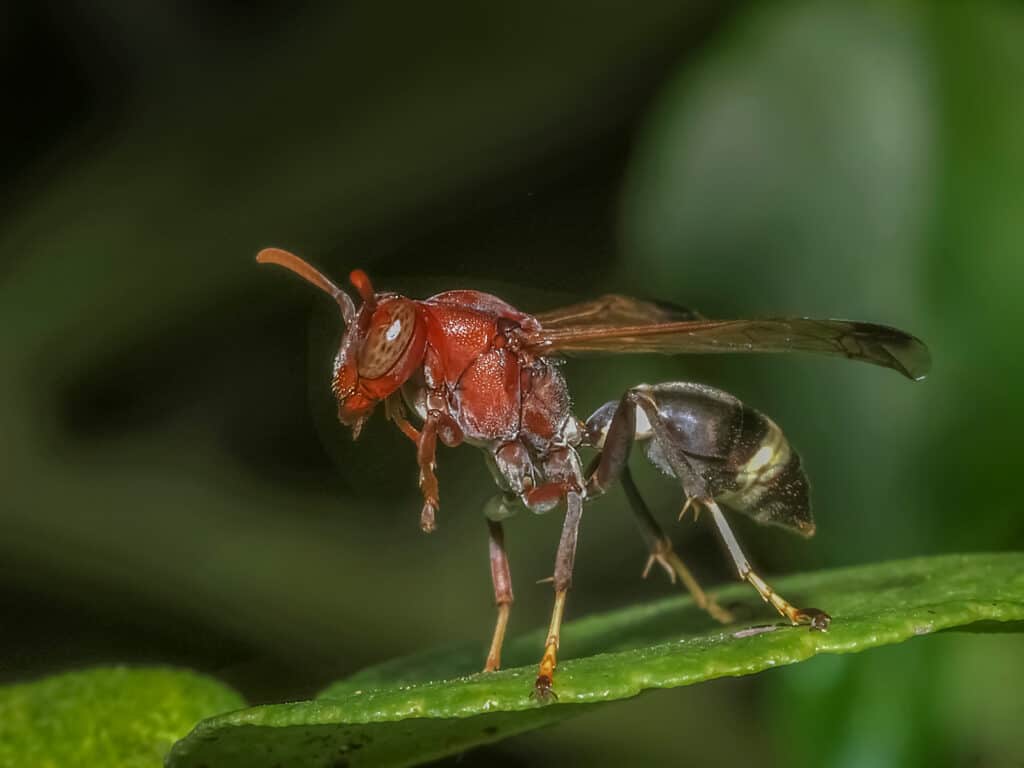
Red wasps are more docile than yellowjackets or hornets.
©Yuttana Joe/Shutterstock.com
Paper Wasp Sting Symptoms
Paper wasp stings typically result in pain and discomfort, often manageable with home remedies. Common symptoms of a paper wasp sting include:
- Localized pain
- Swelling
- Redness
- Itching
- Warmth at the sting site
- A mild fever
- Hives
Most people who get stung don’t develop severe complications. However, some people develop life-threatening allergic reactions to wasp stings, like anaphylaxis, which require emergency treatment.
If you experience the following symptoms, seek emergency care immediately.
- Changes in breathing
- Hives or other skin issues that are not close to the sting site
- Stomach issues such as nausea, vomiting, cramps, or diarrhea
- Dizziness or fainting
- Heart rate changes or a weak pulse
- Seizures
Treating a Paper Wasp Sting
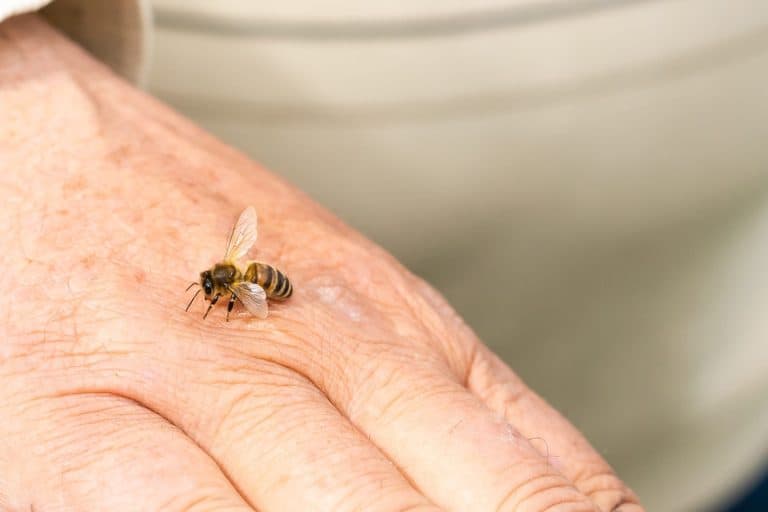
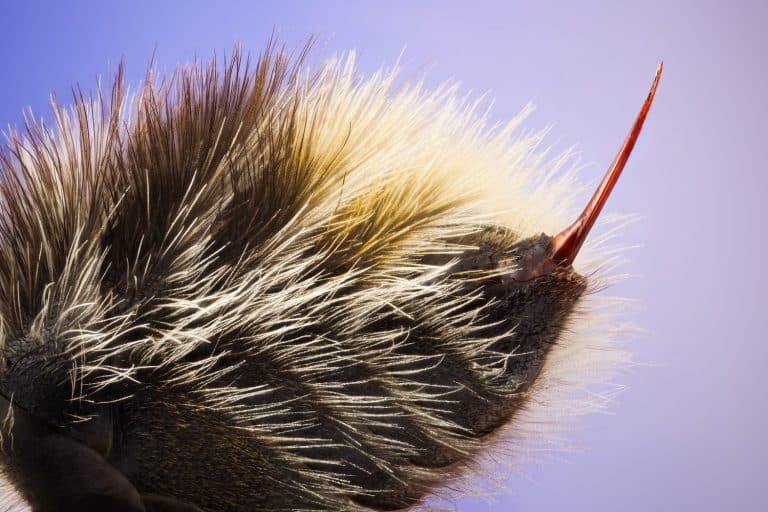
Paper wasps don’t usually leave a stinger. However, if it has, remove the stinger. According to the Cleveland Clinic, the best way to remove the stinger is by scraping the stinger with something that has a thin, dull edge, which should remove it. Do not use tweezers, as this could squeeze more venom into your body. Cleanse the affected area with soap and water, then cover it to keep the area clean.
To reduce swelling, apply cold water or a cold pack. You can alleviate pain with aspirin or another pain reliever. You can soothe itching with a cortisone cream, or take an oral allergy medication like diphenhydramine to help with symptoms. Experts also suggest raising the affected body part higher than your heart to help with swelling.
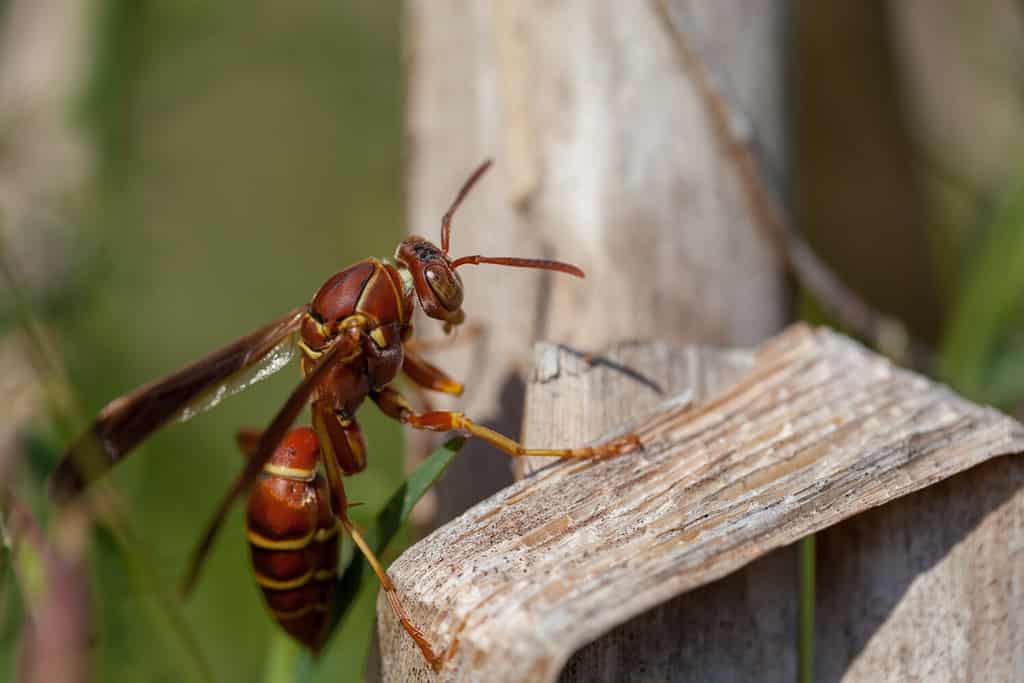
Paper wasps typically do not leave stingers.
©pixelworlds/Shutterstock.com
How to Get Rid of Red Wasps
We value and respect the lives of all animals on the planet, but when certain creatures try to cohabitate with us, sometimes it poses a risk to our safety. As much as you may want to respect the red wasp nest nestled in a corner just above the front door of your home, you also don’t want you or your children to be stung trying to enter or exit your house. So how can you get rid of red wasps safely and effectively?
One tactic that is also more humane is to remove their nests. This is best reserved for small nests in the early stages of being built. Some ways to remove the nest include spraying it with a water hose or knocking it down with a garden tool. Wear protective clothing and work at night. You’ll need to make sure that you are far enough away from the nest not to invite an attack. It’s also important to think about how you can escape in case wasps do happen to swarm you. While DIY removal might be the most humane, note that experts, including Texas A&M AgriLife Extension and the EPA, recommend using commercial wasp spray at night when wasps are inactive. Homeowners should also stand at least 10–20 feet away.
There are plenty of products in hardware stores to deal with red wasps, whether they are sprays that kill them (some are designed to shoot long distances), or traps. These can be effective not only when targeting nests, but may be necessary if you find red wasps in your house. As noted above, red wasps are inactive at night and retreat to their nests. So if there is any yard work that must be done near the nest, if you can get it done at night, that’s another idea to avoid provoking them.
Wasps Are Beneficial to the Environment
The sight of a wasp nest around your home can be frightening, especially if you have pets and young children. No one could judge you for calling a pest control specialist to have it removed. However, if you have a nest further away from your dwelling that doesn’t interfere with your livelihood, it may be a good idea to leave it alone. The reason? Wasps, like bees, are good for the environment.
Wasps are pollinators and essential for the survival of a range of flowers, trees, and vegetables. This species, like most wasps, controls top crop pests. They consume some of the most severe agricultural pests like caterpillars and beetles. This natural pest controller is essential in farming, agriculture, and horticulture.