
Quick Take
- Paper wasps have a feeding habit so bizarre it challenges everything you thought you knew about what insects eat. Discover their strange diet →
- Most people confuse paper wasps and yellow jackets, but one easy trick separates them instantly. See how to tell them apart →
- Paper wasps are praised as pest controllers, yet one beloved insect may actually be their victim. Explore their prey choices →
- When a paper wasp queen dies, what happens next inside the nest is wilder than you'd expect. See the colony life cycle →
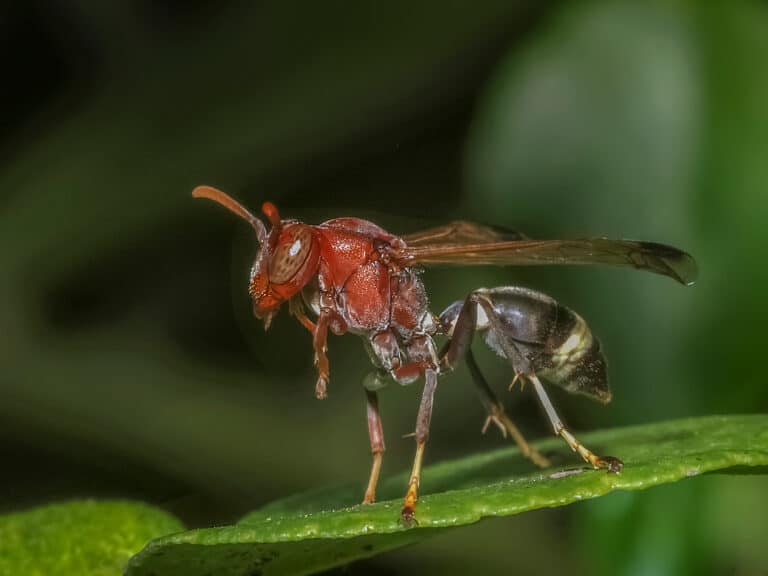
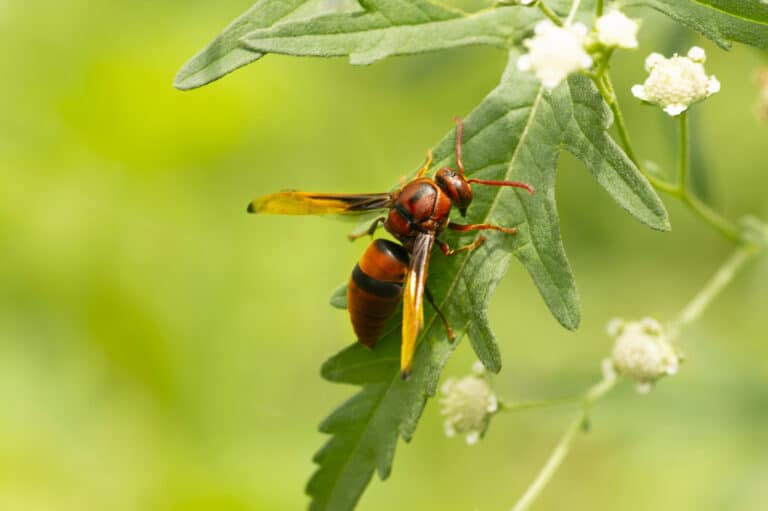
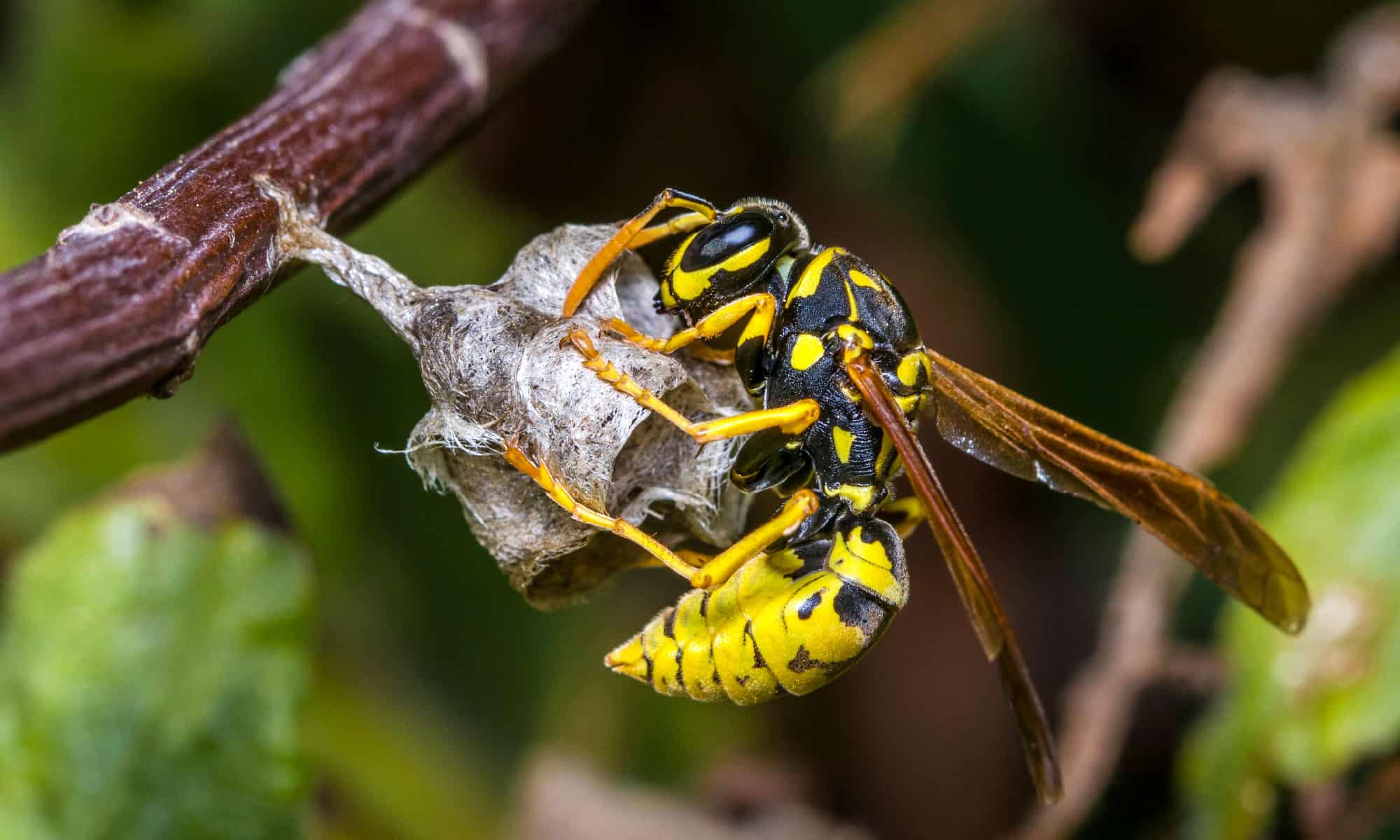
Paper wasps (spp. Polistes) are social insects that belong to the family Vespidae. There are over 20 species of paper wasp in North America. These wasps construct brownish-grey paper-like nests in trees, on plants, or around man-made structures. These wasps have slim, dark bodies with yellow or reddish-brown patterns and black wings. Today we’ll discuss what paper wasps eat, along with some other facts about their habits and environment.
How to Identify Paper Wasps
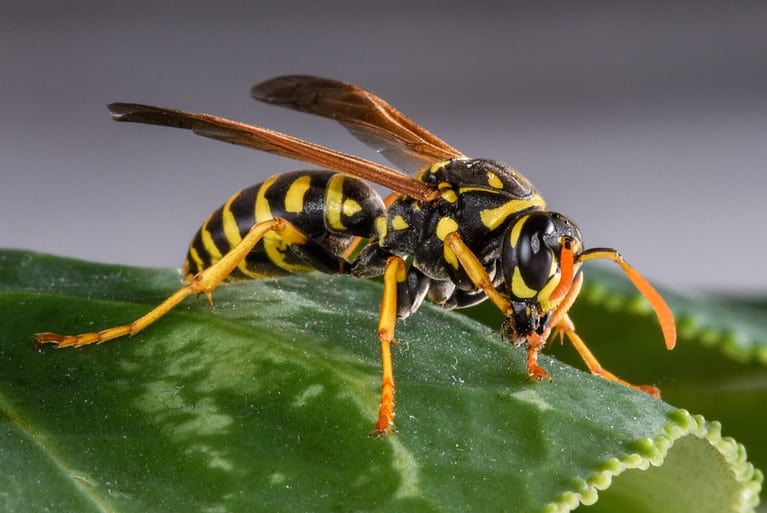
It might be challenging to distinguish between paper wasps and yellow jackets. These two wasp species resemble one another in appearance, having a similar pattern of black and yellow stripes. A closer inspection reveals some differences, though. Paper wasps tend to have a browner tint and typically have yellow markings, although reddish-brown markings are occasionally seen. They have large legs and antennae, and they range in length from 0.50 inches to 1 inch.
Paper wasps have notably long legs that seem to hang loosely when flying, and their waists are significantly slimmer than those of other species. The simplest technique to distinguish between the two species, given that wasps should not be approached too closely, is to study their nests from a safe distance. Paper wasp nests are inverted umbrella-shaped structures that are typically constructed above ground. They might be as small as a fist or as large as a basketball.
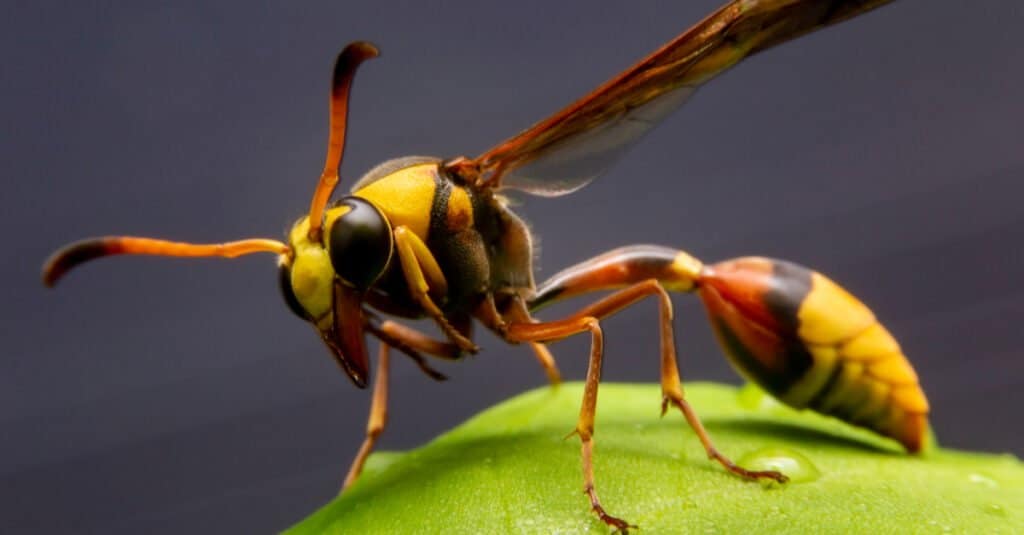
Paper wasps have notably long legs and their waists are significantly slimmer than those of other species.
©Witsawat.S/Shutterstock.com
Where Do Paper Wasps Live?
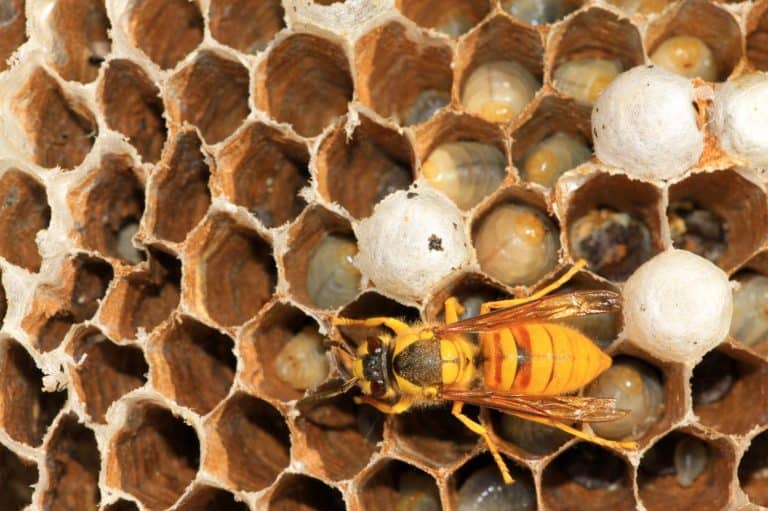
Using wood fiber gathered from plants, paper wasps create nests by chewing the fiber into hexagonal cells that resemble paper. Up to 200 cells can be found in mature nests. The queen will look for a secure location for her nest, such as under the eaves of houses, in door frames, behind light fixtures, under large tree branches, or inside hollow trees. Typically, up to 20–50 wasps can be found in a nest towards the end of the summer, with colonies rarely exceeding 100.
If the queen passes away, the most aggressive female will succeed her and start laying eggs on her own. In most paper wasp species, the males, unmated females, and the original queen will all pass away in the late summer or early fall. Newly fertilized females will overwinter under the bark of fallen trees, behind siding, or in hollow trees, among other locations. The new queens come out in the spring to start their own colonies.
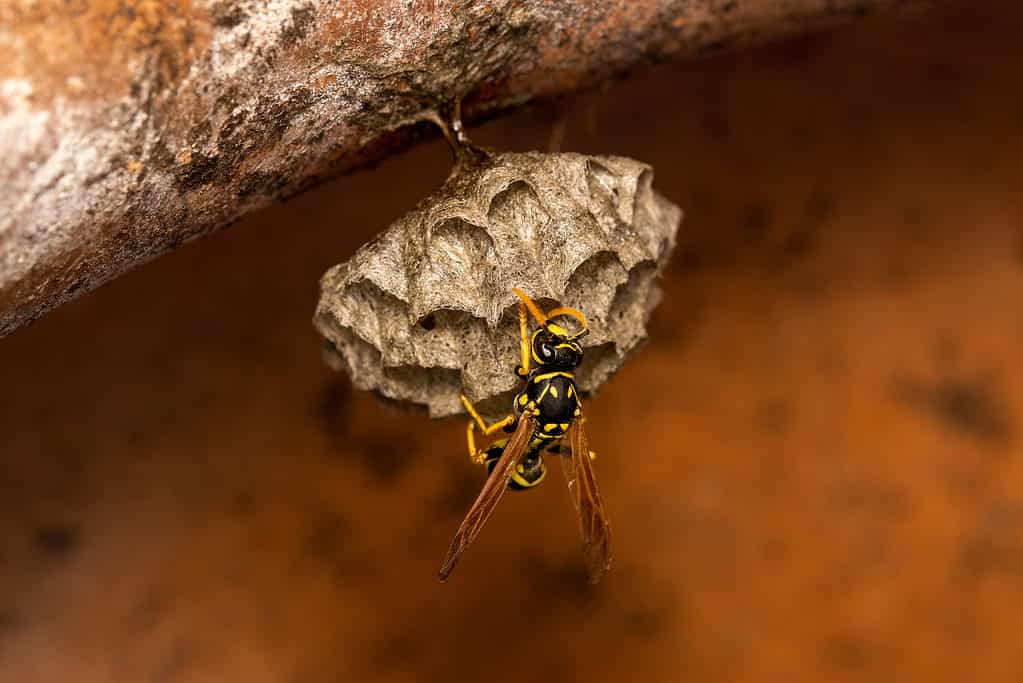
Using wood fiber gathered from plants, paper wasps create nests that resemble upside-down umbrellas.
©iStock.com/Wirestock
What Do Paper Wasps Eat?
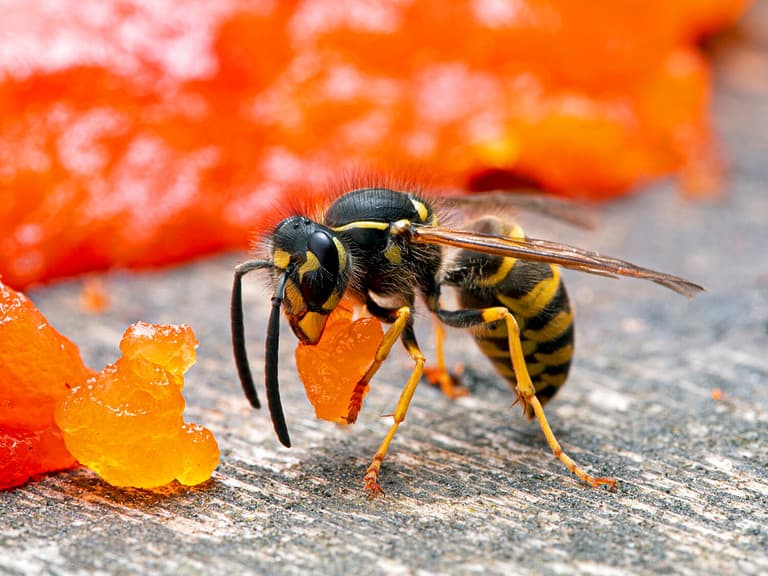
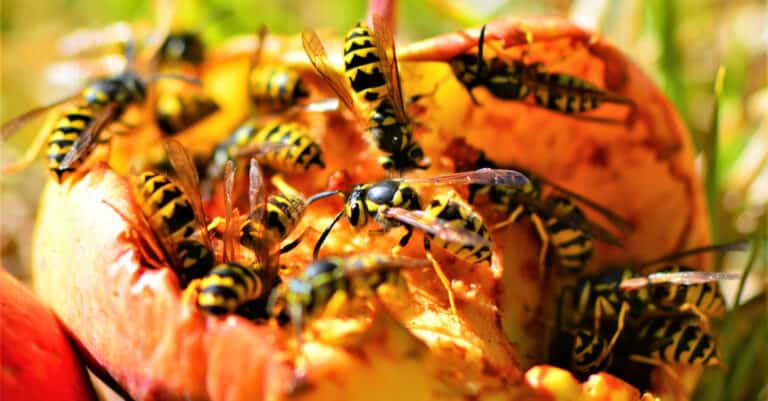
Adult paper wasps feed on plant nectar, pollen from flowering plants, ripe fruit juices, secretions left behind by aphids, and other sugary liquids. Paper wasps also feed on a sweet secretion produced by their larvae. These wasps frequently forage on a variety of human foods, so it is important to keep trash cans covered. Homeowners should also pick and dispose of rotten fruit.
Paper wasps can be important to the ecosystem since they help regulate insect populations. The larvae feed on destructive agricultural pests such as the caterpillars of earworms, armyworms, and hornworms, as well as other soft-bodied insects. However, researchers believe that some species, like the European paper wasp, may be detrimental to monarch butterfly caterpillars.
Adult wasps also catch flies, spiders, beetles, and other arthropods for the larvae. They will chew up the caterpillars and other prey and feed the pieces to the larvae. Once the larvae reach full size, they will seal themselves inside their nest cells to transform into pupae.
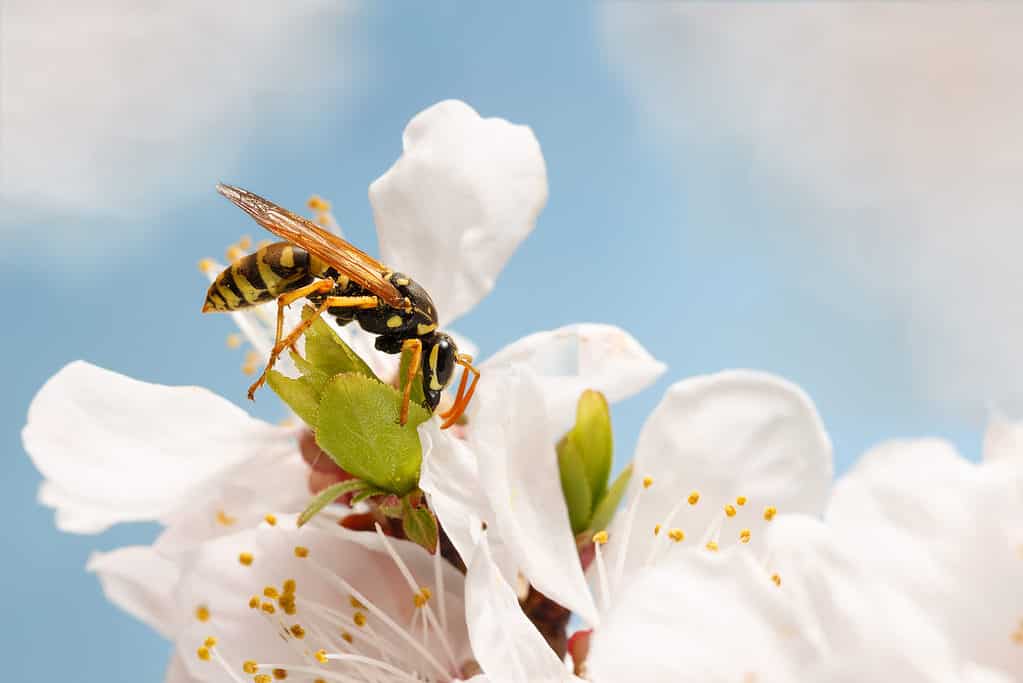
Adult paper wasps dine on sugars from nectar, aphid honeydew, or a sweet liquid made by their larvae.
©iStock.com/tenra