
Quick Take
- To the untrained eye, sea sponges resemble plants, but they are actually aquatic animals.
- Sponges are widely distributed throughout the world’s oceans.
- Sponges are filter-feeding detritivores that help keep ocean water clean.
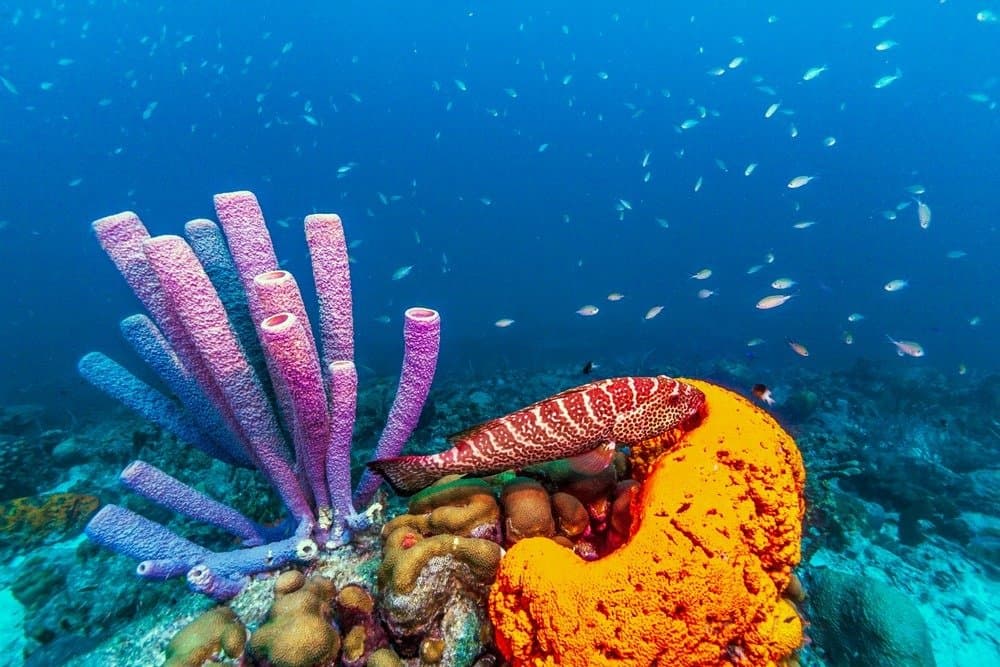
Sponges (Porifera) are ancient aquatic animals with over 8,500 to 11,000 described species found worldwide in both marine and freshwater environments, from shallow intertidal zones to the deep sea. They exhibit an incredible variety of sizes and colors. Sponges exist in polar, temperate, and tropical waters, with significant diversity in the Caribbean, Mediterranean, and Antarctic, where they attach to hard surfaces, such as rocks and reefs. They range in size from less than one inch to over 11 feet in length and come in numerous colors, including red, yellow, purple, blue, green, and white. They take on shapes such as long tubes and branches. Sponges are active suspension/filter feeders that pump water through their porous exterior to capture food particles. Although sponges don’t appear to do much, they are actually quite active in their role as filter feeders. Let’s look at their role and learn a bit about what sponges eat.
What do Sponges Eat?
Sponges are filter feeders that passively allow water to flow through them, capturing any food that passes through them. Animals that filter microscopic life and organic debris from water are known as filter feeders; some sponges also act as detritivores by consuming dead organic matter.
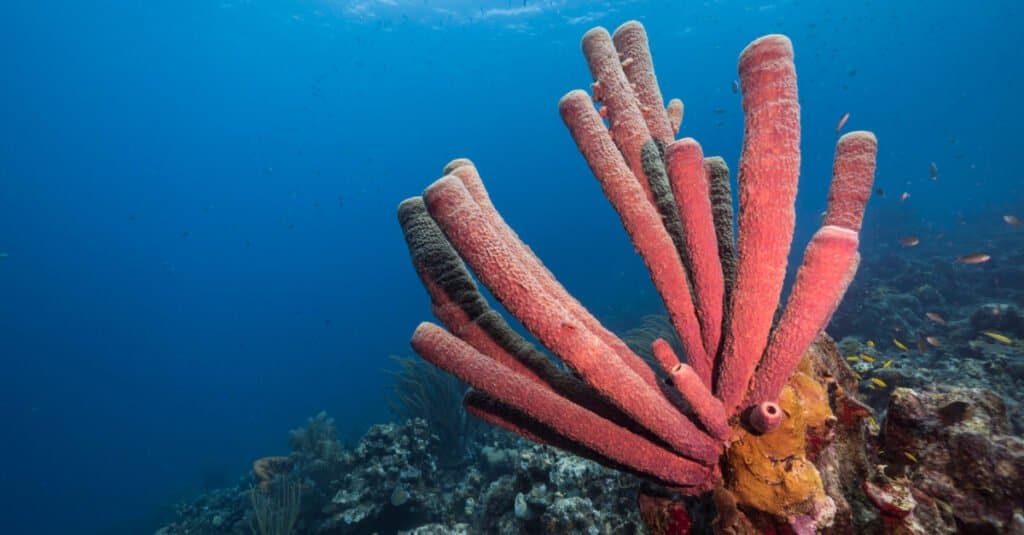
Sponges are detritivores that eat microcellular life and dissolved organic materials, including plankton, viruses, and bacteria.
©NaturePicsFilms/Shutterstock.com
In their natural habitat, sponges consume microscopic life from the water that flows through them.
Sponges consume plankton, bacteria, viruses, archaea, protists, and fungi. Although most single-celled organisms are invisible to the naked eye, sponges can digest them as they float by. It doesn’t look like much is happening, but a single teaspoon of seawater can be home to as many as 100 million viruses.
Carnivorous Sponges
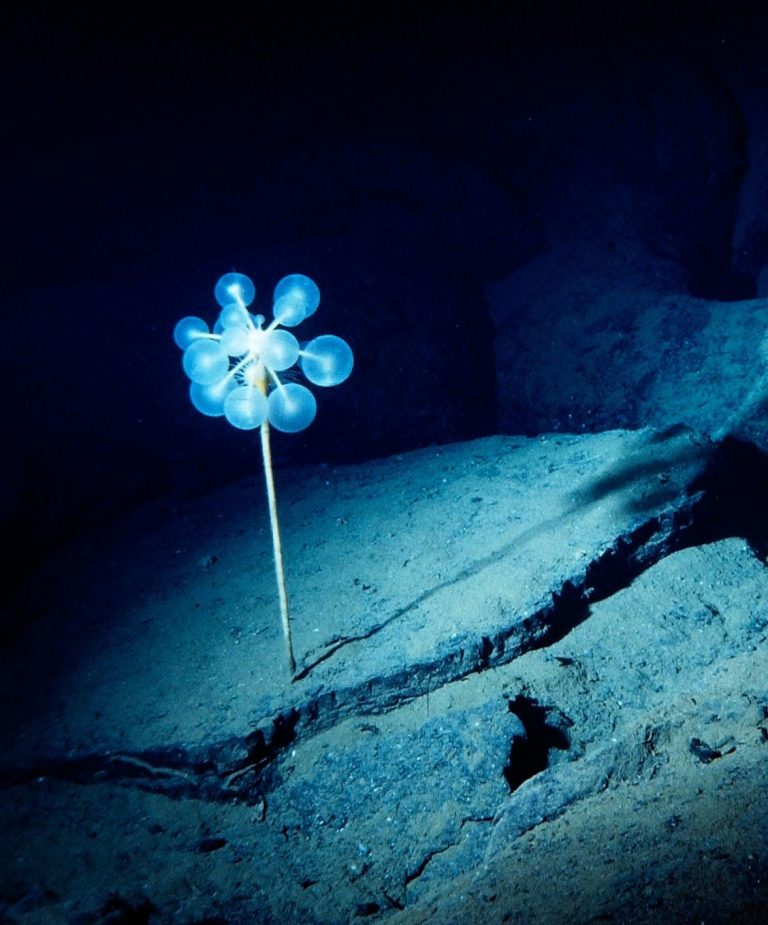
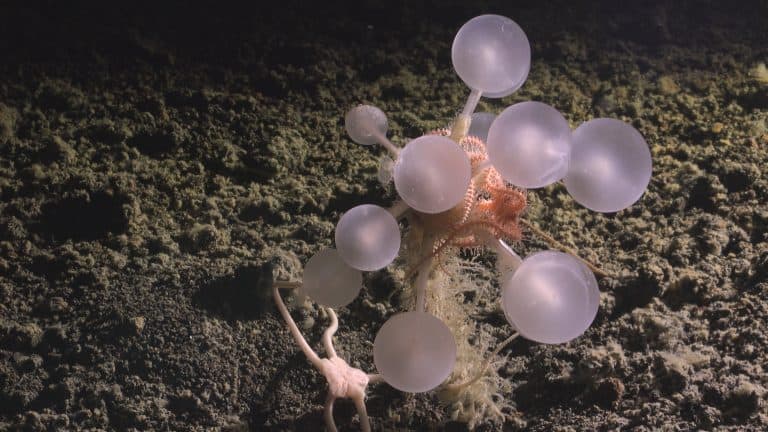
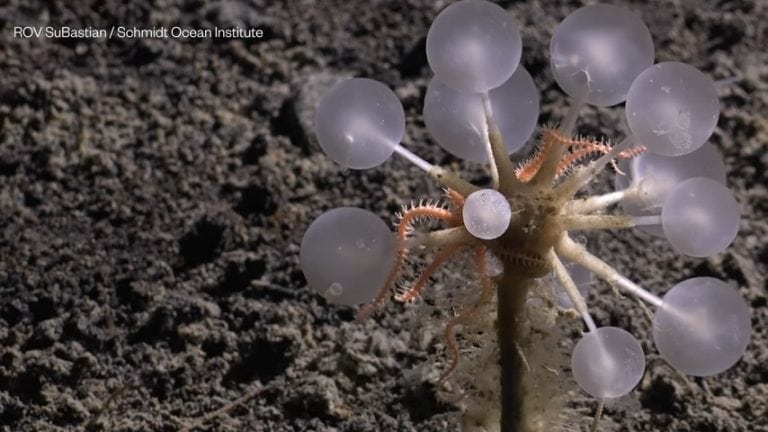
Sponges primarily eat microscopic organisms, but a few species of sponge are known to be carnivorous. Approximately 1 to 2% of known sea sponge species are carnivorous. While the majority of sponge species are filter feeders, between 150 and 170 species have evolved to become carnivorous, using specialized hooks to trap small crustaceans in nutrient-poor, deep-sea environments.
These carnivorous sponges live in very deep waters and use a variety of methods to capture their prey. From what scientists have observed, most carnivorous sponges eat small crustaceans and other small animals that can be captured passively. The primary method that these carnivorous sponges use to capture their prey involves sticky threads and hooks that loop around prey as it passes through.
Some sponges, known as boring sponges, erode shells and coral structures by boring into calcium carbonate for habitat, but they are not parasitic or carnivorous and do not drain nutrients from living hosts.
Freshwater Sponges and Endosymbionts
Sponges are an incredibly diverse animal group, and as a result, their diets are varied. When it comes to freshwater sponges, many of them host endosymbionts, meaning they host other organisms within themselves for a specialized purpose. In freshwater environments, many sponges host photosynthesizing algae within their bodies, receiving nutrients produced by the algae.
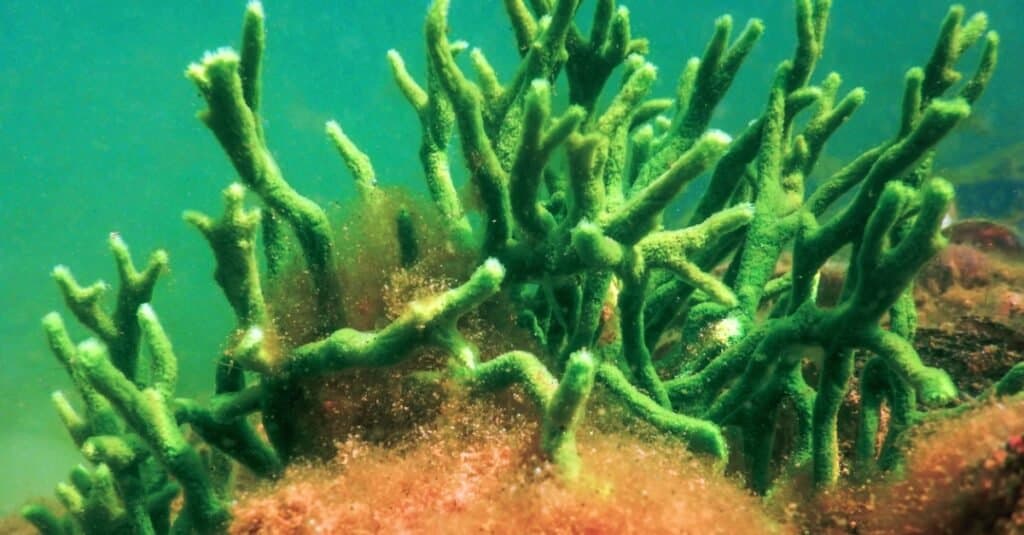
Freshwater sponge using symbiotic algae for nutrients.
©iStock.com/Allexxandar
In ecosystems where filter-feeding is less viable, this relationship allows sponges to obtain 50-80% of their energy needs passively. Living in these specialized niches, sponges often develop leafy structures to better support the photosynthesizing algae.
Foods that Sponges Eat
Here is a complete list of foods that sponges will typically eat:
- plankton
- phytoplankton
- viruses
- bacteria
- amoeba
- organic debris
- crustaceans
- algae
- photosynthesized nutrients
Filter Feeding, Hunting, and Symbiosis
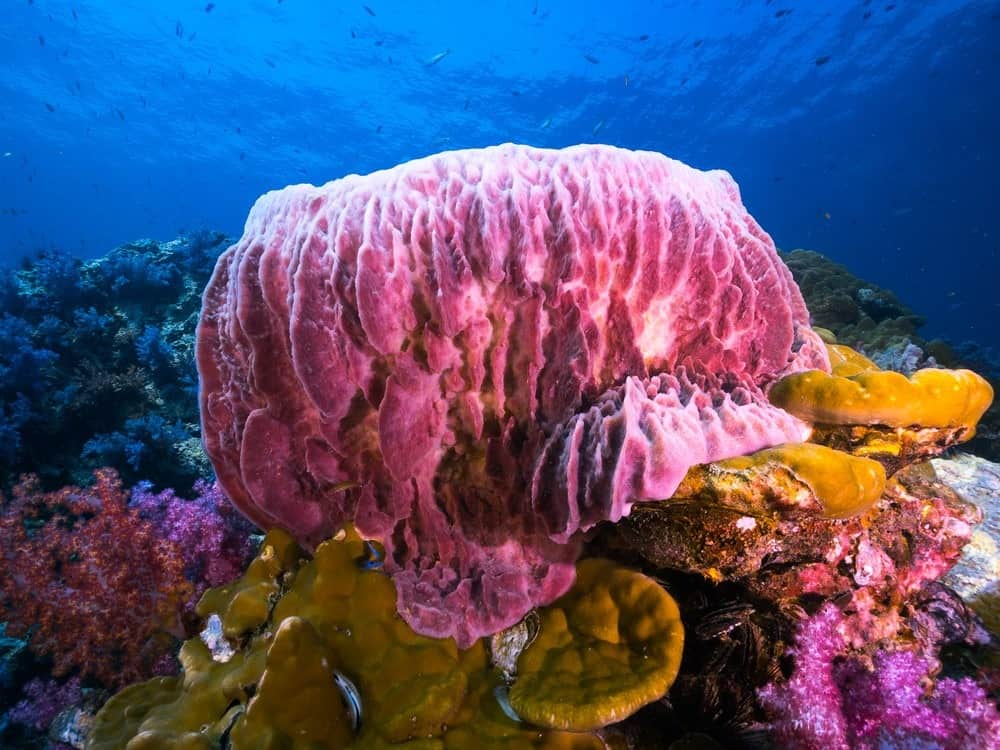
Most sponges use passive methods to eat, but some are carnivorous and others symbiotic.
©Bangtalay/Shutterstock.com
There are three ways that sponges get food:
- Passive filter feeding
- Carnivorous digestion
- Symbiotic relationships
The most common way sponges eat is through passive filter feeding. Sponges are elementary animals, and their biological structure reflects that. They lack complex organs such as distinct respiratory, digestive, or excretory systems, instead relying on specialized cells, called vesicles, and water flow to perform these functions. These vesicles are critical for intracellular digestion, nutrient transport, and uptake. Although sponges lack true tissues or organs, their specialized cells use vesicles to move food and substances.
Carnivorous digestion is much less common, but a few species of sponges do eat animal protein. One species of sponge, for example, has been found in Mediterranean caves in which the water is very still and poor for filter-feeding organisms. As a result, these sponges capture their food using fine threads that entangle their prey. After their prey is stuck, the sponge wraps it in additional threads, and digestion begins. Another species of carnivorous sponge uses modified inflation systems to expand its body structure and capture prey.
Another form of eating that sponges partake in is through symbiotic relationships. Where filter-feeding isn’t a viable option but sunlight is still present, many sponges will form symbiotic relationships with algae. These photosynthesizing algae grow in and around the sponge and use it as a structure. As the algae produce food for themselves from the sun, the sponge is able to capture some of those nutrients. In some cases, sponges even grow silica structures that act as fibers to transfer light to hard-to-reach places inside their own bodies. In these symbiotic relationships, algae can become one-third of the total mass of the sponge and contribute up to 80% of its nutrient needs.