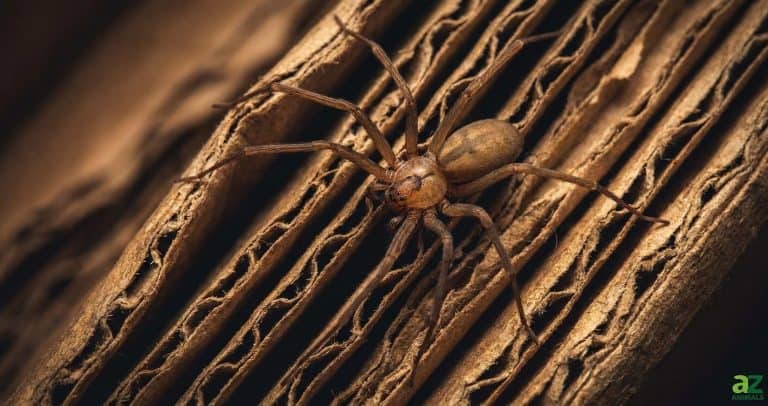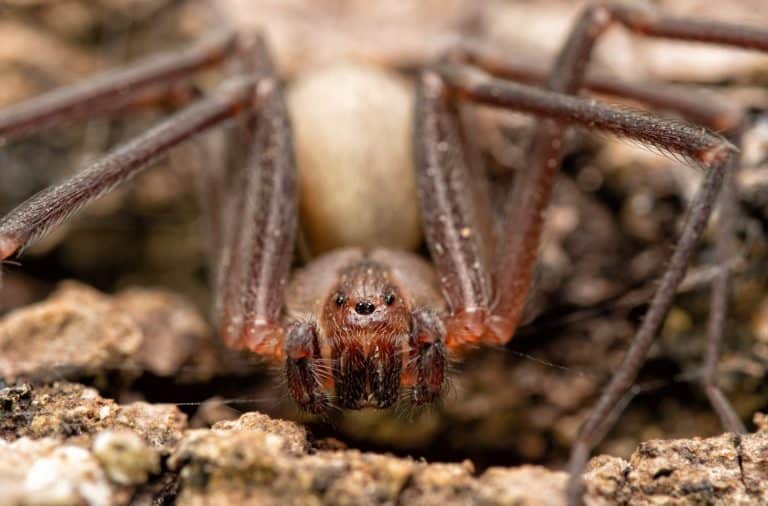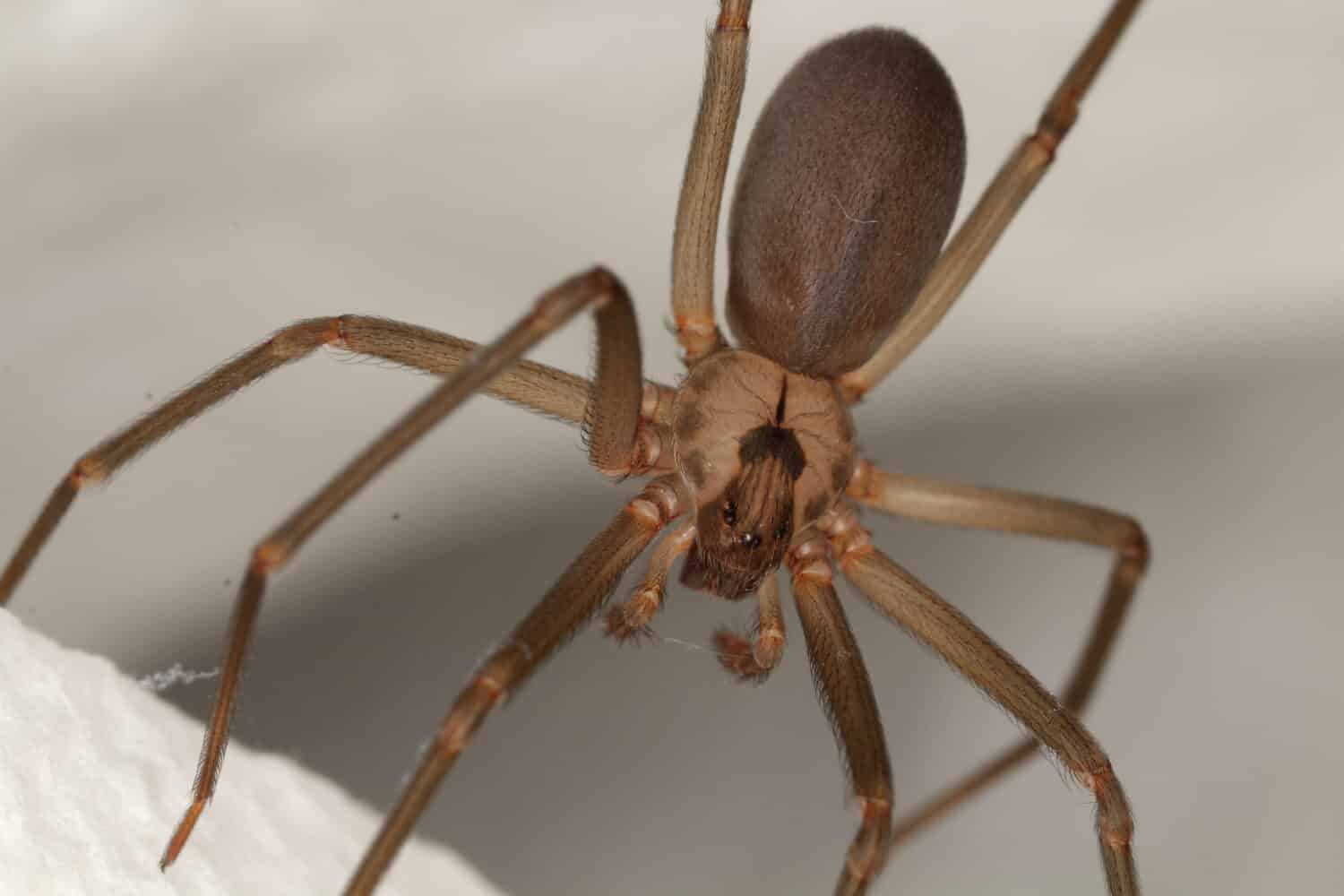

Just the name “brown recluse” is enough to send a shiver down any arachnophobe’s spine. These spiders have earned a reputation as some of the most feared in North America. Aside from the black widow, the brown recluse is the most well-known arachnid in the country. This spider is more likely to evade than attack, but even that is little reassurance to some. What’s also unsettling is that this spider does have some look-alikes. More often than not, people who think they’ve seen a brown recluse have actually seen one of these similar-looking arachnids.
Hobo Spider
While comparable in size, the hobo spider has some significant differences from the brown recluse. It is primarily found in the western U.S., specifically in the Pacific Northwest. In contrast, brown recluses are found in the central Midwest U.S., so their regions do not typically overlap. Hobo spiders are stockier than brown recluses and have darker patterns covering their bodies. Where the brown recluse has a telltale violin shape on its cephalothorax, the hobo spider has a tan, dark brown, and white chevron pattern. Another key difference is its web, which is shaped like a funnel and typically low to the ground.
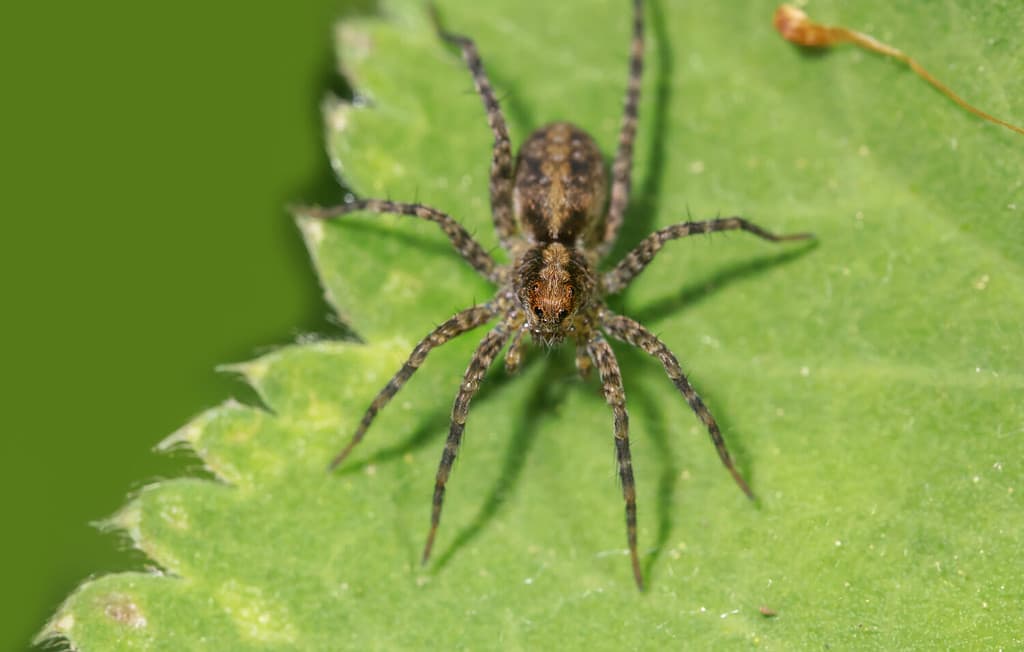
The hobo spider is believed to have gotten its name due to its spread along railway lines in the Pacific Northwest.
©SNEHIT PHOTO/Shutterstock.com
| Brown Recluse | Hobo Spider | |
| Size | 1/4 to 1/2 inches long (the size of a quarter) | 3/8 to 5/8 inches long |
| Bite | Severe, necrotic | Mild, non-toxic |
| Where It’s Found | Attics, basements, closets, clothing piles, cardboard boxes, behind furniture, cluttered spaces | Basements, garages, sinks, bathtubs, dark areas |
| Color & Markings | Tan to dark brown, six eyes, uniform body color, violin-like shape on the cephalothorax | light yellowish brown, chevron pattern, some have a stripe down the center |
American House Spider
As its name implies, the American house spider is commonly found throughout the U.S. They are often mistaken for the brown recluse due to their brown markings. These spiders have thicker, more pointed legs than the brown recluse and prefer to remain in their webs. If they’re unhappy with a location, they move on quickly. Unlike the brown recluse, they typically remain high up and weave webs in windows, ceiling corners, and closets.
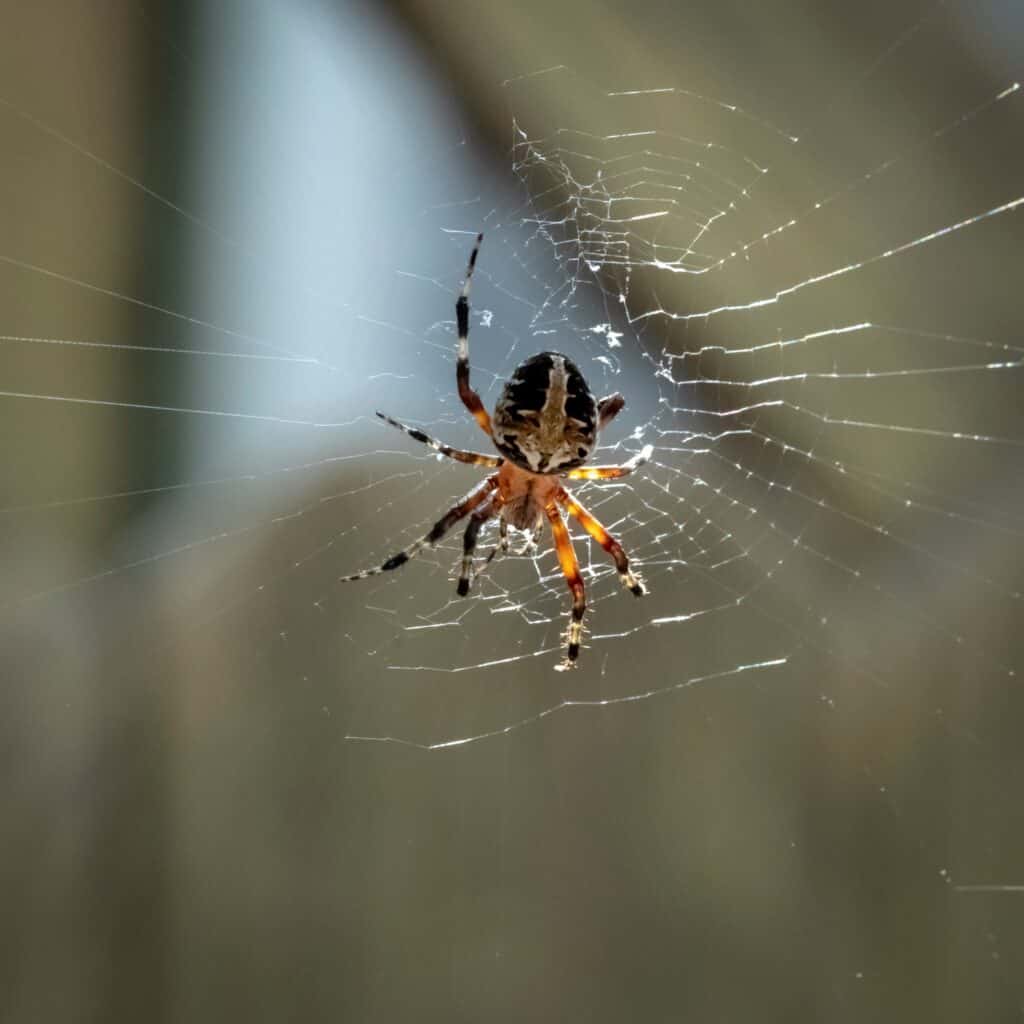
The American house spider is harmless and beneficial for pest control.
©Constantine Lukashin/Shutterstock.com
| Brown Recluse | American House Spider | |
| Size | 1/4 to 1/2 inches long (the size of a quarter) | 1/8 to 1/16 inches long |
| Bite | Severe, necrotic | Mild, non-toxic |
| Where It’s Found | Attics, basements, closets, clothing piles, cardboard boxes, behind furniture, clutter | Ceiling corners, closets, under furniture, windowsills, eaves, attics |
| Color & Markings | Tan to dark brown, six eyes, uniform body color, violin-like shape on the cephalothorax | Brown, tan, and/or gray with chevron markings on its body and alternating stripes on its legs |
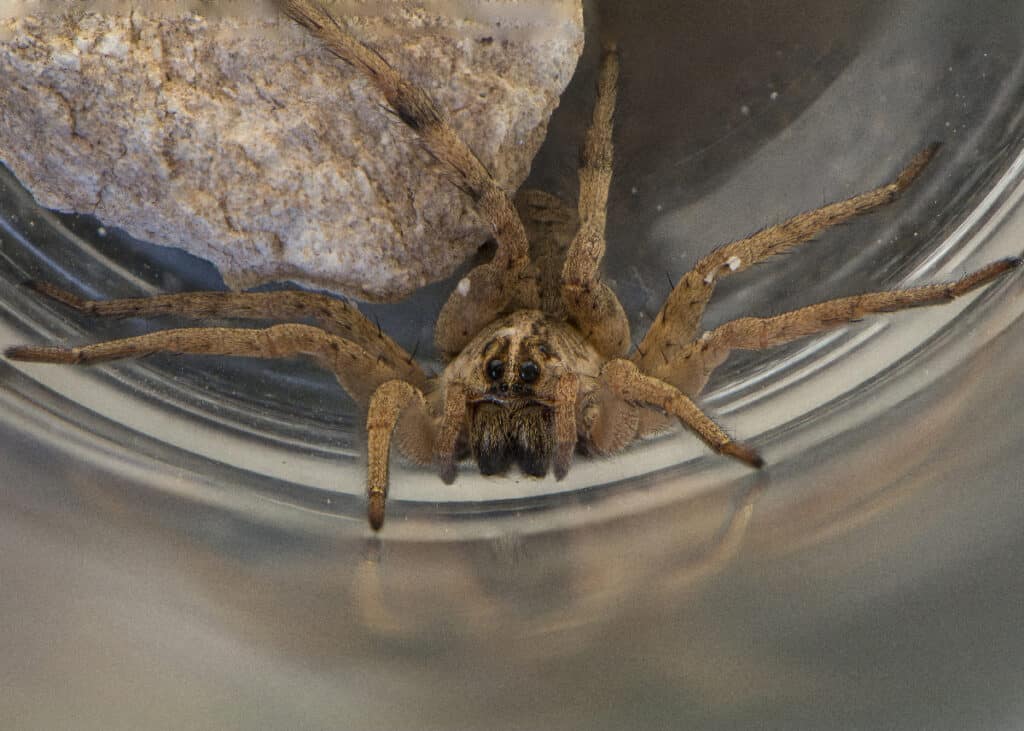
Wolf Spider
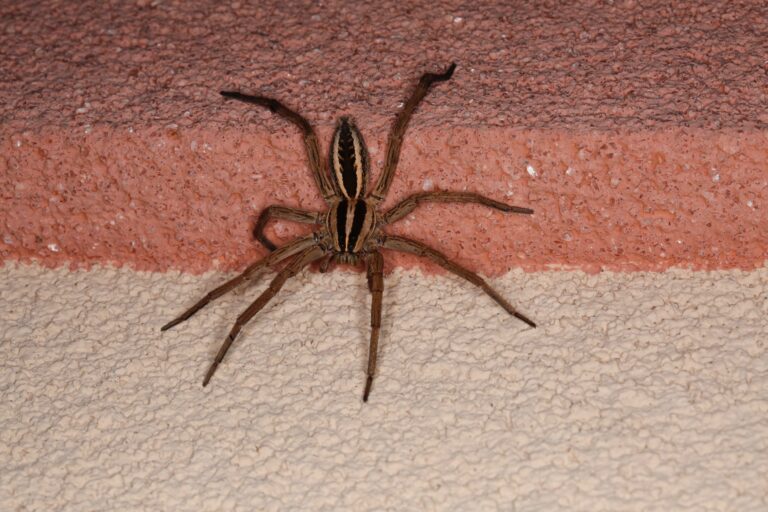
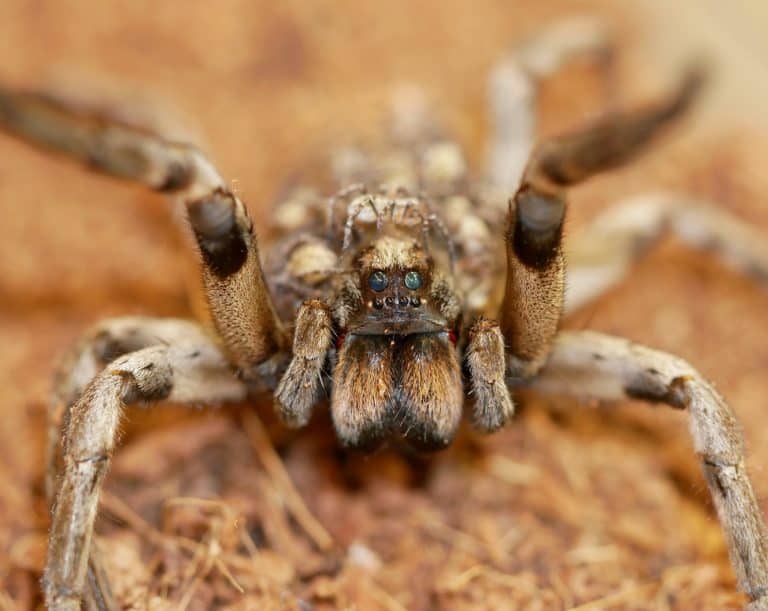
The wolf spider is one of the most mistakenly identified spiders. They can be found across the U.S., which doesn’t help their mistaken identities. Thankfully, wolf spiders prefer to be outdoors and typically find their way indoors by accident. The most significant difference between these and the brown recluse is their size. Wolf spiders can grow much larger and will typically run away when they sense a human nearby.
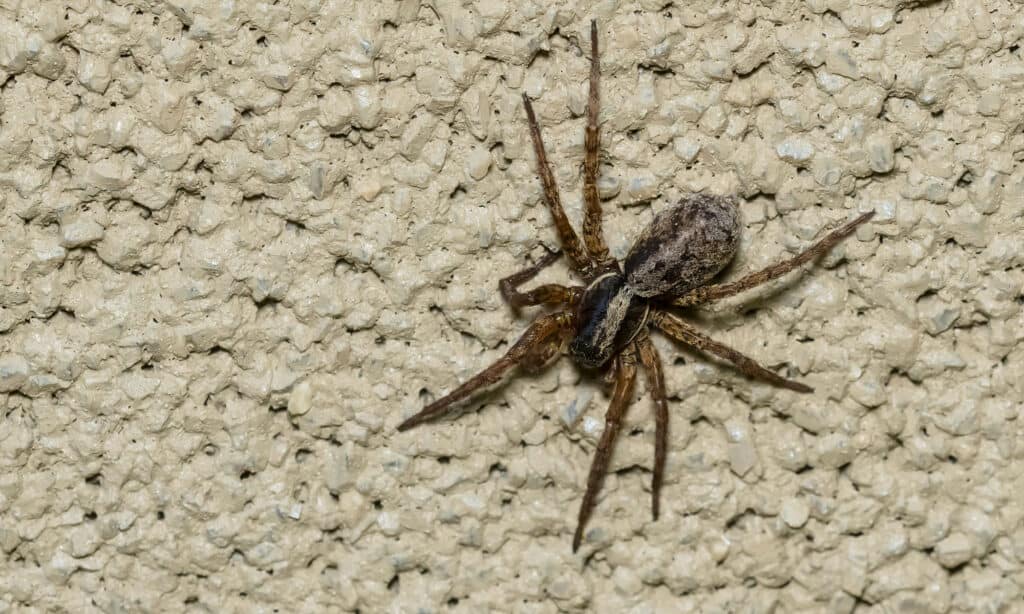
Most wolf spiders do not make webs.
©Paul Reeves Photography/Shutterstock.com
| Brown Recluse | Wolf Spider | |
| Size | 1/4 to 1/2 inches long (the size of a quarter) | 1/2 to 2 inches long |
| Bite | Severe, necrotic | Mild, venomous |
| Where It’s Found | Attics, basements, closets, clothing piles, cardboard boxes, behind furniture, clutter | Garages, basements, sheds, under rocks or debris (ground-dwellers) |
| Color & Markings | Tan to dark brown, six eyes, uniform body color, violin-like shape on the cephalothorax | Hairy, eight eyes, brown, gray, or black stripes, thick, muscular-looking legs |
Southern House Spider
In the South, the southern house spider is commonly mistaken for a brown recluse spider. These two species resemble each other more closely than the wolf spider and are challenging to distinguish. Up close, the southern house spider is slightly darker than the brown recluse. The body shapes of females are often compared to those of a tarantula, with thick legs and a chunky body. Males are more slender, but both have eight eyes, which distinguishes them from the brown recluse.
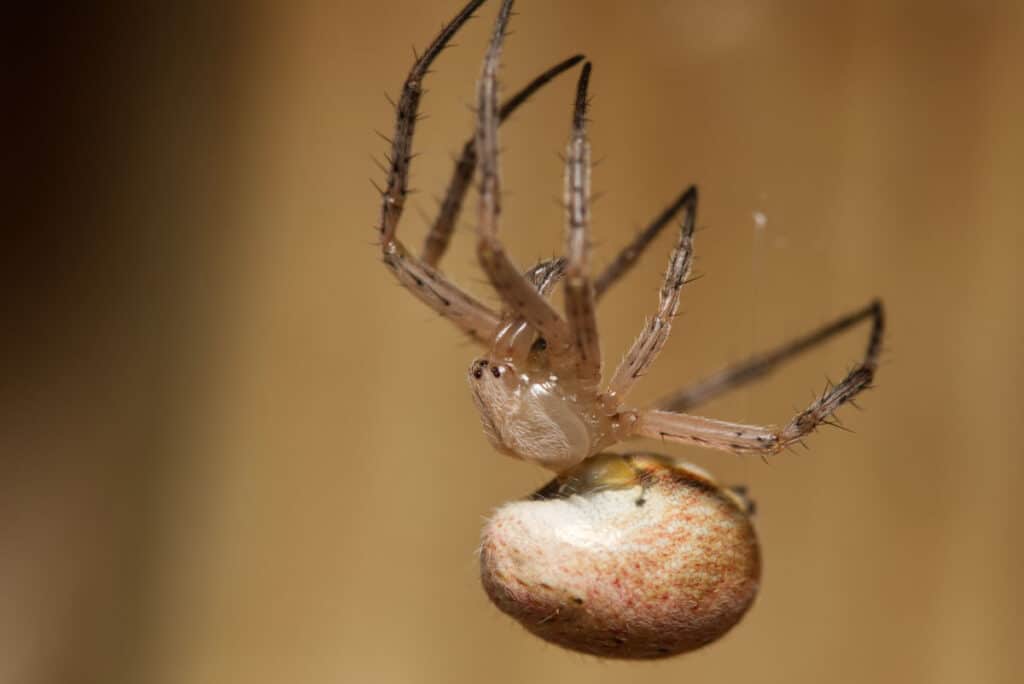
Southern house spiders are often mistaken for brown recluse spiders due to their similar markings.
©Kala Stuwe/Shutterstock.com
| Brown Recluse | Southern house Spider | |
| Size | 1/4 to 1/2 inches long (the size of a quarter) | .47 to .7 inches long |
| Bite | Severe, necrotic | Mild, non-toxic |
| Where It’s Found | Attics, basements, closets, clothing piles, cardboard boxes, behind furniture, clutter | Crevices, wall cracks, room corners, behind furniture, around appliances, basements, attics |
| Color & Markings | Tan to dark brown, six eyes, uniform body color, violin-like shape on the cephalothorax | Charcoal gray to black, eight eyes, a body that extends forward slightly |
Yellow Sac Spider
Yellow sac spiders are widespread throughout many parts of the U.S., making them a dupe for the brown recluse. Their similar body shapes are what fool most people. These spiders don’t build webs and are active hunters, which differs from the messy web of a brown recluse. Yellow sac spiders also have eight eyes, which, if you can get close enough, differentiates them from their venomous counterparts. While the two may share the same center stripe, not all yellow sac spiders have this marking. Both spider bites can cause necrotic lesions, but the venom of yellow sac spiders is much less potent.
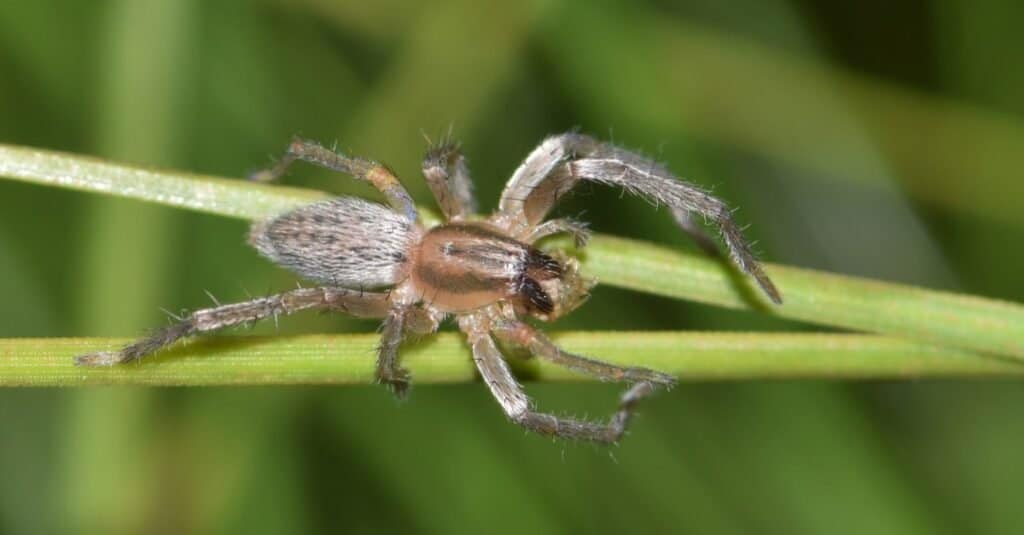
These spiders are prolific at night and have a venom similar to that of the Brown Recluse spider, but in a milder dose.
©Brett Hondow/Shutterstock.com
| Brown Recluse | Yellow Sac Spider | |
| Size | 1/4 to 1/2 inches long (the size of a quarter) | 1/4 to 3/8 inches long |
| Bite | Severe, necrotic | Mild, necrotic |
| Where It’s Found | Attics, basements, closets, clothing piles, cardboard boxes, behind furniture, clutter | Corners of walls, ceilings, behind furniture, cluttered spaces (they build sac-like nests) |
| Color & Markings | Tan to dark brown, six eyes, uniform body color, violin-like shape on the cephalothorax | Pale green to yellow, sometimes with a tan stripe down the back, eight eyes |
Arizona Brown Spider
The Arizona brown spider is primarily found within the state of Arizona and parts of New Mexico. Since there’s some overlap into brown recluse territory, the two are often mistaken for one another. Although the Arizona brown spider is smaller, it does have the same markings. Their bites are also similar to those of the brown recluse and can cause necrosis in severe cases. However, sightings are rare, as they prefer to remain outdoors in the desert.
The Arizona brown spider’s bite packs a punch, but fortunately, it is rare.
©iStock.com/Ledzeppelinriff
| Brown Recluse | Arizona Brown Spider | |
| Size | 1/4 to 1/2 inches long (the size of a quarter) | 1/4 to 3/8 inches long |
| Bite | Severe, necrotic | Severe, necrotic |
| Where It’s Found | Attics, basements, closets, clothing piles, cardboard boxes, behind furniture, clutter | Sheds, underneath outdoor debris, closets, attics, garages |
| Color & Markings | Tan to dark brown, six eyes, uniform body color, violin-like shape on the cephalothorax | Brown to yellowish brown, violin-like shape on the cephalothorax, unpatterned abdomen, six eyes |
Spitting Spider
Spitting spiders are common across many parts of the U.S. They’re also commonly found in homes, which makes them look very similar to the brown recluse. They both have six eyes and similar markings, making identification a challenge. However, spitting spiders have domed heads and lankier legs. Another significant difference is that their venom is harmless to humans. Rather than killing prey by biting, these spiders immobilize their prey by spitting a mixture of glue and venom.
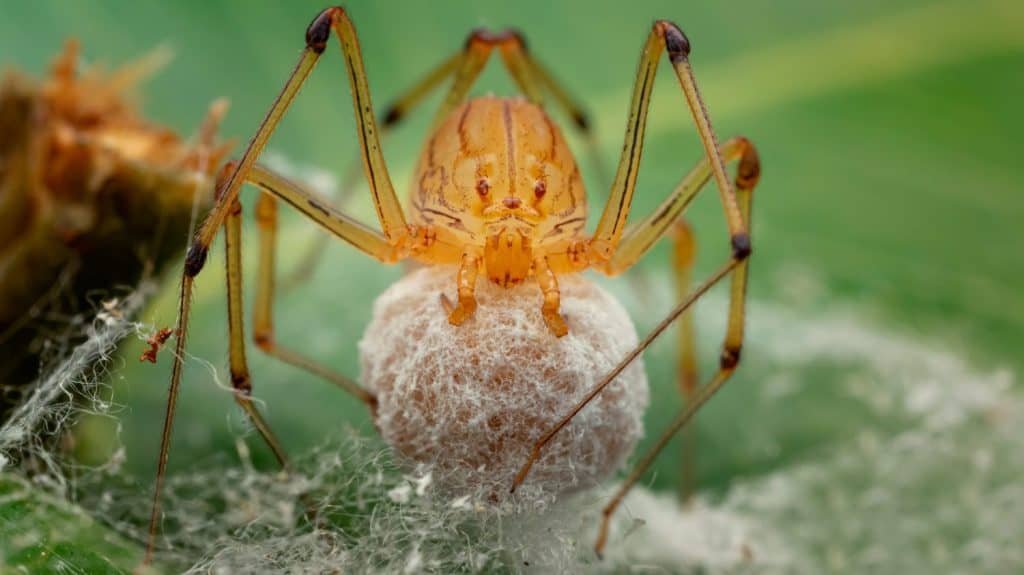
The spitting spider uses its literal spit to trap and catch prey.
©fendercapture/Shutterstock.com
| Brown Recluse | Spitting Spider | |
| Size | 1/4 to 1/2 inches long (the size of a quarter) | .12 to .24 inches long |
| Bite | Severe, necrotic | Mild, non-toxic |
| Where It’s Found | Attics, basements, closets, clothing piles, cardboard boxes, behind furniture, clutter | Attics, basements, ceiling corners, closets, crevices, cabinets, garages, room corners |
| Color & Markings | Tan to dark brown, six eyes, uniform body color, violin-like shape on the cephalothorax | Oversized cephalothorax, pale yellow, black markings on their legs, six eyes |
Cellar Spider
These spiders are less likely to be mistaken for the brown recluse, but they do look similar in coloring. While they can bite, their venom is not medically significant, and bites are extremely rare. This differs from the brown recluse, which has necrotic venom. Their elongated bodies and dark brown markings give them a similar appearance to the brown recluse. The difference lies in their longer legs and eight eyes, compared to the brown recluse’s six eyes.
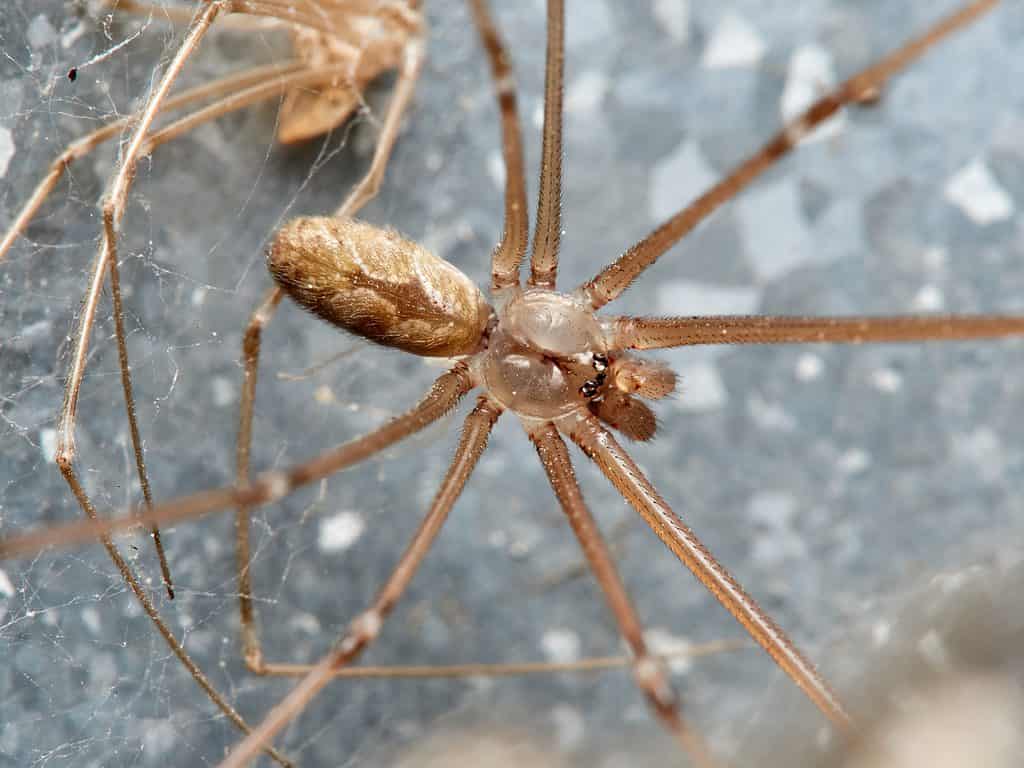
Cellar spiders are typically unnoticed and catch unwanted house pests.
©Macronatura.es/Shutterstock.com
| Brown Recluse | Cellar Spider | |
| Size | 1/4 to 1/2 inches long (the size of a quarter) | 1/4 inch long |
| Bite | Severe, necrotic | N/A |
| Where It’s Found | Attics, basements, closets, clothing piles, cardboard boxes, behind furniture, clutter | Attics, basements, garages, ceilings, dusty room corners, windowsills, behind furniture |
| Color & Markings | Tan to dark brown, six eyes, uniform body color, violin-like shape on the cephalothorax | Attics, basements, garages, ceilings, dusty room corners, windowsills, and behind furniture |
Nursery Web Spider
The nursery web spider is found throughout the U.S. and looks nearly identical to the brown recluse. Aside from having eight eyes and a hairy body, they could almost be mistaken for the same spider. Nursery web spiders also have darker markings on their legs, but these markings are not easy to see unless you’re up close. The only other distinguishing feature is the size of the nursery web spider. They’re often quite large compared to a brown recluse.
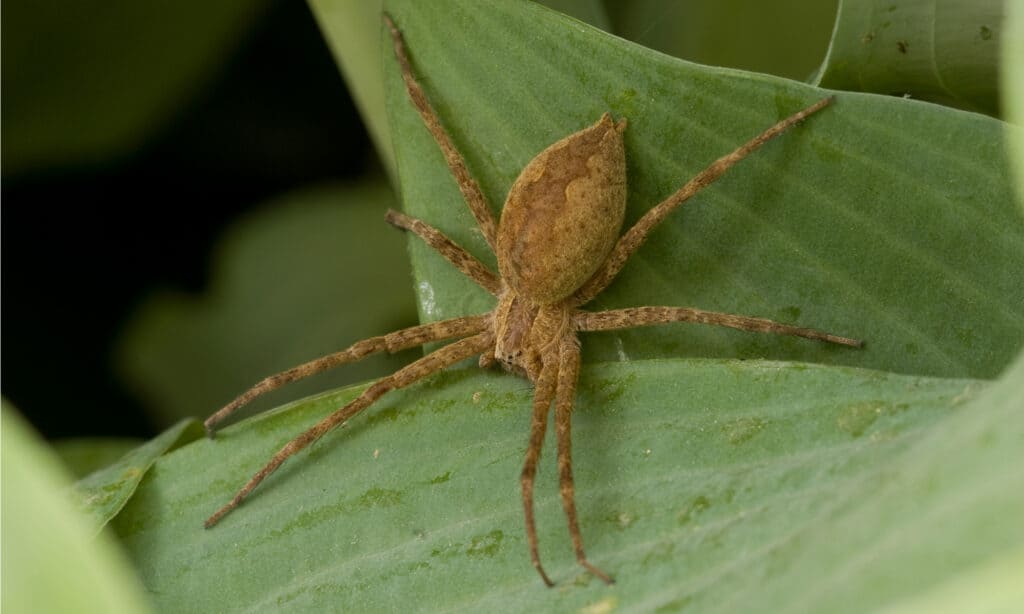
Male American nursery web spiders will tie females’ legs during mating to prevent them from being eaten afterward.
©SDeming/Shutterstock.com
| Brown Recluse | Nursery Web Spider | |
| Size | 1/4 to 1/2 inches long (the size of a quarter) | 1/2 to 3/4 inches long |
| Bite | Severe, necrotic | Mild, non-toxic |
| Where It’s Found | Attics, basements, closets, clothing piles, cardboard boxes, behind furniture, clutter | Shrubs, gardens, houseplants, occasionally basements or garages |
| Color & Markings | Tan to dark brown, six eyes, uniform body color, violin-like shape on the cephalothorax | Brown or gray, long, stocky legs, black stripes, brown stripe down the cephalothorax, hairy, eight eyes |
Funnel Weaver Spider
These spiders are found across the U.S. and are often mistaken for wolf spiders. However, this also means they are easily mistaken for the brown recluse. Funnel weaver spiders can be easily identified by their funnel-like nests, if you find one. Outside of their webs, you can identify them by their hairy bodies and dark brown leg banding. While the funnel weaver spider may appear intimidating, their bites are not considered dangerous to humans.
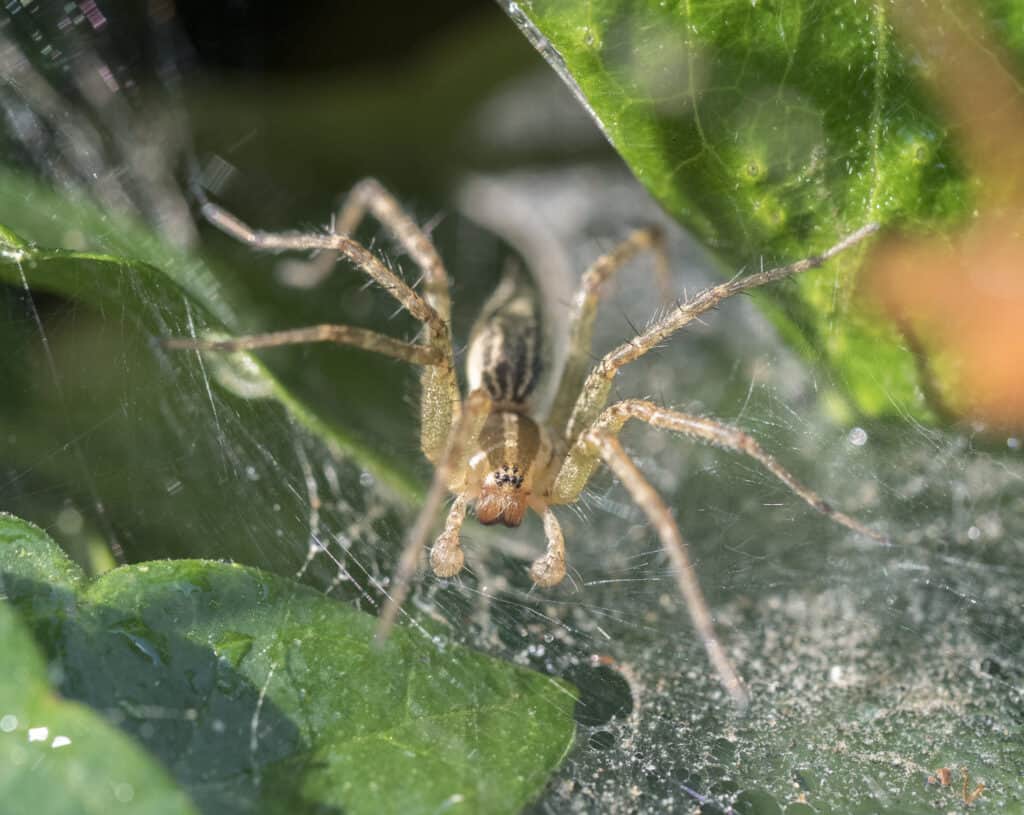
Funnel weaver spiders typically remain outdoors and rarely wander indoors.
©iStock.com/johnandersonphoto
| Brown Recluse | Funnel Weaver Spider | |
| Size | 1/4 to 1/2 inches long (the size of a quarter) | 1/3 to 2/3 inches long |
| Bite | Severe, necrotic | N/A |
| Where It’s Found | Attics, basements, closets, clothing piles, cardboard boxes, behind furniture, clutter | Basements, attics, garages, undisturbed corners |
| Color & Markings | Tan to dark brown, six eyes, uniform body color, violin-like shape on the cephalothorax | Brown to gray, hairy legs with dark banding, eight eyes |