
Quick Take
- Stories of parrots repeating phrases like “Don’t shoot!” after a killing have fueled public fascination, but courts have consistently refused to treat animal sounds as testimony, keeping such moments in the realm of legend and media spectacle rather than evidence.
- Parrots can accurately mimic human speech due to their vocal anatomy, but imitation does not equal understanding; repeated phrases reflect sound patterns, not intent, memory, or truth in a legal sense.
- While animals cannot testify, dogs and other animals play important investigative roles through tracking, detection, and comfort, with courts allowing their involvement only when humans can explain and scrutinize the animal’s training and behavior.
- Animals contribute most powerfully as physical and scientific evidence—through injuries, hair, blood, and DNA, including wildlife trafficking cases—serving as silent sources of testable data rather than voices in the courtroom.
Imagine walking into a courtroom and seeing a cage near the witness stand. Inside sits a bright, alert parrot whose owner was recently murdered. The bird suddenly squawks, “Don’t shoot, Arthur!” The room erupts into commotion, the judge bangs her gavel for order, handlers cover the bird and hustle it out a side door while two different lawyers simultaneously yell “Objection!” and “I rest my case!”
It’s a fictional scenario—but one based on a real case. When an animal is the only witness to a murder, can it truly serve as a witness in court, or are humans simply projecting meaning onto instinctive behaviors and imitations that may not be reliable sources of truth?
Parrots as Stool Pigeons
During the early 1920s, newspapers thrived on unusual criminal trials. One of the strangest involved a parrot said to repeat its owner’s last words after a killing, allegedly squawking phrases like, “Don’t shoot, Arthur!” following its owner’s death. Headlines portrayed the parrot as a kind of informant, and the public quickly embraced the idea of a bird acting like a witness.
Nearly a century later, a similar case surfaced in Michigan. In 2015, Marty Duram was shot and killed in his home. Afterward, his African grey parrot, Bud, began mimicking what sounded like a heated argument between a man and a woman, ending with a sharp “Don’t shoot!” Family members believed the parrot echoed the final moments of the crime and urged investigators to pay attention.
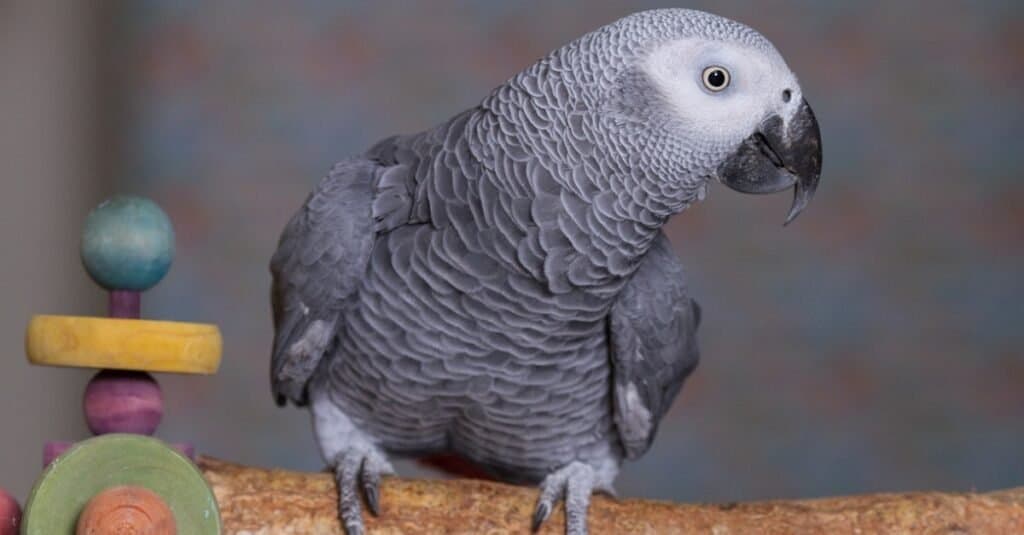
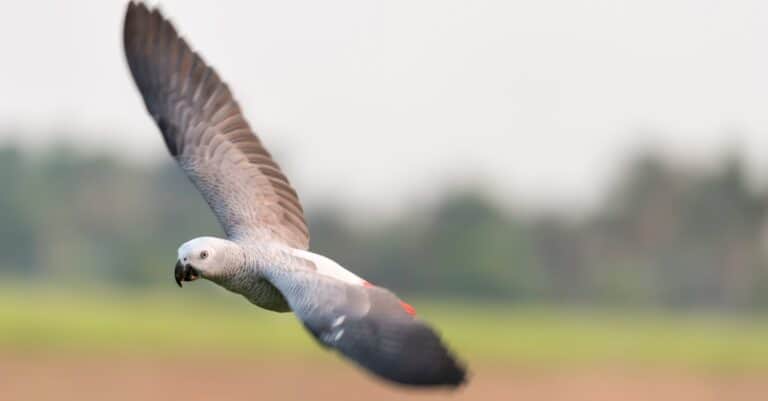
Bud, an African grey parrot, seemed to have memorized phrases from an argument overheard just before its owner was murdered.
©iStock.com/n1kcy
In both cases, the courts did not allow these birds’ “testimonies” to be admitted as evidence. The jury heard only human testimony and physical evidence. The parrot’s sounds remained part of media coverage and public fascination, but not the legal record.
How Parrots Copy Sounds Without Understanding
To understand why such stories persist, it helps to know how parrots produce speech. Parrots, especially African greys, excel at mimicking sounds thanks to an organ called the syrinx, located where the windpipe splits into the lungs. This structure, combined with precise control of tongue and throat muscles, allows them to create a wide range of tones and complex vocalizations.
They can imitate human speech, doorbells, electronic beeps, and mechanical noises with striking accuracy. Some parrots can associate certain sounds with actions or rewards, and a small number have learned to label objects or colors in controlled studies. However, this ability does not mean they understand abstract concepts like intent, guilt, or truth-telling. When a parrot repeats a phrase like “Don’t shoot,” it may simply echo a tense moment it heard before, reproducing sound patterns rather than recalling events with purpose.
Why the Law Rejects Animal Witnesses
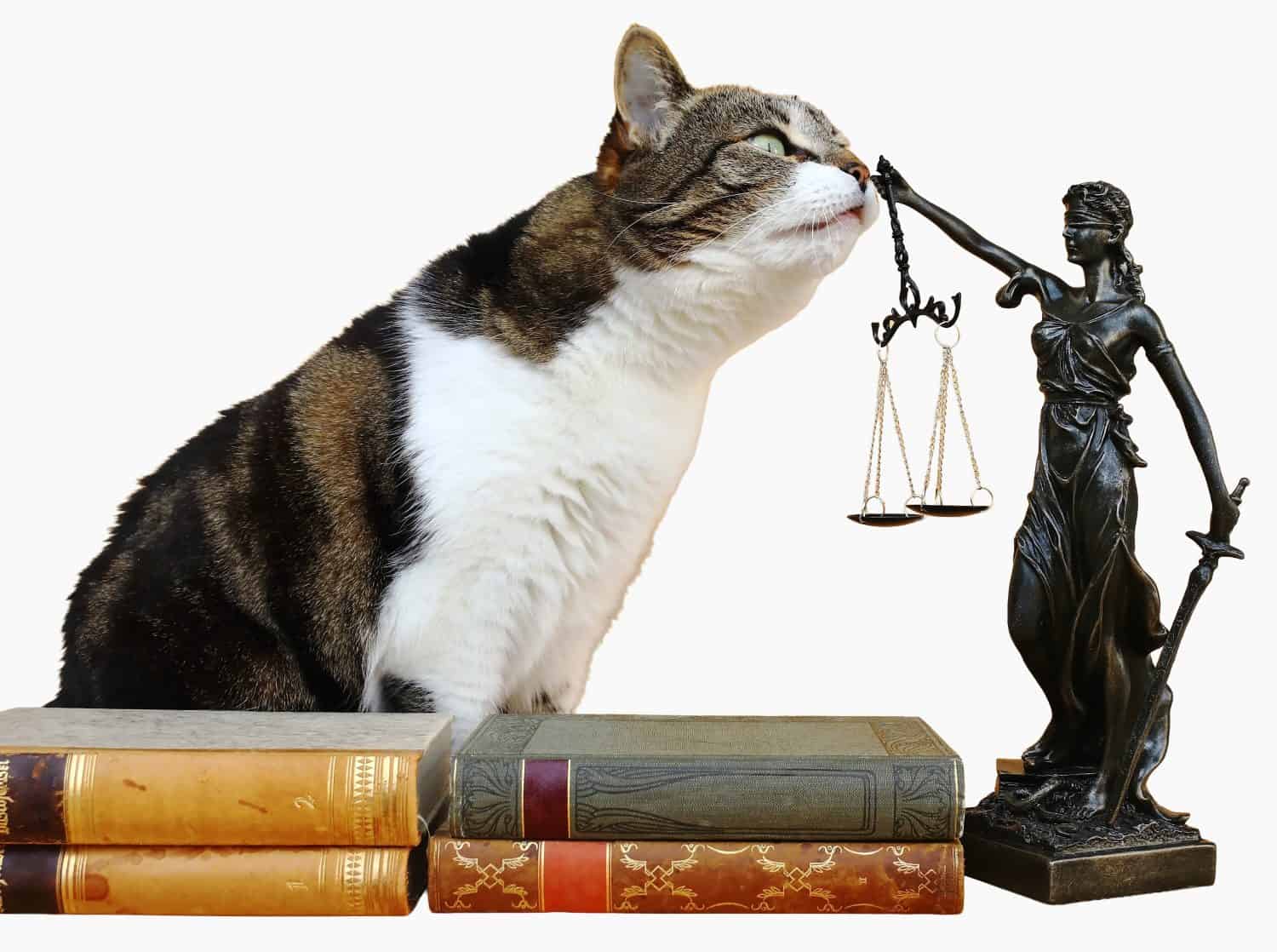
Legal systems expect witnesses to meet strict standards. A witness must observe events, remember them, and explain them clearly under oath, then submit to cross-examination so lawyers can test accuracy and credibility. Animals cannot meet these requirements.
An animal cannot swear to tell the truth, describe what it perceived, or clarify details such as timing and identity. If the bird repeats words, lawyers cannot ask follow-up questions to explore the context or meaning. Courts also treat repeated phrases as hearsay because the original human speaker cannot be questioned and the animal cannot confirm what the words refer to. As a result, judges exclude animal “statements” from evidence, even when the sounds resemble human speech.
How Dogs Contribute in Court
Although animals cannot testify, dogs play important roles in criminal investigations. Tracking dogs follow scent trails from crime scenes, while detection dogs locate drugs, explosives, or traces of blood. When these findings reach court, handlers explain the dog’s training, reliability, and reactions. The dog itself does not appear in court. Human witnesses describe what the animal did and how it was trained to respond.
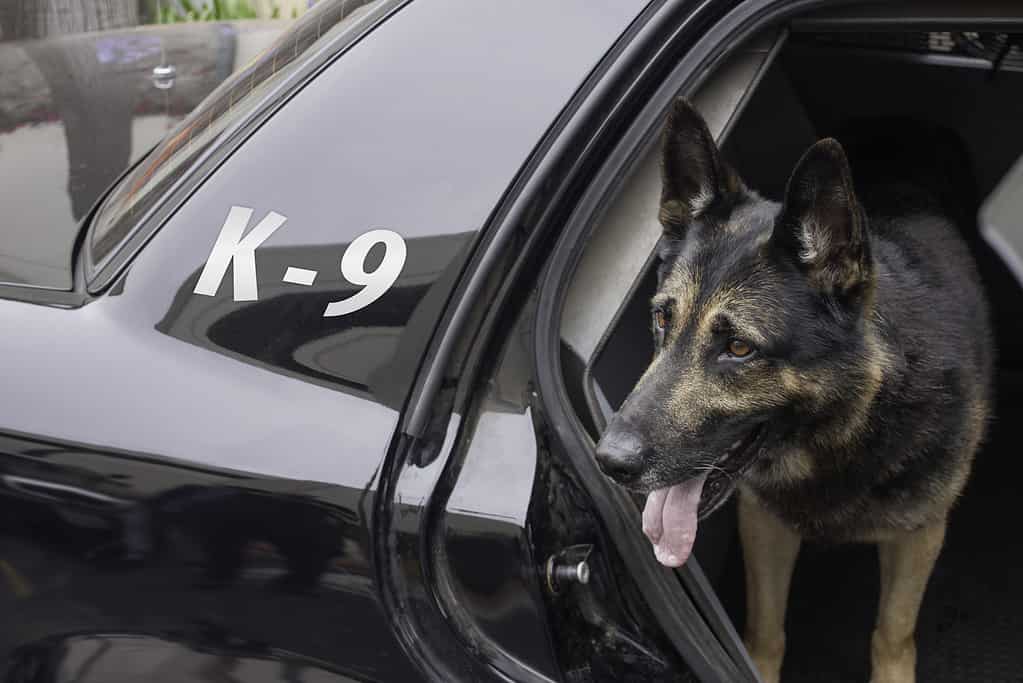
Dogs assist police by following scent trails and detecting clues, even though they cannot testify.
©805promo/iStock via Getty Images
Some courts also allow trained facility dogs to sit beside vulnerable witnesses, often children, while they testify. These dogs help reduce anxiety and make it easier for frightened witnesses to speak in a formal courtroom setting. Defense attorneys sometimes argue that a dog’s presence may influence jurors emotionally, suggesting the witness deserves extra sympathy or credibility.
The Legal Limits of Scent Lineups
In some investigations, trained scent dogs have been used to link suspects to crime-scene items by matching human scent, including through “scent lineups” once employed in Texas. In these lineups, dogs compared an unknown scent to samples from multiple people, and their indications could contribute to arrests or prosecutions. Over time, courts grew skeptical of relying on these methods.
This shift was underscored by the cases of Richard Lynn Winfrey Sr. and his daughter Megan, whose 2007 Texas murder convictions rested heavily on scent-lineup evidence from bloodhounds that examined clothing years after the crime. In 2010, the Texas Court of Criminal Appeals acquitted Winfrey Sr., ruling that dog-scent evidence alone could not sustain a guilty verdict. In 2013, the same court overturned Megan Winfrey’s conviction on similar grounds, emphasizing that such evidence may serve only as limited support rather than proof of guilt.
Animals as Physical and Scientific Evidence
While animal voices lack legal standing, animal bodies and biological traces often provide strong evidence. Injuries to pets can support cases involving domestic violence or neglect, especially when patterns of harm toward animals mirror abuse within a household. Veterinarians examine wounds, estimate timing, and explain likely causes, playing roles similar to forensic doctors.
Animals also contribute trace evidence in broader criminal investigations. Pet hair on clothing can link a suspect to a home or vehicle. Blood or saliva can confirm which animal was present during an incident, and attackers sometimes leave their own DNA on collars, leashes, or fur during a struggle. In these cases, animals function as sources of physical data, while human experts interpret that data for the court.
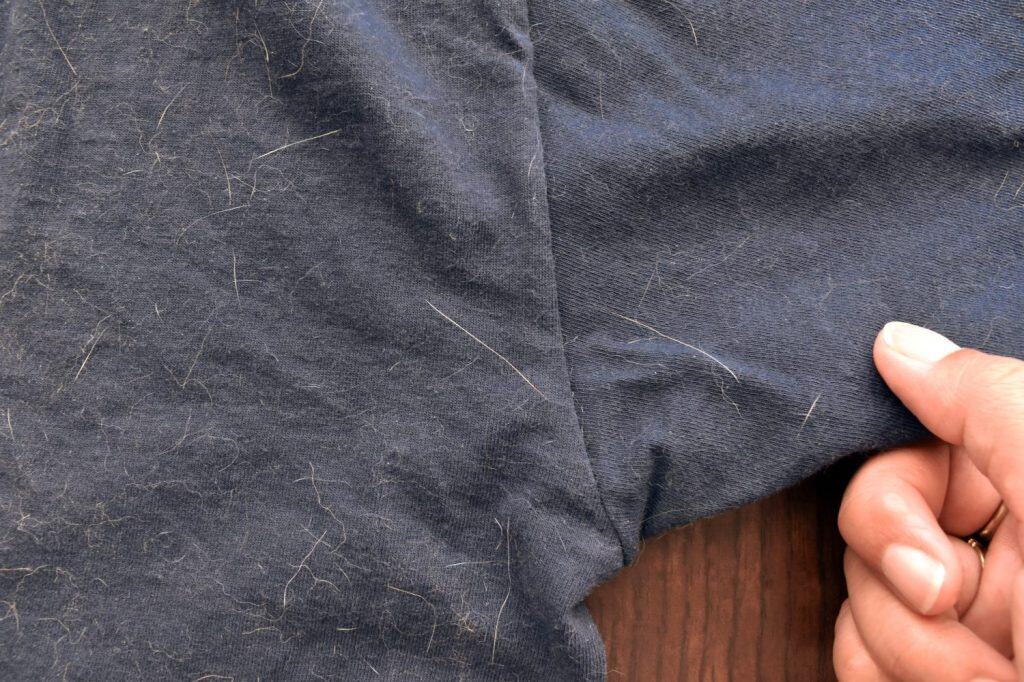
Animal hair on clothing can provide DNA evidence linking a criminal to a crime scene.
©Maliflower73/Shutterstock.com
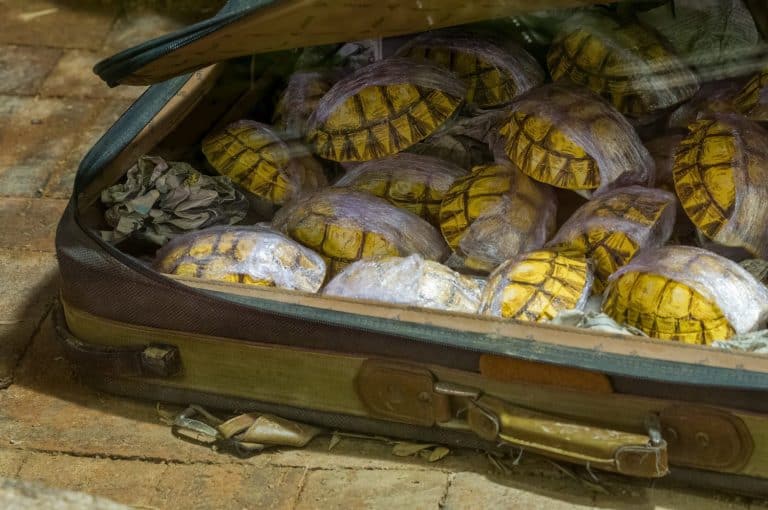
A third area where animal evidence plays a role is wildlife trafficking cases, where DNA analysis has become a powerful investigative tool. Scientists can analyze genetic material from seized ivory, skins, or meat to determine the species, geographic origin, and even family relationships of animals involved in illegal trade. By comparing DNA across multiple seizures, investigators can link shipments taken years apart to the same poaching networks, showing patterns that point to organized trafficking rather than isolated incidents.
Why Courts Keep Animals Off the Stand
Courts have consistently resisted treating animals as witnesses because doing so undermines basic legal standards. Animals cannot explain what they perceive, clarify intent, or submit to questioning, making concepts like responsibility and truth impossible to test. While earlier legal systems occasionally placed animals on trial, modern courts have abandoned that approach as evidentiary rules have become more rigorous. Today, judges draw a clear line between emotional narratives and admissible proof, accepting animal-related evidence such as injuries, DNA, or expert-interpreted behavior, while rejecting the idea of animals as legal speakers.
The belief that animals might “know” what happened persists because people live closely with pets and naturally attribute meaning to their behavior—especially after a tragedy. Animals observe daily life and react in ways that feel expressive or intentional, inviting interpretation. A legal witness, however, must do more than be present; testimony must be explainable, testable, and open to challenge. For that reason, animals remain contributors to justice through physical and scientific evidence rather than spoken accounts, serving as silent participants rather than voices in the courtroom.