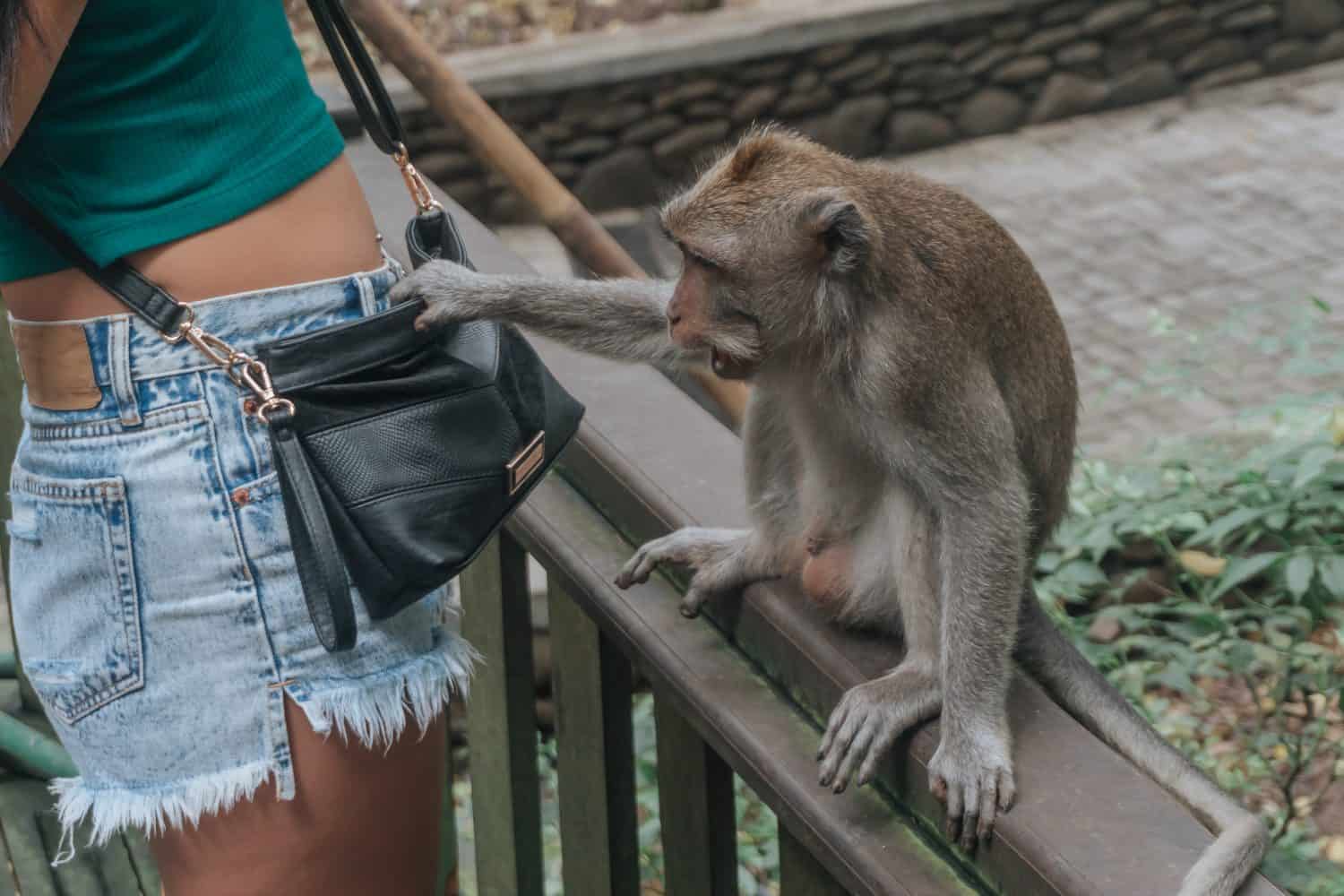

From a quick swipe of a banana to elaborate “ransoms” of smartphones, monkey shenanigans have earned these adorable animals a worldwide reputation as mischievous little thieves. Perhaps you’ve seen viral videos of a macaque at a temple snatching an ice cream cone away from an unsuspecting tourist, or baboons executing a calculated raid on suburban bins, or capuchins sneaking into hotel kitchens and helping themselves. Pretty cute, right? Pretty hilarious. We’re all in total agreement there. But these behaviors are more than simple monkey business; they reveal real animal cognition, social learning, and predictable responses to humans who feed or otherwise reward bold behavior. But as cute and clever as is it, it also comes with a heavy cost, and we don’t just mean losing your sandwich! Below we unpack the science behind these antics, explain how monkeys learn to manipulate people, and show why feeding wildlife escalates risky interactions for both species.
What mischief looks like
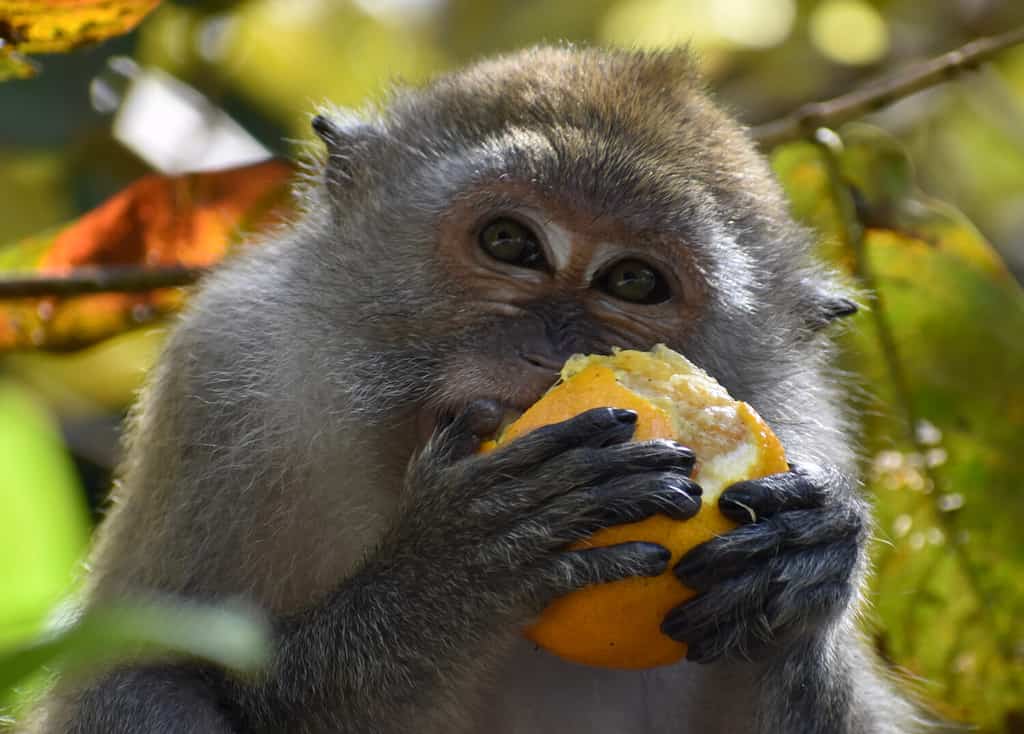
Macaques are well-known to grab a sandwich right out of person’s hands.
©Mick Carr/Shutterstock.com
Monkeys display a wide range of behaviors that people interpret as mischief, but scientists and wildlife managers tend to describe these more neutrally: foraging strategies, problem-solving, or learned opportunistic behavior. Let’s look at a few of the more common behaviors of this sort:
Quick snatching and “grab-and-run” foraging
Monkeys will often take unattended food and run. This behavior is documented in many species, from capuchins to macaques to baboons. In tourist areas you might see a monkey snatching a sandwich, ice cream, or a bag of chips straight off a table or even from a person’s hands. Do a Google video search for “monkey stealing food from tourist” and you’ll see an endless stream of videos documenting such thefts. (Actually, maybe don’t do that, unless you’ve got nothing to do for the rest of the day…)
Targeted theft of high-value items
At some sites, long-tailed macaques have been shown to preferentially seize high-value objects like phones, sunglasses, and wallets rather than low-value items. In tourist-heavy places like Uluwatu Temple in Bali, macaques sometimes return stolen items only after being “paid” with food by handlers or visitors. Researchers describe this “robbing and bartering” as a locally learned, profitable tactic. I think most of us would happily give a monkey a banana to get our iPhone back.
Coordinated or repeated raids (planned foraging)
Some species, perhaps most notably baboons in urban edges like Cape Town, conduct repeated, targeted raids on garbage, gardens, and even houses. Studies using GPS and accelerometers show individuals using sit-and-wait tactics and short, intense forays into human areas when the food payoff is high, like a bank robber carefully scoping out the bank’s security before he makes his move. These are not random acts but considered foraging choices.
Begging, intimidation and aggressive theft
Where people routinely provide food to primates, whether intentionally or unintentionally, individuals may adopt bold begging postures, or worse. Once monkeys learn that approaching humans pays off, their behavior can escalate. They may start grabbing food, snatching bags, or trying to intimidate people into handing something over. These pushy or aggressive encounters are known as agonistic interactions.
Tool use, manipulation, and problem solving around human objects
Some species, like capuchins, have advanced manipulative skills. When human food or containers are involved, monkeys can demonstrate inventive solutions such as opening coolers, untying bags, or manipulating zippers. These actions may appear mischievous to us, but are really just expressions of cognitive flexibility and manual dexterity.
Why monkeys behave this way
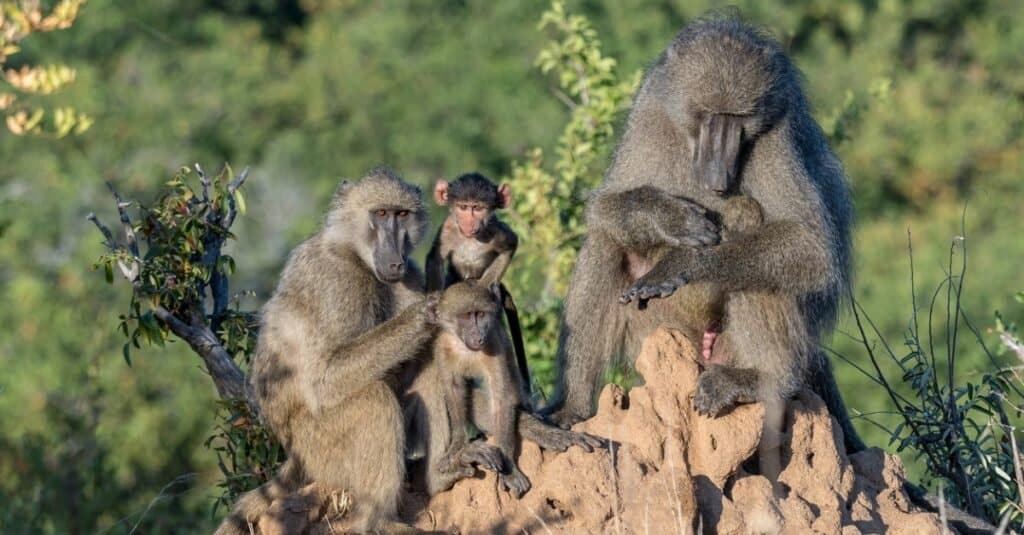
Monkeys can pick up “bad behavior” by observing other monkeys and copying what they see.
©Grobler du Preez/Shutterstock.com
Several overlapping scientific processes explain how and why monkeys evolve or learn to “misbehave” around people.
Cost/Benefit Logic: That phrasing may sound corporate jargony, but it’s simple reward-driven decision making. Animals make choices influenced by energy gain versus risk. Food in human areas is often calorie-rich and easy to obtain, so even risky foraging, like snatching food near people or taking a brief foray into an urban environment, can pay off. Think of it this way: Would you walk a block for a slice of pizza? Most likely. Would you walk that same block if it were infested with crocodiles? Most likely not. Monkeys make these same types of calculations. Researchers studying urban-foraging primates emphasize that high caloric payoff and low effort strongly bias animals toward these behaviors.
Social learning and cultural transmission: Monkeys are social learners. When one individual discovers that stealing sunglasses yields food, others are likely to adopt the tactic. Studies show primates preferentially copy successful or high-ranking group members, allowing clever behaviors to spread and persist as local traditions. This explains why “robbing and bartering” can be a persistent, group-specific behavior at certain temples and parks. To put it in the parlance of grade-school humans: monkey see, monkey do.
Individual learning: Monkeys are curious and good at trial-and-error. Through repeated encounters with humans, individuals learn which human behaviors predict food and which objects are likely to yield a payoff. Suppose you’ve gone to the market and tried to trade a handful of dirt for a loaf of bread, and the merchant repeatedly denies you. Then, you offer a silver coin, and the merchant gives you the bread. Next time you go to the market, you are much more likely to avoid offering the dirt and go straight to the silver coin. Well, monkeys have figured that out as well. That individual learning, combined with social learning, accelerates the spread of opportunistic thefts.
Dominance, rank, and who does the stealing: In many primate groups, higher-ranking individuals lead foraging and bold behavior. Younger or lower-status animals may copy them. This creates patterns where a few “specialist” thieves acquire and transmit the tactic. Studies explicitly link dominance structure to who learns and performs raiding or stealing behaviors. In a lot of ways, you could think of it as a Monkey Mafia.
Wait… So this is all OUR fault?

Whether directly or indirectly, humans supplying monkeys with the food is the main cause of mischievous monkey behavior.
©Elizaveta Galitckaia/Shutterstock.com
Yes. It’s our fault. Feeding wildlife is the central human action that fosters bold, risky interactions. This occurs in three different ways:
Direct provisioning means people giving the animals food. This creates strong positive reinforcement: monkeys learn that people equal food. When the reward is immediate and reliable, risky behaviors like approaching people and snatching items is repeated and refined.
Indirect provisioning is when the animals score human food from trash, picnic leftovers, accessible food storage, etc. These food finds reward raiding and encourages repeated urban forays. Studies have shown baboons will make short trips into human areas when food density and caloric payoff are high. If a snack is just sitting out for the taking, you can’t blame the monkey for taking it.
“Paying the ransom” is when a human or handler gives food to get a stolen item back. This literally trains animals to steal items they know will be exchangeable for treats. That dynamic entrenches robbing-and-bartering as a profitable strategy. If you stole a car and the owner handed you a thousand dollars for it, no questions asked, no negative consequences—what would stop you from stealing the car again and again to keep getting that thousand dollars? I mean, other than a moral code, of course. But that’s what separates us from the monkeys.
In short: if you feed them—even once—you’ve taught them a profitable lesson.
Dangers and broader consequences
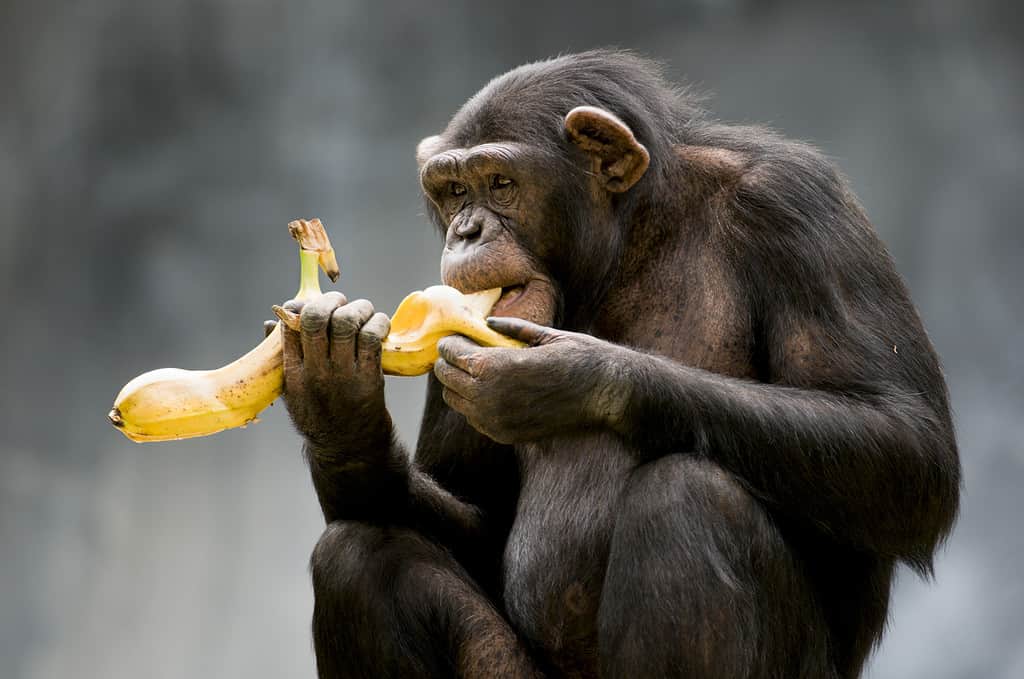
While this behavior may seem cute, it actually has serious consequences and should not be encouraged.
©Windzepher/iStock via Getty Images
While it might make a great story to return from the zoo and tell your buddies about how a monkey reached through the bars of the cage and took the cotton candy out of your hand, mischievous monkey behavior actually carries real costs.
Human safety and injury: Bold primates can bite or scratch when confronted, and such interactions sometimes escalate. Increased agonistic events have been observed at sites where tourists feed monkeys.
Disease risk: Close contact raises the chance of disease transmission—exponentially so if a bite or scratch occurs. Public health authorities warn that nonhuman primates can transmit and acquire infections like hepatitis, herpes B, and other pathogens. Rabies in primates is comparatively rare in many regions but nevertheless a concern in some contexts. Extreme caution is recommended with any type of primate contact.
Ecological and population impacts: Relying on human food can change diets, body condition, reproduction timing, and social behavior in primate groups. Management programs note that removing or culling “problem” individuals often backfires. These individuals are often higher-ranking, and their removal can destabilize troops and create new problems. The focus increasingly is on managing people’s behavior, education, and securing food as opposed to “punishing” the animals.
Economic and reputational costs
Tourist sites may face insurance claims, the need for increased management expenditures, and reputational problems when visitors are harmed or repeatedly robbed. This could significantly raise the cost of visiting such places, or in some cases shut them down entirely.
What researchers and managers recommend
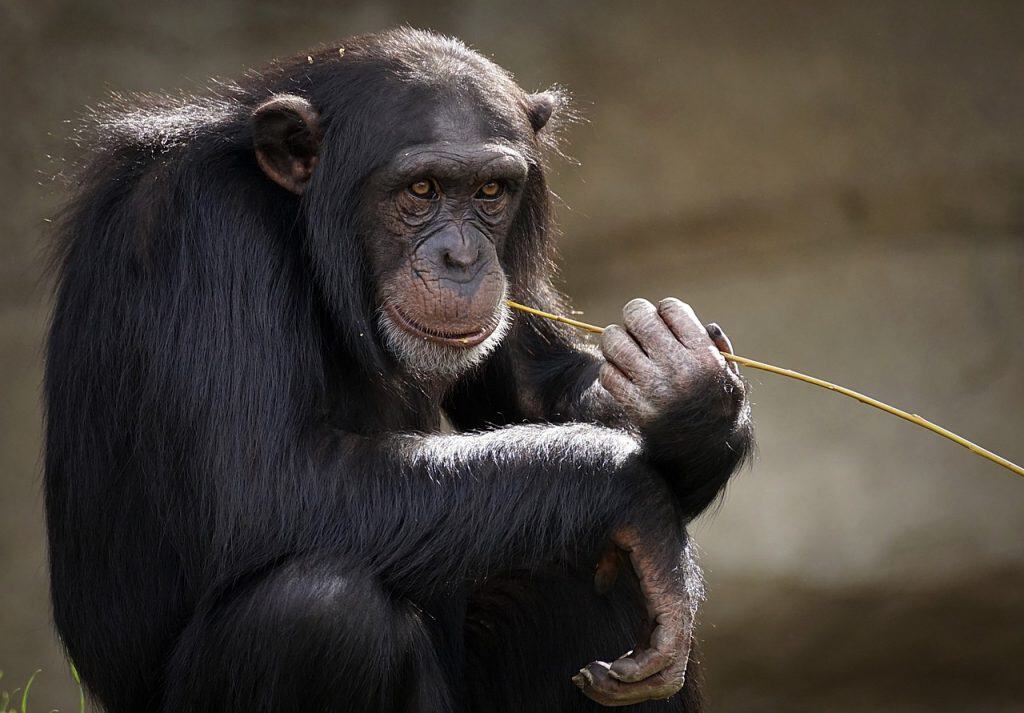
The message from conservation scientists, public-health authorities, and wildlife managers has been consistent:
Don’t feed wild primates! Eliminating deliberate provisioning removes the strongest reinforcement for bold, risky behavior.
Secure food and garbage so indirect provisioning doesn’t occur. Urban planning, wildlife-proof bins, and picnic rules reduce incentives for raiding.
Educate visitors and local communities about disease risk and safety. That means avoid close contact, don’t try to take selfies while holding food, and respect barriers.
Use nonlethal management and community-based strategies. Removing animals can disrupt social groups and worsen problems; many programs now emphasize deterrents, habitat management, and human behavior change.
Bottom line
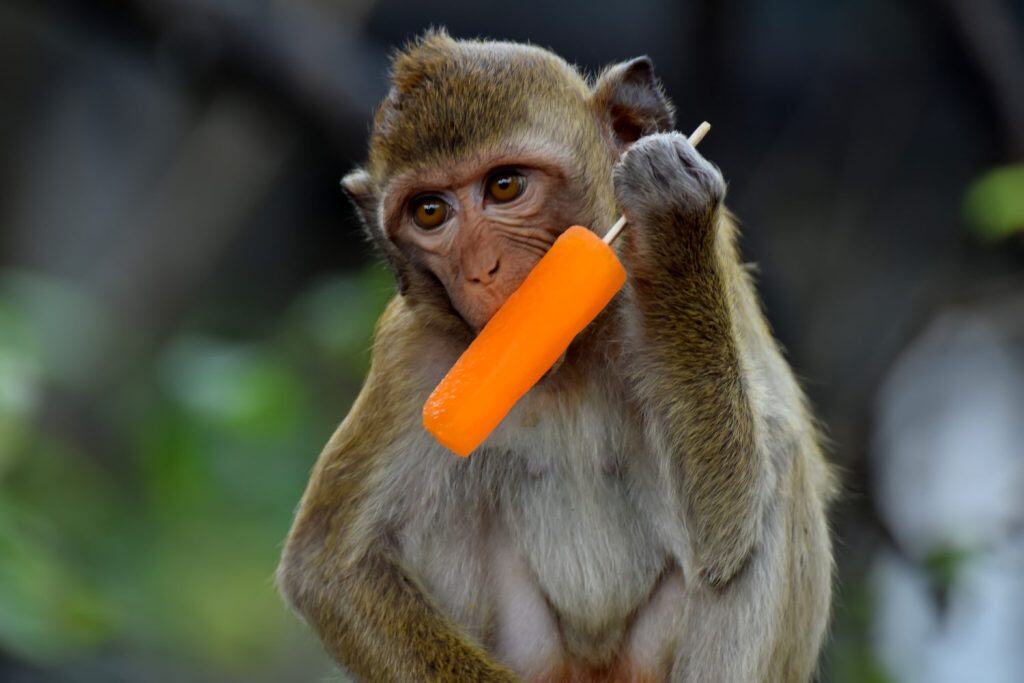
What seems like mischief to us, is really just monkeys trying to eat.
©CHOTE BKK/Shutterstock.com
Monkeys may look like tiny comedians in fur coats, but their “mischief” is really a smart response to the opportunities humans keep handing them—sometimes literally. From targeted thefts to cheeky ransom negotiations, they’re simply doing what clever, food-motivated primates do best: learning the rules of our world and bending them in their favor.
But don’t blame them: we’re the ones training them! Every dropped snack, every unlocked bag, every tourist who trades peanuts for a stolen phone helps create the next generation of monkey masterminds. It’s a learned behavior, and we’re the teachers. Respect their space (and protect your sunglasses!) and you’ll see monkeys as they truly are: not villains, not tricksters, but wildly intelligent animals adapting to a human-filled planet with style, strategy, and a whole lot of swagger.
But with all that said, if a monkey steals your expensive iPhone, nobody here is going to you judge too harshly if you give the monkey a banana in order to get it back.