
Autumn is a beautiful season, filled with vibrant colors, crisp air, sweet treats, and tons of festivities. What’s more, it’s also mating season for many spiders. If you notice an increase in the number of indoor spiders during this time of year, there’s a reason for their surge in activity. Usually, this isn’t a cause for concern. However, some spider species can be dangerous to humans — especially if they find their way inside your home.
We spoke with Nicole Carpenter, a pest control professional and the President at Black Pest Prevention, about some of the well-known spiders you might spot indoors. According to Carpenter, these are seven of the most common spiders found in homes.
1. American House Spider
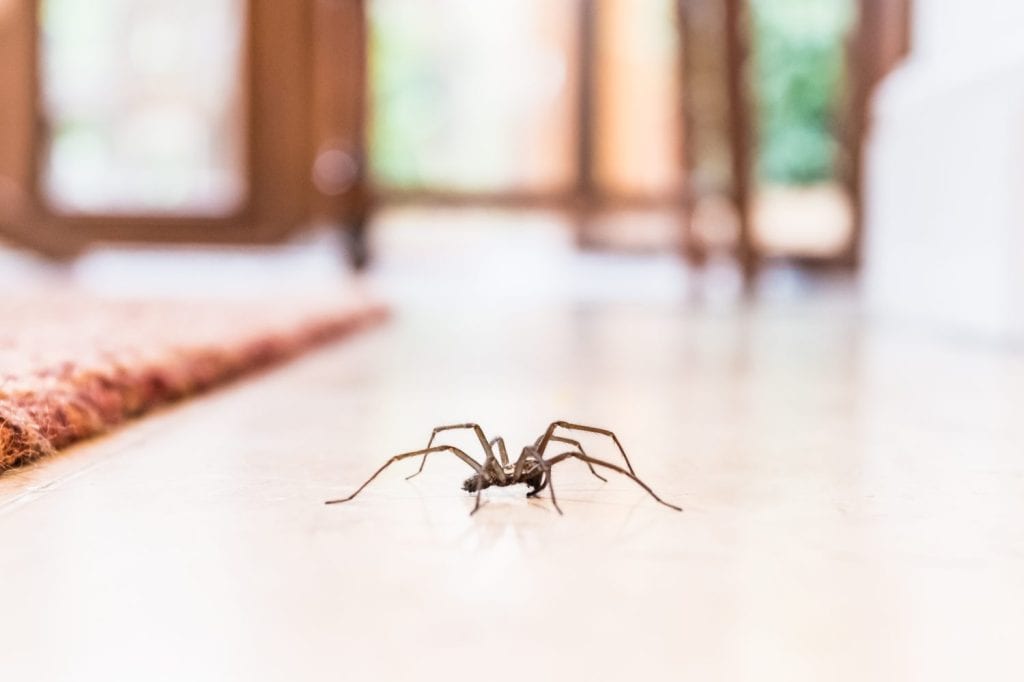
The common house spider is completely harmless.
©Christine Bird/Shutterstock.com
Many spiders find their way inside homes, especially during mating season. However, not all of them are considered house spiders. The common house spider, also known as the American house spider, is one species that actually does live indoors among humans. These critters are typically small in size and brown with faint markings. You might not even notice them.
“Some prefer to stay somewhere like a garage, basement, or crawl space — but our homes are where house spiders feel most comfortable, and they get in through tiny cracks in the home structure or even open windows,” Carpenter says.
If you do spot these little guys, you might be tempted to get rid of them immediately. However, they can actually be beneficial to your overall environment.
“If you don’t mind them, it’s even better to let them be because they eat flies and mosquitoes,” Carpenter continues. “They sit in corners and along walls and build webs in corners and close to the ceiling that don’t even turn into something serious if you vacuum regularly.”
2. Cellar Spider
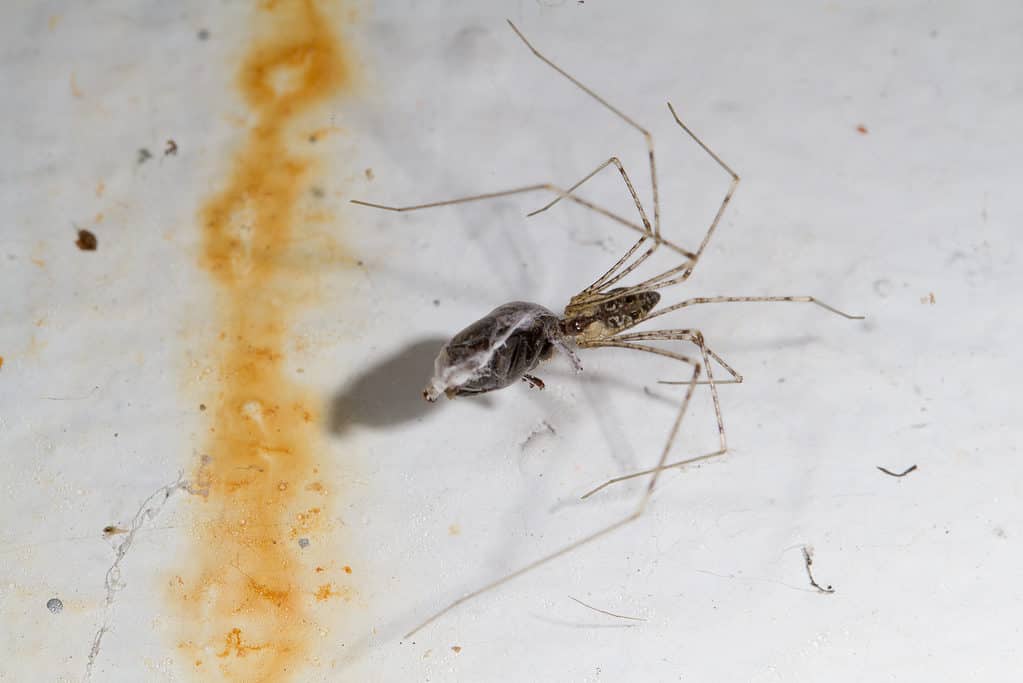
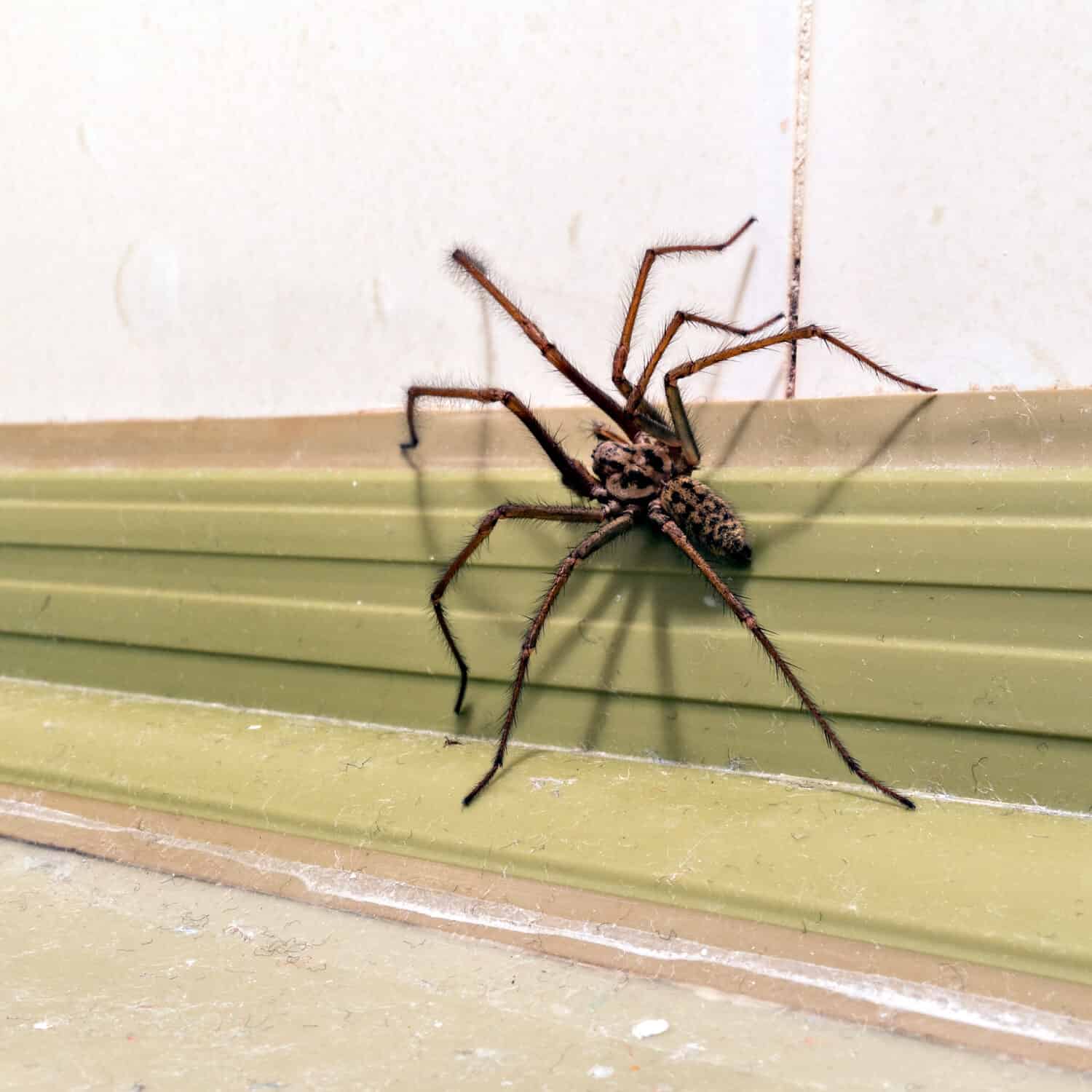
Cellar spiders often appear like daddy long-legs, as they have skinny, lengthy legs.
©Elliotte Rusty Harold/Shutterstock.com
Cellar spiders are common household spiders. Their long, thin legs and small, oval-shaped bodies make them easy to identify. Many people mistake cellar spiders for daddy long-legs (harvestmen), but they’re actually a completely different arachnid.
“Cellar spiders have very long, thread-like legs and often hide in basements, garages, or ceiling corners,” says Carpenter. “Seeing them almost always means there are gaps in the structure, so treat them as an indicator that it’s time for sealing.”
Thankfully, cellar spiders don’t pose any threat to homeowners. They’re not aggressive creatures, and they have weak venom that doesn’t affect humans. Additionally, they help control pests by hunting common household insects.
If you don’t mind them, it’s even better to let [American house spiders] be because they eat flies and mosquitoes.
Nicole Carpenter, pest control professional and President of Black Pest Prevention
3. Funnel Weavers
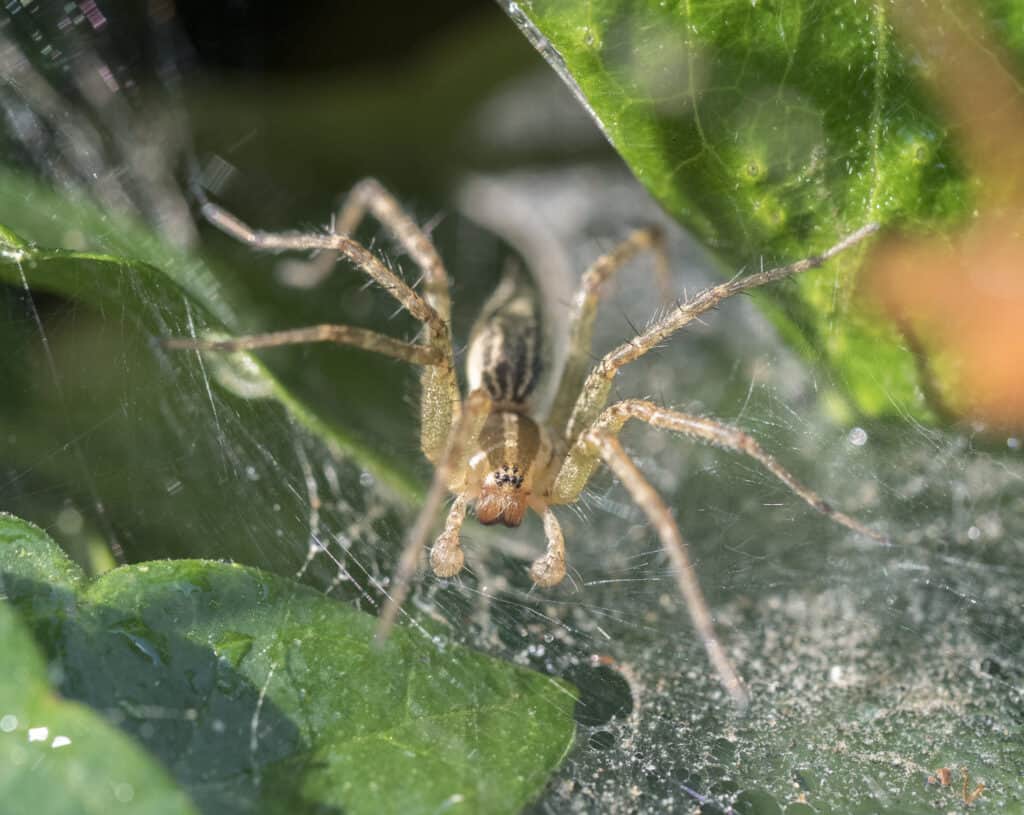
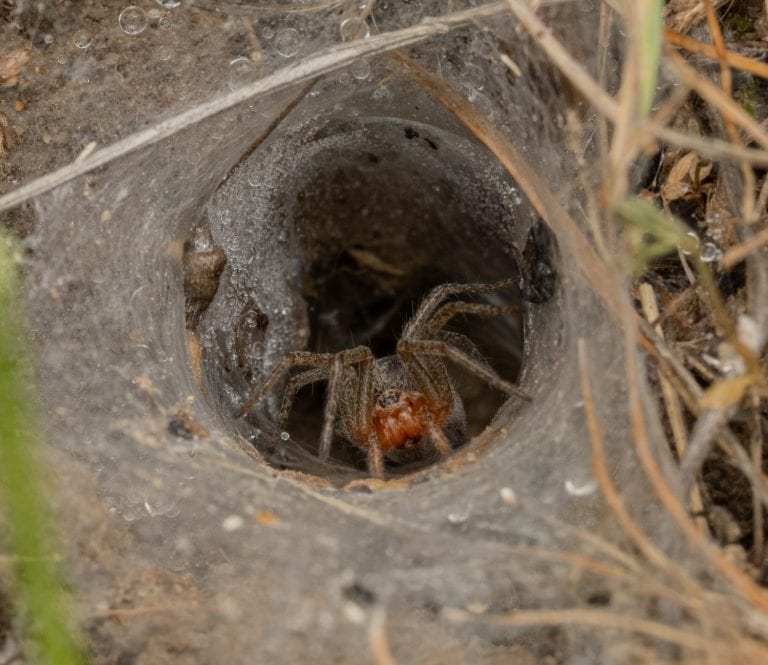
Funnel weaver spiders build impressive webs.
©iStock.com/johnandersonphoto
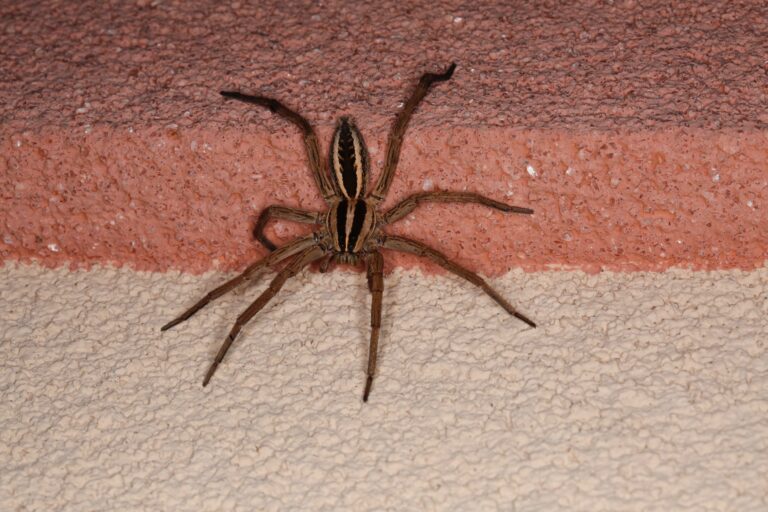
Funnel weavers are medium-sized spiders known for their signature webs. These creatures are typically brown or gray in color with stripes down their hairy bodies. Due to their web-building abilities, homeowners might be a little less thrilled to spot them indoors. However, they’re quite harmless—more of an inconvenience than a threat.
“House funnel weavers build sheet-like webs and often clutter up corners or window wells — that’s the only harm they bring,” says Carpenter.
Not to mention, given their size, it’s harder for them to sneak inside than it is for other house spiders. You likely won’t notice them as often as you would other indoor spiders. If you do, it’s likely a fluke.
“They don’t appear indoors as often as true house spiders, but when they do, it’s usually through gaps around doors or windows,” says Carpenter. “Having door sweeps and screens on windows almost completely eliminates the chance to see them indoors.”
4. Wolf Spider
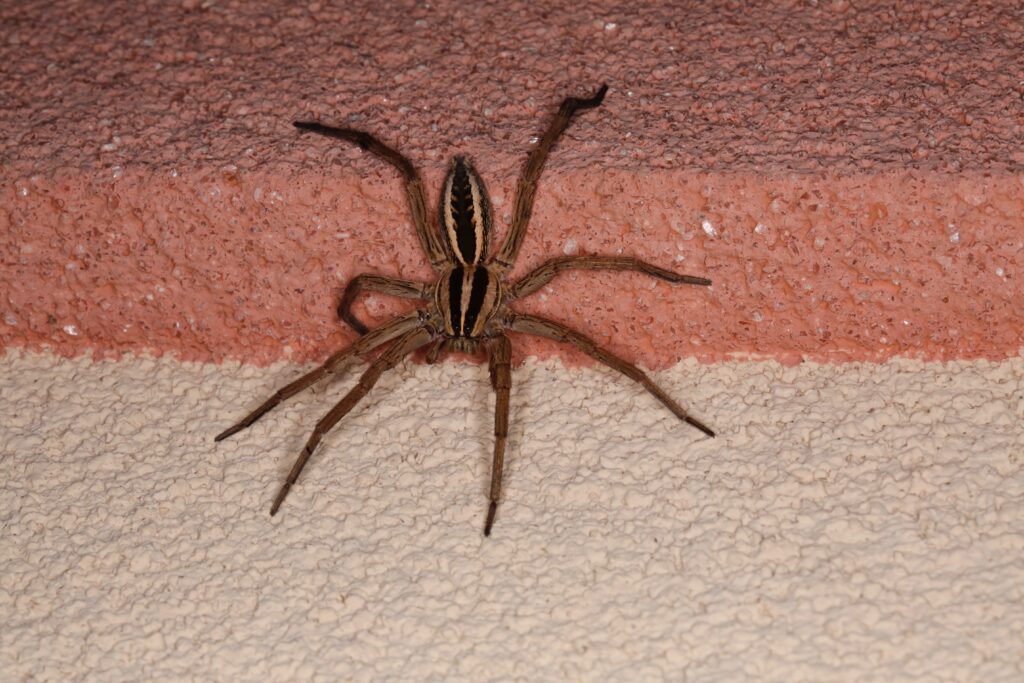
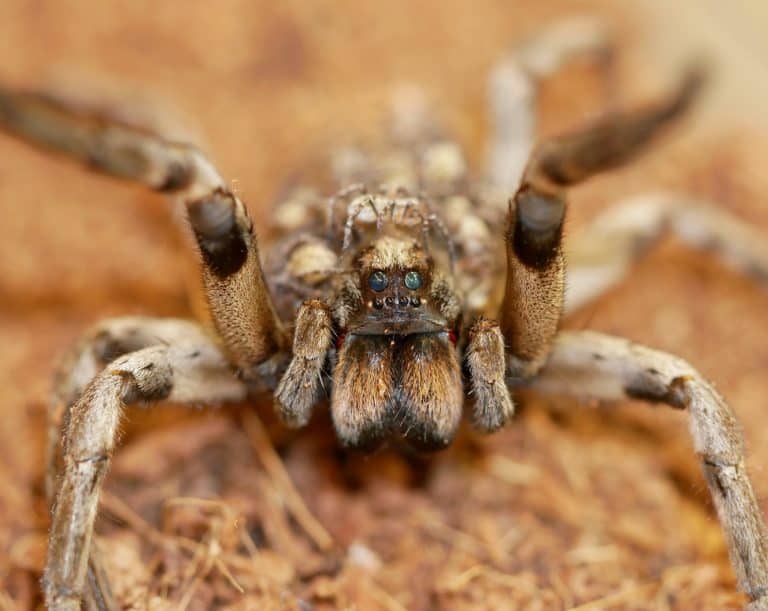
Wolf spiders are brown and furry.
©Cathleen Wake Gorbatenko/Shutterstock.com
Wolf spiders are robust creatures that grow up to two inches in length. They’re brown in color with hairy bodies and eight prominent, beady eyes.
While they may appear intimidating, Carpenter says they’re nothing to worry about.
“They are completely harmless. They don’t build webs and almost never bite. Even if they do, the bite is not dangerous,” says Carpenter. “As with other spiders, they get into the gaps in the house structure, usually under doors or around basement windows.”
5. Orb Weavers
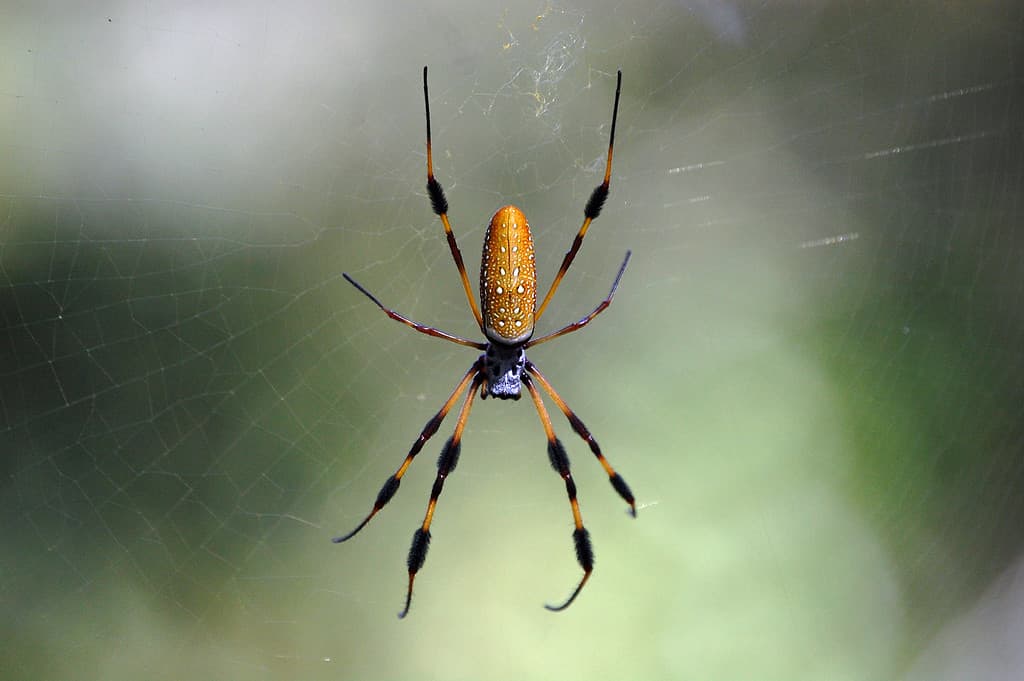
Another spooky yet harmless spider is the orb weaver. These vibrant, patterned spiders are about an inch long with round bodies, typically orange, yellow, and brown in color.
“Orb weavers are big and look very scary — but the worst thing they can do is to cover your porch with webs,” says Carpenter. “They are unlikely to get inside but love porches and outdoor lights where insects hang out.”
If you do notice quite a few orb weavers in or around your home, you might just have to make friends with the critters.
“They are almost impossible to get rid of as long as it’s impossible to completely eliminate insects outdoors they feed on, but turning off outdoor lights and using yellow bulbs to attract fewer flying insects will reduce their number,” Carpenter says.
6. Brown Recluse
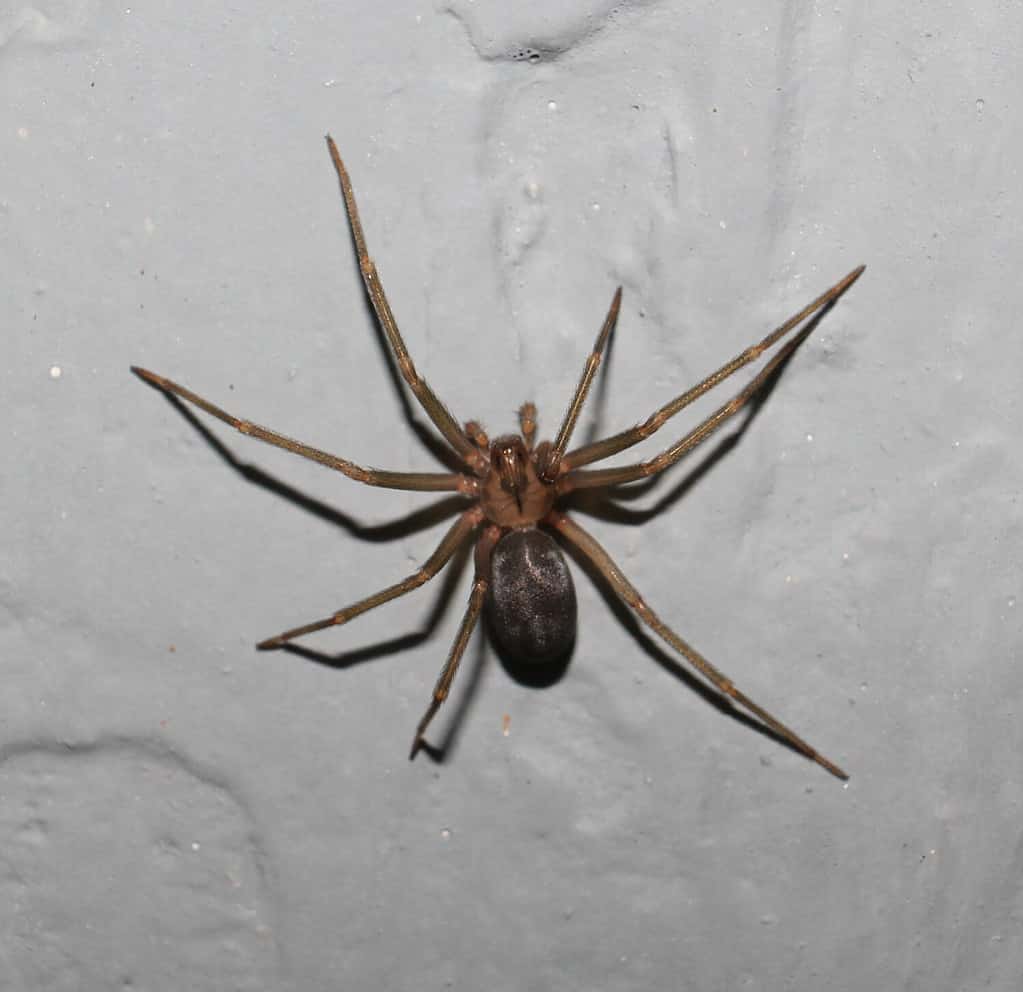
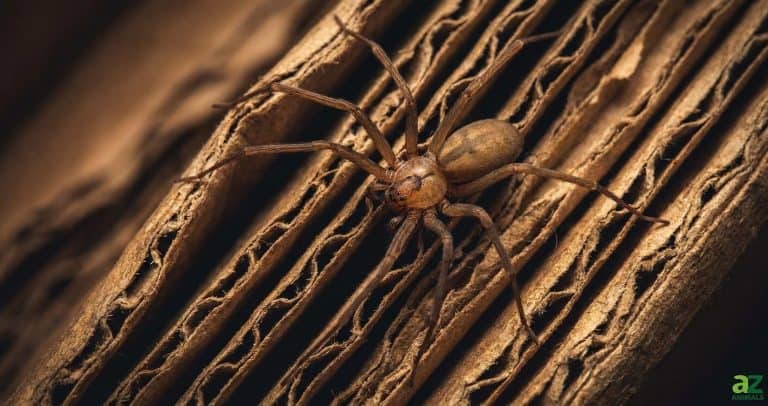
Brown recluse spiders are incredibly venomous.
©Keith Davis/Shutterstock.com
Now we’re onto the more dangerous spiders. Unfortunately, it’s not uncommon to spot a brown recluse spider indoors in the south-central and midwestern United States.
“Brown recluse is one to watch out for,” says Carpenter. “It’s light to medium brown with a clear violin-shaped mark on its back — no other common house spider has that feature.”
This venomous species is most prevalent in the south-central and midwestern United States. They often hide in warm, dark places. Their bite can cause redness, swelling, itching, pain, blistering, and even fever, nausea, and muscle pain in later stages.
“While they don’t attack and usually prefer to stay hidden, their bite causes serious skin injury and requires a doctor’s check,” Carpenter warns. “They hide in cardboard boxes, closets, shoes, and stored clothes — that’s why it’s so easy to get bitten even though they are not aggressive.”
Due to the severity of their bites, it’s crucial to identify any brown recluse spiders in or around your home.
“You can run into it without even realizing that and get bitten,” Carpenter adds. “If you or your neighbors have ever spotted them, make a habit of shaking out clothes and shoes before use and use sealed containers or bags for storage.”
7. Black Widow
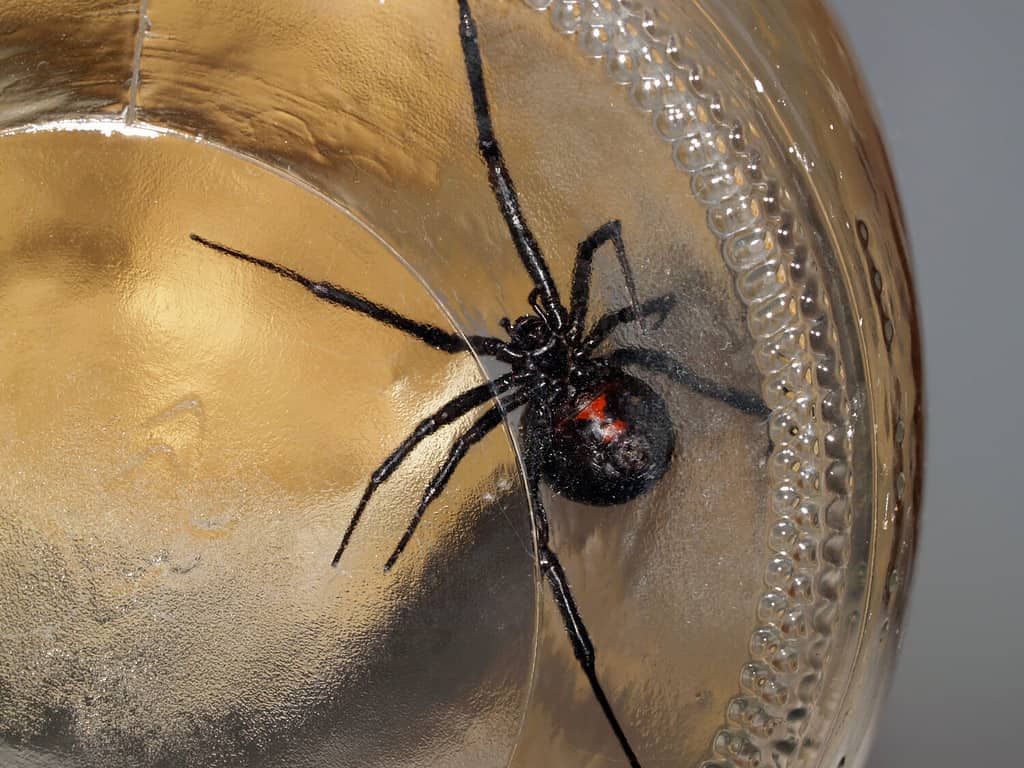
You can identify black widows from the bright red mark on their bodies.
©Jeff Cleveland/Shutterstock.com
Another venomous spider species is the infamous black widow.
“Shiny black body and red hourglass, the black widow fortunately has distinct marks, and that’s something we should thank it for because it helps us stay away,” says Carpenter.
Unfortunately, these creatures can also find their way into (or at least around) your home.
“Black widows usually avoid the true ‘indoors’ of a house, like kitchens or bedrooms, and prefer in-between, semi-sheltered spaces like garages, sheds, and the space under your deck,” Carpenter adds. “They need to have easy access to the outdoors with a lot of insects to prey on.”
However, that doesn’t mean they can’t make their way inside.
“They can get inside if you leave ground-floor windows and doors open or if you bring in firewood or boxes without checking them before,” she says. “Having screens on windows and doors and storing anything like woodpiles a few feet from the house is already a big step toward prevention.”
Similar to the brown recluse, black widows have a venomous bite that can cause severe symptoms. Typically, you’ll notice some redness, pain, and swelling near the bite itself. It usually looks like two small puncture wounds. Eventually, you may also experience muscle cramps, headache, abdominal pain, nausea, vomiting, diarrhea, sweating, dizziness, and even anxiety. If you have any of these symptoms and suspect a spider bite, see your doctor immediately. The best way to prevent these spiders from becoming house visitors is to keep your space clean and check any shoes, blankets, towels, or boxes before bringing them inside.