
Quick Take
- This "mole" spends more time in water than underground, and its body has evolved to pull that off in some genuinely unexpected ways. Discover its aquatic adaptations →
- A predator from another continent is quietly driving the desman toward extinction, though most people have never connected the two. See the invasive species threat →
- The desman must consume a jaw-dropping share of its own body weight every single day, and skipping a meal could be fatal. Explore its extreme dietary needs →
- Its population numbers tell one of conservation's most alarming recent stories. See the population collapse →
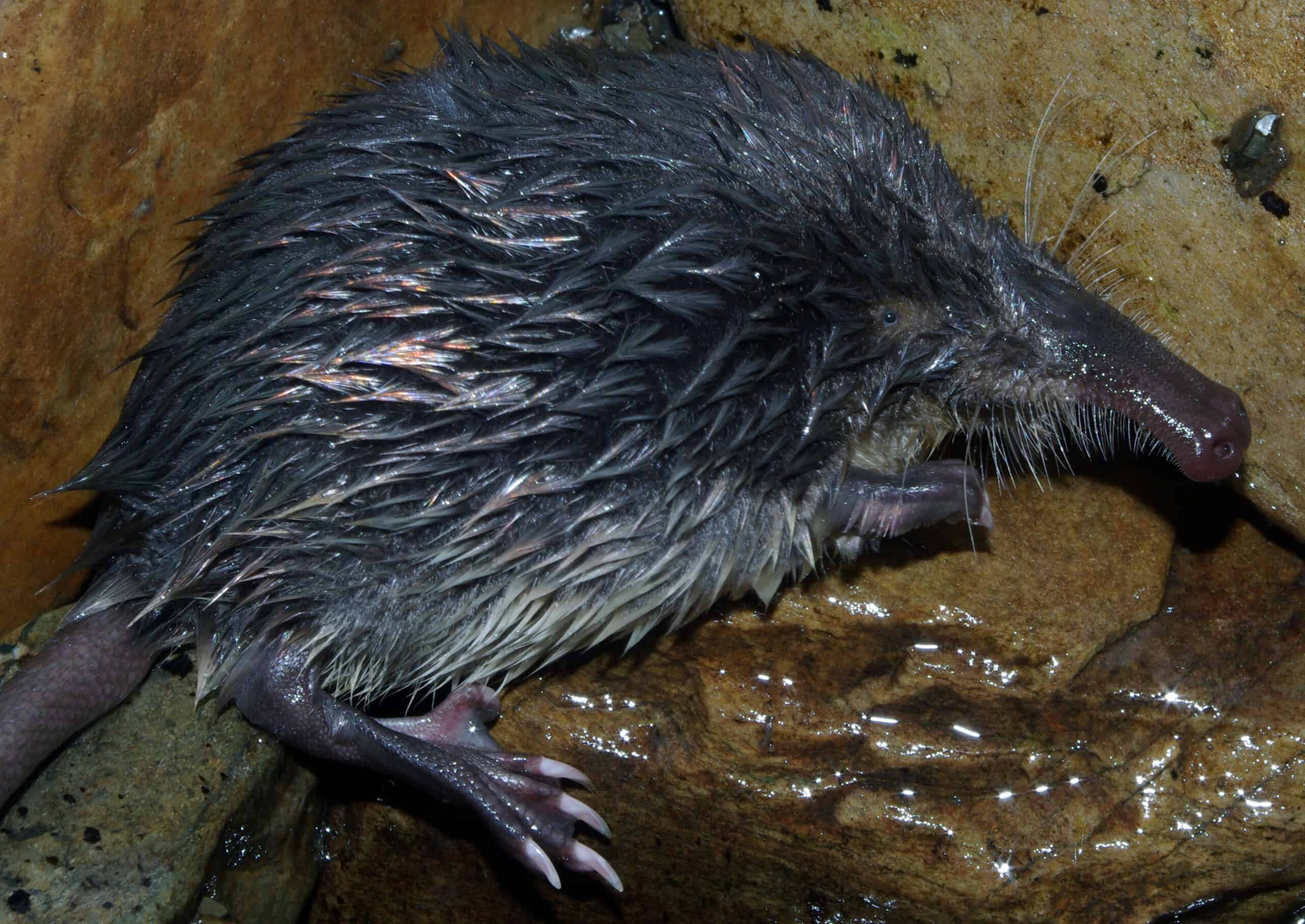
Not all moles live in holes! In the drainage basins of the Don, Ural, and Volga rivers in Russia, there lives a semi-aquatic mole. The desman is a unique creature with a long snout and tail, and an appetite much larger than its size! However, without additional protection, the survival of this little mammal is uncertain.
Is the Russian Desman Endangered?
The Russian desman (Desmana moschata) is classed as critically endangered by the IUCN Red List, and its numbers are decreasing. Existing populations are also severely fragmented.
In the 1970s, there were around 70,000 of them living in Russia, Kazakhstan, Ukraine, and Belarus. By 1985, there were only 39,000, and this had dropped to 27,000 by 2001. Since then, there has been a further decline, and there are probably only around 4,000 or fewer of them left now. In some locations, they have completely disappeared, and other populations only contain around 100 individuals.

Desman live around streams.
©Digital Photo/Shutterstock.com
Their decline has been caused by entanglement in fishing nets, habitat loss and degradation, and the introduction of invasive species such as the American mink, which preys on them. Muskrats compete with desmans for breeding sites, while Chinese sleepers compete with them for food. They are now protected, but were once hunted for their fur and musk glands, which were used in perfumes. Those that have survived now live in freshwater, slow-moving streams, lakes, and ponds.
Russian Desman Diet and Behavior
These small mammals are about 8 or 9 inches long, with a long tail and a flexible, grooved snout. To help them move in water, their forefeet are partially webbed, and their hind feet are fully webbed. They also have hair fringes on the pads of their feet, which help them swim efficiently.
They live in groups of up to eight individuals in dens along the shoreline, under vegetation and roots above the high-water line. They are mainly nocturnal and spend the night probing the bottoms of streams with their snouts, searching for aquatic organisms such as fish, mollusks, amphibians, crustaceans, and insects.
Close European Cousins
The Russian desman is closely related to the Iberian desman (Galemys pyrenaicus), which is found in the Pyrenees mountains in France and the northern part of the Iberian Peninsula. They are classified as Endangered and face similar pressures to their Russian cousins, particularly wetland habitat destruction.
These moles feed on aquatic insects, crustaceans, and terrestrial insects. However, their high metabolic rate means they must consume approximately one-third to one-half of their body mass daily!